
Review · PARIS
Paris: Musée de Montmartre and Gardens Entry Ticket
Montmartre’s best story is not only found at Sacré-Cœur or in the busy artist square. At the Musée de Montmartre, you step into Bel Air House, a 17th-century building tied to the artists who made this hill famous. Rooms, paintings, photographs, cabaret lore, and garden paths turn the district into a place you can understand, not just photograph.
I like the 90-minute audio guide, which gives shape to Montmartre’s move from countryside to Paris district. I also like the Renoir Gardens, the vineyard, and the peaceful café, all included with the $16 ticket. The main drawback is that some rooms can be easy to miss, and the café may occasionally close for a private event.
Key points
- Bel Air House: Enter one of Montmartre’s oldest surviving buildings and see how artists lived and worked on the hill.
- Chat Noir and cabaret life: Follow the story of shadow theatre, singers, dancers, circus, and the performers Toulouse-Lautrec captured.
- 90-minute audio guide: Learn how Montmartre changed after its annexation to Paris, then explore at your own speed.
- Renoir Gardens and vineyard: Take a quiet break among flowers, greenery, and one of Montmartre’s most unusual sights.
- Temporary exhibitions: Your ticket includes changing art displays, which can add a second layer to the permanent collection.
- Good value at $16: The ticket covers the museum, gardens, café access, permanent displays, temporary shows, and skip-the-line entry.
Why the Musée de Montmartre tells the hill’s story so well
Montmartre is often treated as a postcard: white basilica, painted portraits, steep streets, and souvenir shops. The Musée de Montmartre gives you the backstory behind that image. It explains how a rural hill on the edge of Paris became one of Europe’s most famous centers for art, music, and nightlife.
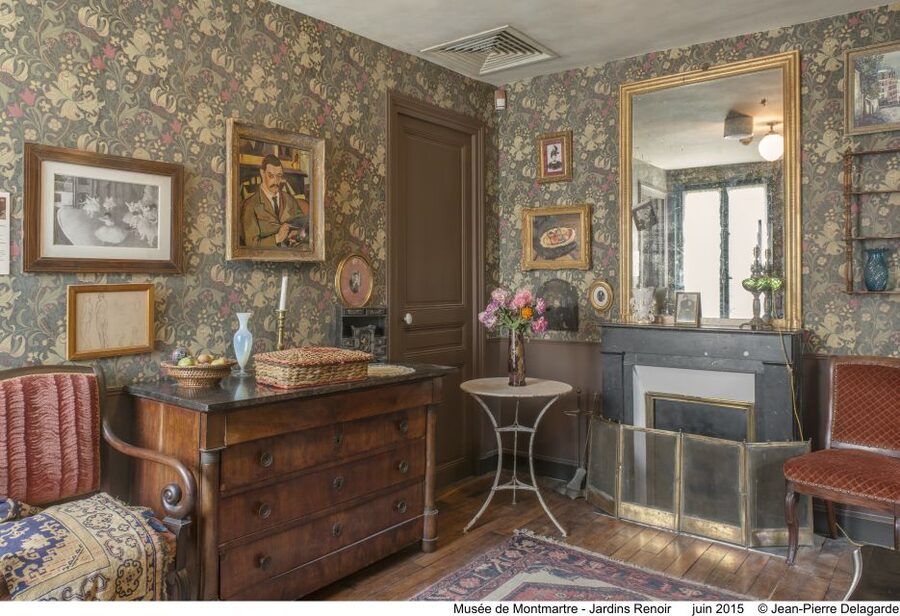
The museum occupies Bel Air House, described as the oldest building in Montmartre. It was once a meeting place and home for artists. That setting matters. You are not looking at the district from a distance. You are walking through the kind of building where its creative life actually unfolded.
I find this more satisfying than a quick stop at a large art museum with a room full of famous names. Here, the paintings and objects are tied to streets, cafés, studios, cabarets, and local characters. You get a sense of Montmartre as a working neighborhood before it became a major stop on every Paris itinerary.
The museum’s permanent displays cover the district’s past, including its mills, photographs, artists, and performance venues. The story is especially strong from the late 19th century, when Paris expanded and Montmartre began to change quickly.
More Garden Tickets in Paris:
- Paris: Versailles Palace and Gardens Full Access Ticket
★ 4.6 · 41,579 reviews - From Paris: Versailles Palace Self Guided & Gardens tickets
★ 4.4 · 1,100 reviews - Paris: Louvre Museum Entry Ticket and Garden Walking Tour
★ 4.2 · 326 reviews
From village edge to Paris district
Montmartre was annexed to Paris in the 19th century. That political change forms an important part of the visit. The city began imposing itself on what had been countryside, and the old hill entered a new period of construction, commerce, and social change.
Artists started arriving around 1870. By the 1880s, cafés and cabarets were multiplying. Montmartre became a place where artists, performers, writers, and spectators crossed paths. The museum helps you see that this was not simply a neighborhood full of painters. It was a place where painting, music, theatre, dance, circus, and satire fed one another.
The audio guide is useful here. Without it, you might admire the rooms and artwork but miss the connections between the district’s political changes and its creative life. The tour lasts about 90 minutes, giving you a clear path through the main story without forcing you to leave when the narration ends.
You can stay longer and explore at your own speed. I recommend doing so, especially if a temporary exhibition is open. The audio portion gives you structure, then the extra time lets you return to paintings, photographs, or rooms that caught your eye.
Cabarets, shadow theatre, and Toulouse-Lautrec
The museum’s account of Montmartre’s nightlife is one of its most entertaining sections. The famous Chat Noir cabaret welcomed performances of shadow theatre, an art form developed by Henri Rivière and Henry Somm. These shows used projected silhouettes and theatrical effects, creating a form of entertainment that was simple, inventive, and very much of its time.
The district’s stages offered much more than shadow plays. Theatre, music, circus, and dance all had a part in Montmartre’s nightlife. Aristide Bruant and Yvette Guilbert performed their texts, while dancers at the Moulin Rouge became part of the district’s public mythology.
The performers La Goulue, La Môme Fromage, and Grille d’Egouts are part of this story. Toulouse-Lautrec repeatedly recorded these performers and venues, helping preserve the look and mood of a nightlife world that could be loud, cheeky, and sometimes rough around the edges.
I like this part because it places familiar posters and names in their working setting. You are not simply seeing an isolated Toulouse-Lautrec image. You are learning what the artist was watching, who was performing, and why Montmartre offered such a steady supply of subjects.
The artists’ studios at 12 Cortot
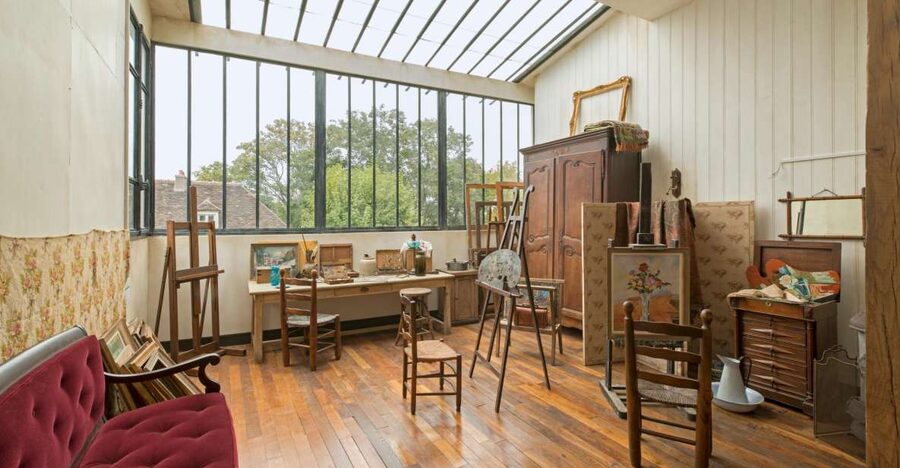
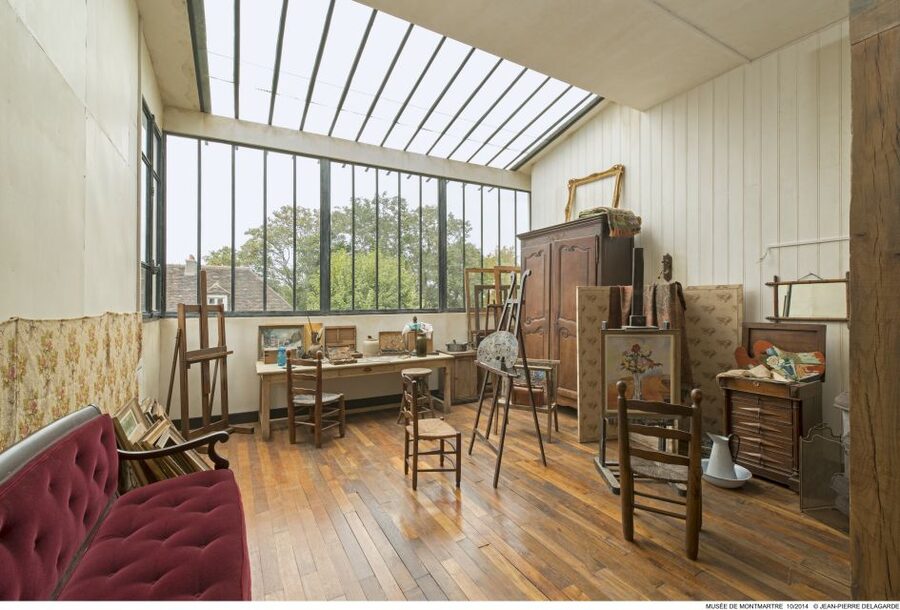
The address 12 Cortot is central to the museum experience. These studios saw the passage of several artists, many of whom painted their own surroundings. That detail gives the visit an intimate quality. You can think about artists not only as creators of famous works but as people attached to rooms, windows, gardens, and daily routines.
The museum’s rooms can feel small and personal. That is part of the appeal, but it also means you should not rush. Signage is important, and some spaces are easy to overlook. One visitor found that sections could be reached through the café area, so look carefully for directions rather than assuming you have seen everything after the first gallery.
I would allow at least 90 minutes for the audio guide and more time if you care about art history. A brief visit can cover the main displays, but the building rewards a slower pace. You may want to stop for photographs, read the labels, compare artists’ views of Montmartre, and spend time in the garden afterward.
A few more garden visits around Paris worth a look
- Versailles: Skip-the-Line Tour of Palace and Gardens Access
★ 4.7 · 10,429 reviews - From Paris: Versailles Palace & Gardens with Transportation
★ 4.6 · 6,222 reviews - From Paris: Versailles Palace Guided Tour & Gardens Access
★ 4.7 · 3,574 reviews - From Paris: Giverny, Monet’s Home & Gardens Half-Day Trip
★ 4.5 · 2,887 reviews
Temporary exhibitions add a useful second visit
Your ticket includes both the permanent and temporary exhibitions. The changing program can shape the day, so check what is showing when you book. Recent visitors found exhibitions devoted to Maximilien Luce and Herbin especially worthwhile, with the latter presenting works that followed the artist’s changing style over time.
This is a strong reason to choose the museum even if you have already seen Montmartre’s main sights. A temporary exhibition can give you a focused art experience, while the permanent collection explains the district itself.
The downside is that access can vary by date. One top floor was closed during a visit, which was disappointing even though the temporary exhibition remained worthwhile. If you have your heart set on a particular room or floor, ask at the entrance about current access.
Renoir Gardens and the Montmartre vineyard
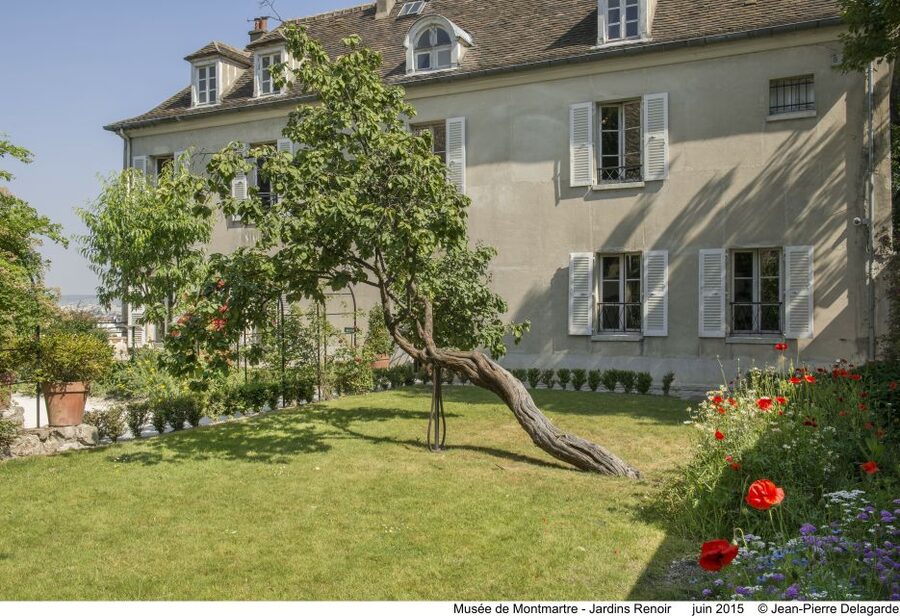
The gardens are not a minor extra. They change the pace of the visit. After the rooms, paintings, cabarets, and historical information, you can step outside into the Renoir private garden and take a quiet break.
The gardens contain abundant plant life and offer a different way to picture Montmartre. Instead of crowded streets and photo stops, you see the calmer side of the hill. The museum’s vineyard is another pleasant surprise. Montmartre is usually associated with artists and nightlife, but the vines recall the area’s older rural identity.
The garden can be enjoyable even in poor weather. A visit in the rain still offered enough visual interest to make the outdoor space worthwhile, though you will naturally get more from it on a dry day. I would not treat the garden as a quick walk-through. Give yourself time to sit, look back at the building, and let the museum’s story settle.
Café Renoir and a sensible break
Café Renoir is open from 11 a.m. to 6 p.m., while the museum operates from 10 a.m. to 7 p.m. The café gives you a convenient place to pause before or after the galleries, and the garden setting makes it more appealing than a standard museum snack counter.
A relaxed lunch or drink works well here. One visitor singled out the hot chocolate, and another enjoyed taking a break in the garden after viewing the exhibitions. Still, I would not plan your entire meal around the café. It has closed for a private event, and the food selection may not suit children with very specific tastes.
The practical approach is simple: use Café Renoir if it is open and convenient, but keep another food option in mind. The museum remains worthwhile even if the café is unavailable.
How the $16 ticket earns its place
At $16 per person, this is a reasonable Paris museum ticket, especially because it covers several parts of the property. You receive entry to the permanent collection, temporary exhibitions, gardens, the Renoir private garden, and the café area. Skip-the-line entry also saves you from waiting at the ticket counter.
The value is strongest for anyone interested in Montmartre’s cultural story rather than only its famous views. You are paying for context, atmosphere, and a quiet historic setting. The audio guide makes the visit more useful than a quick look at rooms and paintings without explanation.
It is less compelling if you want a large national collection or a full day of major masterpieces. This is a relatively small museum, and the advertised audio route takes 90 minutes. Its strength is focus. You learn one district well, then have time for the gardens and café.
The ticket is valid for one day, and the museum is wheelchair accessible. You show your voucher at the entrance. Last entry is 45 minutes before closing, so arriving late in the afternoon leaves less time for the galleries and garden.
Who will enjoy this museum most?
I would recommend it to first-time visitors who want to understand why Montmartre became associated with artists and cabarets. It also suits repeat visitors who have already seen Sacré-Cœur and want a quieter, more specific experience on the hill.
Art lovers will appreciate the links to Toulouse-Lautrec, Maximilien Luce, Herbin, and the artists connected with 12 Cortot. History-minded visitors will like the explanation of Montmartre’s annexation to Paris and the shift from countryside to urban district.
Families can enjoy the manageable size and garden, though the café may not satisfy picky children. The audio guide helps older children and adults follow the story, while younger children may prefer the outdoor space and theatrical cabaret material.
You should be comfortable with a visit that depends on reading, listening, and noticing details. There is no live guide included, so you will explore with the audio guide and museum information rather than a person leading the group.
Planning your visit without rushing
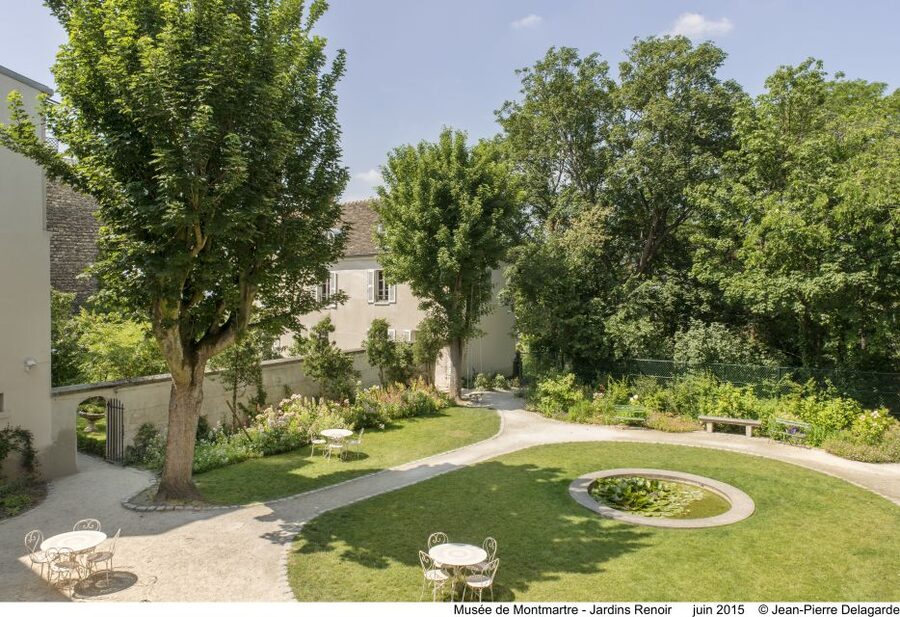
The museum is open from 10 a.m. to 7 p.m. Plan around two hours if you want the audio guide, permanent collection, temporary exhibition, and gardens. Add café time if you hope to sit down afterward.
Morning gives you the longest margin before closing, but the best time depends on your wider Montmartre plans. The museum works well as a calmer break after walking the district, or as a starting point before exploring the surrounding streets.
Do not leave at the first obvious exit. Check the signs, especially around the café and garden areas, since some exhibition spaces can be easy to miss. The building has several rooms and routes, and a little attention prevents you from skipping part of the visit.
The ticket allows free cancellation up to 24 hours before the visit, and you can reserve now and pay later. Those terms are useful if your Paris schedule is still shifting.
Should you book the Musée de Montmartre?
Book it if you want Montmartre explained from the inside, with artists, cabarets, performers, studios, and local change tied together in one compact visit. The gardens make it feel less enclosed, and the $16 price is fair for the exhibitions, audio guide, and outdoor spaces.
Skip it if your Paris schedule is extremely tight or you only want grand-scale art museums. Also remember that temporary displays, room access, and the café can change.
For most visitors with half a day in Montmartre, I would make room for it. The museum gives the hill a human scale, then sends you back into the streets with a much clearer idea of what made this corner of Paris so creative.
FAQ
How long does the audio guide take?
The audio tour lasts about 90 minutes. You can stay longer and continue exploring the museum and gardens at your own pace.
What does the ticket include?
It includes entry to the permanent and temporary exhibitions, the museum gardens, the Renoir private garden, the café area, and the audio guide. Skip-the-line entry is also included.
Is a live guide included?
No. The ticket includes an audio guide, but not a live guide.
What are the museum’s opening hours?
The museum is open from 10 a.m. to 7 p.m. The last entry is 45 minutes before the halls close.
When is Café Renoir open?
Café Renoir is open from 11 a.m. to 6 p.m. It can occasionally be unavailable for a private event, so it is wise not to depend on it as your only meal plan.
Is the museum wheelchair accessible?
Yes, the activity information states that the museum is wheelchair accessible.
Just added around Paris
- Versailles & Giverny Private Day Tour Luxury van & Private Guide★ 5.0 · 7 reviews
- Versailles Half Day Private Tour Trianons & Gardens Included★ 4.5 · 18 reviews
- The Tuileries Garden’s Classic Sights: A Self-Guided Audio Tour★ 4.0 · 3 reviews
- Versailles Small Group Tour from Paris Palace Gardens★ 5.0 · 2 reviews
- Versailles Palace & Giverny Private Tour with Lunch&Hotel Pick-up★ 5.0 · 48 reviews
- Versailles Bike Tour from Paris w. Gardens & Entry Tickets★ 4.0 · 16 reviews
- From Paris: Versailles Timed Entry Tickets & Gardens Access★ 4.0 · 35 reviews
- Versailles Palace and Garden Tour with Paris Private Transfers★ 5.0 · 58 reviews
Paris Garden Tours, compared.

Versailles Palace and Gardens Full Access Ticket
Read our review →
Skip-the-Line Tour of Palace and Gardens Access
Read our review →
Versailles Palace & Gardens with Transportation
Read our review →
Versailles Palace Guided Tour & Gardens Access
Read our review →
Giverny, Monet’s Home & Gardens Half-Day Trip
Read our review →
Giverny Day Trip with Audio Guide or Live Guide
Read our review →
Versailles Palace and Giverny Monet House Visit with Lunch
Read our review →
Giverny Monet’s Home and Gardens Half Day Tour from Paris
Read our review →Browse the lists this tour appears in