
Review · UK
Barbara Hepworth Museum & Sculpture Garden: entry to site.
Barbara Hepworth’s former home in St Ives gives you something a standard gallery cannot: her sculptures remain in the rooms and garden where she lived and worked. You move from archive photographs to paintings and drawings, then outside among large abstract sculptures set against subtropical planting.
I like the site’s intimate scale and its sense of place. I also like that the garden is not just a pleasant extra: the plants and open air change how you see the sculpture. The staff are described as friendly and ready to explain Hepworth’s life and work.
The main drawback is size. You can see the house, museum rooms, studios, and garden in roughly an hour, but there is no café, only one toilet, and little space for large bags. Plan this as a focused art visit, not a full-day attraction.
Key points before you go
- Hepworth’s former home remains largely unchanged, giving the visit a personal, domestic feel.
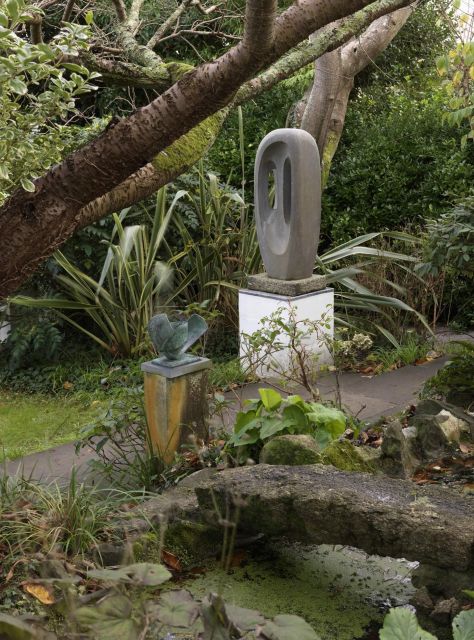
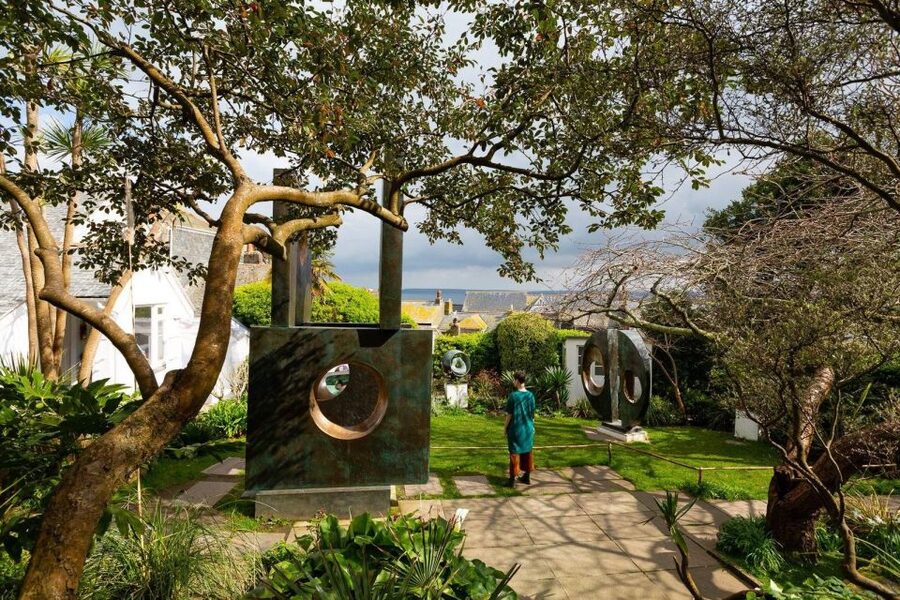
- The sculpture garden is the main visual treat, with larger works placed among subtropical plants.
- The indoor displays include archive material, paintings, drawings, and sculpture, offering useful context before you head outside.
- Allow about one hour, although art lovers may want longer to look closely.
- The site costs about $13 per person, a fair price if you value intimate museum visits and modern sculpture.
- Wheelchair access requires advance arrangement, and the only toilet is on site.
Why Barbara Hepworth’s home matters
Barbara Hepworth is closely linked with modern art in St Ives, but this visit is not simply a room full of famous objects. You enter the place where her daily life and artistic work overlapped. That makes the experience more direct than a large museum display, where sculptures can feel separated from the person who made them.
The site has been kept close to its earlier form. You are not walking through a rebuilt attraction designed to look historic. The preserved home, work areas, and garden help you picture Hepworth making decisions about shape, material, light, and placement.
I find this kind of museum especially useful if you are new to abstract art. A sculpture can seem puzzling when it sits alone on a white plinth. Here, the setting gives it scale and atmosphere. You see work indoors, then encounter larger pieces outside, where space and plants become part of the viewing experience.
The museum is also a good stop for people already familiar with Hepworth. You may recognize the language of pierced forms, smooth curves, and balanced volumes, but the garden gives the work a different effect from a book or gallery photograph.
More Museums in the UK:
- Natural History Museum e Kensington Garden
★ 3.3 · 3 reviews - Vienna: Skip-the-Line Sisi Museum, Hofburg and Gardens Tour
★ 4.8 · 5,918 reviews - Marrakech: Majorelle Garden, YSL, and Berber Museum Entry
★ 4.6 · 5,168 reviews
Begin with photographs and archive material
Your visit starts in the admission area, where chronological photographs and archive objects trace Hepworth’s career. This opening section is modest, but it does useful work. It gives you a basic timeline before you meet the art itself.
I recommend taking a few minutes here rather than hurrying upstairs. The photographs and artefacts help connect the artist’s public career with the private setting you are about to see. You can also use this area to get your bearings, since the museum is compact and the route is not a long, formal circuit.
The information is especially helpful if you know little about Hepworth or her relationship with St Ives. It also includes material connected with Ben Nicholson, whose name appears in the museum’s presentation of her life and artistic circle.
This is not a large archive exhibition, so do not expect a major research collection. Its purpose is orientation. The display prepares you to look at the objects with more attention, rather than leaving you to guess why the house and garden matter.
Hepworth’s former living rooms upstairs
From the admission area, you go upstairs into the museum rooms, located in Hepworth’s former living area. Selected sculptures, paintings, and drawings are placed within the rooms, allowing you to see different parts of her practice together.
The indoor collection gives you close views of smaller and medium-sized works. You can study surfaces, openings, outlines, and the relationship between solid material and empty space. These details are easier to miss outside, where large forms compete with sky and planting.
I like the way the domestic rooms soften the usual museum distance. The work does not feel detached from ordinary life. You are looking at art in rooms associated with the artist, rather than moving through a large institution with dozens of unrelated galleries.
The limited size can also be an advantage. You are less likely to suffer from museum fatigue. Instead of trying to see every period and every major work, you can focus on how Hepworth used shape and space.
That said, the selection cannot provide a full account of her career. If you want a broad survey of modern sculpture, this visit works best alongside another museum, not as your only source. Here, the value is setting and intimacy.
The garden turns sculpture into an outdoor experience
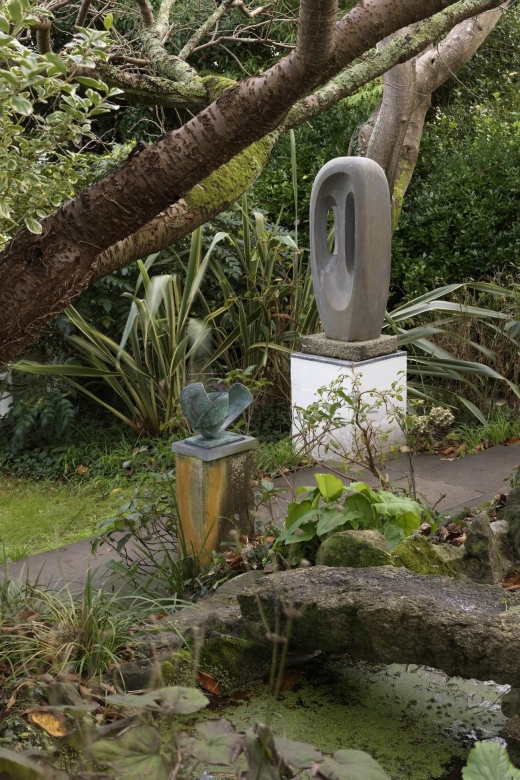
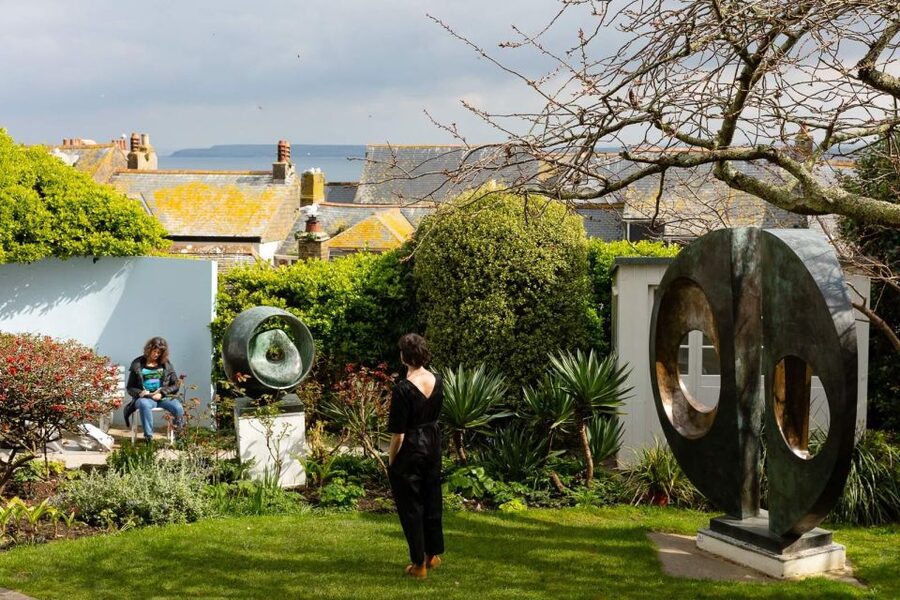
The garden is the heart of the visit. Outside, larger sculptures sit among subtropical plants, creating a setting where art, light, foliage, and open space work together.
You can look at a sculpture from several angles without being told exactly where to stand. The garden gives you room to move around the forms and notice how their appearance changes. A piece that seems compact from one position may open up when you walk to the side.
The planting is not a plain backdrop. Its texture and height affect your sense of the sculptures. Greenery can frame a simple outline, while bright open areas give a large form more visual weight. The garden also makes the work feel less severe and more connected to everyday surroundings.
I would leave enough time to pause here. An hour is enough for a sensible visit, but it can feel short if you want to sit with each sculpture and compare the indoor and outdoor displays. The experience is not about rushing from object to object.
The garden is also one reason this museum appeals to people who are not committed modern-art followers. You receive a pleasant outdoor visit as well as an art collection. The setting may help you appreciate Hepworth’s work even if abstract sculpture is not usually your first choice.
A few more garden visits around the UK worth a look
- London: Kew Gardens Admission Ticket
★ 4.6 · 3,252 reviews - Kew Gardens Entrance Ticket
★ 4.0 · 1,055 reviews - The Kensington Palace Gardens Royal High Tea
★ 4.5 · 934 reviews - London: Kensington Palace Gardens Tour with Royal High Tea
★ 4.6 · 325 reviews
Views of the studios add useful context
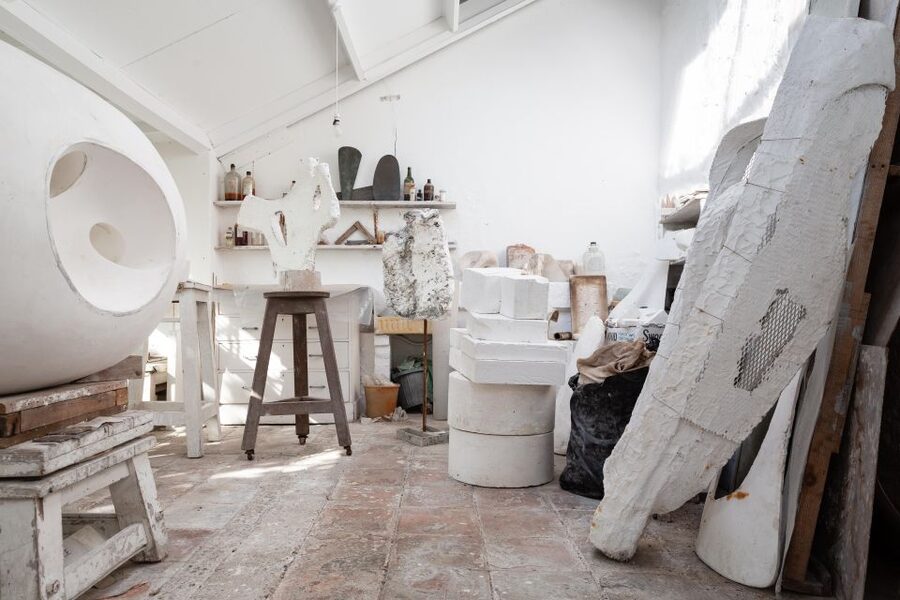
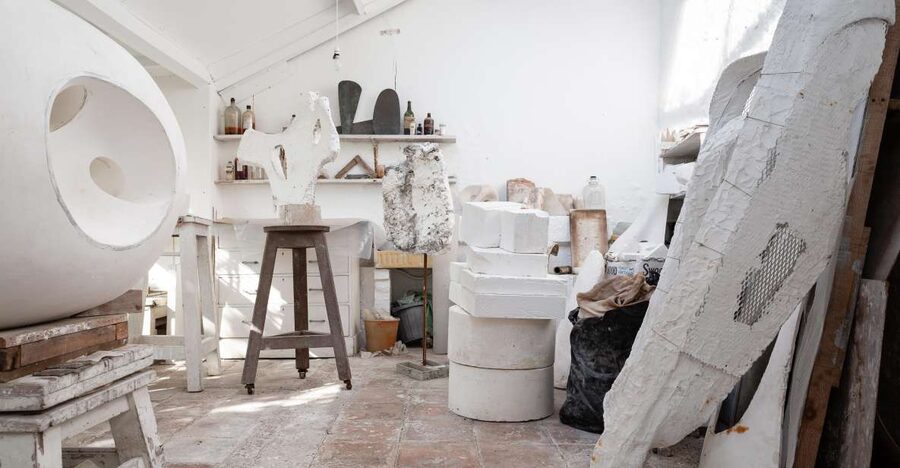
The site includes views of Hepworth’s work studios. These spaces help explain the practical side of sculpture, including the fact that large works require room, tools, and careful planning.
You may find the studios as interesting as the finished objects. They shift your attention from the polished result to the process of making. The museum does not present art as something that appeared fully formed. The working spaces remind you that sculpture develops through handling, testing, altering, and viewing from different positions.
The studio views are not described as a separate guided demonstration, so you should expect to look rather than take part in a workshop. That is still valuable. Even a brief look can make the scale of the garden sculptures easier to understand.
How long to spend at the museum
The admission is valid for one day, but the attraction itself is compact. Most people can see the archive display, indoor rooms, garden, and studio views in about an hour.
I would plan for at least an hour if you are visiting St Ives on a busy day. Add time if you enjoy reading archive information or want to examine the sculptures from several angles. The garden rewards a slower pace.
A one-day ticket is useful because it removes pressure to finish in a narrow time slot. You can check the available starting times when booking and arrange your visit around the rest of your St Ives plans.
Do not treat the one-day validity as a reason to expect a large complex. This is a small, focused museum. Its strength is the quality of the setting, not the number of rooms.
Is the $13 admission good value?
At about $13 per person, the ticket is reasonably priced for a specialist museum in St Ives. You are paying for entry to Hepworth’s original home and garden, archive displays, paintings, drawings, abstract sculpture, and views of the studios.
The value depends on what you want from a museum. If you prefer large collections with cafés, shops, and several hours of galleries, this may feel limited. If you value authentic settings and a direct connection between an artist and her working environment, the price is easier to justify.
The garden strengthens the value. You are not paying only to look at a few indoor pieces. The larger outdoor works and subtropical planting give the visit a second half with a different mood.
There is no café or refreshment service, and the souvenir range is limited. I would eat and use facilities elsewhere before arriving if you need a proper break. The site is best treated as one stop within a day in St Ives.
Practical access and restrictions
Wheelchair access is available through a side-street entrance, but you need to arrange this ahead of your visit. This is important because the standard route includes an upstairs museum area, so do not arrive expecting to sort out access at the last minute.
The site has only one toilet. Keep that in mind if you are visiting with children or planning to stay for a longer period.
Large bags, luggage, oversize items, and mobility scooters are not allowed. Food and drinks are also prohibited, as are smoking and vaping. You cannot bring drones, bikes, surfboards, skateboards, skates, tripods, or professional cameras.
Flash photography is not allowed, and you must not touch the exhibits. Assistance dogs are allowed, but other pets are not. These rules protect a small historic site where rooms and objects have limited space around them.
The experience is listed for small groups of up to nine participants. That fits the character of the museum, since tight rooms and a compact garden are easier to enjoy without a crowd. The information does not describe a named guide or a formal guided tour, so expect a self-directed visit supported by staff and displays.
Who will enjoy this visit most?
I would recommend the museum to anyone interested in Barbara Hepworth, modern art, sculpture, or artist homes. It is also a good choice if you want a quieter cultural stop in St Ives rather than another large attraction.
Garden lovers may enjoy it even if they are unsure about abstract art. The planting is an important part of the setting, and the outdoor sculptures give you something to see beyond the indoor collection.
Families can visit, but the strict rules matter. Children must not touch the exhibits, climb, feed animals, or bring food and drinks inside. Unaccompanied minors are not allowed, and the site is not designed as a hands-on activity.
You may want to choose another attraction if you need a café, generous facilities, step-free access without advance planning, or enough content to fill most of a day. This museum offers concentration rather than variety.
Booking flexibility and timing
You can cancel up to 24 hours before the visit for a full refund, and a reserve-now, pay-later option is available. That is useful if your St Ives schedule depends on weather or changing plans.
Check the available starting times before booking. Although the ticket is valid for one day, the site still operates around scheduled availability.
I would book ahead if Hepworth is a main reason for your visit, especially since the experience is small and limited to nine participants. The compact setting is part of its appeal, but it also means capacity is not unlimited.
Should you book the Barbara Hepworth Museum?
Book it if you want to see sculpture in the place where the artist lived and worked. The combination of archive material, indoor art, studio views, and a subtropical sculpture garden gives you a clear sense of Hepworth’s world without requiring a full day.
The best reason to go is the garden. The strongest indoor feature is the chance to see paintings, drawings, and sculpture within her former living space. Friendly staff and clear information add useful context without turning the visit into a formal lecture.
Skip it if you want a large collection, extensive shopping, food on site, or a long attraction with many activities. For most art lovers, though, the $13 admission is a sensible St Ives purchase. Allow about an hour, arrange access in advance if needed, and give the garden time to work its quiet magic.
FAQ
Where is the Barbara Hepworth Museum and Sculpture Garden?
It is in St Ives, in South West England, United Kingdom.
What does the ticket include?
The ticket includes entry to Barbara Hepworth’s original home and garden, archive information and images, abstract sculptures, paintings, drawings, a subtropical garden, and views of her work studios.
How long should I allow for the visit?
The site can be seen in about an hour, although you may want longer if you plan to read the archive material and spend time in the garden.
Is the ticket valid for one day?
Yes. The admission is valid for one day, with available starting times shown when you check availability.
Does the site have a café?
No. The site has no café or refreshment facilities, so plan to eat and drink elsewhere.
Is there a toilet?
Yes, but there is only one toilet on site.
Is the museum wheelchair accessible?
Yes, but wheelchair access is through a side-street entrance and must be arranged ahead of your visit.
Can I bring food, drinks, or large bags?
No. Food, drinks, luggage, large bags, and oversize items are not allowed.
Can I cancel the booking?
Yes. You can cancel up to 24 hours in advance for a full refund, and you can also reserve now and pay later.
Just added around the UK
- ULLAPOOL PORT Cruise Ship Tour, Ardvreck Castle, Rocks & More★ 5.0 · 5 reviews
- RHS Garden Wisley and Tea in the Garden Entry Ticket★ 4.0 · 10 reviews
- Oxford College Gardens Public Walking Tour★ 5.0 · 3 reviews
- Hillsborough Castle Gardens only Ticket★ 4.5 · 26 reviews
- Sky Garden Access Ticket + 2 Course Dinner at Larch Restaurant★ 4.0 · 4 reviews
- Secret Gardens of London Private Tour★ 5.0 · 13 reviews
- RHS Garden Hyde Hall★ 4.5 · 3 reviews
- Visit Kew Gardens & 3 Hour Westminster Walking Tour★ 5.0 · 6 reviews
UK Garden Tours, compared.

Step Inside the Game Show – The Crystal Maze LIVE Experience
Read our review →
Kensington Palace Gardens Tour with Royal High Tea
Read our review →
Sky Garden Early Access with Pastry and Hot Drink
Read our review →

Birmingham: Winterbourne House and Garden Admission Ticket
Read our review →Step Inside the Game Show The Crystal Maze Live Experience
Read our review →Browse the lists this tour appears in