
Review · CHIANG MAI
Cooking class in organic garden and local market tour ThaiCottage
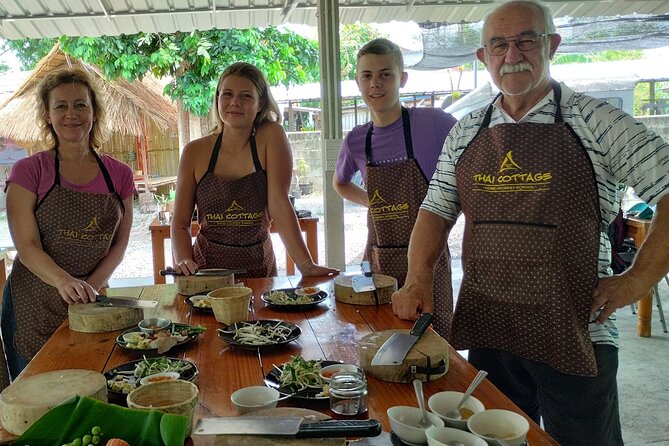
The best part of this Chiang Mai cooking class is the combination of market shopping, garden ingredients, and hands-on cooking. You do not just watch a chef work. You handle the curry paste, cook at your own station, and sit down to eat the meal you made.
I like the freedom to choose dishes instead of being locked into one menu. I also like the small maximum group of eight, which gives the instructor room to help. The main thing to consider is that the market visit may be fairly brief and partly self-guided, while some ingredients may already be cut or cooked before class.
Key points at a glance
- Make curry paste from scratch using a traditional mortar-and-pestle method.
- Choose your own Thai dishes, with options covering soup, stir-fry, curry, and dessert.
- Visit a local market before cooking and see the ingredients used in the class.
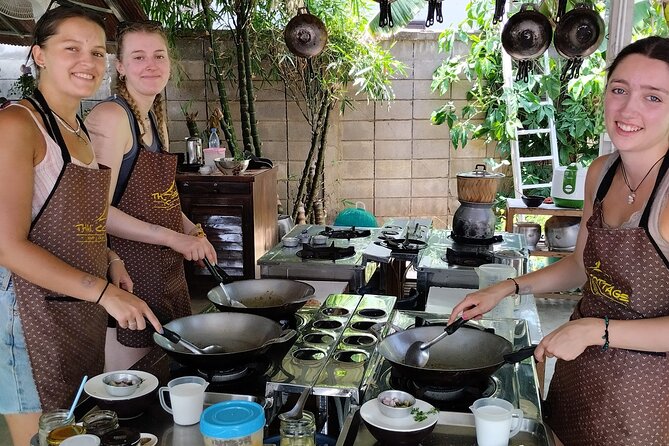
- Cook in an organic garden kitchen with your own cooking station.
- Learn mango sticky rice, including how to prepare the sticky rice.
- Keep the recipes afterward, with an online PDF recipe book in English.
A Chiang Mai cooking class built around choice
Thai Cottage Home Cookery School offers a four-hour food experience for about $35.86 per person. That price includes hotel pickup and return within three kilometers of Chiang Mai’s city area, ingredients, drinking water, the market visit, the organic herb garden, instruction, and recipes.
For a half-day activity, this is good value. You receive a meal, a lesson, a market introduction, transport within the stated pickup zone, and recipes you can use later. It costs less than many polished cooking schools while still offering the parts that matter most: individual cooking stations, fresh produce, and direct help from an instructor.
The class is also a good match if your group has different tastes. One person might choose curry, another soup, and another a stir-fry. That flexibility came up often in the feedback, and it is more useful than it sounds. Thai food can be spicy, sweet, sour, or herbal, so choosing your own dishes makes the meal more likely to suit you.
Instructors have included Toey, Tory, Kat, Mac, Wave, and Gataii. The strongest praise centers on patient instruction, clear English, good timing, and the ability to keep several dishes moving at once. Mac was noted for adjusting to different skill levels, while Toey and Kat were praised for friendly, capable teaching. The exact instructor depends on the date.
More Cooking Classes in Chiang Mai:
- We Cook Thai Home Garden Cooking School
★ 4.9 · 378 reviews - Cooking Morning Class Chiang Mai Visit Organic Garden and Market
★ 5.0 · 211 reviews - Cooking Evening Class Chiang Mai Visit Organic Garden and Market
★ 5.0 · 187 reviews
Starting at a local Chiang Mai market
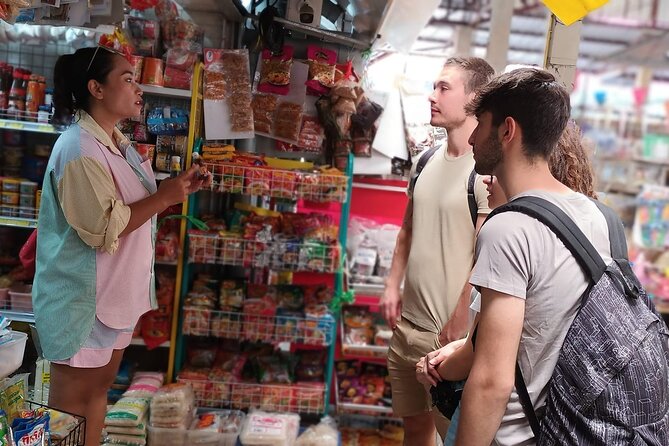
The class begins with hotel pickup, followed by a visit to a local market. This is a sensible first stop because Thai cooking can seem confusing when you meet unfamiliar herbs, vegetables, curry ingredients, and sauces all at once.
At the market, you can see the fresh ingredients used by local residents and learn what they look like before they reach the cooking table. The instructor explains the ingredients connected with the class, and you have some time to look around.
Keep your expectations in check. This is not presented as a long guided food tour. Some participants found the market portion too independent and wanted more explanation about the products. The ingredients used for class may also not all be purchased directly during your visit.
Still, the market adds useful context. A cooking demonstration alone can make Thai food feel like a list of hard-to-find items. Seeing those items in a real Chiang Mai market gives you a better chance of recognizing them later. If you want a more detailed market lesson, ask questions early and stay close to the instructor.
The market is also one reason to bring a little flexibility. Pickup timing and the order of activities can vary, and the experience depends on good weather. Comfortable shoes and light clothing make sense, since you will move between the market and an open-air garden kitchen.
From market produce to the organic herb garden
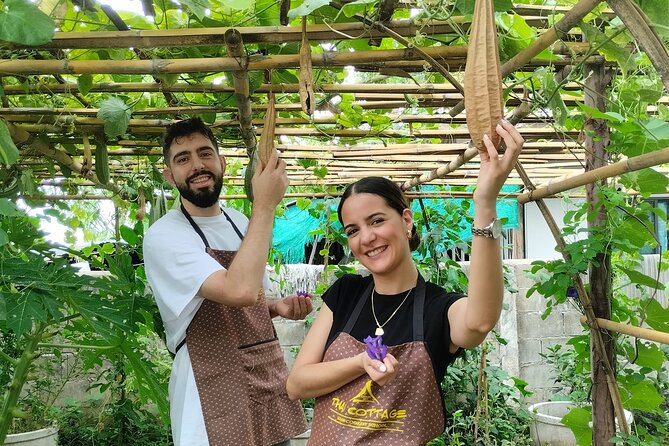
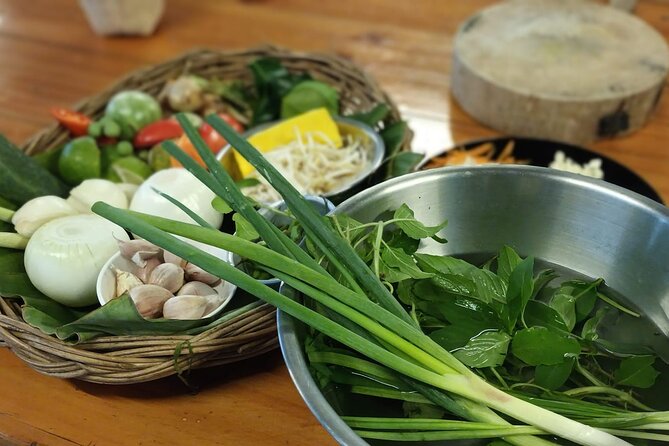
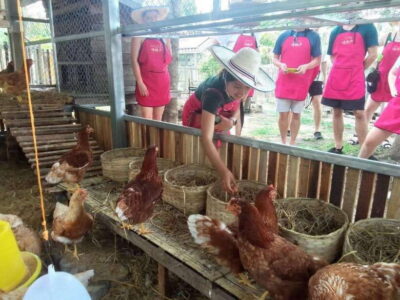
After the market, the group heads to an organic Thai herb garden. The garden supplies a setting for the class and helps connect the ingredients on the market table with the plants used in Thai food.
You may see the herbs and vegetables that go into the dishes before you cook them. That simple link is valuable. It is easier to understand a recipe when you can connect the aroma and appearance of an herb with the final curry or soup.
The kitchen is described as a traditional family-style organic garden kitchen. It is covered, which offers some protection from the sun and weather, but it is not presented as a formal restaurant kitchen. One participant felt the location and cooking tools could use improvement. That is worth noting if you expect a highly polished culinary studio.
The tradeoff is atmosphere. You get a more personal, home-style setting rather than a slick cooking classroom. The staff handle cleanup between dishes, and the class is organized so that several people can cook without the table becoming chaotic.
Your own station and a flexible Thai menu
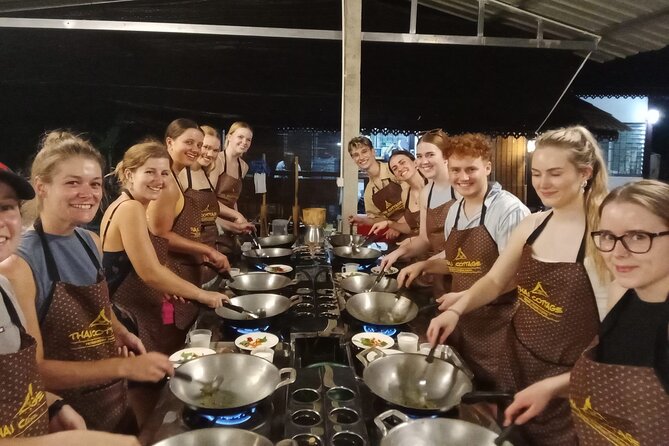
The cooking section is the heart of the experience. Each person has an individual cooking station, and the instructor demonstrates the steps before you prepare your dish.
The menu is organized by categories. The stated format allows you to choose six Thai dishes, with everyone also learning to make curry paste and sticky rice for mango sticky rice. In practice, the class is often described as four finished dishes: one soup, one stir-fry, one curry or main dish, and one dessert.
Because the supplied descriptions use both formats, it is wise to confirm the exact number of dishes when booking. The important point is that you receive several choices rather than a single fixed meal.
Common dish categories include:
- Soup
- Stir-fry
- Curry or another main dish
- Dessert, especially mango sticky rice
This setup works well for couples and families. If three people attend, each person can pick a different dish and share the results afterward. It also helps people with different spice preferences. You are not forced to spend the class preparing something you already know you will not eat.
The instructor keeps the group on schedule and helps with preparation, cooking heat, seasoning, and timing. Several instructors were praised for answering questions and handling different levels of kitchen experience. You do not need to arrive as a cook. The class is designed for direct guidance.
More Market Visits in Chiang Mai:
- Versailles Bike Tour with Market, Gardens & Guided Palace Tour
★ 5.0 · 1,121 reviews - Bangkok: Night Bike Tour with Temples & Flower Market Visit
★ 4.8 · 751 reviews - Thai Cooking Class with Market & Garden Tour
★ 4.9 · 249 reviews - Half day Thai cooking Class + Market tour+Garden tour
★ 5.0 · 237 reviews
Why making curry paste matters
The curry paste lesson is one of the most worthwhile parts. You make the paste from scratch rather than opening a ready-made packet. That lets you understand how Thai curry gets its smell, heat, and depth from a mixture of fresh ingredients.
The process also shows why Thai food depends so much on balance. The paste is only one part of the dish, but it shapes the final flavor. You can ask about the ingredients, how they are combined, and how the paste changes the curry.
This is the sort of lesson you can take home. You may not reproduce every ingredient exactly outside Thailand, but the basic method and proportions give you a starting point. The PDF recipe book helps, especially because it includes photos and instructions in English.
The lesson is hands-on, but it may not cover every preparation step from beginning to end. One participant noted that rice, potatoes, or chicken were already prepared before the class. That is common in a timed group lesson, since several dishes must reach the table within four hours. If doing every cut and boil yourself is important, ask how much advance preparation is involved.
Mango sticky rice and the final meal
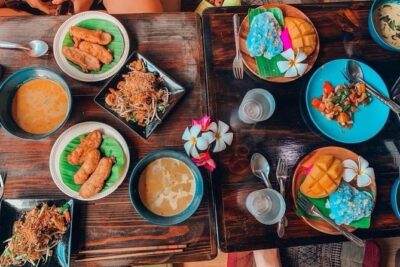
Everyone learns to prepare sticky rice for mango sticky rice. This gives the class a sweet finish and adds a classic Thai dessert to the menu.
The dessert is simple in appearance but depends on the right texture and sweetness. The class covers the sticky rice, which is then served with mango. It is a good choice for anyone who wants to understand more than curry and noodles.
After each dish is ready, you eat the food together in the garden kitchen. This family-style meal is part of the appeal. You get to taste several dishes, compare choices, and share the table with a small group.
The meal also gives you a chance to see how your decisions worked. If you added more spice, changed the seasoning, or chose a different dish from another person, you can compare the results. The food receives some of the strongest praise, with repeated comments about fresh ingredients and delicious final dishes.
Alcohol is not included, though it is available to purchase. Drinking water is included.
Group size, pace, and teaching style
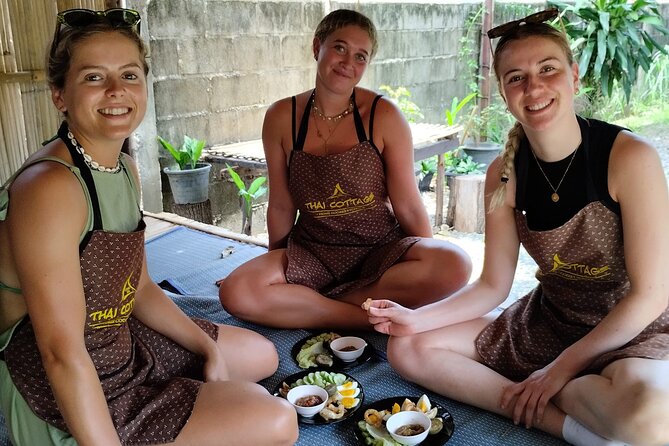
The class has a maximum of eight people. That is small enough for personal help but large enough to feel social. People often cook alongside others, and the shared meal creates an easy way to meet people without turning the class into a large workshop.
The pace is active. You will move from market visit to garden, then through several cooking stages. The staff clean between dishes and keep the work area moving, but you should not expect a slow, private lesson focused on one recipe.
The instructors are a major part of the experience. Toey has been praised for making the class fun and keeping the atmosphere relaxed. Kat was noted for detailed teaching and a well-run session. Mac received praise for patience with different skill levels and language abilities. Gataii was described as energetic and effective at getting the group working together.
Since teaching assignments can change, book this for the format rather than a guaranteed named chef. If you have dietary restrictions or strong spice preferences, contact the provider before the class rather than waiting until you arrive. The available information confirms menu choice, but it does not promise specific substitutions.
Hotel transfers and practical value
Pickup and return are included only within three kilometers of the city area. This is useful if your hotel is inside the stated zone, since you do not need to arrange a separate taxi for a morning or afternoon activity.
If you are staying farther out, transport is not included. Check your hotel’s distance before paying, and allow time to agree on the pickup point. One participant had trouble responding about pickup after being away from phone service, so do not leave the meeting details until the last minute.
The tour lasts about four hours. That is long enough for the market, garden, cooking, and meal without taking up an entire day. You will want to keep the rest of your schedule flexible, since cooking several dishes and eating them afterward can take the full allotted time.
The activity requires good weather. If conditions force a cancellation, you can choose another date or receive a full refund. For a full refund when you cancel yourself, cancel at least 24 hours before the start time. Changes or cancellations inside that window are not accepted.
Who should book this class?
I would recommend this for you if you want to do more than watch a chef demonstrate recipes. The individual station, dish choices, curry paste, and recipe PDF make it a practical introduction to Thai home cooking.
It suits couples, families, solo visitors, and small groups. It is especially useful for people who want to choose their own food, since the menu is not completely fixed. Beginners should feel comfortable, and more experienced cooks can still learn from the ingredients and curry-paste work.
It may not suit you if you want a long, highly detailed market tour or a professional kitchen with every ingredient prepared from scratch in front of you. The market section may feel short, and some advance food preparation takes place. The setting is home-style rather than luxurious.
Should you book Thai Cottage Home Cookery School?
Book it if you want a friendly, hands-on half-day that combines food, local shopping, garden ingredients, and a shared meal. At $35.86, the combination of transport within the pickup zone, ingredients, instruction, food, and recipes offers solid value.
Choose another type of class if your priority is a serious culinary course, a long market lecture, or complete control over every preparation step. For most people looking for an accessible Chiang Mai food experience, the flexible menu and personal cooking stations make this a strong choice. Confirm the exact dish count and pickup details before you go.
FAQ
How long does the cooking class take?
The experience lasts approximately four hours, including hotel pickup, the market visit, the organic garden, cooking, and the final meal.
Is hotel pickup included?
Yes, round-trip hotel transfer is included for hotels within three kilometers of the Chiang Mai city area.
What happens at the local market?
You visit a local market, see fresh food and vegetables used by the community, and learn about ingredients connected with the cooking class. Some time is provided to look around.
Is the market tour fully guided?
The instructor explains ingredients used in the class, but the market visit may also include time for you to explore independently.
How many people can join the class?
The group has a maximum of eight travelers.
Can I choose what I cook?
Yes. You can choose from available Thai dishes in different categories. The descriptions include soup, stir-fry, curry or a main dish, and dessert.
Will I make curry paste?
Yes. Everyone makes curry paste from scratch as part of the class.
Is mango sticky rice included?
Yes. Everyone learns to prepare sticky rice for traditional mango sticky rice with mango.
Are drinks included?
Drinking water is included. Alcoholic drinks are not included, but they are available to purchase.
What is the cancellation policy?
You can cancel at least 24 hours before the experience starts for a full refund. Cancellations or changes made less than 24 hours before the start time are not accepted. If bad weather causes the provider to cancel, you can receive a full refund or choose another date.
More Workshops in Chiang Mai
- Chiang Mai: Half Day Cooking Class at Organic Farm
★ 4.8 · 96 reviews - Morning Cooking Class in Traditional Pavilion with Beautiful Garden – Chiang Mai
★ 4.0 · 5 reviews - Evening Cooking Class in Traditional Pavilion with Beautiful Garden – Chiang Mai
★ 5.0 · 3 reviews - Anggrek Putih Lombok Cooking Class
★ 5.0 · 253 reviews
More Shopping Tours in Chiang Mai
- National Mall Tour with 10+ Stops, Boat Cruise, Entry Tickets
★ 4.5 · 1,212 reviews - Seoul: Mt.Seorak, Nami Island & Korean Garden, No Shopping
★ 4.8 · 614 reviews - National Mall Tour with 10 Stops & U.S. Capitol or Museum Entry
★ 4.5 · 331 reviews - Bangkok: Night Bike Tour with Temples & Flower Market Visit
★ 5.0 · 223 reviews
Just added around Chiang Mai
- One day Doi Inthanon National Park & Trekking on Kew Mae Pan★ 5.0 · 12 reviews
- One Day Tour Doi Suthep Temple, Palad Temple, Orchid Farm, Longneck hill tribe village (Private tour)★ 5.0 · 7 reviews
- Morning Cooking Class in Traditional Pavilion with Beautiful Garden – Chiang Mai★ 4.0 · 5 reviews
- Inthanon Small-Group with Kew Mae Pan Trail from Chiang Mai include Lunch★ 4.5 · 16 reviews
- Doi Suthep Temple, Pha Lat Temple, Sticky Waterfall, Orchid farm★ 5.0 · 31 reviews
- Evening Cooking Class in Traditional Pavilion with Beautiful Garden – Chiang Mai★ 5.0 · 3 reviews
- Private Tour Doi Inthanon, Trekking Kew Mae Pan Nature Trail★ 5.0 · 11 reviews
- From Chiang Mai: Temples, Sticky Waterfall, and Orchid Farm★ 4.8 · 52 reviews
Chiang Mai Garden Tours, compared.

Doi Inthanon Park with Kew Mae Pan Hike Day Trip
Read our review →
Cooking Morning Class Chiang Mai Visit Organic Garden and Market
Read our review →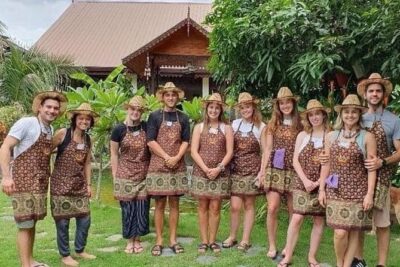
Cooking Evening Class Chiang Mai Visit Organic Garden and Market
Read our review →

Doi Inthanon National Park & Hike at Kew Mae Pan
Read our review →
Browse the lists this tour appears in