
Review · GERMANY
Private Tour of Nymphenburg Palace and Gardens
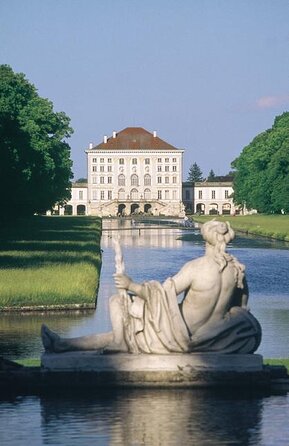
Nymphenburg Palace is more than a grand set of royal rooms. Its real reward is the combination of palace, immense gardens, fountains, and four eccentric pavilions, from a Rococo hunting lodge to a shell-covered hermitage. Tom Mills guides this private tour in English and brings visual aids, royal gossip, and useful Munich context.
I like the personal pace and the chance to ask questions without a large group pressing onward. I also like that public transport and admission tickets are handled for you, while the itinerary leaves time to explore on your own. The main caution is walking: you will cover a lot of ground, and the trip begins with public transport from Munich’s main station.
Key points to know before you book
- Four garden pavilions add real value: Amalienburg, Badenburg, Pagodenburg, and Magdalenenklause turn a standard palace visit into a wider look at court life.
- Tom Mills leads the tour: He uses visual aids and mixes royal history with stories about the people who lived and worked here.
- The tour is truly private: Only your group takes part, so you can ask questions and adjust the pace.
- Plan for substantial walking: The palace grounds are extensive, and the garden section is a major part of the experience.
- Winter changes the itinerary: The four pavilions close from October 16 through March 28, while the Marstallmuseum is offered during that period.
- The price is $192.77 per person: That is a serious cost, but it includes admission, public transport, and about five hours with a dedicated guide.
Why Nymphenburg works so well as a private tour
Nymphenburg was built as a royal summer residence for Bavaria’s ruling Wittelsbach family. The setting lets you see both sides of court life: polished ceremonial rooms on one hand, and private retreats, hunting spaces, swimming facilities, and religious hideaways on the other.
That breadth is the reason I would choose a private guide here instead of relying only on an audio guide. The palace rooms can be beautiful but somewhat formal. A good guide gives you the human stories behind the walls, explains how court life functioned, and helps you connect the palace to Bavaria’s wider political story.
Tom Mills is the guide named for this experience. He has lived in Munich for more than a decade and is originally from the United Kingdom, so the tour is offered in clear English. His approach includes humor, historical explanation, and visual material showing the royal family and their relationships.
The private format matters. You can stop to ask about a painting, spend longer in a room that catches your eye, or slow the pace if the weather is hot. Tom has also adjusted the walking speed to suit older visitors, according to the tour details. That sort of flexibility is hard to get on a fixed group excursion.
More Palace and Castle Gardens in Germany:
- Hanover: Royal Gardens of Herrenhausen Guided Tour
★ 4.6 · 78 reviews - Heidelberg: Heidelberg Castle Garden & Outside Private Tour
★ 4.9 · 18 reviews - Paris: Versailles Palace and Gardens Full Access Ticket
★ 4.6 · 41,579 reviews
Meeting Tom at Munich Hauptbahnhof
The normal meeting point is Munich Hauptbahnhof, the city’s main train station. You meet Tom there between 9:30 and 10:00 in the morning, then travel to Nymphenburg by public transport.
This arrangement is practical because the station connects with S-Bahn, U-Bahn, buses, and trams, and it puts you near the transport needed for the palace. Tom handles the transport and palace entry tickets, so you do not have to work out the route or ticket machines before the tour begins.
There is one detail worth taking seriously: this is not a door-to-door palace tour. You will walk through the station and use public transport before reaching Nymphenburg. One guest expected less walking and found the journey tiring, especially after arranging a hotel meeting point. The guide explained that the hotel request added only five to ten minutes, but the larger point remains: bring comfortable shoes and expect movement before the palace visit even starts.
Tom has sometimes met groups at their hotel by prior arrangement, but the stated meeting point is Hauptbahnhof. Confirm the exact plan after booking, since the tour requires coordination and confirmation is subject to availability.
Inside Nymphenburg Palace: royal rooms and court drama
The first major part of the visit takes you through Nymphenburg’s Baroque palace. You will hear about the Wittelsbach rulers, their ambitions, family tensions, and the everyday machinery of court life.
The guide’s approach is not limited to dates and architectural labels. Expect discussion of aristocratic flirting, succession struggles, royal personalities, and the daily work of servants. That helps make the palace feel less like a museum of furniture and more like a working residence where public ceremony and private behavior collided.
The Grand Hall is one of the visual highlights. Its scale and decoration can make a strong impression, especially if you have already seen Munich’s smaller historic interiors. Tom also uses visual aids to help explain the family tree and the people connected with the palace, which is useful because Bavarian royal names and marriages can become confusing quickly.
You are not rushed through every room. The guided explanation is followed by free time to look around on your own, a small but important advantage of a private visit. You can use that pause to study the details, revisit a favorite room, or simply enjoy the space without listening continuously.
A fair comparison is Munich’s Residence. If you visit both, some of the royal interiors may feel familiar in their opulence and ceremonial purpose. Nymphenburg earns its place on your schedule because the palace visit is only one part of the outing. The gardens and small buildings give this tour a different character.
The gardens are the heart of the outing
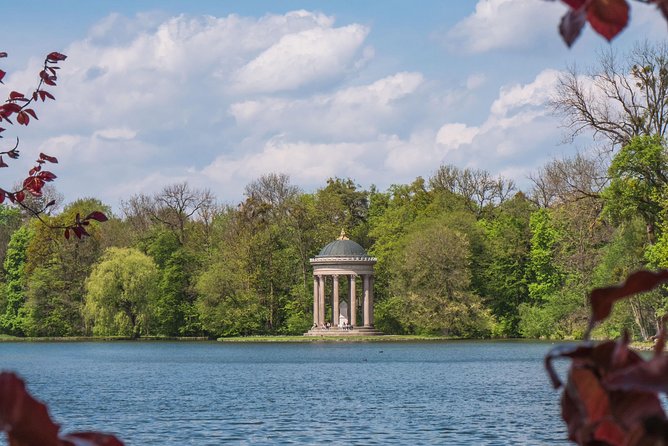
Allow plenty of energy for the grounds. The gardens combine formal French planning with more natural English-style sections, and the route takes you past fountains, statues, water features, and the four park pavilions.
I would not treat the garden walk as an optional extra. It is a large part of what makes Nymphenburg different from an indoor palace tour. You see how the royal family used the property for display, leisure, hunting, bathing, religious retreat, and escape from court routine.
The scale also explains the walking warning. The listed palace stop lasts about four hours, and that time includes both the interior and the grounds. The overall experience lasts about five hours, so this is not a quick photo stop between city sights.
The garden route can be adapted to your interests. You might spend more time on architecture, royal life, or the practical way the estate functioned. The private format gives Tom room to answer questions instead of delivering the same script to a large group.
More Private Garden Tours in Germany:
- Private Munich Rickshaw City Tour and English Garden
★ 5.0 · 49 reviews - Private and full rickshaw tour in the English Garden
★ 4.5 · 10 reviews - Berlin: Potsdam & Sanssouci Gardens Private Tour With Jacob
★ 4.8 · 8 reviews - Munich Private City Bike Tour and English Garden
★ 4.5 · 2 reviews
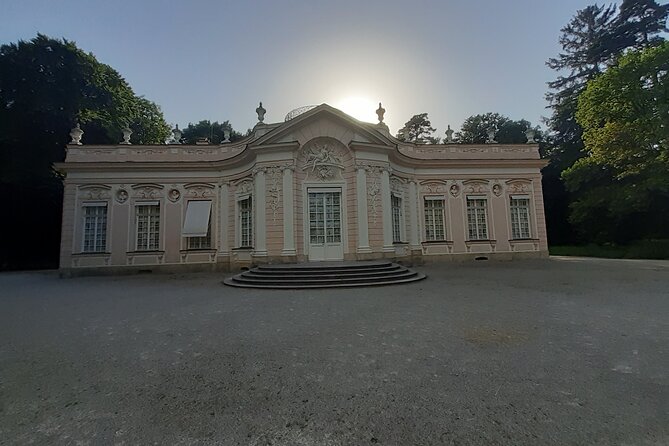
Amalienburg: a Rococo hunting lodge
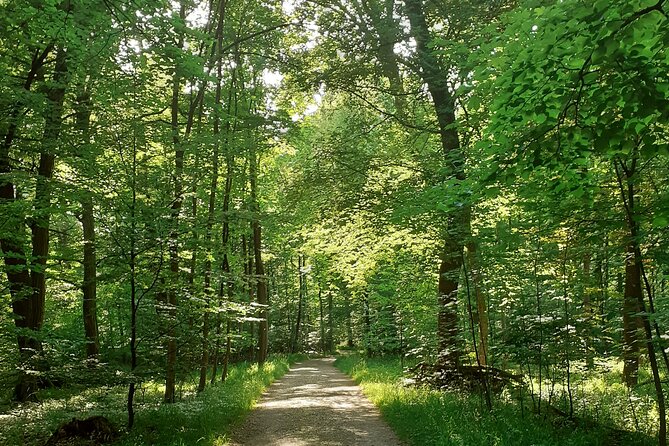
Amalienburg is a small hunting lodge built for an empress and one of the most decorative buildings in the park. Its Rococo design offers a sharp contrast to the larger, more formal palace.
The pavilion is included in the admission and receives about ten minutes in the stated plan. That may sound short, but the building is compact, and the point is to understand its role as a pleasure retreat rather than spend a full hour indoors.
This is one of the stops where a guide adds useful context. On your own, you can admire the decoration. With Tom, you can connect the building to the leisure culture of the Bavarian court and see how a hunting lodge could also serve as a stage for display and private entertainment.
Amalienburg is closed from October 16 through March 28, so check your travel dates before assuming every pavilion will be open.
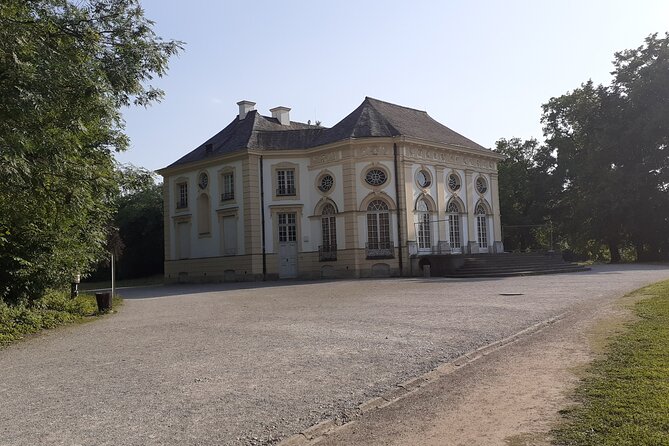
Badenburg: a palace built around swimming
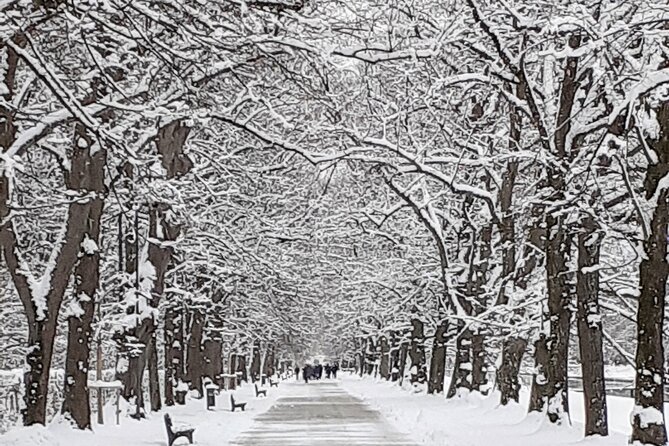
Badenburg is an unusual royal building because its central feature was a Baroque swimming pool. It belonged to Elector Max Emanuel and shows a different side of court life from the throne rooms and formal reception halls.
The building takes about ten minutes on the planned route. That is enough for a focused explanation of why a royal bathing facility mattered and how it fit into the wider estate.
For me, this is the sort of detail that gives Nymphenburg its charm. A large palace can blur into a sequence of grand rooms. A royal swimming palace is much easier to remember, and it reveals how the rulers used the grounds for comfort and pleasure as well as ceremony.
Badenburg closes during the same October 16 to March 28 period as the other garden pavilions.
Pagodenburg: a Chinese-inspired pleasure palace
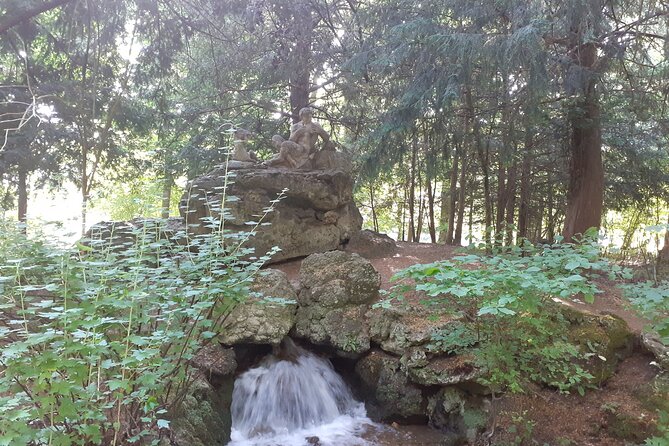
Pagodenburg was the first pavilion built by Elector Max Emanuel. Its design reflects the period’s fascination with Chinese-inspired decoration and small pleasure palaces.
The visit lasts about ten minutes. It is not a separate full tour, but it helps show how the Nymphenburg grounds were planned as a collection of different moods and architectural ideas.
I like this stop because it breaks the assumption that the estate is simply a French-style royal palace with symmetrical gardens. The pavilions give you a more personal view of the rulers’ tastes, hobbies, and desire for secluded spaces away from formal court business.
Pagodenburg is closed from October 16 through March 28.
Magdalenenklause: a hermitage with a shell grotto
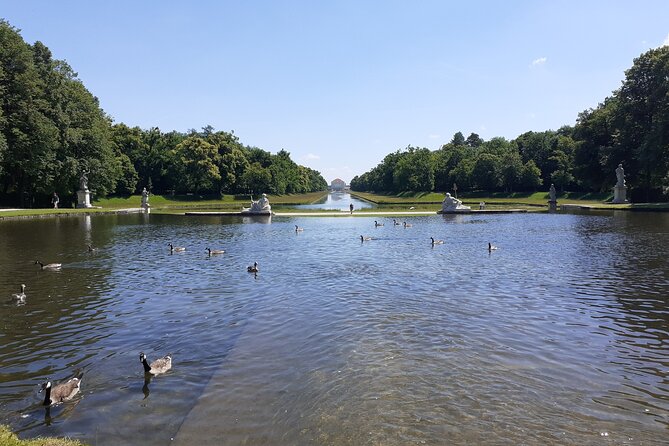
Magdalenenklause served as a retreat where Bavarian electors and kings could withdraw from court life for contemplation and Bible study. Its purpose is quieter than the hunting lodge or bathing palace, but it may be the most atmospheric stop.
The building is noted for its shell grotto and a spring associated with miraculous powers. Those details give the visit a more unusual edge than another decorated state room. You see how the royal estate made room for religious thought and solitude as well as parties and display.
Tom’s historical storytelling is especially useful here because the building’s meaning is tied to behavior and routine. It was not simply a decorative folly. It offered a place to step away from the public role of monarchy.
Like the other three garden pavilions, Magdalenenklause is closed from October 16 through March 28.
The Marstallmuseum in the colder months
The seasonal schedule reverses for the Marstallmuseum. This carriage museum is available only from October 16 through March 28, while the four garden pavilions are closed.
The museum displays carriages connected with the Wittelsbachs and adds another practical layer to royal life. Carriages show how rulers traveled, represented status, and moved between residences and public events.
If you visit in winter, the Marstallmuseum gives the tour a useful indoor alternative. If you visit between March 29 and October 15, the four garden pavilions are the stronger part of the outdoor itinerary, while the carriage museum is not included.
This seasonal difference is important when comparing dates. The tour is not identical throughout the year, and the advertised stop list reflects that.
How much value do you get for $192.77?
At $192.77 per person, this is not a budget palace visit. You are paying for a private guide, included admission, public transport, planning help, and roughly five hours of attention rather than simply paying to enter the building.
The price makes more sense for couples, families, or small groups who want a tailored visit. A larger private group may also benefit from the listed group discounts, though the exact discount should be confirmed before booking.
I would not choose this tour if you only want to see the Grand Hall, take a few photographs, and move on. A basic palace admission will suit that plan better. I would consider the price worthwhile if you want the estate explained as a whole, need help with the transport, or prefer asking questions as you go.
The included tickets remove some common travel friction. You do not have to arrange the tram or palace admission yourself, and Tom has been praised for arriving prepared with tickets and a clear meeting plan. That convenience has real value in a half-day outing.
The strongest value comes from the garden pavilions and the guide’s interpretation. If you skip the garden walk because of time or fatigue, you lose much of what makes this experience distinctive.
Who should book this private Nymphenburg tour?
I would recommend it to you if you want history told through people, family connections, and everyday court behavior rather than a list of construction dates. It also suits visitors who prefer a calm pace and like to ask questions.
It is a good fit for:
- Couples who want a private half-day outing
- Families who benefit from a flexible pace
- First-time visitors to Munich who want transport and tickets organized
- History enthusiasts interested in Bavaria’s royal family
- Anyone who wants to see the gardens and all four pavilions in season
I would think twice if long walks are difficult for you or if you prefer a short, self-guided museum visit. The tour includes public transport, a large palace complex, and extensive grounds. There is no promise of a low-walking route.
The experience has a 4.9 rating from 26 reviews, with 96 percent of customers recommending it. The praise centers on Tom’s preparation, friendly manner, humor, visual aids, and ability to adjust the pace. Those strengths matter because Nymphenburg rewards explanation more than speed.
Final booking advice
Book this tour if you want Nymphenburg to make sense as a living royal estate rather than a pretty palace on the edge of Munich. Tom Mills appears to be the main reason the experience feels personal: he brings visual material, explains the family connections, and adds practical Munich advice along the way.
Before booking, check two things. First, confirm your meeting arrangement at Hauptbahnhof and prepare for public transport and plenty of walking. Second, check the season: from March 29 through October 15, you can visit the four garden pavilions, while from October 16 through March 28, the Marstallmuseum replaces them.
You can cancel for a full refund up to 24 hours before the start time. For a private, five-hour visit with transport, admission, and a guide who can shape the day around your interests, the cost is high but defensible, especially if you share it with family or friends.
FAQ
How long does the Nymphenburg Palace tour last?
The experience lasts approximately five hours. The main Nymphenburg Palace and gardens visit is listed as about four hours, followed by short visits to the individual pavilions or the Marstallmuseum depending on the season.
Where does the tour begin?
The standard meeting point is Hauptbahnhof, Munich’s main train station, at 9:30 to 10:00 in the morning. The station is served by S-Bahn, U-Bahn, bus, and tram.
How do I get to Nymphenburg Palace?
You travel with your guide by public transport from Munich’s main train station. Public transport tickets are included.
Is admission to Nymphenburg Palace included?
Yes. Admission tickets for the palace and the listed seasonal attractions are included.
Is this a group tour?
No. This is a private activity, so only your group participates.
Is the tour offered in English?
Yes. The tour is offered in English and is led by Tom Mills of Tom’s Tours.
Can I visit the four garden pavilions all year?
No. Amalienburg, Badenburg, Pagodenburg, and Magdalenenklause are closed from October 16 through March 28.
What can I visit during the winter season?
From October 16 through March 28, the Marstallmuseum is included instead of the four garden pavilions. It displays carriages associated with the Wittelsbach family.
Can I cancel the booking?
You can cancel up to 24 hours before the experience start time for a full refund. Cancellations or changes made less than 24 hours before the start time are not accepted for a refund.
Just added around Germany
- Sanssouci Park: A Self-Guide Audio Tour of the Garden’s Landmarks★ 3.0 · 2 reviews
- Private Munich Rickshaw City Tour and English Garden★ 5.0 · 49 reviews
- City Bike and English Garden Tour★ 4.0 · 14 reviews
- Private and full rickshaw tour in the English Garden★ 4.5 · 10 reviews
- Munich Private City Bike Tour and English Garden★ 4.5 · 2 reviews
- Day Trip Flower Island of Mainau including Meersburg★ 4.5 · 7 reviews
- Amazing Schwetzingen Garden Tour★ 4.5 · 4 reviews
- E-ticket to Berlin Botanical Garden with Audio Tour★ 5.0 · 2 reviews
Germany Garden Tours, compared.

Stuttgart: Wilhelma Zoological-Botanical Garden Ticket
Read our review →
Hanover: Royal Gardens of Herrenhausen Guided Tour
Read our review →
From Berlin: Gardens & Palaces of Potsdam Bike Tour
Read our review →
Heidelberg: Heidelberg Castle Garden & Outside Private Tour
Read our review →Browse the lists this tour appears in