
Review · INDIA
Mughal Heritage Tour Including Lodhi Garden, Humayun Tomb and Akshardham Temple
Delhi’s past comes into focus through four very different stops: a quiet Sai Baba shrine, the tombs of Lodhi Garden, the grand Mughal geometry of Humayun’s Tomb, and the highly detailed Akshardham Temple. The route moves from older Islamic architecture to a modern Hindu temple complex, giving you a useful look at how Delhi’s faiths and dynasties shaped the city.
I like the private car and guide, which let you avoid figuring out Delhi’s broad, traffic-heavy streets on your own. I also like the mix of open gardens, historic stonework, and living places of worship. The catch is time: the advertised five to six hours can stretch to eight in afternoon traffic, and monument fees are not included in the $94 price.
Key points to know before booking
- Four very different stops: Sai Baba Temple, Lodhi Garden, Humayun’s Tomb, and Akshardham Temple give you more variety than a tour focused only on Mughal monuments.
- Private attention: Only your group takes part, so you can ask questions and may be able to adjust the route.
- A strong guide can make the day: Vijay, Sunil, and Kiran Singh are among the guides praised for clear English, good history explanations, and practical suggestions.
- Traffic affects the schedule: The plan says five to six hours, but one afternoon outing lasted eight hours.
- Akshardham has strict security: Leave phones, cameras, electronics, food, umbrellas, luggage, and other banned items at your hotel or in the free cloakroom.
- Budget for entry charges: Hotel transport, water, snacks, and the guide are included, but monument fees are extra.
What the $94 private tour really gives you
At $94 per person, this is not the cheapest way to see Delhi. It is a private half-day outing, however, with hotel pickup and drop-off, a private vehicle, a professional guide, bottled water, and light refreshments. That changes the value for you if you have limited time or do not want to negotiate Delhi’s traffic and taxi system yourself.
You are paying for structure and context as much as transport. A guide can explain why Humayun’s Tomb matters, point out the older tombs in Lodhi Garden, and help you handle the rules at Akshardham. The private format also gives you room to ask questions or request some adjustment, as one outing was changed to include other heritage sites.
The price does not include monument fees. The available details clearly identify Humayun’s Tomb as an extra-cost stop, while the other listed stops show free admission. I would still carry enough Indian rupees for tickets, deposits, or small practical costs, since the tour description puts the fee responsibility on you.
The route averages about five to six hours, but Delhi traffic is the wild card. One afternoon departure at 1 p.m. ran to eight hours. That is not a minor detail if you have a train, flight, dinner booking, or evening show planned. I would leave a generous buffer after the tour.
More Historical Tours in India:
- Jaipur Full-Day Heritage Tour with Guide
★ 5.0 · 18 reviews - Lodhi Garden Heritage Walk
★ 5.0 · 7 reviews - Delhi historical Gardens & Ruins
★ 5.0 · 3 reviews
Sai Baba Temple: a short spiritual opening
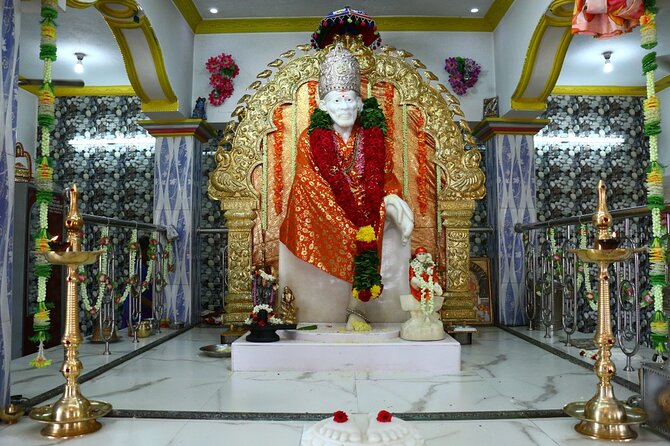
The first stop lasts about 20 minutes. Your guide explains the life and stories of Sai Baba, giving you a brief introduction to a figure important in Indian devotional life.
This is not a long temple visit, and you should not expect the same architectural focus as at Humayun’s Tomb. Its value is the human and spiritual beginning it gives the day. You start with a place of worship before moving into gardens, royal tombs, and a large modern temple complex.
Keep your clothing respectful from the start. The general dress guidance calls for smart casual clothing, with shoulders and knees covered at places of worship and selected museums. A light shirt and longer trousers or a below-knee skirt will make the day easier.
Lodhi Garden: Delhi’s quiet break from traffic
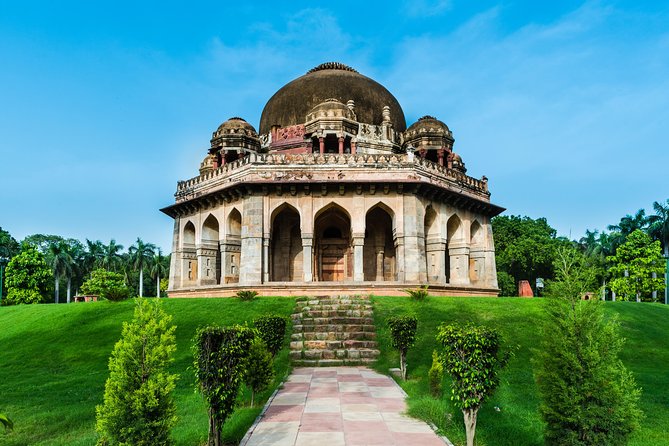
Lodhi Garden covers about 90 acres and contains the tombs of Mohammed Shah and Sikander Lodi. After the noisy roads, the open lawns and mature plantings offer a welcome pause. You walk rather than simply view the monuments from the car, so wear shoes that can handle paths and uneven ground.
I like this stop because it shows Delhi as a city of reused space and layered time. The tombs are not sealed away in a formal museum setting. They sit within a public garden, where the historic structures share space with ordinary city life.
The planned visit lasts around 50 minutes. That is enough for a walk and a basic explanation, but it is not a slow botanical tour or a detailed architectural study. If gardens are your main interest, you may wish for more time. If you are using the tour as a broad introduction to Delhi, the short visit works well.
A guide can help you notice the difference between the garden setting and the royal purpose of the tombs. Without that explanation, you might see attractive old buildings and move on. With context, the stop becomes a useful bridge between Delhi’s living present and its earlier ruling families.
Humayun’s Tomb: the architectural heart of the day
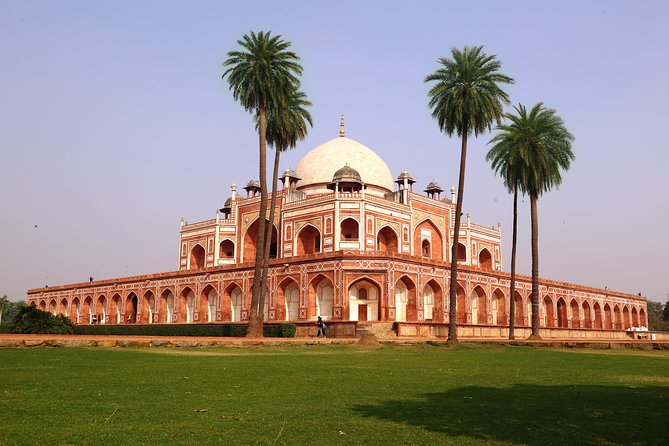
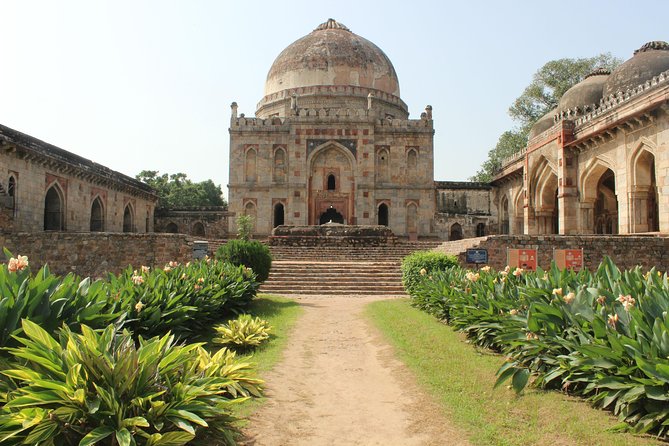
Humayun’s Tomb is the major Mughal stop, built in 1565 C.E. The visit lasts about an hour, giving your guide time to explain the design and the development of Mughal architecture in India.
This is where the tour earns much of its historical value. The monument’s formal layout and grand scale make a strong contrast with Lodhi Garden’s scattered tombs. You get a clearer sense of how royal burial architecture was planned, presented, and linked to power.
Expect an exterior-focused visit with time to walk through the grounds and study the structure. The guide’s explanation matters here. Several guides associated with this tour, including Vijay, Sunil, and Kiran Singh, were praised for clear English and useful explanations of Delhi’s past. Names are not guaranteed, but they give you a sense of the guiding style to hope for.
One important cost issue applies here: the entry fee is extra. The tour includes transport and the guide, not every monument ticket. Ask your guide about the current charge when you meet, rather than assuming the $94 covers all admissions.
The main drawback is that one hour can feel short if you enjoy photography or architectural details. You may have to choose between listening closely, walking the grounds, and taking pictures. Since Akshardham has a strict no-camera rule later, Humayun’s Tomb may be one of your better chances to record the day, subject to the monument’s current rules.
A few more garden visits around India worth a look
- Delhi: Yoga in Lodhi Garden
★ 4.9 · 53 reviews - Srinagar: Private Old City and Mughal Gardens Guided Tour
★ 4.9 · 7 reviews - Lalbagh Botanical Garden Early Morning Walk + Breakfast at MTR
★ 5.0 · 5 reviews - Sunrise Taj Mahal, Agra Fort, Red Taj and Moonlit Garden Private Tour
★ 5.0 · 4 reviews
Akshardham Temple: extraordinary detail, strict rules
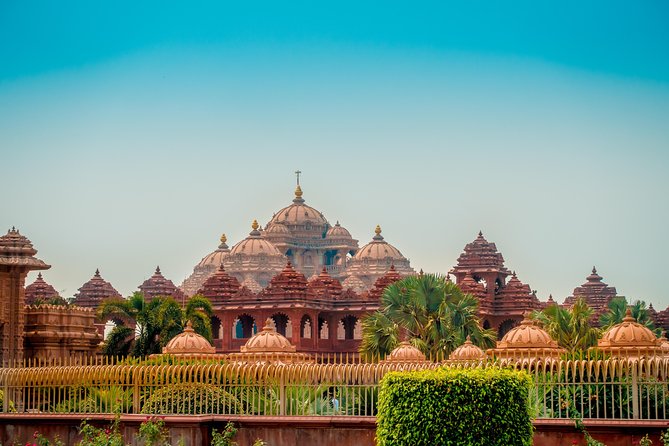
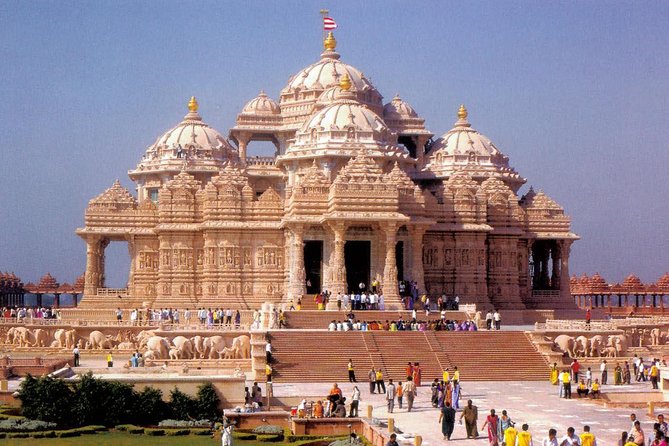
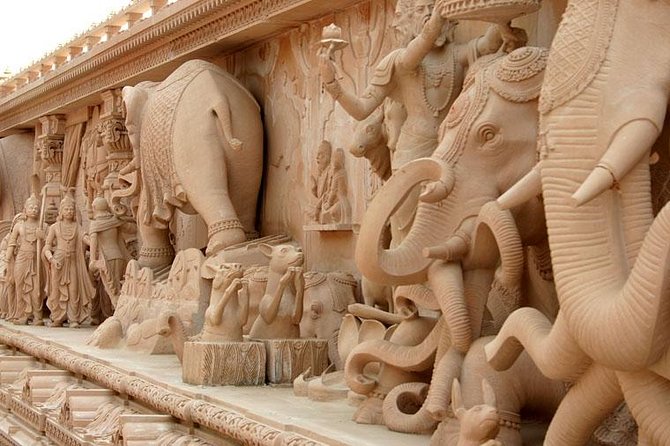
The final main stop is Swaminarayan Akshardham, a modern Hindu temple complex with 234 carved pillars, nine domes, and more than 20,000 statues of Hindu sages, saints, and other figures. The planned visit takes about one hour.
The scale and carved detail make this a dramatic ending. After the restrained Mughal forms at Humayun’s Tomb, Akshardham presents a different idea of sacred architecture, one built around dense ornament and religious storytelling. The contrast is one of the best reasons to choose this tour rather than a route limited to Mughal sites.
The security rules are serious. Mobile phones, cameras, USB drives, music devices, electronic items, weapons, umbrellas, luggage, toys, pets, food and drink, tobacco, alcohol, and drugs are not allowed inside the complex. A free cloakroom is available if you arrive with prohibited items, but the easiest plan is to leave them at your hotel.
Items listed as allowed include a wallet, shoes, belt, passport, money, a small purse, jewellery, baby food, a water bottle, and a jacket. Baby food and water bottles may receive further checks. Take care of your belongings, and do not bring a large bag simply because it might be accepted elsewhere in Delhi.
Dress is also controlled. Your upper clothing must cover the shoulders, chest, navel, and upper arms. Lower clothing must reach below the knees. If your outfit does not meet the rule, a sarong can be provided for a refundable deposit of 100 rupees. Return it when you leave.
Sundays and holidays can bring long queues. The temple is a daily place of worship, not just a sightseeing stop, so modest clothing and patient behavior matter. The complex is listed with free admission, but the tour notes that monument fees in general are extra. Confirm exactly what is included for your date.
Some outings connected with this route have ended with a dancing fountain or sound and light presentation. That feature is not promised in the core schedule, so treat it as a possible addition, not a guaranteed part of your booking. If your guide offers it, ask about extra time and any added charge before agreeing.
The guide and driver make or break the day

The best part of a private tour is not simply having someone point out buildings. It is having a person who can connect the sites and adjust the pace. Guides named Vijay and Sunil were praised for clear English, humor, and the ability to explain both old and recent Delhi. Kiran Singh was also singled out as a strong guide for an introduction to the city.
You should expect a guide and driver to meet you at your hotel at the agreed time. The private vehicle is useful because the stops are spread across Delhi, and public transport would make this particular sequence harder to manage in a half-day.
The guide may also suggest photo spots, food options, and other places to see. That practical help can be valuable on a first visit. Still, keep an eye on the route. One poor experience involved an unexpected shift toward shops and time spent without the guide, so I would confirm the planned stops at the beginning and speak up if shopping is not part of your plan.
The private format means your group alone participates. That gives you more control than a large coach tour, but it does not remove traffic or temple queues. It also means the quality of your individual guide matters a great deal.
Timing, traffic, and the best way to plan your day
The schedule adds up to roughly three hours of sightseeing: 20 minutes at Sai Baba Temple, 50 minutes in Lodhi Garden, one hour at Humayun’s Tomb, and one hour at Akshardham. The rest of the five to six hours goes to driving, pickup, drop-off, and city traffic.
Delhi traffic can be heavy, especially in the afternoon. One tour that began at 1 p.m. took eight hours, and the guide and driver had to work around congestion. I would avoid booking a tight evening connection after this experience.
Bring water only if you are willing to follow the security rules at Akshardham. Bottled water is included, but it may be checked there. Light refreshments are also included, though the information does not specify exactly what they are, so do not treat them as a full meal.
The route suits a first day in Delhi when you want a broad introduction rather than a narrow study of one dynasty. It also works for families and small private groups because most participants can take part, and the pace can be discussed with the guide.
Clothing and packing advice for a smoother visit
Dress for religious sites, not just for the heat. Cover your shoulders and knees, and choose clothing that covers the chest, upper arms, and navel for Akshardham. A light jacket or scarf can help you stay modest without carrying a large bag.
For the temple complex, bring only the basics:
- Passport, wallet, and money
- Belt and shoes
- Small purse
- Jewellery
- Jacket
- Baby food or water bottle if needed, subject to checks
Leave phones, cameras, electronics, umbrellas, luggage, food, and other banned items behind. The cloakroom is free, but avoiding the queue with prohibited belongings is simpler.
Free cancellation is available if you cancel at least 24 hours before the local start time. Changes or cancellations inside that window are not refunded, so keep that rule in mind when arranging flights and Delhi connections.
Who should book this experience?
I would choose this tour if you want a private introduction to Delhi’s history and religious architecture without arranging several separate rides. The combination of garden, tomb, temple, and shrine gives you a useful range in a short time.
It suits first-time visitors, small groups, families who prefer private transport, and anyone who values a guide’s explanations. It is also a good pick if you want hotel pickup and do not want to spend your first day working out Delhi’s roads.
I would hesitate if you want a slow, specialist visit to Humayun’s Tomb, long garden walks, or complete control over the clock. I would also hesitate if your schedule cannot absorb an eight-hour day. The monument fees, strict Akshardham rules, and possible queues deserve attention before you pay.
Final verdict: a useful Delhi sampler with one big warning
Book this tour if you want variety, private transport, and a guide who can put Delhi’s monuments into a clear story. The strongest features are the contrast between Lodhi Garden, Humayun’s Tomb, and Akshardham, plus the chance to ask questions without a large group around you.
The main warning is timing. Delhi traffic can turn a planned half-day into most of an afternoon, and the $94 price does not include monument fees. Confirm the route, ask about the guide, dress for the temple, and leave all electronics at the hotel. With those points handled, this is a solid first look at Delhi’s Mughal and spiritual sides.
FAQ
How long does the tour last?
The stated duration is about five to six hours. Heavy Delhi traffic can make the day longer, with one afternoon outing lasting eight hours.
What places are included?
The route includes Sai Baba Temple, Lodhi Garden, Humayun’s Tomb, and Swaminarayan Akshardham Temple.
Is hotel pickup included?
Yes. Hotel pickup and drop-off are included.
Is this a private tour?
Yes. Only your group participates in the private activity.
Are monument entry fees included?
No. Monument fees are not included in the tour price.
What is included besides transportation?
The tour includes a professional guide, bottled water, light refreshments, local taxes, all listed activities, and private-vehicle transport.
Can I bring a camera into Akshardham Temple?
No. Cameras and mobile phones are not allowed inside the complex. Electronic items can be left in the free cloakroom.
What clothing is required at Akshardham?
Your shoulders, chest, navel, and upper arms must be covered. Lower clothing must extend below the knees. A sarong is available for a refundable 100-rupee deposit if needed.
Can I visit Akshardham on a Sunday or holiday?
Yes, but the complex can be very crowded then, and you may need to wait in line for entry.
What is the cancellation policy?
You can cancel at least 24 hours before the local start time for a full refund. Cancellations or changes made less than 24 hours before the start are not refunded.
Just added around India
- Visit to Sahelion Ki Bari, Garden of the Maidens, Udaipur★ 4.0 · 2 reviews
- Kashmir Tulip Festival★ 5.0 · 43 reviews
- Delhi historical Gardens & Ruins★ 5.0 · 3 reviews
- Sunder Nursery Delhi’s Heritage Garden Walk Tour★ 5.0 · 3 reviews
- Lodhi Garden Heritage Walk★ 5.0 · 7 reviews
- Delhi Street Art Walk in Lodhi Art District with Chai & Food★ 5.0 · 34 reviews
- Dhobi Ghat, Ancient Stepwell and Lodhi Gardens Tour★ 5.0 · 2 reviews
- Private Half-Day Delhi Flower Market Tour★ 5.0 · 5 reviews
India Garden Tours, compared.

Private Jaipur Full-Day Tour with Block Printing
Read our review →
Private Custom Full Day Sightseeing Tour of Kolkata
Read our review →

Jaipur Tour by Tuk-Tuk or Car with Flower Market
Read our review →
Half-Day Guided Sightseeing Tour with Flower Market
Read our review →
Mumbai Morning Market Tour of Flowers, Fish, and More
Read our review →
Half or Full Day Sightseeing Tour with Flower Market
Read our review →Mumbai Morning Market Tour of Flowers, Fish, and More
Read our review →Browse the lists this tour appears in