

Review · ITALY
Amalfi Organic Lemon Tour & Tasting in the Historical Garden
The best part of this Amalfi lemon tour is that it takes you into the working terraces behind the town, where lemons grow on steep shelves of land held up by hand-built stone walls. Giovanna, a fourth-generation farmer, explains how the farm functions and why these old gardens are so hard to preserve.
I like the small-group setting and the personal link to the family farm. I also like that the tasting is not just a quick sip of limoncello: you get organic lemonade, lemon cake, and often other farm products such as candied lemon peel, honey, perfume, or a citrus liqueur such as mandaretto.
The catch is simple: this is a steep, stair-filled walk with no concrete paths or platforms. It is a poor fit for anyone with mobility, heart, or respiratory problems, and even able walkers should wear proper shoes.
Key points to know before booking
- A working Amalfi lemon farm: Walk through old terraces, chestnut pergolas, stone walls, water channels, and ancient cisterns.
- Giovanna leads the experience: She explains the farm’s family story, organic methods, citrus varieties, and the work behind each harvest.
- The tasting is the payoff: Try lemonade, lemon cake, and organic limoncello while looking over Amalfi and the sea.
- Expect lots of stairs: The route begins near central Amalfi but climbs through traditional terrace farming country.
- Best lemon color season: Amalfi lemons are yellow only between February and July, though the tour runs as a garden and farming experience beyond that period.
- Good value for a hands-on visit: At $59 per person, the price covers a small shared tour, guided walk, tastings, and access to a private agricultural setting.
Why this is more than a limoncello stop

Amalfi’s lemons are part of the town’s identity, but most sightseeing keeps you at street level. This tour shows you the hard work above the town, where every patch of soil has been built into a terrace and every basket of fruit once had to be carried down by people or mules.
The Amalfi Historical Garden is not a flat orchard. It is a form of vertical farming, shaped by steep hillsides and centuries of hand labor. Stone walls called macerine hold earth and rocks in place from one terrace to the next, while wooden pergolas support the lemon trees and help create shade.
That setting gives the visit its real value. You are not simply learning that Amalfi produces lemons. You are seeing the engineering, patience, and physical effort needed to grow them here.
The farm also presents agriculture as a way of life rather than a commercial display. The family’s approach centers on reuse, balance, and biodiversity. Water comes through old channels from clear springs, and the garden avoids concrete roads and platforms so the terraces remain close to their original form.
I find this especially worthwhile if you are tired of crowded waterfront stops and souvenir shops. The experience asks you to slow down and pay attention to the scent of the trees, the shape of the walls, and the view that opens between the branches.
A few more garden visits around Italy worth a look
- Sorrento: Lemon Garden Tour with Marmalade Tasting
★ 4.6 · 405 reviews - Sorrento: Walking Tour in Lemon Garden w/ Food Tasting
★ 4.8 · 72 reviews - Authentic Amalfi Lemon Tour & Tasting in the Historical Garden
★ 5.0 · 52 reviews
Meeting Giovanna at the garden gate
The tour begins at the gate of the Lemon Farm in central Amalfi. Exact meeting details are sent after booking, so check your confirmation rather than assuming the gate will be obvious from the main street.
If you are coming down from Pontone or Scala, contact the farm before walking all the way to the listed meeting point. The hosts may arrange to meet you along the route down to Amalfi.
Giovanna is a member of the family that owns and works the farm. Her presentation is one of the strongest parts of the visit because she connects practical farming details with her family’s story. She explains how organic and conventional groves differ, how the various citrus plants are handled, and what makes the local Sfusato lemon so distinctive.
Her English is clear, and the tour is conducted in English. She has also been praised for checking in with visitors before the tour and sending useful updates, a small touch that can matter in a place where directions and stairways are not always straightforward.
The group is shared but very small. One recent group had eight people, and that is a useful idea of the scale you may encounter. A small group makes it easier to ask questions and keeps the visit personal without turning it into a private tour.
Walking the ancient terraces
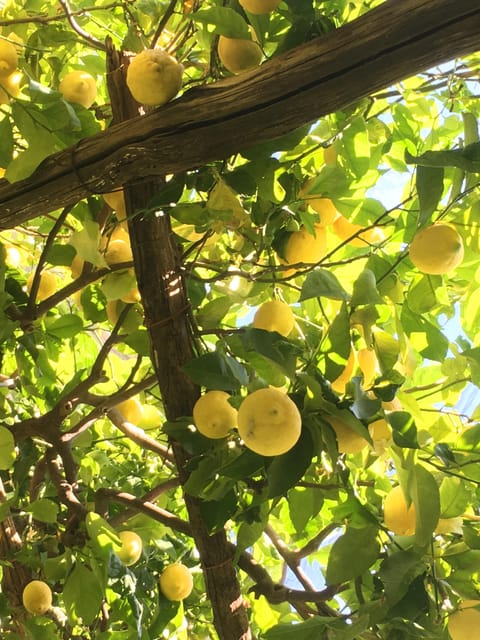
The guided walk lasts about 1.5 hours, though you should allow up to 2.5 hours for the full experience. The pace includes stops for explanation, photographs, and tasting, but this is still a walk through a steep agricultural site.
You will see lemon trees planted across terraces supported by dry stone walls. The branches are described as rough and thorny, so this is not a garden where you casually push through the trees. The guide explains how to approach and handle the plants, including how fruit is picked without damaging the tree or the person doing the work.
The walk also brings attention to old water systems. Cisterns and channels helped carry spring water to high terraces, solving a basic problem in a place where level ground is scarce. These features are easy to miss if you visit Amalfi only from the road, but they explain how the farms survived for generations.
Chestnut wood from local forests forms the pergolas above parts of the garden. The pergolas are both practical and beautiful, giving the lemons support while filtering the sun. Expect shifting shade, earthy paths, and views that appear through the foliage rather than a paved viewing platform.
You will also learn how fruit once moved from the upper terraces. Farmers carried baskets on their backs and shoulders, while mules helped with the heavier work. Women took part in this labor as well, a detail that gives a fuller picture of farm life than a simple explanation of harvest dates.
Sfusato lemons and other citrus varieties
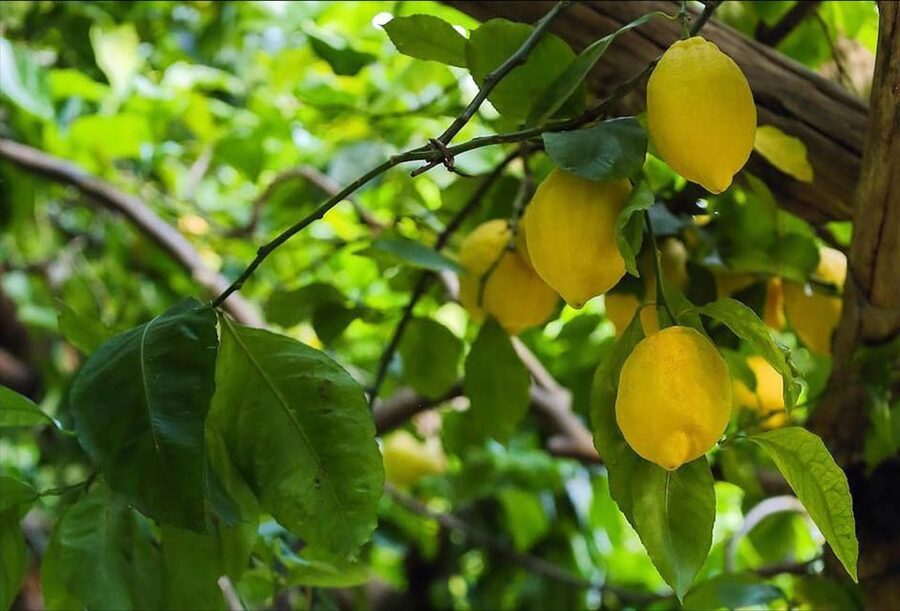
The Sfusato lemon is the star citrus of the Amalfi Coast, and the tour gives you a chance to see it in the setting where it is grown. You will also hear about other lemon varieties and citrus fruits found on the family property.
The exact appearance of the trees depends on the season. The farm notes that lemons are yellow only between February and July. If you visit outside those months, do not book expecting every tree to be heavy with bright yellow fruit. The garden, farming methods, views, and tasting remain the focus, but the visual experience will change.
The tour also explains the difference between organic and conventional cultivation. That matters here because the tasting lets you connect farming choices with what reaches your glass and plate. The family makes its own products from farm-grown lemons, and the guide explains how the fruit is used.
You may hear about bees and the role of agriculture in supporting them. The lesson is not only about citrus. It is about how soil, water, insects, plants, and people all depend on one another in a small farming system.
More Historical Tours in Italy:
- Sea, Volcano and History: Giardini Naxos, Isolabella, Etna and Taormina
★ 4.5 · 3 reviews - Aboriginal Heritage Walk – Royal Botanic Gardens Victoria, Melbourne Gardens
★ 5.0 · 314 reviews - Beijing Historical Tour II including Summer Palace, Lama Temple & Panda Garden
★ 4.0 · 187 reviews - Discover the Art of Ikebana in Tokyo’s Historic Yanaka District
★ 5.0 · 60 reviews
The tasting beside the Amalfi view

The tasting takes place during a relaxing break with a view across Amalfi and the blue sea. This is the moment when the physical work of the walk pays off, but it is also more than a photo stop.
The standard tasting includes three items:
- Organic lemonade
- Limoncello
- Lemon cake
The lemonade is refreshing after the uphill or stair-filled sections. The lemon cake gives you a taste of the fruit in a softer, sweeter form, while the limoncello shows how strongly the lemon peel can shape a drink.
Additional products may include candied lemon peel, honey, citrus perfume, or mandaretto. These extras are drawn from details shared about the experience, but the core promise is lemonade, lemon cake, and limoncello. Ask at the farm if you want to know what is being served on your date.
The organic limoncello receives especially strong praise. Even people who usually find limoncello too sharp or sweet may appreciate the farm’s version. You can also ask about buying bottles or other local products at special prices offered through the garden.
The setting adds something important. You are tasting products in the same agricultural world that produced them, with the trees, stone walls, and sea below you. That connection makes the tasting feel less like a sales counter and more like the natural finish to the walk.
The views and the quiet break
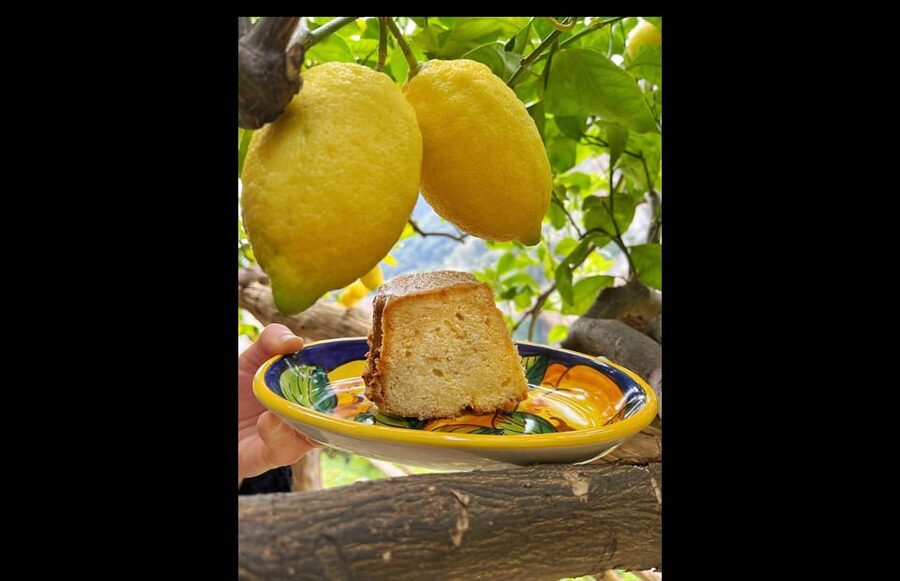
Amalfi can feel crowded, especially around the port and the central streets. The garden gives you a short escape without requiring a full-day trip away from town.
From the terraces, you look over Amalfi and the coast from a higher, quieter position. The view is not the only reason to book, but it is one of the experience’s best features. Sunlight filters through the branches, the scent of the trees hangs in the air, and the garden’s height gives you a different understanding of the town below.
I would not treat this as a formal scenic viewpoint with railings and a large platform. The farm deliberately avoids concrete construction. You are in an old working garden, so paths can be uneven and the setting remains rustic.
That is a benefit if you want something authentic and close to nature. It is a drawback if you need smooth walking surfaces, shade on demand, or easy access at every stop.
Is $59 a fair price?
At $59 per person, this is not the cheapest way to taste limoncello in Amalfi. You can buy a drink or lemon dessert in town for much less.
The price makes more sense when you consider what is included: a guided walk through a family farm, a very small shared group, explanations of local agriculture, access to historical documents, a scenic tasting, and several farm-made products. You are paying for time, access, and interpretation rather than just food.
The family also says that tour income helps support the garden. That matters because Amalfi’s terraces require constant care. Stone walls need repair, wooden pergolas age, water channels need attention, and the steep land makes routine farming difficult.
I consider the tour good value for people who enjoy food, gardens, local history, or traditional rural work. If your main goal is simply to drink limoncello, the price may feel high. If you want to understand why Amalfi lemons are part of the region’s culture, the cost is easier to justify.
Who will enjoy this tour most?

This is a strong choice for couples, families with older children, and anyone interested in organic farming, food production, or the quieter side of Amalfi. Teenagers can enjoy it too, especially if they like plants, unusual views, or hands-on food experiences.
It also works well for visitors who want a break from shopping. The garden is close enough to central Amalfi to fit into a day of sightseeing, yet it feels far removed from the waterfront.
You should choose another activity if stairs are difficult for you. The route includes steep inclines and many steps, and there are no concrete roads or flat platforms through the lemon groves. The experience is not suitable for people with mobility impairments, heart problems, or respiratory issues.
Wear comfortable clothing and sturdy shoes. Bring water, especially in warm weather, although the lemonade tasting provides a welcome refreshment during the visit.
Timing, cancellation, and practical planning
The tour lasts between 1.5 and 2.5 hours depending on the schedule and pace. Starting times vary, so check availability for your date.
You can cancel up to 24 hours in advance for a full refund. The reserve-now, pay-later option lets you hold a place without paying immediately, which is useful when Amalfi plans depend on ferries, buses, or changing weather.
The experience includes a shared tour in English. Accommodation pickup and drop-off are not included unless reserved in advance. Lunch or dinner is also not part of the standard tour, though you can ask the hosts about arranging it separately.
The meeting point and drop-off are both at the Lemon Farm unless special arrangements are made. Since Amalfi is full of stairs and turns, keep the confirmation message handy and contact the farm if you are unsure where to go.
Should you book the Amalfi Organic Lemon Tour?
Book it if you want a personal look at the farming tradition behind Amalfi’s lemons, not just another tasting in town. Giovanna’s family connection, the small group, the old terraces, and the final lemonade, cake, and limoncello make this a well-rounded half-day stop.
Skip it if you dislike stairs, have health concerns related to steep walking, or want a polished attraction with easy paths. The garden is beautiful precisely because it remains rustic and practical.
For most visitors who can handle the climb, I would put this near the top of an Amalfi itinerary. Aim for February through July if seeing yellow lemons matters to you, and wear shoes that can cope with uneven steps.
FAQ
Where does the Amalfi lemon tour begin?
The tour begins at the gate of the Lemon Farm in the Amalfi Historical Garden, near the center of Amalfi. Exact meeting details are provided after booking.
How long does the experience last?
The guided tour lasts about 1.5 hours. Allow between 1.5 and 2.5 hours for the full activity, depending on the starting time and pace.
What tastings are included?
The standard tasting includes organic lemonade, limoncello, and lemon cake.
Is the tour conducted in English?
Yes. The live tour guide speaks English.
Is the tour private?
No. It is a shared tour, but the group is kept very small.
Who leads the tour?
The tour is led by Giovanna, a member of the family that owns and works the organic lemon farm.
Are there many stairs?
Yes. The farm uses traditional Amalfi terraces, steep paths, and ancient stairways. There are no concrete roads or platforms through the lemon garden.
Is the tour suitable for people with mobility impairments?
No. The experience is not suitable for people with mobility impairments, heart problems, or respiratory issues.
When are the lemons yellow?
The farm states that the lemons are yellow only between February and July.
Can I cancel the booking?
Yes. You can cancel up to 24 hours before the activity for a full refund. You can also reserve now and pay later.
Just added around Italy
- Venice: panoramic lunch in St. Mark’s Square Royal Gardens★ 3.0 · 12 reviews
- Hidden Verona & Giusti Garden- 3 hour private walking tour★ 5.0 · 2 reviews
- Royal Gardens & St.Mark Basin View Casanova Aperitif★ 3.5 · 17 reviews
- Secret Gardens of Venice Walking Tour★ 5.0 · 60 reviews
- Secret gardens of Venice in the Dorsoduro district with Cichetti tasting★ 3.0 · 2 reviews
- Sea, Volcano and History: Giardini Naxos, Isolabella, Etna and Taormina★ 4.5 · 3 reviews
- Taxi Giardini Naxos★ 5.0 · 2 reviews
- Tour to Etna Volcano and Taormina from Giardini Naxos – Taormina★ 5.0 · 2 reviews
Italy Garden Tours, compared.

Borghese Gallery and Gardens Guided Small-Group Tour
Read our review →
Borghese Gallery & Gardens Small Group Guided Tour
Read our review →
Bioparco di Roma Zoological Garden Entry Ticket
Read our review →

Caserta Royal Palace & Gardens Small Group Tour with Shuttle
Read our review →
Giardini Naxos: Dolphin Searching Sunset Boat Tour
Read our review →
Pitti Palace, Boboli Garden, Palatine Gallery Tour
Read our review →Browse the lists this tour appears in