
Review · GERMANY
Hanover: Royal Gardens of Herrenhausen Guided Tour
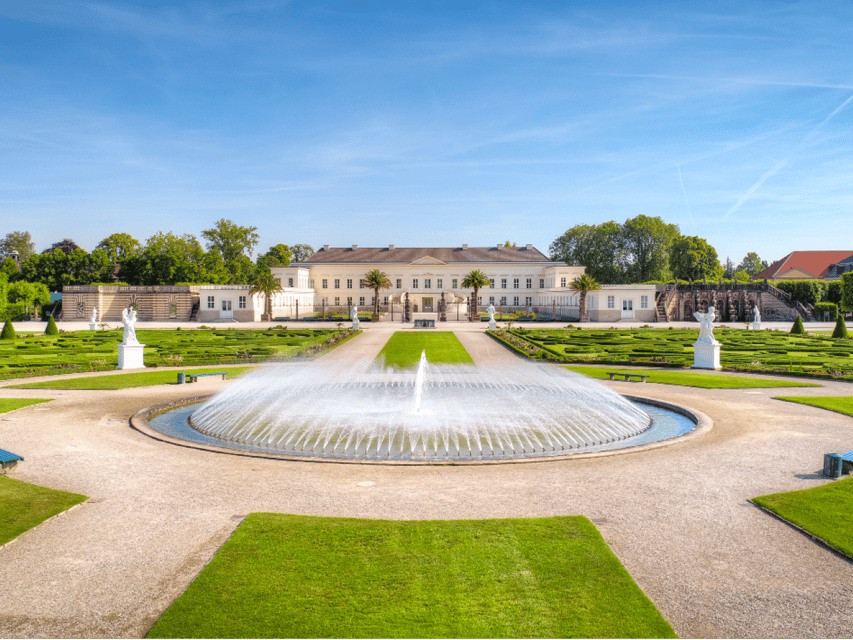
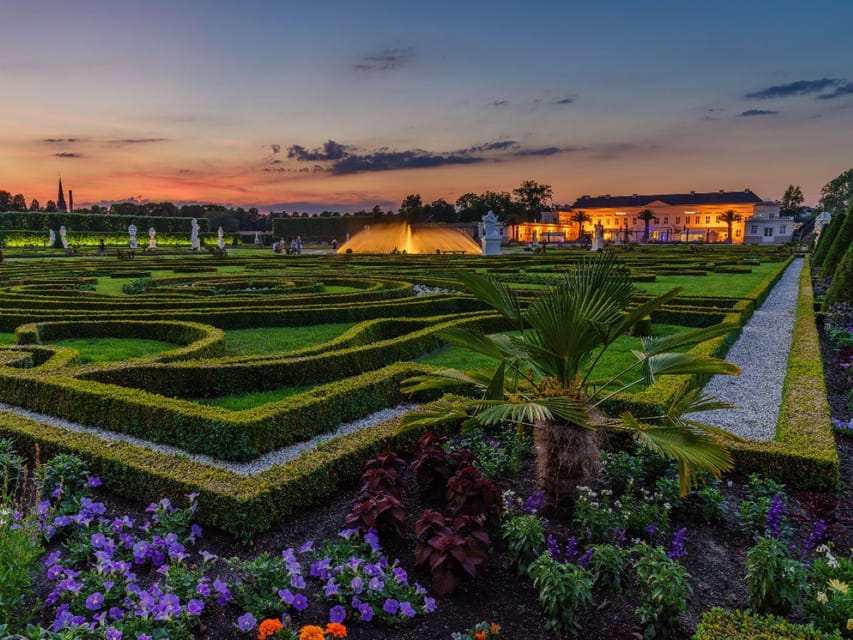
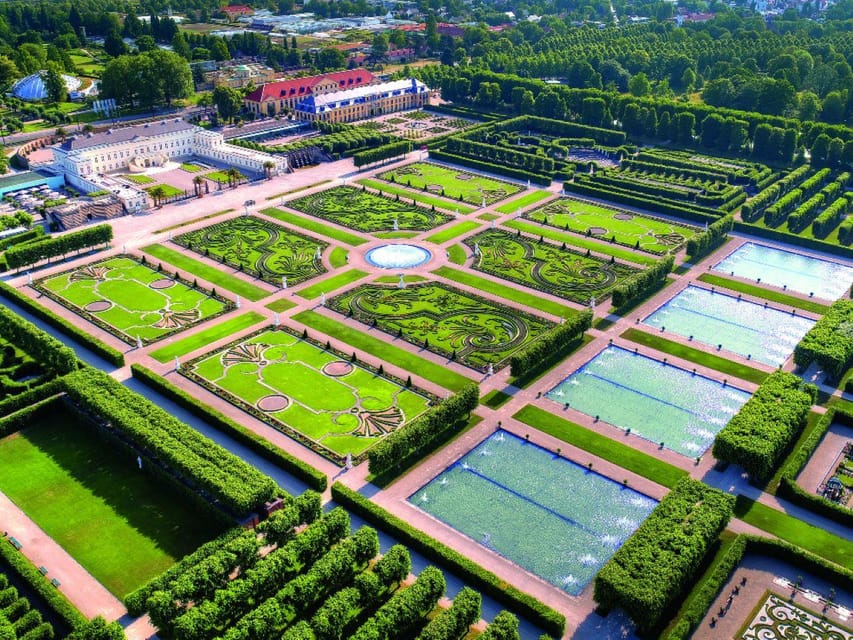
The most striking part of this Hanover tour is the Great Garden, a 300-year-old Baroque garden laid out on a grand French model. Its clipped boxwood, marble gravel, flower borders, and water features were designed to be seen as a complete work of art, not simply enjoyed as a park.
I like the clear focus on the garden’s details, especially the Great Fountain and the bold grotto by Niki de Saint Phalle. I also like the human story behind the grounds: Elector Sophie of the Palatinate made this project her life’s work. The main drawback is that the tour is conducted in German, so you will miss much of the explanation if you do not understand the language.
Key points to know before booking
- A 90-minute walk through the Great Garden: The tour covers the main Baroque features without taking up an entire day.
- The Great Fountain is a central highlight: You get a close look at one of the garden’s most impressive engineering and design features.
- Niki de Saint Phalle’s grotto adds a modern surprise: Colorful glass mosaics bring a very different mood to the formal grounds.
- Elector Sophie is at the heart of the story: Her vision shaped the garden and links Hanover to the English royal family.
- German is the only stated tour language: This matters more here than it might at a simple sightseeing stop because much of the value comes through the guide’s explanation.
- The tour includes admission and a separate entrance: At $18 per person, the price is reasonable if you want context rather than just a walk through the grounds.
Why Hanover’s Great Garden deserves your time
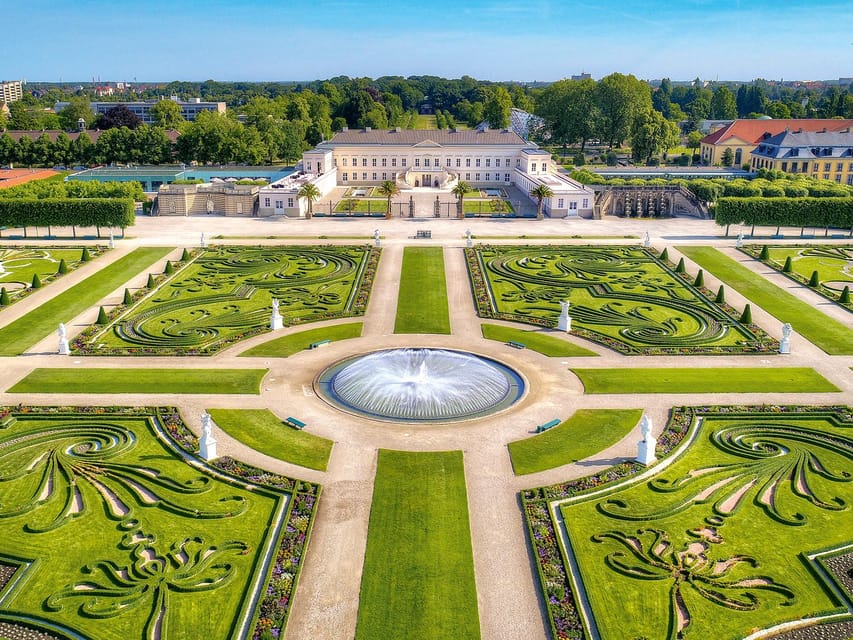
Hanover is not always the first German city that comes to mind for royal history or grand garden design. The Great Garden changes that quickly. You enter a carefully ordered world of straight lines, clipped plants, decorative gravel, water, sculpture, and bright planting beds.
This is not a casual stroll through an informal public park. The garden reflects the taste of European courts in the late 17th century, when rulers used gardens to display money, power, and control over nature. The design was based on the French model associated with Louis XIV, whose court at Versailles set the standard for royal display.
The person who pushed this work forward was Elector Sophie of the Palatinate. She had the roughly 200-acre garden laid out and continued to shape it over many years. That personal connection gives the visit more interest than a simple list of fountains and flowerbeds. You are seeing the result of one woman’s sustained ambition.
I find that useful context because formal gardens can otherwise feel decorative but distant. Once you understand that Sophie made the garden her life’s work, the clipped patterns and measured paths begin to look like part of a larger political and family story.
More Palace and Castle Gardens in Germany:
- Private Tour of Nymphenburg Palace and Gardens
★ 5.0 · 26 reviews - Heidelberg: Heidelberg Castle Garden & Outside Private Tour
★ 4.9 · 18 reviews - Paris: Versailles Palace and Gardens Full Access Ticket
★ 4.6 · 41,579 reviews
Meeting at Herrenhäuser Str. 5
The meeting point is in the foyer in front of the television at the main entrance, at Herrenhäuser Str. 5. That detail is worth noting because large garden entrances can be confusing, especially if you arrive with only a few minutes to spare.
The tour includes admission, so you do not need to arrange a separate garden ticket. It also includes a fast lane through a separate entrance. That can save time on a busy day, although the actual benefit depends on how many people are waiting when you arrive.
Plan to wear comfortable shoes. The experience lasts about 1.5 hours and takes place outdoors, so you will be on your feet for most of the visit. The grounds are wheelchair accessible, which makes this a practical choice for many visitors who want a guided cultural visit without stairs being the main concern.
Pets, drones, and bicycles are not allowed. Leave extra equipment behind and treat the garden as a carefully managed historic site rather than a place for casual cycling or aerial photography.
The first 10 minutes: getting oriented in a Baroque garden
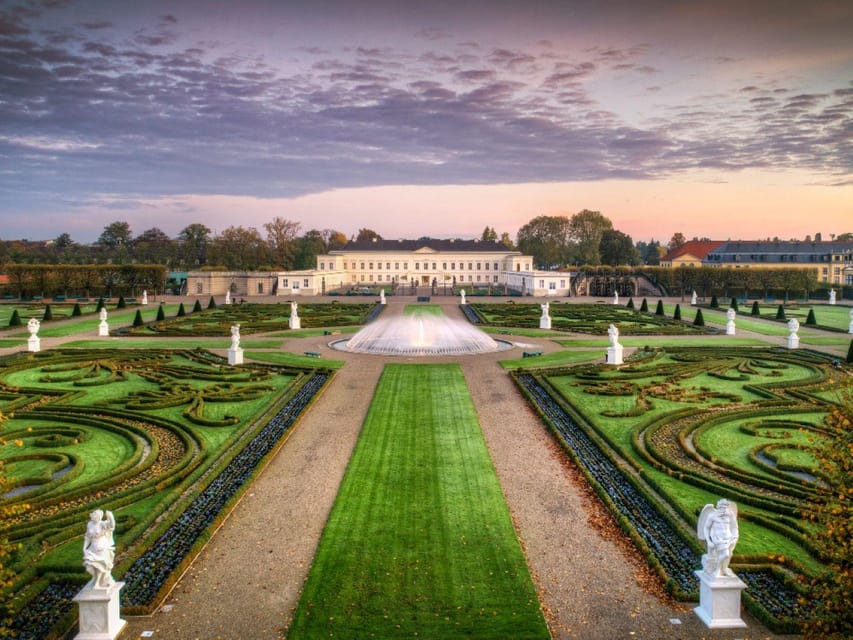
The schedule begins at the main entrance, followed by several short sightseeing sections. The opening part gives your guide a chance to explain the basic plan of the Great Garden and show you how to read its design.
That introduction matters. Without it, the clipped hedges and repeated patterns may look attractive but somewhat formal for the sake of formality. With some background, you can see the garden’s geometry as a deliberate statement. The paths, plantings, and decorative elements were arranged to guide the eye and create a sense of order.
You will also begin to hear about Sophie and the French influence on the garden. This is the right moment to pay attention to names and dates if you enjoy the historical side of a visit. If you mainly want photographs, the first few minutes still help you understand where the best visual details fit into the larger plan.
The garden is large, but the guided route is not meant to cover every corner. The 90-minute format keeps the visit manageable and concentrates on the most important features.
The next 10 minutes: boxwood, marble, and careful patterns
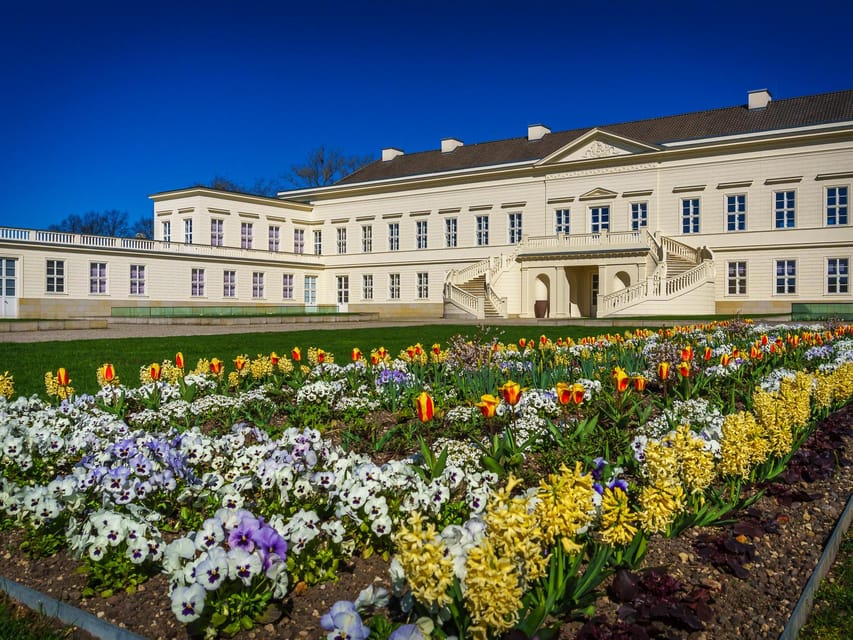
One of the Great Garden’s pleasures is its small-scale precision. Boxwood is clipped into intricate designs, while marble gravel adds pale contrast and helps define the patterns. The result is easy to appreciate from a distance, but it rewards a closer look.
I like this section of the visit because it shows how much work lies behind a garden that can appear effortless. A hedge does not naturally form a sharp decorative border. The effect depends on planning and constant care.
Your guide can point out details that are easy to miss when you are walking alone. Look for the relationship between the low boxwood shapes, the gravel, and the flower borders. The garden does not rely on one spectacular feature alone. Much of its character comes from repetition and proportion.
This is also a good place to consider the limits of the experience. Formal gardens are not for everyone. If you prefer wild scenery, long country walks, or a relaxed setting with little interpretation, you may find the strict geometry less appealing. If you enjoy design, architecture, or decorative arts, the patterns are likely to hold your attention.
A few more garden visits around Germany worth a look
- Sanssouci Park: A Self-Guide Audio Tour of the Garden’s Landmarks
★ 3.0 · 2 reviews - From Paris: Versailles Palace Guided Tour & Gardens Access
★ 4.7 · 3,574 reviews - Rome: Borghese Gallery and Gardens Guided Small-Group Tour
★ 4.6 · 2,783 reviews - From Paris: Giverny Day Trip with Audio Guide or Live Guide
★ 4.3 · 2,372 reviews
The following 10 minutes: flower borders and seasonal change
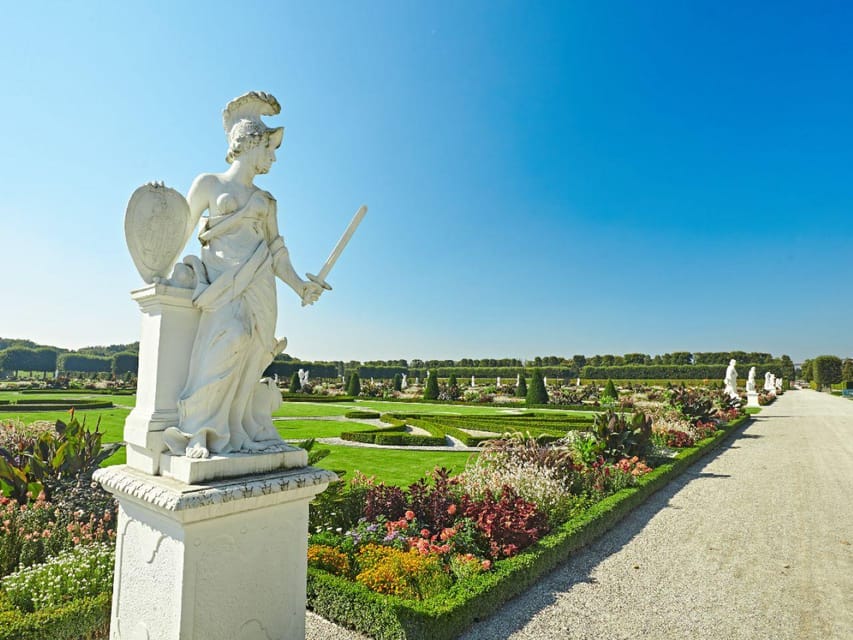
Colorful flower borders soften the garden’s strict lines. They also mean that the visit will change with the season. The planting will not look exactly the same in spring, summer, or autumn.
The timing of your visit therefore affects what you see. You should expect the garden to reflect the season rather than offer one fixed display all year. A German review from October described the presentation as appropriate to the time of year, which is a useful reminder not to expect peak summer color in an autumn visit.
Even outside the main flowering season, the structure remains important. The boxwood, gravel, paths, and fountains give the grounds a strong visual framework. The flowers add color, but they are not the only reason to come.
The guide’s job here is to connect the planting to the garden’s design rather than simply point out what is blooming. That makes the visit more useful for anyone interested in how a Baroque garden works as a whole.
The Great Fountain and the garden’s grand scale
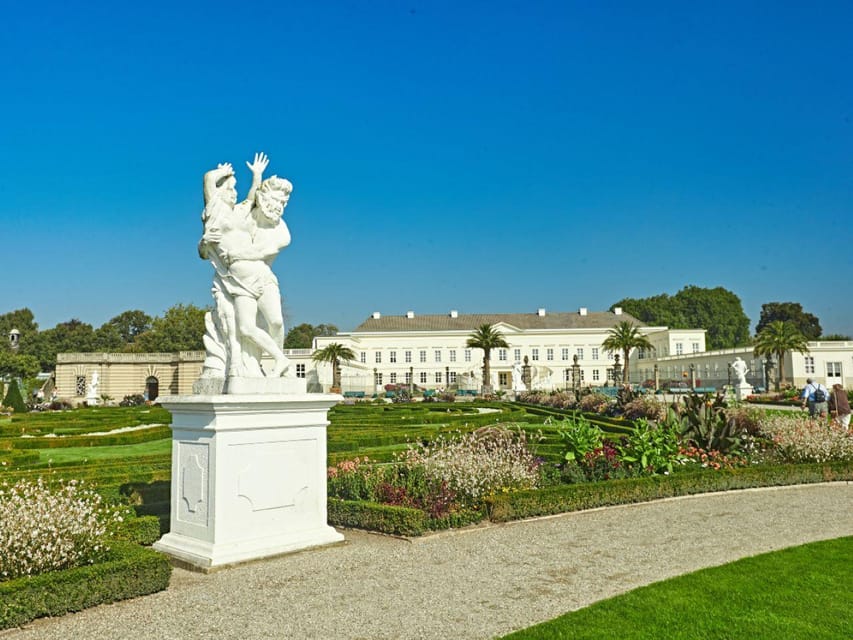
The Great Fountain is one of the tour’s main sights. It provides the large visual gesture that balances the smaller boxwood patterns and flower borders.
Water had a special role in royal garden design. It was decorative, but it also showed that a court had the money, engineering, and labor needed to control and redirect it. The fountain helps you understand the scale of the Great Garden and the ambition behind its creation.
The schedule includes several short sightseeing sections and one longer 20-minute section. The exact order can vary, but the fountain is among the features your guide is expected to explain in detail. You will have time to look at it as part of the garden plan rather than rushing past it as a quick photo stop.
Do not assume the tour is built around a long technical lecture about water systems. The stated focus is broader, covering the garden’s history, decorative details, and royal connections. That balance should suit you if you want context without turning the visit into a specialist course.
The 20-minute section: Niki de Saint Phalle’s grotto
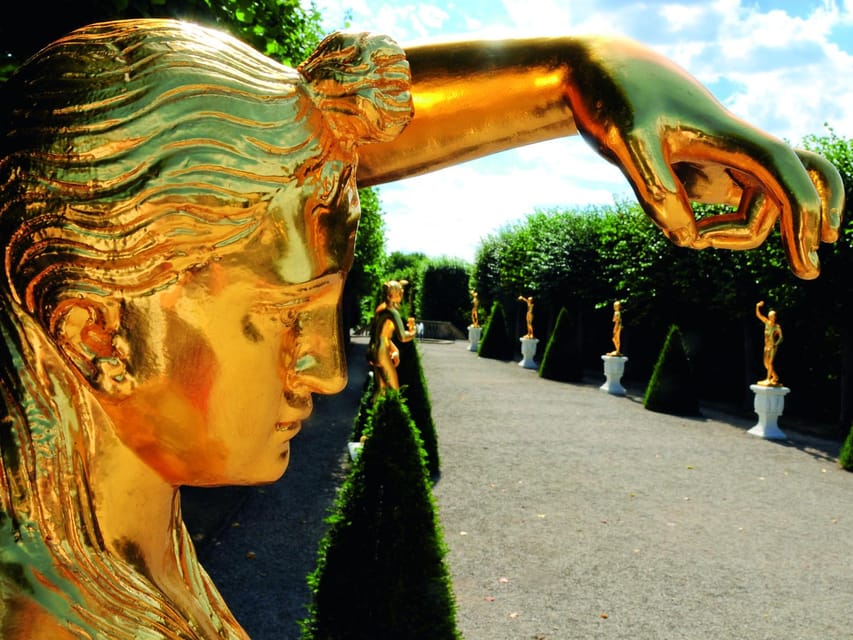
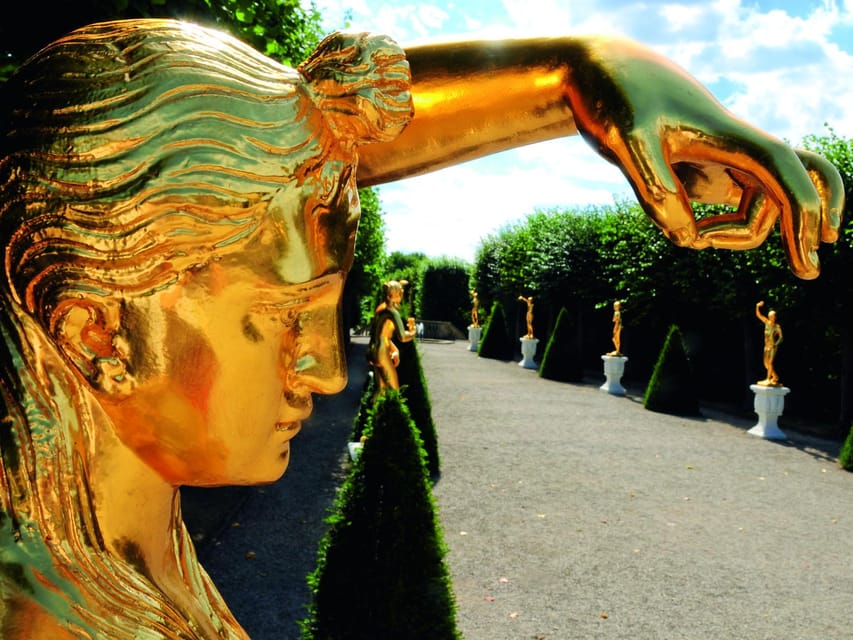
The grotto is the Great Garden’s most surprising contrast. Niki de Saint Phalle designed it with colorful glass mosaics, bringing a modern artistic voice into a setting known for Baroque order.
This is not simply another historic garden feature. The grotto gives the tour a change of mood and period. After seeing clipped boxwood, marble gravel, and formal planting, you encounter something more expressive and contemporary.
Allow yourself time to look at the mosaics rather than treating the grotto as a quick stop. The color and reflective surfaces can feel playful beside the controlled geometry of the garden. That contrast is part of the appeal.
The 20-minute portion of the route is the longest single sightseeing segment, and the grotto is a strong candidate for that extra time. The available information does not assign exact minutes to each named feature, so you should not expect a rigid stop-by-stop script. The guide may adjust the pace based on the group and the garden conditions.
For me, the grotto is one of the best reasons to choose a guided visit rather than a quick independent walk. You get a clearer sense of how the modern work fits into the older setting and why it deserves attention.
Hanover and the English royal family
The tour also explains Hanover’s connection to the English royal family. This is an important thread because it places the garden within a wider European story rather than treating it as an isolated local attraction.
The connection is tied to the ruling family of Hanover and its links with Britain. The garden’s history is therefore connected not only to French design but also to dynastic relationships that shaped European politics and royal life.
The tour is conducted in German, and this historical material will be difficult to follow if you do not understand the language. You may still enjoy the garden’s visual features, but you will lose much of the explanation about Sophie, the royal family, and the reasons the Great Garden matters.
If you speak German, the format is especially appealing. The guides named in the feedback include Herr Kron, Frau Focke, and Roland Wagenführer. Their styles are described as informative, relaxed, humorous, and engaging, so the personality of the guide may add a lot to the visit. Guide assignments can change, of course, and no particular guide should be assumed when booking.
What the 90-minute itinerary feels like
The route starts and finishes at Herrenhäuser Str. 5. In between, you move through a series of sightseeing sections lasting about 10 minutes, with one longer 20-minute portion.
That structure keeps the pace moving. You are not committed to a three-hour lecture, but you also get more than a quick orientation. The short sections work well for a garden because they let you move from one visual idea to another: formal patterns, flower borders, water, the grotto, and the royal story.
You should expect a walking tour rather than a seated presentation. The supplied details do not give a precise group size or a fixed list of stop names, so you should leave room for the guide to adjust the route.
Bring your camera if you want to record the patterns and mosaics, but do not bring a drone. The garden’s beauty is close to ground level, in the clipped lines, pale gravel, flowers, and glass details.
Is $18 a fair price?
At $18 per person, the price is fair for a 90-minute guided visit that includes entrance and a fast lane through a separate entry. If you were already planning to pay admission and explore on your own, the extra cost buys you structure, historical background, and help spotting details.
The value depends heavily on your German ability. A German-speaking guide can explain the garden’s connection to Sophie, the French court model, the English royal family, and Niki de Saint Phalle’s work. If you do not understand German, you may still enjoy the grounds, but the paid tour offers less value than it does for a German speaker.
The tour also saves planning time. You do not need to design your own route or decide which features deserve attention first. For a short visit to Hanover, that can be useful.
Free cancellation up to 24 hours before the start gives you some flexibility. You can also reserve now and pay later, which helps if your schedule is still shifting.
Who should book this garden tour?
I would recommend it most strongly to German-speaking visitors who enjoy garden design, royal history, or European art. It also suits anyone who likes seeing how a place was made, rather than simply taking photographs of the finished result.
Families with an interest in history may find the 90-minute length manageable. The route is long enough to feel substantial but short enough that you do not give up half a day. Wheelchair accessibility is another practical advantage.
Independent visitors who prefer to read at their own pace may be happier exploring without a guide, especially if they do not speak German. The tour does not offer English as a stated language, and that is the main issue to weigh before paying.
I would also avoid treating this as a weather-proof activity. Much of the appeal is outdoors, and comfortable shoes are specifically recommended. Seasonal planting changes the appearance, so an autumn visit will look different from a summer one, but the formal design remains the main attraction.
Should you book the Great Garden tour?
Book it if you want the Great Garden explained as a work of design, history, and royal ambition. The combination of Baroque patterns, the Great Fountain, Sophie’s story, Hanover’s British royal connection, and Niki de Saint Phalle’s mosaic grotto gives the visit more range than a standard park walk.
Skip it if you need an English-language guide or prefer to explore quietly without a set pace. For everyone else, $18 is a sensible price for admission plus a focused 90-minute route, especially if you want to notice the details that are easy to miss alone.
FAQ
Where does the Hanover Royal Gardens tour begin?
The meeting point is in the foyer in front of the television at the main entrance at Herrenhäuser Str. 5.
How long does the guided tour last?
The tour lasts 1.5 hours, or 90 minutes.
What language is the tour conducted in?
The live tour guide language is German. German is the only language stated for this activity.
What is included in the price?
The price includes the guided tour, entrance to the garden, and access through a separate fast lane.
Is the garden tour wheelchair accessible?
Yes. The activity is listed as wheelchair accessible.
What should I bring?
Wear comfortable shoes because the experience is a walking tour through the garden.
Can I cancel the booking?
Yes. You can cancel up to 24 hours in advance for a full refund. You can also reserve now and pay later.
Just added around Germany
- Sanssouci Park: A Self-Guide Audio Tour of the Garden’s Landmarks★ 3.0 · 2 reviews
- Private Tour of Nymphenburg Palace and Gardens★ 5.0 · 26 reviews
- Private Munich Rickshaw City Tour and English Garden★ 5.0 · 49 reviews
- City Bike and English Garden Tour★ 4.0 · 14 reviews
- Private and full rickshaw tour in the English Garden★ 4.5 · 10 reviews
- Munich Private City Bike Tour and English Garden★ 4.5 · 2 reviews
- Day Trip Flower Island of Mainau including Meersburg★ 4.5 · 7 reviews
- Amazing Schwetzingen Garden Tour★ 4.5 · 4 reviews
Germany Garden Tours, compared.


Stuttgart: Wilhelma Zoological-Botanical Garden Ticket
Read our review →
From Berlin: Gardens & Palaces of Potsdam Bike Tour
Read our review →


Heidelberg: Heidelberg Castle Garden & Outside Private Tour
Read our review →Browse the lists this tour appears in