

Review · ITALY
Lemons & Breathtaking Views: Amalfi Monumental Garden Tour
The best part of this Amalfi tour is that you enter a working family lemon grove, not a polished garden built just for sightseers. Gianmarco leads you through terraces tended by the Aceto family for seven generations, then serves lemonade, lemon cake, and limoncello with Amalfi spread out below.
I like the family connection and the chance to learn how Sfusato Amalfitano lemons are grown, harvested, and turned into local products. I also like the small group of no more than 10 people, which gives you a better chance to ask questions and enjoy the terrace without a crowd.
The main consideration is the walking. The public elevator usually removes the uphill climb, but if it is not operating, you may face about 200 stone steps, followed by uneven paths through the terraces. This is not a good choice for wheelchair users or people with serious mobility or heart concerns.
Key points about the Amalfi lemon garden tour
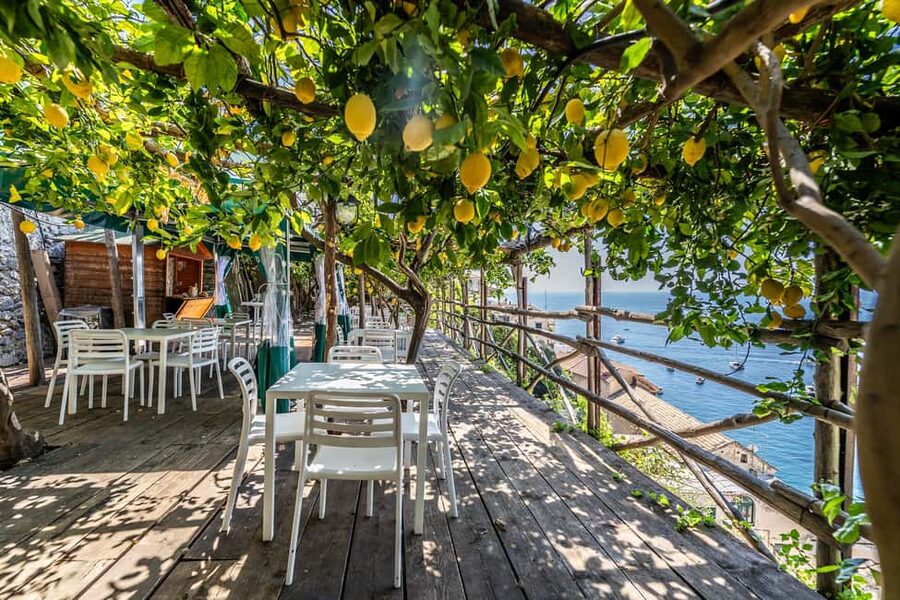
- A seven-generation family farm: Gianmarco and the Aceto family share a working lemon grove they have cared for across generations.
- A striking viewpoint: A terrace beneath Amalfi’s Monumental Cemetery opens toward the town and Mediterranean Sea.
- A real taste of Campania: The tasting includes homemade lemonade, lemon cake, a sweet lemon, and family-made limoncello.
- Ancient agricultural roots: The garden dates to around 700 AD and sits near the historic San Lorenzo al Piano aqueduct.
- A small, personal group: Tours are limited to 10 people and offered in English or Italian.
- Plan for steps and uneven ground: An elevator normally helps with access, but a lift failure can change the route.
Why this lemon grove tells Amalfi’s story
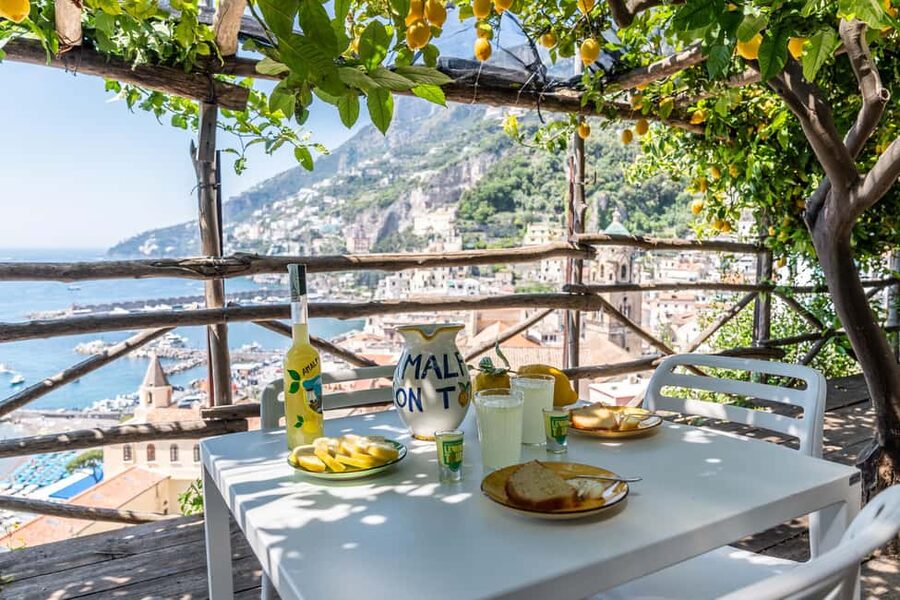
Amalfi is famous for its cliffs, sea views, and narrow streets, but lemons explain a great deal about the town’s daily life and food. This tour gives you a closer look at the farming system behind the bright yellow fruit piled in shop windows and used in cakes, drinks, jams, honey, and limoncello.
The garden sits beneath the Monumental Cemetery of Amalfi. Its terraces are more than attractive planting beds. They are part of an old system that made farming possible on steep ground, with stone walls holding the soil in place and water brought in from higher areas.
The site dates back to around 700 AD. It is also close to the San Lorenzo al Piano aqueduct, which once carried water from Scala. Records from the years 1000 to 1100 describe changes made to the garden and water system, showing that this was an important place for Amalfi’s food supply long before lemon tourism became part of the local economy.
That background gives the walk more weight. You are not simply looking at citrus trees. You are seeing how people adapted steep terrain, managed water, and protected useful farmland in a crowded coastal town.
A few more garden visits around Italy worth a look
- Florence: Reserved Entry Ticket to the Boboli Gardens
★ 4.4 · 5,275 reviews - Rome: Borghese Gallery and Gardens Guided Small-Group Tour
★ 4.6 · 2,783 reviews - Rome: Borghese Gallery & Gardens Small Group Guided Tour
★ 4.5 · 2,190 reviews
Meeting Gianmarco near Fior di Pizza
The tour begins near Fior di Pizza, where Gianmarco waits in a recognizable shirt. This is useful in busy Amalfi, where meeting points can blend into the maze of storefronts, pedestrians, and traffic.
From there, you walk for about five minutes toward the garden. The short approach means you do not need a taxi or private transfer, but you should arrive ready to walk. Hotel pickup and drop-off are not included, and transportation to the garden is your responsibility.
The group is capped at 10 people. That matters here because the garden is made up of narrow terraces rather than broad paths. A small group keeps the route more manageable and makes it easier to hear explanations about the trees, family work, and local farming.
Gianmarco leads the tour in English or Italian. His style, based on the way the tour is organized, is personal rather than scripted: the family farm is his own, and the products served at the end are connected to the work you have just seen.
The elevator route and the stone-step backup
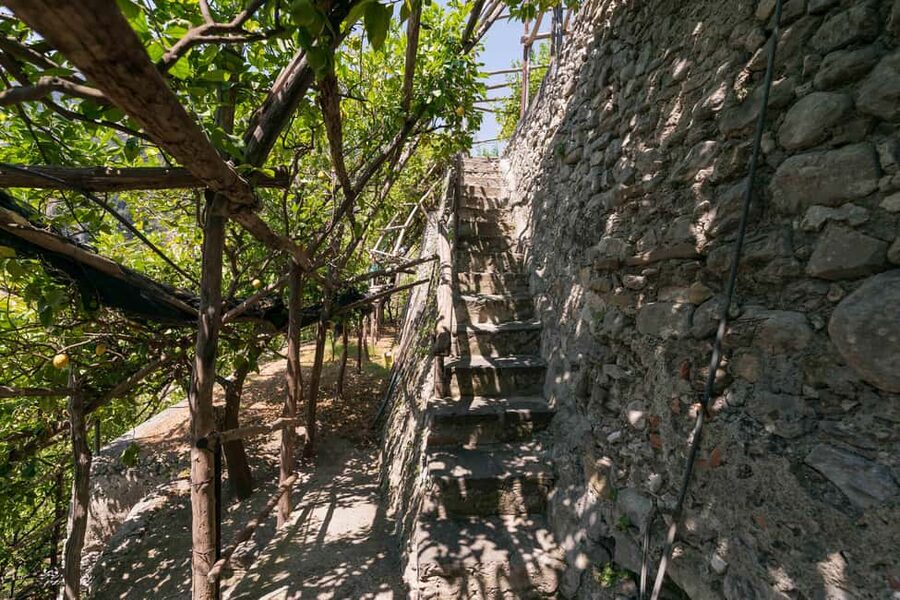
When the public elevator is operating, you usually avoid the main uphill climb. The lift takes you toward one of the city’s best viewpoints, and from there the route continues mostly downhill through the lemon grove to a panoramic terrace.
This is the easier version of the tour, but it is not completely effortless. The paths through the grove are uneven, and terraces can involve changes in level. Wear firm, comfortable walking shoes rather than sandals with slippery soles.
If the elevator is out of service, the group uses stone steps instead. The tour information describes about 200 steps in total. One visitor found the approach from the main road closer to 40 or 50 steps, but you should plan for the full stated possibility rather than count on the shorter route.
That backup matters if you have knee, heart, balance, or breathing concerns. The tour is specifically not suitable for wheelchair users or people with mobility impairments. If you are an older walker in decent condition, the elevator route may make this manageable, but you should still be comfortable on uneven paths.
Walking among Sfusato Amalfitano lemons
The main walk lasts about an hour. You move through terraced rows of Sfusato Amalfitano lemons, the local PGI-certified variety associated with the Amalfi Coast.
The Sfusato is not just a decorative symbol. Amalfi’s seafarers introduced the lemon in the 10th century, and the fruit gradually became central to local cooking, farming, and trade. Its thick, fragrant peel makes it especially useful for products such as limoncello, while the juice works in drinks, cakes, preserves, and savory recipes.
The Aceto family has cared for this garden for seven generations. For the past 30 years, the family has focused on preserving the terraces and keeping the grove productive. Some trees are centuries old, which gives the garden a sense of continuity that a standard tasting room cannot provide.
You learn about traditional cultivation methods as you walk. The steep terraces require regular maintenance, and the garden uses organic certification, integrated biological control, and beekeeping. The bees help with pollination and also produce honey, giving you a glimpse of how different parts of the farm support one another.
One of the useful parts of this visit is learning about the work behind the fruit. Lemon farming on the Amalfi Coast is not simply a matter of planting trees and waiting for a harvest. Stone terraces, water, pruning, pollination, and careful upkeep all matter. The tour makes those details easier to understand because you see the trees growing on the slopes around you.
You are asked not to touch the plants. That rule is sensible in a working organic grove, where branches, fruit, and soil need protection. It also means this is a guided look at the farm, not a pick-your-own activity.
Same place, a different kind of green day out:
- Rome: Bioparco di Roma Zoological Garden Entry Ticket
★ 4.6 · 1,414 reviews - Florence: Pitti Palace and Boboli Gardens Ticket & eBook
★ 4.5 · 835 reviews - Caserta Royal Palace & Gardens Small Group Tour with Shuttle
★ 4.9 · 632 reviews - Giardini Naxos: Dolphin Searching Sunset Boat Tour
★ 4.7 · 564 reviews
The terrace with Amalfi below
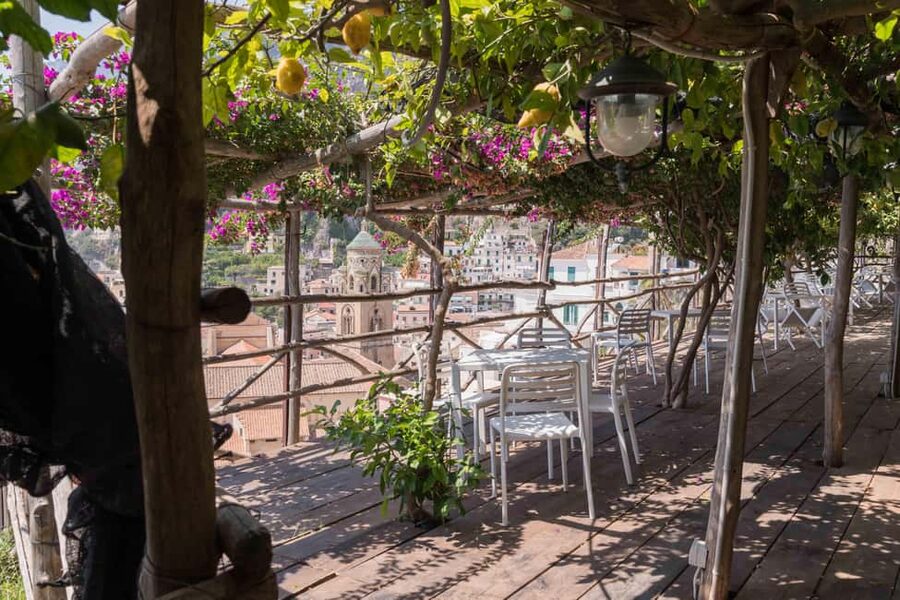
The viewing terrace is the emotional center of the tour. From beneath the lemon trees, you look toward Amalfi and the Mediterranean Sea. The setting combines the practical and the scenic: this is a place built for farming, yet it also offers one of the town’s most appealing high views.
Shade from the lemon trees makes the terrace a welcome pause, particularly in the warmer months. The tour is scheduled for about 90 minutes, with roughly an hour for the guided walk and 20 minutes for tasting. That is enough time to stop, listen, and take photographs without turning the outing into an all-day commitment.
I like that the viewpoint comes within the garden rather than as a separate photo stop. You first learn how the terraces work, then see the town from the same elevated setting that helped make the grove possible. The view has context, not just scenery.
Keep your expectations practical. This is a cultivated farm with uneven paths, not a formal botanical garden with wide paved walkways and signs at every turn. The beauty comes from the combination of old trees, stone terraces, sea air, and the view over Amalfi.
Lemonade, cake, and limoncello at the end
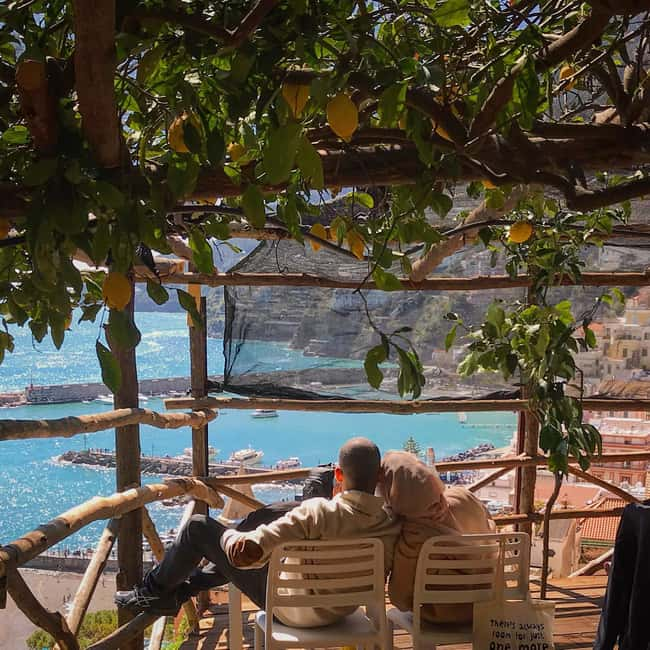
The tasting follows the walk and lasts about 20 minutes. You sample fresh homemade lemonade, a slice of lemon cake, and limoncello. The tasting may also include a sweet lemon, as part of the farm’s introduction to different flavors and products.
The lemon cake is a particular highlight. It is made by Gianmarco’s mother, and the family connection makes it feel more meaningful than a generic pastry served at a commercial shop. You taste the fruit in a soft dessert, then compare it with the sharper freshness of lemonade and the stronger citrus aroma of limoncello.
The limoncello demonstration is another useful touch. You learn how the family makes it and how you can prepare it at home. Exact home recipes can vary, but the lesson connects the drink to the peel and fragrance of the local lemons rather than treating limoncello as a bottle to buy at the end.
The tasting is generous in spirit, but it is not a full meal. If you need lunch, eat before or after the tour. The food is best understood as a sample of family products and local tradition.
For many people, this final stop will be the most memorable part because it brings together everything from the walk. You have seen the trees, heard about the farming, looked over the town, and then tasted the results.
What $41 buys you
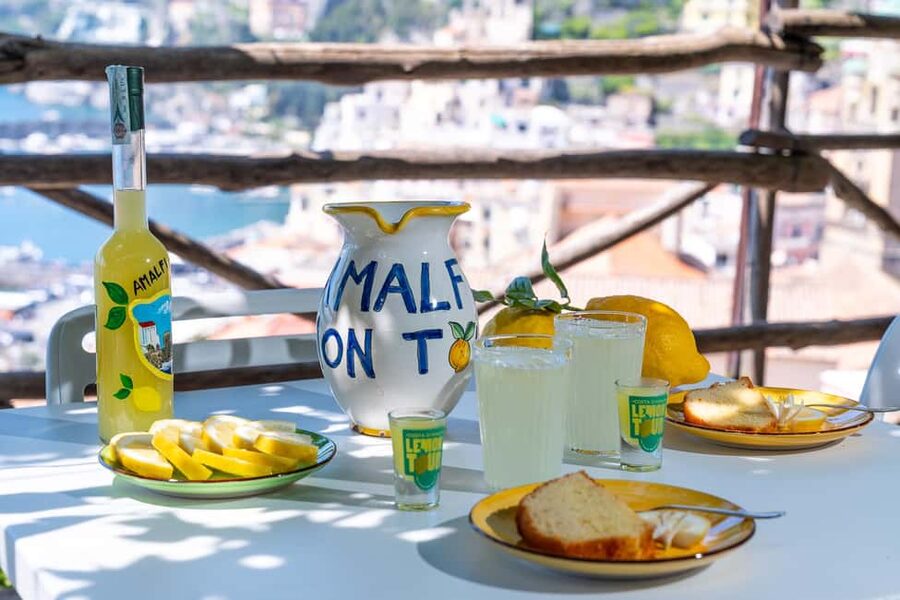
At $41 per person, the price is reasonable if you value a small group, a family-run setting, and access to a place that is not open to the public outside tour times. You are paying for more than a view. The fee covers a 90-minute guided visit, entry into the terraced grove, explanations about local agriculture, and the tasting.
The cost is less compelling if your main goal is only a quick photograph of Amalfi. You can find viewpoints around town without booking a tour, and the garden requires advance reservation. The value comes from the combination of access, instruction, and food.
I would also compare this price with the cost of a basic limoncello tasting or a short guided walk. Here, those elements are joined together, and the guide is part of the family that maintains the grove. That personal link is the reason I would choose this over a generic citrus-themed stop.
The small group helps the price make sense. With a maximum of 10 people, you are less likely to be lost in a large crowd, and you have room to ask about cultivation, recipes, bees, or the local lemon variety.
Who will enjoy this tour most
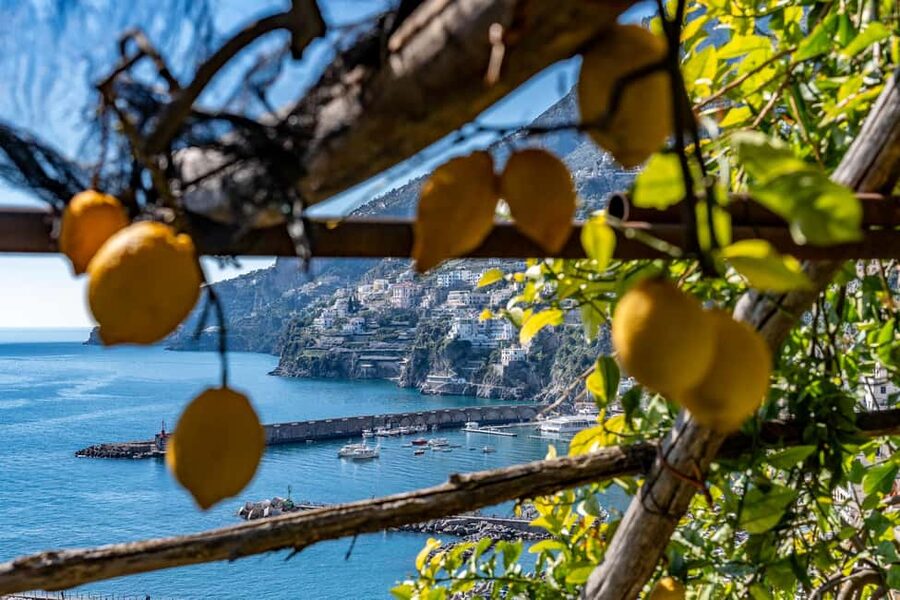
This tour suits you if you want a quieter side of Amalfi and enjoy learning how local food is produced. It is especially good for people interested in gardens, traditional agriculture, family businesses, and regional cooking.
It also works well for a short stay. The tour takes about 90 minutes, so you can fit it between sightseeing, lunch, or a ferry schedule, provided you allow enough time to reach the meeting point and return to town.
Families with older children may enjoy the tasting and the clear connection between the trees and the food. Couples and solo visitors who prefer small groups should also find the format comfortable.
The tour is not ideal for anyone expecting a completely flat route, a long formal lecture, or a full meal. If you dislike uneven stone paths or cannot manage steps, choose another Amalfi activity. Even with the elevator, the grove itself has natural changes in height.
The experience is also best for people who respect working farms. You cannot touch the plants, and the garden is not open for casual wandering outside tour times. That restriction protects the grove, but it also means you need to follow the guide’s route.
Practical timing and booking advice
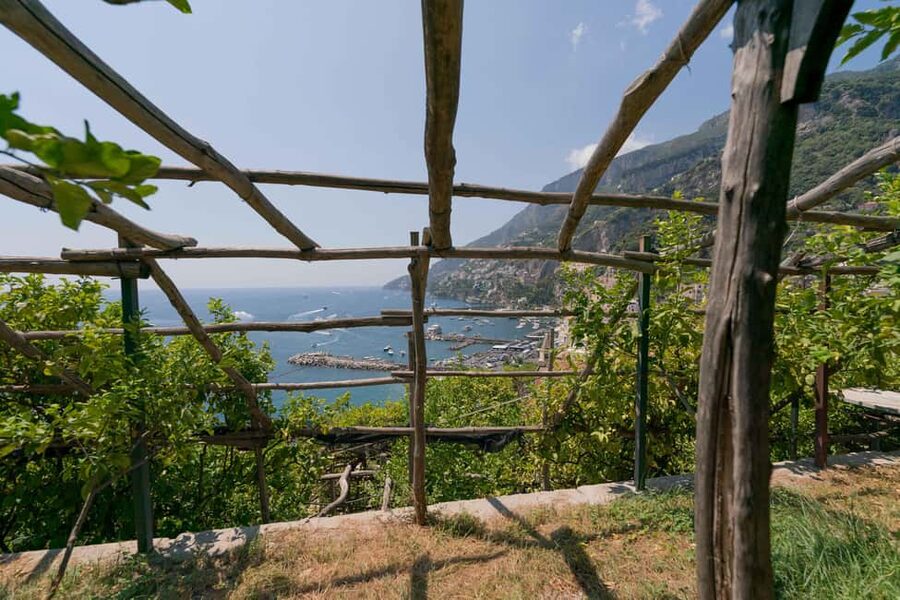
Book ahead because the garden is closed to the public outside scheduled tours. The group size is limited, and the tour is available in English or Italian.
The advertised duration is one to two hours, with the normal visit taking about 90 minutes. Starting times vary, so check availability when you book. You can cancel up to 24 hours before the tour for a full refund, and a reserve-now, pay-later option is available for people who want to keep plans flexible.
Arrive in comfortable shoes. Bring water if you are visiting in warm weather, since the route includes outdoor walking and stone paths. The shade at the terrace helps, but it does not remove the need to prepare for the heat.
The elevator is an important variable. If easy access matters to you, check its operating status as close to the tour as possible, while still planning for the stone-step route. Even when the lift works, the path through the grove remains uneven.
Should you book the Amalfi Monumental Garden tour?
I would book this tour if you want more than the usual Amalfi postcard. The strongest reasons are the family-run setting, Gianmarco’s personal connection to the farm, the old terraces, and the tasting of homemade lemonade, cake, and limoncello.
The views are excellent, but the real value is understanding why lemons matter here and how difficult it is to maintain agriculture on steep coastal ground. You leave with a better sense of Amalfi’s food culture, not just another photograph.
Skip it if you need step-free access, dislike uneven paths, or want a larger meal instead of a short tasting. For most reasonably mobile visitors who have 90 minutes to spare, this is a focused, good-value way to meet the working side of Amalfi.
FAQ
Where does the Amalfi lemon garden tour begin?
The meeting point is near Fior di Pizza in Amalfi. Gianmarco waits for the group wearing a recognizable shirt.
How long does the tour last?
The tour normally lasts about 90 minutes. Plan on roughly one hour for the guided walk and about 20 minutes for the tasting, with the full activity listed as taking one to two hours.
What food and drinks are included?
The tasting includes homemade lemonade, lemon cake, and limoncello. A sweet lemon may also be included, and the guide explains how the family makes limoncello.
Is there much uphill walking?
When the public elevator is operating, there is no uphill walking required. You take the elevator to a viewpoint and then walk downhill through the grove. If the lift is out of service, the tour uses about 200 stone steps.
Is the tour suitable for wheelchair users?
No. The tour is not suitable for wheelchair users or people with mobility impairments. The garden has uneven terrain, and the backup route may involve about 200 stone steps.
What languages are available?
The live tour is available in English and Italian.
Just added around Italy
- Venice: panoramic lunch in St. Mark’s Square Royal Gardens★ 3.0 · 12 reviews
- Hidden Verona & Giusti Garden- 3 hour private walking tour★ 5.0 · 2 reviews
- Secret gardens of Venice in the Dorsoduro district with Cichetti tasting★ 3.0 · 2 reviews
- Royal Gardens & St.Mark Basin View Casanova Aperitif★ 3.5 · 17 reviews
- Secret Gardens of Venice Walking Tour★ 5.0 · 60 reviews
- Sea, Volcano and History: Giardini Naxos, Isolabella, Etna and Taormina★ 4.5 · 3 reviews
- Taxi Giardini Naxos★ 5.0 · 2 reviews
- Tour to Etna Volcano and Taormina from Giardini Naxos – Taormina★ 5.0 · 2 reviews
Italy Garden Tours, compared.


Borghese Gallery and Gardens Guided Small-Group Tour
Read our review →
Borghese Gallery & Gardens Small Group Guided Tour
Read our review →
Bioparco di Roma Zoological Garden Entry Ticket
Read our review →

Caserta Royal Palace & Gardens Small Group Tour with Shuttle
Read our review →
Giardini Naxos: Dolphin Searching Sunset Boat Tour
Read our review →
Pitti Palace, Boboli Garden, Palatine Gallery Tour
Read our review →Browse the lists this tour appears in