Review · AMSTERDAM
Amsterdam: Tulip Fields Day Tour with Lunch & Windmill
The best thing about this tour is that it takes you beyond the usual flower stops. You visit working tulip fields in North Holland with guides such as Mike, who grew up in a tulip-growing family, and Roel, whose easy explanations turn a pretty outing into a lesson in Dutch farming.
I like the quiet northern route and the chance to enter fields with the growers’ permission. I also like the generous lunch in Onderdijk, where mustard soup, Dutch cheeses, cold cuts, pastries, and fresh juice may all appear on the buffet. The main catch is timing: tulips are seasonal, and the route and exact fields can change with bloom conditions and traffic.
The tour in four quick points
- Three tulip fields are guaranteed: The precise farms may change, but you will visit at least three fields, often showing different stages of the growing cycle.
- The guides work in the tulip industry: Mike and Roel explain planting, breeding, harvesting, and the practical side of farming.
- Lunch is part of the price: Expect a substantial regional buffet in the old village of Onderdijk, with juice and water included.
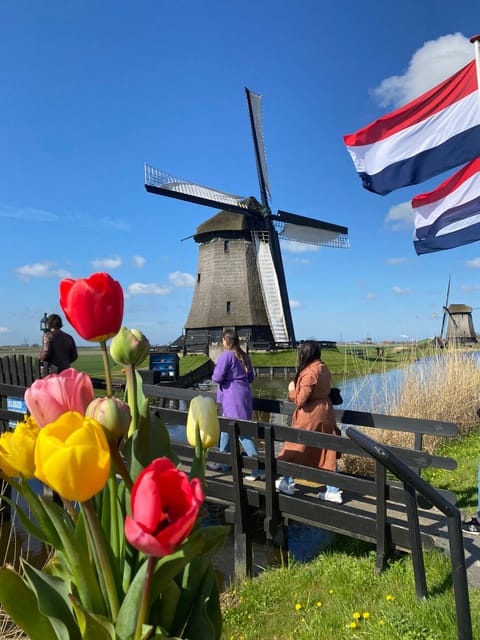
- The windmill is a working one: You visit a traditional mill dating to 1633 and meet the miller.
- The starting point is easy from central Amsterdam: Take the M52 North-South Metro Line to Noord. Market 27 is a short walk from the station.
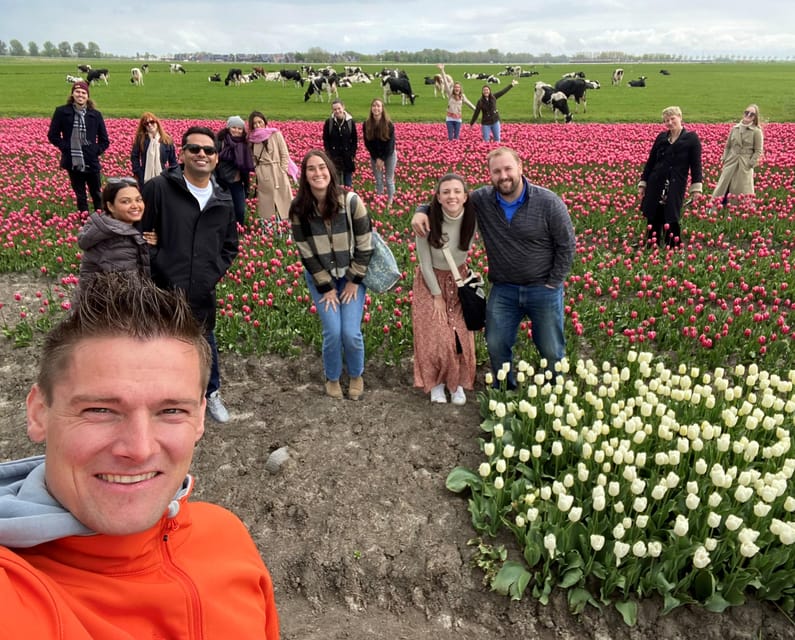
- The group is limited to 30: Some departures have been smaller, around 16 people, which helps keep the outing friendly and manageable.
Why the northern tulip route is worth your time

Amsterdam makes it easy to see flowers, but the city itself cannot show you how the Dutch tulip trade works. This six-hour outing heads north into North Holland, where broad fields are used for commercial bulb production rather than arranged as a formal garden.
That distinction matters. At a garden, you see the finished display. Here, you can see rows at different stages, farmers working with new varieties, and fields that may look different from one another because of planting dates and crop cycles. The guides explain why growers cut the flowers, how bulbs are developed, and how new hybrids are produced.
The tour also avoids the most crowded southern flower route. The company describes the stops as crowd-free, and the northern setting generally offers a quieter visit than the famous garden circuit. You still need to share the fields with your group, but you are not simply standing in a long line for one famous photo point.
I would choose this tour if you want context as well as color. If your only goal is the largest possible flower display, a major garden may offer more arranged beds. If you want to understand what you are looking at, this outing gives you more to take home than photographs.
More Garden Day Trips in Amsterdam
- Amsterdam: Day Tour Keukenhof and Zaanse Schans Windmills
★ 4.5 · 1,549 reviews - Amsterdam: Keukenhof and Zaanse Schans Windmills Guided Day Trip
★ 4.5 · 1,063 reviews - Amsterdam: Day trip to Tulip Farm, Keukenhof + Windmill Cruise
★ 4.5 · 211 reviews
Starting at Market 27 and crossing into North Holland
The meeting point is Market 27 at Amsterdam Noord. From Amsterdam Central Station, take the M52 Metro in the direction of Noord. The ride takes about four minutes, and the departure point is close to the metro station.
This is a useful detail for a city break. You do not need a complicated transfer or a long trip across Amsterdam before the day even begins. Check the departure time carefully, arrive with a little margin, and look for the restaurant rather than expecting a traditional coach terminal.
Once aboard the modern bus, you ride in comfort toward the fields. The listed maximum is 30 people. That is not a private tour, but it is much easier to manage than a large sightseeing coach. Several departures have had around 16 people, giving the guide room to answer questions and help with photographs.
The drive itself is part of the lesson. As you leave Amsterdam, the guide can explain the farming areas and the seasonal work ahead. Mike and Roel are particularly useful here because their connection to the tulip trade is personal rather than purely academic.
Three tulip fields, three different views of the crop
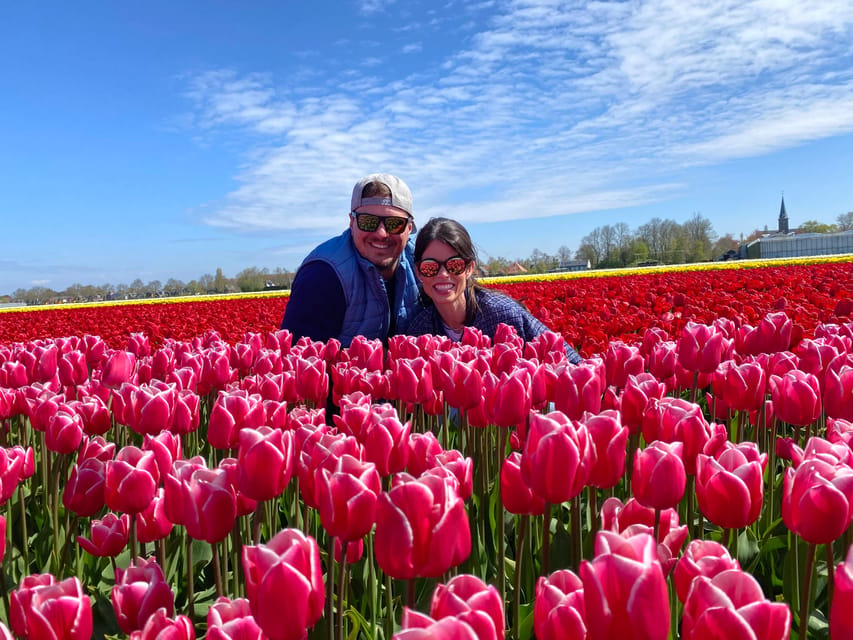
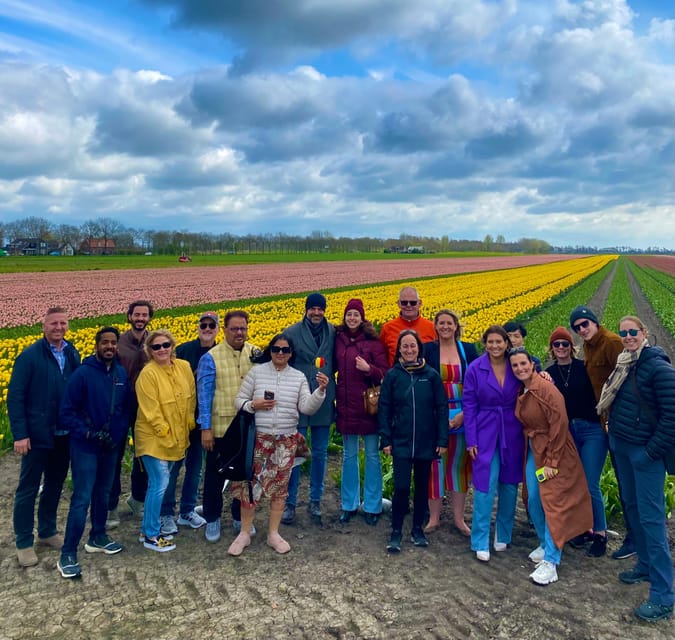
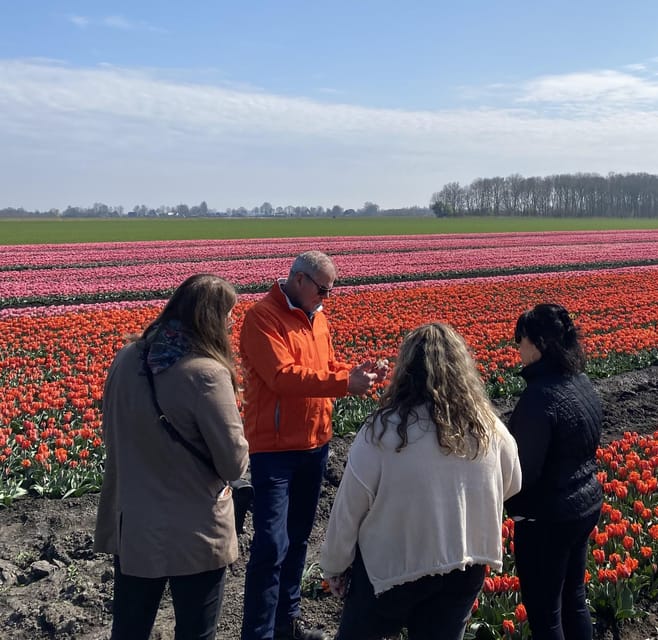
The route includes a guided visit to at least three tulip fields. The exact order can shift, and the fields can change according to the season. That flexibility is a strength. A field at its best one week may be past its peak the next, so using local contacts gives the operator a better chance of finding color during your visit.
Allow time for both explanation and photographs. You are not rushed from bus to bus for a single quick stop. The schedule includes several visits of roughly 30 minutes, though the full timing can change with traffic and field conditions.
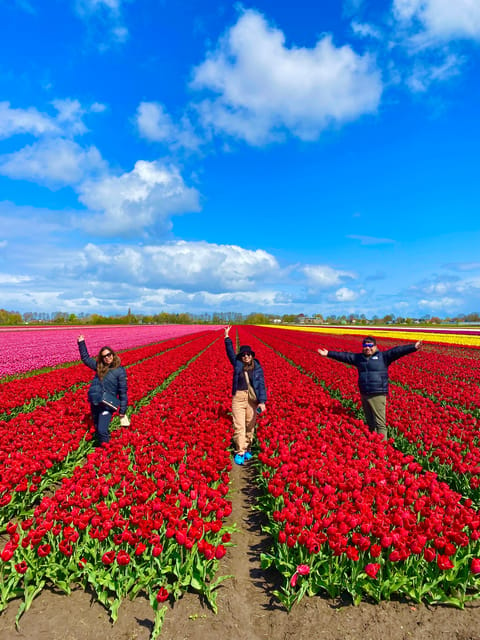
At one stop, you might see intense blocks of color arranged in long, straight rows. At another, the flowers may be at a different stage of growth. This variation helps you understand that Dutch tulip production is not simply a matter of planting bulbs and waiting for a postcard scene.
Mike’s family still grows tulips, and his background gives the farming talk a practical feel. He can discuss the tulip life cycle, the work involved in creating new varieties, and the difference between growing flowers for display and growing bulbs for sale. Roel is also praised for explaining the subject clearly and helping people enjoy the fields without disturbing private farmland.
That last point is important. You are visiting with permission rather than wandering into restricted rows for a photograph. Follow the guide’s instructions, stay on the permitted paths, and remember that these fields are working farms.
The photo opportunities are excellent, but conditions are not guaranteed to be sunny or at peak bloom. The season can also be near its end by early May. Even then, you may see plenty of color, as different fields can be at different points in the cycle.
Lunch in Onderdijk with Dutch comfort food

The lunch stop comes between the field visits, in the old Dutch village of Onderdijk. This gives the day a welcome pause from the bus and the open fields.
The meal is buffet style, with juice and water included. Past menus have included cold cuts, Dutch cheeses, pastries, croquettes, toast with butter and chocolate sprinkles, and mustard soup. The mustard soup is a local favorite and worth trying if it is offered. Alcoholic drinks and sodas cost extra.
The setting adds something to the meal. You can admire the Geradus Majella church, an architectural landmark in the village, while taking a break from the tour commentary. This is not just a boxed lunch eaten beside a parking lot. It is a proper restaurant stop with enough food to make the meal feel like one of the day’s main events.
I would describe the lunch as generous rather than formal luxury dining. The word luxury may suggest a polished tasting menu, but the actual appeal is hearty local food, a comfortable setting, and no need to search for a restaurant during a busy flower season.
If you have strict dietary needs, ask about them before booking. The provided information does not specify special menus. Juice and water are included, while alcoholic drinks and sodas are not.
More Garden Day Trips in the Netherlands
- Day Trip to Keukenhof Gardens from Amsterdam with Tour Guide
★ 4.5 · 77 reviews - Amsterdam: Day Trip to Flower Parade & Keukenhof on April 18
★ 3.8 · 37 reviews - Private Day Tour to Keukenhof Gardens – from Amsterdam/Rotterdam
★ 5.0 · 20 reviews - Amsterdam: Day Trip to Keukenhof & Zaanse Schans Windmills
★ 3.5 · 12 reviews
A working windmill dating to 1633
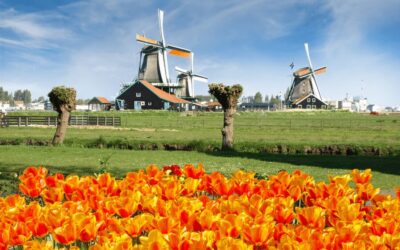
The windmill stop gives the day a second Dutch symbol without feeling like a repeat of the flower fields. You visit a traditional working windmill dating to 1633, see the interior, and meet the miller.
There is also a short presentation about the history and use of Dutch windmills. The guide can explain how these structures helped manage water and support life in a low-lying country. Inside the mill, the machinery makes the visit more concrete than simply photographing sails against the sky.
This stop lasts about 45 minutes in the planned schedule, with additional time around the windmill area for pictures. The pace is active but not frantic. You can listen, look around, and take photographs before returning to the bus.
The windmill visit is especially useful if you have already seen Amsterdam’s canal houses and want another piece of Dutch culture explained in context. It also gives the day more variety. You are not spending six hours looking at tulips from slightly different angles.
Timing, comfort, and the real value of $143
At $143 per person, this is not the cheapest way to see tulip fields. The value depends on how much of the day you would otherwise arrange yourself.
The price includes transportation, entry to the windmill, a substantial lunch, and visits to at least three fields. You also get a guide with direct experience in the tulip industry. Hiring transport into the northern farming areas, finding permitted fields, arranging a meal, and locating a working windmill would take time and would not guarantee the same access.
The modern bus is another part of the calculation. You can leave the driving to someone else, avoid figuring out rural connections, and return to Amsterdam the same day. Several departures have been described as comfortable and clean, with a group size that feels manageable.
The advertised duration is six hours, but traffic and field conditions can alter the schedule. One outing finished a little over five hours, apparently because the roads were clear. Treat six hours as a planning guide rather than a precise promise.
The tour is a good fit for couples, families, solo visitors, and older people who want a complete day without changing trains in the countryside. An 85-year-old participant enjoyed the comfortable bus, the lunch, and the windmill, but you should still be comfortable getting on and off a coach and walking around fields and the mill site.
The activity is wheelchair accessible, though the rural stops and windmill interior may have their own practical limitations. Confirm your needs with the operator before departure if you use a wheelchair or require assistance.
How the guides shape the day
A flower tour can become a sequence of pretty stops with little meaning. The guide is what prevents that.
Mike grew up around tulip farming and can explain the trade from family experience. Roel is also closely connected to the region and is known for clear explanations, a friendly manner, and help with photographs. Both English and Dutch are available.
The best part of their approach is that they connect the small details to the larger picture. You learn why farmers grow several varieties, what happens during the tulip cycle, and how the fields are managed. You also get practical reminders about respecting private farms and staying within approved areas.
Guides may help take photos, which is useful when you are traveling alone or want a picture of your whole group. Do not expect a private photography session for every person, but the staff makes an effort to include people.
Who should book this tour
Book it if you want:
- Flower fields away from the busiest tourist route
- A guide who can explain commercial tulip farming
- A traditional meal included in the day
- A working windmill rather than a windmill photo stop only
- Simple transport from Amsterdam
- A structured six-hour outing with several different stops
This is less suitable if you want to spend the whole day inside a formal flower garden, prefer complete independence, or dislike fixed schedules. Field access depends on farming conditions, and the route may change.
Bring comfortable shoes and a camera. You will walk at the fields and around the windmill, and weather can affect how enjoyable the open-air stops feel. The tulip season is short, so check the available date carefully rather than assuming every spring day will look the same.
Free cancellation is available up to 24 hours before departure, and you can reserve now and pay later. That flexibility helps when spring weather and flower conditions are hard to predict.
Should you book the North Holland tulip tour?
I would book this tour if you want more than a quick photograph among flowers. The combination of three permitted farm visits, direct farming knowledge from guides such as Mike and Roel, a filling village lunch, and a working 1633 windmill gives the day a good range.
The strongest reason to choose it is access to the northern fields without having to plan rural transport yourself. The main caution is seasonal uncertainty: blooms, route order, traffic, and total time can vary.
For a first visit to the Netherlands during tulip season, $143 is fair when you count the meal, transport, windmill admission, and specialist guide. It is a practical choice for a relaxed day outside Amsterdam, especially if you want quiet fields and a clearer idea of how Dutch tulips are actually grown.
FAQ
Where does the tour leave from?
The tour departs from restaurant Market 27 at Amsterdam Noord Metro Station.
How do I reach Market 27 from central Amsterdam?
Take the M52 North-South Metro Line in the direction of Noord. The ride from Amsterdam Central Station takes about four minutes, followed by a short walk to the departure point.
How many tulip fields will I visit?
You will always visit at least three tulip fields. The exact fields and route can change with seasonal conditions and traffic.
Is lunch included?
Yes. Lunch is included, along with juice and water. Alcoholic beverages and sodas are not included.
What food is served at lunch?
The meal is regional and may include buffet items such as cold cuts, Dutch cheeses, pastries, croquettes, toast with butter and chocolate sprinkles, and mustard soup.
Will I visit a real working windmill?
Yes. The tour includes entry to a traditional windmill dating to 1633, a presentation about windmill history, and an opportunity to meet the miller.
Which languages are available?
Live guiding is available in English and Dutch.
Can I cancel the booking?
You can cancel up to 24 hours before departure for a full refund. Reserve-now, pay-later booking is also available.
More Lunch Experiences in Amsterdam
- Keukenhof, Zaanse Schans Windmills Private Tour with Lunch
★ 4.5 · 50 reviews - From Amsterdam: The Early Flower Tour, full day with Lunch
★ 5.0 · 2 reviews - Versailles Palace and Giverny Monet House Visit with Lunch
★ 4.0 · 1,948 reviews - Sapadere Tour with Dimçay Lunch, Cave, Tropical Fruit Garden
★ 4.5 · 1,640 reviews
More Tulip and Flower Field Tours in Amsterdam
- Amsterdam: Tulip Farm Visit, Keukenhof, and Windmill Cruise
★ 4.6 · 456 reviews - Amsterdam Canal, Tulip, Windmill Photoshoot | Custom Request
★ 4.9 · 307 reviews - Keukenhof Gardens & Tulip Experience Tour from Amsterdam
★ 4.5 · 267 reviews - From Amsterdam: Keukenhof Gardens & Tulip Experience Tour
★ 4.6 · 249 reviews
Just added around Amsterdam
- Amsterdam Private Tour to Keukenhof, Tulip Fields and Windmills★ 5.0 · 28 reviews
- Tulip Paradise: Keukenhof Half-Day Private Tour★ 5.0 · 17 reviews
- Private Guided Keukenhof Gardens and Zaanse Schans Tour★ 5.0 · 7 reviews
- Private Tour Tulip Gardens (Keukenhof) and Dutch highlights★ 5.0 · 2 reviews
- Sightseeing Keukenhof Tulip fields, Giethoorn tour from Amsterdam★ 5.0 · 2 reviews
- Keukenhof, Flower Fields, Volendam and Zaanse Schans Small-Group Tour★ 4.0 · 23 reviews
- Private Tour to Tulips, Keukenhof, Windmills & Cheese Farm★ 5.0 · 4 reviews
- Skip-the-Line Keukenhof Gardens and Tulip Fields Tour from Amsterdam★ 4.0 · 5 reviews
Amsterdam Garden Tours, compared.
Keukenhof Entry & Shuttlebus with Flexible Return
Read our review →

Day Tour Keukenhof and Zaanse Schans Windmills
Read our review →
Keukenhof and Zaanse Schans Windmills Guided Day Trip
Read our review →
Go City Amsterdam Pass: 40+ Attractions including Keukenhof
Read our review →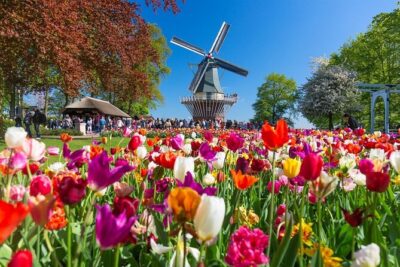
Keukenhof Entry & Shuttle Bus with Flexible Return
Read our review →