
Review · GREECE
Athens with Kids: Myths & Family Games in the National Garden
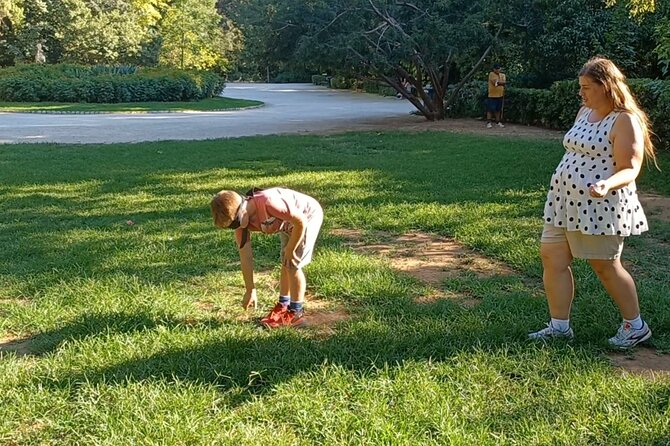
Ancient Greece becomes much easier for children to grasp when they can play the games, handle toy replicas, and hear stories instead of standing still beside a monument. In Athens’ National Garden, a facilitator uses five Hercules myths and five ancient Greek games to show how children lived, learned, and had fun 3,000 years ago.
I like the shaded garden setting, which gives families a quiet break from Athens’ busy streets. I also like the hands-on format: the handmade replicas and adjustable game difficulty give adults a real role instead of leaving the children to watch. The main drawback is that this is not a guided sightseeing tour, and the outdoor setting makes good weather essential.
Key points at a glance

- Five Hercules myths and five ancient games: History comes through stories, movement, and friendly competition.
- A shaded National Garden setting: You meet at Leof. Vasilisis Amalias 1 and remain near the starting point for the full activity.
- Replicas you can use: Ancient toys and handmade game pieces help children picture everyday life in classical Greece.
- A small group of up to 10 people: The size should allow questions and personal guidance.
- A useful take-home ending: Each family receives a commemorative gift and one Garden map.
- Weather matters: If the garden closes or rain prevents the activity, it moves to nearby Zappeion or can be rescheduled or refunded.
Why play works better than a standard Athens lesson
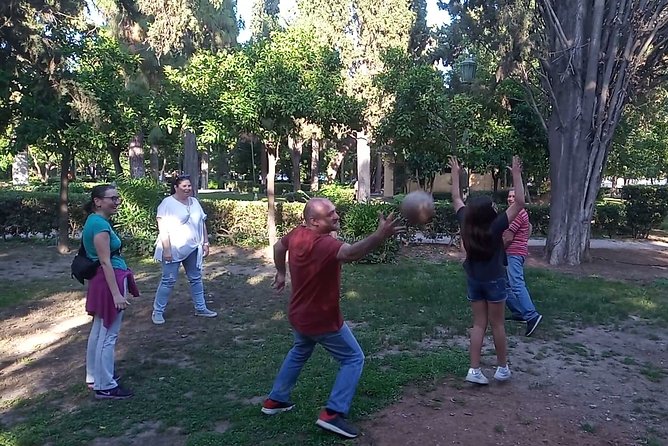
This experience takes a simple approach: children learn about ancient Greece by doing things children once did themselves. Instead of asking a six-year-old to remember dates or names, the facilitator uses toys, images, myths, and games to make the subject physical and easy to follow.
That matters in Athens, where many family activities can become a long walk among ruins. The Acropolis and the Ancient Agora are essential, but younger children may not connect with stones and columns right away. Here, the focus shifts to childhood, education, competition, and play. You get a different view of the ancient world, one that feels closer to daily life.
The session lasts about 90 minutes. That is long enough to offer real content, but short enough for a family to fit it between major sights. The format also gives you a break from sunlit archaeological sites. The National Garden provides shade and a calmer setting, although you should still prepare for an outdoor activity rather than an indoor workshop.
A few more garden visits around Greece worth a look
- Athens Cooking Class and Lunch in our beautiful garden in Greece
★ 5.0 · 130 reviews - Athens Market Tour and Cooking Class in a Beautiful Garden
★ 5.0 · 122 reviews - National Gardens Segway Tour
★ 4.5 · 93 reviews
Meeting the facilitator at the National Garden
The meeting point is Leof. Vasilisis Amalias 1, Athens 105 57, beside the National Garden. The activity begins and ends at this same point, so you do not need to arrange a second pickup location or figure out how to return to your hotel from an unfamiliar neighborhood.
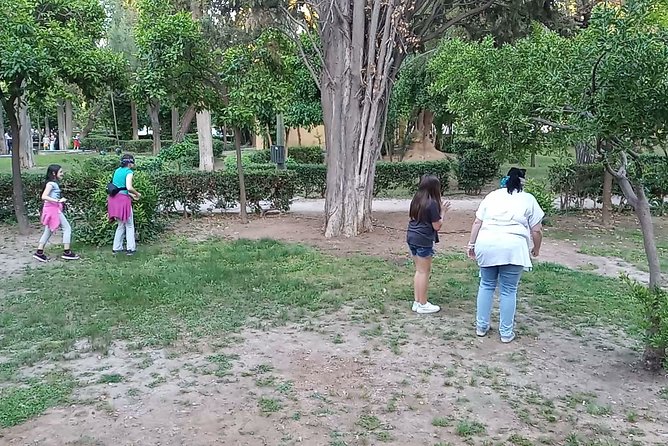
Once the group is together, you head into the garden’s greenery. The setting is a former royal retreat, and its paths and shade make a pleasant change from the hard stone and traffic around central Athens. You settle on a mat for the storytelling and toy portion, then use the surrounding open space for the games.
The group limit is 10 people. For a family activity, that is a useful number. A large crowd can turn a game into a demonstration, while a small group gives children room to ask questions and try again. It also helps the facilitator adjust the activity to different ages. One family used the workshop with boys aged 5 and 8, and another account describes different levels of difficulty being offered when requested.
The activity is offered in English. The facilitator is central to the experience, so the personality and style of the instructor will shape your afternoon. Valia is specifically praised for her patience, warmth, and ability to answer questions, and she has led sessions where both adults and children took part fully. Since the information does not promise that Valia leads every departure, you should think of her as a named example of the kind of facilitator involved, not a guaranteed instructor.
Ancient toys on a mat beneath the trees
The first part introduces replicas of ancient toys. Through images and interactive storytelling, you learn how children played around 3,000 years ago. This is a useful starting point because it gives the games some context before anyone begins competing.
The replicas are not simply decoration. They give children something concrete to look at and use. A toy can prompt a better question than a long explanation: Who played with this? Was it for a small child or an older one? Did children play alone or together? What did play tell adults about education and growing up?
Adults benefit too. The activity is not designed as a babysitting session while parents watch from the side. The information covers childhood and education in ancient Greece, and the group learns together. You may find yourself comparing ancient games with games you played as a child, especially when some activities feel surprisingly familiar.
Images and stories help fill in the gaps. The session is not trying to present every aspect of Greek civilization. Instead, it picks one narrow subject, childhood, and explores it through objects and play. That focus keeps the material manageable for children.
A practical point: bring the same patience you would bring to any family workshop. Some children will jump into a game quickly, while others may want to watch first. The facilitator’s role is to explain and encourage, not force every child to perform.
Five Hercules myths told through movement
The storytelling centers on five myths about Hercules. These are not presented as a long lecture. The myths form the bridge between ancient storytelling and the games that follow, helping children understand why Hercules remains such a strong figure in Greek culture.
The activity uses sources from antiquity, but the supplied information does not list the exact five stories. You should expect a family-friendly introduction to Hercules rather than a full scholarly study of every version of his life. That is a sensible choice for a 90-minute outdoor session.
The best part of this format is the connection between story and action. Children hear about a hero, then take part in activities that require concentration, coordination, or friendly competition. The result is less passive than listening to mythology in a museum gallery.
Adults should not assume the myths are only for children. The workshop has also appealed to adults looking for a relaxed cultural activity, including a couple who chose it as a way to learn about ancient Greece without booking a conventional sightseeing tour. You can ask questions and follow the ideas behind the stories, while children remain active.
The word myth here does not mean a fantasy show or theatrical performance. Expect storytelling, images, explanation, and participation. The emphasis is on understanding ancient childhood through play.
Same place, a different kind of green day out:
- Rethymno:Matala ,Agia Galini,Botanic Garden & Spili Day Trip
★ 4.6 · 21 reviews - Cooking experience in the most beautiful garden near Rethymno
★ 4.5 · 19 reviews - Santorini Farm-to-Table Cooking Class with a Local Chef, Christos
★ 4.5 · 16 reviews - Sunrise Pilates & Calisthenics at National Garden
★ 5.0 · 16 reviews
Five Greek games, with room for different ages
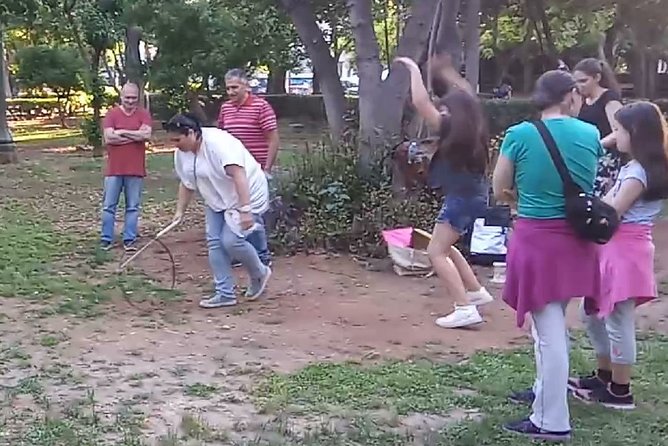
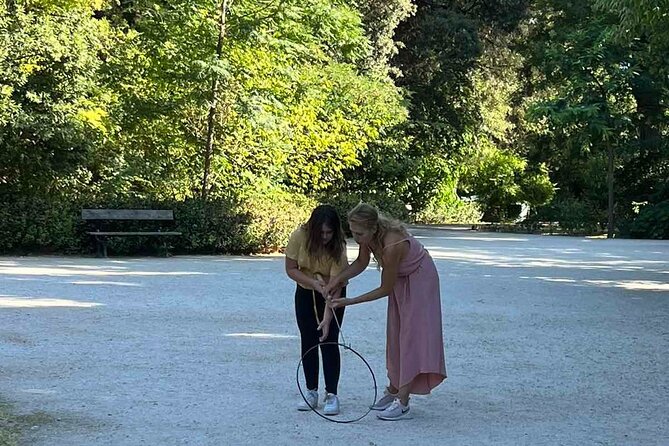
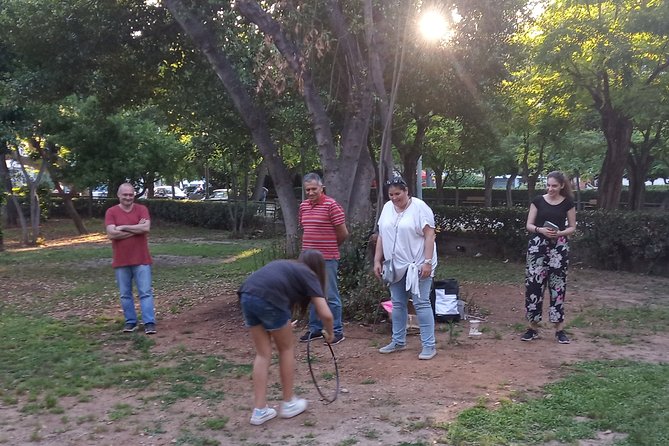
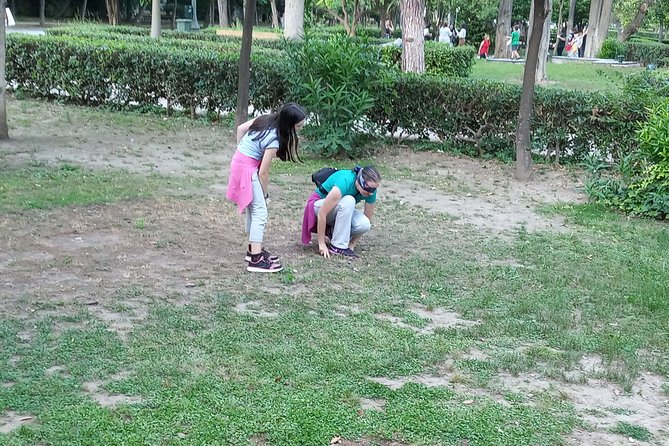
After the stories, the group plays five ancient Greek games using handmade replicas. This is the heart of the experience. The games are based on authentic sources, though the supplied information does not identify each game by name or explain the exact rules in advance.
That lack of a published game list is worth noting. If you want to research every activity before booking, this experience will leave some surprises. If your family prefers a little discovery, it works in your favor.
The games are designed for children and adults. Some can be adjusted to different levels, which is important when one child is five and another is eight, or when adults want a more difficult challenge. A family can ask the facilitator to demonstrate another level of difficulty, so the session does not have to feel too easy for older children or impossible for younger ones.
The competitive part adds energy, but the goal is not simply to find the strongest player. You learn how games can show patience, skill, cooperation, and the values of the society that created them. Some activities may feel close to modern games, making the ancient world seem less distant.
I would encourage parents to play rather than stand behind a camera. The activity is built for shared participation, and adults who join in help create the family memory. One participant even won a prize at the end, so there is room for lighthearted competition.
Do keep expectations realistic. These are ancient-game recreations, not a full archaeological experiment. The replicas are there to support play and explanation. You will not receive a detailed history of every object or a museum-level catalog of sources.
A gift and a map to continue the visit
The experience ends back at the meeting point with a commemorative gift and one map of the National Garden for each family. These are small additions, but they make the ending more useful than simply saying goodbye.
The map lets you continue exploring the garden on your own. That works well if your children still have energy or if you want a quiet stroll after the workshop. The garden can also serve as a breathing space between central Athens sights, so you do not have to rush straight back into traffic and crowds.
The souvenir helps children remember the activity after the holiday. It is not described in detail, so do not book this expecting a particular type of toy or prize. Think of it as a modest keepsake tied to the workshop.
Because the session finishes where it starts, you can also plan your next stop without a complicated transfer. The meeting point is near public transportation, though no specific metro or bus instructions are supplied. Check your route before setting out and allow time to find the entrance.
What the $54.19 price means for a family
The listed price is $54.19 per person. For four paying participants, that comes to $216.76 before any separate spending on transport or food. The price includes the facilitator, toy replicas, the commemorative gift, the Garden map, liability insurance, and local VAT at 24 percent.
That is not a bargain in the same way as walking through a public park, but it is a different product. You are paying for a planned, instructor-led workshop with small-group participation and materials. The value improves if your family wants more than a playground break and would otherwise book a separate cultural activity.
The price makes less sense if your children dislike structured games or if your family plans to spend only a few minutes in the area. It is also not the best fit if you want a conventional guide to Athens’ monuments. No major archaeological admission is included because the activity takes place in the garden, and the format is not a guided tour.
For families who like interactive learning, the cost covers a focused 90 minutes with a clear theme. You also receive a take-home gift and map. I would compare it with the cost of other family workshops in Athens, not just with a free walk through the garden.
Weather, comfort, and practical limits
This is an outdoor activity, so weather is the main practical risk. If poor weather forces cancellation, you will be notified at least three hours in advance and offered another date or a full refund. If the National Garden is closed for another reason, the activity moves to the green open area of Zappeion next door, while the meeting point remains the same.
Wear comfortable clothes suitable for sitting on a mat and taking part in games. The supplied details do not specify whether seating is available beyond the mat, so anyone who needs a particular type of seat should ask before booking.
Service animals are allowed, and most people can participate. Facilitators are trained and certified in first aid, but they cannot provide medication by law. Bring any medication your family needs, especially allergy medicine, since you will be outdoors.
The workshop can include photo or video recording in the public space. By attending, you consent to shooting that may be used later by the provider or other participants, although you can withdraw your consent in writing before or after the workshop. You are not responsible for images taken and used by other people, so discuss this point with the organizer if privacy is important to your family.
Free cancellation is available up to 24 hours before the start time for a full refund. Changes or cancellations inside that window are not accepted, unless the provider cancels for poor weather and offers a new date or refund.
Who will enjoy this family workshop most
I would choose this for families who want children to connect with Greek history through movement and play. It is especially suited to parents who know that a long museum visit may test everyone’s patience, but who still want a cultural activity with real content.
Children around the ages described in the available information, 5 and 8, can take part, and the games can be adjusted. Older children and adults can also enjoy the challenge, especially if the facilitator offers harder versions. The activity is not limited to families with children, either. Adults looking for a relaxed introduction to ancient Greek childhood can join.
It may not suit you if you want a detailed tour of the National Garden, a monument-by-monument explanation of Athens, or a fully indoor activity. It is also a weaker choice in uncertain weather if your schedule has no spare time for a change of date.
The small group size helps, but the experience still depends on your family joining in. You will get more from it if everyone is willing to ask questions, try the games, and accept a little friendly competition.
Should you book Athens with Kids: Myths and Family Games?
Book it if you want a short, hands-on cultural activity that gives your children a break from ruins and museum displays. The combination of Hercules stories, ancient toy replicas, five games, and a shaded garden setting offers a clear theme and a useful amount of participation.
Skip it if your priority is sightseeing information about Athens’ major landmarks, or if outdoor plans are risky during your dates. Before booking, check the forecast, remember that the activity is in English, and confirm that everyone is happy to take part rather than simply watch.
At $54.19 per person, it is best viewed as a small educational workshop, not a cheap park visit. For a family that wants to learn together and leave with a map, a keepsake, and a better sense of how ancient children played, it is a well-focused choice.
FAQ
Where does the activity begin and end?
It begins at Leof. Vasilisis Amalias 1, Athens 105 57, Greece, and ends back at the same meeting point.
How long does the activity last?
The experience lasts approximately 1 hour and 30 minutes.
Is this a guided tour of the National Garden?
No. It is a family activity based on ancient Greek games, myths, and childhood. It is not a guided sightseeing tour.
What happens if the National Garden is closed?
The activity takes place in the green open area of nearby Zappeion. The meeting point remains the same.
What happens if bad weather cancels the activity?
You will be notified at least three hours ahead and offered the choice of another date or a full refund.
What is included in the price?
The price includes an expert facilitator, use of replicas of ancient toys, a commemorative gift, one Garden map per family, liability insurance, and local VAT at 24 percent.
Just added around Greece
- Santorini Farm-to-Table Cooking Class with a Local Chef, Christos★ 4.5 · 16 reviews
- Off-Road Safari, Traditional Villages & Botanic Garden Walk★ 5.0 · 5 reviews
- Cooking experience in the most beautiful garden near Rethymno★ 4.5 · 19 reviews
- Half Day Private Tour to Botanical Garden in Chania★ 5.0 · 2 reviews
- Sunrise Pilates & Calisthenics at National Garden★ 5.0 · 16 reviews
- Cooking Class at Diamond Roof Garden★ 5.0 · 14 reviews
- Melanes Tour: Village Highlights & Garden-to-Table Meal★ 4.5 · 5 reviews
- Karpathos: Botanical Clay Workshop & Pottery in a Vineyard★ 4.8 · 4 reviews
Greece Garden Tours, compared.

Athens Cooking Class and Lunch in our beautiful garden in Greece
Read our review →
Athens Market Tour and Cooking Class in a Beautiful Garden
Read our review →
Rethymno:Matala ,Agia Galini,Botanic Garden & Spili Day Trip
Read our review →
Cooking experience in the most beautiful garden near Rethymno
Read our review →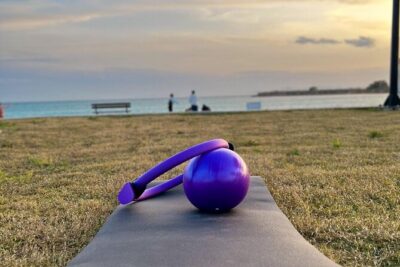
Sunrise Pilates & Calisthenics at National Garden
Read our review →
Santorini Farm-to-Table Cooking Class with a Local Chef, Christos
Read our review →
Browse the lists this tour appears in