
Review · COOKING CLASSES
Authentic Garden to Table Cooking Class in Dubrovnik Countryside
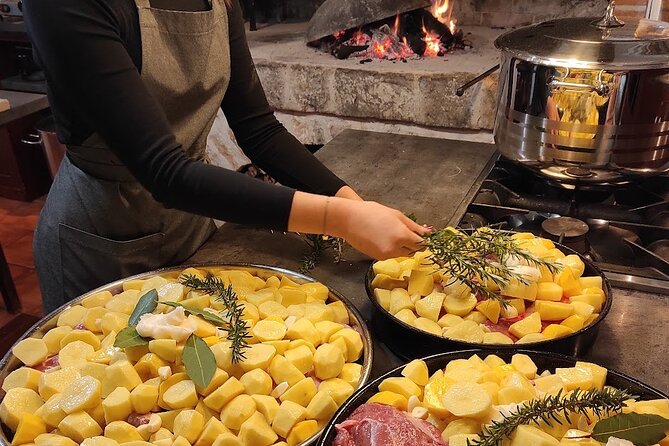
The best part of this Dubrovnik cooking class is that you do not simply watch someone prepare Croatian food. You knead your own bread, gather vegetables and eggs, and help turn farm ingredients into lunch at a family homestead that has belonged to the same family since the 1500s. Ivo and Katarina add local stories to the food, so the class feels like a visit to a working home rather than a restaurant demonstration.
I especially like the garden-to-table approach and the small group size, capped at eight people. You also get a proper meal, wine, garden walk, and cultural history for the $208 price. The main consideration is that the menu changes with the season, and five hours can feel long if you want only a quick cooking lesson.
Key points at a glance
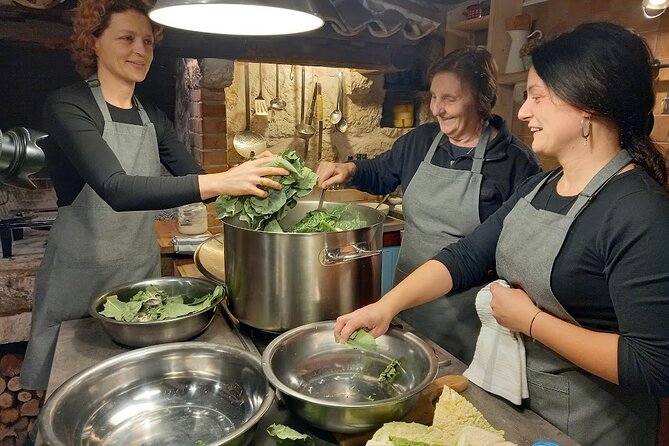
- A 500-year family home: Kameni Dvori in Konavle has been part of the Mujo family story for roughly 15 generations.
- Hands-on from the start: You knead your own bread, collect produce and eggs, and help prepare the meal.
- Seasonal Croatian food: The menu depends on what is ready in the garden and on nearby family farms.
- A possible goat-milking moment: If dessert uses milk, you may be invited to milk a goat.
- A full countryside outing: Pickup, cooking, garden time, a generous meal, homemade wine, and local stories are included.
- Small-group setting: The maximum is eight people, which allows more direct help in the kitchen.
From Dubrovnik to the Konavle countryside
The cooking class begins at Kameni Dvori, Holiday Village Konavle, in Lovorno near Gruda, south of Dubrovnik. Pickup is offered, and the vehicles carry a Cooking class sign. Transfers use vehicles for three, seven, or eight people, so you should provide any special transport request when booking. Child seats can also be requested.
The drive matters because the setting changes the whole mood of the day. Dubrovnik is famous for its walls, stone lanes, and busy sightseeing schedule. Konavle gives you a slower look at southern Croatia, with family farms, gardens, vineyards, and traditional homes. I like this contrast. You get away from the crowds without giving up the convenience of hotel pickup.
Ivo has provided a short history lesson during the drive on some outings, and Katarina has also explained the family and the area while driving. Do not treat the transfer as a formal sightseeing tour, but it can help you understand why this rural valley is a useful place to learn about Croatian food and family life.
The class is offered in English. Confirmation is normally sent at booking, although reservations made within two days of the start may take up to 48 hours to confirm, subject to availability.
More Cooking Classes in the world:
- We Cook Thai Home Garden Cooking School
★ 4.9 · 378 reviews - Thai Cooking Class with Market & Garden Tour
★ 4.9 · 249 reviews - Ella : Cooking class with amazing Spice Garden Tour
★ 5.0 · 239 reviews
A welcome drink and a family introduction
At the homestead, you begin with a welcome drink and an explanation of the day. The hosts introduce the cooking plan, though the exact dishes depend on the season and the ingredients available that morning.
That seasonal element is important. You are not being shown a fixed menu built around ingredients shipped in from elsewhere. The class uses food produced on the property or sourced from a local family farm. A garden visit may include vegetables, fruit trees, olive trees, wine production, and fresh eggs.
The property itself is part of the experience. The family home dates back to the 1500s, and several generations are involved in running the activity. You may meet members of the family in the kitchen and garden, rather than dealing with a single instructor from beginning to end.
This is one reason the small group limit helps. With no more than eight people, you have a better chance to ask questions, get help with the dough, and take part in the food preparation. It also keeps the gathering closer to a family meal than a large commercial class.
Kneading bread the old-fashioned way
The first practical task is homemade bread. Each person kneads their own portion according to a traditional recipe.
This is a simple activity, but it gives the class a good rhythm. You start with something familiar, use your hands, and then leave the dough to rise while you visit the garden. You are not just given a finished loaf to sample at the table. You take part in a basic task that has long been part of rural household cooking.
The bread is served warm with the starter, along with homemade olive oil, spreads, pickled vegetables, cured meat, and cheese. If you enjoy food preparation more than formal instruction, this hands-on beginning should suit you well.
The class is not described as a professional culinary course, so you should not expect advanced knife skills, technical pastry work, or restaurant-style training. Its strength is practical home cooking and the chance to understand how a meal comes together from ordinary farm ingredients.
Walking through the garden for the day’s ingredients
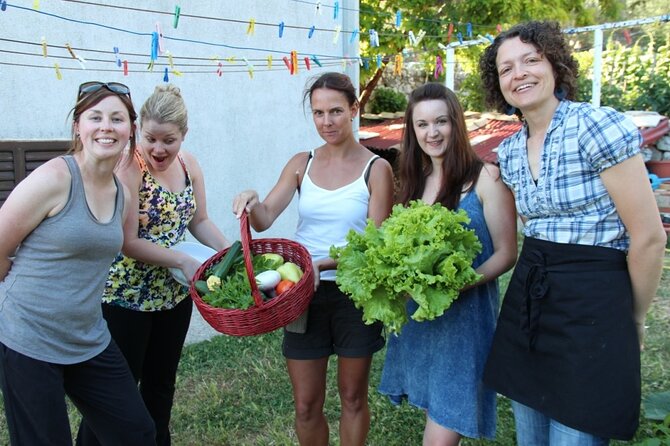
After the bread preparation, you visit the garden. The host explains the growing methods, and you collect the ingredients needed for the meal. Fresh eggs are gathered as part of the visit.
This is the point where the experience moves beyond a standard cooking demonstration. You see the source of the vegetables before they are washed, chopped, and cooked. The timing also makes sense: while the bread rests, you move outdoors and learn how the household produces some of its food.
The family produces or grows much of what appears on the table, including vegetables, fruit, olive oil, and wine. Other ingredients come from local family farms. That makes the meal feel connected to Konavle rather than simply labeled Croatian for marketing purposes.
The garden visit is also a good reason to choose this class over a cooking lesson in central Dubrovnik. You get a clearer picture of rural life, seasonal eating, and the work behind a homemade meal. Bring comfortable shoes, since the activity includes walking around the property. The provided information does not promise a particular harvest, so expect the garden to look different depending on the time of year.
A few more garden visits around the world worth a look
- Half day Thai cooking Class + Market tour+Garden tour
★ 5.0 · 237 reviews - Cooking Morning Class Chiang Mai Visit Organic Garden and Market
★ 5.0 · 211 reviews - Shared Cooking Class with Fresh Garden Ingredients in Sorrento
★ 5.0 · 194 reviews - Cooking Evening Class Chiang Mai Visit Organic Garden and Market
★ 5.0 · 187 reviews
Goat milk, eggs, and the little surprises
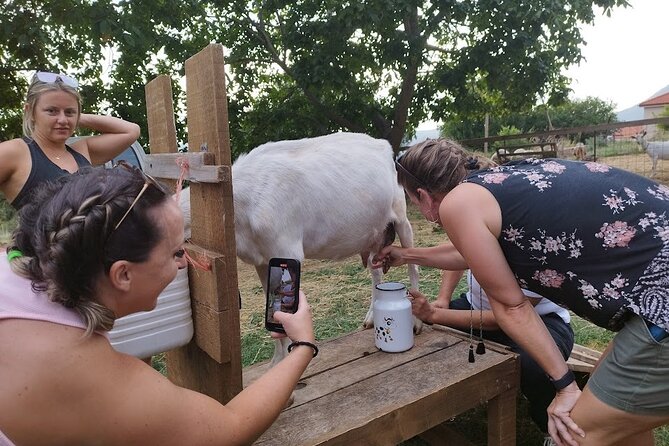
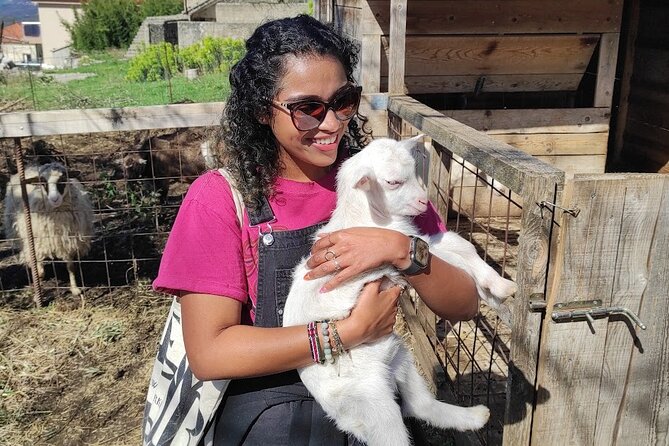
If the dessert includes milk, the host may offer you the chance to milk a goat. This is not guaranteed on every visit, but it is a memorable possibility and one of the most unusual parts of the experience.
The same applies to the exact food tasks. One version of the day included gathering vegetables, eggs, and milk before preparing dinner. Another included bread, pasta, chicken stew, and vegetable soup. The fixed idea is not a fixed recipe. You work with what is available.
That flexibility is a strength if you want a genuine farm meal. It is less suitable if you need to know the precise menu before you arrive. Vegetarian, vegan, and gluten-free meals are available, and the hosts can accommodate flexible dietary restrictions. Tell them in advance so the kitchen can plan properly.
Cooking a Croatian meal with the family
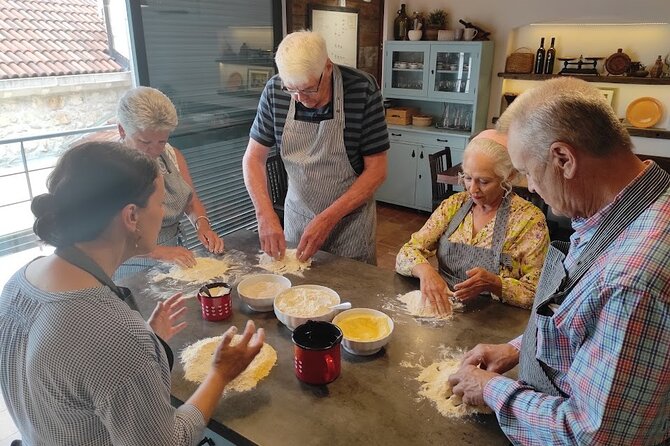
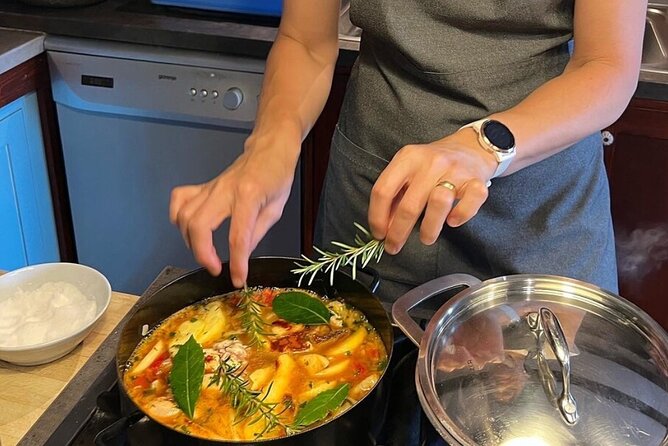
Once you return to the kitchen, you help prepare the main food. Depending on the season, that may include a farm-grown chicken stew with fresh vegetables and fruit, cooked with wine and served with homemade pasta.
Another listed main dish is the Lovorno skewer: pork cooked on bay leaf branches and served with country-style potatoes, boiled vegetables seasoned with homemade olive oil, and a seasonal salad. The bay leaf branches give the dish a strong connection to the local setting, and the cooking method is more distinctive than simply grilling meat on a standard skewer.
The menu begins with cured meat and homemade cheese, warm bread, pickled vegetables, spreads, and olive oil. Dessert is Grandma’s cake. Since the food changes, think of these dishes as examples rather than a promise.
The cooking has a shared, family style. You help with the work, but you are not expected to run the kitchen alone. This suits people who want guidance without being kept at a demonstration table. It also works well for families and groups of friends, since several people can take on different jobs.
Wine, lunch, and stories from 500 years
While the food cooks, the hosts present stories from their family tree, which reaches back roughly 500 years. This is not a separate museum-style lecture. The history comes while you wait for lunch, making the pause part of the meal rather than dead time.
The family connection is one of the strongest reasons to book this outing. You learn about Croatian heritage through a real household, its property, and its food traditions. The setting adds meaning to the dishes. Homemade olive oil, wine, bread, vegetables, and preserves are not abstract cultural examples. They are things the family makes and serves.
When the meal is ready, you sit down to eat with homemade red or white wine. The class price includes more than instruction: it covers the transfer option, welcome, garden visit, ingredients, cooking activities, a substantial meal, and drinks. At $208 per person, that is a serious price for a five-hour activity, but the value is strongest if you want a full cultural outing rather than a two-hour lesson.
I would compare it with the cost of a private countryside transfer, a long meal, and a separate food experience. If you would otherwise book several smaller activities, the combined format can make sense. If you only want to learn one or two Croatian recipes, this is probably more than you need.
An occasional bicycle addition
A bicycle ride has been included in at least one version of the family outing. That day featured a roughly nine-mile ride through the countryside, mostly downhill, with stops for local history and a visit to a cousin’s vineyard for homemade wine, cheese, and cured meat.
This sounds like a terrific addition, but it is not listed as a standard part of the five-hour cooking program. Do not book this activity expecting the bicycle ride unless the operator confirms it for your date. The core experience is the cooking class, garden visit, meal, and family setting.
That distinction matters for planning. People looking for a quiet food day may prefer the standard format. Cyclists may want to ask if a ride can be arranged, but should not assume it will happen.
Who will enjoy this experience most
I would choose this class if you want to slow down after several days of Dubrovnik sightseeing. It suits people who care about food origins, family traditions, and the feel of a countryside home.
It is especially good for:
- Couples looking for a personal day outside the city
- Families who enjoy practical activities
- Small groups of friends
- Anyone interested in Croatian cooking and rural life
- Visitors who prefer a shared meal to a formal restaurant tasting
- People who want a cultural activity with pickup included
You should think twice if you dislike group cooking, have limited mobility for garden walking, or want a tightly scripted menu. The experience is built around participation and seasonal change. You get more personality, but less predictability.
The five-hour length is worth noting. It sounds long on paper, but the day includes transport, welcome time, bread making, garden work, cooking, storytelling, and a full meal. If you prefer quick attractions packed into a busy schedule, this may take too much of your day. If you enjoy lingering over food, the length is part of the appeal.
Practical details before you book
The meeting point is Kameni Dvori, Holiday Village Konavle, Lovorno 11, 20215 Gruda, Croatia. The activity ends back at the meeting point, unless you use the offered transfer arrangement.
The operator provides vehicles for three, seven, and eight occupants. Look for the Cooking class sign, and contact the provider ahead of time if you need a child seat or have a special pickup request.
The experience has a maximum of eight people and is offered in English. Service animals are allowed. Vegetarian, vegan, and gluten-free meals are available, with other dietary restrictions handled when arranged in advance.
Cancellation is free up to 24 hours before the start time for a full refund. Changes or cancellations made less than 24 hours before the start are not accepted for a refund. The cutoff follows local time in Croatia.
The activity is highly rated, with a five-star average from 17 ratings and a 100 percent recommendation rate. That matches the experience’s clear strengths: warm family hosting, hands-on work, excellent food, and an attractive rural setting. Still, the rating should not replace practical planning. Confirm dietary needs, pickup details, and any special activities before you go.
Should you book the Kameni Dvori cooking class?
Book it if you want a complete countryside day, not just a recipe lesson. You will knead bread, gather ingredients, learn about a long family story, help prepare Croatian dishes, and sit down to a generous meal with homemade wine.
The strongest reasons to go are the family-run setting, seasonal ingredients, small group size, and direct connection between the garden and your plate. The main drawbacks are the high price, the five-hour commitment, and the changing menu.
For a first visit to Dubrovnik, I think this is a smart choice for one day away from the city, especially if you have already seen the main sights. It gives you food, history, and rural life in one outing. Just remember that the goat milking, bicycle ride, and exact dishes depend on the day. Book this for the warm family atmosphere and hands-on cooking, then treat the extra surprises as bonuses.
FAQ
Where does the cooking class take place?
It takes place at Kameni Dvori, Holiday Village Konavle, Lovorno 11, 20215 Gruda, Croatia. The activity ends back at the meeting point.
Is pickup from Dubrovnik available?
Yes. Pickup is offered, and the vehicles display a Cooking class sign. Vehicles are available for three, seven, and eight occupants.
How long does the experience last?
The cooking class lasts approximately five hours.
What food will be prepared?
The menu changes with the season and available ingredients. Possible dishes include Lovorno skewers, farm-grown chicken stew, homemade pasta, vegetables, bread, and Grandma’s cake. The meal also includes cured meat, homemade cheese, pickled vegetables, spreads, and olive oil.
Can dietary restrictions be accommodated?
Yes. Vegan, vegetarian, and gluten-free meals are available. The operator can also accommodate flexible dietary restrictions when arranged in advance.
Is goat milking included every time?
No. Goat milking may be offered if the dessert includes milk, so it is a possible part of the experience rather than a guaranteed activity.
Just added around the world
- Skip-the-Line Guided Tour and Gardens Entry in Versailles Palace★ 3.5 · 3 reviews
- Versailles Palace and Gardens Tour★ 4.5 · 44 reviews
- Versailles Palace Guided Experience and Gardens Entry 10 PPL Max★ 5.0 · 42 reviews
- Versailles Palace & Gardens Audio Tour – Private Transportation★ 4.5 · 11 reviews
- Versailles: Farmers Market & Royal Vegetable Garden Food Tour★ 5.0 · 11 reviews
- Versailles Gardens Walking Tour with Audioguide (no tickets)★ 3.0 · 6 reviews
- Versailles Golf Cart & Shuttle Guided Tour, Hamlet and Gardens★ 4.5 · 13 reviews
- Palace of Versailles Entry ticket with Musical Gardens & Estate★ 3.5 · 55 reviews
Cooking Classes, compared.
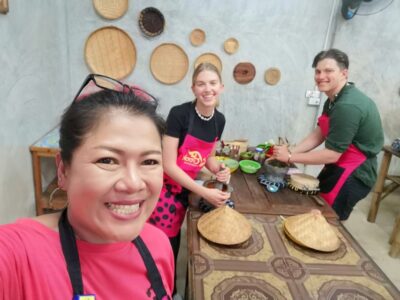
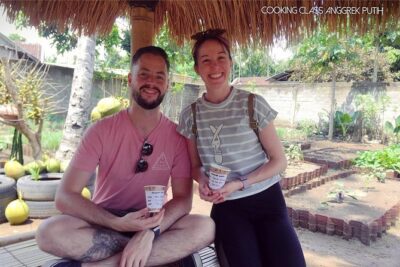
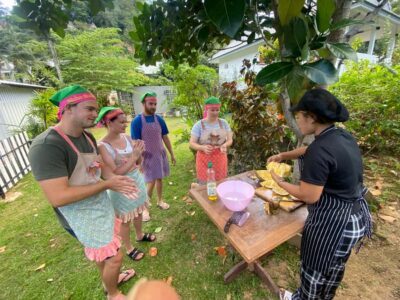
Ella : Cooking class with amazing Spice Garden Tour
Read our review →
Half day Thai cooking Class + Market tour+Garden tour
Read our review →
Cooking Morning Class Chiang Mai Visit Organic Garden and Market
Read our review →
Shared Cooking Class with Fresh Garden Ingredients in Sorrento
Read our review →
Cooking Evening Class Chiang Mai Visit Organic Garden and Market
Read our review →Browse the lists this tour appears in