
Review · USA
Botanical Tour (by Walk With Me Savannah Tours)
Savannah’s beauty is not only in its old buildings. It grows from the ground, hangs from live oaks, spills over garden walls, and shades the city’s famous squares. This two-hour botanical walk with Walk With Me Savannah Tours shows you that living side of town, with stops at Columbia Square, Colonial Park Cemetery, Lafayette Square, the Andrew Low House, and Forsyth Park.
I like the way the tour connects plants with Savannah’s past, rather than treating flowers as labels in a garden. I also like the mix of public squares, private garden views, cemetery trees, and historic ironwork. The main drawback is simple: you walk for about two hours, often in heat, so good shoes, water, and a hat matter.
Key points to know before you book
- Plants with a story: Learn about camellias, magnolias, Spanish moss, palmettos, live oaks, resurrection fern, and many less familiar plants.
- A wider Savannah tour: Botany is the focus, but the route also covers cemeteries, architecture, fountains, ironwork, folklore, and local history.
- Guides who adapt: Sargon is especially praised for clear explanations, humor, and adjusting the walk to whatever is blooming.
- A full two-hour stroll: The route is not a quick garden visit. It moves through several squares and ends at Forsyth Park.
- Small group format: The maximum is 20 people, which should make it easier to hear the guide and ask questions.
- Good value for curious walkers: At $40 per person, the tour gives you a focused way to see several central Savannah sights while learning how to read the plant life around you.
Why Savannah makes a fine botanical walking tour
Savannah was planned around squares, trees, gardens, and open public spaces. That design gives a plant-focused guide plenty to work with. You are not confined to one formal garden. Instead, the city itself becomes the classroom.
One moment you may be looking at a fountain or a piece of cast iron. A few steps later, the guide is pointing out a tea olive, star jasmine, bottlebrush, or an old camellia. This makes the tour useful even if you do not know much about plants. You learn what to look for, where the plant came from, and how it connected to food, medicine, gardening, or local custom.
The botanical theme also gives familiar sights a fresh angle. You may have already planned to see Forsyth Park or the Cathedral of St. John the Baptist. Here, you pause to consider the trees that frame them, the flowers that soften their edges, and the way Savannah’s climate shapes its streets.
I would not choose this as your only Savannah tour if you want a broad survey of the entire city. It has a clear specialty. But that specialty is what makes it useful after you have seen the main landmarks and want to understand why Savannah looks the way it does.
More Garden Walks in the USA:
- Savannah Midnight in the Garden of Good & Evil Narrated Walking Tour
★ 5.0 · 370 reviews - Kauai: Allerton Garden Guided Group Walking Tour
★ 4.6 · 159 reviews - The DC Cherry Blossom Bus Tour with Tidal Basin Guided Walk
★ 4.5 · 151 reviews
Starting among cast iron and flowers at Columbia Square
The walk begins at Columbia Square, one of Savannah’s historic public squares. The opening section combines two subjects that work well together: the city’s cast iron details and its plant life.
You begin with the oldest fountain downtown, then look at ironwork connected with Georgia’s largest historic foundry and more recent cast iron by Ivan Bailey. This is a smart introduction because Savannah’s decorative metalwork often appears beside gates, porches, plants, and garden walls. The guide helps you notice both the crafted and natural details.
The plant discussion here may include star jasmine, bottlebrush, tea olive, privet, azaleas, and rhododendron. That list gives you a sense of the tour’s range. You are not only looking at showy blooms. You are also learning to recognize shrubs and climbing plants that many people pass without a second thought.
This first stop lasts about 15 minutes and requires no admission ticket. It is a gentle start, but the tour does not remain in one square for long. If you want detailed botanical instruction, listen closely and ask questions early. The guides praised most highly, especially Sargon, are known for explaining plants in plain language rather than reciting names without context.
Colonial Park Cemetery and the trees around Savannah’s past
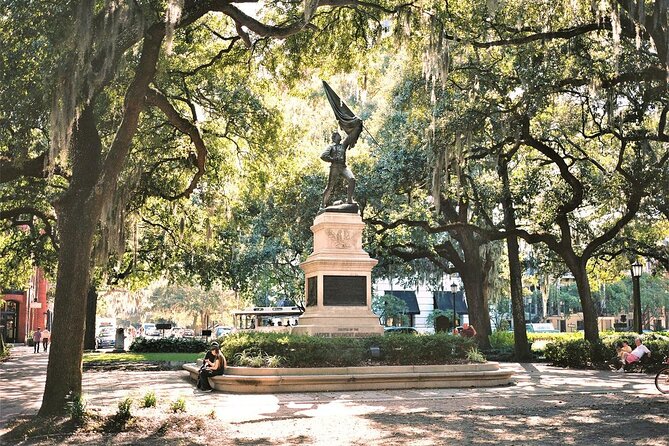
The route continues toward and through Colonial Park Cemetery. This is one of the stronger parts of the walk because the cemetery adds weight to the plant stories. Trees and moss here are not just decoration. They help create the setting in which Savannah’s older stories are told.
The guide discusses Spanish moss, palmetto trees, and crape myrtles, along with ginkgo trees and magnolias. You may also see what could be the oldest crape myrtle downtown. The exact plants in bloom will change with the season, but the tree and plant identification remains useful year-round.
I like this part because it slows you down. A cemetery can easily become a quick photo stop, but looking at its trees changes your pace and attention. The guide may also connect plants with folklore, medicinal uses, culinary traditions, and the city’s urban development.
Expect uneven walking in places and the need to stay attentive to the group. The cemetery section is not a formal garden visit, and the main value comes from listening while you look around.
Lafayette Square’s fountain, ferns, and cathedral view
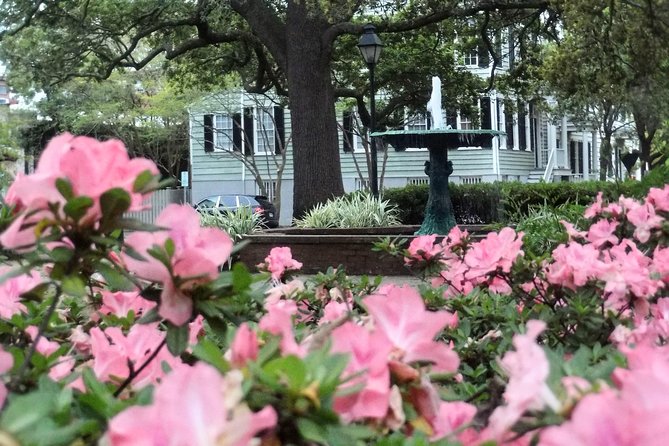
Lafayette Square provides a brief but attractive stop. The guide points out variegated shell ginger, green leopard plants, and Japanese holly fern. These are useful examples of how Savannah’s mild climate supports plants that may look unusual to visitors from cooler areas.
The square also gives you views of the cathedral and surrounding homes, plus a fountain. This is a good place to see how foliage, civic design, and architecture work together. You are not simply studying a plant in isolation. You are seeing how it helps shape the feel of a public square.
The listed stop takes about five minutes, so do not expect a long botanical lesson here. Its value is in the combination of scenery and quick identification. If you have a question about a plant, ask it while you are there, since the group will soon move on.
A few more garden visits around the USA worth a look
- Seattle: Space Needle & Chihuly Garden and Glass Ticket
★ 4.7 · 1,890 reviews - Space Needle and Chihuly Garden and Glass Combination Ticket
★ 4.5 · 1,551 reviews - Princeville Botanical Gardens Tour and Chocolate Tasting Ticket
★ 5.0 · 774 reviews - South Maui: Snorkel to Coral Gardens or Molokini Crater
★ 4.3 · 689 reviews
Juliette Gordon Low’s garden at the Andrew Low House
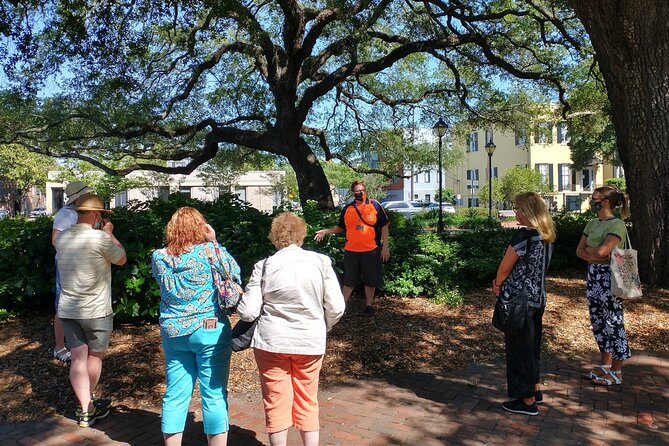
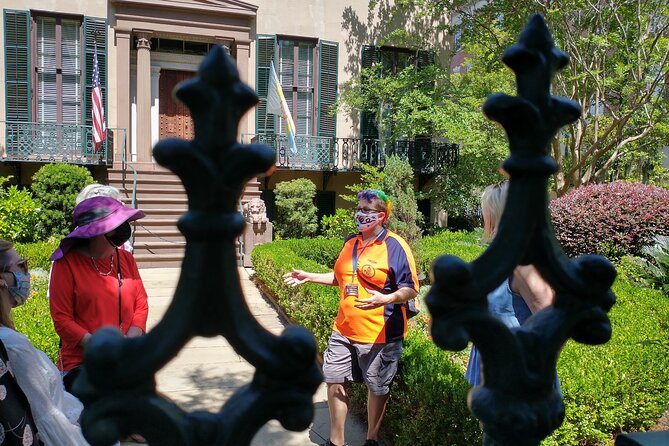
At the Andrew Low House, the tour visits the garden associated with Juliette Gordon Low, founder of the Girl Scouts. This gives the botanical discussion a personal link. You are looking at plants in a garden connected with a notable Savannah resident, not just a collection of anonymous shrubs.
The garden includes crape myrtles, several kinds of camellias, narcissus, and other plantings. Camellias were Juliette Gordon Low’s favorite, so they receive particular attention. If you enjoy flowers with a story, this is one of the more memorable stops.
There is one practical qualification. The garden may be closed depending on the house schedule. The plants can still be seen from outside the fence, but that is not quite the same as walking through the garden. If this stop is especially important to you, keep that possibility in mind.
The visit lasts about 10 minutes and does not include a separate admission charge. The short timing means the guide will focus on selected plants and their connection to the property rather than provide a full house tour.
Madison Square and the plants people often overlook
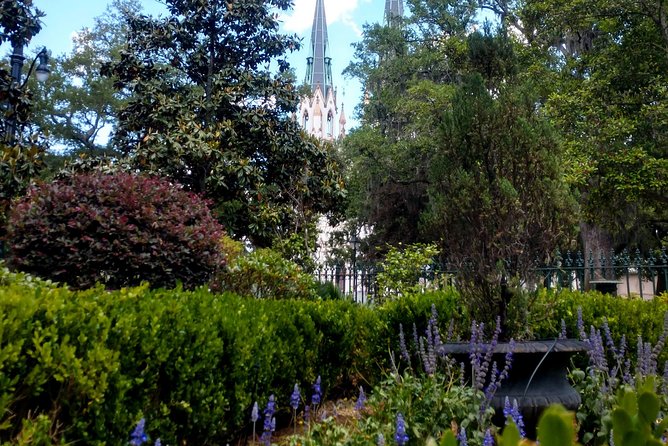
Madison Square adds another set of plants to your growing field guide. The discussion includes agapanthus, reed canary grass, big-leaf hydrangeas, large lacy tree philodendrons, shrimp plants, and a Japanese cherry blossom.
This stop shows why a botanical tour can appeal even if you are not a serious gardener. Some of these plants are easy to recognize once named, while others are the sort you might have seen many times without knowing what they were. The guide helps you connect appearance with name and use.
The square itself also continues the tour’s mix of open space, historic buildings, and planted edges. I find this more useful than an indoor plant lecture because you learn in the setting where these species actually grow. You can keep spotting them for the rest of your trip.
Like Lafayette Square, Madison Square is a short stop of about 10 minutes. The tour moves at a steady pace, so you should not expect long periods for sketching or close study of each plant.
Jones Street, private gardens, and a live oak canopy
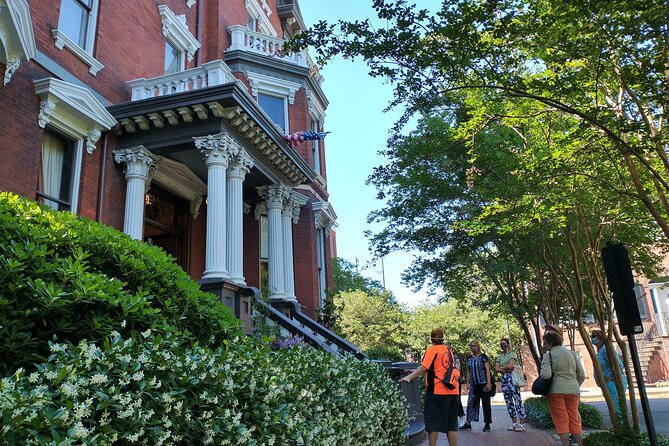
The walk along Jones Street changes the mood. Here, you see private gardens, a canopy of live oaks, and more ironwork. The street has been named by Better Homes and Gardens as the prettiest neighborhood to live in the country, and the route lets you judge its appeal for yourself.
The guide uses this section to discuss additional plant life and iron details. Because many gardens are private, you are viewing them from the public street rather than entering them. That limitation is also part of the charm. You get a look at how residents use greenery, fences, and porches to shape the street without turning the stop into a formal property visit.
This is one of the places where shade can help, especially on a hot day. A guide who pays attention to comfort may choose shady stopping points, but you should still bring water. The walking distance is manageable for most people who can walk or roll about one-third of a mile without resting, yet the full route feels longer because it lasts about two hours.
Monterey Square and Georgia’s olives
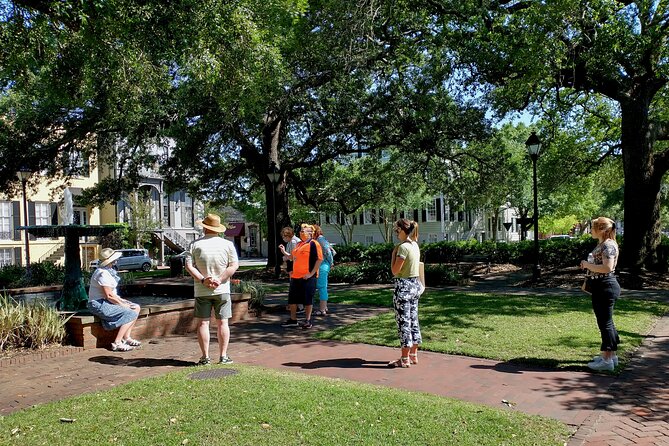
Monterey Square brings the discussion back to plants and ironwork. The guide talks about Georgia’s olives, juniper, and gardenias, while pointing out more examples of local iron decoration.
This stop is a reminder that Savannah’s plant palette is not limited to familiar Southern icons such as live oaks and Spanish moss. You get a broader sense of what can grow here and how people use plants to mark entrances, frame buildings, and soften hard surfaces.
The square also helps tie the route together. By this point, you have seen several kinds of public space: a formal square, a cemetery, a residential street, and gardens linked with historic homes. The plants differ, but the city’s basic pattern remains clear.
Finishing at Forsyth Park with live oaks and scent
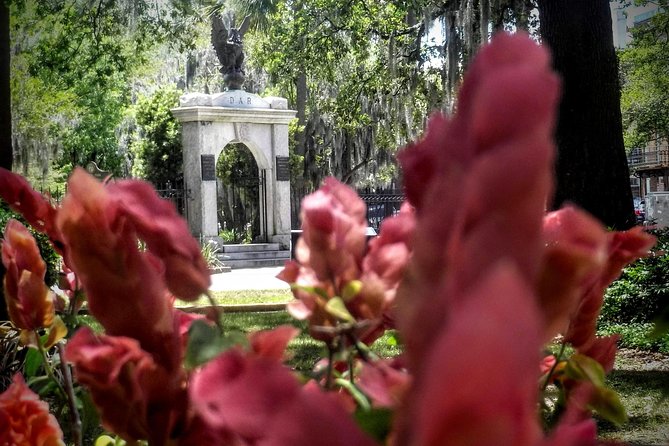
The tour ends at Forsyth Park, Savannah’s largest open green space. The guide points out the oldest live oak in downtown Savannah, the Savannah Scent Garden for the Blind, and plants connected with live oaks and resurrection fern.
The scent garden is a particularly thoughtful final stop because it reminds you that gardens can be experienced through touch and smell as well as sight. Resurrection fern also makes a fitting subject for the end of the walk. It is associated with live oaks and offers a chance to discuss how plants respond to dry conditions.
The listed time at the final stop is about five minutes, but the route itself concludes here. You can continue exploring the park afterward, making this a convenient ending if you want more open space, photos, or a rest after the walk.
The meeting point for the end is the Marine Corps Memorial at 1 West Gaston Street. Since the tour begins at Columbia Square and finishes at Forsyth Park, you should plan for a one-way walk rather than expecting to return to your starting point.
What the $40 price buys you
At $40 per person, this is not the cheapest way to walk through Savannah’s squares. The value comes from the guide’s focused attention and the number of subjects covered in two hours.
You are getting botanical identification, plant folklore and uses, cemetery interpretation, architectural context, ironwork details, and a route through several central sights. A general sightseeing walk might pass these places, but it would not necessarily explain why a camellia matters at the Andrew Low House or how resurrection fern relates to live oaks.
The strongest value appears when the guide adapts to the season. Sargon is praised for knowing what is in bloom and shaping the discussion around it. That matters because a spring walk and an autumn walk should not feel identical. You may see fewer flowers at some times of year, but the trees, shrubs, moss, ironwork, and garden design keep the subject broader than bloom watching alone.
The group can include up to 20 people. That is not an intimate private walk, but it is still limited enough to make questions possible. The most positive feedback focuses on guides who answer questions, explain ideas at a level that makes sense, and keep the tone lively without drowning the walk in facts.
Practical advice for a comfortable walk
Wear shoes suited to two hours of city walking. Several people who enjoyed the experience still emphasized that it is a full walk, not a brief garden stop.
Bring water, especially in warm weather. A hat or visor is also sensible, since shade will vary from square to square. The guides may choose shaded places when possible, but you should not rely on every stop being cool.
The tour uses a mobile ticket, and confirmation is provided when you book. Service animals are allowed, and well-behaved pets are allowed as well. The activity is near public transportation, and most people can participate, but it is not recommended if you cannot walk or roll one-third of a mile without resting.
You can cancel for a full refund up to 24 hours before the start time. Changes or cancellations inside that window are not accepted for a refund. The tour depends on good weather and a minimum number of participants, so a cancellation by the operator may lead to another date or a full refund.
Who should book this Savannah walk
I would choose this tour if you like gardens, trees, city design, or small details that are easy to miss. It also suits anyone who wants a history walk with a different subject at its center. You do not need a background in botany. The guide explains plants by name, appearance, origin, use, and connection to Savannah life.
It is especially useful for repeat visitors who have already seen the main squares. The same streets feel different once you know which plant is a camellia, where to look for resurrection fern, or why the city’s live oaks matter.
I would think twice if you dislike walking in warm weather or prefer a seated tour. The route includes several brief stops, and the guide keeps moving between them. Anyone hoping for a long visit inside the Andrew Low House should also note that this is a botanical garden visit, not a house tour.
Should you book the Botanical Tour?
Book it if you want to understand Savannah through its living details. The best parts are the links between plants, homes, cemeteries, ironwork, and local stories, along with guides such as Sargon who make room for questions and adjust to the season.
Skip it if you want a fast overview of every major landmark or cannot manage two hours on foot. For curious walkers, though, $40 buys more than a list of flowers. It gives you a practical way to read Savannah’s squares and gardens long after the tour ends.
FAQ
How long is the Botanical Tour?
The tour lasts approximately two hours.
Where does the tour begin?
It begins at Columbia Square in Savannah, Georgia.
Where does the tour end?
It ends at the Marine Corps Memorial at 1 West Gaston Street, near Forsyth Park.
What places does the tour visit?
The route includes Columbia Square, Colonial Park Cemetery, Lafayette Square, the Andrew Low House garden, Madison Square, Jones Street, Monterey Square, and Forsyth Park.
How much does the tour cost?
The price is $40 per person.
Is the Andrew Low House garden always open?
The garden may be closed depending on the house schedule. The plants can still be viewed from outside the fence.
Is the tour suitable for people who do not know much about plants?
Yes. The tour explains plant names, origins, uses, and history in an accessible way, and guides answer questions.
What happens if bad weather cancels the tour?
You will be offered a different date or a full refund if the experience is canceled because of poor weather.
Just added around the USA
- Zen Garden Yoga Bliss Experience★ 5.0 · 2 reviews
- Tulip Festival and Skagit Valley Tour★ 5.0 · 7 reviews
- Tulip Festival in Skagit Valley Tour from Seattle★ 4.5 · 28 reviews
- Midnight in the Garden of Good and Evil Walking Tour★ 5.0 · 65 reviews
- Tulip Festival at Skagit Valley ,La Conner and Deception Pass★ 4.0 · 4 reviews
- Skagit Valley Tulip Festival Day Tour from Seattle★ 4.5 · 7 reviews
- A Walk Through The Book “Midnight in the Garden of Good and Evil”★ 4.0 · 52 reviews
- Behind The Scenes Movie Tour Midnight in the Garden★ 4.0 · 5 reviews
USA Garden Tours, compared.
Princeville Botanical Gardens Tour and Chocolate Tasting Ticket
Read our review →
South Maui: Snorkel to Coral Gardens or Molokini Crater
Read our review →

Everglades: Mangrove Maze Airboat Tour and Boardwalk
Read our review →
Maui Afternoon Snorkel Aboard Malolo to Molokini or Coral Gardens
Read our review →
Big Island Waterfalls Tour with Swimming and Botanical Garden
Read our review →
Hilo Shore Excursion: Active Volcano, Lava Tube, Waterfall and Gardens
Read our review →
Browse the lists this tour appears in