Review · SEOUL
From Seoul: Korea Spring Cherry Blossom Day Tour
The most appealing thing about this long spring outing is the variety. In one day, you might see white plum flowers beside the Seomjin River, cherry trees framing a temple, twin peaks behind a mountain road, and old Korean homes in Jeonju. This is a scenery-first tour, not a slow, single-site garden visit.
I like the convenience of round-trip transport from Seoul, especially when flower sites are spread across several provinces. I also like the free time built into the day, since you can walk, eat, take photos, or simply enjoy the setting without being hurried at every stop.
The main caution is important: the destinations change by booking option, and the day can last from 750 minutes to 16 hours. Check the exact route and meeting point twice before paying. April 8 can already be too late for cherry blossoms, as one Jeonju visitor found, though the hanok village still made the trip worthwhile.
Key points to know before booking
- Several spring routes are sold under one experience: Your chosen option may focus on Gwangyang and Jeonju, or include Donghaksa, Maisan Mountain, Yeongrangho, or Seoraksan.
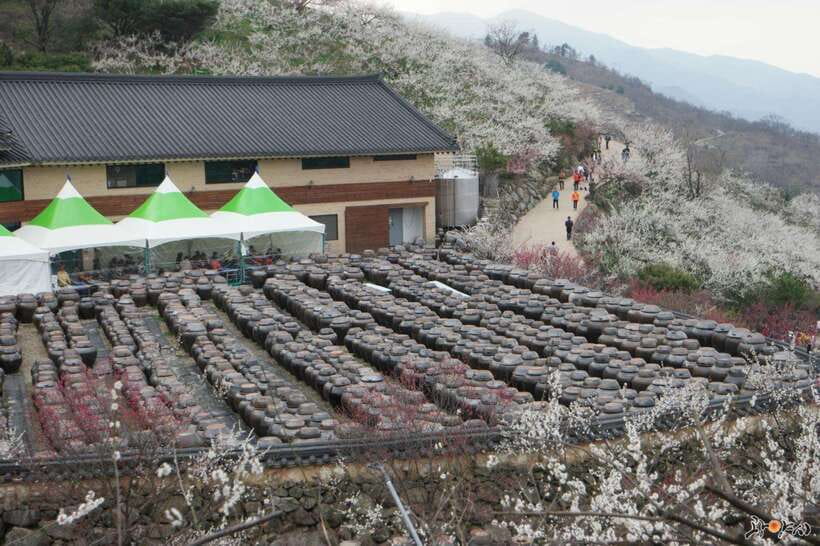
- Gwangyang Maehwa Village offers early-season flowers: White plum blossoms cover the village beside the Seomjin River before the main cherry blossom season.
- Jeonju gives the day a cultural anchor: More than 800 traditional hanok houses, hanbok rental, snacks, and local food add more than scenery.
- The day is long and walking is part of it: Plan for roughly one to two hours of walking, plus substantial time in the vehicle.
- Guiding can add practical help: Andrew helped with food choices, village plans, and photographs on one Jeonju outing, while Leo was praised for making another trip pleasant.
- The $66 price is strongest when transport matters: It can be good value for a distant seasonal route, but food and drinks are extra.
Why this Seoul spring trip is really several tours in one
This experience is best understood as a set of seasonal routes rather than one fixed day tour. The advertised stops cover a wide area, and the exact combination depends on the option you select.
That matters more than it might seem. A day centered on Gwangyang and Jeonju is a different outing from one featuring Seoraksan or Yeongrangho. Before booking, read the option title and included destinations carefully. Do not assume that every flower site appears on every departure.
The tour runs between 750 minutes and 16 hours. That is a very full day, but distant spring sights are the reason to consider it. You trade some independence and rest for a driver, a planned route, and a return to Seoul without arranging several train or bus connections yourself.
The tour includes round-trip transportation and a driver-guide. Food and drinks are not included, so keep money and time for meals and snacks. The listed package also includes entrance tickets for Gwangyang and Jeonju, when those places are part of your chosen option.
More Cherry Blossom Tours in Seoul
- Chasing Cherry Blossom & Spring Flowers Day Tour from Seoul
★ 5.0 · 11 reviews - Maisan Cherry Blossom and Jeonju Hanok Village
★ 5.0 · 8 reviews - Jinhae’s Cherry Blossoms Shuttle Bus depart from Seoul/Busan
★ 4.5 · 8 reviews
Gwangyang Maehwa Village and the first flowers of spring
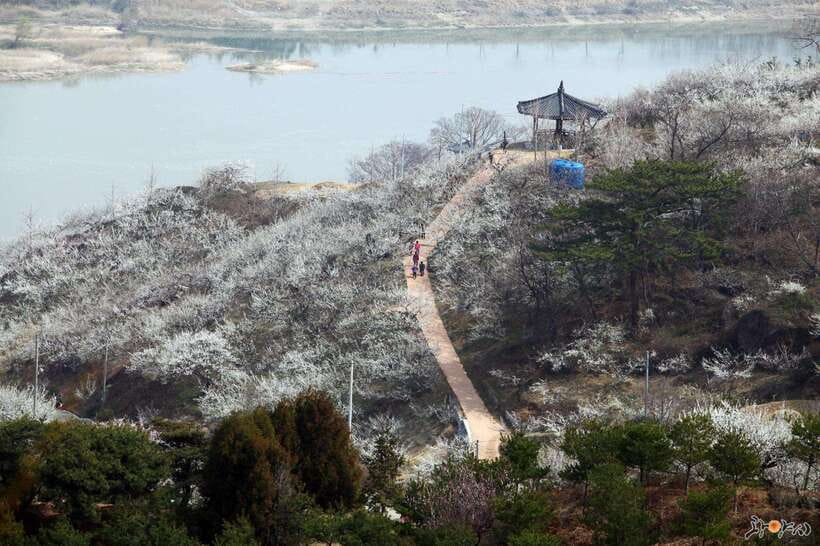
Gwangyang Maehwa Village is the early-season highlight. Maehwa means plum blossom, and these trees flower before the main cherry blossom display. The village is described as being covered in white flowers, with the Seomjin River providing a broad natural setting nearby.
I would choose this stop if you want something more distinctive than the standard cherry blossom circuit. The white plum flowers have a softer, snow-like look, and the river gives you room to appreciate the view rather than stare at trees along a city street.
The timing is the key. Gwangyang is associated with the beginning of spring, while later stops focus on cherry blossoms. That means the best route for you depends on your travel date and the exact option offered. If you are visiting later in April, do not expect every flower type to be at its best.
Allow time for walking through the village and along the river area. The stated walking requirement for the tour is about one to two hours overall, so comfortable shoes are sensible. You will also want a phone or camera ready, since the contrast between white flowers and the river is one of the day’s clearest photo opportunities.
Donghaksa Temple beneath cherry blossoms
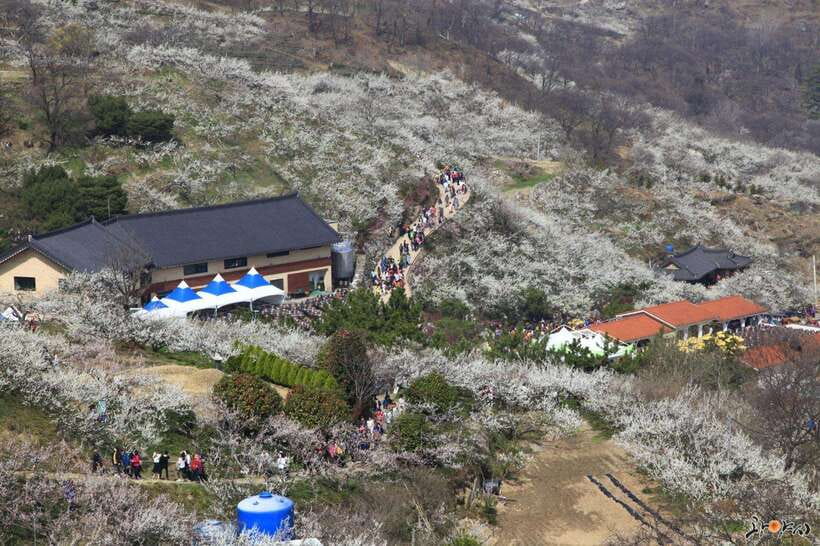
Donghaksa Temple brings culture into the flower itinerary. The appeal is not simply a row of trees. Cherry blossoms frame an old Buddhist temple, giving you a view where architecture and spring color work together.
I like this kind of stop because it feels more connected to Korea than a flower-only photo field. You get a chance to see how a traditional religious site looks during a popular local season, while still having the visual reward that brought you out of Seoul.
The practical point is that temple grounds and flower paths require walking. This is not the place for anyone expecting to remain beside the vehicle. The tour information gives one to two hours of walking, though the exact time at each stop can change with the selected route.
The word cherry blossom can also create unrealistic expectations. Bloom dates shift, and the April 8 visit to Jeonju found that the blossoms had already finished. The temple itself remains worthwhile, but you should treat peak flowers as a seasonal possibility, not a guarantee.
Maisan Mountain and its twin peaks
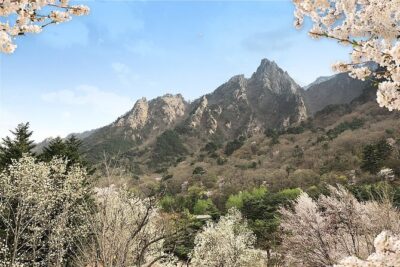
Maisan Mountain gives the tour a stronger natural backdrop. Its distinctive twin peaks create a recognizable setting for cherry trees, so the view is not just flowers in the foreground. You get the unusual shape of the mountain behind them.
This stop should suit you if you like photographs with a sense of place. A blossom-lined road can be lovely, but a mountain backdrop tells you where you are. Maisan also adds a little variety to a day that could otherwise become a sequence of similar pink-and-white scenes.
Do not book this portion expecting a full mountain expedition. The information promises cherry blossoms against the twin peaks and walking suitable to the day, but it does not specify a long summit hike or a particular trail. Think of it as a scenic spring stop, not a technical hiking trip.
As with the other flower sites, your experience depends heavily on the date. The mountain will remain, but the blossoms may be early, peak, or past their best. I would place more weight on the scenery and setting than on a promise of perfect bloom.
More Cherry Blossom Tours in South Korea
- Jinhae Cherry Blossom Festival Gyeonghwa Stn Day Tour from Seoul
★ 4.0 · 8 reviews - Jinhae Cherry Blossom + Busan Sunrise from Seoul
★ 4.5 · 5 reviews - Seoraksan and Cherry Blossom Lake 1 day trip from Seoul
★ 5.0 · 4 reviews - Seoul to Jinhae Cherry Blossom Festival (With Busan Drop-off)
★ 5.0 · 3 reviews
Yeongrangho for a lakeside stroll
Yeongrangho offers a calmer type of flower scene. The plan is to walk along the lake shores, where cherry trees line the water.
A lakeside path changes the pace. After riding between destinations, you can stretch your legs and enjoy open water, trees, and reflections. I would especially favor this stop if you prefer a gentle walk to a crowded attraction, though the tour information does not give a detailed account of the path or how much time you spend there.
Again, check that Yeongrangho is included in your option. The tour’s central warning is that main destinations vary, and that warning should guide your booking. You may be buying a route built around another site entirely.
The lake also makes this stop dependent on weather and bloom timing. On a clear spring day, it should offer an easy setting for photographs. If clouds or wind arrive, the value is more about the walk and the change of scenery than a perfect postcard view.
Seoraksan adds a national park to the flower season
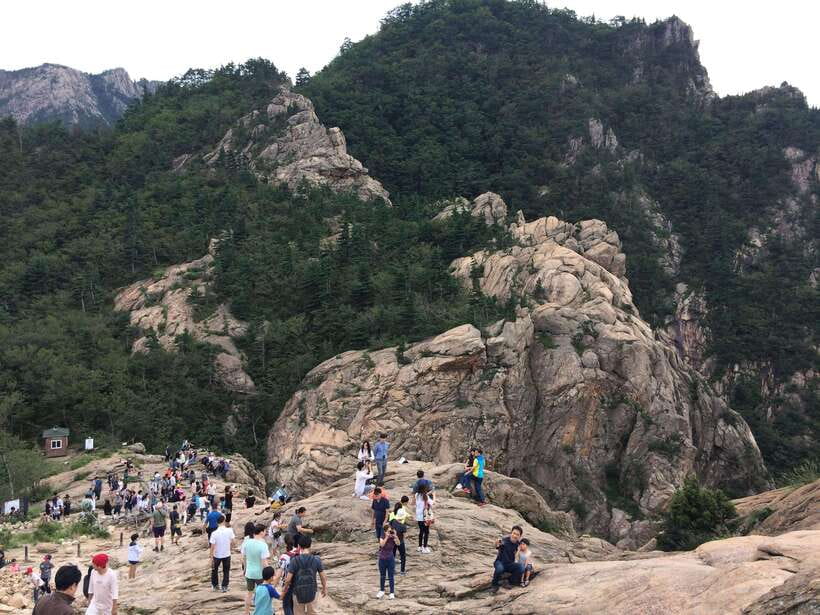
Some versions include Seoraksan National Park, one of Korea’s best-known mountain areas. The plan includes scenic views, hiking trails for different fitness levels, and a chance to see the park’s varied plant life.
This option is the best fit if you want more than blossoms. Seoraksan gives the day a broader outdoor focus, with mountain trails instead of only village lanes and temple grounds. You should still read the exact option details, since the supplied information does not state a particular trail, viewpoint, or hiking distance.
The phrase different fitness levels is useful, but it does not mean every route is effortless. Walking is part of the outing, and the full day can reach 16 hours. Wear shoes you can use comfortably for one to two hours of walking or more if your chosen park visit takes longer.
I would not pick the Seoraksan option if your only goal is a concentrated cherry blossom photo session. Choose it if you want a day that combines seasonal flowers with a national park setting and are comfortable giving up much of your day to the road.
Jeonju Hanok Village gives the day a cultural payoff
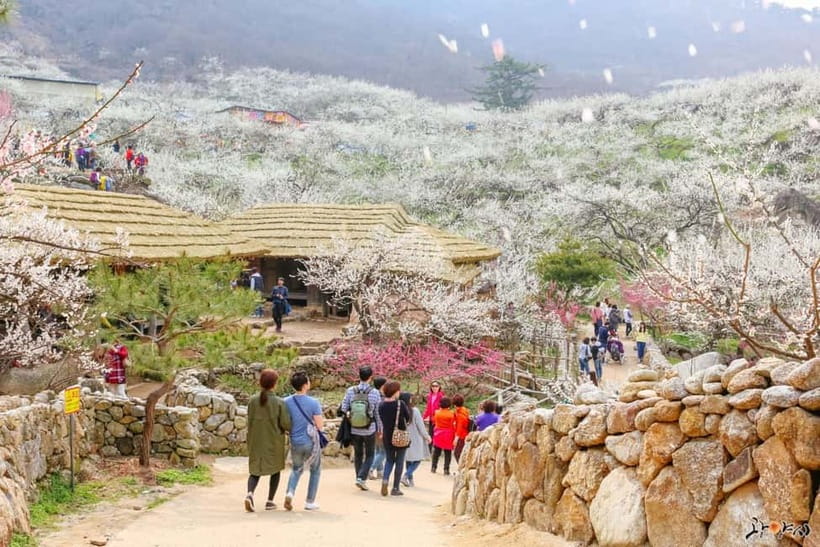
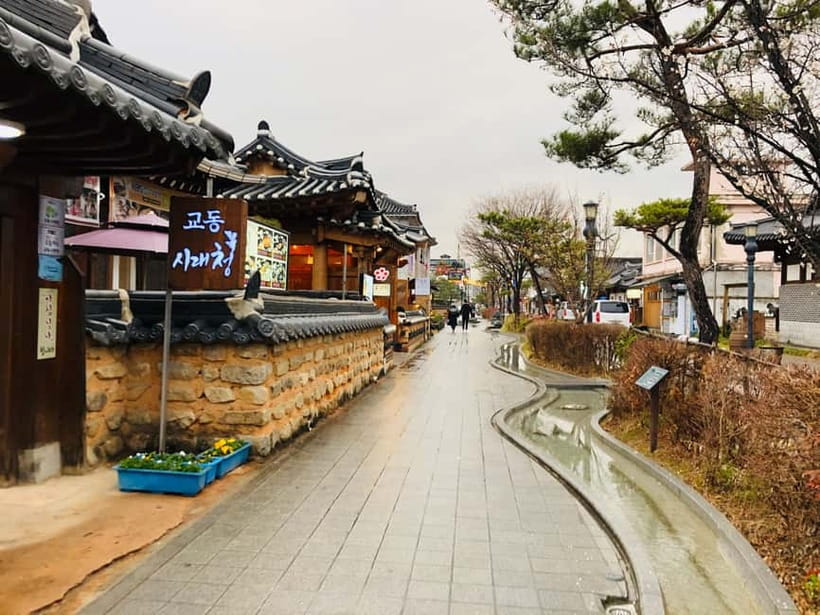
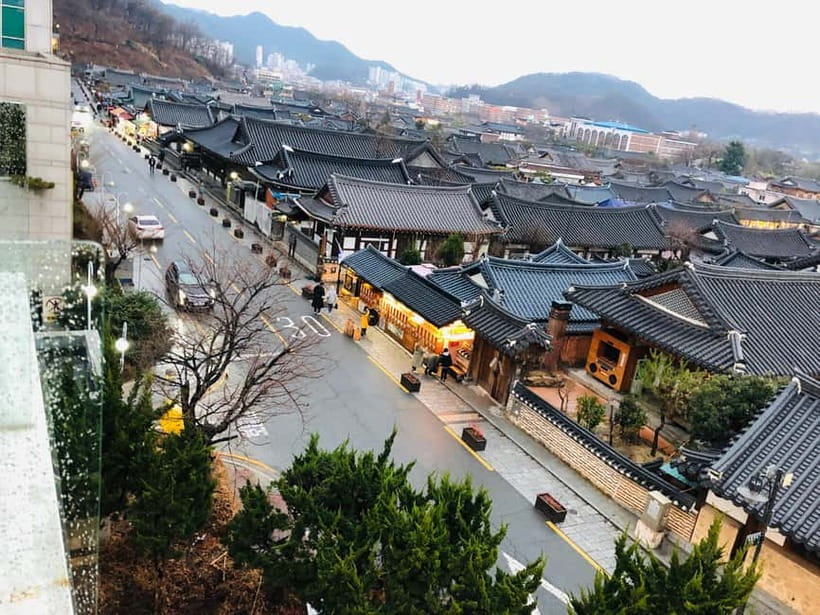
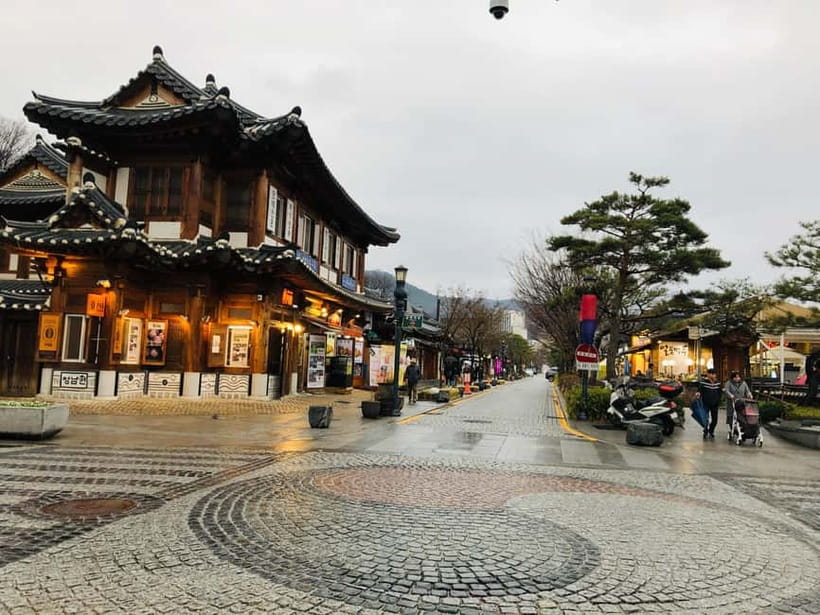
Jeonju Hanok Village is perhaps the most useful stop for first-time visitors who want a taste of traditional Korea. More than 800 hanok, or traditional Korean houses, fill the area, creating a distinctive old-style townscape.
This is not simply a place to walk and leave. You can look for hanbok, sample snacks, eat at a traditional restaurant, and visit the liquor museum. The village gives you choices, which matters on a long group outing. You can focus on architecture, food, clothing, or small cultural stops instead of following one narrow path.
I especially like the flexibility here. On one Jeonju day, Andrew helped with food recommendations, suggested things to do, and helped with photographs. That kind of practical guidance is useful when your free time is limited and the village offers more possibilities than you can cover in one visit.
Jeonju can also rescue the day if the flowers are past their peak. An April 8 visit found no cherry blossoms left, but the hanok streets, museum, traditional meal, and local atmosphere still made the outing worthwhile. That is a good reason to value Jeonju as more than a backup stop.
The tradeoff is that a large traditional village can pull you in several directions. If you want to see everything, you will feel rushed. I would choose two or three priorities before you arrive, perhaps hanok streets, a traditional meal, and one cultural stop. Then leave room for an unplanned snack or photo break.
What the ride from Seoul means for your day
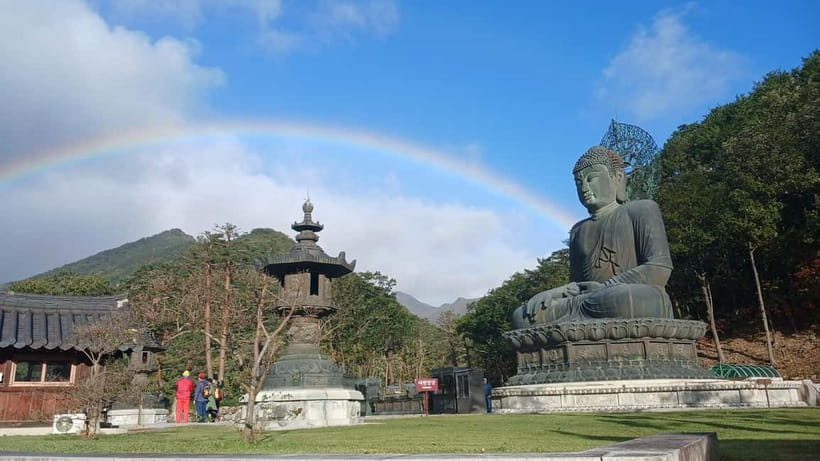
Round-trip transportation is the practical core of this experience. The sites are not all close to Seoul, and planning the same route alone could involve several connections, separate tickets, and careful timing.
At $66 per person, the price is reasonable when your chosen option covers a distant flower destination and returns you to Seoul in one day. The value comes less from the entrance tickets than from the driving time, route planning, and guide support. Gwangyang, Seoraksan, or other far-flung stops would be harder to combine independently.
Still, this is not a cheap local half-day outing. A 750-minute day is already long, and some versions reach 16 hours. You will spend a major part of the day in transit. If you dislike long vehicle rides or prefer to explore at your own pace, a single destination near Seoul may suit you better.
The meeting point can vary by option, so check it carefully. The time and place may affect your morning plans, especially if you are staying outside central Seoul. The booking also permits cancellation up to 24 hours ahead for a full refund and lets you reserve now and pay later, which helps when flower timing or weather remains uncertain.
Guides, free time, and the human side of the trip
The guide is not only there to point out the next stop. A good driver-guide can help you use short blocks of free time well, explain where to eat, and keep the day moving.
Andrew was specifically useful in Jeonju for food suggestions, activity ideas, and photographs. Leo was praised for making another trip pleasant. Those names do not guarantee who will lead your departure, but they show the sort of assistance you can reasonably hope for: practical help rather than a formal lecture at every site.
The April 18 outing was described as relaxed, with enjoyable free time. That is encouraging because the itinerary contains many possible stops, yet the day does not have to feel like a constant march. The exact balance depends on the route and traffic, so keep your expectations flexible.
You should also plan for your own meals. Food and drinks are excluded, but Jeonju gives you a particularly good chance to try local dishes and snacks. At flower sites, you might find food options, but no specific meal arrangement is promised.
Who should book this spring route?
I would recommend this tour to you if you are based in Seoul, have only one day for spring scenery, and want someone else to handle the long-distance transport. It suits first-time visitors who want a mix of flowers, mountain views, a temple, a lake, and traditional homes.
It is also a good match for photographers who want variety. Gwangyang offers white plum flowers and a river, Donghaksa pairs blossoms with a temple, Maisan supplies twin peaks, Yeongrangho gives you water and trees, and Jeonju provides old houses and street scenes.
Families and mixed-interest groups may appreciate the choices, though the long duration and walking deserve attention. Someone who wants only a short, relaxed blossom stroll should look elsewhere. So should anyone who needs a fixed, single-destination itinerary, since the route varies by option.
The ratings are strong at 4.8 from six reviews, and the most consistent praise centers on friendly guides, good organization, enjoyable free time, and the pleasure of the day itself. The Jeonju experience also shows the tour’s sensible backup: even after the flowers fade, the village, food, museum, and traditional setting can carry the outing.
My booking advice
Book it if you can accept a long day and you care more about seeing several parts of Korea than about lingering in one place. At $66, transport and guide support make the price attractive for a distant seasonal trip, especially when entrance tickets for Gwangyang and Jeonju are included on the relevant option.
Before you commit, confirm three things: the exact destinations, the meeting point, and the expected duration. Then check the likely flower timing for your date. If you do that homework, this can be a practical way to turn a Seoul stay into a wide-ranging spring day, with Jeonju providing cultural interest even when nature does not follow the calendar.
FAQ
How much does the Korea Spring Cherry Blossom Day Tour cost?
The listed price is $66 per person.
How long does the tour last?
The duration ranges from 750 minutes to 16 hours, depending on the option selected.
Where does the tour go?
Possible destinations include Gwangyang Maehwa Village, Donghaksa Temple, Maisan Mountain, Yeongrangho, Seoraksan National Park, and Jeonju Hanok Village. The main destinations vary by option.
Does every option include all of the listed destinations?
No. The destinations change according to the option you book, so check the selected route carefully before booking.
Is transportation included?
Yes. Round-trip transportation is included, along with a driver-guide.
Are food and drinks included?
No. You need to pay separately for food and drinks.
Are entrance tickets included?
Entrance tickets for Gwangyang and Jeonju are listed as included when those destinations are part of the selected option.
How much walking should I expect?
The tour information states that there will be about one to two hours of walking.
Can I cancel the booking?
You can cancel up to 24 hours in advance for a full refund. The tour also offers a reserve-now, pay-later option.
More Garden Day Trips in South Korea
- Alpaca World & Nami Island & Garden of Morning Calm One Day Tour
★ 4.5 · 60 reviews - Seoul: Pocheon Art Valley, Garden and Fruit Picking Day Tour
★ 4.5 · 56 reviews - Pocheon Art Valley, Garden & Fruit Picking Day Tour from Seoul
★ 5.0 · 27 reviews - Nami Island& Petite France& Garden of Morning Calm& Italian Village One-Day Tour
★ 4.5 · 26 reviews
More Garden Day Trips in Seoul
- Mt. Seorak+Nami Island+Garden of Morning Calm Day Trip from Seoul
★ 5.0 · 959 reviews - From Seoul: Nami Island, K-drama Garden & Rail Bike Day Tour
★ 4.6 · 724 reviews - Day Trip to Nami Island with Rail bike and The Garden of Morning Calm
★ 4.5 · 459 reviews - Day Trip to Nami Island with The Garden of Morning Calm
★ 4.5 · 215 reviews
Just added around Seoul
- Taean Tulip Festival and Strawberry Picking Day Tour from Seoul★ 4.5 · 3 reviews
- Eobi Ice Valley& Nami Island with Garden of Morning Calm Trip★ 4.5 · 9 reviews
- Strawberry & Eobi Valley & Nami Island & Garden of Morning Calm★ 4.5 · 2 reviews
- Full Day Private Tour Nami Island, Garden & Petite France★ 5.0 · 57 reviews
- Scenic Escape: Nami Island, Garden of Morning Calm, and Rail Bike★ 3.0 · 2 reviews
- Seoraksan and Cherry Blossom Lake 1 day trip from Seoul★ 5.0 · 4 reviews
- (Private tour) Nami Island + Railbike + Garden of morning calm★ 5.0 · 7 reviews
- Alpaca, Nami, Petite Fr, Italian Village, Garden of Morning Calm★ 3.5 · 5 reviews
Seoul Garden Tours, compared.
Mt. Seorak+Nami Island+Garden of Morning Calm Day Trip from Seoul
Read our review →
Nami Island and Garden of Morning Calm opt Railbike
Read our review →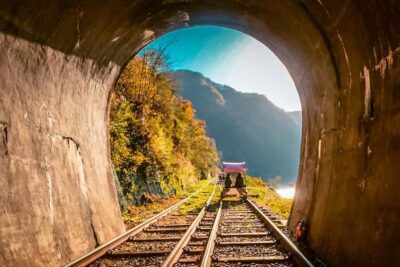
Nami Island, K-drama Garden & Rail Bike Day Tour
Read our review →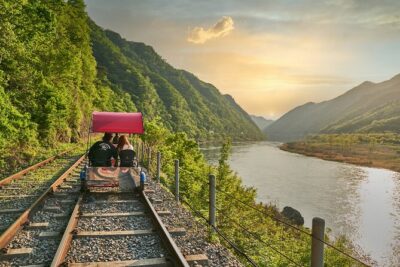
Day Trip to Nami Island with Rail bike and The Garden of Morning Calm
Read our review →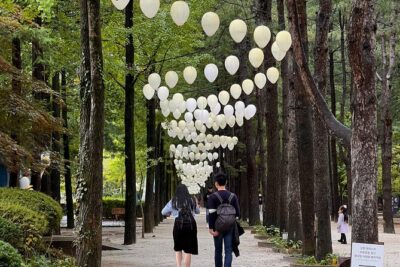
Trip to Nami Island with Petite France & Italian Village, Garden of Morning Calm
Read our review →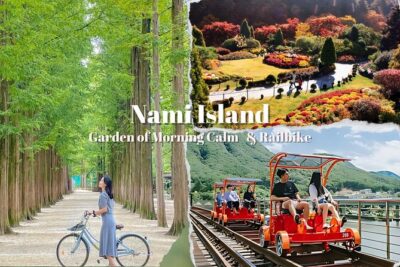
Nami Island & Garden of Morning Calm & Gangchon Railbike Tour
Read our review →
Nami+Alpaca+Garden of Morning Calm (+Rail Bike Option)
Read our review →