
Review · SOUTH KOREA
Full-day Hadong, Gwangyang, Cherry blossom, Green Tea Fields Private Tour
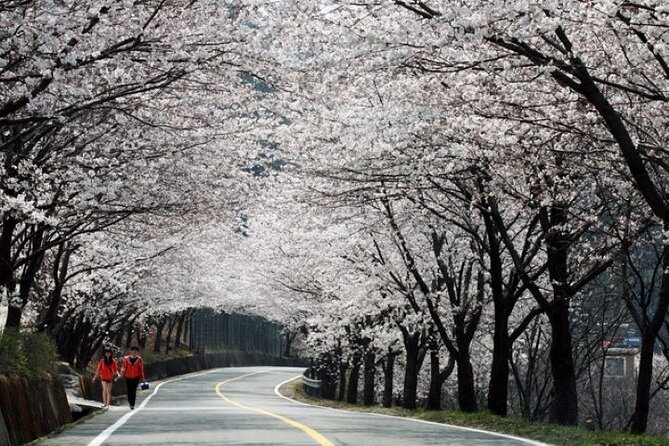
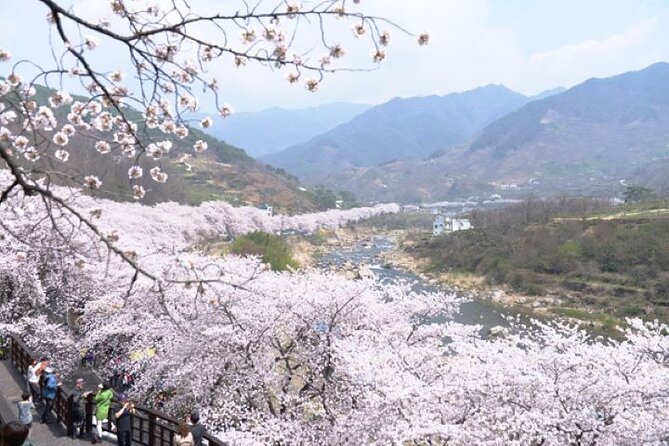
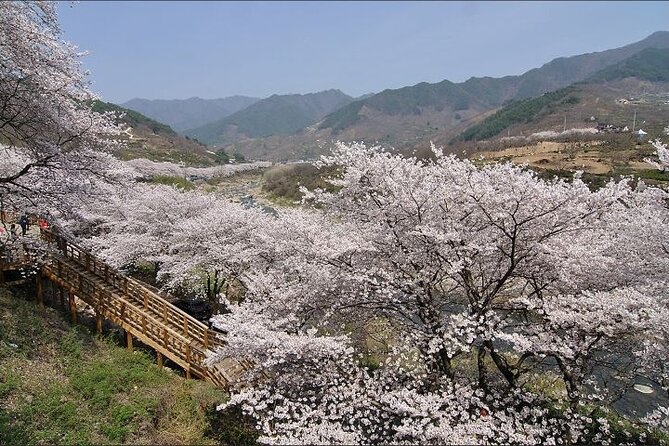
Hadong’s 4km Shimni Beotkkot road is the star here, a spring route where cherry trees line the road between Jeolla-do and Gyeongsang-do. The old nickname, Wedding Road, comes from a local legend: couples who walk it hand in hand are said to remain happy together. Add mountain tea fields, a traditional market, and a bowl of Gwangyang bulgogi, and you get a full day far removed from Busan’s city streets.
I like two things right away. Private transport removes the headache of reaching this rural corner, and the itinerary gives you more than a quick flower stop. I also like the mix of sights: cherry trees and temples in the morning, Korean tea culture in the afternoon, and a proper regional meal before the drive home.
The catch is the long road time. You can spend about three hours and 40 minutes driving between Busan and the Hadong and Gwangyang area, and spring bloom dates are never fixed. The plum flowers may be at their best while the cherry trees are still waiting, as happened on one family’s visit.
Key points to know before booking
- A private day from Busan: Pickup, fuel, tolls, parking, and transport are included, making this useful for couples, families, and small groups.
- The main cherry blossom walk: Seomjin River and Hwagae offer a long spring route rather than a single photo stop.
- A real tea-growing region: Dosim Dawon and the Hadong Tea Museum explain why this area matters to Korean tea.
- Several seasonal sights in one day: Cherry blossoms, plum flowers, temple grounds, and tea fields may not all peak together.
- A local dinner finish: Gwangyang’s beef barbecue is planned as the final meal before returning to Busan.
- Good help for a complicated route: Guides Frank Yi and Robin have handled early pickups, English-language guiding, older family members, and extra comfort stops.
Why Hadong makes a better spring day trip than a single flower park
The appeal of this tour is its range. You are not simply driven to a famous tree-lined road, given a short window for photos, and sent back. The route follows the Seomjin River, passes through Hwagae, reaches a historic Buddhist temple, visits Korea’s first tea-growing area, and ends in Gwangyang.
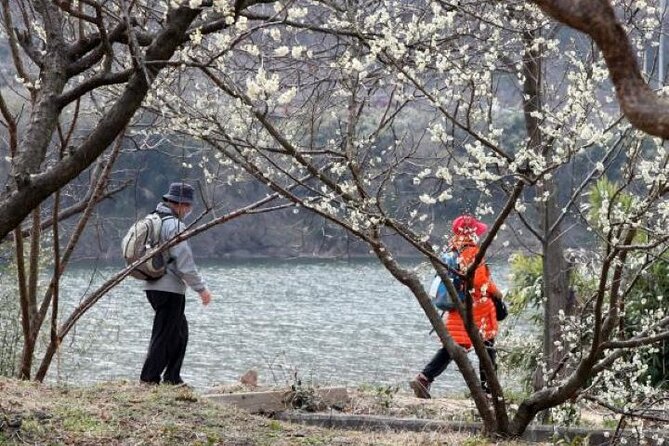
That matters because spring in southern Korea arrives in stages. Plum and apricot flowers can appear before the cherry trees. Cherry blossoms may then open later, often around April, after the last cold snap. You get more from the day if you treat the flowers as part of a larger regional visit, not as a guaranteed single-color show.
The scenery changes as you go. The river road gives you open views and flowering trees. Hwagae adds market stalls and local food. Ssanggyesa brings temple courtyards and mountain surroundings. Dosim Dawon replaces blossoms with neat rows of tea plants growing among rocks on the lower slopes of Jirisan.
More Cherry Blossom Tours in South Korea
- Jeju East: Cherry Blossom Early Bird Tour with Hotel Pickup
★ 4.8 · 21 reviews - Jinhae Cherry Blossom Festival Gyeonghwa Stn Day Tour from Busan
★ 4.5 · 13 reviews - Jinhae Cherry Blossom Day trip from Busan – A Spring Adventure!
★ 4.5 · 13 reviews
The Seomjin River road and the 4km Wedding Road
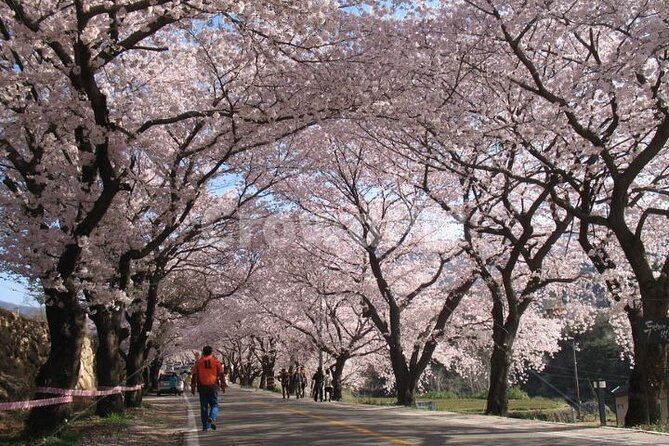
Pickup is planned for around 9:00 a.m., with arrival near the Hadong cherry blossom road at about 10:30. The first stop allows roughly two hours, which is the right kind of timing for a road best enjoyed on foot rather than from a car window.
The famous section is called Shimni Beotkkot, meaning 4km of cherry blossoms. The trees follow the road near Hwagae, between Jeolla-do and Gyeongsang-do. During bloom, the flowers can look like pale snow scattered through the branches, especially along the longer Hwagaedongcheon route, which stretches for about 25km and is associated with local spring events.
You should ask your guide where the best walking section is on the day. Bloom conditions can vary along the route, and traffic or festival crowds may affect where the vehicle can stop. The private format helps here because your guide can work around the group instead of following a large coach schedule.
This is the part that most clearly justifies choosing a private tour. The road is far from central Busan and not simple to combine with several other stops by public transport. Robin’s prompt pickup and good English were specifically praised, while Frank Yi was described as flexible with a large family and older relatives who needed more time and frequent toilet breaks.
Hwagae Market, a useful 40-minute pause
Hwagae Market is scheduled for about 40 minutes. That is enough for a look around, a snack, and a quick sense of the local trade, but not enough for a long meal or slow browsing through every stall.
The market has long been linked with the cherry blossom route and sits near Ssanggyesa Temple and Jirisan. It is known as one of Korea’s larger traditional markets, with local produce, food, and regional goods. The market also appears in Kim Dong-ri’s novel Yeokma, which adds a literary connection to this otherwise practical stop.
I like this short visit because it breaks up the flower viewing. You can see what people in the region buy and eat, rather than spending the whole morning at photo points. The limitation is timing: 40 minutes passes quickly, particularly during a festival or if you want to eat properly. Keep your expectations to a compact market visit unless your guide can adjust the schedule.
Ssanggyesa Temple and six kilometers of spring trees
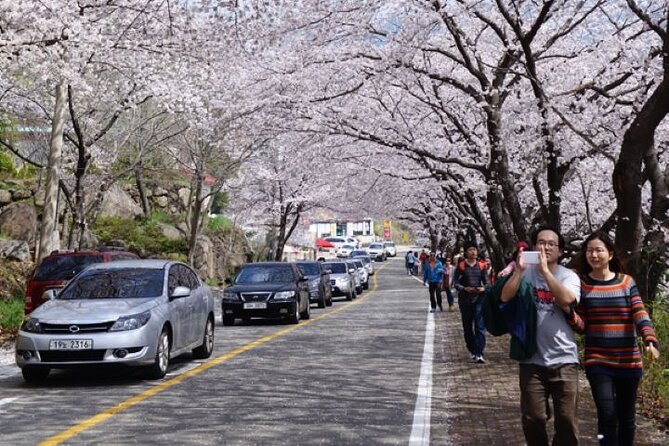
The route then goes to Ssanggyesa Temple for about an hour. The temple sits on the southern foothills of Jirisan and was founded in 722 during the reign of Silla King Seongdeok. Its original name was Okcheonsa, and it took the name Ssanggyesa in 887.
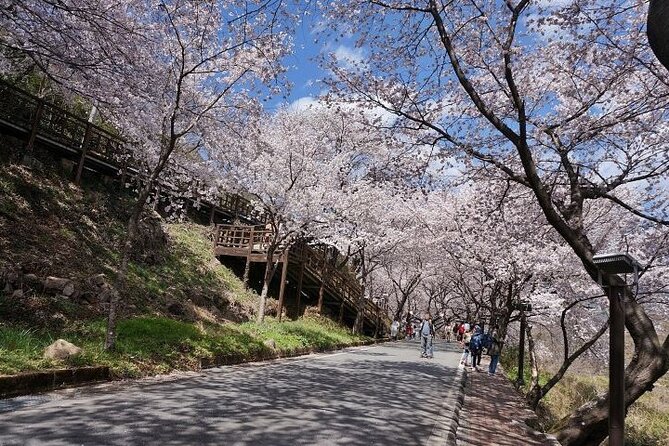
The current buildings date from 1632, after earlier structures were burned during the Imjin War. You can look around the temple grounds, see the mountain setting, and learn about the nearby six-kilometer stretch of cherry trees that blooms each spring.
This stop adds context to the day. The blossoms are not just a seasonal decoration. They connect roads, temples, mountain water, and the long tea-growing tradition of the area. Nearby attractions include Burilpokpo Falls and a large tea plantation, though the stated schedule gives the temple about one hour, so you should not assume there is time for every nearby walk.
An hour is a sensible compromise for a mixed-age group. It gives you time to see the main grounds without turning the tour into a temple-only excursion. If you want a long hike, this is not the right format.
Same place, a different kind of green day out:
- Mt. Seorak+Nami Island+Garden of Morning Calm Day Trip from Seoul
★ 5.0 · 959 reviews - Seoul: Nami Island and Garden of Morning Calm opt Railbike
★ 4.6 · 907 reviews - From Seoul: Nami Island, K-drama Garden & Rail Bike Day Tour
★ 4.6 · 724 reviews - Seoul: Mt.Seorak, Nami Island & Korean Garden, No Shopping
★ 4.8 · 614 reviews
Hadong Tea Museum and the story of Korean tea
The Hadong Tea Museum has about 40 minutes in the schedule. It sits near the tea-growing area and Ssanggyesa Temple, at the foot of Jirisan. Its displays explain Korean tea culture and the history of Hadong, described as the country’s first tea-producing region.
The museum is useful before visiting the fields because it gives meaning to what you see outside. You can learn why Hadong green tea has such a strong local identity and how tea production fits into the area’s food and farming traditions.
The stop includes an exhibition hall and a tea-related experience, though the exact activity is not specified. I would treat this as an introduction rather than a long museum visit. Forty minutes lets you get the basic story and see the displays, but it leaves limited time for lingering.
Dosim Dawon and the oldest tea-growing traditions
The one-hour visit to Dosim Dawon is one of the most distinctive parts of the day. Hwagae-myeon is known as an early center of Korean tea planting and hand-made tea production. The tea fields sit along the Seomjin River and on the southern slopes of Jirisan, where plants grow between rocks.
A notable feature is an ancient tea tree known as Korea’s Oldest Tea Tree, or the Thousand-Year Tree. The area also includes the original tea field associated with Ssanggyesa, a Buddhist temple with more than a thousand years of history.
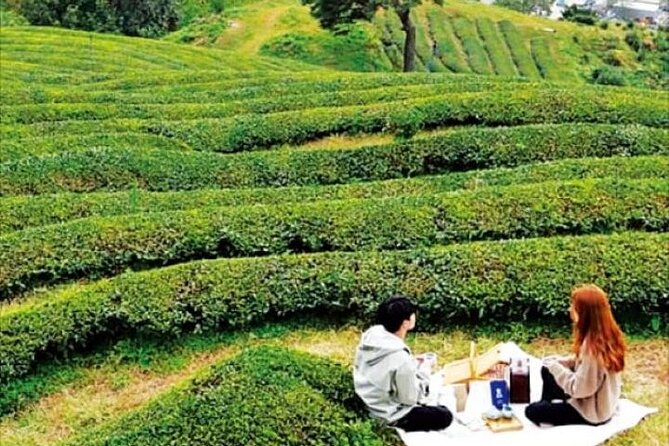
You will see a different kind of scenery here. Tea plants form low, orderly rows rather than tall forest canopies, and the rocky ground gives the fields a distinctive look. The site also helps explain why Hadong tea is more than a product sold in a shop. It is tied to local climate, mountain water, Buddhist tradition, and hand processing.
The visit is especially valuable if the cherry blossoms are late. Even when flowers are not at peak, Dosim Dawon gives the day a strong regional focus. Wear shoes suitable for uneven ground, since the fields are placed along slopes and rocky areas.
Plum flowers and the Hong Ssang Ri farm
The schedule includes about an hour at Gwangyang Maehwa Village, associated with Hong Ssang Ri’s plum farm. In 1965, Hong Ssang Ri began cultivating 2,000 plum trees. The farm is also linked with maesil-cheong, a Korean plum extract made by aging Korean-grown plums with oligosaccharide in traditional onggi jars for six months.
Maesil-cheong is used in Korean cooking in place of sugar and can also be mixed with water as a plum tea. Its sweet and tart flavor, along with its use in home cooking, gives this stop more substance than a simple orchard photo opportunity.
Timing matters here. Plum flowers, often called apricot flowers in English descriptions, can peak before cherry blossoms. One family reached the festival about a week before the cherry bloom and found the area crowded with local people enjoying the early sign of spring. That is a useful warning: you may get excellent plum flowers and miss the cherry peak, or arrive for cherry blossoms after the plum display has faded.
The tour combines these seasonal sights because they are close enough to fit into one long day, not because they bloom at exactly the same time. Ask about current conditions before confirming if flowers are your main reason for booking.
Gwangyang bulgogi as the final reward
The last major stop is Gwangyang Bulgogi Street, scheduled for about an hour. Bulgogi is thin, tender beef seasoned with a sweet sauce, but Gwangyang’s version has its own traditional seasoning and cooking style. The meal includes side dishes as well as the beef.
Dinner is not included, so you pay at the restaurant. That gives you some flexibility, but you should budget beyond the $300 tour price. The exact meal cost is not supplied, and it can depend on what your group orders.
I like ending here because it turns the trip into a food-and-culture outing rather than a flower excursion alone. After a full day outdoors, a regional barbecue meal gives you a clear final stop before the drive back to Busan. The return drive takes about one hour and 40 minutes, with drop-off at the starting point.
Is $300 per person good value?
At $300 per person, this is not a cheap day trip. The value depends heavily on group size and your comfort with a long drive. The price includes private transportation, fuel, tolls, parking, a guide and driver, and pickup and drop-off. It does not include meals or admission charges paid on site.
For two people, the cost is substantial, but the route would be awkward to arrange independently in one day. You are paying for door-to-door transport and local route planning, not just entry to a garden. A larger private group can make the per-person cost easier to accept, especially when older family members or children need a flexible pace.
The private setup also matters during blossom season, when roads and festival areas can be crowded. Frank adjusted timing for a big family and older relatives, while Robin handled an on-time pickup and English communication. Those details are worth more than a polished vehicle if you want a calm day with fewer transport decisions.
Who should book this Hadong day tour?
I would choose this tour if you are staying in Busan and want rural spring scenery without changing hotels. It suits couples interested in the Wedding Road, families who need private transport, and small groups that want a guide for a difficult-to-reach area.
It is also a good match if you care about Korean tea, local markets, temples, and food as much as flowers. You get a fuller picture of Hadong and Gwangyang than you would from a single cherry blossom stop.
I would hesitate if you want a slow temple visit, a serious hike, or guaranteed peak blossoms. The day covers a lot of ground, and the drive is long. Flower timing can also work against you, particularly if you book without checking the expected bloom period.
The experience is private, and a minimum of two people applies. Pickup is available from your location, including possible transport for people with luggage at Busan’s Gimhae Airport. Tell the provider about dietary needs when booking. Free cancellation is available up to 24 hours before the start time, but changes made inside that window are not accepted.
Should you book it?
Book this tour if you value convenience, a flexible private guide, and a broad spring itinerary more than a low price. The strongest reasons are the hard-to-reach cherry blossom road, the tea fields near Jirisan, and the chance to finish with Gwangyang beef barbecue.
Skip it if your plans depend on one exact flower peak or if you dislike spending several hours in a vehicle. For the right group, though, Frank Yi or Robin can turn a complicated rural day into a manageable, varied trip from Busan.
FAQ
Where does the tour start and finish?
The tour starts with pickup from your location in Busan around 9:00 a.m. After dinner in Gwangyang, you return to Busan and are dropped off at the same starting point.
How long does the tour last?
The experience lasts approximately 9 to 10 hours. The drive back from Gwangyang to Busan takes about 1 hour and 40 minutes.
Is this a private tour?
Yes. Only your group participates in the private activity.
What is included in the price?
Private transportation, fuel, tolls, parking fees, a guide and driver or driving guide, and free pickup and drop-off are included.
Are meals included?
No. Meals are not included. Dinner at Gwangyang Bulgogi Street is paid for at the restaurant.
Are admission fees included?
Admission fees are not included and are paid on site. The listed stops show free admission for the stated itinerary.
What happens if the cherry blossoms are not in bloom?
Blooming dates vary. The tour also includes Hwagae Market, Ssanggyesa Temple, the Hadong Tea Museum, Dosim Dawon, the plum farm, and Gwangyang bulgogi, so the day includes several activities beyond cherry blossoms.
Can people with dietary requirements join?
Yes, but you should advise the provider of specific dietary requirements when booking.
What is the cancellation policy?
You can cancel up to 24 hours before the experience for a full refund. Cancellations or changes made less than 24 hours before the start time are not accepted for a refund.
More Full-Day Trips in South Korea
- Full Day Private Tour Nami Island, Garden & Petite France
★ 5.0 · 57 reviews - 2026 JEJU Cherry Blossom West&South Full Day Tour with UNESCO
★ 5.0 · 12 reviews - Full-Day Jinhae Cherry Blossom festival Private tour
★ 5.0 · 3 reviews - Versailles Full Day Bike Tour with Palace, Gardens, & Picnic
★ 5.0 · 2,217 reviews
Just added around South Korea
- Taean Tulip Festival and Strawberry Picking Day Tour from Seoul★ 4.5 · 3 reviews
- Strawberry & Eobi Valley & Nami Island & Garden of Morning Calm★ 4.5 · 2 reviews
- Eobi Ice Valley& Nami Island with Garden of Morning Calm Trip★ 4.5 · 9 reviews
- Full Day Private Tour Nami Island, Garden & Petite France★ 5.0 · 57 reviews
- Scenic Escape: Nami Island, Garden of Morning Calm, and Rail Bike★ 3.0 · 2 reviews
- Seoraksan and Cherry Blossom Lake 1 day trip from Seoul★ 5.0 · 4 reviews
- (Private tour) Nami Island + Railbike + Garden of morning calm★ 5.0 · 7 reviews
- Alpaca, Nami, Petite Fr, Italian Village, Garden of Morning Calm★ 3.5 · 5 reviews
South Korea Garden Tours, compared.
Mt. Seorak+Nami Island+Garden of Morning Calm Day Trip from Seoul
Read our review →
Nami Island and Garden of Morning Calm opt Railbike
Read our review →
Nami Island, K-drama Garden & Rail Bike Day Tour
Read our review →
Mt.Seorak, Nami Island & Korean Garden, No Shopping
Read our review →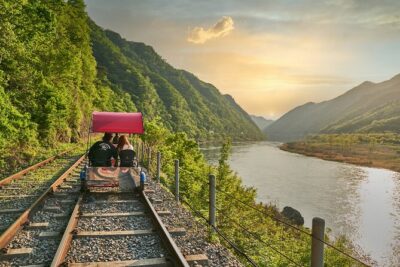
Day Trip to Nami Island with Rail bike and The Garden of Morning Calm
Read our review →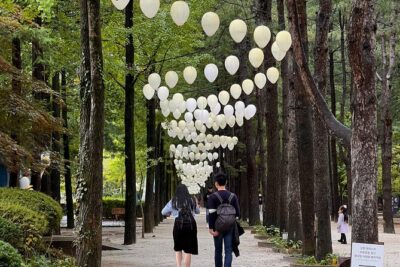
Trip to Nami Island with Petite France & Italian Village, Garden of Morning Calm
Read our review →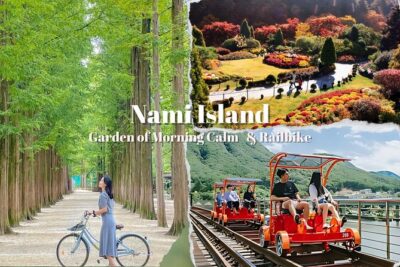
Nami Island & Garden of Morning Calm & Gangchon Railbike Tour
Read our review →
Nami+Alpaca+Garden of Morning Calm (+Rail Bike Option)
Read our review →Browse the lists this tour appears in