
Review · FARMS
Lotus Silk Farm: Discover Learn and Experiment the Lotus Flower
The clever idea here is simple: take one lotus flower and show how many useful things can come from it. At Lotus Silk Farm, you learn to pull silk-like fibers from lotus stalks, make paper and incense, string seed pods into jewelry, and finish with a boat ride through the flower field. Hands-on work gives the visit more meaning than a quick photo stop.
I like the mix of craft and countryside, and I like that you leave with things made by your own hands. The small group limit of 15 people should also make it easier to follow demonstrations and ask questions. The main consideration is the three-hour focus on making things, so this suits curious, practical visitors more than anyone seeking a fast sightseeing stop.
Key points to know before you go
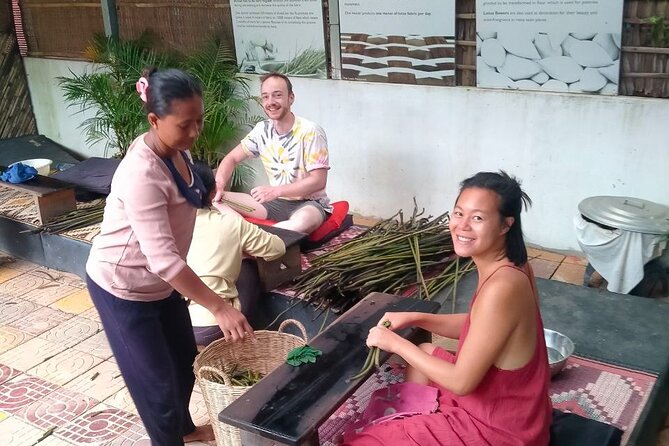
- Six lotus-based workshops: Work with lotus fibers, paper, incense, seed pods, flowers, and tea.
- A boat ride through the lotus field: The peaceful water excursion provides a slower finish after the craft sessions.
- Useful handmade souvenirs: Make items such as a bracelet, necklace, paper, yarn, and incense sticks.
- A look at artisan life: The activities connect the lotus plant to textiles, sustainable fashion, botanical products, jewelry, and tea.
- A small group setting: The experience accepts no more than 15 people.
- Good value for craft lovers: At $47, the price covers instruction, several activities, handmade keepsakes, and the boat ride.
Why this lotus farm visit feels different
Siem Reap is best known for Angkor Wat, but the city also offers chances to see how local materials become useful goods. This experience takes a single plant and follows it through several stages, from field to finished object.
The lotus has a strong place in Cambodian life, but this is not simply a flower-viewing trip. You get to handle stems, seed pods, petals, and other parts of the plant. That physical work helps you understand the skill behind products that can look simple when displayed in a shop.
I especially like that the workshop avoids a passive demonstration. You are expected to try the techniques yourself. Your results may not look perfectly polished, but that is part of the point. You see how much patience goes into extracting thin fibers or assembling small decorative pieces.
The farm also links the plant to sustainability. Lotus materials can be used for textiles, paper, incense, jewelry, and tea, giving the session a practical focus rather than treating the flower as decoration alone.
More Farm Visits in the world:
- Boti Falls, Umbrella Rock, Aburi Gardens & Cocoa Farm Tour
★ 4.6 · 72 reviews - Cooking Class Hoi An – Organic Garden – Farming Tour-Handicrafts
★ 5.0 · 56 reviews - Alcamo Farm Animals and Aromatic Garden
★ 4.0 · 45 reviews
Start with lotus tea and local craft work
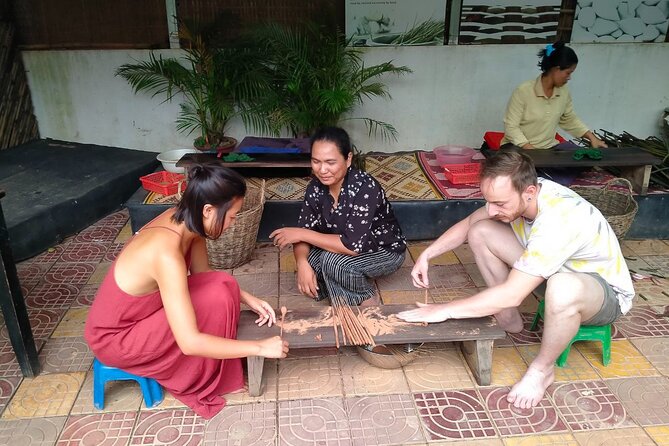
The experience begins at Lotus Silk Farm on Road 63 in the Phnom Krom area of Siem Reap. You start with a cup of lotus tea, a fitting introduction because the plant is not just something to look at. It can also be dried and prepared for drinking.
From there, the workshop moves through six activities. The exact order may vary, but the central idea remains the same: you learn by doing. The staff explain how the material is prepared, then give you a chance to make or handle something yourself.
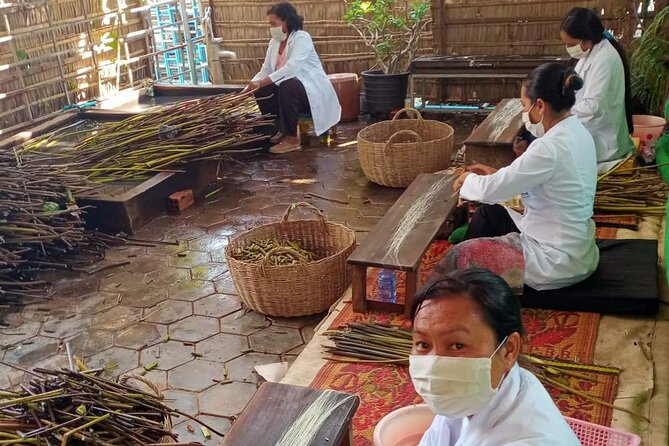
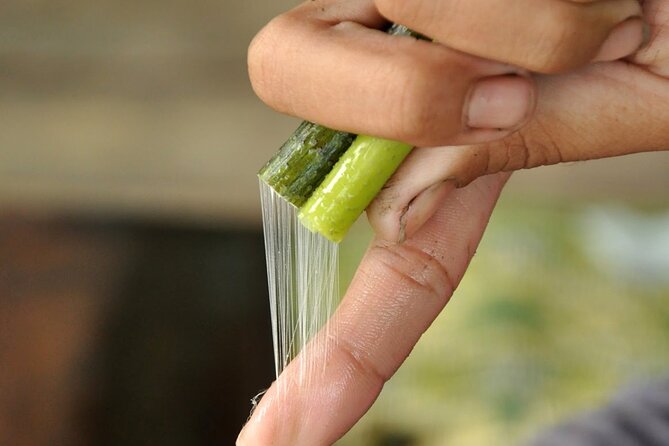
One of the more unusual tasks is extracting silk-like fiber from lotus stalks. The strands are delicate, and the work gives you a better sense of why lotus textiles require care. It is a small action, but it explains the connection between the farm and textile production far better than a short talk would.
You also work with lotus to make yarn or thread. This is a useful part of the visit if you are interested in sustainable fashion, since it shows how an agricultural product can become a textile material.
Make bracelets, necklaces, paper, and incense
The craft sessions are varied enough to keep the morning moving. Seed pods can be strung as beads for a bracelet or necklace, giving you a souvenir with a clear connection to the plant itself.
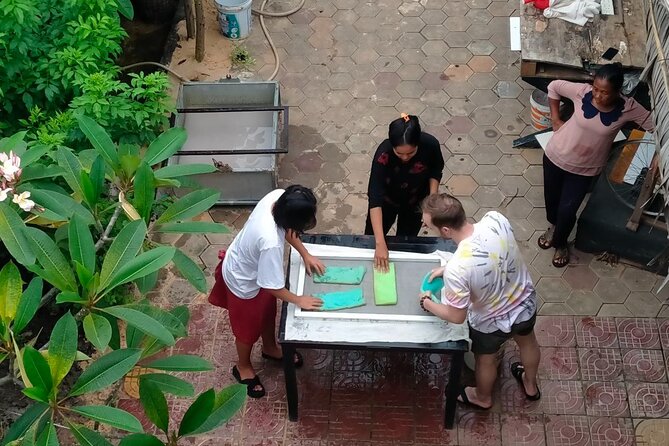
Making paper adds another type of activity. Instead of simply buying a sheet with a lotus design, you take part in the process of turning plant material into something flat and usable. The finished piece may be a little uneven, but it carries more personal value because you helped create it.
Another session covers incense sticks. This gives you a different view of the lotus, using it in a botanical product rather than a decorative one. You may also learn how to fold the flower into a simple form, an activity that suits visitors who enjoy careful handwork.
The selection works well for families, couples, and solo visitors who want a souvenir-making experience. It is also a good choice if you have already spent hours at temples and want an activity that uses your hands instead of requiring more walking and looking.
Learn how artisans use the whole plant
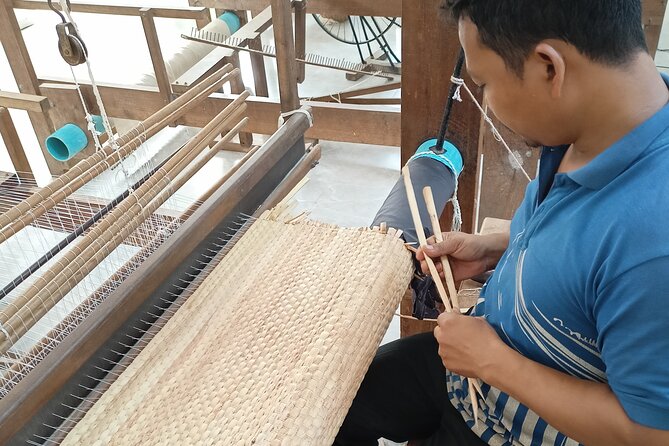
The strongest part of the visit is the connection between each activity. Fibers become yarn, seed pods become beads, plant material becomes paper, and petals can be dried for tea. You begin to see the lotus as a working crop with several uses.
That matters because the session gives you a glimpse into the daily lives of artisans. You are not just shown a finished product. You see the patience, repeated motions, and care needed to prepare the raw material.
I would pay close attention during the explanations, especially if textiles interest you. The lotus fiber process is unusual, and it is easy to miss the importance of each small step when you are focused on producing your own piece.
The visit also connects traditional craft with modern ideas about sustainable fashion. The tour does not promise a full technical course, but it gives you enough contact with the materials to understand why lotus products take time and why handmade goods cost more than factory-made souvenirs.
Same place, a different kind of green day out:
- Paris: Versailles Palace and Gardens Full Access Ticket
★ 4.6 · 41,579 reviews - Versailles: Skip-the-Line Tour of Palace and Gardens Access
★ 4.7 · 10,429 reviews - Marrakesh: Majorelle Garden Entry Tickets
★ 4.5 · 9,651 reviews - Vienna: Schönbrunn Palace & Gardens Skip-the-Line Tour
★ 4.7 · 7,739 reviews
The boat ride through the lotus field
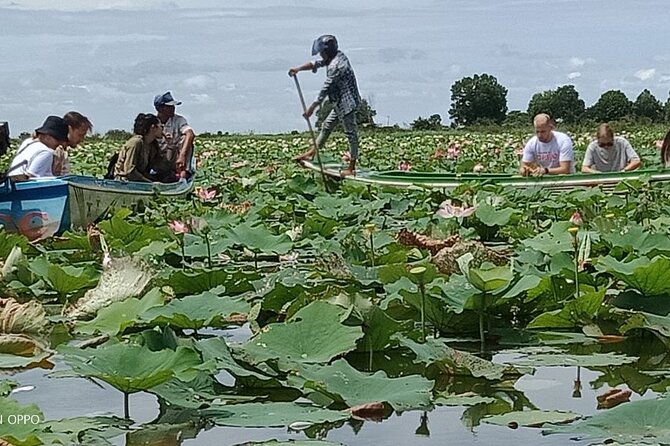
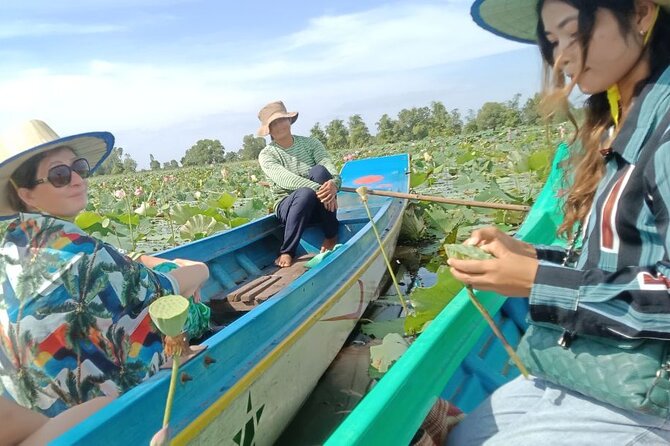
After the workshops, you take a boat ride through the lotus field. This is the quietest part of the experience and a useful change of pace after the craft work.
The boat carries you among lotus and water lilies, giving you a close view of the plants in the setting where they grow. The water ride is especially appealing for photographers and anyone who prefers a peaceful outdoor stop to a busy attraction.
The boat trip is not just an extra scenic ride. It completes the lesson. You have already worked with pieces of the plant, and now you see the living flowers and their growing environment.
Weather matters here. The activity requires good conditions, so poor weather can lead to a new date or a full refund. If the boat ride is an important reason for booking, check the forecast and keep your schedule flexible.
What $47 gets you
The price is $47 for about three hours. That is not the cheapest short activity in Siem Reap, but the value depends on what you want from your morning.
You are paying for several guided craft sessions, materials, a cup of lotus tea, handmade items to keep or give away, and the boat ride. If you bought finished lotus products separately, you would miss the process that makes them meaningful. For me, the instruction and participation make the price more reasonable than a simple farm visit.
The small group limit also matters. With no more than 15 people, the staff should have a better chance to demonstrate the techniques clearly and watch your progress. A larger group could make delicate activities such as pulling fibers or making jewelry feel rushed.
This is not the right choice if you want a full-day tour, a major historical site, or extensive transport around Siem Reap. It is a focused half-day-style activity built around crafts and nature.
Who should book this experience
I would recommend it to anyone who enjoys making things, learning about local materials, or taking home a souvenir with a story. It is particularly well suited to visitors who have already seen the major temples and want to add a more personal activity to their Siem Reap plans.
Families may appreciate the range of tasks, though the small craft work could require patience from younger children. Couples can treat it as a shared activity, while solo visitors have an easy setting for meeting others without the pressure of a large group.
It is also a strong option for anyone interested in sustainable products. You do not merely hear that lotus can be used in textiles and botanical goods. You handle the material and see several stages of the process.
You may want to skip it if you dislike structured workshops or prefer sightseeing from a bus. The visit has a clear program, and much of the time is spent learning techniques rather than freely exploring the farm.
Practical details for planning your visit
The meeting point is Lotus Silk Farm Siem Reap, at 11 Road 63, Phnom Krom, 17250, Cambodia. The activity ends at the same location, so you do not need to arrange a separate end point.
The farm is near public transportation. The supplied details do not specify the exact transport options, so confirm your preferred route before setting out.
A mobile ticket is available, and booking confirmation is provided at the time of booking. Since the experience depends on weather, avoid placing it immediately before an important flight or tightly timed temple visit.
Free cancellation is available if you cancel at least 24 hours before the start time. Cancellations or changes made within 24 hours are not refunded or accepted. If the farm cancels because of poor weather, you can choose another date or receive a full refund.
The small details that improve the experience
Bring a curious attitude rather than expecting perfect finished crafts. The value comes from trying the techniques and learning how the materials behave.
Allow the full three hours. The boat ride and workshops are separate parts of the experience, and rushing away early would cut out one of the main reasons to book.
If you are choosing between a quick lotus photo stop and this activity, pick this one if you want context. The flower field is attractive, but the craft work explains why the plant matters beyond its appearance.
The boat ride is likely to be most enjoyable when the weather is calm and comfortable. Since the activity can be changed or canceled in poor conditions, keep that factor in mind when planning your day.
Should you book the Lotus Silk Farm experience?
Book it if you want a gentle, hands-on morning that combines Cambodian craft, sustainable materials, and a peaceful boat ride. The strongest reasons are the unusual lotus fiber work, the range of handmade souvenirs, and the chance to connect the finished products with the people who make them.
At $47, it offers fair value for visitors who will take part in the workshops rather than simply watch. The main limitation is its narrow focus. If your priority is temples, history, or a fast photo opportunity, use your time elsewhere.
For a break from Siem Reap’s major sights, this is a thoughtful choice. You leave with more than a souvenir. You leave understanding how a familiar flower can support craft, work, tea, and a small local enterprise.
FAQ
Where does the Lotus Silk Farm experience begin?
It begins at Lotus Silk Farm Siem Reap, 11 Road 63, Phnom Krom, 17250, Cambodia.
Where does the activity end?
The activity ends back at the meeting point.
How long does the experience last?
The experience lasts approximately three hours.
How much does the experience cost?
The listed price is $47.
How many people can join the activity?
The activity has a maximum of 15 participants.
Is a mobile ticket available?
Yes. The experience offers a mobile ticket.
What do you make during the workshops?
You may make a lotus-based bracelet, necklace, yarn, paper, and incense sticks. The activities also include working with lotus fiber and folding the flower.
Is lotus tea included?
The experience begins with a cup of lotus tea.
Is there a boat ride?
Yes. The experience includes a boat ride through the lotus field and water lilies.
Can you cancel for a full refund?
Yes, if you cancel at least 24 hours before the start time. Cancellations within 24 hours are not refunded.
What happens if bad weather cancels the activity?
You will be offered a different date or a full refund if poor weather causes the cancellation.
Just added around the world
- Skip-the-Line Guided Tour and Gardens Entry in Versailles Palace★ 3.5 · 3 reviews
- Versailles Palace and Gardens Tour★ 4.5 · 44 reviews
- Versailles Palace Guided Experience and Gardens Entry 10 PPL Max★ 5.0 · 42 reviews
- Versailles Palace & Gardens Audio Tour – Private Transportation★ 4.5 · 11 reviews
- Versailles: Farmers Market & Royal Vegetable Garden Food Tour★ 5.0 · 11 reviews
- Versailles Gardens Walking Tour with Audioguide (no tickets)★ 3.0 · 6 reviews
- Versailles Golf Cart & Shuttle Guided Tour, Hamlet and Gardens★ 4.5 · 13 reviews
- Palace of Versailles Entry ticket with Musical Gardens & Estate★ 3.5 · 55 reviews
Farms, compared.

Tulip Farm Visit, Keukenhof, and Windmill Cruise
Read our review →
Day trip to Tulip Farm, Keukenhof + Windmill Cruise
Read our review →

Boti Falls, Umbrella Rock, Aburi Gardens & Cocoa Farm Tour
Read our review →
Cooking Class Hoi An – Organic Garden – Farming Tour-Handicrafts
Read our review →

Keukenhof Skip-the-line Tickets: Countryside & Farm Private Tour
Read our review →Browse the lists this tour appears in