
Review · MARRAKECH
Marrakech: Medina, Souks, Artisans Guided Tour with Mint Tea
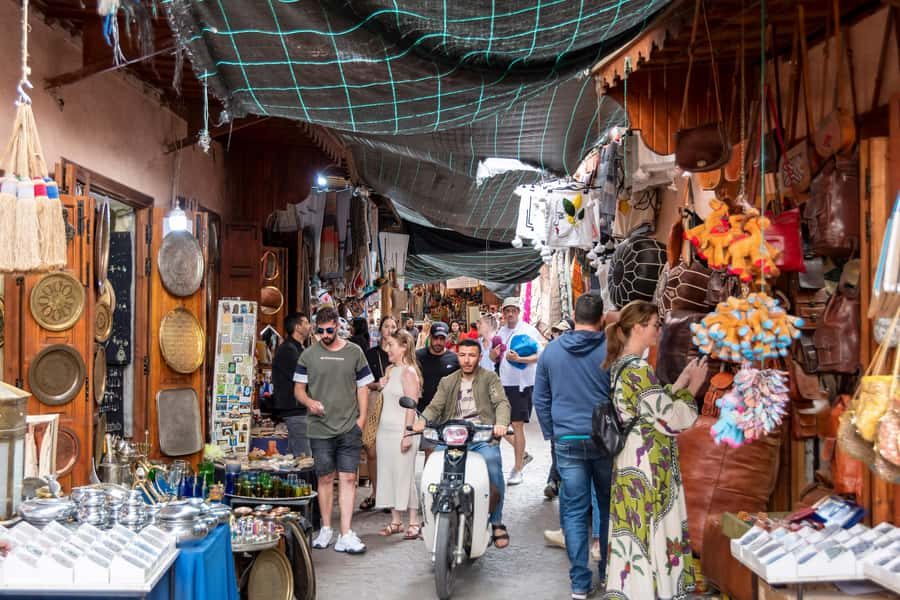
Marrakech’s medina makes the most sense when someone shows you how its working quarters fit together. This 3 to 4 hour walk moves from Jemaa el-Fna into leather, dye, metalwork, textile, and spice areas, with artisans at work and a mint tea pause along the way. The craft districts are the star.
I like the practical shopping help, especially the advice on bargaining, argan oil, spices, and handmade goods. I also like the route’s human side: you are not only looking at stalls, you are seeing dyeing, leatherwork, and metalwork in progress. Guides named Ishmael and Saïd have led recent departures, and both are noted for clear explanations and patience.
The main caution is the walking. You will cover narrow lanes and uneven streets for several hours, so good shoes matter. The schedule can also vary, with one route including the Secret Garden and the published stops naming Ben Youssef Madrasa, so confirm the exact plan if a particular sight matters to you.
Five useful things to know before you go
- Start at Jemaa el-Fna: Meet in front of Café de France, the easiest fixed landmark in the square.
- See real craft quarters: Souk Semmarine, the dyers’ quarter, and the blacksmiths’ quarter each have a different character and purpose.
- Learn how to shop: Your guide can explain bargaining, natural products, argan oil, herbs, and handmade Moroccan goods.
- Take a mint tea break: The pause offers a quieter moment and a window into Moroccan hospitality.
- Plan for a long walk: Bring water, cash, sunglasses, sunscreen, and shoes built for hours on foot.
Why this medina walk is useful on a first day
Marrakech’s old city can feel like a maze, and that is part of its charm. It is also easy to lose time, miss the working quarters, or step into a shop without knowing what you are seeing. A local guide gives the narrow lanes a structure.
This is not simply a walk past colorful displays. The route is built around how the medina works. Leather goods, dyed wool, forged metal, textiles, spices, and natural products each have their own place. That makes the tour useful even if you do little shopping.
At $18 per person, the price is modest for a guided half-day walk with a tea stop. The value depends on your guide and group size, but the cost is low enough to make this a sensible introduction to Marrakech. You are paying for orientation, cultural context, and shopping advice rather than entrance tickets or transport.
The private option adds hotel pickup if you are staying in the medina. A small group costs less and may suit most people, while a private departure gives you more room to ask questions and set the pace.
A few more garden visits around Marrakesh worth a look
- Marrakech: Guided City and Gardens Highlights Tour
★ 3.4 · 446 reviews - Marrakech: Majorelle Garden, Museums Tickets, & Audio Guide
★ 4.6 · 38 reviews - Marrakech: Majorelle Garden with a Digital Audio Guide App
★ 4.1 · 21 reviews
Meeting at Jemaa el-Fna and entering the medina
The usual meeting point is in front of Café de France in Jemaa el-Fna. This is a practical place to meet because the square is central and well known, though it can be crowded and confusing at busy times. Look for the guide’s name and confirm the meeting details through the WhatsApp message sent before the tour.
The walk begins with about 15 minutes in Jemaa el-Fna. Use this time to get your bearings. The square is Marrakech’s social center, and it changes character during the day. Your guide can explain what you are seeing before leading you into the lanes behind it.
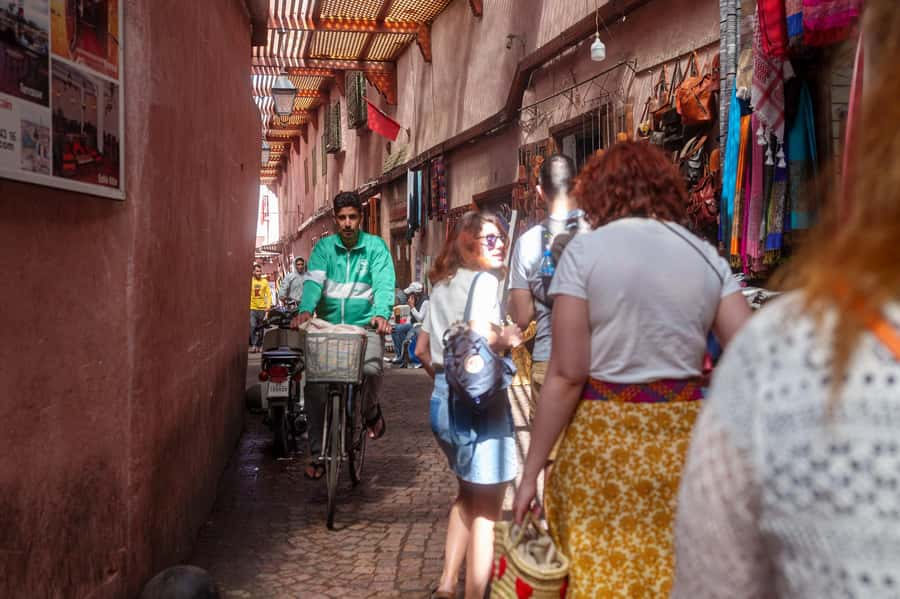
From there, about 30 minutes are spent walking through the wider medina. This opening section helps you adjust to the pace and layout. Streets narrow quickly, and stalls, workshops, homes, and small cafés can all share the same passage.
I recommend arriving with your camera ready but your shopping plans loose. The first part is better for noticing how the old city works than for buying the first item that catches your eye.
Souk Semmarine and the leather craft tradition
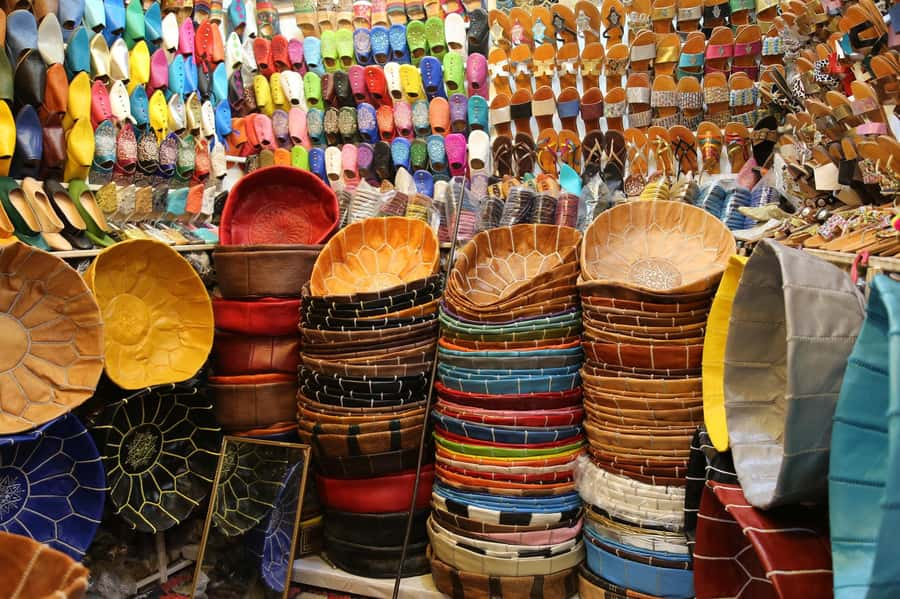
Souk Semmarine is one of the main market streets, with leather goods, textiles, clothing, and traditional crafts. You can expect about 30 minutes here, including time for photographs, explanations, and shopping.
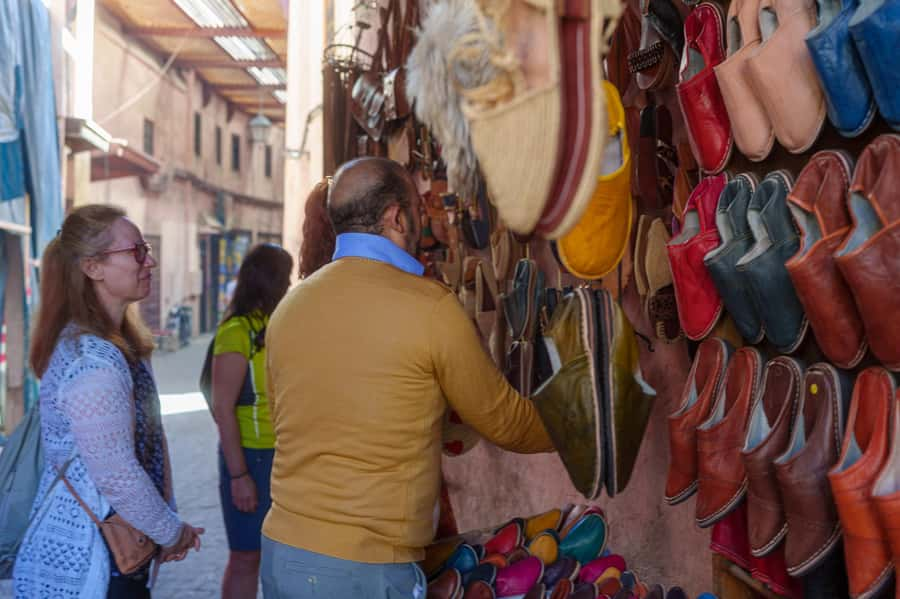
Leather bags, belts, and babouche slippers are key items in this part of the walk. The guide can explain how these goods are made and point out differences in finish and construction. That does not remove the need to inspect what you buy, but it gives you better questions to ask.
This is also where bargaining advice becomes useful. The tour teaches you to negotiate with more confidence rather than treating every marked price as fixed. Set your own budget before you begin, compare similar items, and do not feel obliged to buy simply because an artisan has shown you a workshop.
Some people will enjoy the chance to shop with guidance. Others may find the commercial attention tiring. If you prefer to look without buying, tell your guide early so the focus stays on craft and local life.
Souk El Attarine and the feel of the smaller lanes
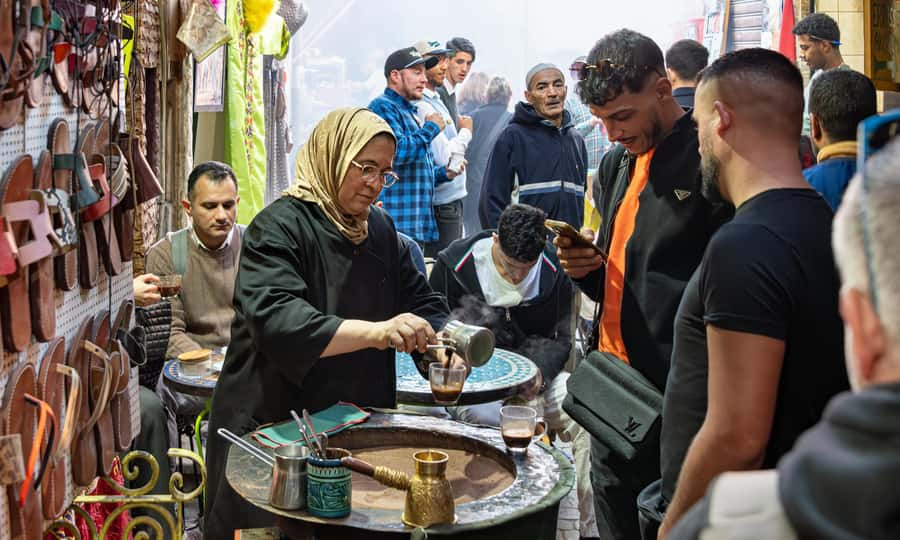
The route then moves through Souk El Attarine for roughly 20 minutes. This section adds more shopping and sightseeing, with the guide helping you read the mix of stalls and workshops.
The value here is less about one major sight and more about the change in atmosphere as the lanes become more specialized. You may see textiles, household goods, and small craft items arranged in compact spaces. The guide’s explanations can help you tell a handmade object from a mass-produced souvenir, though you should still ask direct questions about materials and origin.
This is a good time to note items you may want to revisit later. The tour ends with free time, so you do not need to carry every purchase for the rest of the walk.
Same place, a different kind of green day out:
- Marrakesh: Majorelle Garden Entry Tickets
★ 4.5 · 9,651 reviews - Marrakech: Majorelle Garden, YSL, and Berber Museum Entry
★ 4.6 · 5,168 reviews - Marrakech: Ben Youssef, Secret Garden, & Souks Walking Tour
★ 4.6 · 2,802 reviews - Marrakech: Madrassa Ben Youssef, Secret Garden & Medina Tour
★ 4.8 · 1,303 reviews
Souk Sebbaghine, where wool becomes color
The dyers’ quarter, known as Souk Sebbaghine or Souk des Teinturiers, is one of the most visual sections. Colored wool hangs overhead, and the route allows about 20 minutes for a visit, photographs, explanations, and shopping.
Here you can watch traditional dyeing methods and learn how textile work has been passed through generations. The hanging wool gives the lane a strong visual identity, but the point is not only the color. It is the process, the labor, and the way several trades support one another inside the medina.
If you are buying a scarf or textile, ask about the fiber, dye, and care. A short explanation from the guide may help you choose with more care. Natural materials and handmade work often cost more than factory-made pieces, so bargaining should take quality into account.
The lanes can be tight, and stopping for photographs may slow the group. Stay close to your guide and be aware of people carrying goods through the souk.
Mint tea on a quiet terrace
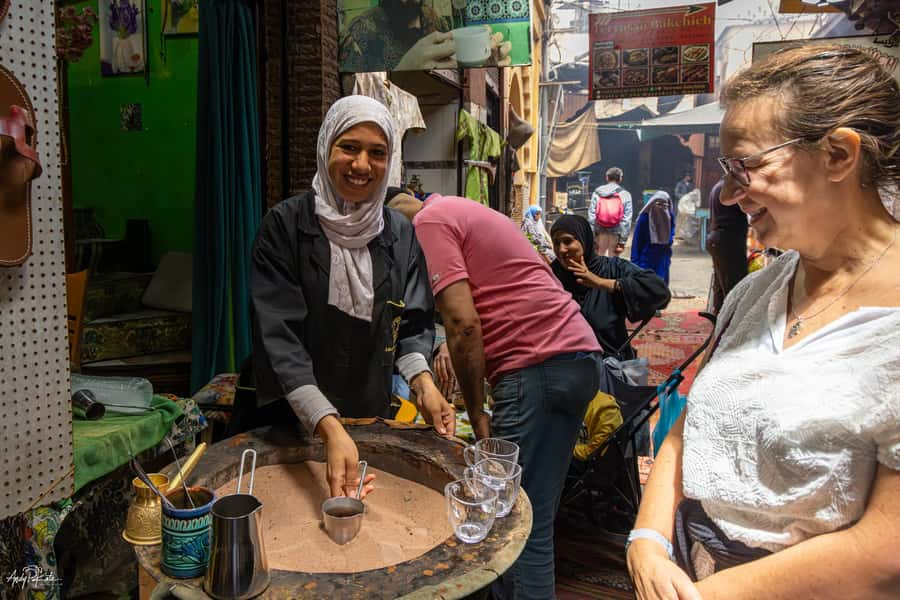
The tea break is a welcome change from the narrow market streets. You will stop at a quieter terrace for Moroccan mint tea and learn why the drink matters in daily social life.
This is not a major sightseeing stop, and that is precisely why it works. The pause gives your feet a rest and lets you talk with the guide away from the sales activity. You can ask about customs, food, neighborhoods, or the crafts you have just seen.
Mint tea also shows how hospitality works in Morocco. It is more than a quick refreshment. It is part of greeting, conversation, and time spent together. If you are visiting Marrakech during hot weather, carry your own water as well. Tea is pleasant, but it should not be your only drink during several hours of walking.
Souk Haddadine and the blacksmiths’ quarter
The route continues to Souk Haddadine, the blacksmiths’ quarter. Here metalworkers shape tools and decorative items using traditional methods. The visit helps balance the softer textiles and leather goods seen earlier with the sound and force of metalwork.
You will see how practical objects and decorative pieces can come from the same trade. The guide can explain how these workshops remain part of everyday medina life rather than existing only for tourists.
This section may be especially interesting if you like process. It is one thing to see a finished lantern or metal object in a shop. It is another to watch a craftsperson work with heat, tools, and repeated hand movements. The exact activity may vary from one workshop to another, so expect a working area rather than a staged show.
Keep your hands and belongings close in tight spaces. The medina is active, and people may be moving tools, materials, or goods through the lane.
Rahba Lakdima and the spice stalls
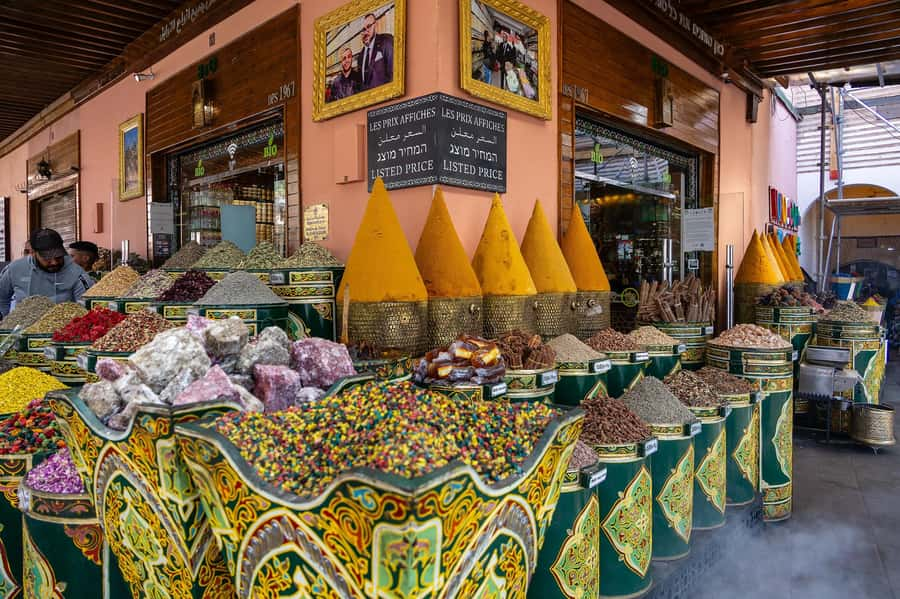
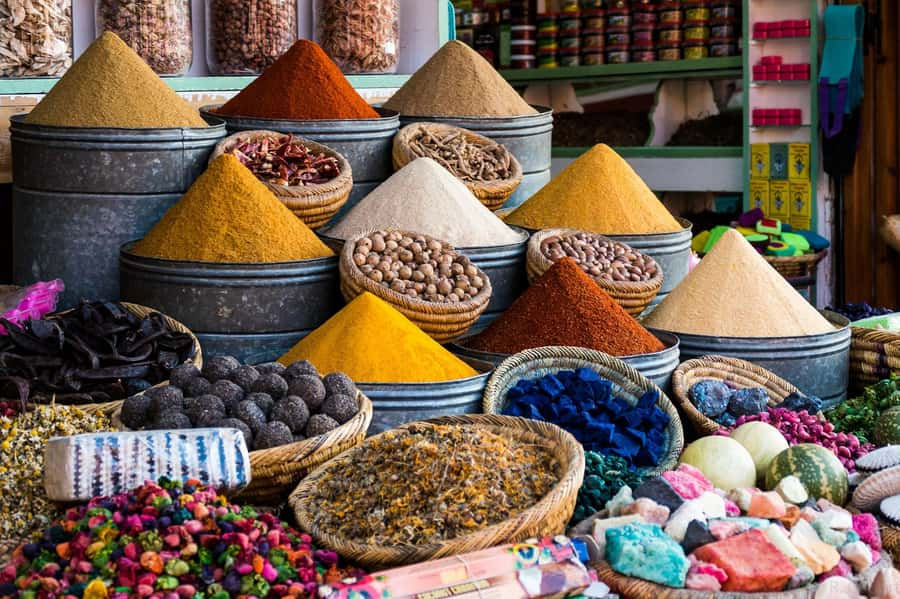
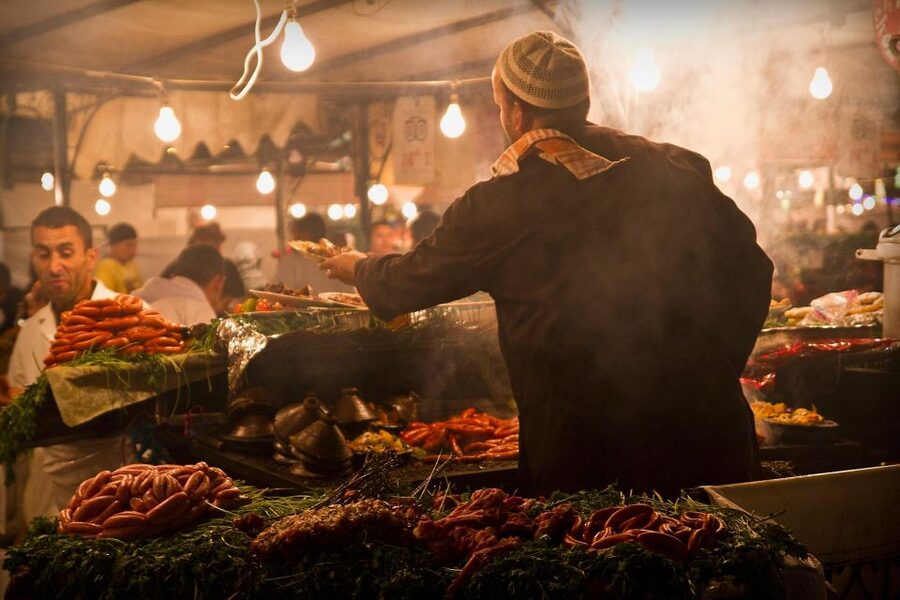
The guided walk ends at Rahba Lakdima, also called Spice Square. This is a natural place to finish because it brings together food, scent, traditional remedies, and shopping.
Stalls offer spices, herbs, and natural products. Your guide can explain common uses and help you recognize authentic argan oil. That advice matters because the market contains many similar-looking bottles and products, and labels alone may not tell the whole story.
Ask what an item is used for, how it should be stored, and whether it is meant for cooking or skin care. If you are buying spices, consider how much you can realistically carry home. Small quantities are often easier to pack and use.
The square is also a good place to think about the difference between a useful purchase and a souvenir impulse. A spice blend, small textile, or carefully chosen craft may give you a stronger connection to the city than a generic item picked up in a hurry.
Ben Youssef Madrasa and route variations
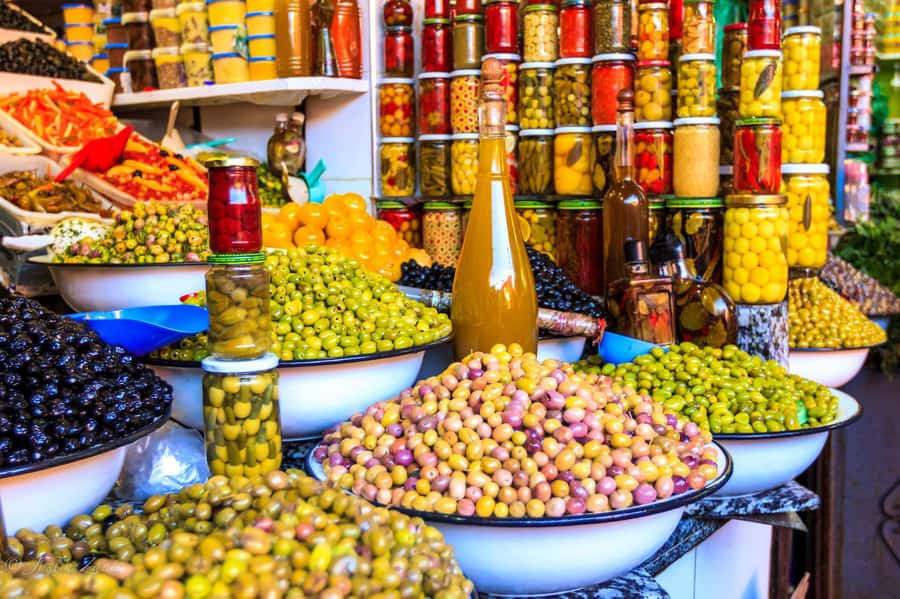
The scheduled route allows about 40 minutes at Ben Youssef Madrasa for a visit, photographs, sightseeing, and free time. This adds an architectural and educational stop to the craft-focused sections of the tour.
Because the supplied route information also describes a guided walk ending at Rahba Lakdima, ask your guide when the madrasa visit fits into the day. The route may be adjusted based on opening arrangements, group pace, or the selected option.
One recent departure included the Secret Garden instead of the expected garden or madrasa stop. Treat this as a possible route variation, not a guaranteed feature. If you want to see Ben Youssef Madrasa or the Secret Garden in particular, confirm before setting out.
Free time, shopping, and what to buy
After the guided portion, you have time to revisit shops or browse at your own pace. This is one of the tour’s better design choices. You get advice before shopping alone, then have room to make your own decisions.
I would use the free time for one or two planned purchases rather than trying to cover the entire souk. Good candidates include a handmade leather item, a textile, spices, or a small metal craft. Compare similar goods, inspect stitching and finish, and ask whether the item was made locally.
Bargaining should be polite and measured. Decide what you are willing to pay, offer a fair counterprice, and be ready to walk away without drama. Your guide can teach the local rhythm, but you remain responsible for the final purchase.
The tour returns toward Jemaa el-Fna, with drop-off at Café de France or the medina. There is no transportation included, so you will continue on foot unless you arrange your own ride afterward.
Timing, language, and walking demands
The total duration is 3 to 4 hours, depending on the pace, group, and route. The itinerary includes several short stops, but the walk between them is the real activity. Wear comfortable shoes, bring water, and use sunscreen and sunglasses.
English and French are available. A private group is also offered, which can be useful if you want more time at workshops or need the guide to adapt the pace. The activity information says it is wheelchair accessible, but it also says it is not suitable for people with mobility impairments. Those details do not fully agree, so contact the provider before booking if accessibility is important.
Hotel pickup is available from your riad in the medina with the private option. Otherwise, meet at Café de France. Transportation outside the walking route is not included.
The booking terms are flexible: cancellation is free up to 24 hours before the tour, and you can reserve now and pay later. Starting times depend on availability.
Who should book this Marrakech tour
I would choose this walk if you are visiting Marrakech for the first time, want help finding the craft quarters, or feel unsure about shopping in the souks. It also suits anyone who prefers local explanations over a list of monuments.
It is a good fit for curious shoppers, photographers, and people who want to understand how the medina’s trades connect. The tea pause makes the long walk easier, and the free time gives you control at the end.
I would be more cautious if you dislike crowded lanes, bargaining, or sustained walking. This is not a quiet museum tour. It is an active city walk through working markets, with uneven streets and frequent stops.
Should you book it?
At $18, this is good value if you use the guide for orientation, craft knowledge, and shopping advice. The strongest parts are the dyers’ quarter, the blacksmiths’ workshops, the practical bargaining help, and the chance to pause over mint tea.
Book it for your first day or two in Marrakech, then return to the souks later with a better idea of what you want. Choose the private option if hotel pickup and a flexible pace matter. Before booking, confirm the exact stops, especially if Ben Youssef Madrasa or the Secret Garden is important to you.
FAQ
How long does the Marrakech medina tour last?
The tour lasts about 3 to 4 hours, depending on the starting time, pace, group, and route.
Where does the tour meet?
The standard meeting point is in front of Café de France in Jemaa el-Fna square.
Is hotel pickup available?
Hotel pickup is available from a riad inside the medina when you choose the private option.
What languages does the guide speak?
The tour is offered with a live guide speaking English or French.
Is this a private tour?
A private group option is available. Other bookings may use a small-group format, depending on the option selected.
Is Moroccan mint tea included?
Yes. A Moroccan mint tea break at an authentic spot in the medina is included.
Does the tour include transportation?
No. Transportation is not included. The activity is a walking tour through the medina.
What should I bring?
Bring comfortable shoes, sunglasses, sunscreen, water, and cash.
Is the tour suitable for someone with mobility impairments?
The activity information says it is not suitable for people with mobility impairments. It also describes the activity as wheelchair accessible, so contact the provider for clarification before booking if you have specific access needs.
Can I cancel the booking?
You can cancel up to 24 hours in advance for a full refund. The reserve now and pay later option is also available.
Just added around Marrakesh
- Private Tour: Jardin Secret and Hidden Gems of Marrakech★ 4.6 · 9 reviews
- Discover Marrakech Through a Photo Experience★ 4.5 · 6 reviews
- Marrakesh: Bahia Palace, Ben Youssef Medersa & Secret Garden★ 4.8 · 55 reviews
- Marrakech: Majorelle Garden with a Digital Audio Guide App★ 4.1 · 21 reviews
- Marrakech Tour Gardens Majorelle, Menara & Anima Gardens★ 4.4 · 10 reviews
- Marrakech Tuk-Tuk Tour with Photography Museum+Secret Garden★ 4.4 · 12 reviews
- Marrakech: Majorel Garden, Camel ride in Palmerai, City trip★ 4.9 · 6 reviews
- Marrakech: Majorelle Garden, Museums Tickets, & Audio Guide★ 4.6 · 38 reviews
Marrakech Garden Tours, compared.
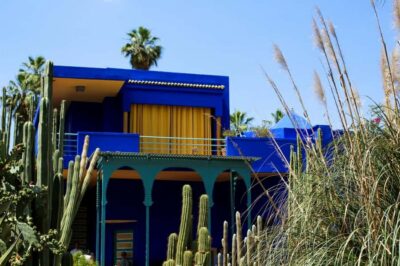
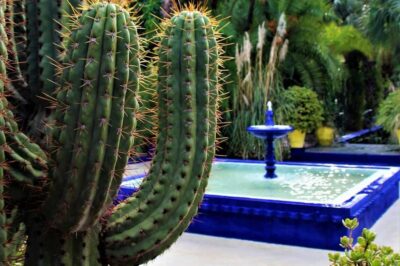
Majorelle Garden, YSL, and Berber Museum Entry
Read our review →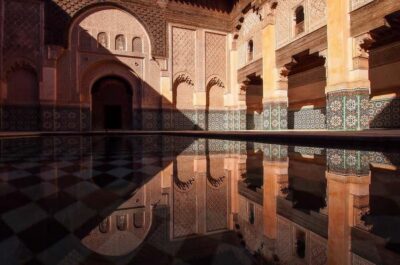
Ben Youssef, Secret Garden, & Souks Walking Tour
Read our review →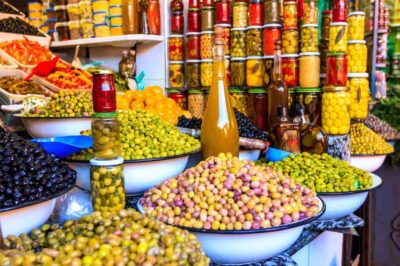
Madrassa Ben Youssef, Secret Garden & Medina Tour
Read our review →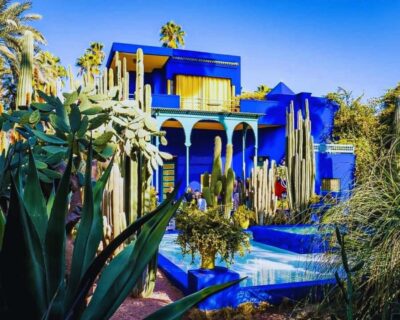
Majorelle & Menara Garden Tour and Carriage Ride
Read our review →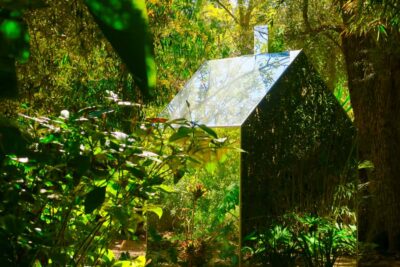
Browse the lists this tour appears in