
Review · INDIA
Mumbai:Dhobi Ghat Laundry,Dharavi Slum & Flower market Tour
Mumbai reveals itself quickly on this $9 small-group-style walking and train experience. You start at Churchgate station, ride with a local guide to Dhobi Ghat, watch laundry workers sort and dry huge loads of clothing, then continue to a flower market and Dharavi. It is a street-level look at how much work and trade happens behind the city’s polished front.
I especially like the local train ride, which turns the journey itself into part of the tour, and the chance to see Dharavi as a working community rather than a movie set or postcard image. Guide Shivam has been praised for clear English, friendly explanations, and knowing Dharavi’s lanes extremely well. The main consideration is that this is a busy, walking-heavy outing through narrow spaces, so it will not suit anyone seeking a quiet or highly polished sightseeing tour.
Key points at a glance
- Churchgate-to-Dhobi Ghat train ride: Your public transport journey is part of the experience, not just a way to reach the next stop.
- Dhobi Ghat laundry work: See hundreds of clothes being washed, hung, and dried in Mumbai’s famous open-air laundry.
- Flower market stop: Walk through a colorful, strongly scented market where the city’s day begins with flowers moving through the streets.
- Dharavi’s working lanes: Visit local markets, a school, recycling businesses, leather work, garment production, and pottery areas.
- Local guides with community ties: English-speaking guides such as Shivam explain the area through daily life, work, and family connections.
- Low price with useful inclusions: At $9 per person, the tour includes a guide, train ticket, taxi fare, and bottled water.
Meeting your guide at Churchgate station
The tour begins inside Churchgate station, at the train ticket counter near the Wheelers bookstall. This is a practical meeting point, but stations can be crowded and confusing, so arrive with the meeting details ready on your phone.
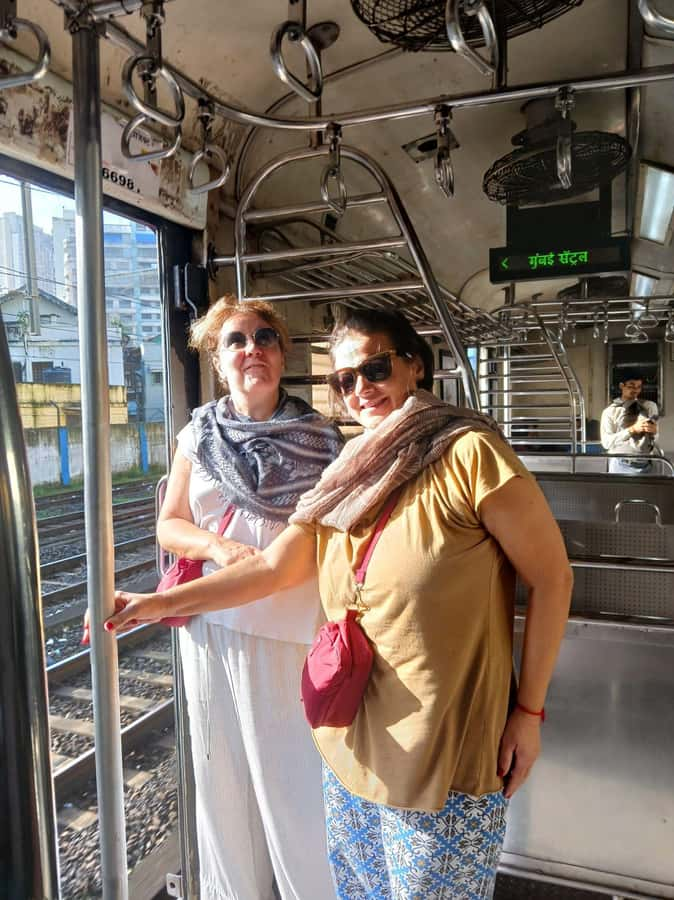
Your guide leads you from the station into Mumbai’s rail system. That first train ride matters because it gives you a taste of how the city moves. You are not being driven from one sealed attraction to another. You are sharing a basic part of the daily transport network before reaching the tour’s main stops.
The guide speaks English, and Shivam has received particularly strong praise for explaining clearly and taking time with questions. The experience depends greatly on the guide, since the value comes from understanding what you see rather than simply walking past it. A good guide can connect a laundry yard, a market, and a workshop to the larger story of Mumbai’s working neighborhoods.
The public train is also one reason to keep your expectations sensible. This is not a private sightseeing ride. You should expect a real city commute, with the noise and pressure that come with it. For many people, that is exactly the point. If you prefer private transport from start to finish, this will feel less comfortable.
More Flower Market Tours in India
- Jaipur Tuk-Tuk Tour with Flower Market Visit
★ 5.0 · 124 reviews - Jaipur Tour by Tuk-Tuk or Car with Flower Market
★ 5.0 · 120 reviews - Jaipur: Half-Day Guided Sightseeing Tour with Flower Market
★ 4.9 · 119 reviews
Dhobi Ghat and the work behind Mumbai’s clean clothes
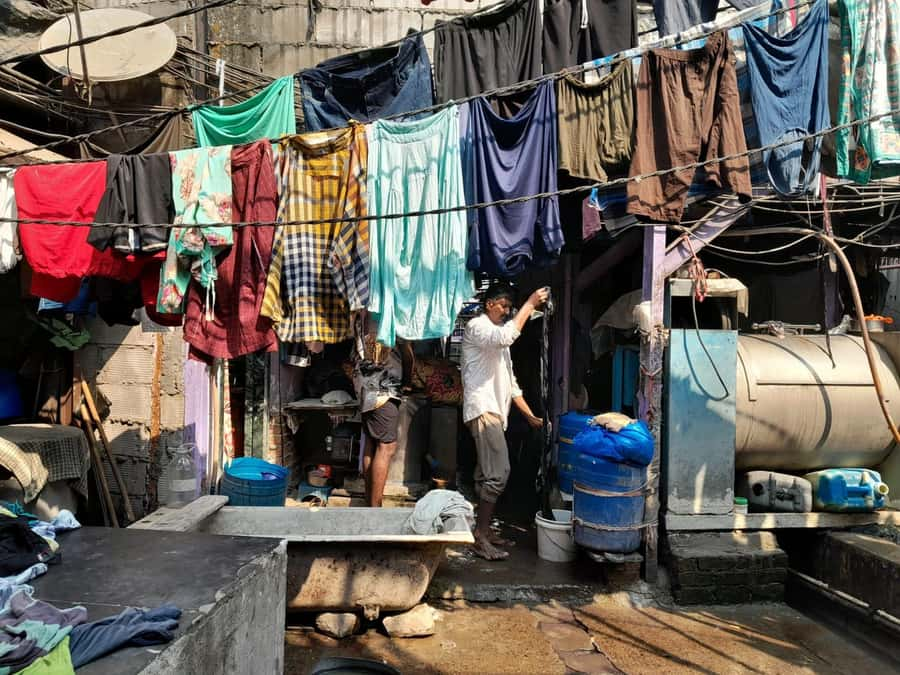
Dhobi Ghat is the tour’s first major stop. It is known as the world’s largest open-air laundry, with hundreds of clothes being washed and dried in a large, organized working space.
The appeal is not only visual. You get to watch a major service industry operating in the open, with laundry moving through repeated stages of washing, sorting, and drying. The sheer amount of clothing helps you understand the scale. This is not a single family washing clothes at home. It is a coordinated system that helps keep Mumbai supplied with clean garments.
The stop is especially useful if you enjoy seeing work rather than only monuments. Your guide can explain what is happening and help you notice the order within what may first look like a confusing mass of fabric, people, and activity.
You should also remember that Dhobi Ghat is a workplace. Treat it with respect. Follow your guide’s instructions, avoid blocking work areas, and ask before photographing people at close range. A camera is useful, but the best visit is one that lets workers continue their day without feeling like performers.
The train ride to Dhobi Ghat and the laundry visit create a strong opening. You move from a station used by ordinary commuters to a place where essential city work happens in full view. That combination gives the tour more substance than a quick photo stop.
A flower market filled with color and scent
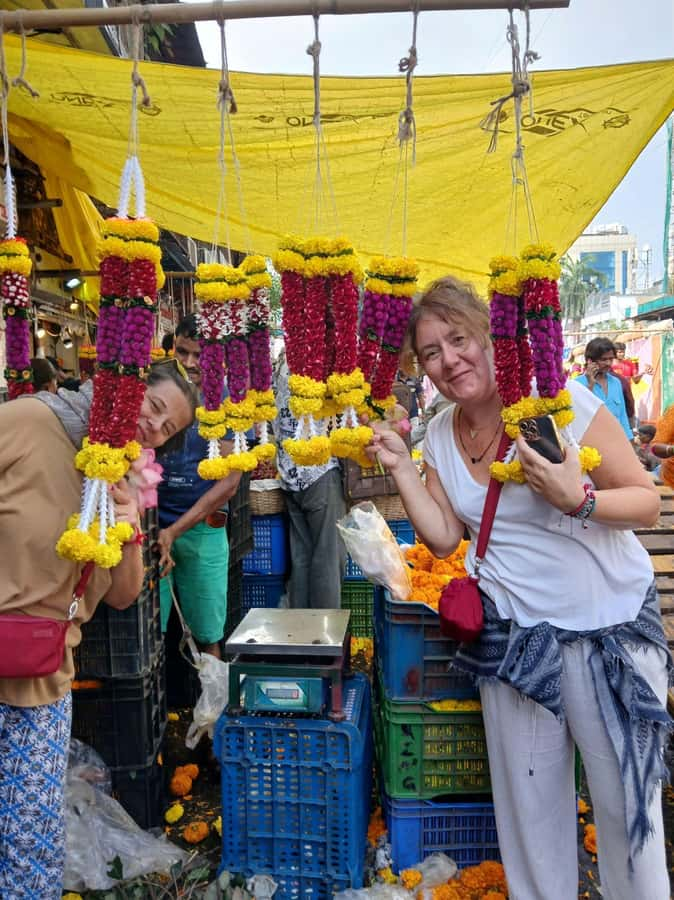
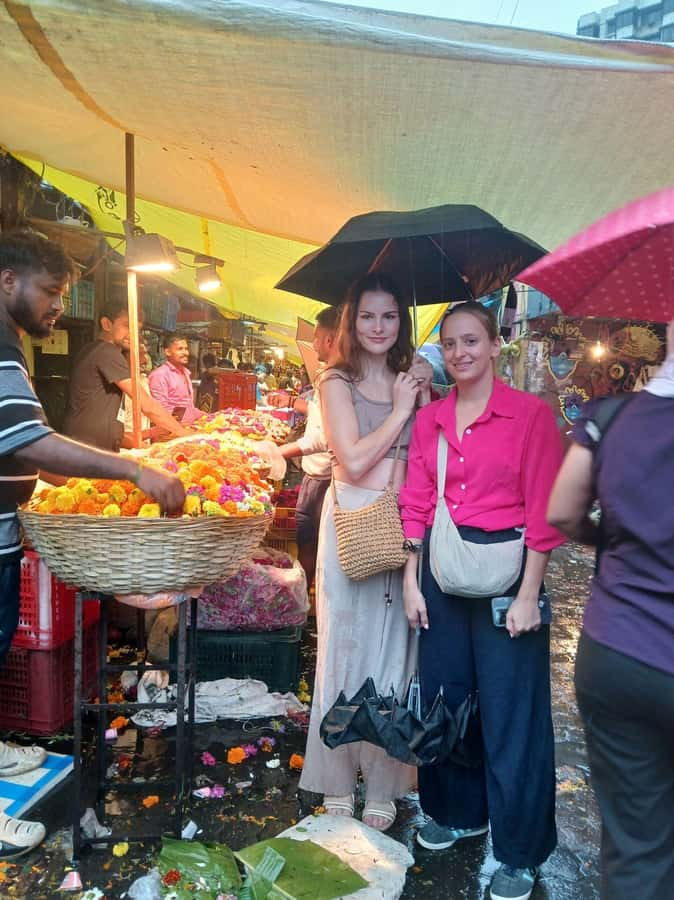
After Dhobi Ghat, a short ride takes you to a busy flower market. The stop adds a very different note to the morning or day, depending on your departure time.
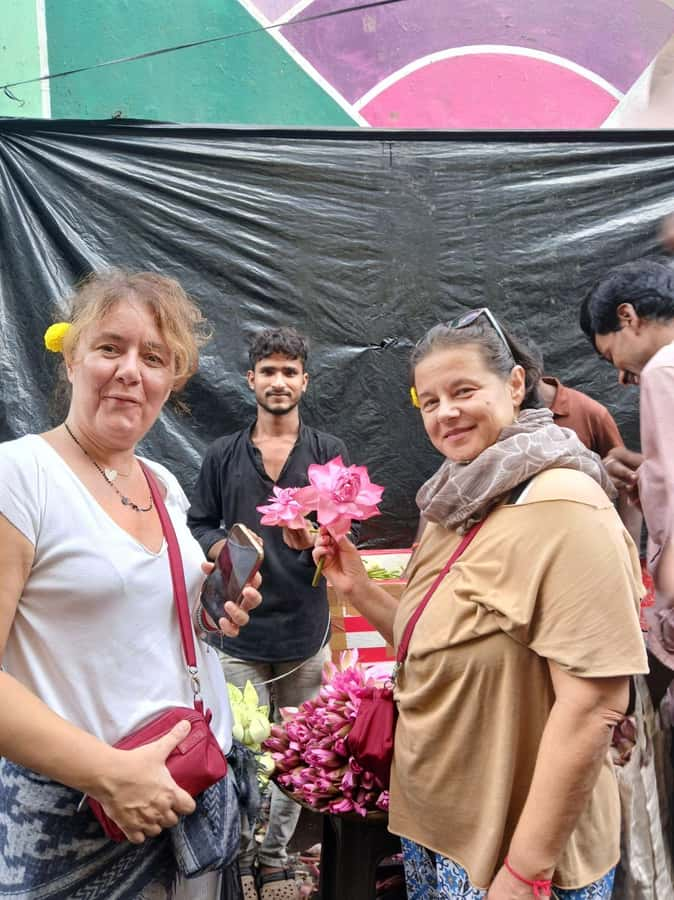
Here, flowers are the main story. You can expect bright colors, strong scents, piles of blossoms, and people moving goods through a crowded trading space. The market shows another part of Mumbai’s economy, one tied to ceremonies, worship, decoration, and everyday trade.
I like this section because it breaks up the heavier subject matter of Dharavi. You are not looking at one single version of Mumbai. The laundry shows organized service work, while the flower market shows fast-moving commerce built around perishable goods.
The market may feel hectic, and space can be tight. Keep your belongings close and stay with the guide. The information provided does not give a specific market name or exact visiting time, so the precise mood will depend on the day and the market’s activity when you arrive.
This is also a good place to use your camera carefully. The flowers will provide striking images, but ask permission before taking close portraits of sellers or workers. A respectful approach is more important than collecting a perfect photograph.
Walking through Dharavi’s working community
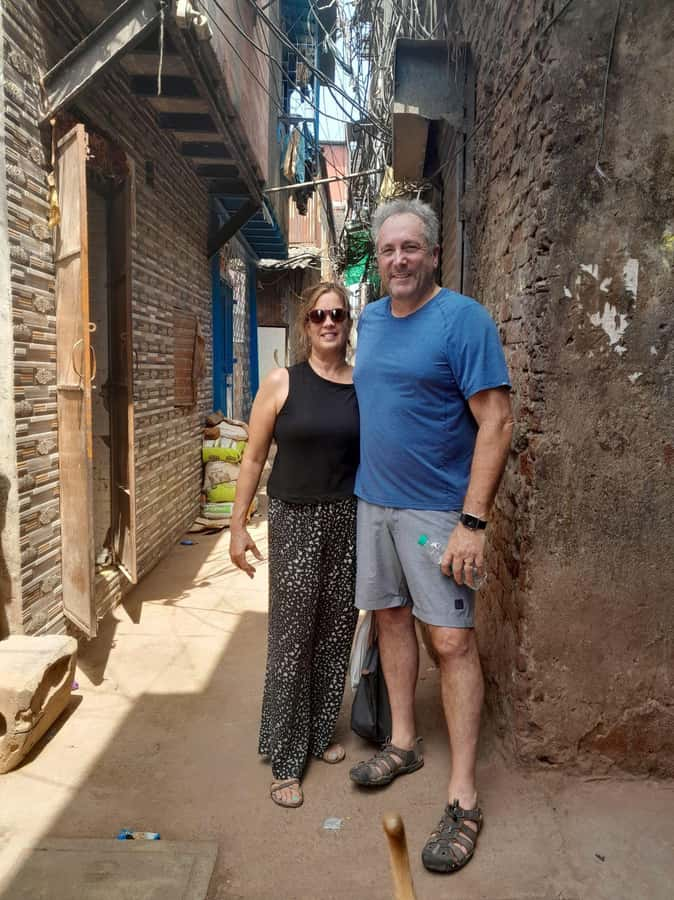
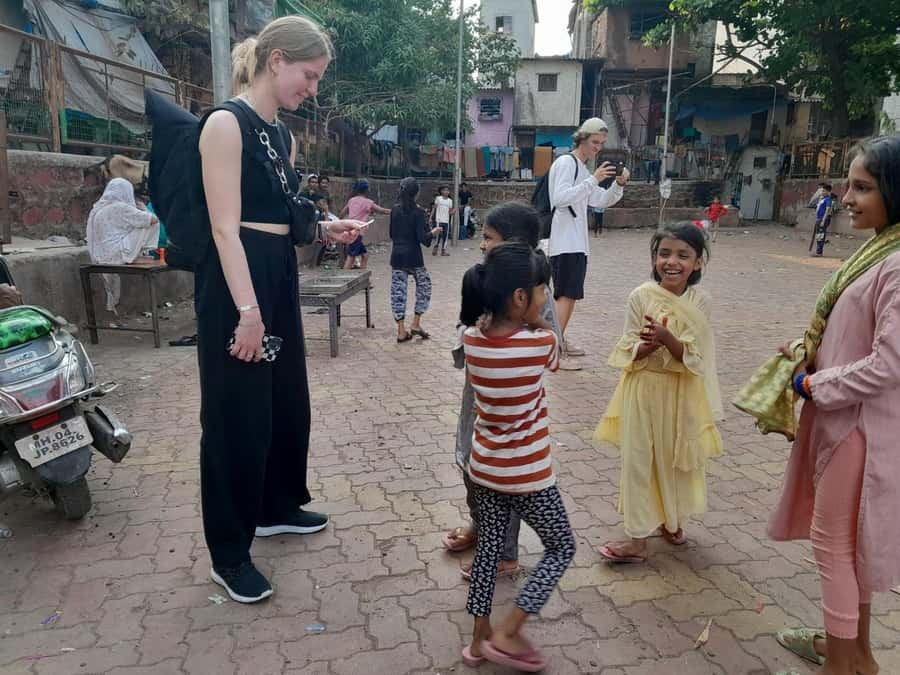
The Dharavi visit is the longest and most serious part of the experience. The guide takes you through narrow lanes to see small homes, local markets, a school, recycling industries, leather work, garment production, and pottery.
The important point is to view Dharavi as a community and a place of work, not simply as a poor neighborhood. The tour presents an area with thousands of small-scale businesses and an annual economy estimated at more than $1 billion. That does not erase hardship or limited space, but it gives you a fuller picture than the usual slum-tour stereotype.
You may see tiny houses beside workshops and markets. The close mix of home life and business is one of the defining features of the visit. People live, make goods, repair items, recycle materials, sell products, and send money home from the same compact network of lanes.
The tour also points to Dharavi’s varied population. Families from across India live here and speak different languages. That detail matters because it shows Mumbai as a meeting point for people from many regions, not as one uniform culture.
The guide’s role is crucial. Shivam is known for a friendly manner, strong English, and a close knowledge of Dharavi’s streets and residents. The provider describes its guides as local and connected to slum communities across generations. That local connection can help you understand the area with more care and less guesswork.
Still, you should approach this part thoughtfully. Dharavi is home to real families, children, and workers. Do not treat narrow lanes as a human zoo. Listen to the explanations, keep a respectful distance, and follow the guide’s photography advice. The tour is at its best when it encourages understanding rather than shock.
Same place, a different kind of green day out:
- Private Jaipur Full-Day Tour with Block Printing
★ 5.0 · 206 reviews - Private Custom Full Day Sightseeing Tour of Kolkata
★ 5.0 · 128 reviews - Mumbai Morning Market Tour of Flowers, Fish, and More
★ 5.0 · 100 reviews - Jaipur: Half or Full Day Sightseeing Tour with Flower Market
★ 5.0 · 94 reviews
What the small businesses show you
Dharavi’s workshops are a major reason to book this experience. Instead of seeing only homes or crowded lanes, you get a look at the practical skills supporting the local economy.
Recycling is one featured industry. You might see how discarded materials are handled and turned into useful goods, although the exact work on display can vary. Leather, clothing, and pottery also show how specialized production fits into a tightly packed neighborhood.
This part can change the way you think about the word slum. It is easy to picture only poor housing. The tour adds another layer: enterprise, family labor, trade, and pride in making a living. Small businesses may lack the space and equipment of a modern factory, yet they still serve a large market.
The tour also offers a chance to understand why Dharavi has been called a five-star slum in Mumbai. That phrase should not make you imagine comfort or luxury. Here it points to economic activity, organization, and the community’s ability to build livelihoods in difficult conditions.
I would not book this tour expecting a formal museum-style presentation. You will not get a display case for every industry. Instead, you walk through the places where work actually happens, with the guide explaining what you are seeing. That makes the visit more immediate, but also less predictable.
Why the $9 price matters
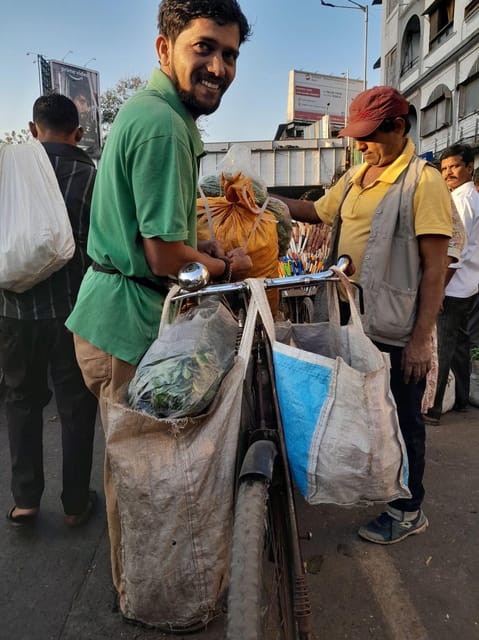
At $9 per person, this is inexpensive for Mumbai, especially because the price includes a guide, train ticket, taxi fare, and bottled water. You are not paying only for entry to one attraction. You are paying for local explanation and transport between several very different parts of the city.
The value is strongest if you want context. Dhobi Ghat, the flower market, and Dharavi can all be visited as separate sights, but you would lose the thread connecting them. This tour puts laundry, trade, transport, and neighborhood production into one outing.
The low price also means you should keep the format in mind. Do not expect luxury transport, a private vehicle throughout, or a polished visitor center. The experience uses a local train and walking routes, with a taxi included where needed. That keeps costs down and makes the day feel more connected to ordinary Mumbai life.
Tips are not included, and snacks are also your responsibility. Bottled water is provided, but bringing extra water and a small snack is sensible if you need them. Wear comfortable shoes, since you will use trains and walk through uneven, crowded areas.
Who will enjoy this experience most
I would recommend this tour to you if you want to see how Mumbai works rather than simply collect famous landmarks. It suits curious first-time visitors, photographers who value real street scenes, and anyone interested in local industry, migration, recycling, and urban life.
It is also a good match if you like guided walking tours where the guide’s personal knowledge matters. Shivam’s clear English and friendly style are useful qualities when the route includes complex social and economic subjects.
Families with older children may find the range of sights interesting, but parents should decide how comfortable their children will be with crowded lanes and serious discussions about poverty and work. The tour is not described as designed specifically for children.
You may want to choose something else if you need step-free access, quiet surroundings, or a private vehicle. The provided information does not give accessibility details, and the train, narrow lanes, and walking route may be demanding for some visitors. Ask the provider before booking if mobility is a concern.
Simple preparation for a smoother visit
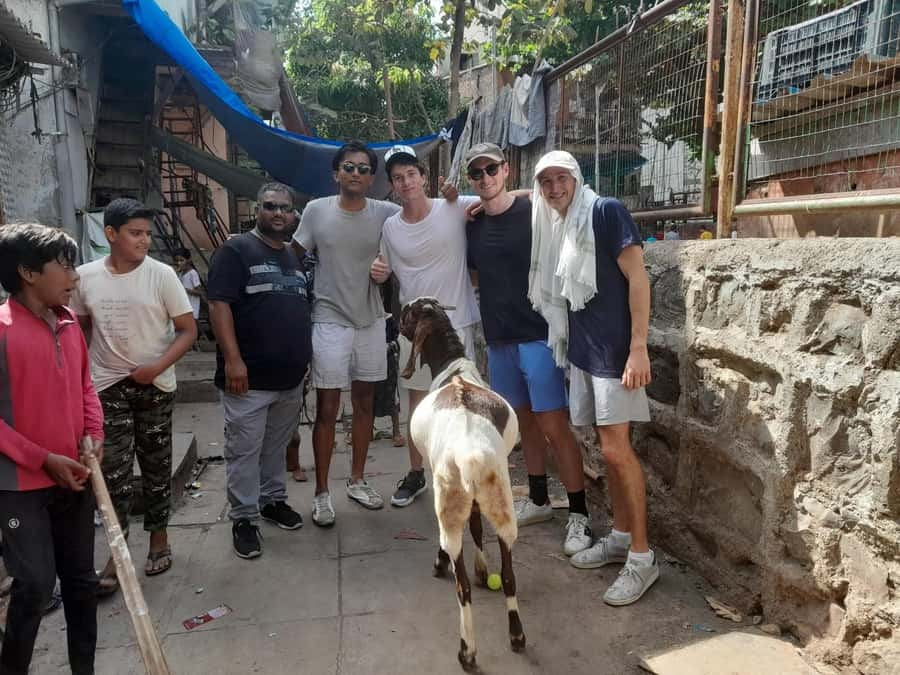
Wear comfortable shoes and bring a camera if you want to record the laundry, flowers, and street scenes. Bring water even though a bottle is included, especially if you are sensitive to heat or prefer to drink often.
Keep your belongings secure during the train ride and in crowded markets. A small bag is easier than bulky luggage, though the tour information does not specify a baggage policy.
Dress for a close look at working neighborhoods rather than a formal attraction. Most important, bring patience. The route includes real workplaces and homes, so the pace may depend on local conditions and the guide’s need to let people pass.
The tour is conducted in English. If you need another language, this experience may not be the right fit because only English is specified.
You can reserve now and pay later, which helps if your Mumbai schedule is still shifting. Cancellation is allowed up to 24 hours in advance for a full refund. The activity ends back at the Churchgate meeting point, making it easier to plan your next stop from the same central area.
Should you book this Mumbai tour?
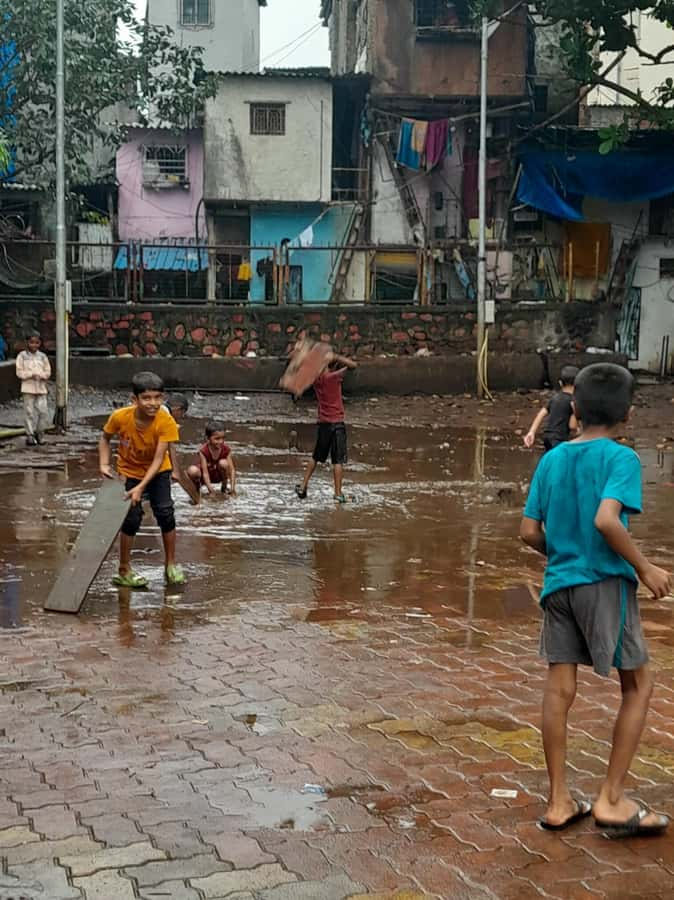
Book it if you want an affordable, direct look at Mumbai’s working life, and if riding a local train sounds like part of the fun rather than an inconvenience. The combination of Dhobi Ghat, the flower market, and Dharavi gives you three distinct views of the city in one outing.
The strongest reason to choose it is the guide. Shivam’s clear English, friendly manner, and command of Dharavi can turn a potentially confusing walk into an informed conversation. The local connection also helps the tour move beyond simple poverty imagery.
Skip it if you want a relaxed sightseeing day, private transport, or a highly structured attraction with no crowds. For everyone else, $9 buys a useful, human-scale introduction to the people, work, and movement that keep Mumbai running.
FAQ
Where does the tour start?
The guide meets you inside Churchgate station at the train ticket counter, near the Wheelers bookstall.
Where does the tour end?
The activity ends back at the meeting point at Churchgate station.
Is a train ride included?
Yes. The tour includes a train ride to Dhobi Ghat, and the train ticket is included.
Is taxi transportation included?
Yes. Taxi fare is included in the tour price.
What places does the tour visit?
The route includes Dhobi Ghat, a flower market, and Dharavi.
What can I see in Dharavi?
The tour visits narrow lanes, small homes, local markets, a school, recycling industries, leather work, garment production, and pottery areas.
What language is the tour conducted in?
The tour is conducted in English.
Is bottled water included?
Yes. Bottled water is included.
Are snacks included?
No. Snacks are not included, so you should arrange your own if needed.
What should I bring?
Bring comfortable shoes, a camera, and water.
Can I reserve now and pay later?
Yes. You can reserve your place and pay later.
What is the cancellation policy?
You can cancel up to 24 hours in advance for a full refund.
More Shopping Tours in India
- Jaipur: Shopping Tour with Blue Poetry & Printing Workshop & Rugs
★ 5.0 · 42 reviews - Jaipur Nahargarh Fort Sunrise or Sunset Tour with Flower Market
★ 5.0 · 9 reviews - Bangalore Walking Tour KR Flower Market,Fort,Tippu palace
★ 5.0 · 8 reviews - Jaipur City Tour with Traditional Flower Market Visit
★ 5.0 · 7 reviews
More Market Visits in India
- Mumbai Morning Market Tour of Flowers, Fish, and More
★ 5.0 · 82 reviews - Kolkata’s Flower Market – Hooghly’s Flower Fest Tour
★ 5.0 · 35 reviews - Jaipur Sunrise Tour with Morning Flower Market Walk
★ 5.0 · 16 reviews - Jaipur: Half-Day or Full-Day Tour with Flower Market
★ 4.9 · 14 reviews
Just added around India
- Visit to Sahelion Ki Bari, Garden of the Maidens, Udaipur★ 4.0 · 2 reviews
- Kashmir Tulip Festival★ 5.0 · 43 reviews
- Mughal Heritage Tour Including Lodhi Garden, Humayun Tomb and Akshardham Temple★ 4.5 · 15 reviews
- Sunder Nursery Delhi’s Heritage Garden Walk Tour★ 5.0 · 3 reviews
- Delhi historical Gardens & Ruins★ 5.0 · 3 reviews
- Dhobi Ghat, Ancient Stepwell and Lodhi Gardens Tour★ 5.0 · 2 reviews
- Lodhi Garden Heritage Walk★ 5.0 · 7 reviews
- Delhi Street Art Walk in Lodhi Art District with Chai & Food★ 5.0 · 34 reviews
India Garden Tours, compared.

Private Jaipur Full-Day Tour with Block Printing
Read our review →
Private Custom Full Day Sightseeing Tour of Kolkata
Read our review →

Jaipur Tour by Tuk-Tuk or Car with Flower Market
Read our review →
Half-Day Guided Sightseeing Tour with Flower Market
Read our review →
Mumbai Morning Market Tour of Flowers, Fish, and More
Read our review →
Half or Full Day Sightseeing Tour with Flower Market
Read our review →Mumbai Morning Market Tour of Flowers, Fish, and More
Read our review →Browse the lists this tour appears in