
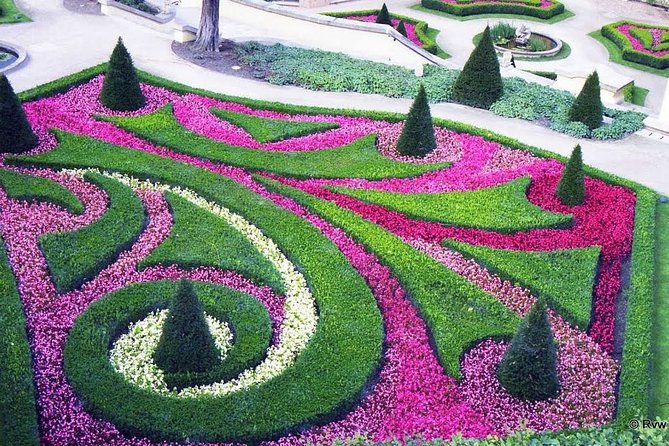
Review · WALKING TOURS
Prague Renaissance & Baroque Gardens Walking Tour
Prague’s finest gardens are not just places for flowers and shade. They are outdoor history books, filled with royal ambition, political symbols, imported plants, mythological statues, and views across the city. This three-hour walk links several of the best, including the Royal Garden at Prague Castle, Wallenstein Garden, and the compact but striking Vrtba Garden.
I like the small group of no more than eight, which gives you room to ask questions and makes it easier for the guide to adjust the conversation to your interests. I also like the focus on meaning: guides such as Bonita and Vadim explain why a statue shows a certain Roman god or why an exotic plant mattered to Prague’s rulers.
The main drawback is cost clarity. The tour price is $126.03 per person, and some admission charges are extra, including Vrtba Garden at CZK 130 and the Prague Castle gardens at CZK 90 for adults. You’ll also need a moderate level of fitness for steep steps in Vrtba Garden.
Key points to know before you book
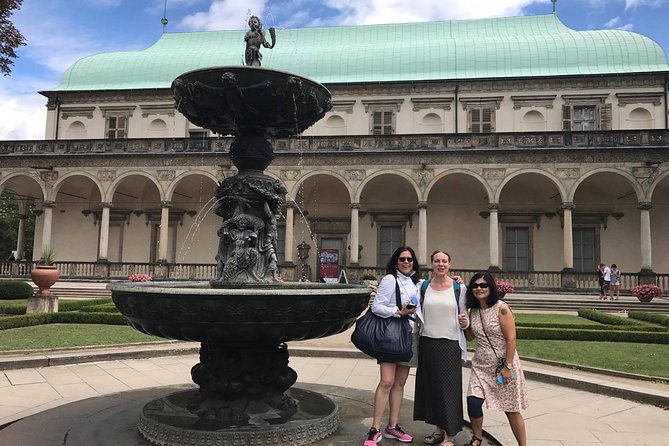
- Royal Garden history: See Queen Anne’s Summer Palace, the Ball Game Hall, the Fig House, and the Orangery.
- Small-group format: The group is limited to eight people, allowing a more personal conversation with the guide.
- Mythology in stone: Wallenstein Garden’s statues and fountain make more sense when you know the political messages behind them.
- Excellent city views: Vrtba Garden’s upper terraces look across Prague toward the castle and old city.
- Two departure choices: Pick a 10am or 2pm start, depending on how you want to arrange your day.
- Plan for stairs and extra fees: Vrtba requires a steep climb, and garden admission is not fully covered by the tour price.
Why these gardens are worth three hours
You could walk past Prague’s gardens and see only trimmed hedges, fountains, and old walls. This tour asks you to look closer. A statue becomes a political statement. A fig tree becomes evidence of a ruler’s interest in science and prestige. A garden plan reveals how noble families wanted to present power.
That is the real value here. You are not simply moving from one pretty courtyard to another. You are learning how Renaissance and Baroque garden design worked in Prague, and how the city’s rulers borrowed ideas from Italy, ancient Greece, and Rome.
The route also gives you a welcome change from Prague’s busiest streets. Even in the main sightseeing season, enclosed gardens can feel calm. You still see major landmarks, but from quieter angles and with more space to pause.
The guides are central to the experience. Bonita is described as an engaging storyteller with a strong grasp of art, history, and mythology. She has also led the tour for Prague residents, including people who have lived in the old city for decades. That matters because the tour is designed to add something even if you already know the castle and Malá Strana.
More Garden Walks in the world:
- Marrakech: Ben Youssef, Secret Garden, & Souks Walking Tour
★ 4.6 · 2,802 reviews - Sintra & Cascais Day Tour with Pena Palace Entry and Gardens Walk
★ 5.0 · 962 reviews - Versailles Château and Gardens Walking Tour
★ 4.5 · 727 reviews
Starting at Malostranská and taking tram 22
The meeting point is Bagel Lounge Malostranská at Letenská 118/1 in Malá Strana, near Malostranská Metro station. From there, you meet the guide and group before taking tram 22 together toward Prague Castle.
The shared tram ride is practical rather than decorative. It saves you from figuring out the route alone and lets the guide begin setting the scene before the gardens appear. You should still arrive ready for a walking tour, since the route includes several gardens, uneven ground, and stairs.
You can choose a 10am or 2pm departure. The morning option gives you the rest of the day after the walk. The afternoon departure can work well if you want to visit Prague Castle earlier and then see the gardens when the day is well underway.
The published information contains one detail worth checking before you go. The meeting information lists the activity as ending back at the original meeting point, while the route description says the guide leaves you at Vrtba Garden. Confirm the final arrangement when booking so you can plan your next stop without guesswork.
Royal Garden and Queen Anne’s Summer Palace
The Royal Garden at Prague Castle began in the 1500s on land that had previously held medieval vineyards. It was created as a Renaissance garden and became known for unusual plants and specimens brought from distant places.
That plant story gives the first part of the walk more substance than a simple tour of lawns and paths. You learn how Prague’s rulers used gardens to display curiosity, wealth, and connections beyond central Europe. The Fig House and Orangery are especially interesting because figs, almonds, oranges, and lemons were grown here at a time when such plants were far from ordinary in the region.
The guide also discusses the arrival of tulips in Prague. This is the kind of detail that can change how you see a formal garden. A flower is not just decoration. It may point to trade, collecting, scientific interest, and the desire of a court to show that it belonged to a wider European world.
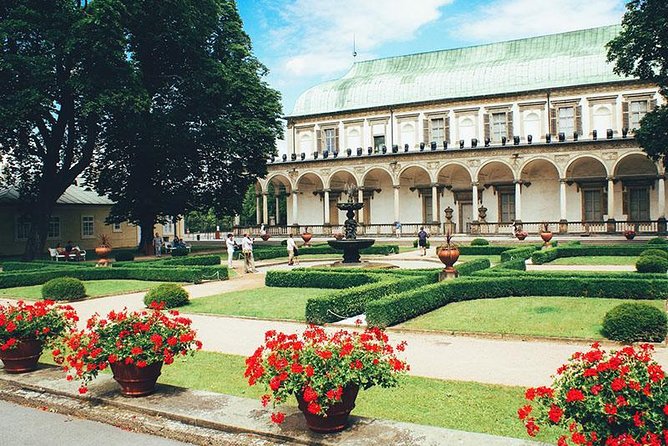
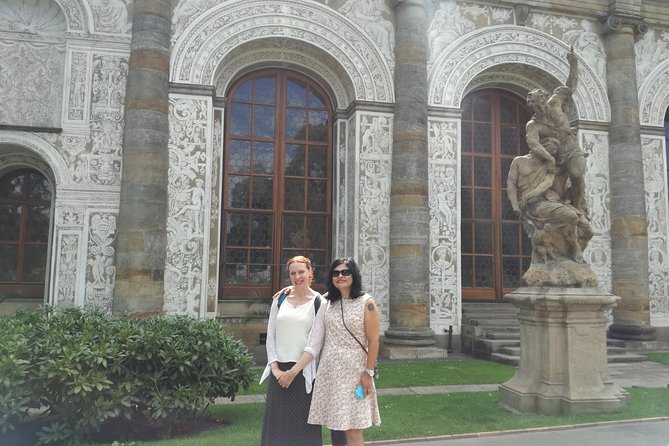
Queen Anne’s Summer Palace is one of the architectural highlights. Completed in the middle of the 16th century, it is known for its pure Renaissance design, with arcades, Tuscan capitals, and a decorative frieze. Reliefs show scenes of mythology, hunting, and war.
Look for the image of Ferdinand I offering Queen Anna a fig blossom. It connects the building to the garden’s plant history and gives the architecture a human detail. You have only about five minutes listed at this stop, so the guide’s explanation is important. This is not a long palace visit or an interior tour. The value comes from seeing the building in its garden setting and understanding its symbolism.
The Ball Game Hall above the Stag Moat
The Ball Game Hall sits on the south side of the Royal Garden, directly above the Stag Moat. Built in the mid-1500s, it first served as a place for ball games before later being used as a riding school and stables.
The stop is brief, around five minutes, but it adds another layer to the castle grounds. Royal gardens were not only for quiet walks and plant collections. They were working spaces for recreation, display, horses, and court life.
I like this part of the route because it keeps the tour from becoming a parade of famous façades. You get a sense of how the castle estate functioned as a whole. The guide can connect the building’s changing uses to the broader story of royal life.
A few more garden visits around the world worth a look
- Paris: Versailles Palace and Gardens Full Access Ticket
★ 4.6 · 41,579 reviews - Versailles: Skip-the-Line Tour of Palace and Gardens Access
★ 4.7 · 10,429 reviews - Marrakesh: Majorelle Garden Entry Tickets
★ 4.5 · 9,651 reviews - Vienna: Schönbrunn Palace & Gardens Skip-the-Line Tour
★ 4.7 · 7,739 reviews
Wallenstein Garden’s statues, grotto, and peacocks
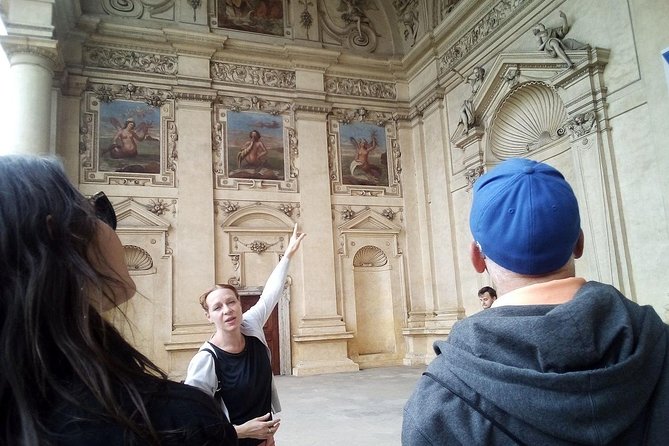
Wallenstein Garden, also called Waldstein Garden, shifts the mood from Renaissance court grounds to the theatrical style of the 1600s. The garden belongs to Wallenstein Palace and is now open to the public as the garden of the Czech Senate.
Its Italian-style design includes an aviary, an artificial grotto, a sculptural gallery of mythological heroes, and a fountain by Adrian de Vries. You may also see brightly colored peacocks moving through the grounds. They are a memorable touch, but the stone figures deserve your full attention.
The statues were not placed at random. Their mythological subjects helped present the garden’s owner as powerful, cultured, and connected to the classical world. A guide with a strong grounding in Greek and Roman mythology can explain why particular gods and heroes appear where they do, and how ancient stories could serve modern political purposes.
This is one of the strongest parts of the tour for anyone who likes art. You are given a way to read the garden rather than simply photograph it. The fountain, grotto, statues, and surrounding architecture work together as a carefully planned statement.
The 25-minute visit is enough to see the main features, but it is not enough for a leisurely, independent study of every statue. If you like to linger with sculpture or take many photographs, you may want to return on your own later. The garden admission is listed as free for this tour stop.
Vrtba Garden and the steep climb to the top
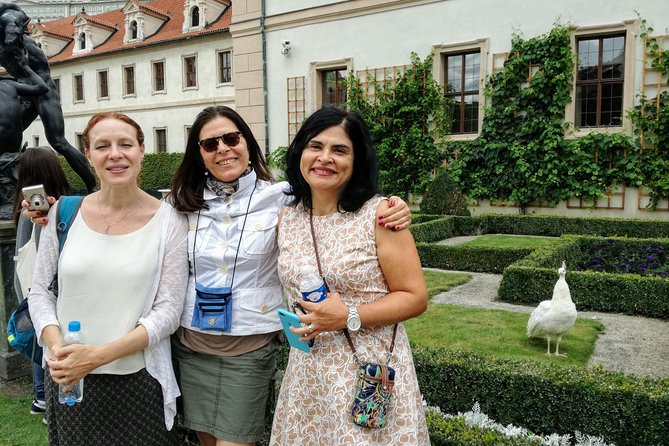
Vrtbovská Garden, usually called Vrtba Garden, is the most intimate stop. This walled Baroque garden dates from 1720 and is tucked into Malá Strana, where it is easy to miss if you are walking between larger sights.
The garden rises in terraces, so the layout creates a strong sense of movement. You climb through the space rather than simply crossing it. Original statuary and sculptural decoration give the terraces their character, while the upper levels open toward views of Prague Castle and the city.
The climb is steep in places. If you have trouble with stairs, you can wait on the second terrace while the group continues to the top, then reconnect after about 10 minutes. The tour provider also says a private version can modify this section for a personal group.
Vrtba admission costs extra: CZK 130 for an adult, or CZK 100 for students and seniors. That additional fee is worth including in your budget because the garden is one of the tour’s main destinations, not an optional side street.
The guide leaves you here according to the route description, which can be convenient. You can continue exploring Malá Strana after the tour instead of retracing the full route. Still, because the meeting details also mention a return to the original point, confirm the end arrangement before setting a tight afternoon schedule.
What the $126.03 price really buys you

At $126.03 per person, this is not a bargain walking tour. The price makes more sense if you want a specialist-led experience rather than a basic orientation walk.
You are paying for three hours with a professional scholar guide, a very small group, historical interpretation, and a route that connects several gardens you might not naturally visit in one outing. The guide’s role is especially important at Wallenstein Garden and the Royal Garden, where the meaning behind the buildings and statues is more interesting than the objects alone.
The extra admission charges reduce the all-in value slightly. Budget another CZK 130 for Vrtba Garden and CZK 90 for the Prague Castle gardens, with lower rates of CZK 100 and CZK 60 for students and seniors. The information supplied about admission is not completely consistent, so check what is being collected on your chosen date.
For someone who wants a cheap walk through Prague, this is too expensive. For someone who has already seen the main castle interiors and wants a more thoughtful look at art, plants, and royal design, the cost is easier to justify.
Who will enjoy this walk most
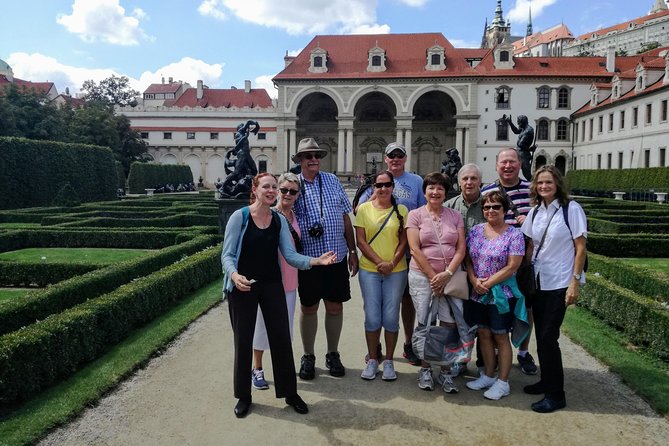
I would choose this tour if you like architecture, sculpture, garden design, or the connection between art and politics. It also suits you if you have already visited Prague and want a different view of familiar parts of the city.
The tour works especially well for curious people who enjoy explanation rather than a fast list of dates. One of the strongest themes is that gardens carry stories. The statues and fountains are not filler between landmarks, and the plants are not just decoration.
You should think twice if you want a relaxed, level stroll with lots of free time. The route uses public transit, covers several garden areas, and includes steep steps at Vrtba. The group moves with a guide, so this is not the best fit if you prefer to set your own pace at every stop.
The small group helps. With up to eight people, you can ask about a particular statue, building, or plant without trying to speak over a large crowd. It also gives the guide room to shape the conversation, a feature that has been especially useful for people who already know Prague well.
Practical details for a smoother visit
Wear shoes suitable for a moderate walking route and steep stairs. Vrtba’s upper terrace is optional if climbing is difficult, but the garden is still more enjoyable if you can manage at least part of its terraced path.
Bring a phone or camera for the views from Vrtba and the Royal Garden. The tour is offered in English and includes a mobile ticket. Confirmation is provided at booking.
You can cancel for a full refund up to 24 hours before the start time. Changes or cancellations made less than 24 hours before the local start time are not accepted for a refund.
Should you book the Prague gardens tour?
Book it if you want Prague explained through its gardens rather than only through its churches, squares, and castle rooms. The strongest reasons are the small group, the specialist attention to mythology and art, the Royal Garden’s unusual plant history, and the city views from Vrtba.
Skip it if the $126.03 price feels high for a walking tour, or if you want a flat route with no extra entrance costs. If you do book, choose the time that leaves room for the garden fees, bring comfortable shoes, and confirm whether the guide ends at Vrtba or returns to Malostranská.
FAQ
How long is the Prague Renaissance and Baroque Gardens Walking Tour?
The tour lasts approximately three hours.
Where does the tour begin?
It begins at Bagel Lounge Malostranská, Letenská 118/1, in Malá Strana, near Malostranská Metro station.
What time can I take the tour?
You can choose between a 10am and a 2pm departure.
Is the tour offered in English?
Yes. The tour is offered in English.
How large is the group?
The group has a maximum of eight people.
Is transportation included during the tour?
The group takes tram 22 together from the Malostranská area to the gardens at Prague Castle. The supplied details do not state whether a separate public transport ticket is included.
Is Vrtba Garden admission included?
No. Vrtba Garden admission costs CZK 130 for an individual, or CZK 100 for students and seniors.
Are Prague Castle garden fees included?
The supplied admission information lists a fee of CZK 90 for individuals and CZK 60 for students and seniors. Confirm the exact collection arrangements when booking.
Is the tour suitable for someone who has difficulty climbing stairs?
The tour includes steep stairs in Vrtba Garden. You can wait on the second terrace while the group visits the highest terrace, and the tour provider states that a private tour can modify this section.
Can I cancel for a full refund?
Yes. You can cancel at least 24 hours before the experience start time for a full refund. Cancellations or changes made less than 24 hours before the start time are not accepted.
Just added around the world
- Skip-the-Line Guided Tour and Gardens Entry in Versailles Palace★ 3.5 · 3 reviews
- Versailles Palace Guided Experience and Gardens Entry 10 PPL Max★ 5.0 · 42 reviews
- Versailles Palace & Gardens Audio Tour – Private Transportation★ 4.5 · 11 reviews
- Versailles Palace and Gardens Tour★ 4.5 · 44 reviews
- Versailles: Farmers Market & Royal Vegetable Garden Food Tour★ 5.0 · 11 reviews
- Versailles Gardens Walking Tour with Audioguide (no tickets)★ 3.0 · 6 reviews
- Versailles Golf Cart & Shuttle Guided Tour, Hamlet and Gardens★ 4.5 · 13 reviews
- PRIVATE Versailles Palace & Gardens Tour with transfer included★ 5.0 · 25 reviews
Walking Tours, compared.

Ben Youssef, Secret Garden, & Souks Walking Tour
Read our review →
Sintra & Cascais Day Tour with Pena Palace Entry and Gardens Walk
Read our review →
Giverny Village Walking Tour & Skip-the-Line to Monet Garden
Read our review →
Imperial Palace East Garden and Edo Castle Walking Tour in Tokyo
Read our review →
Salzburg: Old Town, Mozart, & Mirabell Gardens Walking Tour
Read our review →
Kyoto Arashiyama Bamboo forest & Garden Half-Day Walking Tour
Read our review →Browse the lists this tour appears in