
Review · SHANGHAI
Shanghai: Yu Garden Entry Ticket with PDF Guidebook
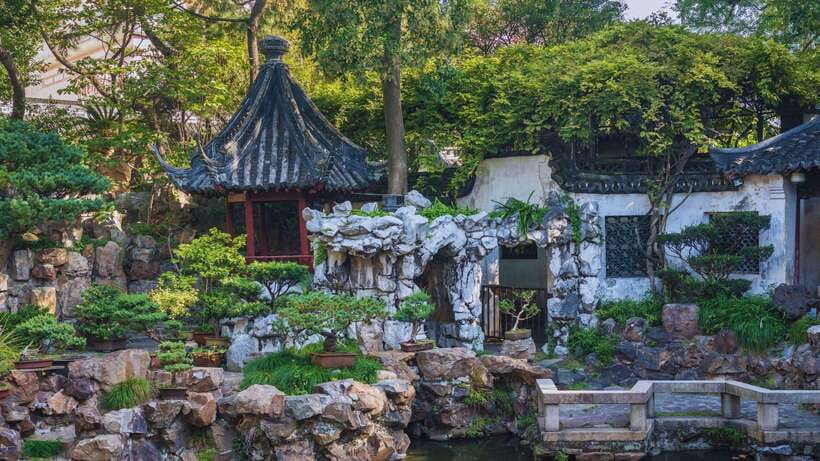
Yu Garden packs old Shanghai into a compact visit: twisting stone paths, quiet pavilions, ponds, carved halls, and the famous Nine-turn Bridge. The garden dates to the Ming Dynasty, yet it sits beside the busy shops and restaurants of the rebuilt Old City. That sharp contrast is part of its appeal.
I like the instant QR ticket, which saves you from wrestling with local apps, and I like the practical PDF guide, especially its suggested route, historical notes, and photo advice. The main drawback is crowding. Yu Garden can feel cramped at popular times, and the garden typically closes at 4:30 p.m., with last entry at 4 p.m.
I also like the English message support, useful if you have trouble finding the entrance or showing your ticket. Just remember that this is a self-guided visit, not a tour with a person beside you, and bring your original physical passport or ID.
Key points to know before you book

- Three hours at your own pace: Allow enough time for the garden, pictures, and nearby Old City streets.
- QR entry sent quickly: Your ticket and visit instructions arrive by email or WhatsApp after booking.
- English PDF guide included: Expect a map, a suggested walking route, background on major sights, and photo tips.
- The Exquisite Jade Rock and Nine-Lion Study: These named features give the visit more focus than simply wandering from pavilion to pavilion.
- Crowds affect the experience: The garden is praised for its beauty but can become overcrowded.
- Bring your passport: The original physical document may be required at entry, while a digital copy may be rejected.
Why Yu Garden is worth three hours

Yu Garden is one of Shanghai’s best places to see traditional Chinese garden design in a small area. You are not visiting a wide-open park. Instead, you move through a sequence of enclosed spaces, stone corridors, ponds, halls, bridges, and framed views.
That design makes the garden feel larger and more varied than its size suggests. A wall may block your view, then a doorway reveals a pavilion or a carefully placed rock. The route is built around changes in sight lines, not long walks between major monuments.
The garden was created during the Ming Dynasty, and its classical style gives you a useful counterpoint to Shanghai’s modern towers. Outside the gates, the Old City is packed with shops, restaurants, and renewed traditional-style buildings. Inside, the pace changes. You still hear the city, but the architecture asks you to look closely.
I would set aside the full three hours if you enjoy photography, architecture, or taking your time with a map. If you only want a quick look, you can see the main features sooner, but the extra time helps when crowds slow you down.
More Garden Tickets in Shanghai:
- Shanghai: Yu Garden Admission Ticket
★ 4.6 · 260 reviews - Shanghai: Yu Garden Ticket+Lantern Festival Entry combo
★ 3.7 · 49 reviews - Shanghai: Yu Garden with Entry Tickets(optional)
★ 4.5 · 28 reviews
Getting started with the QR ticket
The main practical benefit is avoiding the local ticket process. You receive a QR e-ticket and instructions immediately after booking, through email or WhatsApp. You can then show the code at the entrance rather than depending on a local-language app.
That is especially useful if you are arranging several Shanghai sights on your own. A guaranteed entry option also matters on busy days, when official tickets may be sold out. It does not remove the need to check the opening schedule, though. Yu Garden typically closes at 4:30 p.m., and final entry is usually at 4 p.m.
Bring your original physical passport or ID card. The information for this experience specifically warns that digital copies are often rejected. This is a small detail, but it can decide whether a smooth plan stays smooth.
The booking includes skip-the-ticket-line access, not a private entrance to every part of the garden. You should still allow a little time to locate the correct entry point and present your documents. If a problem comes up, the English-speaking support team can be contacted through GetYourGuide messaging at any hour.
Following the garden’s classic route

The PDF guide is meant to give structure to a self-guided visit. That matters because Yu Garden’s winding design can be confusing if you simply follow the largest crowd. The suggested route helps you see the principal sights in a sensible order and points out places where you might pause for pictures.
You are not given a live guide, audio commentary, or printed booklet. The guide exists as a digital PDF, so download it before you arrive and keep your phone charged. Its map and short historical notes are most useful when you stop at a feature and want to understand why it matters.
The route also includes advice on avoiding crowds. That cannot guarantee an empty garden, but it can help you choose where to pause and when to move on. Since many views are framed through narrow openings, a busy walkway can make photography difficult.
I would use the PDF as a light companion rather than trying to read it constantly. Look at the route before entering, then refer to the history tips at the major stops. That keeps your attention on the garden instead of your screen.
Nine-turn Bridge and Huxinting Teahouse

The Nine-turn Bridge is one of the easiest features to recognize. Its sharp turns create changing angles across the water and toward the surrounding pavilions. It is an obvious photo stop, but it can also become a bottleneck when many people gather in the same place.
Nearby, Huxinting Teahouse adds another familiar Shanghai image. The teahouse and surrounding water give you a place to pause and take in the garden’s layered views. Food and drinks are not included in this ticket, so treat the area as a scenic stop unless you decide to purchase something separately.
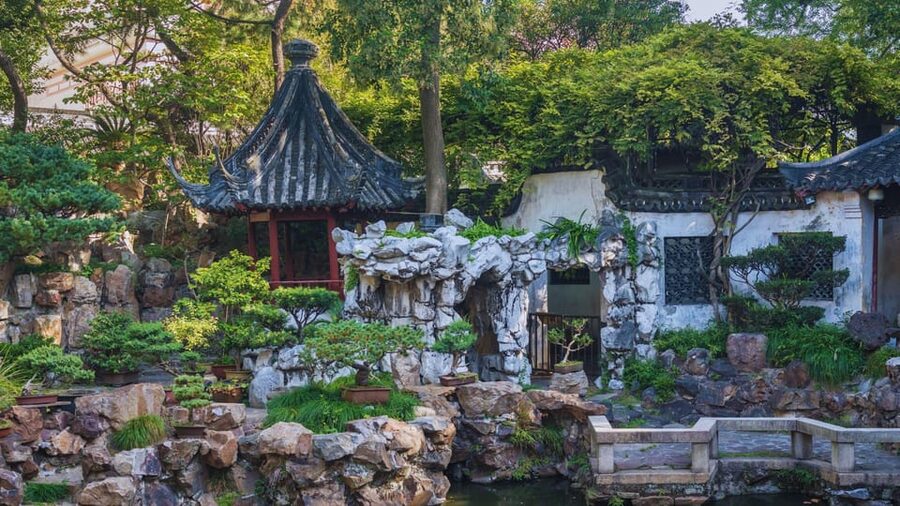
The ponds help tie the garden together. Reflections, bridges, rockeries, and rooflines appear in the same view, which is why the best pictures often come from looking across the water rather than straight at a building.
Do not rush these stops. The garden’s appeal is less about checking off one grand monument and more about how small features work together. At the same time, keep moving if a walkway is crowded. You can return to a favorite view later if conditions improve.
A few more garden visits around Shanghai worth a look
- Shanghai: Zhujiajiao Private Tour w/ Boat Ride & Garden
★ 5.0 · 460 reviews - Best of Shanghai Day Tour, including Jade Buddha Temple & Bund & Yuyuan Garden
★ 4.0 · 338 reviews - Yu Garden, Old Street, Bund & Zhujiajiao Water Town Bus Tour
★ 4.7 · 244 reviews - Shanghai Day Tour to Zhujiajiao Water Town, Yu Garden, Bazaar, Bund
★ 5.0 · 162 reviews
Stone paths, halls, and framed views

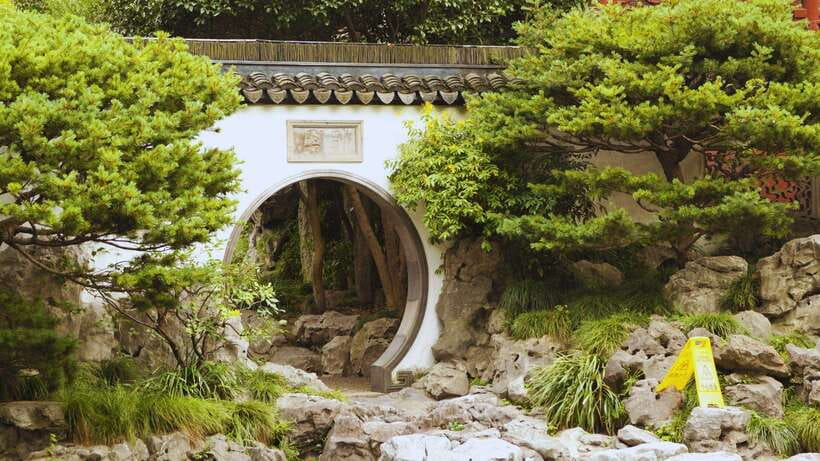
The stone paths are part of the experience, not just a way to get from one pavilion to another. Their shapes guide you around walls and toward new views. Classical halls give the garden a sense of order, while the irregular rocks and twisting passages keep it from feeling formal in a stiff way.
You will see architectural details best by slowing down. Look at rooflines, doorways, windows, and the way a wall frames water or a tree. The PDF guide’s background notes can help you notice these details instead of treating the garden as a series of attractive backdrops.
The garden is particularly good for people who enjoy photographs with layers. A doorway may frame a hall, a bridge may cross the lower part of the picture, and a pavilion may appear beyond the pond. You might find the best images away from the obvious central viewpoints, especially if you follow the suggested route rather than stopping only where everyone else stops.
The tradeoff is space. Narrow stone paths and small courtyards can feel crowded, and the same tight layout that creates intimate views also makes it hard to step aside. Comfortable shoes are sensible, though the supplied information does not describe the paths in detail.
The Exquisite Jade Rock and Nine-Lion Study

The PDF guide calls attention to the Exquisite Jade Rock and the Nine-Lion Study, two details that give your visit more depth. Without some context, they can be easy to pass as attractive objects among many other rocks and halls.
The Exquisite Jade Rock is presented as one of the garden’s notable features. The guide’s historical notes are useful here because they explain what to look for and why the feature is singled out. The Nine-Lion Study offers another focused stop, giving you a reason to pause beyond taking a quick picture.
These names also help divide the visit into manageable sections. You can use them as checkpoints on the map: bridge and water views first, then halls and stone paths, followed by the named features. That approach works well if you are visiting without a guide and want more than a general walk.
The exact amount of time you spend at each point is up to you. A history enthusiast may want to read every note, while a first-time visitor may prefer to keep moving and return to the most attractive views.
Picking the right time for photographs
Yu Garden’s crowd level is the biggest variable. One rating described the garden as interesting but overcrowded, while the strongest praise focused on its beauty and its location in the Old City. Both impressions can be true on the same day.
The guide includes advice on the best times for photography and sightseeing, along with a route intended to reduce crowd pressure. Use that advice before you enter, not after you have already joined the busiest flow.
The closing time makes planning important. With typical last entry at 4 p.m. and closing at 4:30 p.m., a late arrival leaves little room for delays or a relaxed visit. I would avoid treating this as an evening attraction. Plan it as a daytime stop and check the available starting time when you book.
The garden’s position also helps your wider day. Afterward, you can continue through the nearby Old City, where shops and restaurants surround the garden. The garden ticket does not include food, drinks, or transport, but its central setting makes it easy to pair with other sightseeing in the area.
What $17 buys you
At $17 per person, this is more than a bare admission ticket. You are paying for entry, the convenience of a ready-to-use QR code, and an English PDF that helps you make sense of the garden. For an international visitor who does not want to use local apps, that convenience has real value.
The price is easier to justify if you want a self-guided visit but do not want to research every feature in advance. The map and selected route can save time, while the historical notes add purpose to the walk. English support also gives you a backup if the ticket or entrance instructions cause trouble.
It is less compelling if you already know how to buy local tickets, speak enough Chinese to manage the process, and prefer exploring without background information. You also do not receive a live guide, audio guide, hotel pickup, or drop-off. Food and beverages are separate.
A current score of 4.1 from 45 ratings suggests a generally positive but not flawless experience. The favorable side is clear: Yu Garden is widely considered beautiful and worth seeing, and its location among Old City shops and restaurants is convenient. The weaker points are also clear: crowds can reduce the pleasure, and cancellation may not be flexible once the deadline has passed.
Free cancellation is available up to 24 hours before the visit, and you can reserve now and pay later. That helps if your schedule is still moving, but it does not protect against every last-minute change. One traveler who missed the visit because of flight and planning problems was unhappy about not receiving a refund, so check the cancellation deadline carefully before you commit.
Who this self-guided visit suits best

I would choose this experience if you want to see Yu Garden independently and prefer practical help over a full guided tour. It suits first-time visitors who want a route and basic context, couples looking for photo stops, and families who need the freedom to pause or move on without keeping up with a group.
It is also a good fit if you are concerned about sold-out official tickets or do not want to manage local booking apps. The instant QR ticket and English support reduce those sources of stress.
I would think twice if you need a guide to explain every building in person. This is not a live walking tour. It is also not ideal if you dislike crowds, arrive late in the day, or want an experience that includes refreshments or transportation.
For the best result, download the PDF, save the QR code, bring your physical passport, and arrive with enough time before the 4 p.m. last entry. Then use the guide to set a route, but allow yourself to pause when a pond, bridge, or framed view catches your eye.
Should you book Yu Garden with the PDF guide?
Book it if you value easy admission and independent exploring. The $17 fee buys more than access: it gives you a ready QR ticket, an English route guide, photo suggestions, and message support if something goes wrong.
Skip it if you want a live expert beside you, included food, or a late-day visit. Crowding is the main risk, and the early closing time requires planning. For most international visitors who want Yu Garden without dealing with local ticket systems, this is a practical way to see one of Shanghai’s most distinctive classical sights.
FAQ
What is included in the Yu Garden ticket?
The experience includes entry to Yu Garden and an English PDF guidebook with a map, history tips, a suggested route, and photo advice.
Is this a guided tour?
No. This is a self-guided visit. There is no live tour guide or audio guide, but English message support is available around the clock.
How do I receive the ticket?
You receive a QR e-ticket and visit instructions immediately after booking by email or WhatsApp.
Do I need to bring my passport?
Yes. Bring your original physical passport or ID card. Digital copies may be rejected at the entrance.
What are Yu Garden’s usual opening hours?
Yu Garden typically closes at 4:30 p.m., with last entry at 4 p.m. Check the available starting time and plan to arrive early enough for a full visit.
Are food and drinks included?
No. Food and beverages are not included in the ticket.
Can I cancel the booking?
You can cancel up to 24 hours in advance for a full refund. Reserve now and pay later is also available.
Just added around Shanghai
- Tongli Water Town Private Day Trip from Shanghai with Tuisi Garden and Boat Ride★ 5.0 · 7 reviews
- Shanghai Yu Garden Admission Ticket★ 4.0 · 16 reviews
- Explore Suzhou’s Hidden Gardens&Enchanting Tongli Ancient Town★ 5.0 · 3 reviews
- Private Tour of Shanghai Museum the Bund Yu Garden and Cruise on Huangpu River★ 4.0 · 2 reviews
- Private Zhujiajiao Ancient Town and Harmony Garden Day Tour with Gondola Ride★ 5.0 · 7 reviews
- Private Shanghai Day Tour: Shanghai Museum, Yu Garden, Bund, Huangpu Cruise★ 5.0 · 6 reviews
- Private Shanghai Day Tour of Zhujiajiao Water Town,Yu Garden and Bund★ 5.0 · 2 reviews
- Private Suzhou Day Tour from Shanghai to Classical Gardens and Tongli Water Town★ 5.0 · 6 reviews
Shanghai Garden Tours, compared.

Best of Shanghai Day Tour, including Jade Buddha Temple & Bund & Yuyuan Garden
Read our review →

Yu Garden, Old Street, Bund & Zhujiajiao Water Town Bus Tour
Read our review →
Shanghai Day Tour to Zhujiajiao Water Town, Yu Garden, Bazaar, Bund
Read our review →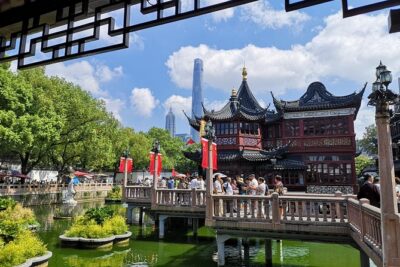
Private Yu Garden, The Bund, French Concession, Pudong Half-Day Tour
Read our review →

Browse the lists this tour appears in