

Review · JAIPUR
Take in the Beauty of an Early Morning with Fresh Flowers
Jaipur is at its most inviting before the day heats up. This early morning walk begins at Hawa Mahal, then follows old streets to a flower market where farmers arrange garlands, bouquets, and loose petals for the day. The colors are strong, the air smells of flowers and tea, and the city is just getting started.
I like the excellent photography light at Hawa Mahal and the chance to see Jaipur’s daily trade rather than only its grand monuments. I also like the local chai stop, which adds a simple, useful pause. The main drawback is the early start and the walking: this is a street-level experience, not a relaxed sightseeing ride.
Key points to know before you book
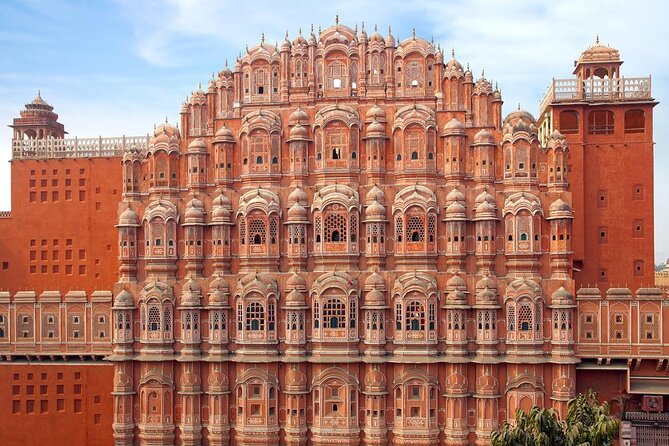
- Hawa Mahal before the traffic: The tour begins at the Palace of Winds when the streets are quieter and the morning light is useful for photographs.
- Farmers and flower sellers: You see garlands, bouquets, and loose petals arriving for sale in Jaipur’s old wholesale flower market.
- A short route with several local sights: The walk links Hawa Mahal, heritage buildings, gates, markets, and temples.
- Guides who add personal help: Harshit and Monty are among the guides associated with this experience, with particular care for solo participants.
- Chai is included: A cup of masala chai at a local tea shop is part of the price, along with all fees and taxes.
- Small group format: The maximum group size is 15, though you should still expect ordinary street noise, uneven city walking, and a working market.
Why an early start makes Jaipur feel different
Most first visits to Jaipur focus on palaces, forts, and grand gateways. This walk gives you something less polished and, for many people, more revealing: the city’s working morning.
The timing matters. Hawa Mahal is one of India’s most photographed buildings, but it can be difficult to appreciate when traffic and crowds fill the road. Early morning gives you a cleaner view of the pink and red sandstone facade, with softer light and fewer people around it.
From there, you walk rather than sit in a vehicle. That choice keeps the experience close to the street. You pass heritage buildings, old gates, and temples as Jaipur moves from quiet to active. You may see people carrying flowers, preparing shops, or heading to worship. The route is not simply a transfer between attractions. It is a brief look at how the old center begins its day.
The flower market gives the walk its strongest sense of place. Farmers come in from smaller villages with flowers, bouquets, and garlands. Sellers set out their goods along both sides of the street, creating a scene that changes as quickly as the morning light.
You should expect a working market, not a display arranged for sightseeing. That means close quarters, people focused on buying and selling, and a certain amount of street noise. It also means you can see flowers being handled for real religious and commercial use.
A few more garden visits around Jaipur worth a look
- Jaipur Sunrise Tour with Morning Flower Market Walk
★ 5.0 · 16 reviews - Take in the Beauty of an Early Morning with Fresh Flowers
★ 5.0 · 10 reviews - Jaipur Nahargarh Fort Sunrise or Sunset Tour with Flower Market
★ 5.0 · 9 reviews
Hawa Mahal before the crowds arrive
The meeting point is on Hawa Mahal Road at Badi Choupad, near the J.D.A. Market. This is a practical starting place because the Palace of Winds is easy to recognize and gives you an immediate landmark.
The building itself was designed with many small windows and openings, creating the famous honeycomb-like facade. The early hour is especially useful here. You have a better chance of photographing the structure without heavy traffic dominating the foreground, and the morning sun can bring out the warm tones in the sandstone.
The visit here lasts about 15 minutes. That is enough for an introduction and photographs, but not enough for a full architectural tour. If you want to spend a long time studying Hawa Mahal, plan to visit again on your own.
This short opening also sets the tone for the rest of the morning. You get an important Jaipur sight without letting it swallow the whole experience. The focus quickly shifts from royal architecture to ordinary commerce.
Walking from the Palace of Winds to the flower market
The main walk takes about 50 minutes. You pass old buildings, gates, temples, and market streets on the way to the flower market. The distance is not presented as a strenuous hike, but you should be ready to walk continuously through an active part of the city.
I like this part because it gives context to the market. You do not appear in a flower-selling district without explanation. Instead, the route links Jaipur’s public monuments with its neighborhood life.
A guide can point out details that are easy to miss when you walk alone. The experience includes explanations about flowers, local customs, Jaipur’s past, and the religious role of garlands and offerings. Guides such as Harshit and Monty have also been praised for making solo participants feel comfortable, which matters on an early walk in an unfamiliar city.
You may also pass through a vegetable market. That is useful because it broadens the experience beyond flowers. The flower stalls provide the color and scent, while the vegetable sellers show another part of Jaipur’s morning supply system.
Keep your expectations realistic. This is not a quiet heritage stroll. Streets can be crowded even early in the day, and a market route may require you to step aside for people carrying goods. Wear comfortable shoes and keep your belongings secure. The tour information says most people can participate, but it does not promise a fully accessible route or smooth pavement throughout.
The old flower market at its busiest
The market is the heart of the experience. As you approach, the smell of fresh flowers becomes noticeable before the full scene comes into view. Farmers and sellers gather along both sides of the street, arranging loose flowers, necklaces, and bouquets.
The visual appeal is obvious, but the market is more than a photo stop. Flowers are tied to worship, temple visits, celebrations, and everyday religious practice. A garland can be both a simple purchase and a devotional offering. Your guide can help explain that connection as you watch the buying and selling.
For photographers, this is the strongest part of the morning. The arrangements are naturally colorful, and the early sun can pick out the reds, yellows, oranges, and whites. You also get a mixture of wide street scenes and close details, such as hands sorting petals or garlands hanging in rows.
Ask before taking close portraits. The tour places you in a real market, and basic courtesy matters. A friendly approach usually goes further than raising a camera without warning. If a seller offers you a flower necklace, accept only if you understand whether it is a gift or a purchase.
The market may appeal to film makers, writers, and social media creators, but you do not need professional equipment to enjoy it. A phone is enough for the colors and changing light. The key advantage is being there early, before the day becomes hotter and the market loses some of its morning character.
One point to keep in mind is that the flower market is not guaranteed to feel identical every day. The amount of produce and the mix of sellers can change. That is normal for a working market, not a shortcoming of the tour.
Same place, a different kind of green day out:
- Private Jaipur Full-Day Tour with Block Printing
★ 5.0 · 206 reviews - Jaipur Tuk-Tuk Tour with Flower Market Visit
★ 5.0 · 124 reviews - Jaipur Tour by Tuk-Tuk or Car with Flower Market
★ 5.0 · 120 reviews - Jaipur: Half-Day Guided Sightseeing Tour with Flower Market
★ 4.9 · 119 reviews
Temple visits and the sound of morning worship
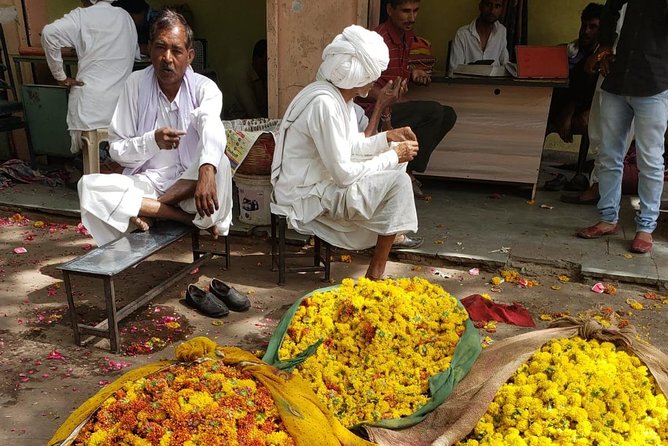
After the market, the route includes temple visits. The stated itinerary names Kale Hanumanji Ka Mandir and Govind Devji Temple, with about 25 minutes at the latter. The end point is listed at Kala Hanumanji Mandir on Amer Road, near Jal Mahal, so it is worth checking the exact finishing place with the operator before you set off.
Kale Hanumanji Ka Mandir is connected with the walk toward the market and is described as one of Jaipur’s oldest wholesale flower market areas nearby. Govind Devji Temple is a well-known Jaipur place of worship and gives the morning a different rhythm after the street market.
You may hear singing or devotional activity at a temple. The experience is not limited to looking at buildings from the outside. It gives you a chance to see how flowers purchased in the market connect with worship.
Temple visits require respect. Dress modestly, follow instructions about footwear or photography, and let your guide explain what is appropriate. The supplied details do not promise a particular ceremony at every departure, so treat any singing or service as part of the morning atmosphere rather than a guaranteed performance.
The temple stop also helps explain why the flower market begins so early. The timing is practical for sellers and buyers, but it is also tied to the start of religious activity in the city.
Chai, snacks, and the human side of the route
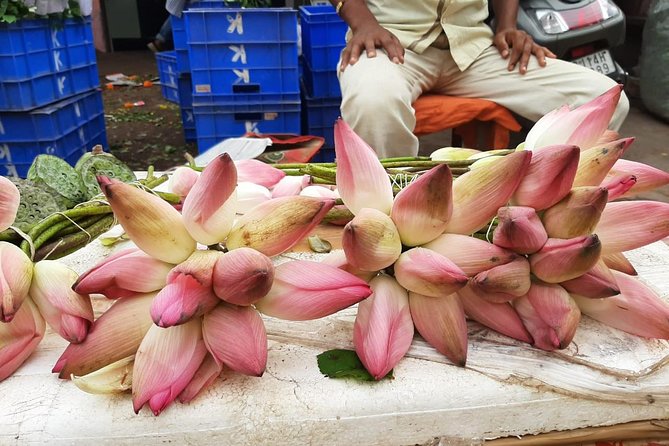
Masala chai at a local tea shop is included. It is a small detail, but it improves the pacing of the walk. After the market and temple visits, you get a chance to sit or pause with a warm drink before continuing or finishing.
The included tea also gives you a taste of a very ordinary Jaipur ritual. You are not being taken to a formal restaurant or a tourist dining room. The appeal is the local setting and the short break.
Several people who took the experience also enjoyed street snacks and Rajasthani specialties. The tour information specifically includes masala chai, but snacks beyond that are not listed as included. If something extra is offered, ask the price before ordering.
This is one place where your guide can make a real difference. Harshit is noted for taking care of a solo participant and knowing a good chai stall and local snacks. Monty is also associated with the tour and is described as friendly and attentive. Guide assignments can change, so book this for the route and format rather than expecting one named person.
What the $35 price really buys you
At $35 per person, the tour is priced as a short guided introduction to Jaipur’s old center. You are paying for about 90 minutes, a guide, market access, temple visits, chai, and the convenience of having the route explained as you walk.
There is no private transportation. That is not a flaw here because walking is the point. A car would move you between sights faster, but it would remove much of the contact with the market streets, tea stop, and old buildings.
The value is strongest if you are new to Jaipur and want a safe, structured way to begin exploring. It is also useful on your first morning in India, when street customs, traffic, and market behavior may still feel unfamiliar.
The value is weaker if you already know the old city well or want a long photography session at each stop. The 90-minute schedule keeps things moving. You will see several places, but you will not have unlimited time at Hawa Mahal or the flower stalls.
All fees and taxes are included, as is the masala chai. The maximum group size is 15, which is small enough for a guide to keep track of the group, though not necessarily intimate. A smaller departure would give you more freedom around the market, but that is not promised.
Who will get the most from this morning walk
I would choose this tour for:
- First-time Jaipur visitors who want a gentle introduction to the old city.
- Photographers and phone photographers who value early light, flowers, and a less crowded Hawa Mahal.
- Solo visitors who prefer company and local guidance on an early city walk.
- People interested in daily life, not only palaces and monuments.
- Food-curious visitors who like chai and may want to try local snacks.
- Writers and content creators looking for a compact morning route with strong visual detail.
I would think twice if you dislike early starts, walking, working markets, or religious sites. The tour is also not the right choice if your priority is private transportation or a long, slow visit at one monument.
Most people can participate, and the start is near public transportation. Still, the route involves city streets and market conditions. Comfortable shoes, modest clothing for temples, and a small bag are sensible choices.
The mobile ticket makes entry simple, but the key practical detail is the meeting point. Hawa Mahal Road and Badi Choupad can be busy places later in the day, so allow enough time to reach the exact spot in the morning.
Free cancellation is available up to 24 hours before the start time for a full refund. Cancellations or changes made within 24 hours are not refunded, and poor weather may lead to a different date or a full refund.
My call: book it for the first morning
I would book this if I wanted to understand Jaipur through its morning routines rather than only its famous buildings. The combination of Hawa Mahal, flower sellers, a vegetable market, temples, and chai gives you several useful impressions in a short time.
The strongest reason to go is the flower market. It provides color, fragrance, religious context, and real local activity without requiring a full-day commitment. The early visit to Hawa Mahal is another strong point, especially if you want photographs before traffic builds.
The main caution is simple: set your alarm and expect to walk. If you do not mind that trade-off, $35 is fair for a guided introduction with an included drink and a group capped at 15. For a first morning in Jaipur, it is a practical and memorable choice.
FAQ
Where does the tour start?
The tour starts on Hawa Mahal Road at Badi Choupad, near J.D.A. Market, Kanwar Nagar, Jaipur.
Where does the tour end?
The listed end point is Kala Hanuman Ji Mandir on Amer Road, near Jal Mahal. The route also includes Govind Devji Temple.
How long does the experience last?
It lasts approximately 1 hour and 30 minutes.
What places are included?
The route begins at Hawa Mahal, continues through heritage streets toward the old flower market, includes Kale Hanumanji Ka Mandir and Govind Devji Temple, and may also pass through a vegetable market.
Is transportation included?
No. Private transportation is not included. The experience is primarily a walking tour.
Is chai included?
Yes. Masala chai at a local tea shop is included, along with all fees and taxes.
What is the maximum group size?
The group can have a maximum of 15 participants.
Is the tour suitable for solo participants?
Yes. Most people can participate, and the experience is suitable for solo visitors. Guides including Harshit have provided personal help to solo participants.
Is the tour good for photography?
Yes. The early visit to Hawa Mahal offers quieter conditions and morning light, while the flower market provides colorful arrangements, garlands, bouquets, and loose petals.
What happens if the weather is poor?
The experience requires good weather. If it is canceled because of poor weather, you are offered another date or a full refund. You can cancel up to 24 hours before the start time for a full refund.
Just added around Jaipur
- Jaipur City Tour with Traditional Flower Market Visit★ 5.0 · 7 reviews
- Jaipur Sunrise Tour with Morning Flower Market Walk★ 5.0 · 16 reviews
- Jaipur: Shopping Tour with Blue Poetry & Printing Workshop & Rugs★ 5.0 · 42 reviews
- Jaipur Full-Day Heritage Tour with Guide★ 5.0 · 18 reviews
- Jaipur Tour with Monkey Temple and Block Print Experience★ 5.0 · 6 reviews
- Jaipur Half-Day Tour with Flower Market by Tuk-Tuk or Car★ 5.0 · 2 reviews
- Jaipur Half-Day Tour with Flower Market & Sunset Views★ 5.0 · 2 reviews
- Jaipur Nahargarh Fort Sunrise or Sunset Tour with Flower Market★ 5.0 · 9 reviews
Jaipur Garden Tours, compared.

Private Jaipur Full-Day Tour with Block Printing
Read our review →

Jaipur Tour by Tuk-Tuk or Car with Flower Market
Read our review →
Half-Day Guided Sightseeing Tour with Flower Market
Read our review →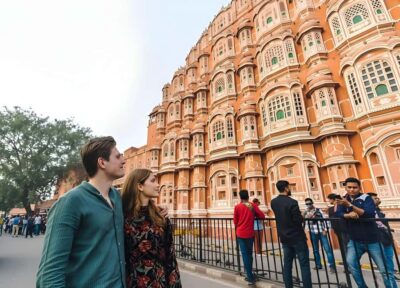
Half or Full Day Sightseeing Tour with Flower Market
Read our review →
Shopping Tour with Blue Poetry & Printing Workshop & Rugs
Read our review →

Jaipur Sunrise Tour with Morning Flower Market Walk
Read our review →Browse the lists this tour appears in