
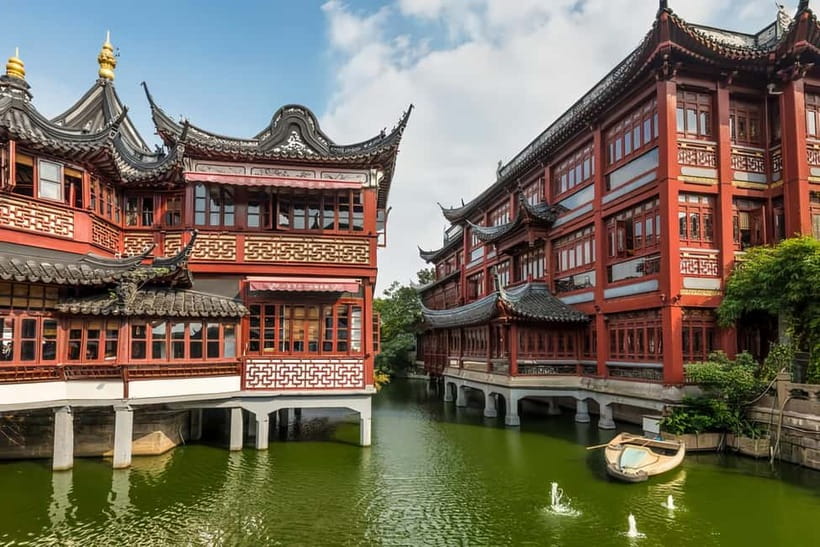
Review · SHANGHAI
Shanghai: Jing’an Temple, Yu Garden, and Bazaar Private Tour
Shanghai’s old soul appears in surprising places, and this half-day tour finds it in two very different settings. You move from the gold-topped calm of Jing’an Temple to the pavilions, ponds, and rockeries of Yu Garden, then finish among the snacks and shops around the City God Temple.
I like the smart route and the human touch. You get both a quiet Buddhist temple and a classical garden, while a guide can explain what you are seeing and help with Shanghai’s metro system. I also like the choice of English, Spanish, Italian, or French guides, with Paz receiving especially warm praise from Spanish-speaking guests. The main drawback is the amount of walking, crowds at the bazaar, and limited suitability for people with mobility impairments.
Key points at a glance
- Two contrasting Shanghai sights: Begin with Jing’an Temple’s peaceful religious setting, then see the refined garden design of Yu Garden.
- A 30-minute metro connection: Public transport is part of the experience, so you see how Shanghai works rather than staying in a tour vehicle.
- City God Temple bazaar finish: Browse handicrafts and sample local snacks around one of the city’s best-known traditional areas.
- Paz for Spanish-speaking visitors: Paz has been praised for her warmth, cultural explanations, and practical help with transport and exchanging money.
- Morning is the calmest choice: One guest specifically recommends going early, when Jing’an Temple and the garden area feel less hectic.
- Good value at $16: For 3.5 hours, two major sights, a guide, and a small-group or private format, the price is notably low, though entrance fees and transport are not included.
Why this route works so well in Shanghai

Shanghai can feel enormous and hard to read on a first visit. Skyscrapers, shopping streets, old lanes, temples, and formal gardens all sit close together, but they do not always connect neatly for a newcomer. This tour gives you a simple half-day thread through the city’s older cultural side.
The route is useful because the stops do different jobs. Jing’an Temple gives you a working spiritual site in the middle of modern Shanghai. Yu Garden shows the polished ideals of classical Chinese garden design. The bazaar adds the everyday side of the outing, with food, small goods, and plenty of people moving through the narrow streets.
I especially like that the metro ride is built into the plan. A 30-minute subway trip is not just dead time. It gives you a chance to ask questions, learn how to make sense of Shanghai’s transport network, and see the city between the formal sights.
This is not a long historical tour with hours of museum-style explanation. Each main stop receives about 50 minutes of guided sightseeing, so you get a focused introduction rather than every possible detail. That makes the experience a good fit for a first visit, a short stay, or a morning before another afternoon plan.
More Market Visits in Shanghai:
- Shanghai Day Tour to Zhujiajiao Water Town, Yu Garden, Bazaar, Bund
★ 5.0 · 162 reviews - Versailles Bike Tour with Market, Gardens & Guided Palace Tour
★ 5.0 · 1,121 reviews - Bangkok: Night Bike Tour with Temples & Flower Market Visit
★ 4.8 · 751 reviews
Jing’an Temple: gold, incense, and a pause in the city
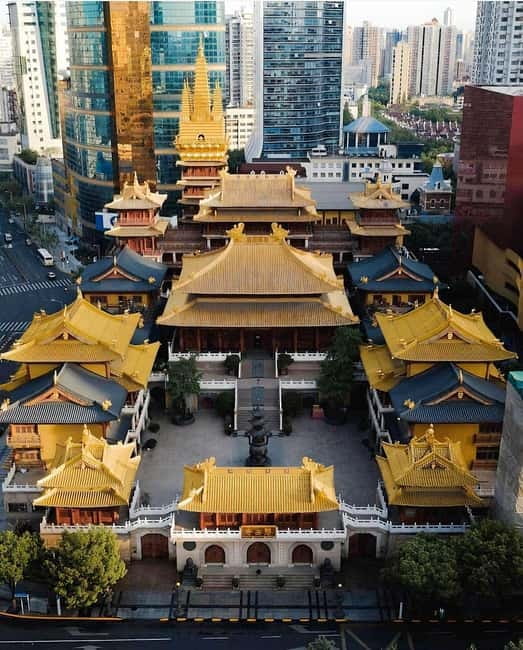
Jing’an Temple is the tour’s most striking contrast. It sits in the heart of a modern urban district, yet the temple offers an immediate change of pace. Gleaming gold surfaces and detailed religious architecture create a strong visual impression, while the enclosed setting helps soften the noise of the city outside.
Your guide leads a photo stop and sightseeing visit of about 50 minutes. That is enough time to take in the main features without turning the visit into a long religious study. I would use this part of the tour to ask about the temple’s role today, the meaning of the architectural details, and how a spiritual site functions within such a busy city center.
The appeal here is not simply decoration. Jing’an Temple gives you a sense of continuity. Modern Shanghai surrounds it, but the temple remains a place for reflection and worship. You should treat it with the respect expected at an active religious site, and your guide can help you understand the proper rhythm of the visit.
Morning is the best choice if you have flexibility. A guest specifically found the tour especially calm in the morning, and that advice makes practical sense. Early hours should give you a better chance to appreciate the temple before the city’s pace picks up.
The temple visit also offers some of the tour’s best photographs. Look for the contrast between the ornate golden structure and the modern buildings beyond it. Bring a charged phone or camera, as photography is one of the clearest pleasures of this stop.
The metro ride: a useful part of the experience

After Jing’an Temple, you take the subway for about 30 minutes toward Yu Garden. Transportation is not included in the tour price, and hotel pickup and drop-off are not provided, so you need to reach the chosen meeting point on your own and pay for the metro separately.
That arrangement keeps the price low, but it also means you should plan carefully. The available starting points include Jing’an Temple, Jing’an Temple metro station on lines 2 and 7, or Yu Garden. Your meeting point depends on the option you book, so check it closely before leaving your hotel.
I see the metro ride as a plus for independent-minded visitors. Shanghai’s subway is central to daily life, and using it with a guide can make the city feel less intimidating. A Spanish-speaking guest found Paz particularly helpful with transport, food, and even changing cash into local currency. That kind of practical assistance can matter as much as the formal sightseeing, especially during a first day in Shanghai.
The tradeoff is that this is not a door-to-door excursion. You will need to walk to the meeting point, use public transport, and keep track of the group. Comfortable shoes are important.
Yu Garden: pavilions, ponds, and carefully framed views
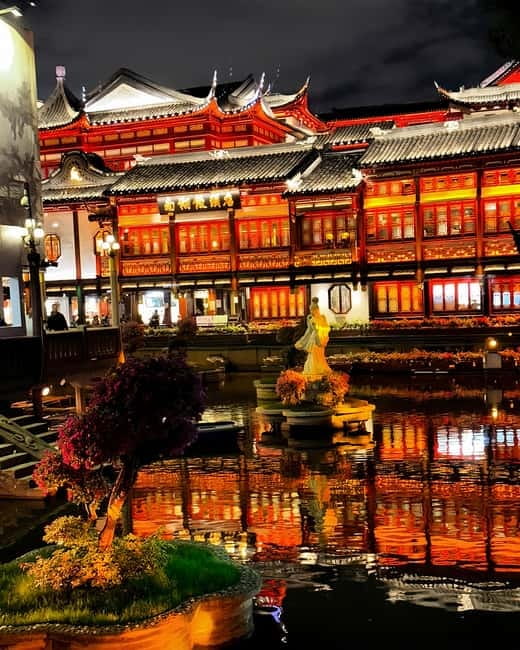
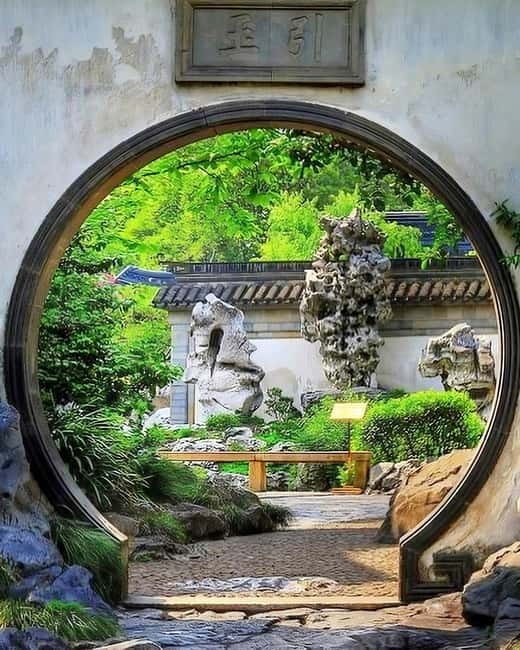
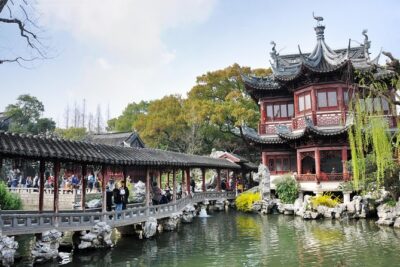
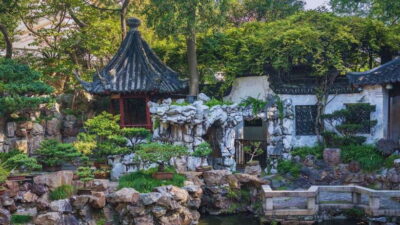
Yu Garden offers a very different mood from Jing’an Temple. Instead of one dominant building, the garden unfolds through small discoveries: winding paths, pavilions, ponds, planted areas, and carefully placed rockeries. The design encourages you to slow down and look through openings rather than simply walk toward one large viewpoint.
The guided visit lasts about 50 minutes and includes walking, sightseeing, and time for photographs. Your guide can help you notice how the garden uses walls, doorways, stone, water, and greenery to create changing views. Without that context, it is easy to see only a pretty collection of buildings. With explanation, the garden becomes a lesson in balance and controlled perspective.
I like the contrast between Yu Garden’s compact, detailed design and Shanghai’s huge scale outside. The garden does not depend on broad open spaces. Its charm comes from turns, framed views, textured rockeries, and quiet corners. You might find a peaceful moment beside a pond, then step through a gate into a much busier passage.
Crowds are the main consideration. Yu Garden is a major sight, and the surrounding area can become crowded, particularly later in the day. The morning recommendation is worth following if your schedule allows it. Even with a guide, you should expect to share the paths and give yourself room to move at a steady pace.
The garden portion is also more physically demanding than the temple visit may suggest. There is walking on paths and likely some uneven surfaces, and the experience is specifically not suitable for people with mobility impairments. Anyone with limited stamina should consider this before booking.
A few more garden visits around Shanghai worth a look
- National Mall Tour with 10+ Stops, Boat Cruise, Entry Tickets
★ 4.5 · 1,212 reviews - Seoul: Mt.Seorak, Nami Island & Korean Garden, No Shopping
★ 4.8 · 614 reviews - National Mall Tour with 10 Stops & U.S. Capitol or Museum Entry
★ 4.5 · 331 reviews - Thai Cooking Class with Market & Garden Tour
★ 4.9 · 249 reviews
City God Temple bazaar: food, shopping, and local energy
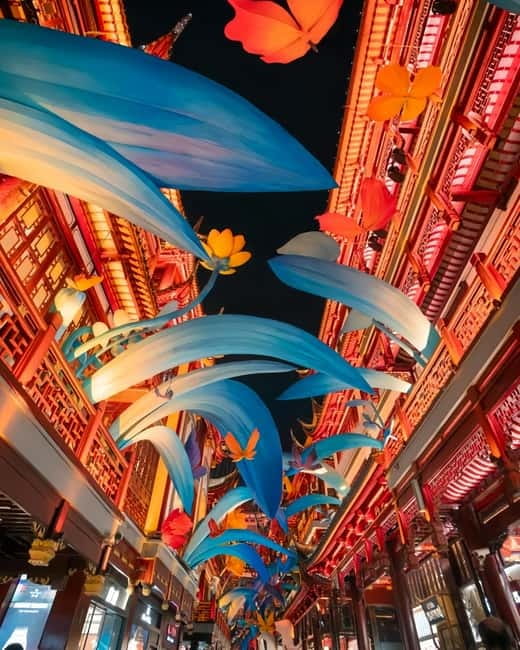
The final major stop is the area around the City God Temple of Shanghai. This is where the tour shifts from formal sights to street-level activity. The bazaar offers local snacks, handicrafts, and the pleasure of browsing without a fixed shopping list.
Your guide provides about 50 minutes of sightseeing and walking here. That is enough time to look around and try something local, but it is not a dedicated food tour. Meals are not included, so bring money if you want to sample snacks or buy a keepsake.
I like this part because it gives the day a practical finish. Temples and gardens show Shanghai’s heritage in polished form. The bazaar lets you see how that heritage is packaged, sold, eaten, and enjoyed in daily life. It also gives you a chance to ask your guide what foods are worth trying and what small items make sensible souvenirs.
Be ready for crowds. The narrow shopping area can feel packed, especially at busy times, and you will need to watch your belongings and stay aware of where the group is going. This is not the place for a leisurely, empty-street stroll. It is noisy, active, and full of distractions, which is part of its appeal.
If you prefer quiet cultural sites, the bazaar may be the least relaxing section. If you want a taste of Shanghai beyond monuments, it may be the most memorable. I would keep your shopping expectations modest and focus on the atmosphere, snacks, and guide’s local suggestions.
What $16 really gets you
At $16 per person, this tour offers strong value if you want orientation and cultural context in a short window. You receive guided visits to Jing’an Temple and Yu Garden, a walk through the City God Temple area, and help connecting the stops by metro. Private and small-group formats are available, which can make the low price especially appealing when compared with a full-day private guide.
The price does not cover meals, transportation, hotel pickup, or drop-off. You should budget separately for the subway and anything you eat or purchase at the bazaar. Entrance arrangements should also be checked when booking, since the supplied details confirm the attractions but do not state that admission fees are included.
The main value is the guide. Shanghai’s signs, transport system, and social customs can take time to understand. A good guide can turn a low-cost sightseeing route into a smoother introduction to the city. Paz is the guide name most useful to note if you speak Spanish. Her role has included cultural conversation as well as practical help with food, transport, and exchanging cash.
The tour also offers free cancellation up to 24 hours before the start and a reserve-now, pay-later option. Those policies are helpful if your Shanghai schedule may change, though you should still confirm the exact start time and meeting point after booking.
Who will enjoy this half-day tour
I would recommend this experience to first-time visitors who want three major cultural stops without committing an entire day. It is also a sensible choice if you have a short stay and want an efficient introduction to traditional Shanghai.
It suits you best if you:
- Want a guide rather than figuring out every sight alone
- Enjoy temples, gardens, local food, and shopping in one outing
- Are comfortable using the metro
- Can walk steadily for several hours
- Prefer a small-group or private setting
- Need an English, Spanish, Italian, or French guide
Spanish-speaking visitors may find Paz particularly appealing because she can offer more than sightseeing commentary. Her help with transport, food, and cash exchange is useful when the city still feels unfamiliar.
I would be cautious about booking if you have mobility limitations, dislike crowds, or want a slow garden visit with lots of unhurried time. The schedule is compact, and the bazaar can be crowded. This is a practical introduction, not a long, quiet retreat.
Practical tips for a smoother morning

Start by checking which of the three meeting points applies to your booking. Jing’an Temple, Jing’an Temple metro station, and Yu Garden are not interchangeable when you are trying to arrive on time.
Wear comfortable shoes. The route combines temple grounds, garden paths, a metro transfer, and bazaar streets. Bring your passport and a charged smartphone, as both are specifically required or recommended for the activity.
Carry some money for subway travel, snacks, and crafts. Food is not included, and the guide can point you toward local choices, but your purchases remain your responsibility.
Keep your bag secure in the bazaar and stay close to the guide. Crowds can make it easy to lose sight of a small group. A morning start should help with the busiest sections and give you a calmer first look at Jing’an Temple.
Should you book it?
Book this tour if you want a low-cost, well-packed introduction to Shanghai’s older cultural side. The combination of Jing’an Temple, Yu Garden, and the City God Temple bazaar gives you three distinct experiences in 3.5 hours, and the metro transfer helps you get a feel for the city itself.
I would choose the private or small-group option if you value questions and practical help. Spanish speakers should look for Paz when possible, particularly if you want guidance with transport and everyday arrangements as well as the sights. Skip it if you need step-free access, dislike crowded markets, or prefer to explore each attraction at a very slow pace.
For most first visits, the price makes this an easy way to get your bearings, see two important cultural sites, and finish with something to eat.
FAQ
How long does the tour last?
The tour lasts 3.5 hours.
Which places does the tour visit?
It visits Jing’an Temple, Yu Garden, and the bazaar around the City God Temple of Shanghai.
How do I get between the main sights?
The tour includes a subway or metro journey of about 30 minutes between sections of the route.
Is transportation included in the price?
Transportation is not included. The tour uses the metro, and you are also responsible for reaching the meeting point.
Are meals included?
No. Meals are not included, though you can sample local snacks in the bazaar at your own expense.
Which languages are available?
Live guides are available in English, Italian, Spanish, and French.
Where does the tour start?
The available starting points are Jing’an Temple, Jing’an Temple metro station on lines 2 and 7, or Yu Garden. The exact meeting point depends on the option you book.
What should I bring?
Bring your passport, a charged smartphone, and comfortable shoes. A camera is also recommended for photographs.
Is the tour suitable for people with mobility impairments?
No. The tour is not suitable for people with mobility impairments because it includes walking through the temple, garden, bazaar, and metro route.
Just added around Shanghai
- Tongli Water Town Private Day Trip from Shanghai with Tuisi Garden and Boat Ride★ 5.0 · 7 reviews
- Shanghai Yu Garden Admission Ticket★ 4.0 · 16 reviews
- Explore Suzhou’s Hidden Gardens&Enchanting Tongli Ancient Town★ 5.0 · 3 reviews
- Private Tour of Shanghai Museum the Bund Yu Garden and Cruise on Huangpu River★ 4.0 · 2 reviews
- Private Zhujiajiao Ancient Town and Harmony Garden Day Tour with Gondola Ride★ 5.0 · 7 reviews
- Private Shanghai Day Tour: Shanghai Museum, Yu Garden, Bund, Huangpu Cruise★ 5.0 · 6 reviews
- Private Shanghai Day Tour of Zhujiajiao Water Town,Yu Garden and Bund★ 5.0 · 2 reviews
- Private Suzhou Day Tour from Shanghai to Classical Gardens and Tongli Water Town★ 5.0 · 6 reviews
Shanghai Garden Tours, compared.
Best of Shanghai Day Tour, including Jade Buddha Temple & Bund & Yuyuan Garden
Read our review →
Yu Garden, Old Street, Bund & Zhujiajiao Water Town Bus Tour
Read our review →
Shanghai Day Tour to Zhujiajiao Water Town, Yu Garden, Bazaar, Bund
Read our review →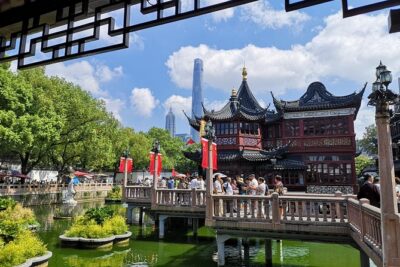
Private Yu Garden, The Bund, French Concession, Pudong Half-Day Tour
Read our review →
Browse the lists this tour appears in