
Review · USA
Historic Charleston: The Battery, Rainbow Row, St. Michael Church
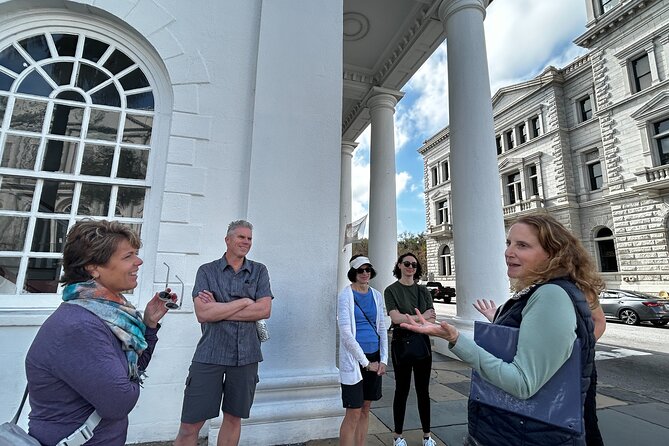
Charleston’s old center is best understood on foot, where a short walk can move you from a grand church steeple to pastel row houses, a harbor promenade, and places tied to the city’s painful past. This tour connects those pieces in about two hours, with guides such as Eric and Erik adding the stories that make the buildings matter.
I like the small group limit of 20, which gives you a better chance to hear the guide and ask questions. I also like the relaxed pace, a useful feature in a city where good sightseeing means looking up at details, not racing from one address to the next.
The main consideration is that church interiors are not guaranteed. St. Philip’s and St. Michael’s are active houses of worship, so you may see only the exteriors if services or congregational needs limit entry.
Key points to know before you book
- The route covers Charleston’s historic core: You visit Washington Square, the Four Corners of Law, Rainbow Row, The Battery, and several major historic buildings.
- Church access can change: Entry to St. Philip’s and St. Michael’s depends on availability, since both are working churches.
- The guide is central to the experience: Eric and Erik are noted for linking local history, architecture, and major American events.
- The Battery brings the best open views: The harbor promenade adds water, old artillery, mansions, and strong photo stops.
- The pace is leisurely: The two-hour walk includes short stops, with time to listen and ask questions.
- You return to Washington Square: The tour begins and ends at 80 Broad Street, making it easy to plan around other downtown activities.
Why this two-hour Charleston walk works
I like this tour because it gives you a useful first look at Charleston without trying to cover the whole city. The route is compact, but its subjects are not: religion, law, architecture, theater, slavery, war, civic life, and the harbor all appear within a manageable walk.
You begin at Washington Square, at 80 Broad Street. That location puts you right in the historic center, and the return to the same meeting point simplifies your day. You do not need to arrange a second pickup or figure out how to get back from a distant neighborhood.
The tour is offered in English and includes live commentary from a licensed guide. That matters here. Charleston’s buildings are attractive on their own, but the meaning of a churchyard, courthouse corner, or waterfront mansion is not always obvious from the sidewalk.
The walking group can include up to 20 people. That is not a private tour, but it is small enough to feel more personal than a large city walk. The guide can answer questions, and the experience may be adjusted toward your interests, as Eric has done for past groups.
More Historical Tours in the USA:
- Historic Mobile and Bellinggrath Gardens Private Day Tour
★ 5.0 · 2 reviews - Aboriginal Heritage Walk – Royal Botanic Gardens Victoria, Melbourne Gardens
★ 5.0 · 314 reviews - Beijing Historical Tour II including Summer Palace, Lama Temple & Panda Garden
★ 4.0 · 187 reviews
Washington Square, the starting point
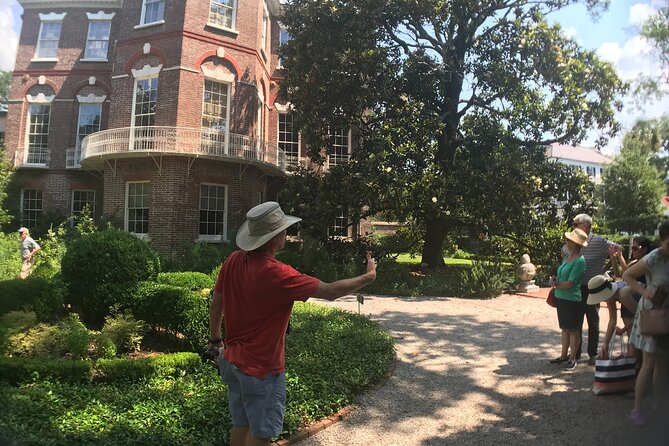
Washington Square provides a calm opening to the route. You can expect live oaks, statues, plaques, and a setting that introduces Charleston’s civic story before the walk moves toward the churches and older streets.
I find this kind of starting point useful because it gives you a place to settle into the city. Rather than begin with a string of dates, you get a physical sense of the old center first. The square also functions as the ending point, so it is worth remembering where you are in relation to the route.
The stop is listed for about 10 minutes. That is enough for an orientation and a few stories, but not enough for a long independent visit. If you want to study every plaque, plan to return after the tour.
St. Philip’s Church and Charleston’s churchyards
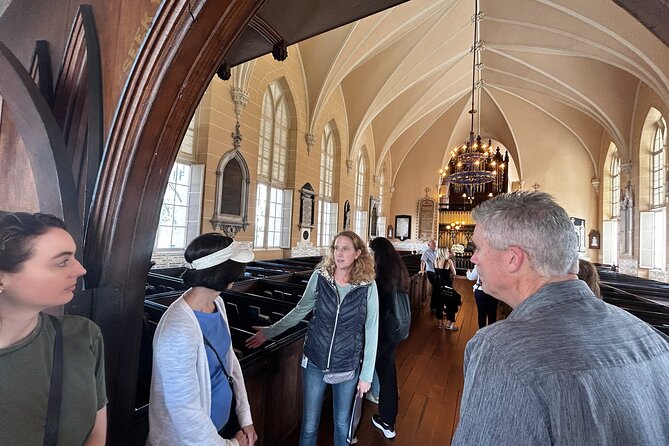
St. Philip’s Church sits on Church Street and was completed in 1836. Its steeple can be seen from far away, making it an excellent visual marker as you move through the city.
The tour allows about five minutes here. That is a brief stop, so expect a focused explanation of the building, its interior, its organ, and the notable people connected with its graveyard rather than a long church visit.
The church’s historic value reaches beyond its exterior. You are looking at a place where religious life, civic life, and local memory meet. The graveyard can prompt useful questions about the people who shaped Charleston and how the city remembers them.
Entry is free when available, but availability is the key point. St. Philip’s is still used by its congregation. If the doors are closed, the guide can still explain what you are seeing from outside, but you should not book this walk solely for guaranteed interior access.
St. Michael’s Church and the oldest surviving religious building
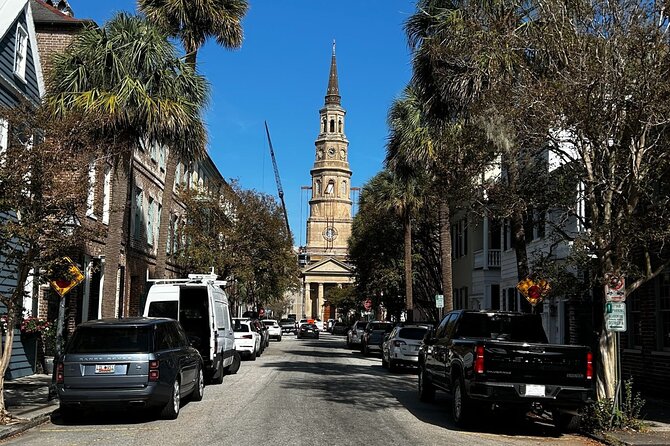
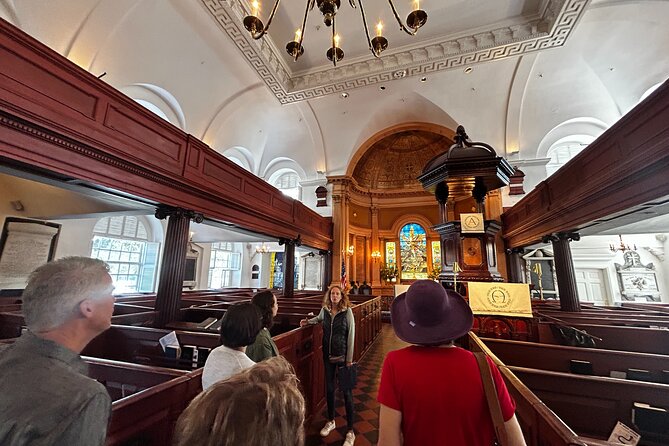
St. Michael’s Church is one of the route’s major sights. Built in 1752, it is described as the oldest surviving religious structure in Charleston. Its tall spire gives it a strong presence in the city center, while the Tiffany stained-glass windows add a more intimate detail.
The tour also connects St. Michael’s with figures such as George Washington and Robert E. Lee, who once attended or visited the church. Those associations help place the building in a wider American story, though the church itself remains the main subject.
Again, the stop is short, about five minutes. You may be able to enter and see the grand interior, but the tour cannot promise access at every departure. This is an active church, not a museum operating only for sightseeing.
I would treat the possibility of entry as a welcome extra. The exterior, steeple, age, and setting still make the stop worthwhile, and a good guide can give you context even if the doors are unavailable.
Same place, a different kind of green day out:
- Seattle: Space Needle & Chihuly Garden and Glass Ticket
★ 4.7 · 1,890 reviews - Space Needle and Chihuly Garden and Glass Combination Ticket
★ 4.5 · 1,551 reviews - National Mall Tour with 10+ Stops, Boat Cruise, Entry Tickets
★ 4.5 · 1,212 reviews - Princeville Botanical Gardens Tour and Chocolate Tasting Ticket
★ 5.0 · 774 reviews
The Four Corners of Law
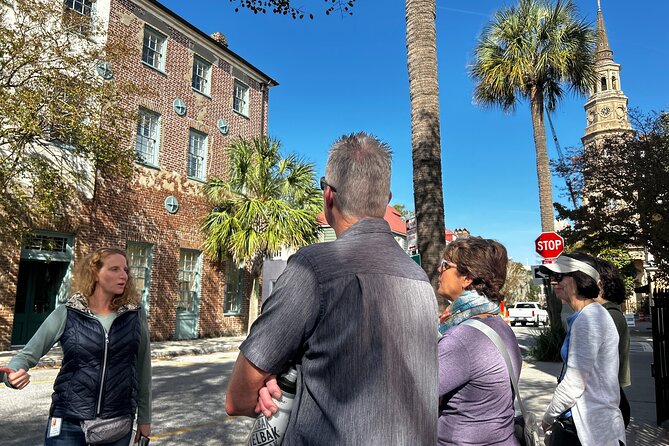
The Four Corners of Law is a quick stop with an unusual idea behind it. At this intersection, local, state, federal, and church authority are represented in the surrounding buildings.
The stop lasts about five minutes, but it gives you a neat way to read Charleston’s civic center. Instead of seeing separate government and religious buildings, you begin to notice how close different forms of authority sit to one another.
This is the sort of detail that is easy to miss on a self-guided walk. You might pass through the intersection, take a photo, and move on. The guide’s explanation turns it into a small lesson in how Charleston organized public life.
Rainbow Row and the value of a short photo stop
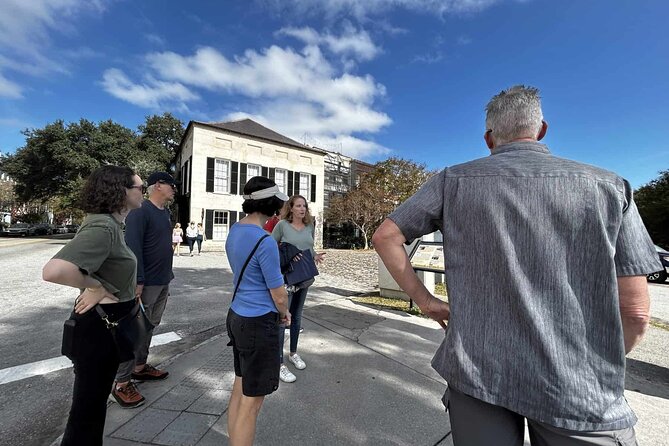
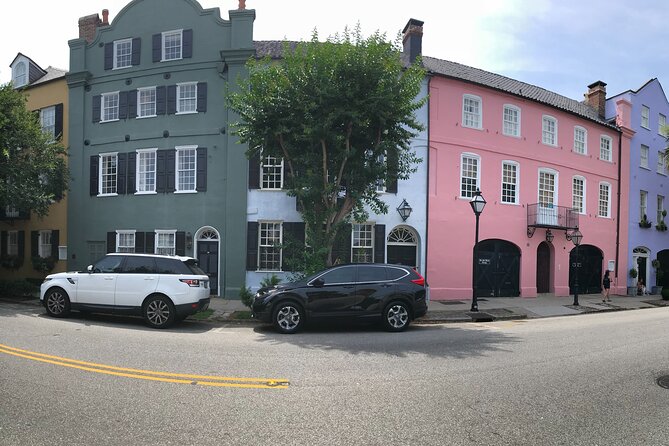
Rainbow Row is among Charleston’s most recognizable stretches of architecture. The pastel-colored historic homes make an easy photo subject, but the stop is not only about color.
Look at the repeated facades, the narrow urban setting, and the way the row fits the surrounding streets. The guide can help you see the homes as part of Charleston’s older built environment rather than as a single postcard view.
The scheduled time is about five minutes. That is enough for a quick look and photographs, but you should not expect a long architectural survey. If you want more time for pictures, the tour’s return to Washington Square gives you a chance to come back later on your own.
Dock Street Theater and Charleston’s stage history
Dock Street Theater receives about 10 minutes, making it one of the longer stops. It is identified as America’s first building designed for theatrical performances, so it adds a different thread to the walk.
The theater helps broaden your view of old Charleston. This is not only a city of churches, government buildings, and private homes. It also had a public entertainment culture and purpose-built spaces for performance.
Entrance is included when available, but access is subject to opening conditions. The supplied details do not promise a full performance, extended tour, or guaranteed interior visit, so think of this as a chance to see an important theater site within a larger walking route.
The wording connected with one itinerary stop suggests a building tied to an important moment in American history, but no separate name or additional visit details are provided. I would rely on the guide for the exact explanation on the day rather than expect a separate, long indoor stop.
The Battery and Charleston Harbor views
The Battery is the scenic payoff of the route. This waterfront promenade gives you views toward Charleston Harbor, along with historic artillery, grand homes, and plenty of room for photographs.
I like the change of pace here. After the tighter streets and civic buildings, the harbor opens the view. You can connect Charleston’s architecture to its coastal setting, and the old artillery adds a reminder that the waterfront was also a place of defense.
The scheduled stop is about 10 minutes. That is enough for a walk along part of the promenade and a set of photographs, but not for a long independent stroll. If the harbor is a priority, you may want to return after the tour and spend more time at your own pace.
The Battery also helps explain why comfortable shoes matter. The full experience involves steady walking between several stops, and one past guest specifically advised bringing good walking shoes. That is practical advice, especially if rain makes the pavement slick or the day becomes warm.
The Old Slave Mart Museum and a necessary part of the story
The route also points to the Old Slave Mart Museum, a difficult but essential part of Charleston’s past. The site offers a way to learn about enslaved people, their resilience, and the role slavery played in shaping Charleston and the United States.
The information provided does not list a separate admission stop or a guaranteed extended museum visit. I would therefore see this as a meaningful point of historical context within the walk, not assume that you will receive a full museum tour or dedicated interior time.
Its inclusion matters. A Charleston tour that focuses only on elegant homes, churches, and harbor views would leave out the people whose forced labor helped build the city’s economy and physical character. This stop gives the guide a chance to address that history directly.
Expect the tone to shift here. The walk is often scenic and architectural, but this part asks you to pay attention to loss, coercion, and human endurance. That balance makes the route more honest.
What the guide adds
The strongest part of this experience is the live explanation. Eric and Erik are specifically associated with the tour, and the comments supplied about their work point to several useful qualities: strong local knowledge, clear storytelling, patience, friendliness, and an ability to connect separate events.
I especially value the ability to link subjects. St. Michael’s is not just an old church. Rainbow Row is not just a line of colorful houses. The Four Corners of Law is not just an intersection. A guide can show how architecture, politics, religion, commerce, and national history overlap in a small area.
The pace also sounds deliberately unhurried. That helps if you want to ask questions or need a moment to take photographs. It may feel less efficient if you prefer to cover a larger area, but this tour is built for understanding rather than distance.
A small group can improve that exchange. With a maximum of 20 people, you should have a better chance of hearing the guide than on a large street-corner tour. It is still worth staying close, since city traffic and street noise can make any walking commentary harder to follow.
Timing, weather, and practical details
The tour starts at 10:00 a.m. and lasts about two hours. Since it begins and ends at Washington Square, you can use it as a morning introduction before lunch or another downtown activity.
Rain does not automatically ruin the experience. One participant found the tour worthwhile even in wet weather, but good walking shoes remain important. You should also remember that this is an outdoor walking activity with several stops, so dress for the conditions rather than treating it like an indoor museum visit.
A mobile ticket is provided, and confirmation arrives at booking. The tour is near public transportation, service animals are allowed, and most people can participate. Those details make it fairly easy to fit into a Charleston itinerary without private transport.
The tour is free to cancel up to 24 hours before the local start time for a full refund. Cancellations or changes inside that window are not refunded or accepted, so keep that cutoff in mind before booking.
Is the tour worth the price?
No price is provided here, so I cannot judge the exact cost against other Charleston walks. I can judge what you receive: a licensed guide, live commentary, a two-hour route, access to one to three historic sites when available, and a compact introduction to several major parts of the city.
The value is strongest if you want structure and interpretation. You could walk past many of these places on your own, but you would need to research the churches, theater, civic buildings, and difficult history separately. The guide saves that preparation time and helps you see links between the stops.
The value is weaker if you want guaranteed church entry, long museum visits, or extensive time at each sight. Several stops last only five minutes, and active congregations can limit access. This is a guided overview, not a series of full interior tours.
Who should book this Charleston walk?
I would recommend it to a first-time visitor who wants a clear introduction to central Charleston. It also suits anyone who enjoys architecture but wants the social and political stories behind the facades.
It is a good fit for couples, families, and small groups who prefer a relaxed walk with room for questions. The guide’s ability to adjust explanations to group interests is useful if you want more focus on architecture, local figures, or American history.
You might choose another experience if you have limited mobility, dislike outdoor walking, or need guaranteed access to every interior. The tour is designed around walking, short standing stops, and changing access at working churches.
Should you book it?
Book this tour if you want Charleston explained rather than simply photographed. The combination of St. Michael’s, St. Philip’s, Rainbow Row, the Four Corners of Law, Dock Street Theater, Washington Square, The Battery, and the Old Slave Mart Museum gives you a broad view in a short time.
Go in with the right expectations: church interiors are not guaranteed, the stops are brief, and the walk cannot replace a full museum visit. If that sounds fair, the small group, leisurely pace, and strong guide-led storytelling make this a sensible first morning in Charleston.
FAQ
How long does the Charleston walking tour last?
The tour lasts approximately two hours.
Where does the tour begin?
It begins at Washington Square, 80 Broad Street, Charleston, South Carolina 29401.
Where does the tour end?
The tour ends back at the Washington Square meeting point.
What time does the tour start?
The stated start time is 10:00 a.m.
Is the tour offered in English?
Yes. The experience is offered in English.
Are church interiors guaranteed?
No. St. Philip’s and St. Michael’s are working churches, so entry depends on availability and congregational use.
How many people can join the tour?
The maximum group size is 20 travelers.
Is admission included?
The experience includes entry into one to three historic sites when available. Dock Street Theater admission is listed as included, while church entry depends on availability.
Can I cancel for a full refund?
Yes, if you cancel at least 24 hours before the experience start time. Cancellations or changes made less than 24 hours before the start are not refunded or accepted.
Just added around the USA
- Zen Garden Yoga Bliss Experience★ 5.0 · 2 reviews
- Tulip Festival and Skagit Valley Tour★ 5.0 · 7 reviews
- Tulip Festival in Skagit Valley Tour from Seattle★ 4.5 · 28 reviews
- Tulip Festival at Skagit Valley ,La Conner and Deception Pass★ 4.0 · 4 reviews
- Skagit Valley Tulip Festival Day Tour from Seattle★ 4.5 · 7 reviews
- Midnight in the Garden of Good and Evil Walking Tour★ 5.0 · 65 reviews
- Botanical Tour (by Walk With Me Savannah Tours)★ 5.0 · 43 reviews
- A Walk Through The Book “Midnight in the Garden of Good and Evil”★ 4.0 · 52 reviews
USA Garden Tours, compared.

Princeville Botanical Gardens Tour and Chocolate Tasting Ticket
Read our review →
South Maui: Snorkel to Coral Gardens or Molokini Crater
Read our review →

Everglades: Mangrove Maze Airboat Tour and Boardwalk
Read our review →
Maui Afternoon Snorkel Aboard Malolo to Molokini or Coral Gardens
Read our review →
Big Island Waterfalls Tour with Swimming and Botanical Garden
Read our review →
Hilo Shore Excursion: Active Volcano, Lava Tube, Waterfall and Gardens
Read our review →
Browse the lists this tour appears in