
Review · SPAIN
Learn Rumbas or Sevillanas in 90 minutes – Gift Flower
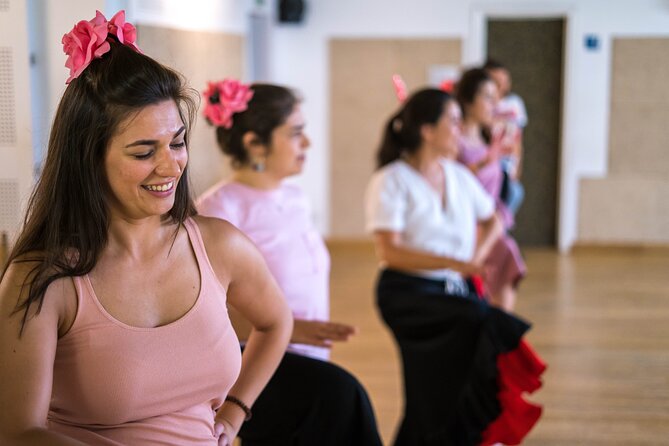
Seville’s flamenco tradition is easier to appreciate once you try the basic steps yourself. In this 90-minute class, a professional dancer teaches hand movements, arm positions, clapping, body motion, rhythm, and simple footwork before guiding you through a short Rumbas or Sevillanas choreography.
I like two things here: the class is built for beginners, and it focuses on doing rather than watching. I also like the small cultural touch of receiving a flower or traditional shawl to take home. The main caution is practical: a past booking had conflicting venue information, so confirm the start time and exact address before setting out.
Key points at a glance
- Choose Rumbas or Sevillanas: You learn one of two accessible flamenco styles rather than trying to cover the whole art form.
- Professional instruction: Classes are taught by dancers with training in dance and flamenco teaching.
- A full beginner lesson: Expect compass, hands, arms, clapping, body movement, and zapateado basics.
- Finish with choreography: You put the lesson into practice with a short Rumbas or Sevillanas routine.
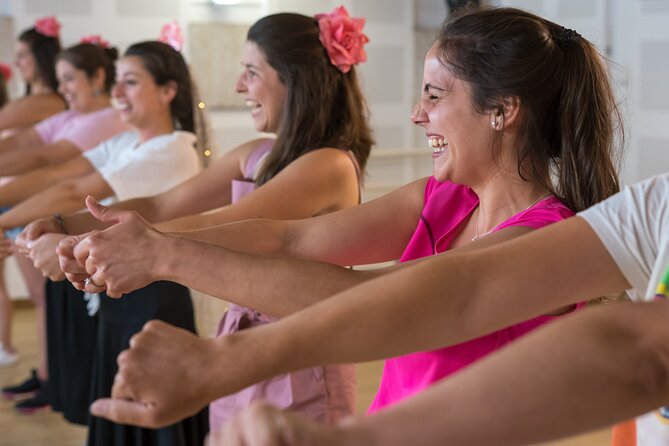
- Private group setting: Only your group participates, which can make the class feel more comfortable for first-timers.
- A small Seville souvenir: You receive a flower or traditional shawl at the end.
What you actually learn in 90 minutes
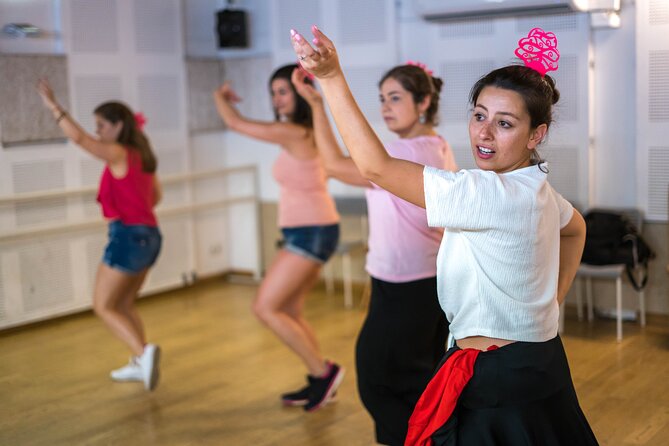
This is not a performance with a short audience participation segment. It is a hands-on flamenco lesson designed to get you moving quickly.
The teacher begins with the building blocks of flamenco. You work on compass, the rhythmic framework that helps keep the dance together, along with hand and arm movements. Clapping is part of the lesson too, giving you a way to feel the beat even when your feet are still catching up.
The class also introduces body movement and zapateado, the footwork used in flamenco. At beginner level, the aim is not to make you look like a professional dancer in an hour and a half. It is to help you understand how the parts connect.
The final section brings those pieces into a short choreography. That matters because isolated hand positions can feel abstract. Once you add rhythm, arms, clapping, and steps, you get a much clearer sense of how a flamenco dance works.
You can learn either Rumbas or Sevillanas. The experience is described as adaptable to different levels, but beginners are the main audience. If you already dance, you may move through the opening material quickly. If you have never danced before, the teacher can work from the basics.
Other gardens people visit around Spain:
- Granada: Alhambra & Gardens Tour w/Nasrid Palaces Option
★ 4.2 · 7,022 reviews - Granada: Alhambra Gardens and Generalife Ticket
★ 4.4 · 2,195 reviews - Granada: Alhambra Guided Tour with Nasrid Palaces & Gardens
★ 4.7 · 2,190 reviews
Rumbas or Sevillanas: choosing your style
Rumbas and Sevillanas are both approachable choices for a first flamenco class, but they offer a slightly different feel.
Rumbas are often associated with a lighter, more social rhythm. The class uses a short Rumbas choreography to help you practice the movements in sequence. This can be a good choice if you want an easygoing introduction and prefer to focus on rhythm and body movement.
Sevillanas are closely linked to Seville and Andalusian social dancing. Learning a basic Sevillana gives you a direct connection to local dance culture, especially if you are interested in the style you may see around festivals and celebrations. The class does not promise mastery of the full form, so think of it as a first lesson rather than a complete course.
You may have a preference when booking, or you may be asked to decide with the school after the reservation. Since the start time is arranged after booking, use that contact to clarify which style you want and whether the class will focus on Rumbas or Sevillanas.
Why the professional teacher matters
Flamenco can look simple from a distance. A raised arm, a turn of the wrist, or a few taps of the foot may appear easy until you try to coordinate them with rhythm and posture.
That is why instruction matters here. The school describes its teachers as professionals with degrees in dance and flamenco pedagogy. In practical terms, you are not just copying a sequence from a video. You are being shown the basic positions and timing, then given a chance to repeat them.
A good beginner class also needs patience. The description makes clear that the lesson is meant to be fun but still educational, with teaching as the main aim. That balance suits people who want a memorable activity without being pushed into a serious technical course.
You should still keep your expectations sensible. Ninety minutes is enough to learn the foundations and a short routine. It is not enough to develop polished technique, strong footwork, or a full command of Sevillanas. Think of the class as a practical introduction that may leave you wanting more.
The private format and who it suits
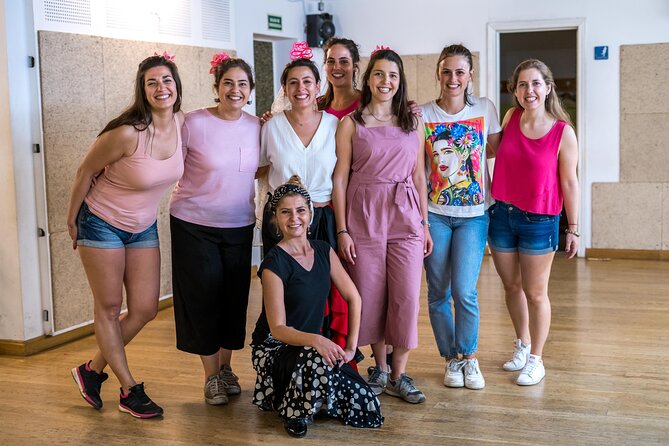
This is a private activity, so only your group participates. That is a useful feature if you feel awkward dancing in front of strangers or if your group wants to learn at its own pace.
A private class can also make the lesson more personal. The teacher may be able to spend more time correcting basic arm positions or repeating a rhythm when needed. The available information does not state the maximum number of people in a group, so do not assume that private means one-on-one.
The class works especially well for:
- Couples looking for an active cultural experience
- Families or friends who want to learn together
- First-time flamenco students
- People who prefer participation over a stage show
- Visitors who want a souvenir connected to the activity
It may be less suitable if you want a formal performance, a long historical lecture, or advanced technical training. The emphasis is on movement, practice, and a short routine.
Same place, a different kind of green day out:
- Alhambra &Charles Palace Guided Tour with Optional Nasrid Palaces
★ 4.5 · 2,149 reviews - Granada: Alhambra and Generalife Garden Ticket & Guided Tour
★ 4.0 · 1,862 reviews - Granada: Flamenco Show in Albayzín – Jardines de Zoraya
★ 4.7 · 1,375 reviews - Granada: 3-Hour Alhambra and Generalife Gardens Guided Tour
★ 4.7 · 1,304 reviews
Starting at Pl. Pelícano
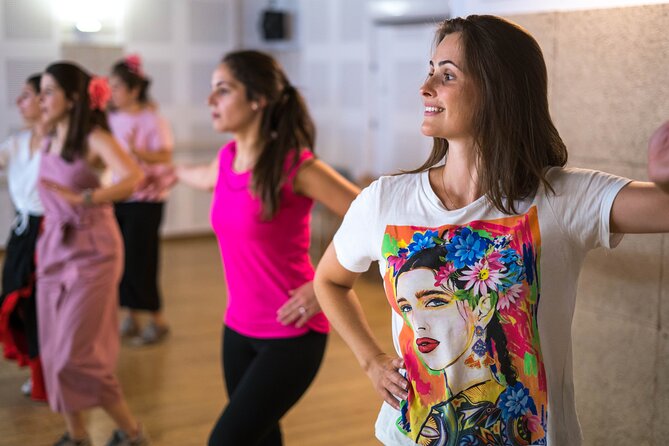
The stated meeting point is Pl. Pelícano, 4, local 6, in Seville’s Casco Antiguo. The activity begins and ends at the same meeting point.
This is the sort of address you should check carefully before leaving. A previous booking ran into trouble because the ticket carried an old address, and the group had to call and search for the correct dance studio. The provider explained that the activity had permanently moved, but some reservations had been sent to the former venue during a changeover.
That problem appears to have been linked to a specific venue transition and an especially busy period during the Seville Fair. Still, the lesson is useful: do not rely only on an old confirmation screen. After booking, confirm the exact meeting address and start time with Estudio Flamenco Sevilla.
The school contacts you to define the class time. This is helpful because the schedule is not presented as a fixed public departure time, but it also means you should watch for that message and make sure the agreed time is clear.
How the class unfolds
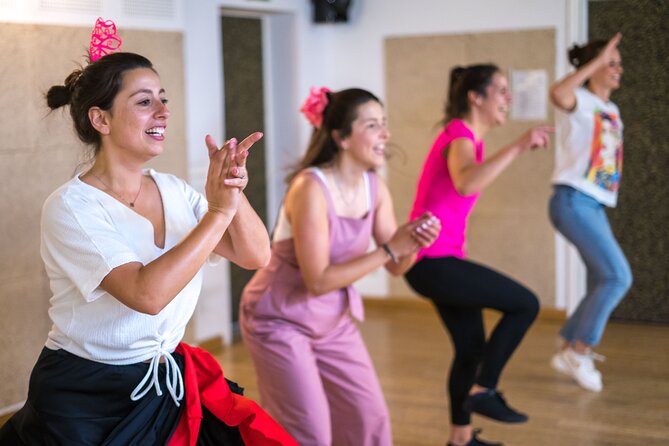
The first part is about rhythm and coordination. You learn the basic compass and begin to connect the music’s pulse with your movements. For many beginners, this is the hardest part, since flamenco depends on timing as much as on the position of the hands and feet.
Next come the hands and arms. Flamenco’s upper-body movement is one of its most recognizable features, but it requires control. The teacher shows the basic gestures and helps you place your arms so they contribute to the dance rather than getting in the way.
Clapping follows as another way to hold the rhythm. This is useful even if you find the footwork difficult. It gives you an active role in the music and helps you understand the structure of the choreography.
The lesson then brings in body movement and zapateado. Do not expect a long or punishing footwork drill. The stated goal is to teach the basics and apply them in a short routine, so the footwork should be viewed as an introduction.
Finally, you rehearse a short Rumbas or Sevillanas choreography. This is the most satisfying part for many beginners because the lesson begins to feel like a dance rather than a series of separate exercises. You leave with a simple sequence you can remember, even if it is far from performance standard.
The flower or shawl souvenir
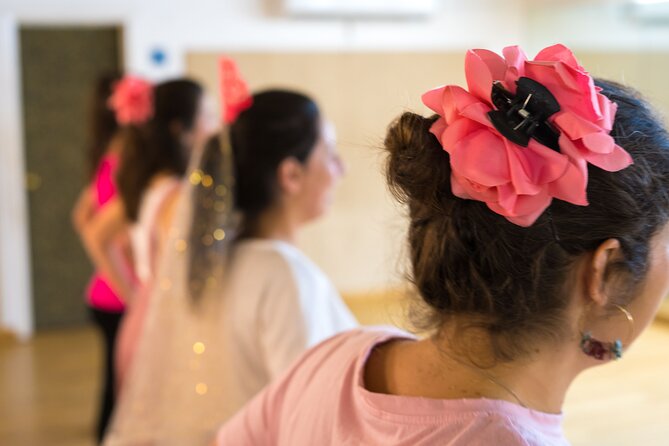
The take-home gift is small, but it fits the experience. You receive either a flower or a traditional shawl as a souvenir.
That detail adds a little ceremony to the class. It also gives you something physical to connect with the lesson after you leave Seville. The information does not specify how the item is assigned or whether you choose between the flower and shawl, so ask the teacher if that choice matters to you.
Do not book this solely for the gift. Its value is in the lesson itself. The souvenir is a pleasant extra, especially for someone who wants a keepsake that relates directly to flamenco rather than a general city memento.
Is $52.34 a fair price?
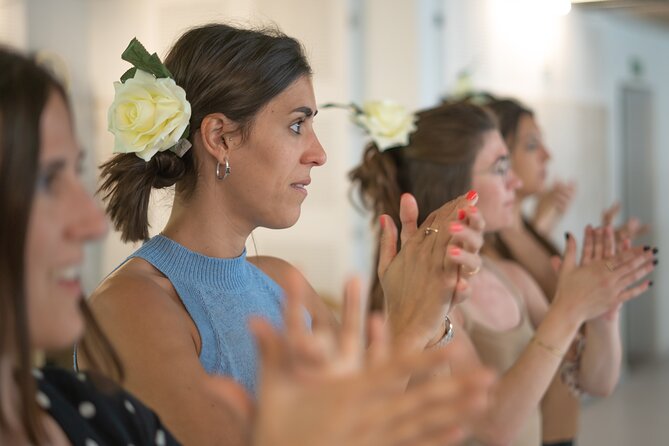
At $52.34 per person, this is not the cheapest way to spend 90 minutes in Seville. The value depends on what you want from the activity.
You are paying for a professional-led lesson, a private group format, the use of a flamenco school, and a finished mini-choreography. If you would otherwise book a flamenco show and only watch from your seat, this gives you a different kind of connection. You are learning the physical language behind the performance.
The price makes more sense for a group that wants a shared activity. Group discounts are available, though the amount of the discount is not stated. If you are booking with friends or family, check the final price before payment rather than assuming a particular reduction.
For a solo visitor, the cost may feel harder to justify if you only want a quick cultural stop. For a couple or private group, the setting and direct instruction may provide better value than a larger general class. The mobile ticket is convenient, but it does not remove the need to verify the venue.
Timing, transport, and what to plan
The class lasts about one hour and 30 minutes. Since the activity returns to the meeting point, you can plan another nearby activity afterward without arranging a second pickup.
The meeting point is near public transportation. The available details do not name a specific bus, tram, or metro route, so check your route on the day you go. Allow extra time to reach Pl. Pelícano, particularly if you are unfamiliar with Seville’s old town streets.
Wear something that lets you move your arms and feet comfortably. The provider does not list a special dress requirement, so ordinary comfortable clothing should be enough. You may also want to avoid carrying anything that makes clapping or footwork awkward.
Service animals are allowed, and most people can participate. No special fitness level is given, but flamenco involves standing, rhythm, and foot movement, so consider your own comfort with a 90-minute dance class.
Free cancellation is available up to 24 hours before the start time. If you cancel later than that, or try to make changes within 24 hours, the payment is not refunded.
A note about the school and the setting
Estudio Flamenco Sevilla presents itself as a flamenco school rather than a general sightseeing company. That distinction matters if you want instruction to be the main event.
The school’s focus is teaching flamenco, and the class is led by people trained in dance and flamenco pedagogy. You are not being rushed through a list of photo stops or fitted into a large sightseeing schedule. The entire 90 minutes is given to learning the dance.
The setting may feel more like a working dance studio than a polished tourist attraction. That is part of the appeal for someone who wants a direct introduction to local performing arts. It also means the experience depends heavily on clear communication about the venue, especially given the earlier address mix-up.
Who should book this class?
I would recommend it to a first-time visitor who wants to do more than watch flamenco. It is also a good match for anyone who enjoys active cultural experiences and does not mind looking a little uncoordinated while learning.
Families and friend groups should find the private format appealing. You can laugh through the awkward first steps together, then leave with a shared routine and a small souvenir.
You may want another option if you are seeking advanced instruction. The class is built around beginners and a short choreography, not a long course or professional coaching. It is also not a substitute for a full flamenco performance if your main goal is music, singing, and stage production.
Should you book Learn Rumbas or Sevillanas?
Book it if you want a friendly, active introduction to Seville’s flamenco culture. The strongest reasons are the professional teaching, beginner-friendly structure, private group format, and chance to practice a real sequence rather than simply watch one.
Before you go, confirm the exact address and agreed start time. That is the one practical issue worth taking seriously. If the details are clear, $52.34 can be fair value for a private 90-minute lesson, especially when shared by a group.
Choose Rumbas for a lighter first taste of flamenco, or Sevillanas if you want a style tied closely to Seville’s local dance tradition. Either way, expect a first lesson, not instant mastery, and you should come away with a better feel for the rhythm, posture, and joy of flamenco.
FAQ
How long does the flamenco class last?
The class lasts approximately 1 hour and 30 minutes.
Where does the activity start and finish?
It starts at Pl. Pelícano, 4, local 6, Casco Antiguo, 41003 Sevilla, Spain, and ends back at the same meeting point.
Do I learn Rumbas or Sevillanas?
You can learn Rumbas or Sevillanas. The class teaches a short choreography in the style selected for the activity.
Is the class suitable for beginners?
Yes. The course is designed for beginners, though the teacher adapts the class to different levels.
What will I learn during the lesson?
You will practice compass, hand and arm movements, clapping, body movement, and basic zapateado before applying them in a short choreography.
Is this a private activity?
Yes. Only your group participates in the activity.
Can I cancel for a full refund?
Yes, if you cancel at least 24 hours before the experience start time. Cancellations or changes made less than 24 hours in advance are not accepted for a refund.
Just added around Spain
- Valencia Segway Tour Through Gardens & Nature★ 5.0 · 19 reviews
- Complet Segway Tour Medieval + Gardens★ 5.0 · 25 reviews
- Private E-Bike City Tour of Valencia’s History, Gardens★ 5.0 · 3 reviews
- Exclusive Alcazar with breakfast or afternoon coffee in gardens★ 5.0 · 3 reviews
- Learn Flamenco in 90 minutes – Gift flower★ 5.0 · 23 reviews
- Malaga Shore Excursion:Skip-the-Line Alhambra, Generalife Gardens★ 4.0 · 21 reviews
- Jardines de Alfabia Tickets★ 4.5 · 10 reviews
- Granada Full Day Tour From Malaga★ 4.0 · 40 reviews
Spain Garden Tours, compared.

Alhambra & Gardens Tour w/Nasrid Palaces Option
Read our review →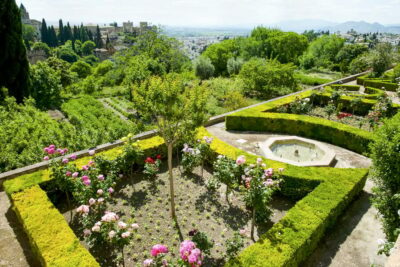
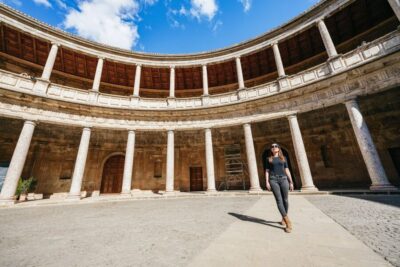
Alhambra Guided Tour with Nasrid Palaces & Gardens
Read our review →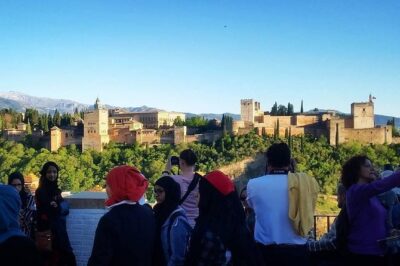
Alhambra &Charles Palace Guided Tour with Optional Nasrid Palaces
Read our review →
Alhambra and Generalife Garden Ticket & Guided Tour
Read our review →
Flamenco Show in Albayzín – Jardines de Zoraya
Read our review →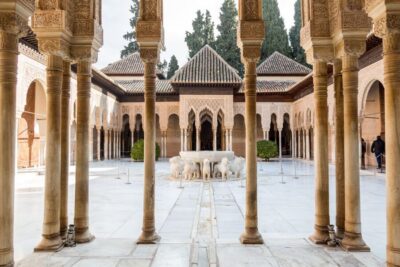
3-Hour Alhambra and Generalife Gardens Guided Tour
Read our review →Blanes: Marimurtra Botanical Garden Entry Ticket
Read our review →Browse the lists this tour appears in