
Review · TOKYO
From Asakusa: Old Tokyo, Temples, Gardens and Pop Culture
Tokyo makes the most sense when you see its contrasts close together. This four-hour walk begins at Senso-ji in Asakusa, moves through Ueno and Okachimachi, reaches the anime and electronics district of Akihabara, and includes time at Koishikawa Korakuen garden. You get temples, street markets, pop culture, and a quiet Edo-era garden in one compact outing.
I like the way this tour shows how neighborhoods change without losing their identity. I also like that standard admissions and local train rides are covered, which makes the $68 price easier to judge. The main drawback is pace: five major areas in four hours means you will get an informed overview, not a long visit at every stop.
The small-group limit of eight should make it easier to hear your guide and ask questions. Guides including Taka, Toru, Takee, and Michelle have been praised for being warm, clear, and good with families. Still, wear comfortable shoes. You will be on foot for much of the day.
Key Points at a Glance
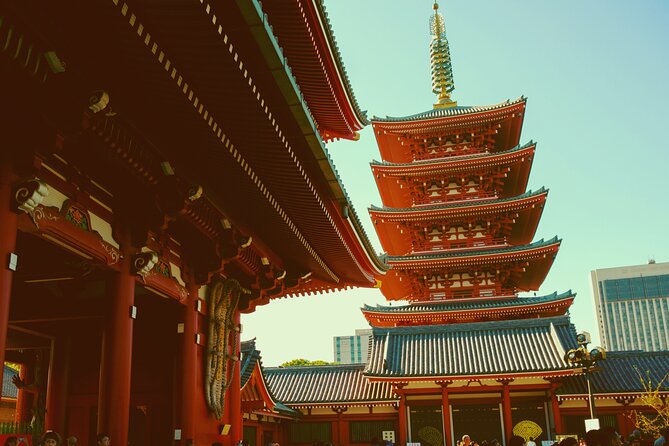
- Senso-ji gives you Tokyo’s traditional starting point: Learn about one of Japan’s earliest Buddhist temples before the route turns toward markets and pop culture.
- Ueno and Okachimachi show everyday Tokyo: Expect street vendors, food shops, and a less polished shopping district than central Tokyo.
- Akihabara explains more than anime: The district’s story runs from pre-war electronics to manga, gaming, cosplay, and modern fan culture.
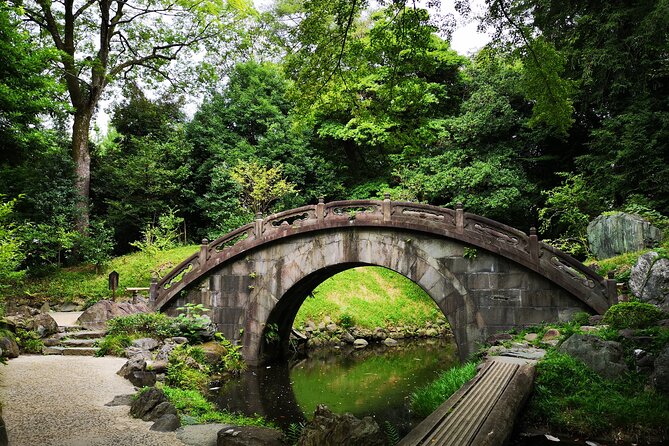
- Koishikawa Korakuen provides a quiet change of pace: Seasonal scenery and Edo-era garden design offer relief from the city streets.
- The group is capped at eight people: That is a useful size for questions and easier movement through crowded areas.
- The price covers practical extras: Guide costs, standard admissions, and local train rides are included, but food, drinks, and Tokyo National Museum admission are not.
Starting at Kamiya Bar in Asakusa
The tour meets at Kamiya Bar, at 1-chome-1-1 Asakusa. That puts you in a useful part of East Tokyo from the first minute, close to the streets that lead toward Senso-ji and Nakamise-dori.
Asakusa is one of the best places in Tokyo to understand the city before skyscrapers and neon took over the popular image. It has long been tied to worship, entertainment, commerce, and public life. Your guide uses the area to explain how Tokyo’s past still shapes its present rather than treating the temple as an isolated photo stop.
The meeting point is easy to recognize, but you should still arrive ready to walk. The tour lasts four hours and includes several neighborhoods, so this is not the time for stiff shoes or a heavy shopping bag. Food and drinks are not included, so eat beforehand or plan to buy something separately during the day.
A few more garden visits around Tokyo worth a look
- Imperial Palace East Garden and Edo Castle Walking Tour in Tokyo
★ 5.0 · 510 reviews - Tokyo: Imperial Palace East Gardens Walking Tour
★ 4.8 · 353 reviews - Tokyo: Edo Castle & East Garden of the Imperial Palace Tour
★ 4.7 · 112 reviews
Asakusa and the Senso-ji Temple Area
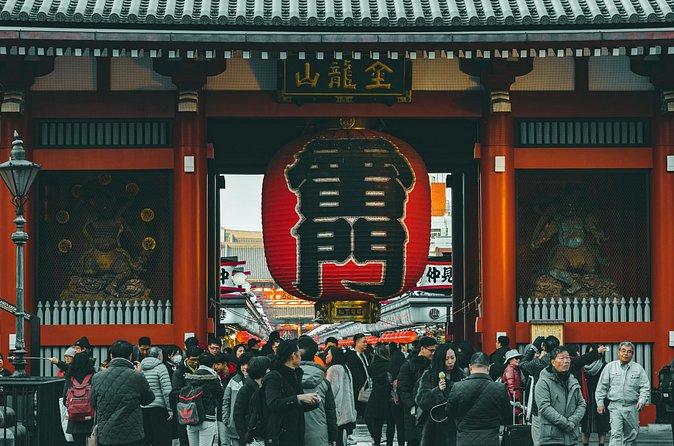
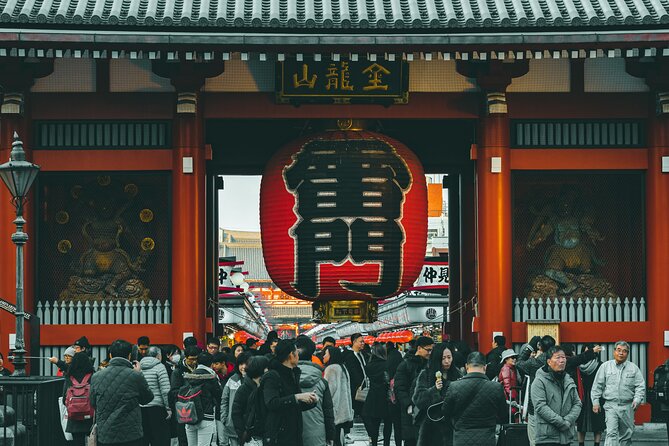
The Asakusa portion lasts about 45 minutes, followed by around 15 minutes focused on Senso-ji. That division matters. You are not simply led through the temple gate, shown the lantern, and sent on your way. The guide places Senso-ji within the wider life of Asakusa.
Nakamise-dori, the shopping street leading toward the temple, gives you an immediate sense of the area’s tourist side. It is lined with traditional-style shops and food stalls, but the larger point is how commerce has always worked alongside religious life here. The route uses Asakusa to show that old Tokyo was not silent or frozen. It was active, social, and full of sellers, worshippers, and entertainment.
Senso-ji itself is the major cultural anchor. Your English-speaking guide explains its Buddhist background and why it matters in Japan. That context is useful because a temple visit can otherwise become a quick exercise in taking pictures without understanding what you are seeing.
I would give this part your full attention, even if you have already visited Senso-ji independently. A guide can help you notice the connection between the temple grounds, the shopping street, and the wider district. The tradeoff is that the 15-minute temple segment is brief. If you want long time for prayer, photography, or quiet inspection, you may need to return on your own.
Asakusa also introduces one of the tour’s main ideas: Tokyo changes in layers. The district has a long past, but it remains a working part of the city rather than a preserved museum quarter.
Ueno and Okachimachi: Tokyo Without the Gloss
The next stops are Ueno and Okachimachi, with roughly 25 minutes at each. These areas offer a different view of Tokyo from the carefully presented temple grounds.
Ueno is associated with museums, cherry blossoms, and large public spaces. The route gives you a look at the district rather than promising a full museum visit. Tokyo National Museum admission is not included if you choose to enter, so you should think of this tour as an introduction to Ueno’s cultural role, not a substitute for a museum day.
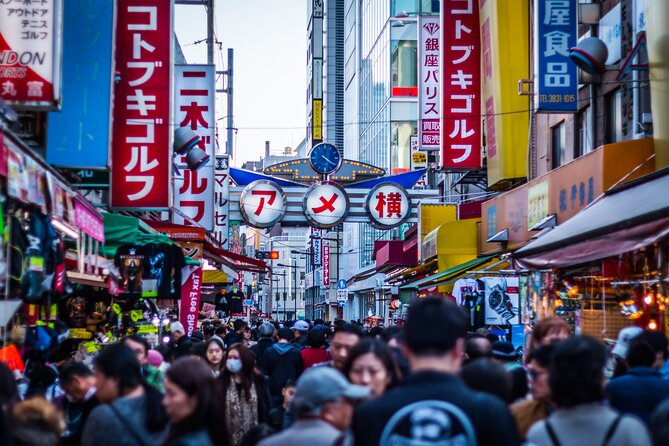
Okachimachi brings you closer to street-level commerce. For generations, this area has been known for vendors, shops, and food sellers. It still feels less controlled than the large corporate shopping zones found elsewhere in Tokyo. That rougher edge is exactly why I like this stop.
The Ameya-Yokocho market is the key draw here. The area has an active, crowded feel, with many kinds of goods and food sold close together. You get a more ordinary side of Tokyo, where shopping is practical and social instead of built around luxury brands and polished interiors.
The short timing helps you see the contrast, but it also limits browsing. If you want to shop for snacks, clothing, or small gifts, you will need to keep an eye on the clock. The tour is built around explanation and comparison, not an extended market crawl.
This section is especially valuable if you want to understand how Tokyo works at street level. Asakusa shows you a historic cultural center. Okachimachi shows you commerce that is less ceremonial and more direct. Together, they make the city feel more human.
Akihabara and the Story Behind Electric Town
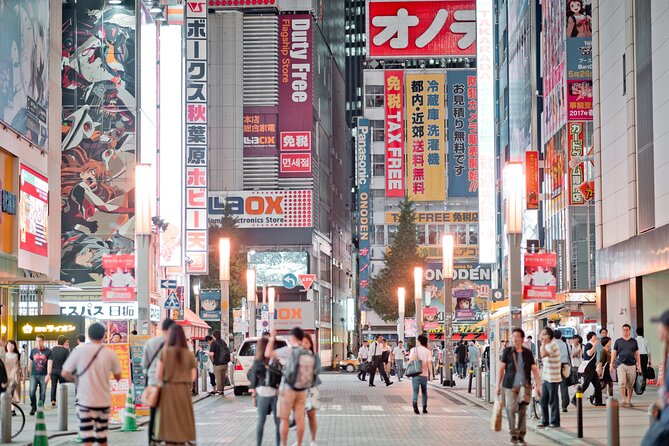
Akihabara receives about 45 minutes, giving it one of the longer stops on the route. The district is widely known for anime, manga, gaming, electronics, and cosplay, but the tour places that pop-culture scene in a longer timeline.
Akihabara began as an electronics center before the war. Its identity later shifted toward the stores, arcades, characters, and fan communities that now define the area. That change is one of the most interesting parts of the tour because it shows how a neighborhood can move from practical technology to entertainment and identity.
You will see streets filled with colorful signs and shops aimed at different parts of otaku culture. The tour description also points to cosplayers and the way daily life can begin to feel like a manga or anime setting. The useful thing here is not simply spotting a maid café sign or a wall of merchandise. It is understanding why Akihabara became a meeting place for people who share very specific interests.
Your guide can help make sense of what might otherwise look like a confusing mass of characters and storefronts. This is also where a good guide’s personality matters. Takee was praised for keeping children engaged, and one family outing included origami and a stop at a pub. That detail suggests the experience can be adjusted into a more social, family-friendly outing, though such extras should not be treated as guaranteed inclusions.
Forty-five minutes is enough for an introduction, but not enough for serious shopping or gaming. If Akihabara is your main reason for visiting Tokyo, plan a separate return visit. On this tour, the district works best as one part of a larger story about the city.
Same place, a different kind of green day out:
- Mt. Fuji Day Trip from Tokyo with English Speaking Driver Guide
★ 5.0 · 443 reviews - Mt. Fuji, Cherry Blossom & Shiba Sakura Pvt. Day Tour
★ 5.0 · 326 reviews - Tokyo Private Tour! Edo Castle & Imperial Palace East Gardens
★ 5.0 · 105 reviews - Mount Fuji & Lake Kawaguchiko Private Tour: Beyond the Ordinary
★ 5.0 · 78 reviews
Koishikawa Korakuen and the Edo-Era Garden Pause
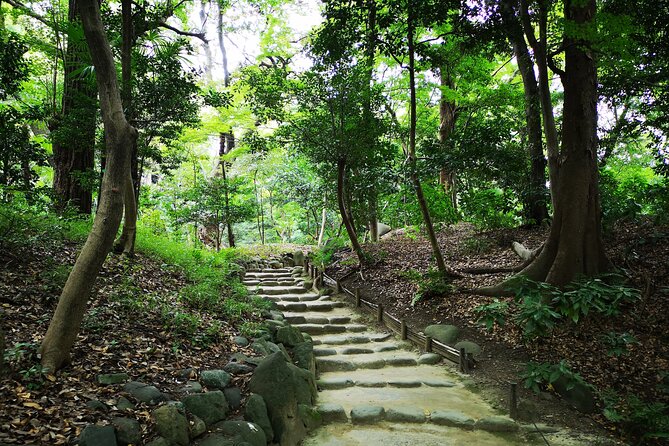
Koishikawa Korakuen offers the sharpest change in mood. After the noise of Asakusa, Okachimachi, and Akihabara, you reach a traditional garden designed in the Edo period. The listed visit lasts about 45 minutes and includes scenic views along the way.
The garden is valuable because it shows another form of old Tokyo. Senso-ji presents religious tradition and public worship. Koishikawa Korakuen presents planned beauty, borrowed scenery, ponds, paths, and the quiet pleasure of walking through a carefully shaped natural setting.
The seasons affect this stop. Spring brings cherry blossoms, while autumn brings strong red and gold color. The garden can therefore feel quite different depending on when you visit. The tour cannot promise a particular seasonal display, but its inclusion gives you a chance to see Tokyo beyond buildings, signs, and crowds.
I would not treat this as a long meditation session. Forty-five minutes is enough to walk and take in the setting, but the day still has a schedule. If you enjoy gardens, you may want to return for more time. If gardens are not usually your priority, the stop still works as a welcome break from the city’s harder edges.
The order of the listed stops places Koishikawa Korakuen before Akihabara, while the broader description presents Akihabara before the garden. Since the route includes both, ask your guide about the day’s exact order when you meet. Either sequence gives you a strong contrast between city energy and quiet design.
How the Four-Hour Format Works
Four hours is a smart length for a first look at East Tokyo. You see several districts without giving up an entire day, and the local train rides help connect areas that would be tiring to cover on foot alone.
The route is not a slow walking tour of one neighborhood. It is a linked tour of several districts, with short guided visits and movement between them. That makes it a good choice for a first or second day in Tokyo, especially if you want a clear mental map of the east side of the city.
You should expect some standing, walking, and time in busy public spaces. Comfortable shoes are specifically recommended, and that advice is worth following. The tour is wheelchair accessible, but the mixed street, market, temple, and garden setting means you may want to confirm any personal mobility needs before booking.
The group limit of eight is another practical advantage. A smaller group usually makes it easier to stay together and ask questions, especially in crowded Asakusa or Akihabara. It also leaves more room for the guide to adjust explanations for children or different interests.
Guides Who Add Personality to the Route
The strongest praise has gone to the guides themselves. Taka was described as highly informative around Asakusa. Takee was praised for being engaging with children, while Toru was remembered as kind and available throughout the outing. Michelle was singled out for professional guiding and fluent Italian.
Those details matter because this route covers topics that can be hard to connect without a good explanation. A temple, a market, an electronics district, and a garden do not automatically form one story. The guide’s job is to show how each place fits into Tokyo’s growth.
The language listed for the tour is English. Michelle’s Italian ability is a useful detail if she is assigned to your departure, but you should not assume an Italian-language guide is guaranteed. The same applies to personal touches such as origami or a pub stop. They may reflect the guide’s style and the group’s interests, not a standard part of every booking.
Is $68 a Good Value?
At $68 per person, the value depends on what you want from a Tokyo tour. You are paying for four hours of guiding, a small-group setting, standard admissions, and local train rides. Those inclusions remove some of the small costs and planning work that can add up during a day of independent sightseeing.
The price is strongest if you want historical and cultural explanation. Senso-ji, the market areas, Akihabara, and Koishikawa Korakuen are easy enough to reach on your own, but connecting them with a clear story takes research and time. You also avoid having to work out each transfer while trying to keep to a schedule.
The value is weaker if you prefer to browse slowly. Food, drinks, custom requests, and Tokyo National Museum admission cost extra. You also do not get a full museum visit or extended shopping time. Think of the tour as a guided introduction, then return independently to the places that interest you most.
Flexible booking helps. You can cancel up to 24 hours ahead for a full refund, and you can reserve now while paying later. Those terms are useful when your Tokyo schedule is still shifting.
Who Should Book This East Tokyo Tour?
I would recommend it to first-time Tokyo visitors who want more than the usual list of famous sights. It is also a good fit for families, provided everyone can manage several hours of walking and changing scenery.
The tour suits you especially well if you enjoy:
- Comparing historic districts with modern commercial areas
- Learning why a neighborhood developed the way it did
- Seeing markets and street life rather than only major monuments
- Getting a first look at anime and gaming culture
- Visiting a Japanese garden without giving up a full day
- Having a guide explain customs and context in English
I would hesitate if you want a relaxed temple morning, a serious museum visit, or a long shopping session in Akihabara. In that case, choose one district and explore it independently. This tour covers ground, and its strength is the connection between places.
Final Verdict: Book It for Context, Not Just Checkmarks
Book this tour if you want East Tokyo to make sense as one evolving city. The best part is the contrast: Senso-ji and Nakamise-dori, the direct commerce of Okachimachi, the pop culture of Akihabara, and the quiet paths of Koishikawa Korakuen.
The four-hour schedule is brisk, but the route gives you a useful foundation for the rest of your trip. At $68, the included local transport, admissions, guide, and small-group format make it a fair choice for visitors who value explanation more than free time.
Bring comfortable shoes, keep your expectations focused on an overview, and ask about the day’s precise stop order at the meeting point. If you do that, this tour can give you a strong first reading of how old Tokyo continues to shape the city you see today.
FAQ
Where does the tour meet?
The meeting point is Kamiya Bar in Asakusa, at 1-chome-1-1 Asakusa.
How long does the tour last?
The tour lasts four hours.
What language is the tour offered in?
The live tour guide speaks English.
How many people can join the group?
The group is limited to eight participants.
Which places are included?
The tour includes Asakusa, Senso-ji Temple, Ueno, Okachimachi, Koishikawa Korakuen, and Akihabara.
Are local train rides included?
Yes. Standard local train rides used during the tour are included.
Is admission to Tokyo National Museum included?
No. Admission to Tokyo National Museum is not included if you choose to visit.
Are food and drinks included?
No. Food and drinks are not included in the tour price.
Can I cancel the booking for a refund?
Yes. You can cancel up to 24 hours in advance for a full refund.
Just added around Tokyo
- Tsumami Zaiku Japanese Fabric Flower Class★ 5.0 · 3 reviews
- Tokyo: Serene Sakura & Sake: An Exclusive Brewery Pairing Lunch★ 5.0 · 2 reviews
- Tsukiji Food Strolling and Hama Rikyu Garden Walking Tour★ 5.0 · 7 reviews
- Private tour – Scenic Fuji Escape: Hakone, Peace Park & More★ 5.0 · 4 reviews
- Tokyo Cherry Blossom Half Day Walking Tour with a Local Guide★ 3.5 · 4 reviews
- TOKYO: Tailored Gardens tour with Pro Gardener by E-bike -BASIC★ 5.0 · 2 reviews
- Cherry Blossom Highlights, Asakusa, Ueno, Imperial Palace Garden★ 4.5 · 4 reviews
- Japan’s Customs of Ikebana Art, Tea Ceremony & Kimono Welcome★ 5.0 · 2 reviews
Tokyo Garden Tours, compared.
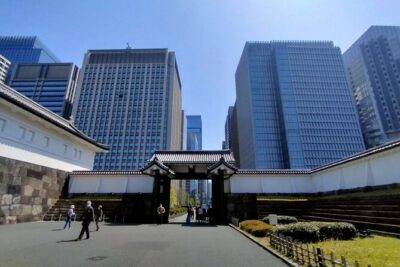
Imperial Palace East Garden and Edo Castle Walking Tour in Tokyo
Read our review →
Edo Castle & East Garden of the Imperial Palace Tour
Read our review →
Tokyo Private Tour! Edo Castle & Imperial Palace East Gardens
Read our review →
Mount Fuji & Lake Kawaguchiko Private Tour: Beyond the Ordinary
Read our review →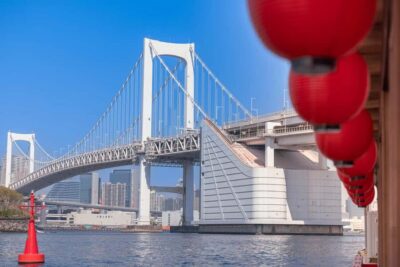
Rainbow Bridge Day Cruise Show and Only Soft Drinks
Read our review →
Tsukiji Market and Hama-rikyu Gardens Guided Tour
Read our review →Browse the lists this tour appears in