
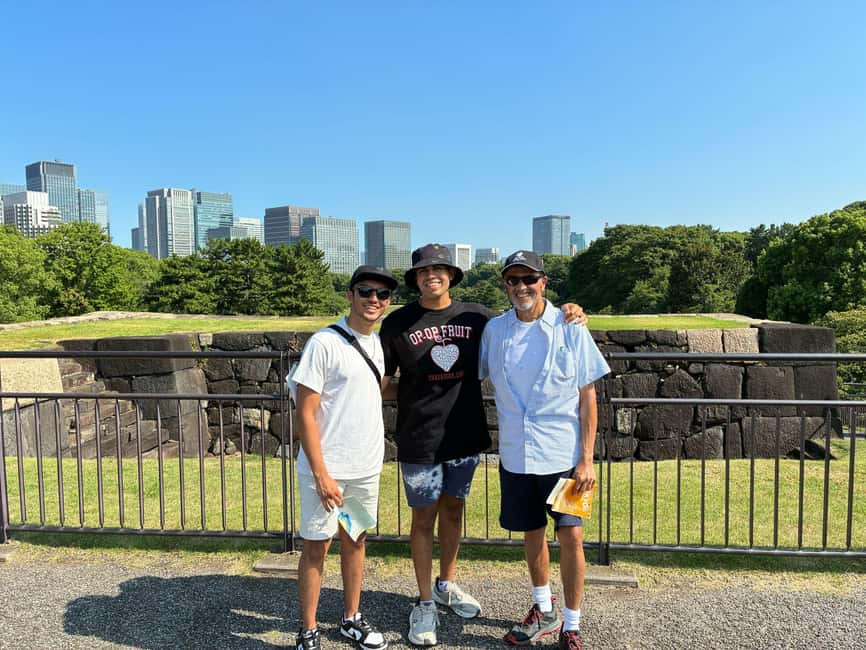
Review · TOKYO
Tokyo: Edo Castle Ruins & Imperial Palace East Garden Tour
Tokyo’s Imperial Palace hides a powerful story beneath its quiet lawns. This two-hour walk traces the former Edo Castle through massive gates, guardhouses, stone walls, garden paths, and the site of the castle’s main hall. You’ll learn how the shoguns ruled from here, then see how the imperial grounds use the same historic setting today.
I like the clear route from Otemon Gate to the castle ruins, and I like the chance to see the peaceful Ninomaru Garden, with koi moving through its pond. The main thing to consider is that you do not enter the palace buildings or the inner grounds, so this is a history and garden tour rather than a palace interior visit.
Key points
- Follow the old castle defenses: Otemon Gate, the Ote San-no-mon ruins, Doshin Bansho, and Hyakunin Bansho show how carefully Edo Castle was guarded.
- Hear the story behind Wadakura Fountain: The fountain was built to mark a royal wedding and provides an easy, central meeting point.
- See the castle from above: The Tenshu-dai offers broad views across the former castle grounds and nearby Tokyo.
- Compare history with living gardens: Ninomaru Garden offers a calm finish, complete with koi in its pond.
- Choose a guide-led visit for context: Guides such as Mari-san and Isao have been praised for warmth, patience, and answering questions.
- Keep expectations realistic: You see ruins, gardens, and models, but not the Imperial Palace’s interior buildings.
Start at Wadakura Fountain, where modern Tokyo meets royal history
Your meeting point is outside the Wadakura Free Rest Area, in front of the entrance. Look for the guide holding a yellow sign. This is a practical place to begin because it is indoors, easy to identify, and close to the first stops.
The tour opens at Wadakura Fountain National Park. The fountain was built to commemorate a royal wedding, giving your guide a useful way to explain the continuing link between this area and Japan’s imperial family. It is not just a quick photo stop. It helps place the modern Imperial Palace setting in context before you reach the older castle remains.
You then walk beside the Wadakura Moat. Water, stone, and open space make it easier to picture the castle as a protected seat of power rather than a garden in the middle of a city. Your guide can explain how the moat worked as part of the castle’s defenses, though the stop itself is brief.
The first ten minutes are gentle and fairly open. If you arrive early, the Wadakura Free Rest Area gives you a clear place to gather without standing in the middle of a busy street.
A few more garden visits around Tokyo worth a look
- Imperial Palace East Garden and Edo Castle Walking Tour in Tokyo
★ 5.0 · 510 reviews - Tokyo: Imperial Palace East Gardens Walking Tour
★ 4.8 · 353 reviews - Tokyo: Edo Castle & East Garden of the Imperial Palace Tour
★ 4.7 · 112 reviews
Otemon Gate reveals the castle’s defensive plan
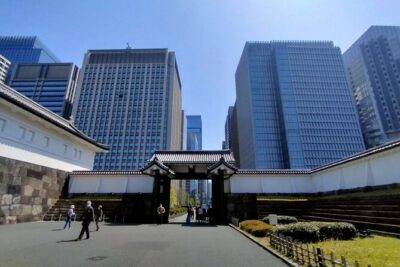
Otemon Gate is one of the strongest visual points on the route. It was the main entrance to the eastern side of Edo Castle, and its scale helps you understand the importance of the site before you reach the quieter garden paths.
A good guide will help you read the gate as a defensive structure, not simply an attractive old entrance. The route continues to the Ote San-no-mon Gate Ruins, where the remains show another layer of protection. The short distance between these points lets you see how access to the castle was controlled in stages.
The next stops, Doshin Bansho and Hyakunin Bansho, add human detail to the stonework. These guardhouses were part of the system that watched people entering the castle grounds. The names can be hard to remember, but the purpose is clear: Edo Castle did not rely on one gate alone. It used checkpoints, guards, walls, moats, and controlled approaches.
This is where the English-speaking guide earns the $37 price. Without explanation, you might see a gate, a small building, and some old stones. With a strong guide, those pieces become a picture of samurai-era security and court life.
The quality of the guiding can vary. Some guests have described Mari-san and Isao as friendly, patient, and willing to answer many questions. One booking was less satisfied because the guide offered very little commentary and felt the walk could have been done alone. If you want the best value, take an active role: ask about castle defenses, the shoguns, and how the site changed under the emperors.
Edo Castle ruins show the scale of shogun power
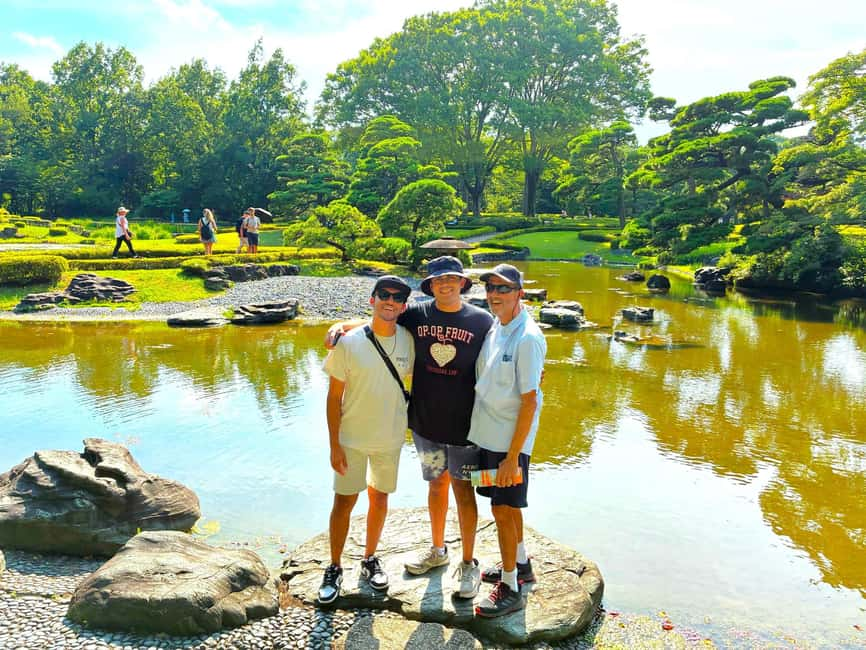
The route then reaches the main Edo Castle ruins. Edo Castle was not a small fort. It was the center of shogun government, and the remaining foundations and open spaces give you a sense of its former size.
You will not see a fully rebuilt castle here. That matters. The experience depends on your guide explaining what once occupied the site and helping you read the remains. Visitors expecting a standing castle with furnished rooms may find the stop modest. Anyone interested in how history survives through foundations, gates, walls, and carefully kept grounds will get more from it.
The Honmaru area was the castle’s main enclosure. The tour includes the site of the Edo Castle Honmaru, or main hall. This is an important stop because the main hall was tied to the daily business of shogun rule. It also shows the difference between seeing a famous building and standing on the ground where political decisions once took place.
The castle keep restoration model helps fill in what the ruins cannot show. You can compare the model with the site around you and understand the scale of the keep more easily. A model is no substitute for the original structure, but it gives your eyes something solid to work with.
The keep itself is not presented as a reconstructed building you can enter. Instead, the tour uses the restoration model and the Tenshu-dai to explain the former tower.
The Tenshu-dai gives you a broad view of the grounds
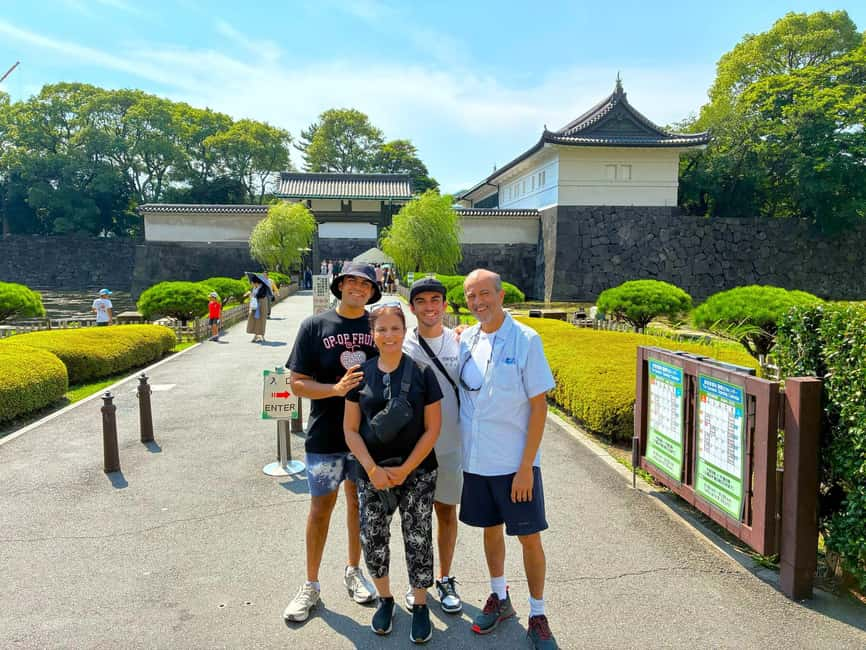
The Tenshu-dai is one of the route’s best pauses. From this elevated position, you can look across the former castle area and surrounding parts of Tokyo. The view is less about a single famous landmark and more about seeing the relationship between open gardens, stone remains, walls, and the city beyond.
I recommend taking a moment here before moving on. The earlier stops focus on individual gates and guardhouses. From the Tenshu-dai, the pieces make more sense as one large castle compound.
The stop labeled 都道府県の木 refers to the prefectural tree area. It is included as part of the guided walk through the gardens. This is not likely to be the major reason you book the experience, but it adds a quieter botanical pause after the heavier castle history.
You also visit Suwa no Chaya, a traditional tea house. The route does not include food or drinks, and this is not described as a tea ceremony. Treat it as a scenic historic garden stop rather than a refreshment break.
Same place, a different kind of green day out:
- Mt. Fuji Day Trip from Tokyo with English Speaking Driver Guide
★ 5.0 · 443 reviews - Mt. Fuji, Cherry Blossom & Shiba Sakura Pvt. Day Tour
★ 5.0 · 326 reviews - Tokyo Private Tour! Edo Castle & Imperial Palace East Gardens
★ 5.0 · 105 reviews - Mount Fuji & Lake Kawaguchiko Private Tour: Beyond the Ordinary
★ 5.0 · 78 reviews
Ninomaru Garden slows the pace at the right time
The Imperial Palace East Gardens provide the tour’s gentlest stretch. After gates, checkpoints, and military history, the paths become calmer and more spacious. The garden setting also shows how the former castle grounds continue to serve a ceremonial and public purpose.
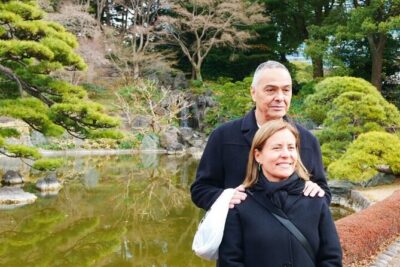
Ninomaru Garden is the natural closing highlight. Its pond contains koi, and the combination of water, planting, paths, and traditional design offers a welcome change from the hard stone of the castle defenses. You can slow down here, take photographs without flash, and ask final questions before returning to the Wadakura Free Rest Area.
The garden is not merely a pretty ending. It helps explain the different roles of the site over time. Edo Castle was a seat of military and political power under the shoguns. The Imperial Palace grounds later became associated with the emperor and the modern state. The tour moves through both layers without pretending that you are entering the private palace itself.
Photography is welcome, but flash photography is not allowed. Bring a camera if you want images of the gates, stonework, views, and koi pond. A phone is enough for most people.
What the $37 price buys you
At $37 per person, this is a reasonable choice if you want historical explanation during a short visit. Admission to Edo Castle and the Imperial Palace East Gardens is included, along with a live English-speaking guide and a commemorative photo opportunity. You do not need to pay separately for food or drinks because neither is included.
The value depends heavily on the guide. A two-hour walk can be excellent when the guide connects the gates, guards, shoguns, emperors, and gardens into one story. It is less convincing if the commentary is sparse. The range of guide feedback reflects this difference, from enthusiastic praise for patient storytelling to disappointment with a quiet guide.
Private and small-group formats are available. A small group can be useful if you want to ask questions without holding up a large crowd. A private option may suit you if the history matters more than simply seeing the grounds. Check the available format and price before booking, since the base price is listed as $37 per person.
You can cancel up to 24 hours before the start for a full refund, and reserve now while paying later. Those terms are useful if your Tokyo schedule is still shifting.
Plan for a proper walking visit
The stated duration is two hours, and the route includes many separate stops. You move from the rest area to the fountain, moat, gates, guardhouses, castle ruins, main hall site, keep model, garden areas, and back to the starting point.
Wear comfortable shoes. The experience is a walking tour across historic grounds, not a seated lecture. Bring water, especially if the weather is warm, because food and drinks are not supplied.
The tour is not suitable for children under six, people with mobility impairments, or wheelchair users. That restriction is important to take seriously before booking. The route includes historic grounds and garden paths, but no detailed accessibility information is provided.
The Imperial Palace buildings are not open to the public on this tour. You also cannot enter the inner grounds where the Imperial Family resides. You should book this for the East Gardens, Edo Castle remains, views, and historical explanation, not for an interior palace visit.
Who will enjoy this tour most
I would choose this experience if you want a compact introduction to Tokyo’s political past and prefer walking with a guide rather than studying signs on your own. It suits first-time visitors who want to connect the shoguns, samurai guards, Edo Castle, and the imperial setting in one morning or afternoon.
It is also a good match for anyone who likes places where the history is partly visible and partly reconstructed through explanation. The model of the castle keep, the foundations, and the gate system reward curiosity.
I would hesitate if you want a grand intact castle, palace rooms, or a long museum-style presentation. Much of what you see is open space, stonework, gardens, and surviving structures. The experience can feel like an ordinary park walk when the guide does not explain much, so ask questions and confirm that your group format suits you.
Should you book the Edo Castle and Imperial Palace East Garden tour?
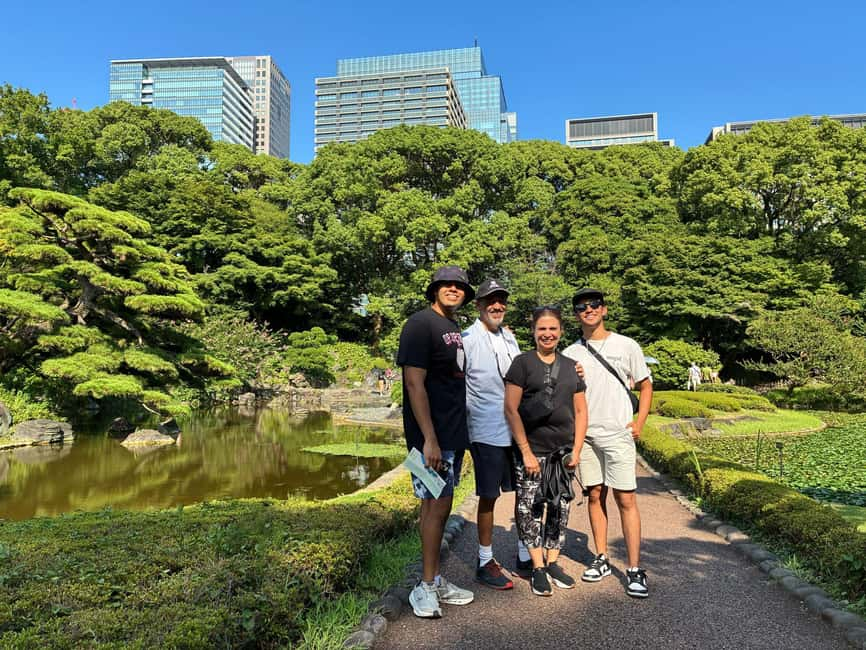
Book it if you want a short, guide-led history walk with a clear route and a mix of castle ruins, Japanese gardens, and city views. The strongest parts are the defensive gates, the Honmaru area, the Tenshu-dai, and Ninomaru Garden with its koi pond.
Skip it if your main goal is to enter the Imperial Palace buildings or see a fully restored castle interior. You will not get that here.
For $37, the tour offers fair value when your guide is active and willing to answer questions. Guides such as Mari-san and Isao have been praised for warmth and patience, but the experience is not entirely uniform. Arrive ready to listen, ask questions, and accept that the site’s power comes from what remains rather than from a complete reconstruction.
FAQ
Where is the meeting point?
Meet outside the Wadakura Free Rest Area, in front of the entrance. The guide will be holding a yellow sign.
Is the tour conducted in English?
Yes. The tour includes a live English-speaking guide.
Does the tour enter the Imperial Palace buildings?
No. The palace buildings are not open to the public, and the tour does not enter the inner grounds where the Imperial Family resides. It focuses on the East Gardens and former Edo Castle ruins.
How long does the tour last?
The tour lasts two hours and returns to the Wadakura Free Rest Area.
What should I bring?
Bring comfortable shoes, water, and a camera. Food and drinks are not included.
Is the tour accessible for wheelchair users?
No. The experience is not suitable for wheelchair users, people with mobility impairments, or children under six.
Just added around Tokyo
- Tsumami Zaiku Japanese Fabric Flower Class★ 5.0 · 3 reviews
- Tokyo: Serene Sakura & Sake: An Exclusive Brewery Pairing Lunch★ 5.0 · 2 reviews
- Tsukiji Food Strolling and Hama Rikyu Garden Walking Tour★ 5.0 · 7 reviews
- Private tour – Scenic Fuji Escape: Hakone, Peace Park & More★ 5.0 · 4 reviews
- Tokyo Cherry Blossom Half Day Walking Tour with a Local Guide★ 3.5 · 4 reviews
- TOKYO: Tailored Gardens tour with Pro Gardener by E-bike -BASIC★ 5.0 · 2 reviews
- Cherry Blossom Highlights, Asakusa, Ueno, Imperial Palace Garden★ 4.5 · 4 reviews
- Japan’s Customs of Ikebana Art, Tea Ceremony & Kimono Welcome★ 5.0 · 2 reviews
Tokyo Garden Tours, compared.
Imperial Palace East Garden and Edo Castle Walking Tour in Tokyo
Read our review →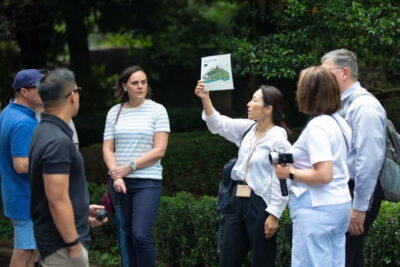
Edo Castle & East Garden of the Imperial Palace Tour
Read our review →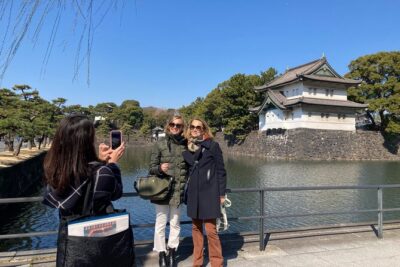
Tokyo Private Tour! Edo Castle & Imperial Palace East Gardens
Read our review →
Mount Fuji & Lake Kawaguchiko Private Tour: Beyond the Ordinary
Read our review →
Rainbow Bridge Day Cruise Show and Only Soft Drinks
Read our review →
Tsukiji Market and Hama-rikyu Gardens Guided Tour
Read our review →Browse the lists this tour appears in