
Review · TOKYO
Tokyo: Imperial Palace East Gardens and Tokyo Station Tour
The most interesting part of this walk is the way Tokyo changes under your feet. You begin among moats, stone walls, gardens, and Edo Castle ruins, then move into Marunouchi’s polished offices and finish at the red-brick face of Tokyo Station. Two eras share one short route.
I like the clear historical storytelling, especially the guide Yuki’s use of humor and vivid explanations about life 400 years ago. I also like the route’s shape: the gardens give you quiet space, while Marunouchi and Tokyo Station show how Japan’s capital rebuilt and modernized. The main drawback is simple: 150 minutes means a steady amount of walking, and the outdoor portions can be tiring in hot, rainy, or cold weather.
Key points at a glance
- Edo Castle remains: See Ote-mon Gate, the Hyakunin Bansho Guardhouse, stone defenses, the Fujimi-yagura watchtower, and a scale model of the former main keep.
- Ninomaru Garden: Walk through a carefully designed garden that offers a softer view of the former castle grounds.
- Nijubashi views: Learn about the imperial palace area and pause for one of the route’s best-known scenic views.
- Marunouchi contrast: Connect samurai-era planning and modern office architecture during a short walk through Tokyo’s central business district.
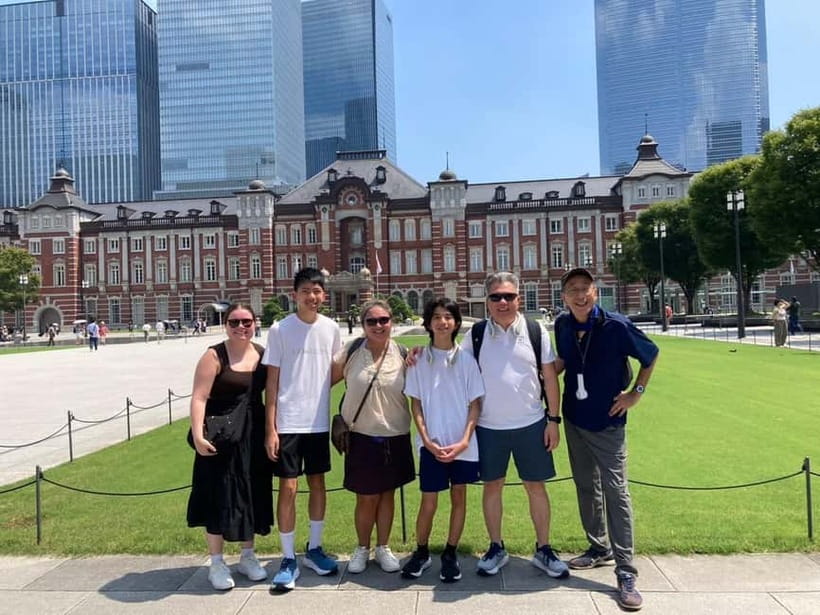
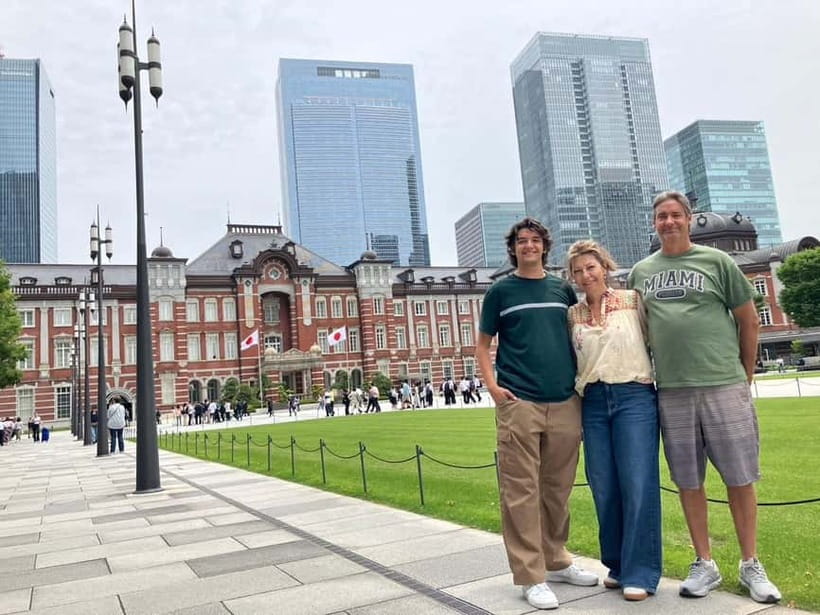
- Tokyo Station finish: End at the restored red-brick station, a handsome closing scene and a useful transport point.
- Flexible format: The tour lasts 150 minutes, costs $38 per person, supports several languages, and allows cancellation up to 24 hours before departure.
From coffee shop meeting point to castle grounds
The walk begins at the Starbucks Coffee Imperial Palace Outer Gardens Wadakura Fountain Park store. That gives you a recognizable meeting place near the palace grounds, though you should allow time to find the exact starting point in the busy central Tokyo area.
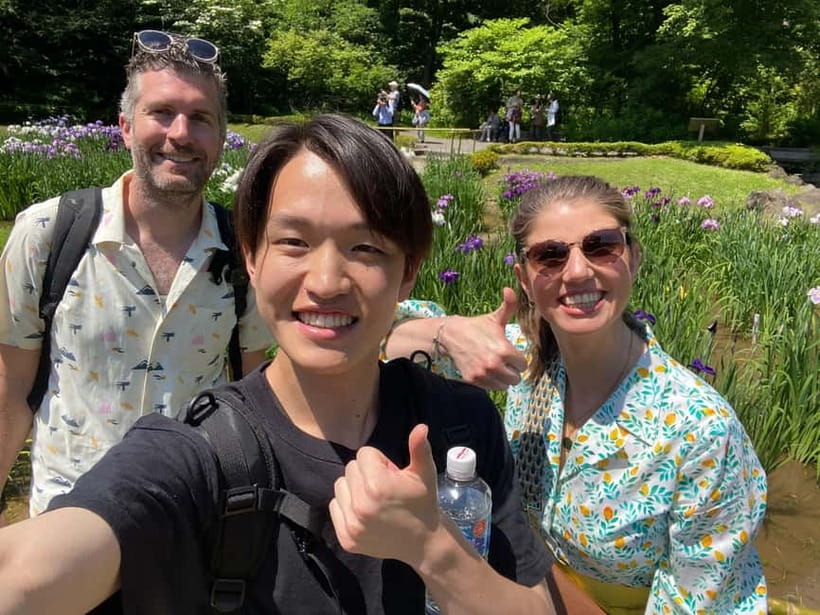
From here, the route moves toward the Imperial Palace East Gardens. The setting changes quickly. You leave the modern city behind and encounter moats, gates, gardens, and traces of Edo Castle, the seat of the Tokugawa shogunate.
This is not a tour of the Imperial Palace interior. The focus is the East Gardens and the surrounding public areas, where you can see physical reminders of the castle complex and learn how the imperial center developed after the shogunate period.
That distinction matters. If you want palace rooms or a formal royal residence tour, this is not the right outing. If you want to understand the ground plan and surviving features of the old castle, the East Gardens offer a more open and practical way to do it.
A few more garden visits around Tokyo worth a look
- Imperial Palace East Garden and Edo Castle Walking Tour in Tokyo
★ 5.0 · 510 reviews - Tokyo: Imperial Palace East Gardens Walking Tour
★ 4.8 · 353 reviews - Tokyo: Edo Castle & East Garden of the Imperial Palace Tour
★ 4.7 · 112 reviews
Ote-mon Gate and the Hyakunin Bansho Guardhouse
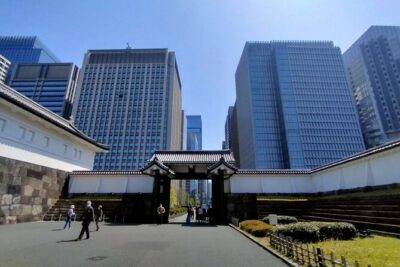
Ote-mon Gate gives the tour a strong beginning. Gates were not just entrances. They helped control movement into one of Japan’s most important fortified compounds, and the stonework and layout make the defensive purpose easier to picture.
The Hyakunin Bansho Guardhouse adds another useful layer. Its name is associated with a guard post for a large number of samurai, and it helps turn a broad historical story into something more tangible. Instead of hearing only about the shogunate in general terms, you can consider how people actually guarded and managed access to the castle.
A good guide makes this part work by connecting visible features with daily life. Yuki was praised for explaining the area in an easy, humorous way and for helping participants picture Tokyo as it looked centuries ago. That style is useful here because castle ruins can otherwise seem like scattered walls and empty ground.
You will want comfortable shoes from the start. The walk is not presented as strenuous, but it includes a moderate amount of walking across outdoor paths and between several areas.
Ninomaru Garden and the East Gardens
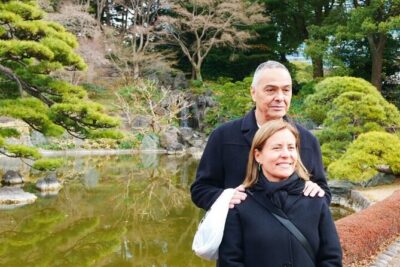
Ninomaru Garden is one of the route’s quieter stops. Its appeal is not only beauty. Garden design was tied to status, movement, viewing points, and the way a ruling power presented itself.
The East Gardens let you see how the old castle area now functions as public green space. You get gardens alongside remnants of the castle, a useful combination for understanding both the military and ceremonial sides of Edo-era power.
The guided portion through the East Gardens lasts about 30 minutes, though the complete experience is 150 minutes. That gives you enough time for explanation without making the garden visit the whole tour.
You may also see the Fujimi-yagura watchtower and hear about the former Edo Castle main keep. The keep itself is not presented as a surviving building on this route. Instead, a scale model helps you understand its size and role, which is especially helpful when the remaining ruins do not show the complete castle.
The Honmaru area adds more context. This was part of the castle’s central compound, and walking through it helps you connect the model, the ruins, and the broader story of the shogunate.
Imperial history and the view toward Nijubashi
The route also includes the Kokyo Gaien National Garden and a view toward Nijubashi. This is where the tour shifts from Edo Castle to the modern imperial setting.
The Nijubashi area is one of the most recognizable palace views in Tokyo. You can pause for photographs and hear how the imperial center relates to the former castle grounds. The scene is more open than the East Gardens, so it gives you a different sense of scale.
Bring a camera, but do not use flash photography. The tour information also asks you not to bring a backpack, and smoking is not allowed. A small, practical bag arrangement is worth considering before you arrive.
Sun protection and water matter here. The route is outdoors, and the supplied advice specifically recommends sunscreen, a hat, weather-appropriate clothing, and water. Tokyo weather can make the same 150-minute walk feel very different from one day to the next.
Same place, a different kind of green day out:
- Mt. Fuji Day Trip from Tokyo with English Speaking Driver Guide
★ 5.0 · 443 reviews - Mt. Fuji, Cherry Blossom & Shiba Sakura Pvt. Day Tour
★ 5.0 · 326 reviews - Tokyo Private Tour! Edo Castle & Imperial Palace East Gardens
★ 5.0 · 105 reviews - Mount Fuji & Lake Kawaguchiko Private Tour: Beyond the Ordinary
★ 5.0 · 78 reviews
The ten-minute walk into Marunouchi
After the garden and palace-area stops, you walk for about ten minutes into Marunouchi. This short connection is one of the tour’s strengths because it makes the city’s change easy to feel.
You are not transported between separate attractions. You walk from old castle grounds into a district known for modern architecture, offices, and public art. That physical transition gives the history a practical edge. Tokyo did not erase its earlier center and start over somewhere else. The modern capital grew around it.
Marunouchi can feel formal and polished, with wide streets and large buildings. The tour uses the district to discuss modern Tokyo and its architecture rather than treating the palace as an isolated historic site.
This part may appeal most to you if you like cities as working places, not only as collections of monuments. You get a look at how business, public space, art, and history sit side by side in central Tokyo.
The tradeoff is that Marunouchi is less peaceful than the gardens, and the architecture may interest you more than the historical details. The route is strongest when you enjoy both periods.
Tokyo Station and the red-brick finale
The tour ends at Tokyo Station, where the older-looking exterior makes a fitting final stop. The beautifully restored red-brick building offers a clear visual contrast with the castle grounds and the glass-and-steel character of much of Marunouchi.
This is an exterior-focused visit. You should expect guided sightseeing around the station rather than a long interior tour or a rail journey. The station is still a useful ending because it leaves you in one of Tokyo’s key central areas.
I like the order of the route. Starting with the shogunate-era setting gives the final station view more meaning. Tokyo Station is not just an attractive building. It represents the city’s later transformation into a modern capital and major transport center.
The ending is also practical. Since the tour finishes at Tokyo Station, you can continue with your own plans from there. The activity itself does not include onward transportation, meals, or other attractions, so treat the station as the handoff point for the rest of your day.
What the guide adds to the experience
The strongest part of this tour is the human explanation. A garden or castle wall can be hard to read on its own. A guide can explain what you are seeing, why it mattered, and how it fits into the larger story.
Yuki received especially strong praise for being kind, organized, humorous, and clear. The most useful detail is not simply that she knows the subject. Her explanations helped people picture what the castle and surrounding area may have been like 400 years ago.
That approach suits this route. The East Gardens include ruins, open spaces, and restored garden areas rather than a fully intact castle. You need interpretation to connect those pieces.
The activity lists live guides in English, Japanese, Spanish, Chinese, and French. You should check the available language and start time before booking, since the tour schedule can vary.
The guide also brings cultural context beyond dates and names. You can learn about samurai-era architecture, garden design, the shogunate, imperial history, and the way the present-day city developed around these sites.
Is $38 a fair price?
At $38 per person, this is a reasonable price if you want a guided introduction to several central Tokyo sights in one outing. The East Gardens do not require an admission fee, so you are paying mainly for the guide, the route planning, and the historical explanation.
That value depends on your interests. If you are comfortable reading signs and exploring public gardens alone, you can visit some of the same outdoor areas without booking a tour. The paid advantage is having the connections explained as you walk.
You also save the effort of building a route between the gardens, Kokyo Gaien, Marunouchi, and Tokyo Station. The tour does not spend the whole time in one attraction, so you receive a broad introduction rather than a slow, specialist study of one site.
I would consider it good value for a first visit, especially if you want history without committing to a full-day activity. It is less useful for you if you already know Edo Castle, the imperial grounds, and Marunouchi well.
Who should book this walk?
This experience fits history fans, first-time visitors, and anyone who wants a gentle introduction to the relationship between old Tokyo and modern Tokyo. It also works well for people who prefer learning through walking rather than sitting in a museum.
The route may suit families and mixed-interest groups because it includes gardens, ruins, city architecture, art, photo stops, and a famous station. The guide’s humor can help keep the historical material from feeling too heavy.
You should think twice if you dislike outdoor walking, need frequent seated breaks, or are visiting during difficult weather. The activity is wheelchair accessible, but the route still includes a moderate amount of movement, so confirm any specific mobility needs before booking.
Wear comfortable shoes. Leave the backpack at your accommodation if possible, carry water, and dress for the forecast. A hat and sunscreen are sensible on bright days, while weather-appropriate layers matter in cooler or wet conditions.
The activity allows free cancellation up to 24 hours in advance for a full refund. You can also reserve now and pay later, which helps if your Tokyo schedule is still changing.
Should you book the Imperial Palace and Tokyo Station walk?
Book it if you want one clear, guided story linking Edo Castle, imperial Tokyo, Marunouchi, and Tokyo Station. The route is well chosen, the price is moderate, and the guide’s explanations give purpose to ruins and gardens that can be easy to overlook alone.
Skip it if you want palace interiors, a long garden visit, or an in-depth architectural tour of Tokyo Station. For most first-time visitors who enjoy history and can manage 150 minutes on foot, this is a practical way to get your bearings in central Tokyo while seeing how the city changed from shogunate stronghold to modern capital.
FAQ
How long does the tour last?
The tour lasts 150 minutes, or two and a half hours.
How much does the tour cost?
The price is $38 per person.
Where does the tour start?
It starts at Starbucks Coffee Imperial Palace Outer Gardens Wadakura Fountain Park.
Where does the tour finish?
The tour finishes at Tokyo Station.
What places are included?
The route includes Ninomaru Garden, the Imperial Palace East Gardens, Ote-mon Gate, the Hyakunin Bansho Guardhouse, the Honmaru area, Kokyo Gaien National Garden, Marunouchi, Nijubashi views, and Tokyo Station.
Is admission to the East Gardens included?
Yes. Entry to the Imperial Palace East Gardens is included, and no admission fee is required.
Which languages are available?
Live guides are available in English, Japanese, Spanish, Chinese, and French.
Is the tour wheelchair accessible?
Yes, the activity is listed as wheelchair accessible.
What should I bring?
Bring comfortable shoes, a hat, a camera, sunscreen, water, and clothing suited to the weather.
Can I cancel or pay later?
You can cancel up to 24 hours in advance for a full refund. You can also reserve your place and pay later.
Just added around Tokyo
- Tsumami Zaiku Japanese Fabric Flower Class★ 5.0 · 3 reviews
- Tokyo: Serene Sakura & Sake: An Exclusive Brewery Pairing Lunch★ 5.0 · 2 reviews
- Tsukiji Food Strolling and Hama Rikyu Garden Walking Tour★ 5.0 · 7 reviews
- Private tour – Scenic Fuji Escape: Hakone, Peace Park & More★ 5.0 · 4 reviews
- Tokyo Cherry Blossom Half Day Walking Tour with a Local Guide★ 3.5 · 4 reviews
- TOKYO: Tailored Gardens tour with Pro Gardener by E-bike -BASIC★ 5.0 · 2 reviews
- Cherry Blossom Highlights, Asakusa, Ueno, Imperial Palace Garden★ 4.5 · 4 reviews
- Japan’s Customs of Ikebana Art, Tea Ceremony & Kimono Welcome★ 5.0 · 2 reviews
Tokyo Garden Tours, compared.
Imperial Palace East Garden and Edo Castle Walking Tour in Tokyo
Read our review →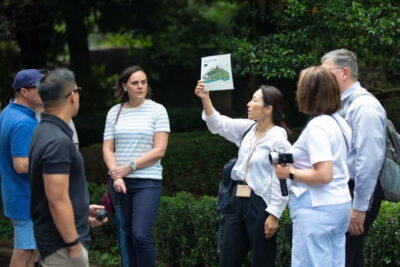
Edo Castle & East Garden of the Imperial Palace Tour
Read our review →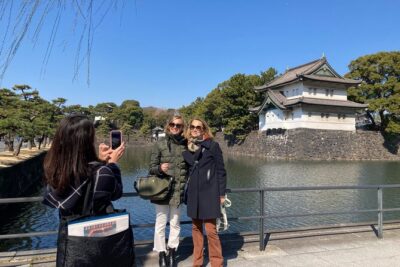
Tokyo Private Tour! Edo Castle & Imperial Palace East Gardens
Read our review →
Mount Fuji & Lake Kawaguchiko Private Tour: Beyond the Ordinary
Read our review →
Rainbow Bridge Day Cruise Show and Only Soft Drinks
Read our review →
Tsukiji Market and Hama-rikyu Gardens Guided Tour
Read our review →Browse the lists this tour appears in