
Review · TOKYO
Tokyo: Pvt. Tour – Edo Castle & Imperial Palace East Gardens
Tokyo’s Imperial Palace East Gardens give you a rare pause in the middle of central Tokyo. Behind the gates, old stone walls, moats, castle ruins, ponds, flowers, and carefully shaped gardens replace the traffic and towers. The setting is calm, but the story is dramatic: this was once Edo Castle, the seat of Japan’s shoguns.
I like the private format, which lets your guide adjust the pace for your family or answer questions without a large group slowing things down. I also like the meeting point at Wadakura Fountain Park, an easy walk from both Otemachi Station and Tokyo Station. The main drawback is simple: you do not enter the palace where the Emperor resides, and two hours can feel short if you want to linger in every garden corner.
Key points at a glance
- Edo Castle remains: Walk beside massive stone walls, moats, and the ruins of the castle keep.
- Private English guide: Guides including Yoshi, Yuji, Masahito, Mari, Naoko, and others explain the gardens at a personal pace.
- Ninomaru Garden: See a traditional Japanese garden with seasonal flowers, koi, and changing color through the year.
- Central Tokyo escape: Reach the meeting point in about three minutes from Otemachi Station or ten minutes from Tokyo Station.
- Important limitation: The tour covers the East Gardens only, not the Inner Palace or the Emperor’s residence.
Why Edo Castle matters in modern Tokyo
Before Tokyo became Japan’s immense modern capital, this area was Edo, a political center ruled by the shogun. Edo Castle grew into one of the country’s largest fortified compounds, with broad moats, powerful stonework, gates, watch posts, and a huge central keep.
The castle itself is gone, but the scale remains easy to read. You will see blocks of precisely fitted stone, sections of moat, and open spaces that hint at the size of the old compound. A guide helps connect these quiet remains to the political power once concentrated here. Without that context, you might simply see attractive walls and paths. With it, the gardens become part of a much larger story about military rule, court life, and the later imperial capital.
The setting also makes the history easier to absorb. Tokyo can be loud and crowded only a few steps away, yet the East Gardens feel measured and spacious. I like that contrast. You are not visiting an isolated historical site in the countryside. You are standing in the middle of modern Tokyo, looking at traces of the city’s beginning.
A few more garden visits around Tokyo worth a look
- Imperial Palace East Garden and Edo Castle Walking Tour in Tokyo
★ 5.0 · 510 reviews - Tokyo: Imperial Palace East Gardens Walking Tour
★ 4.8 · 353 reviews - Tokyo: Edo Castle & East Garden of the Imperial Palace Tour
★ 4.7 · 112 reviews
Meeting your guide at Wadakura Fountain Park
The tour begins in front of Starbucks at Wadakura Fountain Park. Look for the guide holding a sign marked gotcha. The meeting point is about a three-minute walk from Otemachi Station exit D2 and roughly ten minutes from the Marunouchi central exit at Tokyo Station.
That location is practical for a first or last Tokyo activity. Otemachi is served by several metro lines, while Tokyo Station is a major rail hub. Still, give yourself enough time to find the correct exit. Tokyo Station is large, and the ten-minute walk can take longer if you are unfamiliar with the underground passages or station signs.
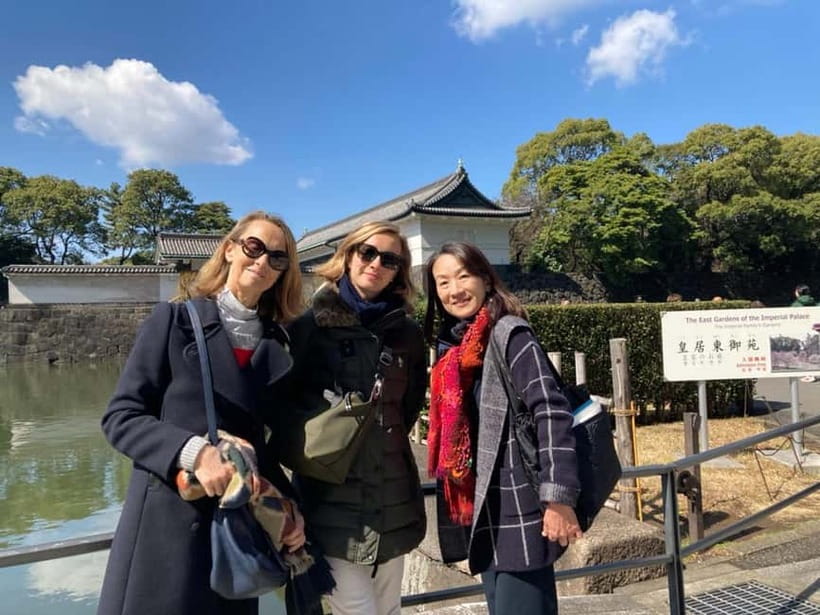
Your guide leads a private group, so you are not tied to the pace of strangers. This matters more than it may sound. The East Gardens invite pauses for photographs, questions, and small details such as garden design, castle construction, and the history of the buildings. Families can ask for a slower walk, while a couple with limited time can keep moving.
English ability varies naturally from guide to guide, but the available feedback points to a strong pattern. Yoshi was praised for clear English and useful explanations of the buildings and flowers. Yuji adjusted his pace for a family and offered help with onward directions after the tour. Masahito answered questions carefully and sought further information when needed. These details suggest a guide-led experience rather than a memorized walk from one signboard to the next.
The Main Gate and the old guardhouse
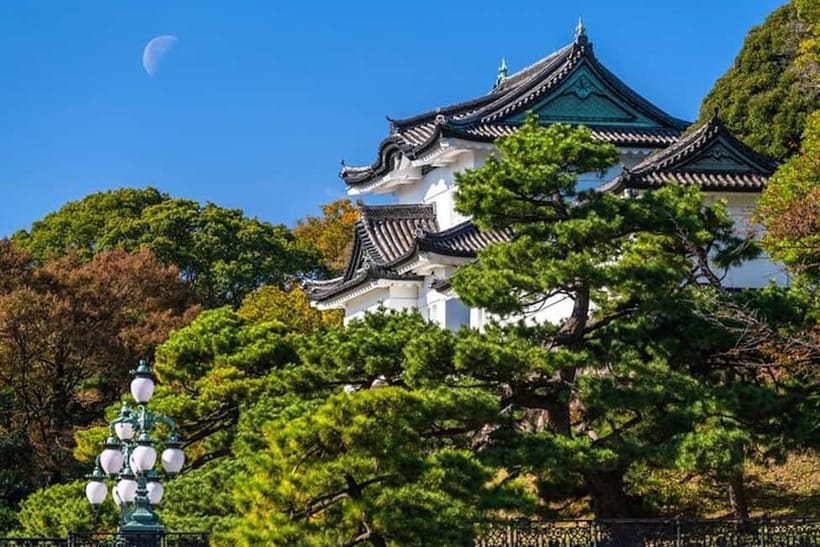
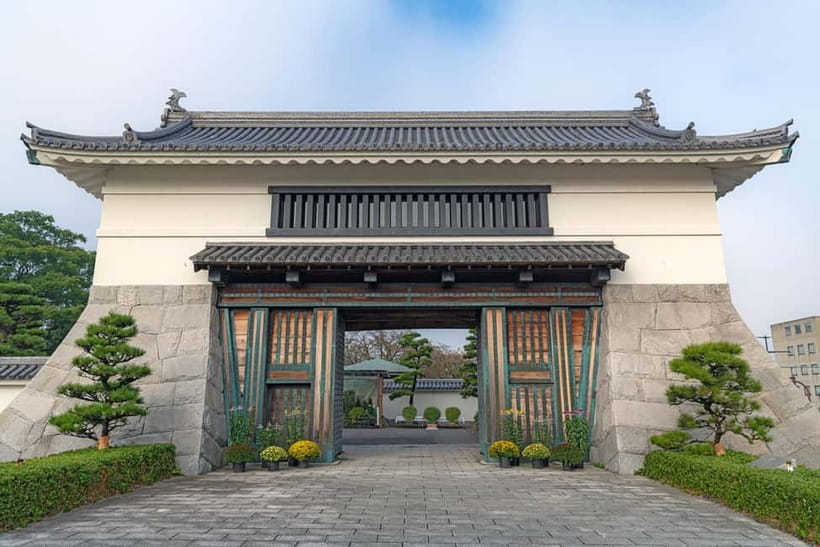
The first major point is the historic Main Gate. Its traditional guardhouse recalls the period when entry to Edo Castle was controlled with care. At the same time, you will notice modern security arrangements, including baggage inspection before you enter the palace grounds.
This is a useful opening stop because it shows how old and new Tokyo meet in one place. The gate is not just a picturesque entrance. It helps explain that Edo Castle was a working seat of power, with movement, access, and security tightly managed.
You should also plan around the baggage inspection. If you have bought Japanese knives or another item that could be treated as a weapon at Tsukiji, Asakusa, or elsewhere, place it in a coin locker or similar storage before the meeting. Do not assume you can simply carry it through the entrance. This small planning point could save you a delay or an awkward change of plan.
Reading Edo Castle in its stone walls
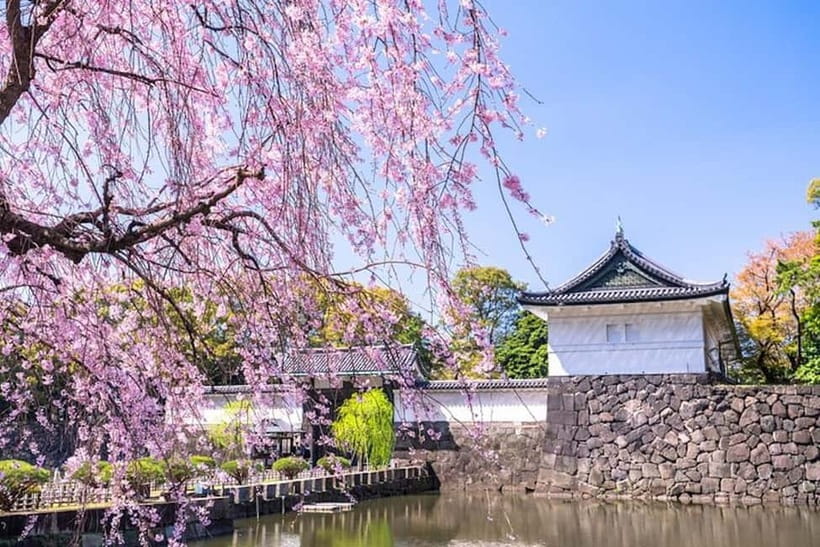
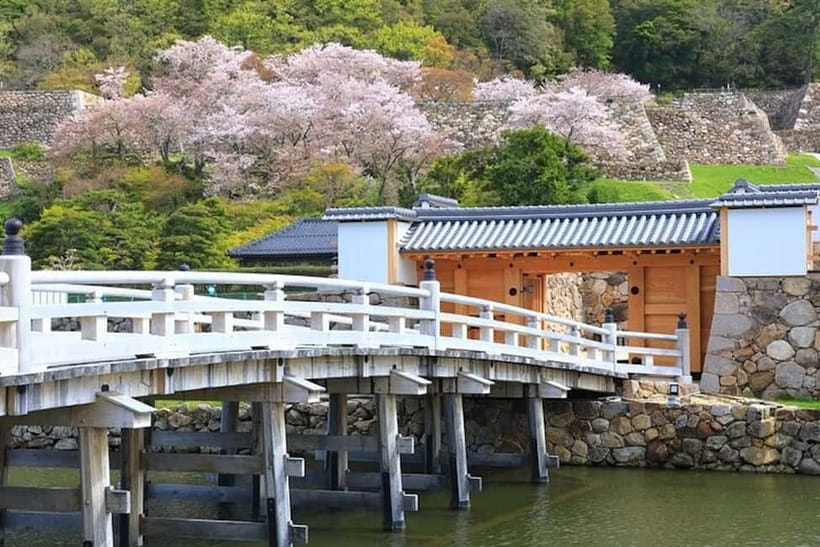
The castle ruins are the heart of the tour. The remaining walls are built from enormous stones, fitted into defensive lines that show how much labor and organization went into the castle compound. Moats add another layer to the picture, separating the old stronghold from the city around it.
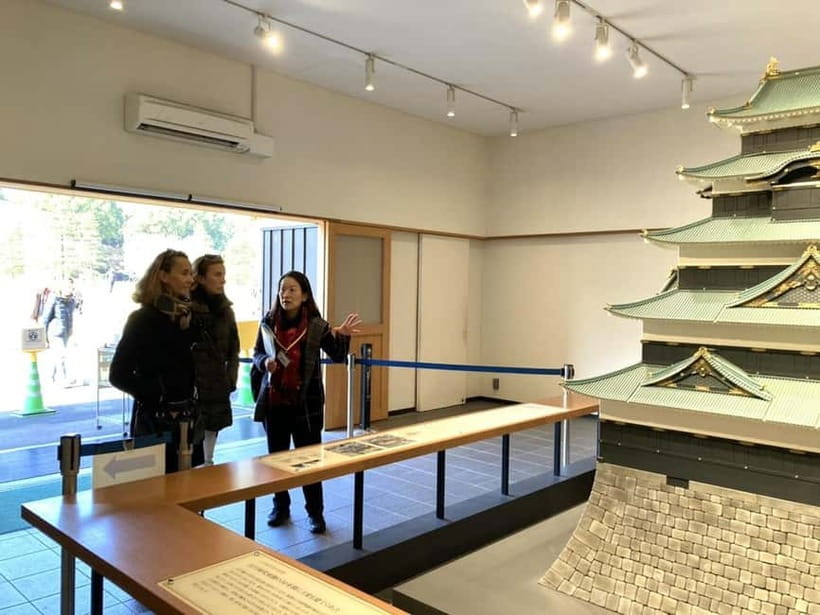
The massive keep is gone, but its former presence still shapes the visit. Open ground and surviving foundations give you a sense of the structure that once dominated the castle. Your guide can point out what is original, what was rebuilt, and how the site relates to the shogun’s government.
I find this more rewarding than looking at a reconstructed castle in isolation. Ruins require a little imagination, but they also leave room for the real setting to speak. You are walking across the same grounds used by the rulers of the Edo period, not simply viewing a later replica.
The tour’s language about walking in the footsteps of the shogun is fair, as long as you understand what that means. You will not enter private chambers or see a preserved royal interior. The experience comes from the scale of the grounds, the surviving defenses, and the explanations that connect them to Japanese history.
Same place, a different kind of green day out:
- Mt. Fuji Day Trip from Tokyo with English Speaking Driver Guide
★ 5.0 · 443 reviews - Mt. Fuji, Cherry Blossom & Shiba Sakura Pvt. Day Tour
★ 5.0 · 326 reviews - Tokyo Private Tour! Edo Castle & Imperial Palace East Gardens
★ 5.0 · 105 reviews - Mount Fuji & Lake Kawaguchiko Private Tour: Beyond the Ordinary
★ 5.0 · 78 reviews
Ninomaru Garden and the changing seasons
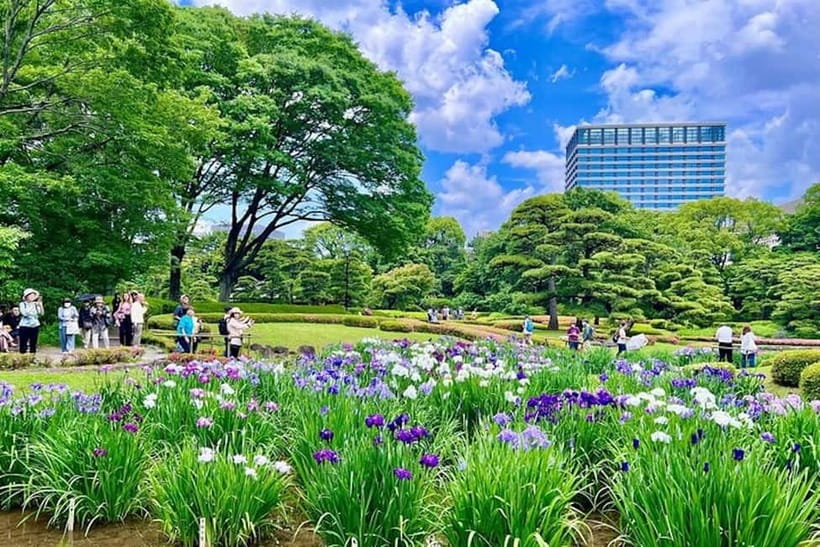
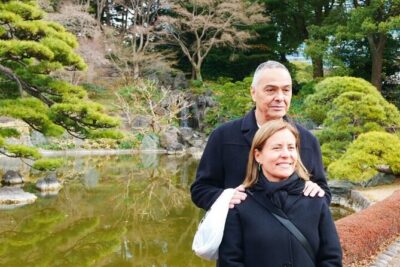
Ninomaru Garden offers a gentler side of the old castle grounds. It is a traditional Japanese garden with ponds, paths, shaped trees, seasonal flowers, and koi. The planting changes through the year, so the mood depends heavily on your dates.
Spring can bring cherry blossoms, although flowering times vary. One April visit found that the blossoms and flowers were not yet fully open, which is a useful warning for anyone planning around a specific bloom. Summer brings irises, while autumn brings colored leaves. Winter is quieter, with less floral display but a clearer view of the garden’s structure.
The garden is not simply a pretty break from the castle ruins. Japanese gardens use water, stones, plants, borrowed views, and controlled sightlines to create a changing sequence as you walk. Your guide can draw your attention to details you might otherwise pass without noticing, including the koi and the way garden features fit together.
Naoko was especially good at explaining the buildings, past and present inhabitants, koi, and unusual fish varieties during one tour. That kind of detail is exactly where a private guide earns the fee. You can stop and ask why a pond is shaped a certain way, what a building was used for, or how the garden relates to the former castle.
A two-hour walk with room for questions
Two hours is enough for a clear introduction to the East Gardens, the castle remains, and the garden’s main features. It is not enough for a slow study of every path. Your guide will need to keep the walk moving, especially if you take many photographs.
That time limit is a benefit if you are fitting the tour between Tokyo Station, Marunouchi, shopping, or another appointment. It is also a possible weakness if you prefer to sit quietly in gardens for long stretches. The private format helps because you can explain your priorities at the start.
I would tell your guide if you care most about one of three things: Edo-period military history, garden design, or photography. The supplied information does not promise a fixed route with named stop times, so the best use of the private setting is to make your interests clear. Guides such as Mari, Yuji, and Masahito were described as flexible and willing to adapt the pace.
Wear shoes suited to walking and check the forecast. The tour is outdoors and takes place across garden paths and historic grounds. No special equipment is listed, but comfortable footwear will make the two hours more pleasant.
What the private price buys you
At $63 per person, this is not the cheapest way to walk through a public garden. The price includes the guide and the two-hour walking tour, but not entry to the Inner Palace, since that area is not part of the experience.
The value comes from interpretation and convenience. You can enter the grounds knowing where to look, understand the difference between the castle remains and the imperial facilities, and ask questions in English. If you already enjoy reading signs and researching Japanese history, you may be satisfied exploring on your own. If you want the site to make sense quickly, the guide adds real value.
The private arrangement also changes the calculation for families and small groups. You are paying for a more personal walk rather than a broad sightseeing circuit. A family can move at a comfortable pace, stop for photographs, and ask basic questions without worrying about holding up a large group.
The strong rating of 4.8 from 63 reviews supports the idea that the guiding is the main strength. Praise repeatedly centers on friendly manner, clear explanations, punctuality, flexibility, and help with onward directions. I would still book for the historical context rather than expecting a grand palace interior, since the palace itself is not open on this tour.
Free cancellation up to 24 hours before the start and the option to reserve now and pay later make the $63 commitment easier to manage. Check available starting times before booking, since the activity lasts two hours but the start schedule can vary.
What you will not see
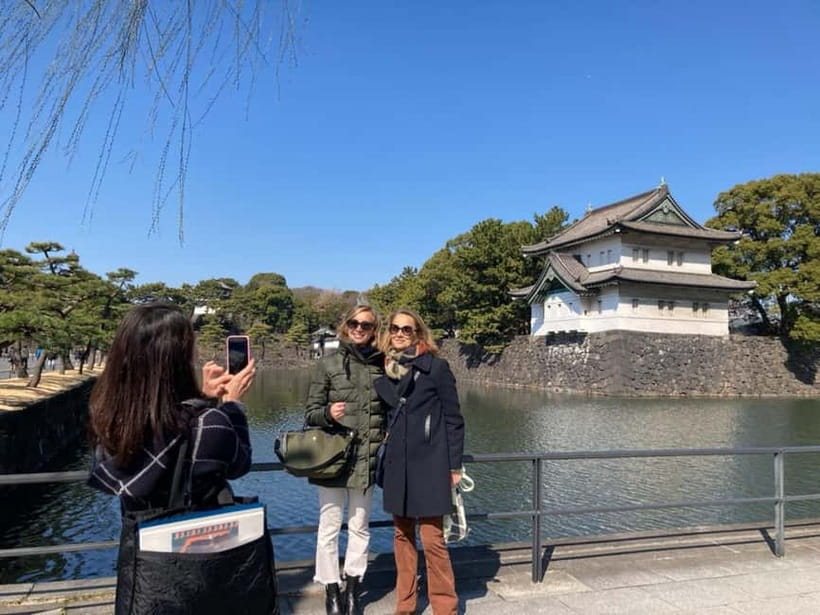
The most important expectation to set is that this is not an inside tour of the Imperial Palace. You will not enter the Inner Palace or the residence of the Emperor. The tour takes place in the East Gardens and on the grounds connected with the former Edo Castle.
That limitation should not be a surprise once you understand the site. The gardens and ruins cover a meaningful part of Tokyo’s political past, but they do not provide access to every palace building. If your main goal is to see royal interiors, this is the wrong activity.
You also should not expect a long museum-style presentation. This is a walking tour in an outdoor setting. The rewards are the scale of the castle remains, the garden atmosphere, and the chance to ask a local English-speaking guide about what you are seeing.
The best time to book this walk
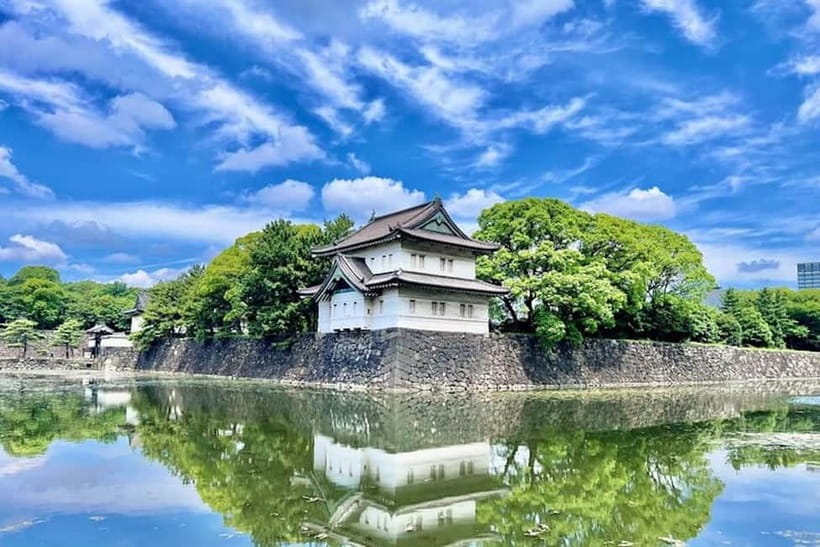
Season matters here more than it does for a purely architectural tour. Spring cherry blossoms and autumn leaves can add color, while summer irises give Ninomaru Garden a different character. But nature does not follow a booking calendar. An April date may fall before the main cherry display, as one spring visit showed.
If you are visiting during a less floral season, the castle walls and political history still carry the tour. You may even find it easier to focus on the design of the garden, the pond, and the old defensive layout when flowers are not competing for attention.
Morning or afternoon availability is not specified, so check the current schedule. In either case, allow time to reach Wadakura Fountain Park and find the Starbucks meeting point. The guide’s sign says gotcha, which should help you confirm the correct person.
Who will enjoy the East Gardens most
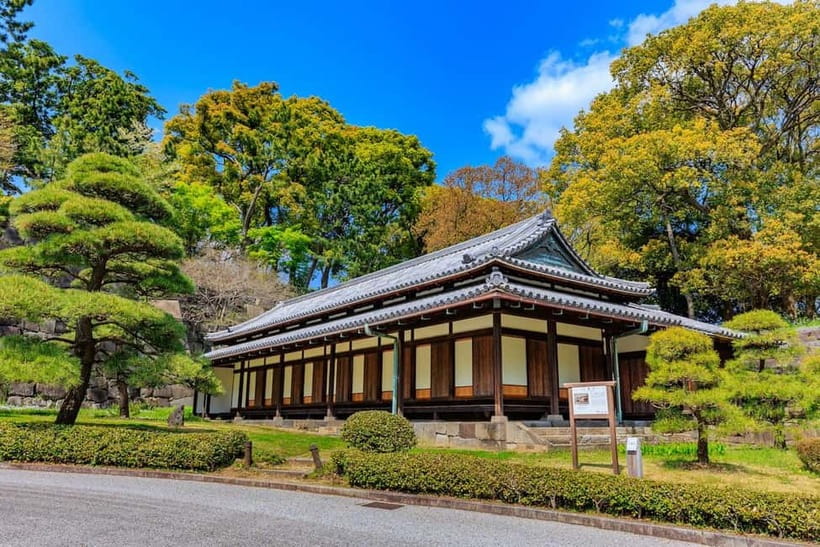
I would recommend this tour to first-time Tokyo visitors who want historical context without giving up a central location. It also suits families, couples, and anyone who likes a private pace. The two-hour length is manageable, and the walk gives you a calmer side of the city without requiring a full-day excursion.
It is particularly useful if you are curious about the Edo period but do not want to study a long timeline before arriving. Your guide can explain the shogun’s role, the castle’s purpose, and the shift from feudal stronghold to imperial grounds while you stand in the actual setting.
You may want to skip it if you have already studied Edo Castle in detail and prefer to explore silently. You may also be disappointed if you picture ornate palace rooms, since those are not included. For most people, the deciding question is whether a two-hour private explanation is worth $63 per person. I think it is, provided you value context and personal attention more than interior access.
Should you book this tour?
Book it if you want the East Gardens to feel like more than a pleasant green space. The castle walls, moats, guardhouse, and Ninomaru Garden are attractive on their own, but a guide turns them into a readable story about shoguns, imperial power, Japanese gardens, and modern Tokyo.
The strongest reason to choose it is the private English format. Guides such as Yoshi, Yuji, Masahito, Mari, Naoko, and Hiroshito have been praised for warmth, clear explanations, flexible pacing, and practical help. Just remember the limits: two hours, outdoor walking, baggage inspection, and no entry to the Inner Palace.
If those terms fit your plans, $63 buys a focused and personal introduction to one of Tokyo’s most important historic sites.
FAQ
Where does the tour meet?
Meet your English-speaking guide in front of Starbucks at Wadakura Fountain Park. Look for a guide holding a sign that says gotcha.
How far is the meeting point from Otemachi Station?
The meeting point is about a three-minute walk from Otemachi Station exit D2.
How far is it from Tokyo Station?
Wadakura Fountain Park is about a ten-minute walk from Tokyo Station’s Marunouchi central exit.
How long does the tour last?
The walking tour lasts two hours.
Is the tour private?
Yes. It is offered for a private group rather than a shared large group.
What language does the guide speak?
The live tour guide speaks English.
Can I enter the Imperial Palace or the Emperor’s residence?
No. The tour does not enter the Inner Palace or the area where the Emperor resides.
What can I see during the walk?
You can see the Main Gate and its guardhouse, Edo Castle ruins, stone walls, moats, the former keep area, and Ninomaru Garden with seasonal flowers and koi.
What should I do if I have bought a Japanese knife?
Leave Japanese knives or other objects that could be used as weapons in a coin locker or similar storage before meeting the guide. Baggage inspection takes place when entering the Imperial Palace grounds.
Just added around Tokyo
- Tsumami Zaiku Japanese Fabric Flower Class★ 5.0 · 3 reviews
- Tokyo: Serene Sakura & Sake: An Exclusive Brewery Pairing Lunch★ 5.0 · 2 reviews
- Tsukiji Food Strolling and Hama Rikyu Garden Walking Tour★ 5.0 · 7 reviews
- Private tour – Scenic Fuji Escape: Hakone, Peace Park & More★ 5.0 · 4 reviews
- Tokyo Cherry Blossom Half Day Walking Tour with a Local Guide★ 3.5 · 4 reviews
- TOKYO: Tailored Gardens tour with Pro Gardener by E-bike -BASIC★ 5.0 · 2 reviews
- Cherry Blossom Highlights, Asakusa, Ueno, Imperial Palace Garden★ 4.5 · 4 reviews
- Japan’s Customs of Ikebana Art, Tea Ceremony & Kimono Welcome★ 5.0 · 2 reviews
Tokyo Garden Tours, compared.
Imperial Palace East Garden and Edo Castle Walking Tour in Tokyo
Read our review →
Edo Castle & East Garden of the Imperial Palace Tour
Read our review →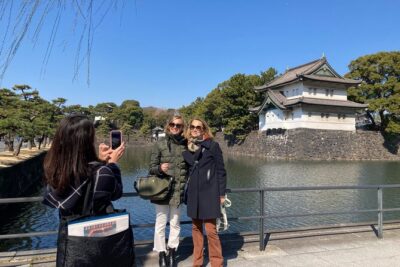
Tokyo Private Tour! Edo Castle & Imperial Palace East Gardens
Read our review →
Mount Fuji & Lake Kawaguchiko Private Tour: Beyond the Ordinary
Read our review →
Rainbow Bridge Day Cruise Show and Only Soft Drinks
Read our review →
Tsukiji Market and Hama-rikyu Gardens Guided Tour
Read our review →Browse the lists this tour appears in