
Review · TOKYO
Japanese flower arranging (Ikebana) Experience/Workshop in Tokyo
Ikebana here is less about strict rules and more about finding your own sense of balance. In a Tokyo florist filled with flowers and foliage, Ruby or Aki explains the ideas behind Japanese flower arranging, then lets you shape a design with plenty of personal guidance. I like the playful approach and the fact that you can learn about flower symbolism while making something with your hands.
I also like the compact 90-minute format, which fits neatly into a busy Tokyo day, plus the shared photos that preserve the moment. The main consideration is price: at $100 per person, this is not a cheap craft lesson, and the vase or container is extra if you want to take your arrangement home in a suitable vessel.
Key Points
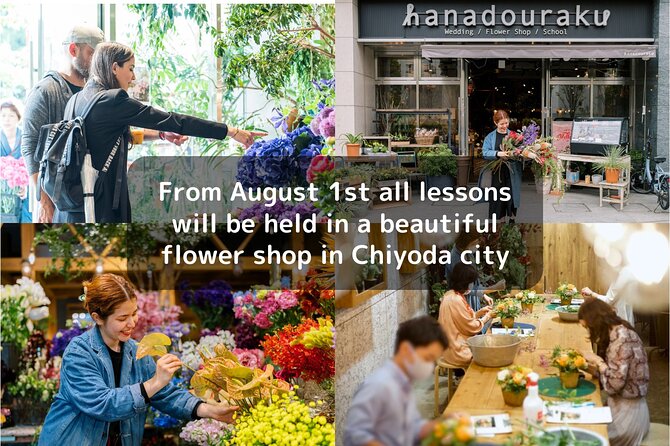
- A relaxed take on ikebana: You use Japanese arranging ideas, including asymmetry, without having to follow a strict formal school.
- Personal instruction from Ruby or Aki: Both instructors are praised for clear English, patience, flower knowledge, and useful creative suggestions.
- A real hands-on activity: Flowers, ikebana tools, and the materials needed for arranging are supplied.
- A calm stop in central Tokyo: The florist setting gives you a quiet change of pace from sightseeing and public transport.
- A practical keepsake: Photos are shared after the workshop, while containers and kenzan can be purchased separately.
- Suitable for families: Children and families are welcome, and pets are allowed.
A Quiet Flower Shop Break in Tokyo
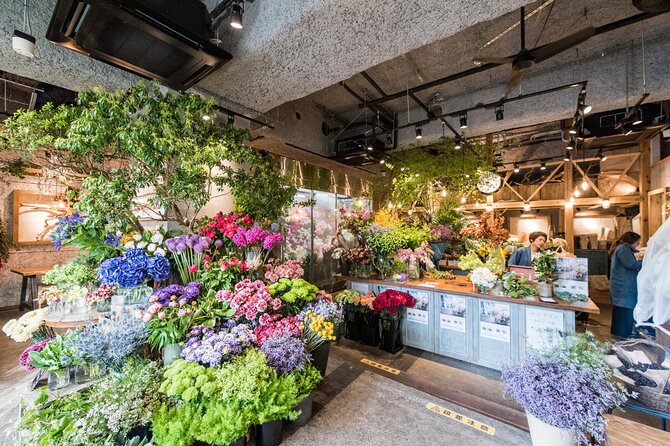
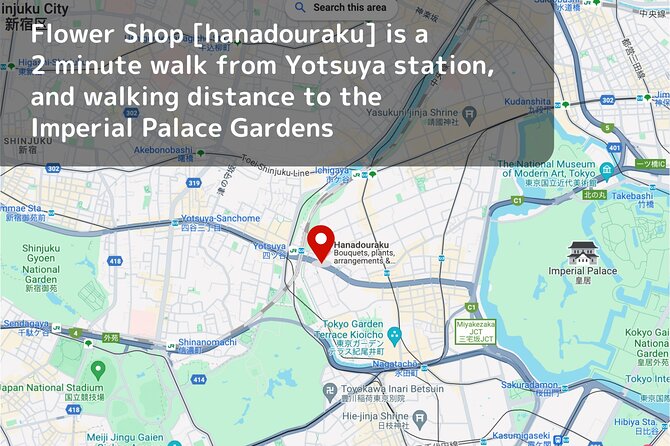
The workshop takes place at Hanadouraku, a Tokyo florist at 6-chome 46 Kojimachi, Chiyoda City, postal code 102-0083. The setting matters. You are not sitting in a generic classroom with a few artificial examples on the wall. You work among real blooms, branches, foliage, and the everyday tools of a florist.
That makes the first few minutes useful even before the formal teaching begins. You can look at the plant material and begin thinking about shape, line, color, and texture. Ikebana often gives as much attention to space and the form of a branch as it does to the flower itself, so a florist is a fitting place to start.
The exact workshop size can vary, but the maximum is 15 people. That is still small enough for personal advice compared with a large demonstration class, though you should not assume a private lesson. One person has attended alone and received plenty of time to create, while other sessions may include families, couples, or a larger group.
The meeting point is also the end point. Since the activity lasts about an hour and a half, you can place it between other plans without giving up half a day. A mobile ticket is provided, and the location is near public transportation, though the supplied details do not specify the nearest station or walking time.
A few more garden visits around Tokyo worth a look
- Japanese Fan Painting Workshop ~ in a Tokyo Flower Shop
★ 5.0 · 9 reviews - Tsumami Zaiku Japanese Fabric Flower Class
★ 5.0 · 3 reviews - Tokyo: Ikebana Workshop at Ginza
★ 5.0 · 2 reviews
Learning Why Ikebana Uses Space and Asymmetry
The workshop begins with an introduction to ikebana and the role flowers have played in human life. Ruby and Aki also explain the meaning attached to different flowers, giving you more to think about than simply matching colors.
This context helps you understand why ikebana can look spare compared with a full Western bouquet. A single stem or unusual branch may be important because of its direction, height, curve, or open space around it. You are encouraged to notice each bloom and connect it with the rest of the arrangement rather than hide every gap.
Asymmetry is one of the ideas you practice. That can feel strange at first. Many people instinctively try to make a design even on both sides, but ikebana often gains energy from an off-center line or a branch that reaches beyond the main cluster.
The class is not presented as a strict examination of traditional rules. Instead, you use the tools and general principles of ikebana as a way to express yourself. That makes this a good first introduction if you are curious about the art but do not want a formal lesson filled with technical terms and rigid correction.
You still get useful instruction. The class covers how to work with the flowers, how to use the kenzan, and how to bring the separate pieces into one arrangement. The guidance is there when you need it, but you also have room to make choices of your own.
Making Your First Arrangement With Ruby or Aki
The central part of the workshop is hands-on. You choose from the available flowers and foliage, then begin placing the materials into your container with the supplied ikebana tools.
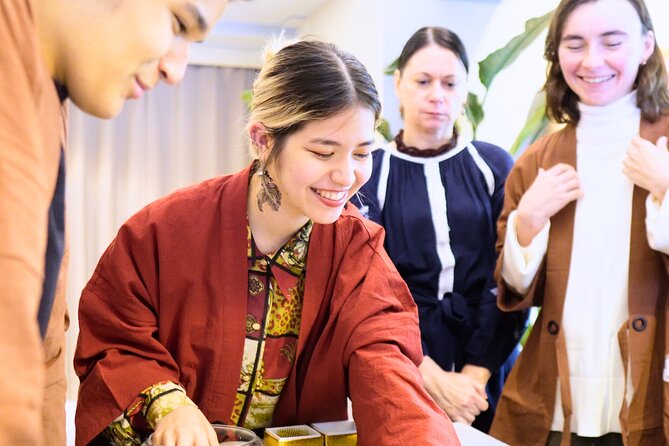
Ruby is described as an experienced florist with clear English and a friendly, engaging teaching style. Aki is also praised for her helpful explanations, including flower types, ikebana history, and the use of the kenzan. If your booking specifies an instructor, you can expect the lesson to reflect that person’s approach, but the core activity remains the same.
You might begin with an arrangement that looks simple, only to find that a stem will not sit at the angle you want. This is part of the appeal. The class gives you a chance to work slowly, test an idea, and ask for a correction without feeling rushed through a demonstration.
The kenzan is the metal pin holder that anchors stems in place. Handling it is a practical part of the lesson, and you learn how to position flowers rather than simply tie them into a bundle. Since the kenzan is sharp, you will want to follow the instructor’s directions carefully.
Some participants have made two arrangements during the session, although you should not treat that as a guarantee. Your pace depends on the number of people attending, the flowers available, and how much time you spend adjusting the first design.
I like the balance between coaching and freedom. You can ask for plenty of help, as several participants did, or make your own creative decisions after the basic method is clear. The result should feel like your work, not a copy made by the instructor.
The Flowers, Tools, and Take-Home Options
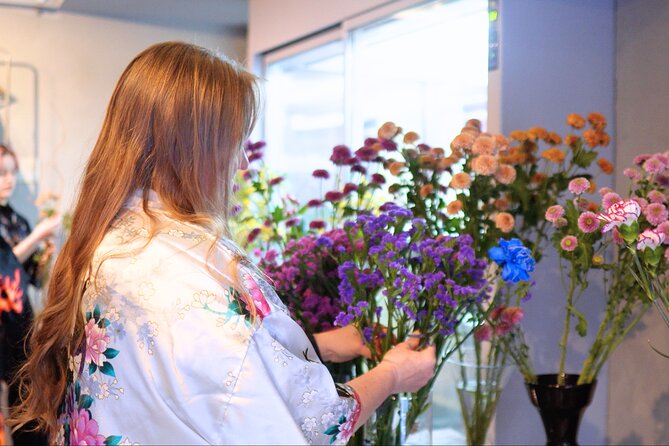
The price includes the flowers used in your arrangement and the necessary ikebana tools. That keeps the booking simple. You do not need to bring a vase, cutters, or other equipment to participate.
There is one cost detail to watch. The container used during the arrangement is not included in the $100 price. Containers are available to purchase, as are kenzan. If you want to keep and display your arrangement for the rest of your stay, buying a suitable container may be worthwhile.
One participant purchased vases and successfully carried the arrangements back to an Airbnb. That gives you a useful idea of how the take-home part can work, but transport will depend on the size and shape of your arrangement. You should also remember that fresh flowers are temporary. The lasting souvenir may be the container, the photos, and the knowledge to try another arrangement at home.
The shared photos are included. They show you and your group working on the arrangements, so you do not have to interrupt the activity to take pictures. These are useful if you want a record of the creative process rather than only a final photograph of flowers on a table.
Same place, a different kind of green day out:
- Imperial Palace East Garden and Edo Castle Walking Tour in Tokyo
★ 5.0 · 510 reviews - Mt. Fuji Day Trip from Tokyo with English Speaking Driver Guide
★ 5.0 · 443 reviews - Tokyo: Imperial Palace East Gardens Walking Tour
★ 4.8 · 353 reviews - Mt. Fuji, Cherry Blossom & Shiba Sakura Pvt. Day Tour
★ 5.0 · 326 reviews
Why the 90-Minute Format Works
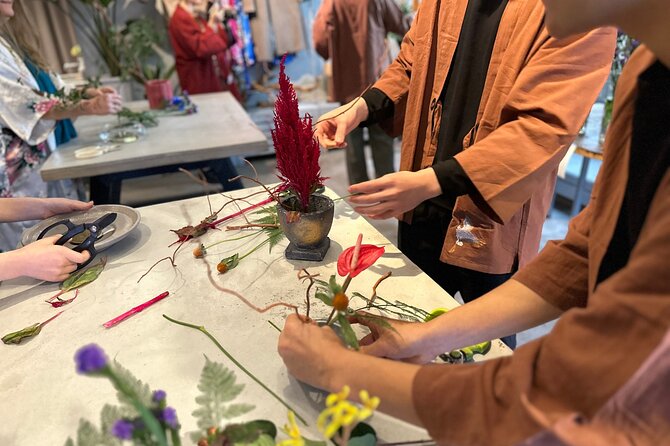
Tokyo sightseeing can involve long walks, crowded trains, and a steady stream of decisions. This workshop gives you a short, focused pause without asking you to devote an entire afternoon to a formal cultural program.
The activity is long enough to cover background, demonstration, arranging, and personal advice. It is short enough to fit around other plans in Chiyoda or elsewhere in the city. If you are visiting Tokyo for only a few days, that matters.
The mindful side is also practical. Arranging flowers requires you to pay attention to the stem in front of you, the open space beside it, and the way one change affects the whole design. You get a reason to slow down, which can make the session feel different from sightseeing at a temple or museum.
That said, this is not a silent meditation class. You will be learning, handling tools, asking questions, and sharing a room with other people. If you want a completely private or highly ceremonial experience, a group workshop may not fit. If you want a calm creative activity with clear instruction, the format makes sense.
Who Should Book This Ikebana Workshop
This experience is a strong fit for first-time visitors who want a cultural activity that produces something tangible. You do not need prior flower-arranging experience, and the instruction is designed to help beginners get started.
It also suits people who enjoy creative work but do not usually plan museum visits or formal cultural lessons. You learn about Japanese flower traditions through action, not only through a talk.
Families can join, and children are welcome. The best age fit will depend on a child’s ability to listen around sharp tools and handle flowers carefully, but the workshop’s free and playful approach is more inviting than a strict adult-only class.
Couples and friends may enjoy making arrangements side by side. The included photos give you a shared record, and the finished flowers can add a Japanese touch to your accommodation for the rest of your stay.
The workshop may be less suitable if you want a low-cost souvenir or a long, advanced course in a particular ikebana school. The session is introductory, and its emphasis is self-expression rather than mastery of a formal style.
Is $100 a Fair Price?
At $100 per person, the cost is on the high side for a 90-minute activity. The value comes from more than the flowers alone. You receive instruction from a florist, access to the tools, the plant materials, photos, and a guided introduction to an art form that is easy to misunderstand if you only see finished arrangements.
The price is easier to justify if you value a small-group creative class and want a memory that is not another bought object. It is also more appealing if you plan to continue ikebana at home, since the instructor’s advice about asymmetry, flower selection, and the kenzan can help you make sense of future attempts.
Budget-minded visitors should account for the optional container and kenzan. You can take part without buying either, but the additional purchase may become tempting once you see your finished arrangement.
Free cancellation is available when you cancel at least 24 hours before the start time. Changes or cancellations inside that period are not accepted for a refund. The activity also requires a minimum number of participants, so if the provider cancels because that minimum is not reached, you are offered another date or experience, or a full refund.
Practical Details Before You Go
You receive confirmation at booking, and the mobile ticket makes entry straightforward. The activity begins and ends at the Kojimachi meeting point in Chiyoda City.
The session allows up to 15 people. Service animals are allowed, and pets are welcome according to the supplied details. Most people can participate, though anyone who finds prolonged standing, flower handling, or sharp tools difficult should consider their own comfort before booking.
Wear something you can work in without worry. The provided information does not state a dress code, but fresh flowers, water, and arranging tools can be part of a florist activity. Arrive ready to listen to the safety instructions for the kenzan and to spend time adjusting stems rather than rushing to finish.
If you want to keep the arrangement, ask about purchasing a container during the session. If you are staying in Tokyo for several days, the flowers may be especially worthwhile because you can enjoy them at your accommodation afterward.
Should You Book It?
I would book this workshop if you want a personal, hands-on introduction to Japan that fits into a tight schedule. Ruby and Aki bring clear explanations and individual advice, while the florist setting gives the activity a natural sense of place.
The decision comes down to value. At $100, you are paying for instruction and a creative cultural experience, not simply a bunch of flowers. Book it if that sounds worthwhile, especially if you like crafts, want a quiet break from city sightseeing, or hope to practice ikebana at home.
Skip it if you are focused on the lowest possible price, dislike group activities, or want a formal course in traditional ikebana rules. For everyone else, this is a thoughtful way to spend 90 minutes in Tokyo and leave with photos, flowers, and a new way to look at shape and space.
FAQ
How long does the ikebana workshop last?
The workshop lasts approximately one hour and 30 minutes.
Where does the activity take place?
It starts and ends at Japan, 102-0083 Tokyo, Chiyoda City, Kojimachi, 6-chome 46, at the Hanadouraku florist.
What is included in the price?
The price includes use of ikebana tools, the flowers used in the arrangement, and photos taken during the activity.
Are containers included?
No. Containers used for the arrangement are not included, but they are available to purchase.
Is the kenzan included?
The kenzan used in the arrangement is not included in the price, but one is available to purchase.
Can children and families participate?
Yes. Children and families are welcome.
Are pets allowed?
Yes. Pets are welcome, and service animals are allowed.
How many people can join the workshop?
The activity has a maximum of 15 travelers.
Can I cancel for a full refund?
Yes, if you cancel at least 24 hours before the experience start time. Cancellations or changes made less than 24 hours before the start time are not refunded or accepted.
Just added around Tokyo
- Tsumami Zaiku Japanese Fabric Flower Class★ 5.0 · 3 reviews
- Tokyo: Serene Sakura & Sake: An Exclusive Brewery Pairing Lunch★ 5.0 · 2 reviews
- Tsukiji Food Strolling and Hama Rikyu Garden Walking Tour★ 5.0 · 7 reviews
- Private tour – Scenic Fuji Escape: Hakone, Peace Park & More★ 5.0 · 4 reviews
- Tokyo Cherry Blossom Half Day Walking Tour with a Local Guide★ 3.5 · 4 reviews
- TOKYO: Tailored Gardens tour with Pro Gardener by E-bike -BASIC★ 5.0 · 2 reviews
- Cherry Blossom Highlights, Asakusa, Ueno, Imperial Palace Garden★ 4.5 · 4 reviews
- Japan’s Customs of Ikebana Art, Tea Ceremony & Kimono Welcome★ 5.0 · 2 reviews
Tokyo Garden Tours, compared.
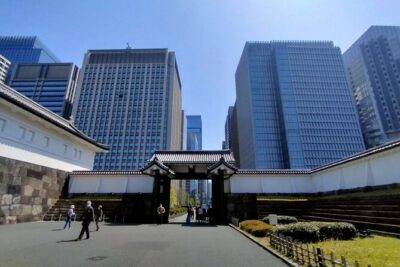
Imperial Palace East Garden and Edo Castle Walking Tour in Tokyo
Read our review →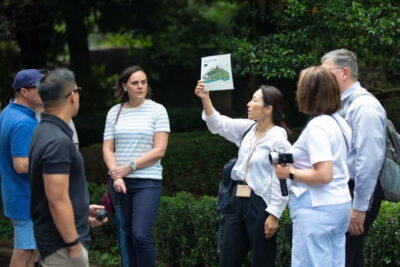
Edo Castle & East Garden of the Imperial Palace Tour
Read our review →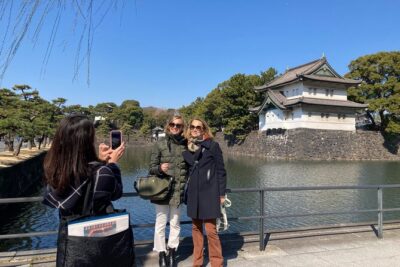
Tokyo Private Tour! Edo Castle & Imperial Palace East Gardens
Read our review →
Mount Fuji & Lake Kawaguchiko Private Tour: Beyond the Ordinary
Read our review →
Rainbow Bridge Day Cruise Show and Only Soft Drinks
Read our review →
Tsukiji Market and Hama-rikyu Gardens Guided Tour
Read our review →Browse the lists this tour appears in