
Review · TOKYO
Sumida Riverside Walk: Garden &Temple Ritual (4 Meeting Points)
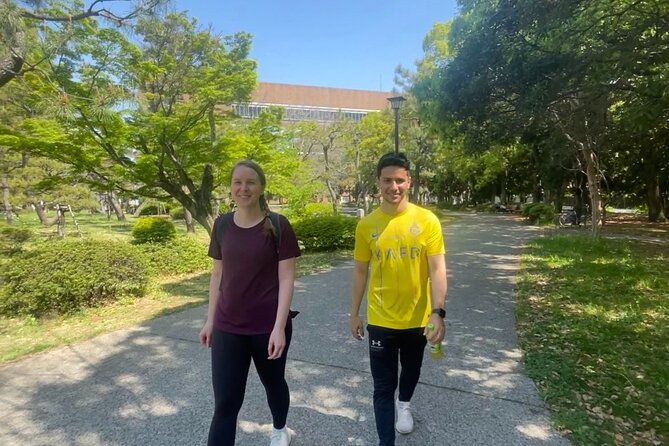
Tokyo has a quieter face, and this tour finds it around the Sumida River. In one morning, you move from a historic iron bridge and river path to the rituals of Fukagawa Fudōson, then into the carefully arranged stones and water of Kiyosumi Garden.
I like the small group, capped at six, and the way the experience joins ordinary city walking with living religious practice. I also like the cultural detail: omikuji, temple architecture, and possibly a striking fire ritual give you more to think about than a simple sightseeing stroll.
The main consideration is pace. This is a gentle cultural walk, not a major Tokyo highlights tour, and the early 8:30 start may not suit late risers or anyone hoping to cover a large part of the city in three hours.
Key points to know before booking
- A small group of six or fewer gives Hiroyuki, also called Hiro, room to answer questions and adjust the walk to the group.
- Fukagawa Fudōson offers a close look at everyday Buddhist customs, including omikuji and temple rituals.
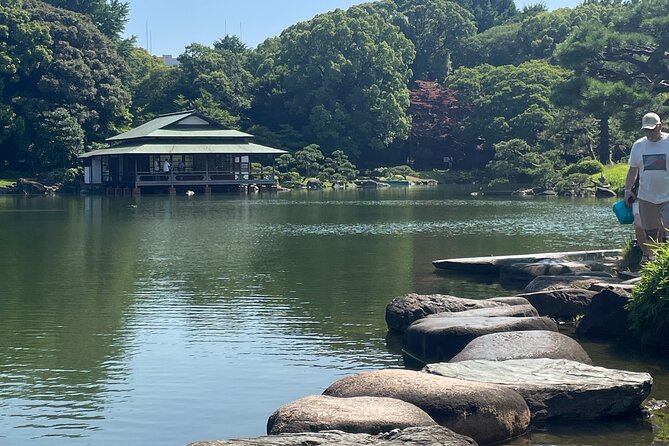
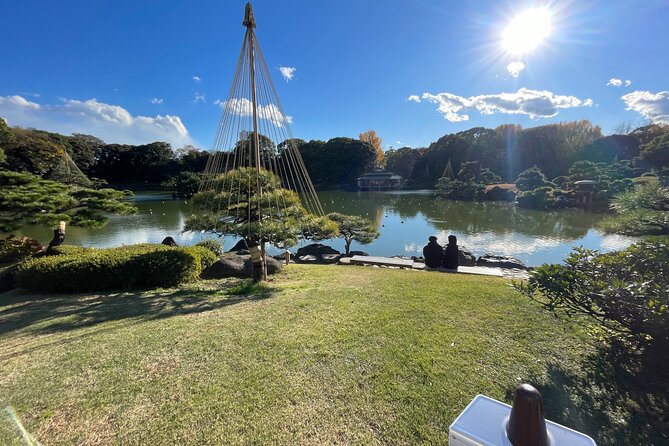
- Kiyosumi Garden is the visual centerpiece, with stones, water, quiet paths, and a miniature Mount Fuji.
- The Sumida River walk connects the temple and garden with a calm start away from Tokyo’s busiest streets.
- The tour begins at 8:30 am and ends at the same Fukagawa Fudōson temple, about four minutes from Monzen-Nakachō Station.
- At $48.86 per person, the value comes from a personal guide, a very small group, and cultural explanation rather than admission-heavy sightseeing.
A calm morning beside the Sumida River
The tour begins at Fukagawa Fudōson, officially the Naritasan Tokyo branch temple, at 1-chōme-17-13 Tomioka in Koto City. You meet at 8:30 am, then set off on foot along the river.
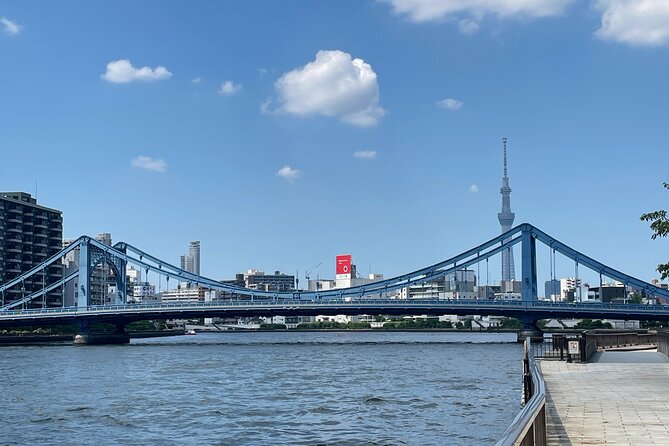
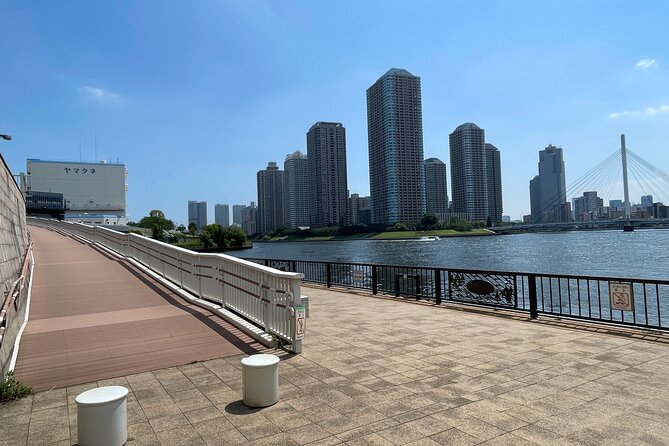
The first section takes about 35 minutes. It is not a long hike, and the appeal is the setting rather than physical challenge. You pass a historic iron bridge and move through an older part of eastern Tokyo, with the river providing a useful break from traffic and tall buildings.
I like this opening because it gives you time to get your bearings before the more focused temple and garden visits. The walk also links the three parts of the morning in a natural way. You are not simply being driven from one attraction to another.
The river route may be especially welcome if you have spent your Tokyo days around packed shopping streets and large stations. The experience is designed to refresh your mind, and the slower start supports that goal. Just keep your expectations in check: this is a short urban stroll, not a long riverside hike.
Hiroyuki’s role matters here. The small group makes it easier to stop, ask questions, and connect what you are seeing with local customs and Tokyo’s past. One account describes an extra museum visit during the tour, but that should be treated as a possible addition rather than a guaranteed stop.
More Garden Walks in Tokyo:
- Imperial Palace East Garden and Edo Castle Walking Tour in Tokyo
★ 5.0 · 510 reviews - Tokyo: Imperial Palace East Gardens Walking Tour
★ 4.8 · 353 reviews - Licensed Guide Tokyo Meguro Cherry Blossom Walking Tour
★ 4.5 · 13 reviews
Fukagawa Fudōson and the meaning of small rituals
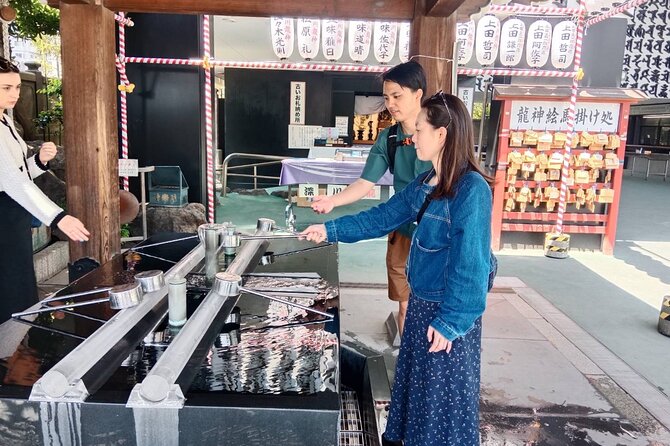
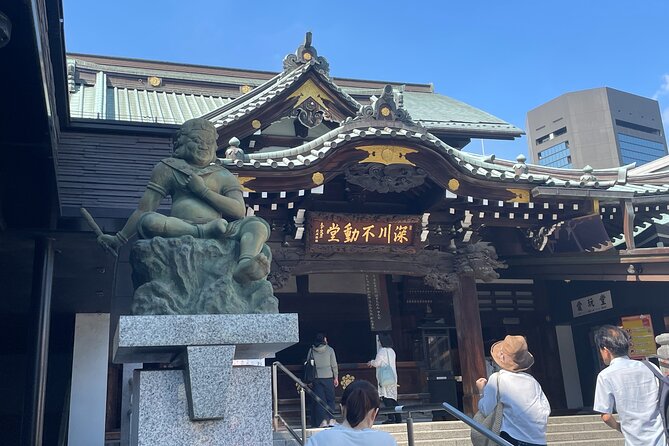
The temple portion lasts about one hour and is the most culturally focused part of the morning. Fukagawa Fudōson has more than 300 years of history, and the visit looks at how spirituality appears in everyday actions rather than only in formal ceremonies.
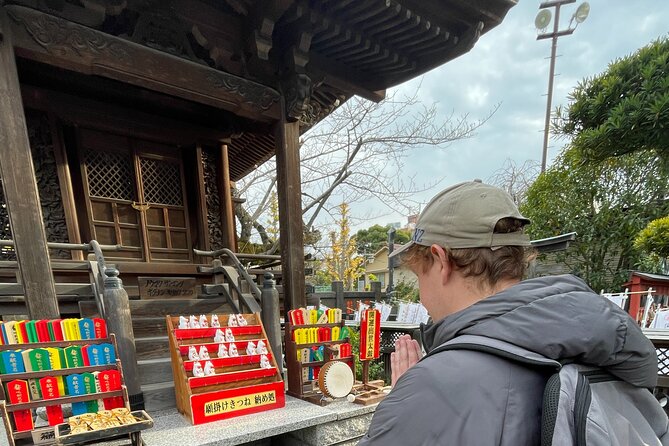
You can expect attention to omikuji, the written fortunes commonly drawn at Japanese temples and shrines. The point is not simply to pull a slip of paper. With explanation, the custom becomes a window into the way people engage with uncertainty, hope, and daily decisions.
The temple’s detailed architecture also rewards a slower look. Rather than rushing through for a photograph, you have time to notice how the space guides attention and how small actions shape a visit. The experience focuses on faith as something practiced quietly, woven into daily life.
A fire ritual was a particular highlight for one person who took the tour. The supplied details do not promise that every departure includes this ceremony, so you should regard it as a possible feature, not the central guarantee of the booking. If it is taking place during your visit, it could become the morning’s most memorable moment.
This part suits you if you want cultural context and are willing to listen. It may be less appealing if you want only open-air sightseeing or a quick checklist of famous Tokyo sights. The temple is not presented as a theatrical show. Its value comes from observing and understanding small traditions.
The tour ends here as well, so you can leave your guide near the same place where you started. That makes the morning easy to combine with other plans in Koto City or elsewhere in Tokyo.
Kiyosumi Garden: stones, water, and a miniature Mount Fuji
Kiyosumi Teien takes about 40 minutes and requires an admission ticket, which is included in the price. This is the quietest part of the experience and perhaps the clearest expression of Japanese garden design.
The garden is more than a green space for a quick walk. Its appeal comes from the arrangement of stones, water, paths, and open pauses. These elements reflect ideas of balance, harmony, and respect for nature, and the guide can help you notice details you might otherwise pass without understanding.
One distinctive feature is a miniature Mount Fuji. It adds a playful and memorable point of reference within the garden, and it gives you a specific detail to look for rather than a vague promise of pretty scenery.
I like the contrast between the temple and the garden. Fukagawa Fudōson asks you to pay attention to ritual and belief, while Kiyosumi Garden encourages quiet observation. Together, they create a fuller picture of Japanese culture without trying to explain everything through a museum display.
Forty minutes is enough for an introduction, but it is not a long garden visit. If you like to sit for extended periods, sketch, or photograph every angle, you may want to return on your own. The tour gives you a guided first look, then leaves the rest of your day free.
The garden also provides a useful pause in the middle of an active city. You may find that its value grows after a crowded morning elsewhere in Tokyo. The tour does not ask you to travel far from the center of urban life, yet the garden changes the mood quickly.
What the small group changes
A maximum of six people is one of the strongest practical features. You are less likely to feel lost in a crowd, and Hiroyuki can spend more time answering individual questions than a guide leading a large walking party.
That matters on a tour built around subtle details. The meaning of an omikuji, the use of a temple space, or the design of a garden can be easy to miss if you are standing at the back of a group. Here, you have a better chance to ask what you are seeing and why it matters.
The guide has also been praised for putting people at ease and explaining both older and newer aspects of Japanese culture. That combination is useful. Japan can seem highly formal from the outside, but daily life is full of small choices and customs that a guide can explain in plain language.
There is no promise of a private tour, since other people may join, but six is still a very manageable number. If your group is interested in culture and conversation, the format should work well. If you prefer to explore entirely alone, a self-guided visit to the garden and temple may give you more freedom.
A few more garden visits around Tokyo worth a look
- Tokyo: Edo Castle & East Garden of the Imperial Palace Tour
★ 4.7 · 112 reviews - Tokyo Private Tour! Edo Castle & Imperial Palace East Gardens
★ 5.0 · 105 reviews - Tokyo: Tsukiji Market and Hama-rikyu Gardens Guided Tour
★ 4.8 · 73 reviews - Tokyo: Pvt. Tour – Edo Castle & Imperial Palace East Gardens
★ 4.8 · 63 reviews
Is $48.86 a fair price?
At $48.86 per person, this is not a bargain-priced walk, but the price is reasonable if you want guidance rather than simple entry to two attractions. The garden admission is included, while the temple and river walk do not require admission fees.
The real value is Hiroyuki’s time and the small group. You are paying for the connection between the sites, explanations of customs, and the chance to ask questions as you walk. One person was even taken to an additional museum, though that should not be counted as part of the standard value.
If you only want to see Kiyosumi Garden, you can visit it separately for less than the full tour cost. The same applies to the temple. This experience makes more sense if you want help understanding what you are looking at and prefer a structured morning.
The three-hour length also has practical value. You finish with most of the day still available, and the end point near Monzen-Nakachō Station makes it easy to continue exploring. The tour does not consume a full day or force you into a long journey outside Tokyo’s main urban area.
Who will enjoy this Tokyo walk?
I would recommend this experience to first-time visitors who want an introduction to Japanese culture beyond major landmarks. It is also a good fit if you have already seen Tokyo’s busiest districts and want a slower morning with more local texture.
The tour should suit curious adults, couples, solo visitors, and small groups who enjoy asking questions. Most people can participate, and the experience is near public transportation. The supplied information does not give a detailed mobility assessment, so you should confirm any specific access needs before booking.
You will probably get the most from it if you are interested in how people use sacred spaces, not only in how those spaces look. The garden and temple are beautiful, but the explanations are what turn the visit into a cultural experience.
Families may also appreciate the manageable length, though the value depends on the children’s interest in walking, gardens, and temple customs. The 8:30 am start can be helpful for making the most of the day, but it may be too early for some holiday schedules.
Timing, meeting point, and useful planning details
The start time is 8:30 am, and the meeting point is Fukagawa Fudōson, also called Fukagawa Fudou-dō or the Naritasan Tokyo branch temple. The tour finishes at the same address: 1-chōme-17-13 Tomioka, Koto City, Tokyo 135-0047.
The temple is about a four-minute walk from Monzen-Nakachō Station. That short station connection is helpful, especially for an early start, but you should still allow time to find the exact meeting spot in the temple area.
The experience uses a mobile ticket, and confirmation is provided when you book. Free cancellation is available if you cancel at least 24 hours before the local start time. Changes or cancellations made inside that window are not accepted for a refund.
Plan for a total experience of about three hours, even though the listed visits add up to roughly two hours and fifteen minutes. The remaining time allows for walking between locations, explanations, and pauses.
Should you book the Sumida Riverside Walk?
Book it if you want a small, calm, culture-focused morning with a guide who can explain what you are seeing. The combination of river walking, temple ritual, and Kiyosumi Garden gives the experience a pleasing range, and the miniature Mount Fuji and possible fire ritual add memorable details.
Skip it if your priority is Tokyo’s biggest sights, fast sightseeing, or a long garden visit. You can also visit the temple and garden independently, but you will give up the personal explanations that make the customs easier to understand.
For the right visitor, $48.86 is a fair price for a three-hour introduction to a quieter side of Tokyo. Start early, bring questions, and leave the rest of the day open for your next neighborhood.
FAQ
Where does the tour start?
The tour starts at Fukagawa Fudōson, also called Fukagawa Fudou-dō or the Naritasan Tokyo branch temple, at 1-chōme-17-13 Tomioka, Koto City, Tokyo 135-0047, Japan.
Where does the tour end?
The tour ends at the same Fukagawa Fudōson temple where it begins.
What time does the tour start?
The start time is 8:30 am.
How long does the experience last?
The experience lasts approximately three hours.
How many people can join?
The group has a maximum of six people.
Is admission to Kiyosumi Garden included?
Yes. Admission to Kiyosumi Garden is included in the tour price.
What is the cancellation policy?
You can cancel for a full refund up to 24 hours before the experience’s start time. Cancellations or changes made less than 24 hours before the start are not accepted for a refund.
Just added around Tokyo
- Tsumami Zaiku Japanese Fabric Flower Class★ 5.0 · 3 reviews
- Tokyo: Serene Sakura & Sake: An Exclusive Brewery Pairing Lunch★ 5.0 · 2 reviews
- Tsukiji Food Strolling and Hama Rikyu Garden Walking Tour★ 5.0 · 7 reviews
- Private tour – Scenic Fuji Escape: Hakone, Peace Park & More★ 5.0 · 4 reviews
- Tokyo Cherry Blossom Half Day Walking Tour with a Local Guide★ 3.5 · 4 reviews
- TOKYO: Tailored Gardens tour with Pro Gardener by E-bike -BASIC★ 5.0 · 2 reviews
- Cherry Blossom Highlights, Asakusa, Ueno, Imperial Palace Garden★ 4.5 · 4 reviews
- Japan’s Customs of Ikebana Art, Tea Ceremony & Kimono Welcome★ 5.0 · 2 reviews
Tokyo Garden Tours, compared.
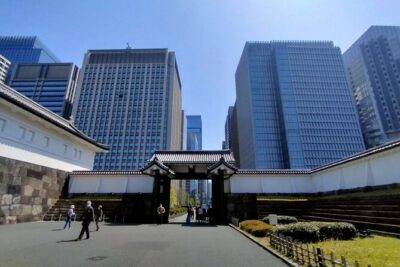
Imperial Palace East Garden and Edo Castle Walking Tour in Tokyo
Read our review →
Edo Castle & East Garden of the Imperial Palace Tour
Read our review →
Tokyo Private Tour! Edo Castle & Imperial Palace East Gardens
Read our review →
Mount Fuji & Lake Kawaguchiko Private Tour: Beyond the Ordinary
Read our review →
Rainbow Bridge Day Cruise Show and Only Soft Drinks
Read our review →
Tsukiji Market and Hama-rikyu Gardens Guided Tour
Read our review →Browse the lists this tour appears in