
Review · TOKYO
Tokyo City Attractive One Day Tour
Tokyo’s sheer size can make a first day feel like a complicated puzzle. This private tour solves much of that by linking Sensoji, Tsukiji, Shibuya, and Meiji Jingu in one long loop, with a car between the far-flung stops.
I like the personal format and the simple hotel transfer. I also like the mix of old Tokyo, food culture, parks, observation towers, and youth districts. The main caution is pace: nine hours is a lot of sightseeing, and the route gives you only about an hour at most stops. The driver is also the guide, so you should not expect a separate specialist guide unless that is arranged in advance.
Key points at a glance
- A private car for up to five people: The $500 group price works best when shared by a full party.
- Tokyo’s greatest hits in one day: The route covers Asakusa, both major towers, Tsukiji, Shinjuku, Meiji Jingu, Shibuya, and Harajuku.
- A driver-guide, not a separate guide: You receive transport and commentary from the same person.
- Flexible in theory: The private format allows itinerary changes, though nine hours limits how much you can add.
- Tower tickets cost extra: Tokyo Skytree and Tokyo Tower admissions are not included.
- Useful for a short Tokyo stay: Round-trip transfer from Tokyo Station Hotel removes much of the city’s transport planning.
Why this route works for a first Tokyo day
Tokyo is not one compact sightseeing district. It is a collection of neighborhoods spread across a huge urban area, and each has its own mood. Asakusa feels traditional and ceremonial. Shibuya is loud, sleek, and fast. Meiji Jingu gives you a wooded shrine setting, while Tsukiji focuses on food and daily commerce.
This tour makes sense because it connects those contrasts in a single day. You do not spend your limited time working out train routes between districts, checking platforms, or finding the right exit at a giant station. Instead, a private air-conditioned vehicle handles the long jumps across the city.
That convenience has a real price. At $500 per group, the cost is about $100 per person for five people, or $125 each for four. For two people, it becomes $250 each, and for one person it is a very expensive day. The value improves if you want a private car, need hotel pickup, or have limited time in Tokyo.
The itinerary is also broad rather than leisurely. Seven of the main stops are assigned about an hour, and Shibuya and Hachiko receive about 30 minutes each. Traffic, crowds, tower queues, and meals all use part of the nine-hour day. Think of this as a well-organized introduction, not a slow cultural tour.
More Garden Day Trips in Japan
- Mt. Fuji Day Trip from Tokyo with English Speaking Driver Guide
★ 5.0 · 443 reviews - Mt. Fuji, Cherry Blossom & Shiba Sakura Pvt. Day Tour
★ 5.0 · 326 reviews - Mt. Fuji & Hakone Cherry Blossom private One Day Tour
★ 4.5 · 35 reviews
Sensoji and Nakamise: Tokyo’s oldest temple setting
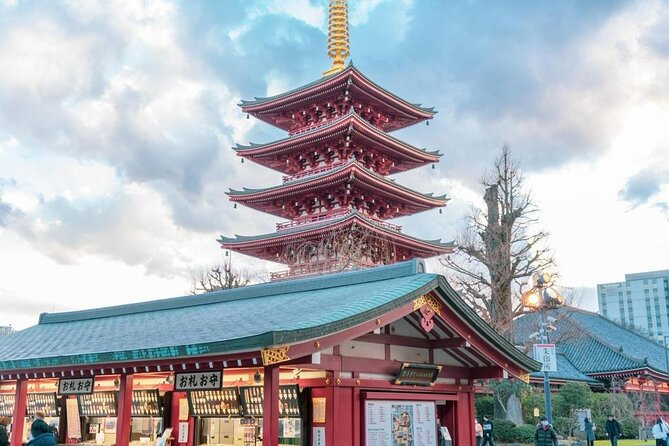
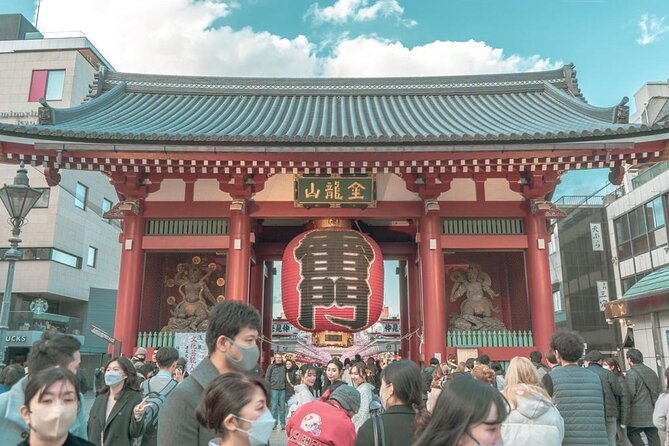
Begin in Asakusa at Sensoji, also called Asakusa Kannon Temple. The temple traces its origin to the story of two brothers who found a statue of Kannon in the Sumida River in 628. Sensoji was completed in 645, making it Tokyo’s oldest temple.
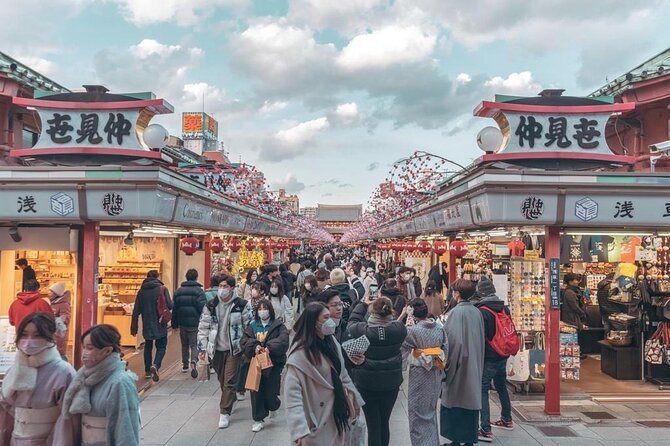
The approach matters as much as the main hall. Nakamise is a shopping street more than 200 meters long, running from the outer gate toward the Hozomon gate. You can browse Japanese souvenirs and traditional goods as you make your way toward the temple grounds.
You receive about an hour here, which is enough for a look at the gates, the shopping street, and the temple itself. It is not enough for an unhurried visit if you want to shop, take many photos, and study the religious details. Keep your spending and browsing focused.
One small point is worth clarifying: the itinerary calls this stop Asakusa Shrine, but the description concerns Sensoji, which is a Buddhist temple. Asakusa Shrine is a separate nearby site. Confirm the exact stop with your driver if that distinction matters to you.
Tokyo Skytree: huge views, extra ticket, possible queue
Tokyo Skytree rises 634 meters and has observation decks at 350 and 450 meters. The lower deck also includes a restaurant, café, and souvenir shop. The tower forms part of Tokyo Skytree Town, where Solamachi adds hundreds of shops and restaurants, along with attractions such as Sumida Aquarium and the Postal Museum.
The tower gives you a strong sense of Tokyo’s size. On a clear day, you can look far beyond the central districts and see how the city keeps spreading outward. The observation decks are the main reason to pay for entry, but the surrounding complex gives you alternatives if you prefer shopping or a meal.
Admission is not included. The supplied price lists Skytree entry at about $12, but treat that as a guide rather than a guarantee, since ticket prices can change. The visit lasts about an hour, and that includes any wait for entry. One useful planning point came up from an earlier full-day visit: the exact arrival time at Skytree matters because timed or advance tickets may be helpful.
Ask the driver when you will arrive before buying a timed ticket. A traffic delay can make a fixed slot inconvenient. If you would rather keep the day flexible, skip the observation deck and enjoy the exterior and Skytree Town, but understand that the tower visit then becomes more of a photo stop.
Tokyo Tower: a postwar symbol in the center
Tokyo Tower is 333 meters tall and was completed in 1958. It was modeled partly on the Eiffel Tower and served as Japan’s tallest structure until Skytree surpassed it in 2012.
The tower represents Japan’s postwar economic rise, and its location in central Tokyo gives it a different feel from Skytree. Skytree emphasizes height and wide city views. Tokyo Tower feels more connected to the older central districts around it.
You have about an hour here, with admission again excluded. Entry is listed at about $7, though prices may change. Since you are already paying separately for Skytree, consider whether you need both observation decks. If your priority is seeing Tokyo from above, one tower may be enough. If you enjoy architecture and the story of Tokyo’s rebuilding, both stops offer different context.
The two towers also make the schedule vulnerable to queues. If you want to enter both, ask about crowd levels and timing at the start of the day.
More Garden Day Trips in Tokyo
- Tokyo: Mt. Fuji & Hakone Cherry Blossoms Private Day Tour
★ 3.5 · 9 reviews - Ashikaga Flowers Park Pvt. One Day Tour with Pickup
★ 4.0 · 6 reviews - Full Guided Mt. Fuji & Hakone Attractive Private Day Tour
★ 5.0 · 3 reviews
Tsukiji Outer Market: Tokyo’s food town
Tsukiji Outer Market is one of the most useful stops for anyone who wants to understand Tokyo through food. Its streets combine wholesale and retail shops with restaurants, traditional ingredients, ready-to-eat items, and small portions designed for casual sampling.
The market once focused mainly on professional buyers, so some products were sold in quantities too large for an ordinary household. Parts of the market now sell directly to the public, including smaller sushi meals and bite-sized tamagoyaki, or Japanese rolled omelet.
You get about an hour here. That is enough to look around and try a few things, but not enough for a long meal and extensive shopping. Lunch is not included, so Tsukiji is the natural place to buy food during the tour. Budget extra for anything you want to eat.
Market streets can be crowded, and your group will need to stay aware of the schedule. I would ask the driver to point out a sensible place for a quick meal rather than wandering until your available time disappears.
Shinjuku Gyoen: a quiet pause in the city
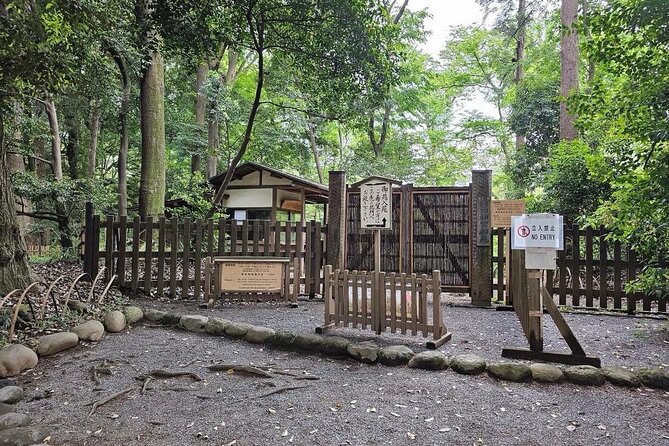
After the market and towers, Shinjuku Gyoen offers a welcome change of speed. This large garden has open lawns, walking paths, and quiet scenery close to Shinjuku Station.
The park is especially popular during cherry blossom season. If your visit falls in spring, the garden may be one of the day’s most memorable stops. The itinerary allows about an hour, which gives you time for a pleasant walk, though not a full exploration of the grounds.
This stop also shows the advantage of a private route. You can use the garden as a breather rather than treating every stop as another busy attraction. If you are tired, let your driver know. The tour is private, so the day can be adjusted more easily than a fixed group excursion, although changes may mean dropping another sight.
Meiji Jingu: shrine grounds and modern history
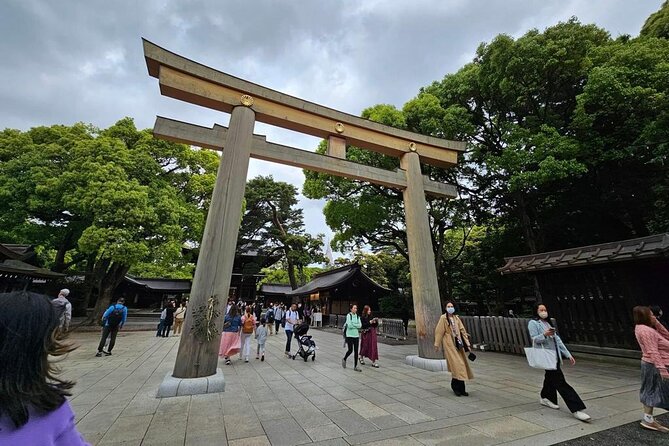
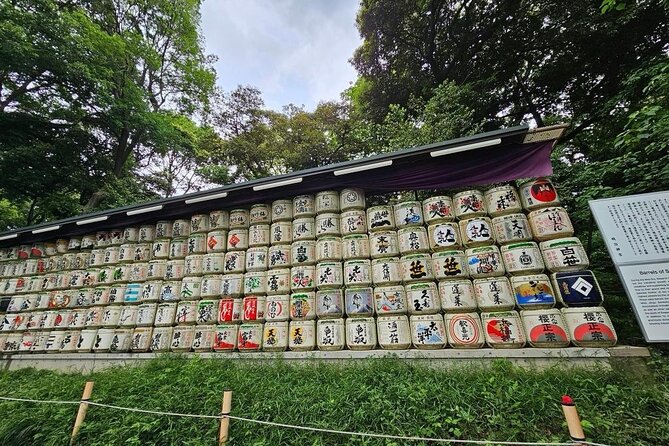
Meiji Jingu honors Emperor Meiji and Empress Shoken. The shrine was completed in 1920, destroyed during the war, and rebuilt soon afterward.
Emperor Meiji was born in 1852 and came to the throne in 1867, during the Meiji Restoration. That period ended Japan’s feudal era and began a rapid push toward modernization. By the time of his death in 1912, Japan had changed into a major modern power.
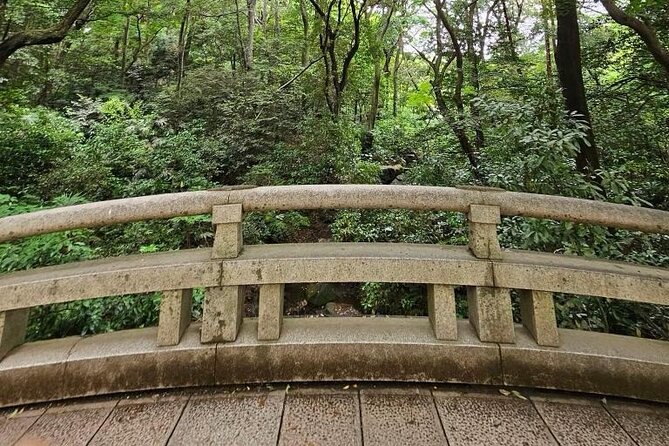
The shrine gives you a useful counterpoint to Tokyo’s glass towers and crowded streets. Its setting is calm, and the approach helps you shift from the commercial city to a place of worship and national memory. You receive about an hour, enough for a respectful visit and a look at the grounds.
The shrine is free to enter, but remember that it is an active religious site, not simply a sightseeing backdrop. Follow posted rules and keep your visit quiet and considerate.
Shibuya Crossing and Hachiko: Tokyo in motion
Shibuya Scramble is the tour’s most recognizable modern scene. Five major crosswalks meet in front of a canyon of tall buildings and bright signs, with traffic stopping so people can cross in every direction.
The listed stop is about 30 minutes, which is enough to see the crossing from street level and take in the surrounding district. You may want to ask where the best nearby viewing point is, since the crossing itself is experienced in a few minutes.
Hachiko’s statue is close to Shibuya Station. The dog became famous for returning to the station each day to await his owner, university professor Hidesaburo Ueno, even after Ueno died in 1925. Hachiko died in 1935, and his story later inspired the film Hachi: A Dog’s Tale.
The Hachiko stop also lasts about 30 minutes. It is brief, but the story adds a human touch to a district known mainly for noise, screens, and crowds. These two stops work well together, though they can feel rushed if you want to shop or visit a viewing facility.
Harajuku: youth fashion and Takeshita Street
Harajuku brings the day back to street culture. The area is known for youth fashion, accessories, cafés, desserts, and unusual souvenirs.
Takeshita Street begins near the station and runs through a busy retail area. The entrance is at the top of a hill, and the street can be especially crowded on weekends and holidays. Shops range from inexpensive accessory stores to clothing and specialty retailers.
You have about an hour here. That is enough for a walk and a snack, but not a serious shopping session. If Harajuku is a priority, ask to spend more time here and shorten a stop that interests you less. The private setup gives you that option, but you cannot see everything in Tokyo in one day.
The driver-guide arrangement matters
The tour includes private transportation in an air-conditioned vehicle, round-trip transfer, and a hotspot on board. The meeting point is The Tokyo Station Hotel, and the day ends back there.
The most important service detail is that the company’s driver also acts as the guide. That means you can expect help moving through the day and commentary about the places you visit, but you should not assume a dedicated historian or specialist guide walking beside you at every site.
One earlier booking raised this exact issue, with a request for a separate guide appearing only after the tour. The company response clarified that the driver is the guide for this experience. If detailed interpretation is important to you, ask about the guide arrangement before booking. A response to a review was signed by Hiroyuki Sato, but the available information does not establish that he will personally lead your tour.
Who gets the best value from $500?
This tour suits a group of four or five who wants comfort and efficiency. At full capacity, the cost is reasonable for a private nine-hour vehicle and driver-guide service in a city where distances between districts can consume time.
It also suits first-time visitors who want a broad overview, people staying only briefly, and anyone who finds Tokyo’s rail system intimidating. Families may appreciate returning to a private car between stops instead of managing every transfer in crowded stations.
The value is weaker for a couple on a tight budget, solo visitors, or repeat Tokyo visitors who already know the city. You may spend less and see more by choosing two or three districts and using public transportation. You also need to budget separately for lunch, dinner, Skytree entry, and Tokyo Tower entry.
Free cancellation is available until 24 hours before the start time. Changes or cancellations inside that window are not accepted for a refund.
Should you book this Tokyo day tour?
Book it if you want to cover Tokyo’s major contrasts in one day, prefer a private car, and can share the $500 cost with a group. The route gives you temples, food, gardens, shrines, towers, youth culture, and Shibuya’s famous crossing without asking you to plan every connection.
Think twice if you want deep time at each place, a separate specialist guide, or a low-cost day. The strongest version of this tour comes from setting priorities before departure. Tell the driver which stops matter most, confirm the tower timing, and treat Tsukiji as your likely lunch stop.
For a first look at Tokyo, it is a practical overview. For a slow, detailed study of the city, it moves too quickly.
FAQ
How long is the Tokyo City Attractive One Day Tour?
The tour lasts approximately nine hours.
Where does the tour start?
It starts at The Tokyo Station Hotel in Marunouchi, Tokyo.
Where does the tour end?
The activity ends back at the meeting point at The Tokyo Station Hotel.
How many people can join the private tour?
The $500 price covers a private group of up to five people.
Is hotel pickup included?
Round-trip hotel transfers are included, with the stated meeting point at The Tokyo Station Hotel.
Are Tokyo Skytree and Tokyo Tower tickets included?
No. Entry tickets for Tokyo Skytree and Tokyo Tower are not included. The listed approximate prices are $12 for Skytree and $7 for Tokyo Tower.
Is lunch included?
No. Lunch and dinner are not included.
Who provides the guiding?
The company states that the driver also serves as the guide. A separate guide is not listed as included.
Can I cancel for a full refund?
Yes. You can cancel at least 24 hours before the experience start time for a full refund. Cancellations or changes made less than 24 hours before the start time are not accepted for a refund.
More 1-Day Tours in Tokyo
- Full Guided Mt. Fuji & Shiba-Sakura Festival One Day Pvt.Tour
★ 5.0 · 6 reviews - From Paris: Giverny, Monet’s Home & Gardens Half-Day Trip
★ 4.5 · 2,887 reviews - From Paris: Giverny Day Trip with Audio Guide or Live Guide
★ 4.3 · 2,372 reviews - Victoria and Butchart Gardens Day Trip from Vancouver
★ 4.5 · 2,242 reviews
Just added around Tokyo
- Tsumami Zaiku Japanese Fabric Flower Class★ 5.0 · 3 reviews
- Tokyo: Serene Sakura & Sake: An Exclusive Brewery Pairing Lunch★ 5.0 · 2 reviews
- Tsukiji Food Strolling and Hama Rikyu Garden Walking Tour★ 5.0 · 7 reviews
- Private tour – Scenic Fuji Escape: Hakone, Peace Park & More★ 5.0 · 4 reviews
- Tokyo Cherry Blossom Half Day Walking Tour with a Local Guide★ 3.5 · 4 reviews
- TOKYO: Tailored Gardens tour with Pro Gardener by E-bike -BASIC★ 5.0 · 2 reviews
- Cherry Blossom Highlights, Asakusa, Ueno, Imperial Palace Garden★ 4.5 · 4 reviews
- Japan’s Customs of Ikebana Art, Tea Ceremony & Kimono Welcome★ 5.0 · 2 reviews
Tokyo Garden Tours, compared.
Imperial Palace East Garden and Edo Castle Walking Tour in Tokyo
Read our review →
Edo Castle & East Garden of the Imperial Palace Tour
Read our review →
Tokyo Private Tour! Edo Castle & Imperial Palace East Gardens
Read our review →
Mount Fuji & Lake Kawaguchiko Private Tour: Beyond the Ordinary
Read our review →
Rainbow Bridge Day Cruise Show and Only Soft Drinks
Read our review →
Tsukiji Market and Hama-rikyu Gardens Guided Tour
Read our review →Browse the lists this tour appears in