
Review · TOKYO
Tokyo Ikebana, Japanese Traditional Flower Arrangement Experience
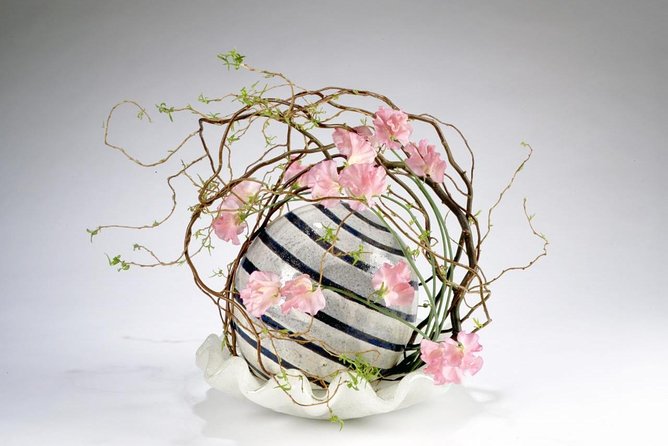
Ikebana turns a handful of flowers, branches, and a vase into a study of line, balance, space, and movement. In this Tokyo class, you first learn why an arrangement looks pleasing, then put those ideas to work in your own seasonal creation. It is a fine way to experience Japanese culture without spending half a day in a museum.
I like the hands-on format and the fact that every material is supplied, so you can arrive with nothing but a mobile ticket. I also like the small maximum of 10 people, which gives the instructor room to offer individual advice. The main consideration is the price, $67.28 per person, for about 70 minutes, and the booking is non-refundable.
Key points to know
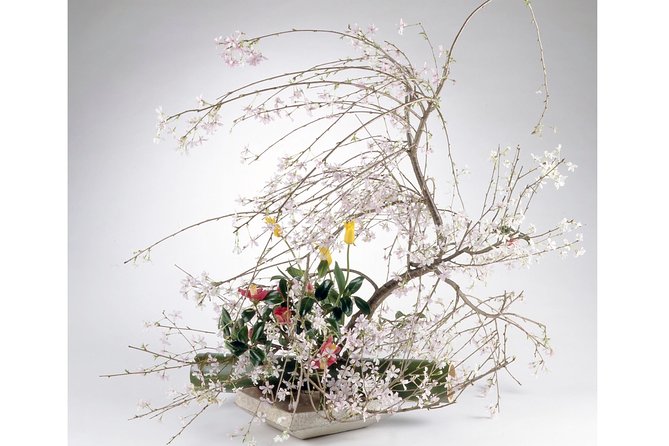
- You make your own arrangement: This is a practical lesson, not a demonstration where you only watch.
- Seasonal flowers are supplied: The materials are local flowers in season, along with the vase and equipment needed for class.
- Instruction suits beginners: The teacher explains form, angles, combinations, and basic ikebana principles step by step.
- The class takes place in Nakano: You meet at Ichiyō-style Ikebana headquarters, at 4-chōme-20-5 Nakano.
- The group is limited to 10: A smaller class allows time for personal corrections and suggestions.
- It connects art with tradition: You learn about an old Japanese practice once associated with samurai culture.
Why this short Nakano class is worth your time
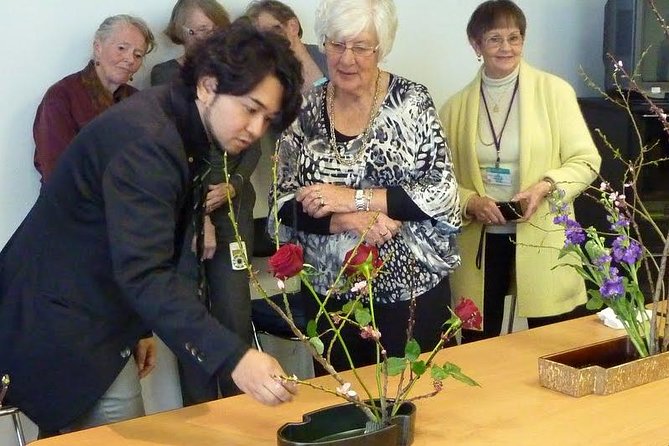
Many Tokyo activities give you something to look at. This one gives you something to do. You work with living material and learn how small changes in angle, height, and spacing can alter the whole appearance of a piece.
That makes ikebana a useful choice if you want more than a quick photo stop. You leave with a better sense of how Japanese design uses empty space and restraint. You also have a finished arrangement to photograph before the class ends.
The session lasts about one hour and 10 minutes. That is short enough to fit into a busy Tokyo day, but long enough for an explanation, a demonstration, your own work, and feedback. I would allow extra time for getting to the meeting point in Nakano, since the class itself is tightly timed.
The experience is offered through Attractive JAPAN and is held at the Ichiyō-style Ikebana headquarters, listed in Japanese as 一葉式いけ花本部. That setting matters. You are learning at a school devoted to the art rather than trying a flower activity in a general-purpose tourist venue.
Other gardens people visit around Tokyo:
- Imperial Palace East Garden and Edo Castle Walking Tour in Tokyo
★ 5.0 · 510 reviews - Mt. Fuji Day Trip from Tokyo with English Speaking Driver Guide
★ 5.0 · 443 reviews - Tokyo: Imperial Palace East Gardens Walking Tour
★ 4.8 · 353 reviews
What you learn before touching the flowers
The first part explains the basic ideas behind ikebana. The focus is not simply on making flowers look full or colorful. You learn how to bring out the character of each material, including the flowers, branches, and vase.
The instructor covers which forms look pleasing, which angle draws the eye, and how different combinations work together. You also learn about geometric and philosophical principles behind ikebana. These ideas help explain why a sparse arrangement can feel complete.
This is especially useful for first-time students. You do not need to know Japanese design, flower names, or formal ikebana vocabulary before arriving. The instructor adjusts the explanation to your level, and the class is designed for beginners.
The lesson also gives you a better way to look at the finished arrangement. Instead of judging it only by color or size, you begin to notice line, shape, movement, balance, and the space around the flowers. That change in viewpoint is one of the most valuable parts of the class.
Past classes have been led by instructors including Naohiro Kasuya and Mrs. Shimakawa. Naohiro Kasuya has been described as a master who explains the school’s principles clearly and gives patient corrections while you work. Mrs. Shimakawa has also been praised for her patient teaching and careful explanations. The exact instructor may depend on the session you book.
Making your own seasonal arrangement
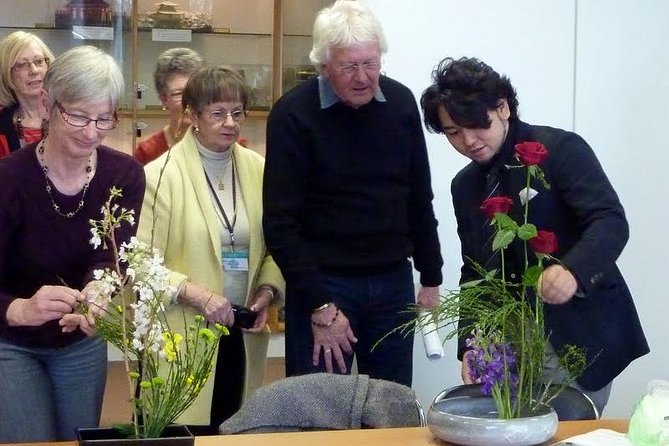
After the introduction, you create your own piece. Flowers and equipment are supplied, so you do not need to carry scissors, a vase, or plant material across Tokyo.
The flowers are local and in season. That means your arrangement can change depending on the time of year, and you work with materials that reflect what is available in Japan at the time of your visit. The result is more personal than a fixed craft kit with the same materials all year.
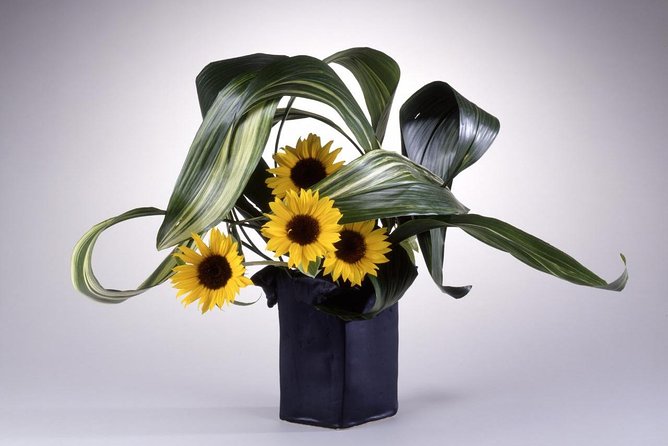
The instructor lets you work through the process rather than simply copying a finished example. You arrange the flowers, consider their direction and placement, and then receive advice on how to improve the piece. This personal correction is important because ikebana can look simple until you try to create a balanced form yourself.
You might be asked to change an angle, remove a stem, alter the relationship between two flowers, or give one branch more room. Small adjustments can make a big difference. The lesson is therefore both creative and precise.
The class ends with time to photograph your arrangement. That is helpful if you want a record of your work or a practical reminder of the structure you learned. Since ikebana can be made with flowers from many countries, the skills are not limited to Japan. You can use the same ideas later with flowers at home.
The traditional ideas behind ikebana
Ikebana is an ancient Japanese art, and this class gives you a simple introduction to its cultural setting. The experience explains that samurai also took part in ikebana, which places the activity within a wider history of Japanese aesthetics and formal practice.
You should not expect a long lecture on every school and period of ikebana. The time is limited, and the main aim is to help you make an arrangement. Still, the historical and philosophical context gives the practical lesson more meaning.
The central idea is not to pack a vase with as many flowers as possible. It is to show the character of the materials. A branch may provide height or direction. A flower may supply a focal point. Open space can be just as important as the plant material itself.
That approach may appeal to you if you enjoy Japanese architecture, gardens, tea ceremony, calligraphy, or other arts based on control and simplicity. It is also a good contrast to Tokyo’s fast pace. For 70 minutes, your attention narrows to the materials in front of you.
Same place, a different kind of green day out:
- Mt. Fuji, Cherry Blossom & Shiba Sakura Pvt. Day Tour
★ 5.0 · 326 reviews - Tokyo: Edo Castle & East Garden of the Imperial Palace Tour
★ 4.7 · 112 reviews - Tokyo Private Tour! Edo Castle & Imperial Palace East Gardens
★ 5.0 · 105 reviews - Mount Fuji & Lake Kawaguchiko Private Tour: Beyond the Ordinary
★ 5.0 · 78 reviews
A small class with room for individual help
The maximum group size is 10 people. That does not guarantee a private lesson, but it is a useful limit for an activity where each person creates a different arrangement.
Instruction is a major part of the value here. Several students have described the teachers as kind, patient, and encouraging, with clear guidance during the practical work. One class had only a single student, showing that the group may sometimes be much smaller than the stated maximum.
English ability can vary by instructor, but class descriptions indicate that English-language teaching has been provided successfully. One instructor apologized for her English even though the student found it easy to understand. The lesson also relies on demonstration, positioning, and visual examples, which support the spoken explanation.
Naohiro Kasuya has been praised for explaining form, shape, and movement in an accessible way. If you are new to ikebana, those three ideas are more useful than memorizing a long list of terms. Ask questions when you need help, especially before making a change to your arrangement.
Getting to the school in Nakano
The meeting point is 4-chōme-20-5 Nakano, Nakano City, Tokyo 164-0001, Japan. The activity takes place near public transportation, and the location has been described as easy to find.
You meet at the school and return to the same place at the end. There is no sightseeing transfer between several locations, so the main transport task is reaching Nakano on time.
Check the exact meeting instructions after booking. Confirmation is sent within 48 hours, subject to availability. Since the activity lasts only about 70 minutes, arriving late could reduce the time you have for the explanation and your own arrangement.
The provider also says an instructor can be sent to any hotel in Tokyo. That option may be useful for a private or specially arranged class, but the standard meeting information for this experience points to the Nakano school. A large group may also incur a separate venue rental fee.
Is $67.28 good value?
At $67.28, this is not the cheapest short activity in Tokyo. You are paying more than the cost of simply visiting a public garden or buying flowers at a market. The value comes from the instruction, the supplied materials, the cultural setting, and the chance to make a finished arrangement under a teacher’s guidance.
The price makes more sense if you want a structured lesson rather than a casual craft session. Flowers, tools, the vase, and equipment are provided, so there are no obvious material costs to add during the class. You also receive feedback instead of only following a printed set of instructions.
The short duration works in the price’s favor for some schedules. You can fit the lesson around other Tokyo plans without committing an entire morning or afternoon. On the other hand, if you want a long, detailed study of ikebana or several arrangements, 70 minutes may feel brief.
I would consider it good value for someone who has a real interest in Japanese arts and wants a personal activity. It is less compelling if you are only looking for a cheap souvenir-making session.
Who should book this experience
This class is best for beginners, couples, solo visitors, families with older children, and anyone who enjoys creative activities with a cultural connection. Children aged 6 and over may take part, and children aged 12 and under must be accompanied by a parent.
It can also suit someone who already arranges flowers at home. The lesson focuses on principles that can be used with flowers from anywhere, so you may gain ideas to continue practicing after returning home.
You should choose it if you appreciate patient teaching, small details, and a calm activity. It is not the right pick if you want a fast-paced tour, a long city walk, or a class where you leave with a large object. Your finished arrangement is the main result, and its size and appearance will depend on the seasonal materials and your own work.
The activity is also a good choice for a birthday or personal treat. One student used it as a birthday present to herself, and the format works well for marking a special day without taking over your entire Tokyo itinerary.
Practical points before booking
Bring yourself and your mobile ticket. The flowers and equipment are supplied. Wear something that allows you to sit and work comfortably, though no special clothing requirement is provided.
Keep your valuables with you. The school is not responsible for lost or forgotten belongings, and you are responsible for accidents or injuries during the experience.
The booking is non-refundable and cannot be changed for any reason. That is the biggest planning drawback. Confirm your Tokyo schedule before paying, especially if your arrival date or daily plans are still uncertain.
The activity is recommended by all current ratings supplied for it, with a rating of 5 from 15 reviews. That is a small sample, so I would treat it as encouraging rather than a guarantee. The consistently praised points are the patient instruction, the clear explanations, the supplied materials, and the personal nature of the finished arrangement.
Should you book the ikebana class?
Book it if you want to learn a Japanese art by doing it yourself. The class gives you seasonal flowers, practical instruction, personal feedback, and a finished arrangement in a compact 70-minute session.
I especially recommend it for first-time ikebana students who want a welcoming introduction rather than a formal course. The small group limit and patient teachers make the class less intimidating, while the Nakano location keeps the activity easy to add to a Tokyo day.
Think twice if $67.28 feels high for a short experience, or if your schedule may change. The non-refundable policy leaves little flexibility. But if you value a genuine cultural lesson and enjoy making something with your own hands, this is a thoughtful and well-focused choice.
FAQ
Where does the ikebana experience take place?
The class takes place at Ichiyō-style Ikebana headquarters, listed as 一葉式いけ花本部, at 4-chōme-20-5 Nakano, Nakano City, Tokyo 164-0001, Japan.
How long does the activity last?
The experience lasts approximately 1 hour and 10 minutes.
What is included in the class?
Flowers and the equipment needed for the activity are provided. You learn basic ikebana principles, make your own arrangement, receive advice from the instructor, and have time to take photographs.
Is the class suitable for beginners?
Yes. The class teaches the basics of ikebana, and the instructor adjusts the lesson to your level. No previous experience is required.
What is the minimum age?
The program is designed for people aged 6 and over. Children aged 12 and under must be accompanied by a parent.
How many people can join the class?
The activity has a maximum of 10 participants.
Can I cancel or change my booking?
No. The experience is non-refundable and cannot be changed for any reason. Confirmation is sent within 48 hours of booking, subject to availability.
Just added around Tokyo
- Tsumami Zaiku Japanese Fabric Flower Class★ 5.0 · 3 reviews
- Tokyo: Serene Sakura & Sake: An Exclusive Brewery Pairing Lunch★ 5.0 · 2 reviews
- Tsukiji Food Strolling and Hama Rikyu Garden Walking Tour★ 5.0 · 7 reviews
- Private tour – Scenic Fuji Escape: Hakone, Peace Park & More★ 5.0 · 4 reviews
- Tokyo Cherry Blossom Half Day Walking Tour with a Local Guide★ 3.5 · 4 reviews
- TOKYO: Tailored Gardens tour with Pro Gardener by E-bike -BASIC★ 5.0 · 2 reviews
- Cherry Blossom Highlights, Asakusa, Ueno, Imperial Palace Garden★ 4.5 · 4 reviews
- Japan’s Customs of Ikebana Art, Tea Ceremony & Kimono Welcome★ 5.0 · 2 reviews
Tokyo Garden Tours, compared.
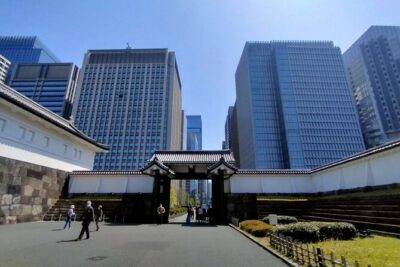
Imperial Palace East Garden and Edo Castle Walking Tour in Tokyo
Read our review →
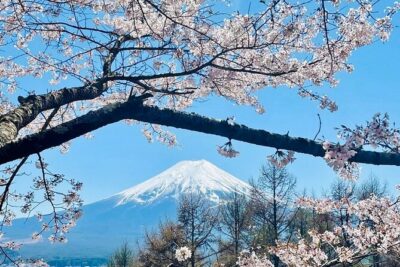
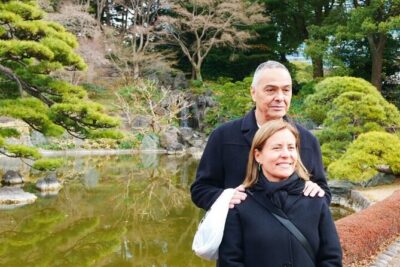
Edo Castle & East Garden of the Imperial Palace Tour
Read our review →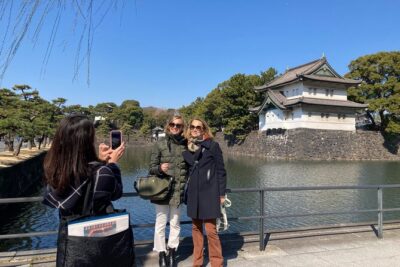
Tokyo Private Tour! Edo Castle & Imperial Palace East Gardens
Read our review →
Mount Fuji & Lake Kawaguchiko Private Tour: Beyond the Ordinary
Read our review →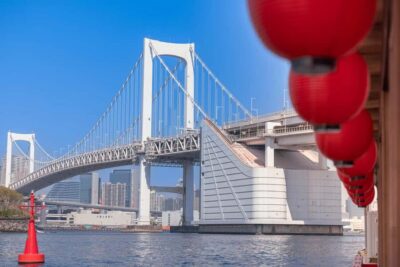
Rainbow Bridge Day Cruise Show and Only Soft Drinks
Read our review →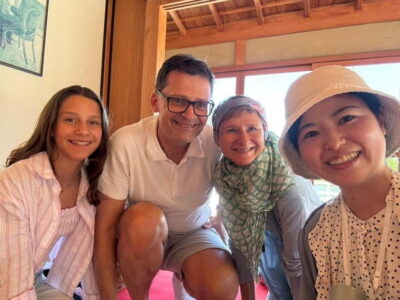
Tsukiji Market and Hama-rikyu Gardens Guided Tour
Read our review →Browse the lists this tour appears in