
Review · TOKYO
Tokyo: Meiji Jingu Shrine & Inner Garden Guided Tour (2h)
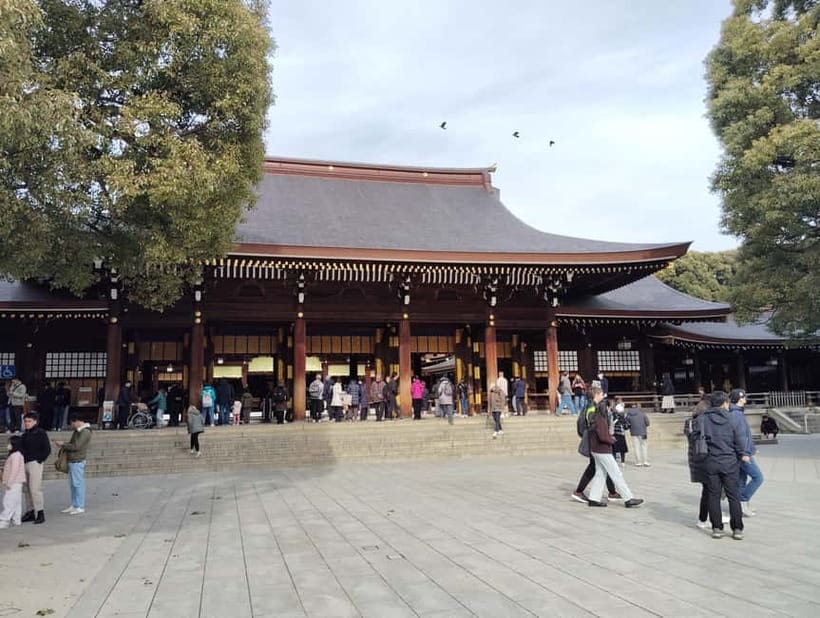
Meiji Jingu is one of Tokyo’s quiet surprises: a major shrine hidden inside a broad forest in the middle of the city. This two-hour tour gives you more than a quick photo stop. You’ll learn how to behave at the shrine, why sake barrels line one approach, and how the garden’s Eternal Forest fits into the site’s identity.
I like the practical ritual instruction, especially the handwashing and prayer steps. I also like the chance to enter Shinen Garden and reach South Pond and possibly Kiyomasa’s Well, places that are easy to miss if you only visit the main shrine.
The main drawback is time. Two hours passes quickly, and the garden visit may be shortened if the earlier stops take longer than expected. The tour also involves walking through a forested shrine complex, so comfortable shoes matter.
Key points at a glance
- Start at the first torii: Meet your guide in front of Meiji Jingu’s Ichinotorii, marked by a yellow DeepExperience sign.
- Learn the shrine etiquette: Practice handwashing and receive a clear explanation of how to pray at Meiji Jingu.
- See the sake barrel display: Hear how the offerings connect with the shrine and its Eternal Forest.
- Visit Shinen Garden: Walk around the South Pond, with Kiyomasa’s Well included if time allows.
- Try an omikuji: The fortune-telling experience and related fees are included.
- Choose a smaller experience: Private and small-group options are available, with a live English guide listed for the tour.
Why this Meiji Jingu tour is worth your morning
Meiji Jingu can look simple at first glance: a long forest path, a large torii, a main shrine, and plenty of people taking photos. The details become more meaningful once someone explains what you are seeing. That is the real reason to consider this guided walk.
You learn the difference between simply entering a Japanese shrine and entering with the right attitude. You get shown how to wash your hands, where to stand, and how to pray. These are small actions, but they turn a passive sightseeing stop into a cultural experience you can use at other shrines in Japan.
The tour is also a good fit if you want context without giving half a day to a museum. It lasts two hours and stays focused on Meiji Jingu and its garden. You will not be rushed through a long list of unrelated Tokyo sights.
The guides who have led this experience include Minoru, Kai, Kyo, and Takashi. Their strengths, based on the information available, include explaining cultural practices in plain terms, adding historical background, and answering questions with an easygoing manner. Kyo has also helped visitors connect shrine customs with present-day Japanese life, including a first visit to a konbini, or convenience store. That extra cultural perspective can be useful if this is your first time in Japan.
A few more garden visits around Tokyo worth a look
- Bangkok: 2-Hour Dinner & Shows on White Orchid River Cruise
★ 3.9 · 897 reviews - Bali Luxury Spa Massage and flower Bath 2 hour Treatmen
★ 4.5 · 167 reviews - Bali: Luxury Spa Balinese Massage scrub Flower bath 2 Hour
★ 4.9 · 77 reviews
Meeting at Meiji Jingu’s first torii
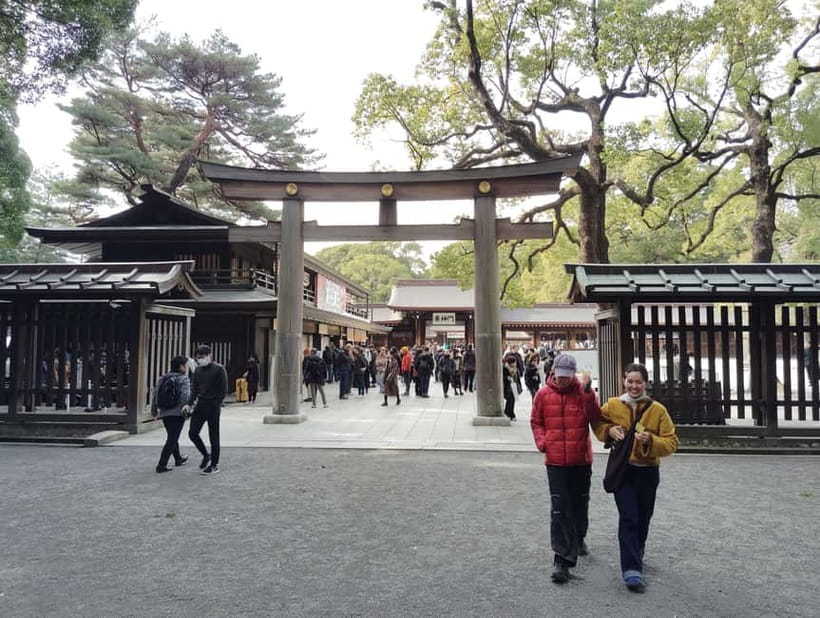
Your starting point is the first torii of Meiji Jingu, called Ichinotorii. Look for the guide holding the yellow DeepExperience sign. This meeting point puts you at the beginning of the shrine approach, rather than asking you to find your guide deep inside the grounds.
The first torii is more than a convenient landmark. It marks the point where the ordinary city begins to give way to the shrine grounds. From here, the walk takes you beneath tall trees, with the sounds and pace of Tokyo gradually feeling farther away.
Your guide begins with a short explanation of the route and the purpose of the visit. That opening is useful because Meiji Jingu is large enough to feel confusing if you arrive without a plan. You know where you are going, what to notice, and how the stops fit together.
Allow yourself enough time to reach the meeting point before the tour begins. The meeting instructions are clear, but the tour does not include private transportation. You make your own way to the shrine.
The sake barrels and the Eternal Forest
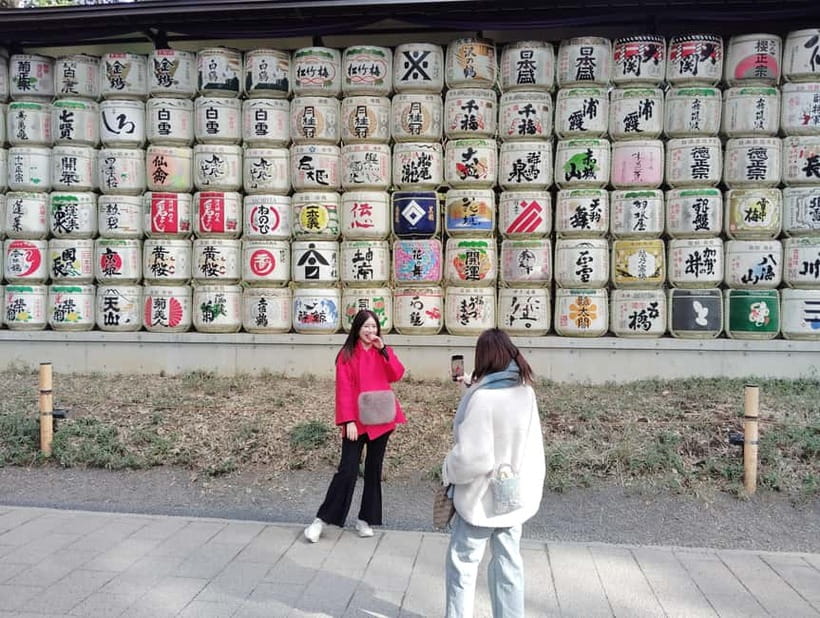
One of the early stops is the sake barrel offering area. Rows of decorated barrels provide one of the most recognizable photo opportunities at Meiji Jingu, but the display is more interesting once you understand why it is there.
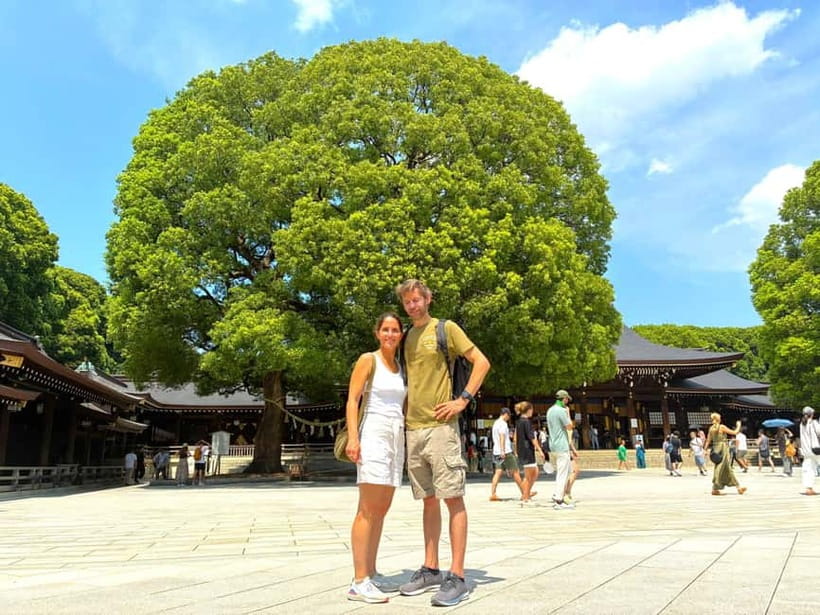
Your guide explains the relationship between sake offerings and the shrine. You also learn about Meiji Jingu’s Eternal Forest, the wooded setting that gives the shrine much of its calm character. This is a good moment to ask questions, take photos, and get a sense of how the site was designed to feel separate from the city.
The forest is central to the experience, not just background scenery. You walk beneath trees while still being close to Tokyo’s busy districts. The changing atmosphere helps explain why Meiji Jingu feels peaceful even when the shrine itself is a popular stop.
Photography is welcome at the sake barrel area, and this pause gives you time to take pictures without having to choose between listening and keeping up with a large moving group. In a small group or private setting, you may find it easier to ask about details that catch your eye.
Walking beneath the grand torii
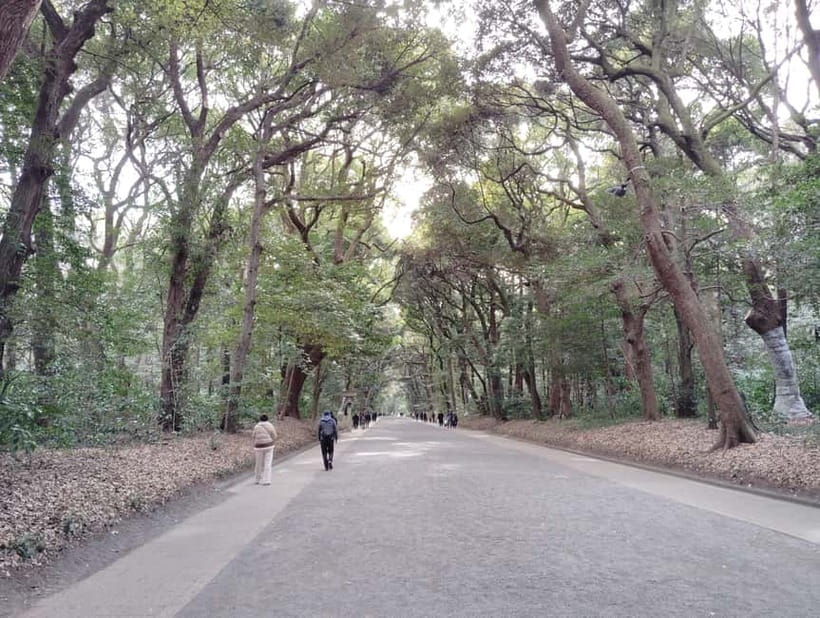
After the sake barrels, the route continues toward the grand torii. This is a transition point, both physically and in terms of shrine etiquette. Your guide prepares you for the handwashing ritual before you approach the main shrine.
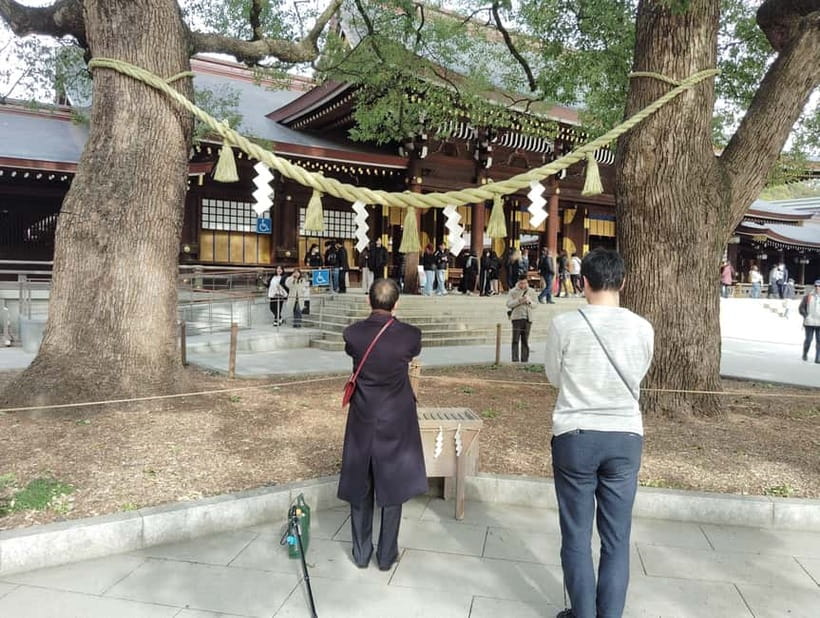
The ritual is called temizu, and the purpose is purification before prayer. You will learn how to use the water and how to avoid treating the basin like an ordinary fountain. The steps are simple, but having them explained removes the worry of doing something disrespectful.
I find this one of the strongest parts of the tour because it gives you something practical. Once you understand the basic pattern, you can use it at other Shinto shrines during your Japan trip. You are not just hearing about a custom. You are taking part in it.
The pace here is usually calm, but the shrine grounds can have other people moving through them. Your guide’s role is especially useful at this point, since you can focus on the instructions instead of guessing what everyone else is doing.
Same place, a different kind of green day out:
- Imperial Palace East Garden and Edo Castle Walking Tour in Tokyo
★ 5.0 · 510 reviews - Mt. Fuji Day Trip from Tokyo with English Speaking Driver Guide
★ 5.0 · 443 reviews - Tokyo: Imperial Palace East Gardens Walking Tour
★ 4.8 · 353 reviews - Mt. Fuji, Cherry Blossom & Shiba Sakura Pvt. Day Tour
★ 5.0 · 326 reviews
Praying at Meiji Jingu
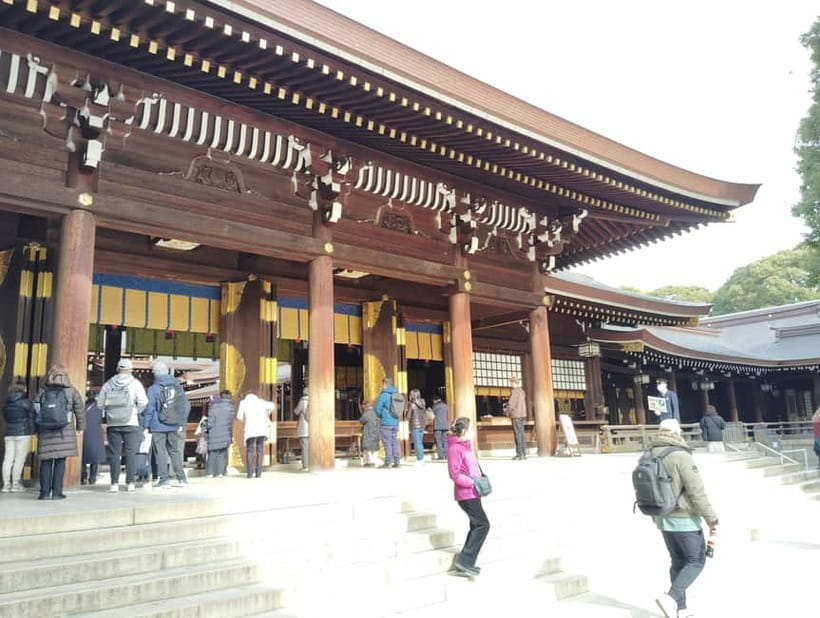
At the main Meiji Jingu Shrine, the guide explains the proper way to pray. You are given time for your own moment of reflection rather than being hurried through for a quick picture.
The value of this stop depends on how you approach it. If you want only architecture, the main shrine may seem straightforward. If you want to understand Japanese religious practice, the prayer explanation gives the visit more depth. You learn when to bow, how to make the offering, and how to carry yourself in the space.
The tour presents the shrine as a living place of worship, not simply a landmark. That distinction matters. Visitors are welcome, but the grounds still serve a religious purpose. Basic etiquette helps you take photos and look around without treating the shrine as a stage set.
This is also a good place to pause and notice the contrast between the forest and the city beyond it. Meiji Jingu is closely associated with Tokyo, yet its inner approach can feel slow and sheltered. The tour uses that quiet atmosphere well, giving you a little time to reflect instead of filling every second with facts.
Omikuji and the fortune-telling stop
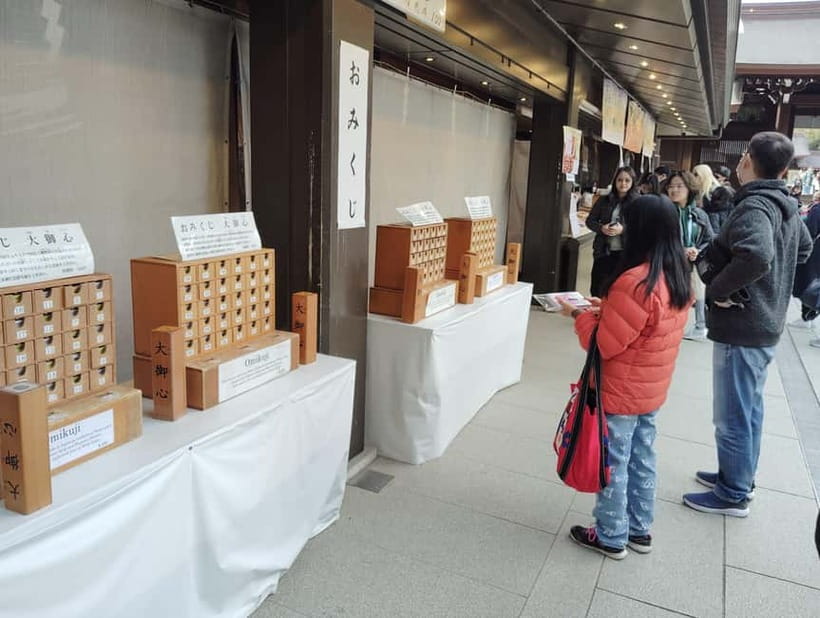
After the prayer visit, the tour includes an omikuji experience. An omikuji is a written fortune that offers guidance and reflection. Your guide explains how to approach it and what to do with the result.
The omikuji is a lighter part of the tour, which helps keep the experience from becoming too formal. You can treat it as a bit of fun, or read it as a small window into a familiar part of Japanese shrine culture. The related experience fee is included.
You may also receive a protective charm if you choose. The information provided does not specify the exact charm or its purpose, so ask your guide if you want a closer explanation before selecting one. The important point is that this part of the visit is included rather than being an unexpected extra charge.
If you are buying souvenirs or charms, remember that the tour price does not include food or drinks. There is no meal component, so plan to eat before or after the walk.
Shinen Garden and the South Pond
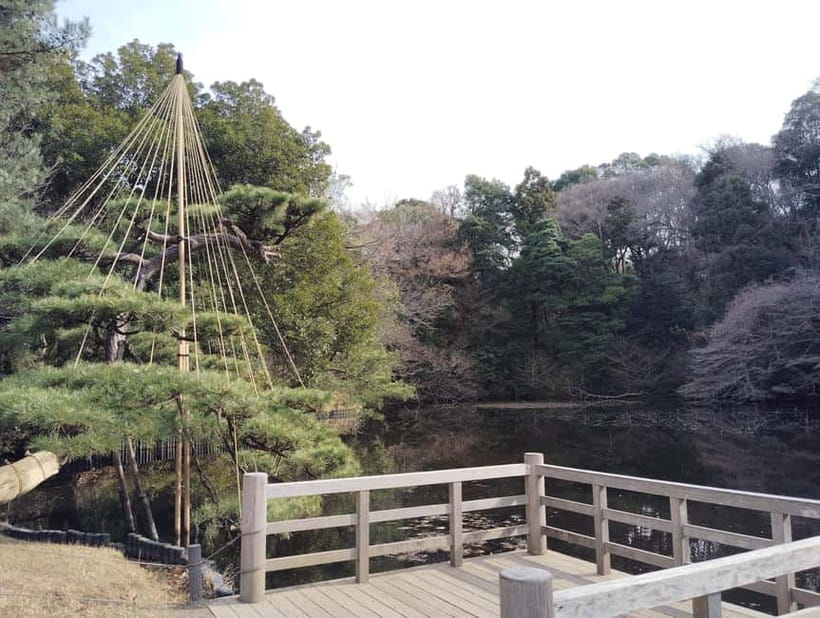
The second half of the experience takes you into Meiji Jingu’s Shinen Garden. This garden adds a different mood to the visit. The shrine approach is broad and ceremonial, while the garden route is more intimate and focused on water, trees, and quiet walking.
The South Pond area is the main focus. Your guide leads you through the garden while explaining what makes it special. This is where the tour can feel less like a standard shrine visit and more like a peaceful nature walk inside the city.
The garden entrance fee is included, which improves the value of the $48 price. If you visited the shrine alone, you could still see the main grounds, but the garden adds a separate paid element and a more complete view of the site.
The garden visit is also where timing matters most. The tour description says Kiyomasa’s Well may be included if time allows. Do not assume it is guaranteed on every departure. If the well is a priority, ask your guide early in the walk how much time remains and whether the route can include it.
Kiyomasa’s Well, if time allows
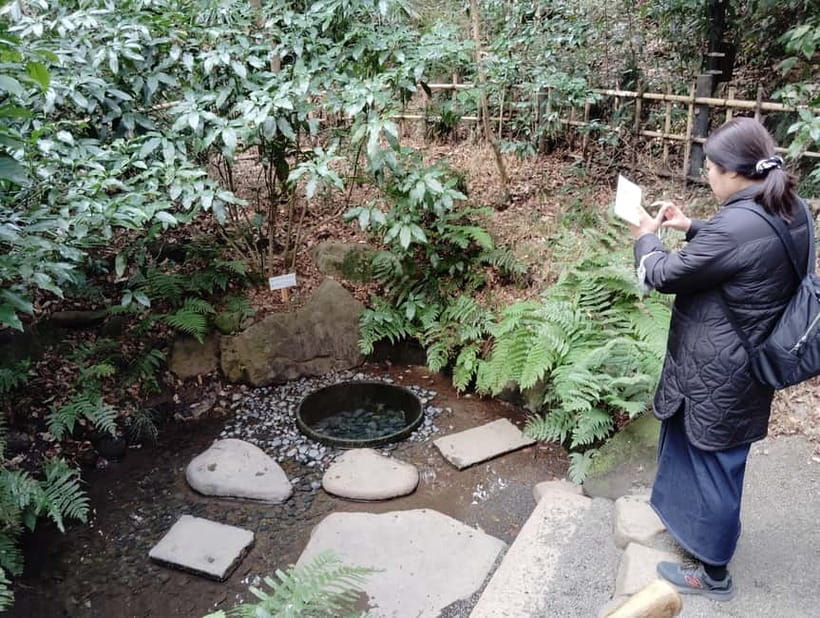
Kiyomasa’s Well is one of the most distinctive points in the garden. It gives the final part of the tour a specific destination beyond the main shrine and pond.
The well is connected with the garden’s appeal as a quiet place of reflection. Your guide can explain its place within the visit and answer questions about why it draws attention. The walk to it also lets you see more of the garden rather than turning around at the South Pond.
Still, the wording matters: this stop depends on time. The two-hour schedule covers the first torii, the sake barrels, the grand torii, the handwashing ritual, the main shrine, omikuji, and the garden. If you spend a long time taking photos or asking questions, there may not be enough time for every garden point.
That is not a flaw so much as a reason to set priorities. If you care most about the prayer ritual, take your time at the shrine. If the garden matters more, tell your guide so the final hour can be managed sensibly.
What the $48 price includes
At $48 per person, this is not the cheapest way to see Meiji Jingu. You can enter the shrine grounds on your own, and independent visitors can walk through the forest and view the main shrine without paying for a guide.
The price makes more sense if you want instruction and a structured visit. It includes the guide, entrance to Meiji Jingu Garden, the omikuji, and other listed experience fees. You are paying for cultural explanation as much as for access.
I would especially consider the tour if you are visiting Japan for the first time, are unsure about shrine etiquette, or want to understand what you are seeing instead of collecting another quick photo. The value is weaker if you prefer to wander alone, move at your own pace, or spend much longer in the garden.
A private or small-group format can also make the price more reasonable for people who want to ask many questions. The group size is not specified, so check the available option before booking if that matters to you.
Timing, walking, and guide language
The experience lasts two hours and ends back at the first torii. That makes it easy to pair with other Tokyo plans, but you should leave extra time before the next appointment. Shrine walks can feel slow when you stop for photos, rituals, and explanations.
The tour includes no private transportation. You reach Ichinotorii on your own and remain on foot during the experience. Comfortable shoes are the sensible choice, especially if you plan to continue sightseeing afterward.
The booking information lists a live English guide and also identifies English and Japanese as in-person guide languages. Confirm your preferred language when reserving. Named guides associated with the experience include Minoru, Kai, Kyo, and Takashi, but the guide assigned to your departure can vary.
The strongest guide qualities described for this experience are clear cultural explanations, historical background, friendliness, patience, and humor. Those qualities matter at Meiji Jingu because many of the most useful details concern behavior and meaning rather than grand visual attractions.
Who should book this experience
This tour suits you best if you want a calm introduction to Shinto customs, prefer a small or private setting, and want a guide to explain the difference between the shrine’s major areas.
It is also a good choice for families and first-time visitors who may appreciate being shown how to wash their hands and pray. The fortune-telling stop adds a simple activity that can appeal to people who do not want every part of a tour to be a lecture.
You may want to skip it if you have already visited Meiji Jingu several times, know shrine etiquette well, or want to spend an entire morning exploring on your own. The fixed two-hour route gives you structure, but structure can feel limiting if your main goal is unhurried photography.
The tour is not centered on food, shopping, or transportation. It is a focused cultural walk. Go in expecting trees, rituals, explanations, a garden, and a quiet change of pace from Tokyo’s streets.
Should you book the Meiji Jingu tour?
Book it if you want Meiji Jingu to make sense, not just appear in your camera roll. The handwashing lesson, prayer instructions, omikuji, sake barrels, and garden walk give you several distinct parts in a short visit.
The best reason to choose it is the guide. Minoru, Kai, Kyo, and Takashi have each been associated with friendly, clear explanations and useful cultural context. The only caution is that the schedule is tight, and Kiyomasa’s Well depends on available time.
At $48, I see this as a fair choice for a first visit, especially when the garden admission and omikuji are included. Independent visitors can save money, but you will need to learn the rituals and interpret the site yourself. If that extra context is worth paying for, this two-hour experience is a practical way to begin understanding Meiji Jingu.
FAQ
How long does the Meiji Jingu tour last?
The tour lasts two hours.
Where does the tour meet?
The meeting point is in front of Ichinotorii, the first torii of Meiji Jingu. The guide holds a yellow sign with the DeepExperience logo.
Where does the tour end?
The tour ends back at Meiji Jingu’s first torii.
Is the Meiji Jingu Garden entrance included?
Yes. The entrance fee to Meiji Jingu Garden is included.
Is the omikuji experience included?
Yes. The omikuji and other listed experience fees are included.
Is a guide included?
Yes. A guide fee is included, and the experience has a live guide.
What languages are available?
The booking information lists English as the live tour language and identifies English and Japanese for the in-person guide options. Confirm your preferred language when booking.
Is private transportation included?
No. Private transportation is not included.
Is food or drink included?
No. Food and drinks are not included.
Can I cancel for a full refund?
You can cancel up to 24 hours in advance for a full refund. You can also reserve now and pay later, according to the booking terms provided.
Just added around Tokyo
- Tsumami Zaiku Japanese Fabric Flower Class★ 5.0 · 3 reviews
- Tsukiji Food Strolling and Hama Rikyu Garden Walking Tour★ 5.0 · 7 reviews
- Tokyo: Serene Sakura & Sake: An Exclusive Brewery Pairing Lunch★ 5.0 · 2 reviews
- Private tour – Scenic Fuji Escape: Hakone, Peace Park & More★ 5.0 · 4 reviews
- Tokyo Cherry Blossom Half Day Walking Tour with a Local Guide★ 3.5 · 4 reviews
- TOKYO: Tailored Gardens tour with Pro Gardener by E-bike -BASIC★ 5.0 · 2 reviews
- Cherry Blossom Highlights, Asakusa, Ueno, Imperial Palace Garden★ 4.5 · 4 reviews
- Japan’s Customs of Ikebana Art, Tea Ceremony & Kimono Welcome★ 5.0 · 2 reviews
Tokyo Garden Tours, compared.
Imperial Palace East Garden and Edo Castle Walking Tour in Tokyo
Read our review →
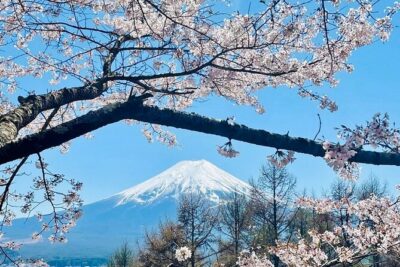
Edo Castle & East Garden of the Imperial Palace Tour
Read our review →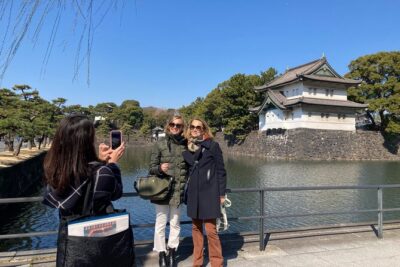
Tokyo Private Tour! Edo Castle & Imperial Palace East Gardens
Read our review →
Mount Fuji & Lake Kawaguchiko Private Tour: Beyond the Ordinary
Read our review →
Rainbow Bridge Day Cruise Show and Only Soft Drinks
Read our review →
Tsukiji Market and Hama-rikyu Gardens Guided Tour
Read our review →Browse the lists this tour appears in