
Review · TOKYO
Tokyo: Ikebana Workshop at Ginza
Ikebana is not simply flower arranging. In this private Ginza workshop, you’ll look closely at each stem, notice its most graceful feature, and build an arrangement around it. The pace is calm, but your mind stays active as you make design choices of your own.
I like two things here: you receive fresh flowers and every tool, so you can arrive with empty hands, and the instructor works in English or Japanese. The chance to take your flowers home is another practical touch. The main drawback is the upstairs venue, reached only by stairs, and the $136 price is high for a 90-minute activity.
Key points to know before booking
- Private instruction in Ginza: You receive personal guidance rather than working as one face in a large class.
- Traditional free-style ikebana: You make your own design while learning how to handle flowers and tools.
- Seasonal flowers are supplied: No advance preparation or flower shopping is needed.
- English or Japanese instruction: Choose the language that makes the creative process easiest.
- Your arrangement goes home with you: You can photograph it first, then take the flowers with you.
- A calm 1.5-hour activity: It fits neatly into a Ginza day, but the venue has stairs only.
What the Ginza ikebana workshop is really about
This experience gives you a short, hands-on introduction to ikebana, the Japanese art of arranging flowers. You are not simply handed a finished example to copy. Instead, the instructor asks you to look at the flowers, find their appealing points, and think about how those shapes can work together.
That small change in approach matters. A standard craft class often rewards accuracy. Here, you make choices about line, balance, and space. You may begin with a flower that bends in an unusual way or has a particularly attractive bloom. The arrangement then grows from that starting point.
The workshop uses a traditional free-style approach. That gives you room to create something personal while still learning the basic discipline of ikebana. You do not need prior experience, and the supplied materials mean you can make a booking without finding a florist or bringing equipment across Tokyo.
The activity is held in Ginza, one of Tokyo’s best-known central districts. The meeting point is in front of the Nonohana Tsukasa Building, and the instructor waits there before taking you inside. The session ends at the same meeting point, so you do not need to arrange a separate ride or navigate to a second location afterward.
A few more garden visits around Tokyo worth a look
- Japanese flower arranging (Ikebana) Experience/Workshop in Tokyo
★ 5.0 · 52 reviews - Japanese Fan Painting Workshop ~ in a Tokyo Flower Shop
★ 5.0 · 9 reviews - Tsumami Zaiku Japanese Fabric Flower Class
★ 5.0 · 3 reviews
Starting at the Nonohana Tsukasa Building
Plan to arrive at the meeting point with enough time to find the building without rushing. Your guide will be waiting in front of the Nonohana Tsukasa Building, then lead you to the venue on the second floor.
There is no elevator, and the room is reached by stairs. This is the one physical detail you should take seriously when deciding if the activity fits your day. If stairs may be difficult for you, contact the provider in advance rather than assuming the venue can accommodate a different route.
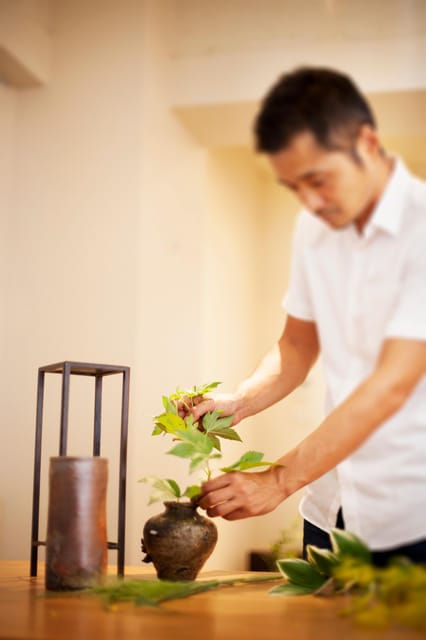
Once inside, you can expect a traditional Japanese atmosphere rather than a large commercial studio. The setting is part of the appeal. You are not attending a quick flower demonstration where you watch someone else work. You sit down with the tools and flowers and take part from the first step.
The class is offered as a private group. That is useful if you are traveling with a partner, family member, or small group of friends and want the instructor’s attention focused on your table. It also makes the class a better fit for people who prefer not to create in front of a large audience.
Children under five are not suited to this activity. The information does not set a broader age range, so families with older children should consider the child’s patience and ability to follow careful instructions with flowers and tools.
First look: finding the character of each flower
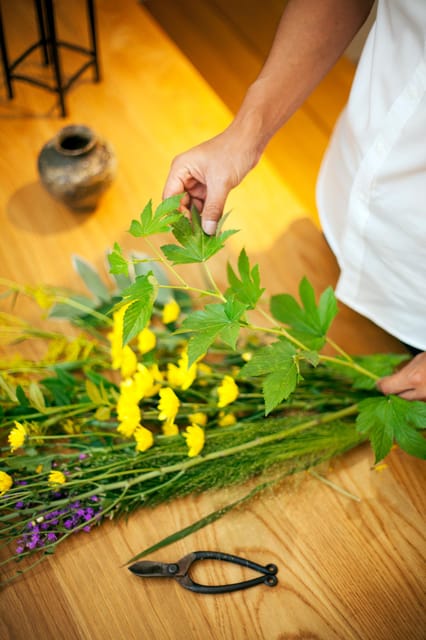
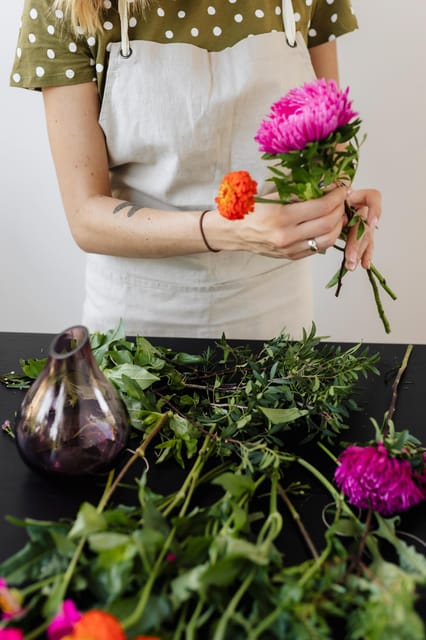
The workshop begins by handling and examining the flowers. This is more important than it may sound. Rather than treating every stem as a uniform piece of material, you look for its individual shape, direction, and appeal.
Your instructor helps you identify what might work best in the arrangement. A stem may have a pleasing curve. A flower may face slightly to one side. Leaves may create a useful contrast in height or texture. You then begin to picture how these parts could sit together.
This is the most reflective part of the class. You are asked to make decisions before cutting or placing everything. The process encourages you to slow down and pay attention, which is one reason the activity can feel calming without becoming passive.
You should not expect a fixed result. Your arrangement may differ from another person’s because ikebana gives importance to the character of the materials and the decisions made by the arranger. The instructor’s role is to help you shape your idea, not erase it.
Fresh seasonal flowers are normally provided. The exact flowers are not guaranteed because the materials change with the season. If you have a request, contact the provider before the session. That is the right time to ask, since special flowers may not always be available.
Using traditional tools to build your arrangement
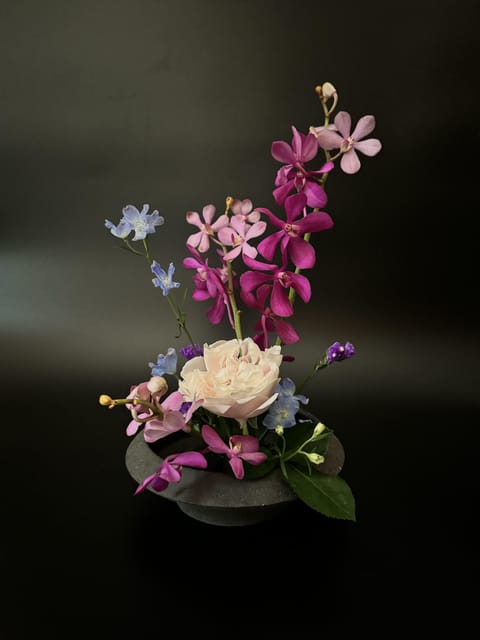
After you have a design in mind, you begin arranging the flowers with traditional tools. The instructor explains how to use the equipment and how to care for the flowers. You are not expected to arrive knowing how to cut, position, or maintain the stems.
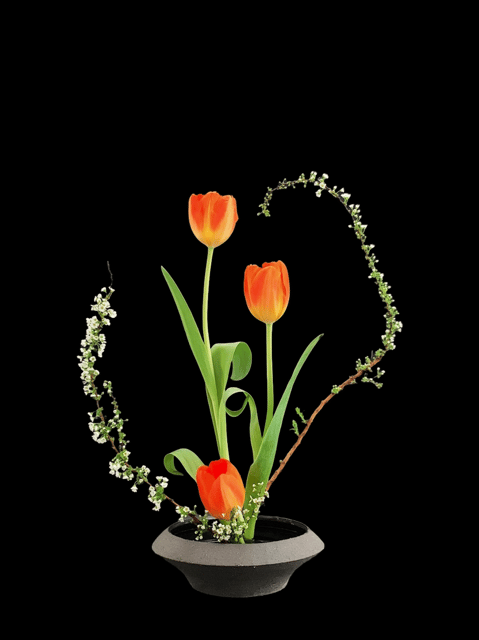
This part calls for a light touch. The aim is not to pack the container with as many flowers as possible. The arrangement depends on the relationship between the stems, their angles, and the open space around them. The instructor’s guidance helps you understand how small adjustments can change the whole shape.
A private format is especially helpful here. If one stem refuses to sit correctly or your design feels unbalanced, you can ask for advice at once. The instructor can offer a correction while still allowing you to make the final decision.
The class is available in English and Japanese. English instruction removes a major barrier for international visitors, especially when the activity involves detailed instructions about tools and flower care. Japanese-speaking participants can choose Japanese if that feels more natural.
The supplied equipment is included in the price. That keeps the session simple for you. You do not need to pack scissors, containers, or other flower-arranging materials, and you do not need to worry about returning with a kit afterward.
Same place, a different kind of green day out:
- Imperial Palace East Garden and Edo Castle Walking Tour in Tokyo
★ 5.0 · 510 reviews - Mt. Fuji Day Trip from Tokyo with English Speaking Driver Guide
★ 5.0 · 443 reviews - Tokyo: Imperial Palace East Gardens Walking Tour
★ 4.8 · 353 reviews - Mt. Fuji, Cherry Blossom & Shiba Sakura Pvt. Day Tour
★ 5.0 · 326 reviews
A quiet activity with something to think about
The instructor presents ikebana as a way to notice beauty and reflect on your own perspective. You do not need to treat the class as a formal meditation session, but the work naturally slows you down.
You look at a flower before deciding where it belongs. You consider whether a stem should be shorter, higher, more upright, or allowed to lean. Those decisions are small, yet they require attention. For many people, that is the strongest part of the experience.
One person who joined the class with a companion described the time as a great hour with a lovely teacher, noting that the flower arrangements looked fantastic and the explanations were good. Another described the activity as calming while still positively stimulating. Those details point to the balance you can expect: peaceful, but not dull; guided, but not rigid.
The scheduled duration is 1.5 hours. That is enough time for an introduction, design, arranging, flower-care advice, and photographs without turning the activity into a full-day commitment. The session could fit well between other Ginza plans, though you should allow extra time for reaching the building and climbing the stairs.
Photographing the finished ikebana
At the end, you can photograph your arrangement. This gives you a record of the design before you leave, which is useful because the arrangement is temporary and the flowers will change over time.
You can also take home the flowers you used. That adds real value to the class. You are not left with only a memory and a photograph. You have the materials to enjoy afterward, provided you can transport them comfortably and care for them as instructed.
The arrangement may be more delicate than a regular souvenir. If you have a full day of sightseeing afterward, think about how you will carry the flowers. The activity information confirms that you can take them home, but it does not specify packaging or a special transport container, so ask the instructor if you have a long journey ahead.
This final step also makes the workshop suitable for a special occasion. You could create an arrangement with a partner, mark a birthday, or simply set aside time for a slower cultural activity during a busy Tokyo visit. The experience remains hands-on rather than ceremonial, so you do not need a strong background in Japanese arts to take part.
Is $136 a fair price?
At $136 per person, this is not a bargain activity. A 90-minute flower class costs more than many casual Tokyo attractions, and the short duration should be part of your calculation.
The price makes more sense if you value private instruction, a traditional setting, supplied flowers, supplied equipment, and the chance to take your arrangement home. You are paying for access to an instructor who can guide your individual design, not just for a basic craft kit.
The included flowers and tools also save you the trouble of buying materials separately. The English or Japanese instruction adds practical value, especially when you want to understand the reasoning behind each step rather than simply follow silent demonstrations.
I would consider it worthwhile for someone who has a real interest in Japanese arts, flowers, design, or quiet hands-on experiences. It is less attractive if you are comparing activities only by minutes of entertainment or looking for the cheapest cultural introduction in Tokyo.
The two available ratings are both five out of five, with particular praise for the attractive arrangements, clear explanations, and calming yet stimulating mood. That matches the strongest reasons to book, but the small number of ratings means you should still weigh the cost and the stairs for yourself.
Who should book this experience?
This workshop suits couples, friends, solo visitors, and private groups who want an activity with a personal pace. It is especially useful for a first introduction to ikebana because you receive flowers, equipment, instruction, and flower-care advice in one session.
You should also consider it if your Tokyo schedule already includes plenty of walking and sightseeing. Ninety minutes of focused creative work can provide a welcome change from temples, department stores, and crowded streets.
It is a good match for you if:
- You enjoy making something with your hands.
- You want direct instruction in English or Japanese.
- You prefer a private group to a large class.
- You like seasonal flowers and Japanese traditional arts.
- You want to take home a physical result.
- You are comfortable climbing stairs to a second-floor venue.
It may not suit you if you need step-free access, dislike careful craft work, or want a fast, highly structured demonstration. The class asks you to make design decisions, so it works best when you are willing to slow down and participate.
Practical details for planning your visit
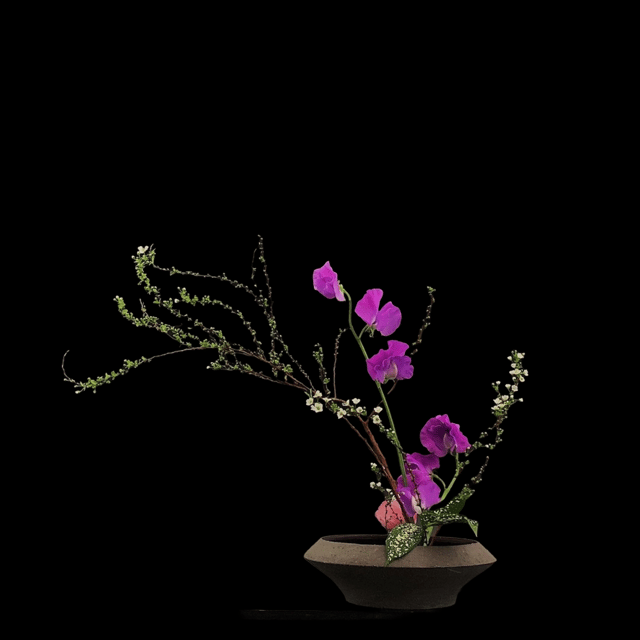
The activity lasts 1.5 hours, and starting times depend on availability. Check the schedule before building the rest of your Ginza plans around it.
Meet in front of the Nonohana Tsukasa Building. Your guide waits there, and the activity returns to the same meeting point at the end. Flowers and all equipment are included, so you only need to bring yourself and any personal items you want for photographing the finished arrangement.
The instructor speaks English and Japanese. If you have a request for a particular seasonal flower, contact the provider before booking or before the session. Fresh seasonal flowers are the standard, but specific requests may require advance discussion.
The activity is not covered by insurance. Cancellation is free up to 24 hours before the scheduled start for a full refund, and you can reserve now while paying later. Those terms give you some flexibility, but they do not remove the need to check the stairs and timing before you commit.
Should you book the Ginza ikebana workshop?
Book it if you want a small, thoughtful cultural experience rather than another sightseeing stop. The strongest features are the private format, English or Japanese guidance, seasonal flowers, traditional tools, and the chance to bring the arrangement home.
Skip it if $136 feels too high for a 90-minute session or if stairs are a concern. For the right person, though, the class offers something many Tokyo activities do not: time to look closely, make your own choices, and leave with a flower arrangement shaped by your hands.
FAQ
How long does the ikebana workshop last?
The workshop lasts 1.5 hours. Starting times vary, so check availability when selecting your date.
Where does the activity begin and end?
Meet your guide in front of the Nonohana Tsukasa Building. The activity ends back at the meeting point.
Is the workshop available in English?
Yes. The instructor offers the workshop in English or Japanese.
Are flowers and equipment included?
Yes. Flowers and all equipment are included, and no advance preparation is needed.
Can I take the flowers home?
Yes. After the session, you can take home the flowers you used. You can also photograph your finished ikebana.
Is the venue accessible by elevator?
No. The venue is on the second floor and can only be reached by stairs. Contact the provider in advance if you have any concerns.
Just added around Tokyo
- Tsumami Zaiku Japanese Fabric Flower Class★ 5.0 · 3 reviews
- Tokyo: Serene Sakura & Sake: An Exclusive Brewery Pairing Lunch★ 5.0 · 2 reviews
- Tsukiji Food Strolling and Hama Rikyu Garden Walking Tour★ 5.0 · 7 reviews
- Private tour – Scenic Fuji Escape: Hakone, Peace Park & More★ 5.0 · 4 reviews
- Tokyo Cherry Blossom Half Day Walking Tour with a Local Guide★ 3.5 · 4 reviews
- TOKYO: Tailored Gardens tour with Pro Gardener by E-bike -BASIC★ 5.0 · 2 reviews
- Cherry Blossom Highlights, Asakusa, Ueno, Imperial Palace Garden★ 4.5 · 4 reviews
- Japan’s Customs of Ikebana Art, Tea Ceremony & Kimono Welcome★ 5.0 · 2 reviews
Tokyo Garden Tours, compared.
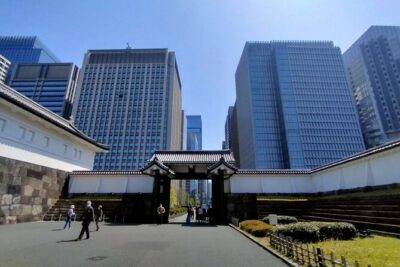
Imperial Palace East Garden and Edo Castle Walking Tour in Tokyo
Read our review →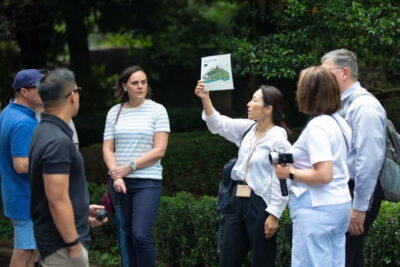
Edo Castle & East Garden of the Imperial Palace Tour
Read our review →
Tokyo Private Tour! Edo Castle & Imperial Palace East Gardens
Read our review →
Mount Fuji & Lake Kawaguchiko Private Tour: Beyond the Ordinary
Read our review →
Rainbow Bridge Day Cruise Show and Only Soft Drinks
Read our review →
Tsukiji Market and Hama-rikyu Gardens Guided Tour
Read our review →Browse the lists this tour appears in