
Review · JAPAN
Private Cherry Blossom Tour in Hirosaki with a Local Guide
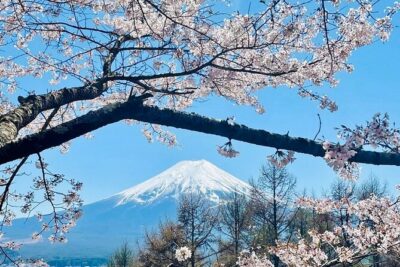
Hirosaki Park is one of Japan’s great spring spectacles, with more than 2,600 cherry trees creating blossom tunnels, petal-covered moats, and quiet corners around Hirosaki Castle. This private tour adds local history and Tsugaru culture, so you see more than flowers.
I like the private format, which lets your guide adjust the pace and explain the many cherry varieties. I also like the mix of sights: Atsushi has been praised for making the day work well for families, while the Neputa drums and Tsugaru-shamisen performance give the tour a distinctly local flavor.
The main drawback is timing. The experience is advertised as a full-day outing but lasts about six hours, and the listed stops include several short visits. During peak blossom season, you may need to choose between lingering in the park and seeing every scheduled sight.
Key points to know before booking
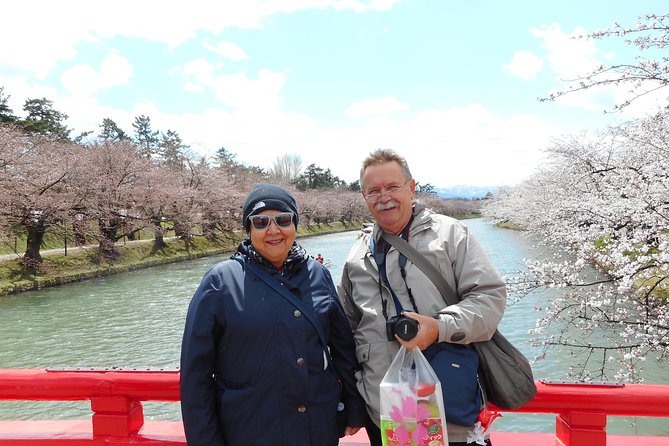
- More than 2,600 cherry trees: Hirosaki Park offers blossom tunnels, moats, boats, picnic areas, and evening illuminations.
- A private guide named Atsushi may lead your day: He has been praised for explaining local history and adapting the pace for children.
- Six hours combines nature with culture: You visit the Former Hirosaki City Library, Hirosaki Castle, Neputa Mura, and Ishiba Residence.
- Hotel pickup in Hirosaki is included: The tour begins at 9:00 a.m. and ends back at the meeting point near Hirosaki Station.
- The best dates are seasonal: The Hirosaki Cherry Blossom Festival is held from April 23 to May 5, when blossoms are usually in bloom.
- The $183.52 price buys privacy and convenience: It includes a guide, bus ticket, walking tour, and entrance fees, but not food, drinks, or hotel drop-off.
Why Hirosaki’s cherry blossoms are worth the trip
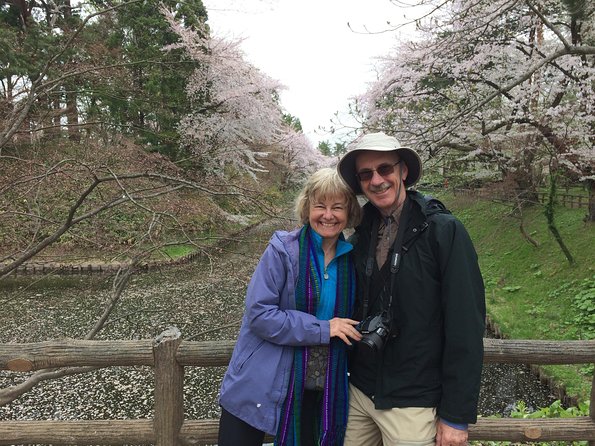
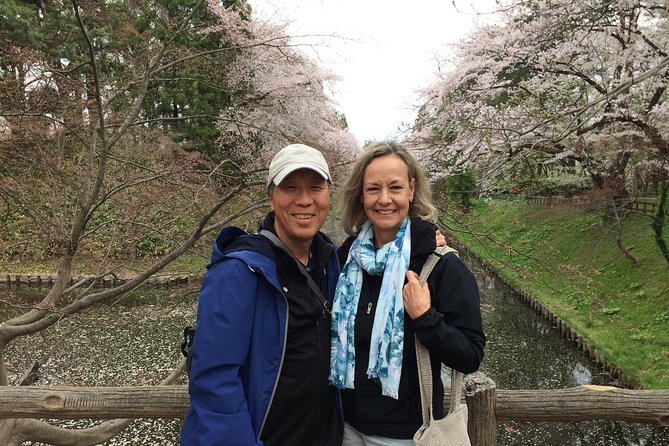
Hirosaki is in Aomori Prefecture, in northern Japan, and its spring display has a special character. The park is not simply a place with rows of flowering trees. Its blossoms frame moats, castle grounds, shrines, open lawns, and old buildings, giving you several different views within one compact area.
You can expect a mix of cherry tree varieties rather than one uniform bloom. That matters because different trees flower and fade at different times. If the season is running late, some trees may still be in bloom after other parts of the park have begun to lose their petals. One person on this tour was lucky enough to catch the last trees flowering, which turned a late visit into a memorable one.
The timing of your trip remains the biggest unknown. Spring weather controls the show, and the tour provider cannot guarantee peak bloom on a particular date. The annual festival is scheduled for April 23 through May 5, but the exact best day changes from year to year.
More Cherry Blossom Tours in Japan
- Mt. Fuji, Cherry Blossom & Shiba Sakura Pvt. Day Tour
★ 5.0 · 326 reviews - Nagano: 1-Day Snow Monkey & Cherry Blossom Tour in Spring
★ 4.8 · 51 reviews - Mt. Fuji & Hakone Cherry Blossom private One Day Tour
★ 4.5 · 35 reviews
Starting with Hirosaki’s Western-style library
The Former Hirosaki City Library is a fine first stop because it gives you a quick look at the city beyond its castle and flowers. Built in 1906 to mark Japan’s victory in the Russo-Japanese War, the three-story wooden building has a Renaissance-style design and two octagonal towers.
You have about 20 minutes here, with admission included. That is enough time to see the exterior and hear how the building served as Hirosaki’s city library until 1931. It is a short stop, but the unusual design helps explain the mix of Japanese and Western influences found in Hirosaki.
Do not expect a long museum visit. The value is in the setting and the guide’s explanation, especially if you would otherwise pass the building without understanding its purpose.
Hirosaki Park: tunnels, moats, and changing light
The central part of the outing is Hirosaki Park. The park contains more than 2,500 trees in the itinerary description, while the overall tour description gives a figure of more than 2,600. Either way, you are dealing with a very large collection of cherry trees, not a small garden with a few photogenic branches.
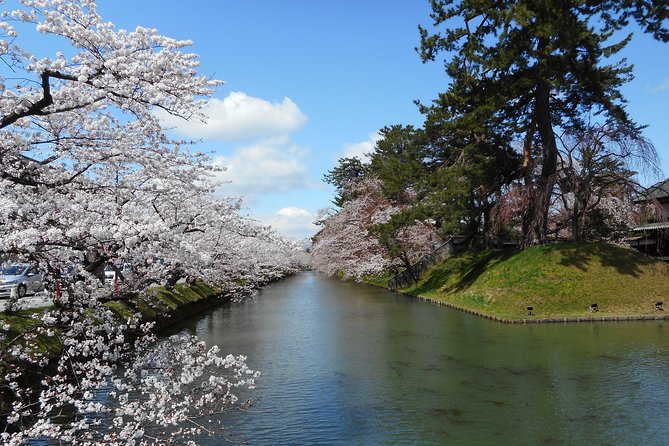
The famous Sakura Tunnel along the west moat is one of the park’s signature views. Branches meet overhead, creating a natural corridor of blossoms. Elsewhere, fallen petals gather on the water and form a soft pink surface around the castle grounds. These different views are one reason the park feels bigger and more varied than a single viewing platform.
The tour gives you time to walk, take photographs, and see the park’s shrines, temples, plants, and wildlife. You might also find pleasant picnic areas and rental rowing boats. A boat ride is not listed as included, so treat it as an optional activity that may involve extra time and cost.
The itinerary assigns 30 minutes to Hirosaki Park and another 30 minutes to the Hirosaki Cherry Blossom Festival. In practice, these two stops concern the same broad park area and seasonal display. Ask your guide how the time will be divided if you want a relaxed walk or plenty of photographs. Thirty minutes can feel short when the trees are at their best.
Hirosaki Castle and the story behind its small tower
Hirosaki Castle sits within the park, making it a natural part of the blossom walk. The castle once had a grand five-story tower, but lightning caused it to burn. Military regulations at the time prevented the tower from being rebuilt to its former size, so it was reconstructed as the three-story building you see today.
The tower is recognized as a symbol of Hirosaki and is described as the only castle tower in the Tohoku region rebuilt during the Edo Period. That detail gives the stop more weight than a simple castle photo.
The scheduled visit lasts about 15 minutes. That is enough for a brief look and an explanation, but not for a long castle visit. If you care more about the park’s scenery than castle architecture, the short stop works well. If the castle is your main reason for coming, ask in advance how much time can be spent there.
Same place, a different kind of green day out:
- Osaka: teamLab Botanical Garden Entry Ticket
★ 4.5 · 1,710 reviews - Imperial Palace East Garden and Edo Castle Walking Tour in Tokyo
★ 5.0 · 510 reviews - Mt. Fuji Day Trip from Tokyo with English Speaking Driver Guide
★ 5.0 · 443 reviews - Kyoto Zen Meditation & Garden Tour at a Zen Temple with Lunch
★ 5.0 · 441 reviews
Neputa Mura brings local festival culture to the day
Tsugaru-han Neputa Mura shifts the focus from flowers to local performance and craft. The attraction presents a small-scale version of the Hirosaki Neputa Festival, with the large fan-shaped Neputa floats used in the festival displayed for viewing.
You can also try the taiko drums alongside Neputa musicians. Live Tsugaru-shamisen performances are available too. This is a useful stop because it gives you something to hear and do, not just another building to photograph.
The scheduled time is 40 minutes, the longest single cultural stop outside the park. That should give you room to look at the floats and take part in the musical demonstrations. The visit is included in the walking tour plan, but the information supplied does not specify every internal admission arrangement, so confirm details with the guide if this stop is especially important to you.
For families, this may be one of the most successful parts of the day. The guide can explain the setting, and children have a chance to interact with the drums rather than simply listen to a historical lecture.
Ishiba Residence and northern merchant life
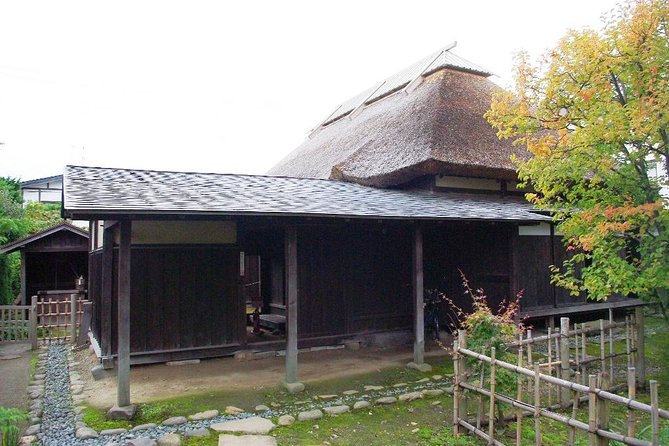
Ishiba Residence offers a quieter look at Hirosaki. The building belonged to a merchant family in the late Edo Period and is designated an important cultural property. The Ishiba family heads were traditionally named Seibei and dealt in general goods.
Today, the building is used as a brewery. Its open hearth and pillars show the marks of long use, while its design reflects the snowy northern climate. This is one of the few surviving merchant residences of its type, so the stop adds a more ordinary, domestic side to the city’s past.
You have about 15 minutes here. That will not allow a long architectural study, but it is enough to see the main features and understand how merchant families lived and worked. The atmosphere should appeal to you if you prefer old homes and local life to a string of major monuments.
How the private guide changes the experience
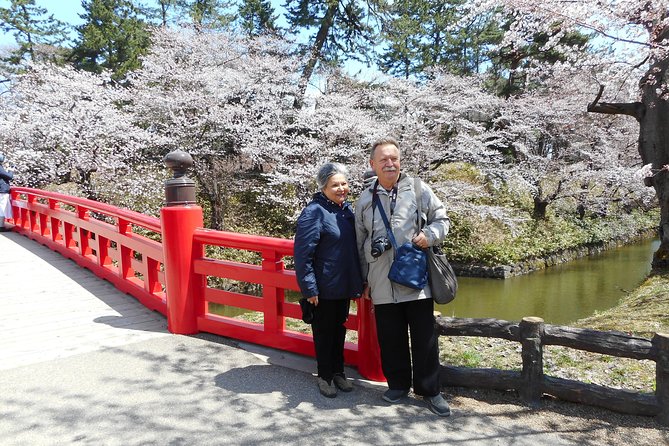
The private setup is the strongest practical reason to choose this tour. You are not tied to the pace of a large group, and the guide can adjust explanations or let you spend longer in the places that matter most to you.
A guide named Atsushi has received especially strong praise for explaining Hirosaki’s past, allowing customization, and staying patient with children throughout the day. That is useful information for families, since a private tour can become stressful if the guide treats every stop like a fixed lecture.
You should still tell the guide early what you want. Ask for more park time if blossoms are your priority. Ask for more castle or cultural explanation if you prefer architecture and local traditions. The supplied details confirm that the tour can be customized, but they do not promise a particular guide on every departure, so the experience may vary.
Transport, meeting point, and the six-hour pace
The stated start time is 9:00 a.m. The meeting point is Hirosaki Station at 1 Omotemachi, and hotel pickup within Hirosaki city is included. A bus ticket is also included, which removes one small transport task from your morning.
The tour ends back at the meeting point rather than at your hotel. You need to arrange your own return from the station, and hotel drop-off is not included. That is easy enough if you are staying near the station, but it matters if you have luggage, a tight train connection, or an evening reservation elsewhere.
The total duration is about six hours. The listed stop times add up to roughly two and a half hours, leaving the rest for walking between sites, transport, explanations, and possible flexibility. You should expect a walking-heavy day, even though the tour includes bus transportation.
A moderate level of physical fitness is recommended. Wear comfortable shoes, particularly if you want to explore more of the park than the short scheduled viewing periods. Service animals are allowed, and the area is near public transportation.
Is $183.52 a fair price?
At $183.52 per person, this is not the cheapest way to see cherry blossoms in Hirosaki. You can visit a public park independently for far less. The price makes more sense if you value a private guide, hotel pickup, a planned route, included bus fare, and entrance fees.
The tour also saves you from working out how the park, castle, library, Neputa attraction, and old merchant residence fit together. That convenience has real value during the short blossom season, when the best days are busy and your time in Hirosaki may be limited.
The value drops if you mainly want an unhurried park visit. The itinerary includes several brief stops, and the two 30-minute park entries may not satisfy you if you want to row on the moat, picnic, photograph every section, or wait for ideal light.
Group discounts may improve the price for larger parties. Since this is a private activity, compare the total cost for your group rather than judging the per-person price alone. For a family or small group that wants guidance and pickup, the arrangement can be reasonable. For a solo visitor focused only on blossoms, independent sightseeing may cost less.
Who should book this Hirosaki tour?
I would recommend it most strongly to first-time visitors who want context along with spring scenery. It also suits families, especially if you prefer a guide who can adjust the pace and keep children involved at Neputa Mura.
The tour is a good fit for you if:
- You are visiting Hirosaki during the cherry blossom season.
- You want a private guide rather than a fixed group outing.
- You enjoy combining gardens, architecture, local performance, and history.
- You are staying in Hirosaki and want hotel pickup.
- You prefer a planned route over arranging several stops yourself.
I would think twice if you want a slow, photography-first day. The short scheduled times and six-hour limit may leave you wishing for more freedom in Hirosaki Park. Ask about spending less time at the smaller stops if the blossoms are at peak.
Book as early as practical if your dates are fixed. This tour is booked, on average, 84 days ahead, which suggests that spring availability can matter. Confirmation is sent within 48 hours, subject to availability. You can cancel for a full refund up to 24 hours before the start time, but changes or cancellations inside that window are not refunded.
FAQ
How long does the private cherry blossom tour last?
The tour lasts approximately six hours and begins at 9:00 a.m.
Where does the tour start and end?
It starts at Hirosaki Station, 1 Omotemachi, Hirosaki, and ends back at the meeting point.
Is hotel pickup included?
Yes. Hotel pickup within Hirosaki city is included, but hotel drop-off is not.
What does the price include?
The price includes a local guide, private walking tour, bus ticket, entrance fee, and hotel pickup in Hirosaki city. Food and drinks are not included.
When is the Hirosaki Cherry Blossom Festival held?
The festival is held annually from April 23 to May 5, when the blossoms are usually in bloom.
Is this tour suitable for children?
The activity requires a moderate level of physical fitness. A guide named Atsushi has been described as patient with children and willing to customize the day, but the tour remains a walking activity.
Just added around Japan
- Tsumami Zaiku Japanese Fabric Flower Class★ 5.0 · 3 reviews
- Tokyo: Serene Sakura & Sake: An Exclusive Brewery Pairing Lunch★ 5.0 · 2 reviews
- Tsukiji Food Strolling and Hama Rikyu Garden Walking Tour★ 5.0 · 7 reviews
- Private tour – Scenic Fuji Escape: Hakone, Peace Park & More★ 5.0 · 4 reviews
- Tokyo Cherry Blossom Half Day Walking Tour with a Local Guide★ 3.5 · 4 reviews
- TOKYO: Tailored Gardens tour with Pro Gardener by E-bike -BASIC★ 5.0 · 2 reviews
- Cherry Blossom Highlights, Asakusa, Ueno, Imperial Palace Garden★ 4.5 · 4 reviews
- Japan’s Customs of Ikebana Art, Tea Ceremony & Kimono Welcome★ 5.0 · 2 reviews
Japan Garden Tours, compared.
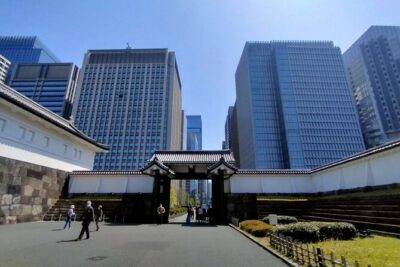
Imperial Palace East Garden and Edo Castle Walking Tour in Tokyo
Read our review →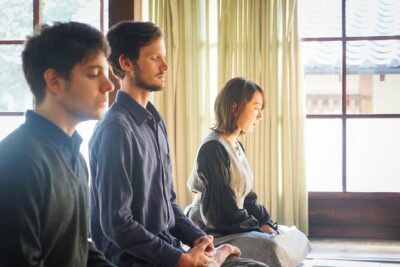
Kyoto Zen Meditation & Garden Tour at a Zen Temple with Lunch
Read our review →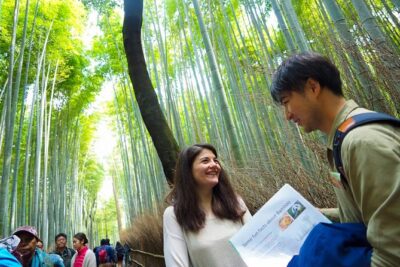
Kyoto Arashiyama Bamboo forest & Garden Half-Day Walking Tour
Read our review →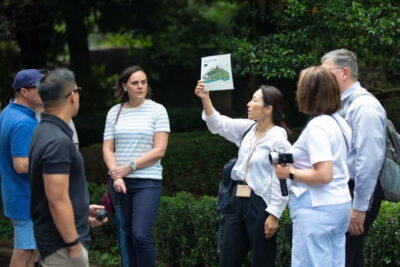
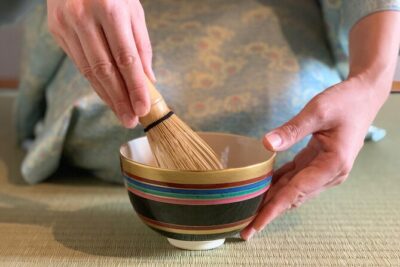
Authentic Kyoto Tea Ceremony: Camellia Flower Teahouse
Read our review →
Edo Castle & East Garden of the Imperial Palace Tour
Read our review →Browse the lists this tour appears in