
Review · JAPAN
From Asakusa: Old Tokyo, Temples, Gardens and Pop Culture
Tokyo rarely makes a gentle first impression. This tour gives you a useful introduction by linking Senso-ji Temple, Ueno, Akihabara, and Koishikawa Korakuen Garden in one four-hour route. You get old neighborhoods, temple customs, street markets, anime culture, and a peaceful Edo-period garden instead of seeing only one polished slice of the city.
I like the small maximum of eight people, which makes it easier to ask questions and move through crowded streets. I also like the broad mix of places: Taka, Ken, Hiro, Yapi, and other guides have helped guests connect Tokyo’s history with everyday customs, train travel, markets, and pop culture. The main concern is pace. One poor experience involved a late start, trouble hearing the guide in Asakusa, and a rushed finish, so stay close and speak up if you need a slower walk.
Key points at a glance
- Senso-ji sets the cultural tone: Learn temple etiquette, the meaning of the Thunder Gate, and how to approach one of Tokyo’s best-known Buddhist sites.
- Four neighborhoods, one compact route: Move from Asakusa’s old streets to Ueno markets, Akihabara’s electronics and anime shops, and a formal garden.
- A group of no more than eight: The smaller size can make questions, photos, and personal adjustments easier.
- The guide can shape the day: Taka, Ken, Hiro, Yapi, Yeman, Michelle, and others have been praised for clear explanations, patience, and adapting to interests.
- Local trains are part of the plan: Standard train rides are listed as included, but one account reported paying separately, so confirm this before setting out.
- Expect a proper walking workout: Four hours includes crowded streets, transfers, standing, and time outdoors. Comfortable shoes matter.
Why this route gives you a useful first look at Tokyo
The smart idea here is contrast. Tokyo is not one city experience repeated across different neighborhoods. Asakusa feels tied to old religious traditions and visitor markets. Ueno has a long connection with street sellers and everyday shopping. Akihabara turns toward electronics, anime, and maid cafés. Koishikawa Korakuen slows everything down with ponds, paths, and garden design.
You will not get a full picture of Tokyo in four hours, but you will see several of its strongest themes. That makes this a good early-trip activity, especially if you are staying in the newer western districts and want a taste of traditional Tokyo.
The tour costs $70.49 per person. That is fair if you value an English-speaking guide, admission to Koishikawa Korakuen, and help moving between areas that are not next door to each other. The written inclusions cover admissions, taxes, and standard local train rides. Food and drinks are extra.
At roughly $17.60 per hour, the price is not a bargain walking tour. It becomes better value if your guide helps you understand customs you would otherwise miss, explains how the train system works, and adjusts the route to your interests. Several guides, including Ken, Taka, Yeman, and Hiro, have been praised for doing exactly that.
A few more garden visits around Japan worth a look
- Osaka: teamLab Botanical Garden Entry Ticket
★ 4.5 · 1,710 reviews - Imperial Palace East Garden and Edo Castle Walking Tour in Tokyo
★ 5.0 · 510 reviews - Kyoto Zen Meditation & Garden Tour at a Zen Temple with Lunch
★ 5.0 · 441 reviews
Starting at Senso-ji in Asakusa
The meeting point is at Japan, 111-0032 Tokyo, Taito City, Asakusa, 1-chōme 1-1, near the listed Kamigaya Building address. The tour begins in one of Tokyo’s most visited districts, so allow enough time to find the exact spot.
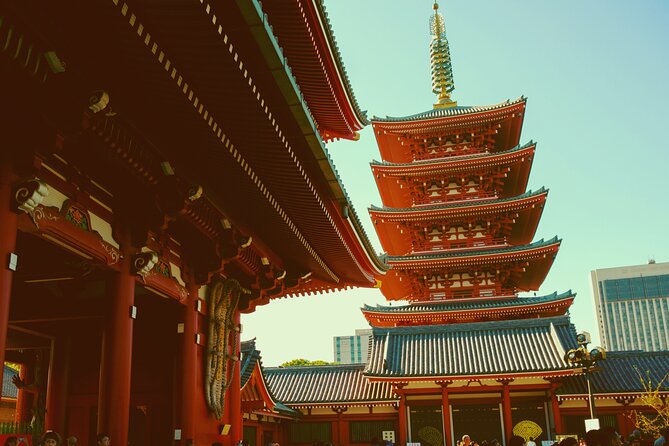
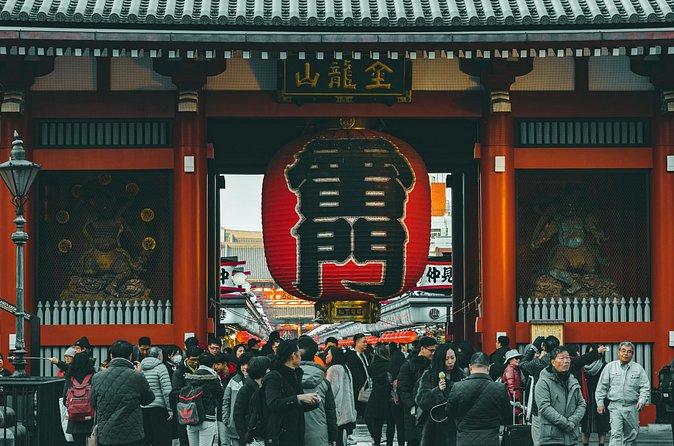
The first Asakusa portion lasts about 45 minutes. Your guide uses the area to explain the history of Senso-ji, Japanese Buddhist customs, and the etiquette that helps you feel comfortable at a temple. This is more useful than simply taking a photo at the front gate.
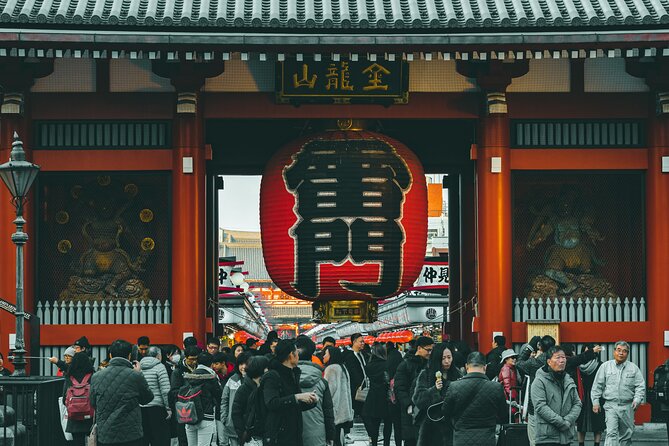
Senso-ji is famous for its Thunder Gate, called Kaminarimon, and its large lantern. From there, Nakamise shopping street leads toward the temple grounds. The approach is lined with shops and can be extremely crowded, especially when several groups arrive at once.
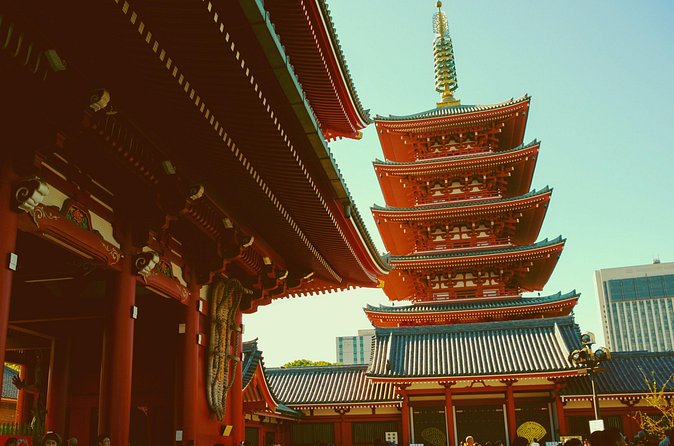
A good guide can point out details that are easy to pass without context. The tour may cover statues, the large ropes, and customs connected with entering and praying at the temple. One particularly useful part is learning how to behave respectfully without treating the temple like a stage set.
The listed Senso-ji stop adds another 15 minutes. Since the first Asakusa stop already includes the temple area, think of these entries as one connected visit rather than two fully separate attractions. The extra time likely allows for a closer look at the temple grounds and more explanation.
The drawback is the crowd. One account reported that the guide moved ahead too quickly and was difficult to hear. In Asakusa, this matters. Tell the guide if you cannot hear, and keep the group in sight when crossing busy lanes.
Ueno brings in markets and ordinary city life
From Asakusa, the group continues toward Ueno for about 45 minutes. This section shifts away from temple grounds and toward the commercial side of old Tokyo.
Ueno has long been associated with vendors, food sellers, and shops offering many kinds of goods. That gives the stop a more practical feel. You are not only looking at monuments. You are seeing a part of Tokyo where people shop, eat, and move through the city.
One guide, Taka, was specifically praised for taking time in the markets and allowing room to shop. That is an important distinction. A tour can either rush through a market for photos or give you enough breathing space to notice what is being sold and ask questions.
If you want souvenirs or snacks, Ueno may be the place to speak up. Food is not included, so bring money if you want to buy something. The guide may offer context and recommendations, but your purchases are your responsibility.
This stop also helps balance the grand scale of Senso-ji. After the temple’s gates and rituals, Ueno shows you a less formal side of Tokyo. The transition is valuable because it connects cultural traditions with ordinary commerce.
Akihabara adds the pop-culture chapter
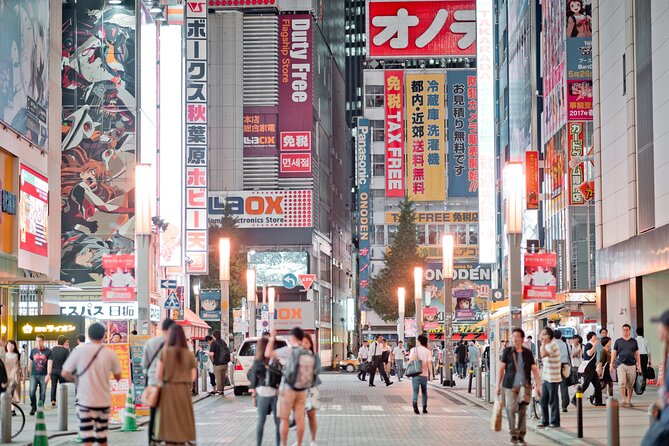
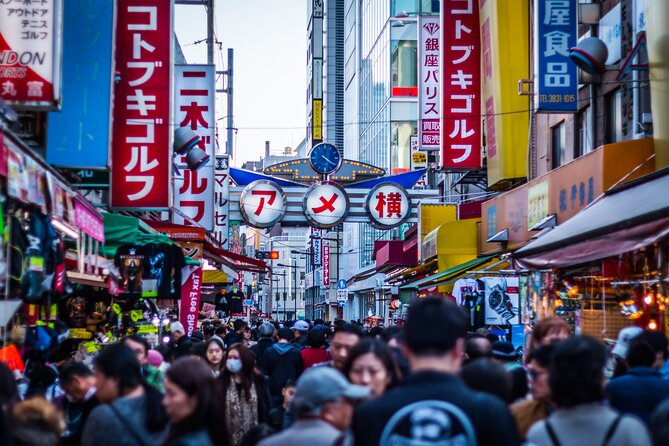
The route then reaches Akihabara for about 45 minutes. Known as Electric Town, Akihabara began as an electronics center and later became associated with anime, manga, gaming, themed cafés, and other forms of Japanese pop culture.
This is the most modern and potentially most personal part of the route. If you are curious about anime shops, electronics, or maid cafés, a guide can explain what you are seeing and how the district developed. One guide was praised for explaining cultural details about maid cafés that a first-time visitor might not understand on their own.
Do not expect this section to be a full shopping expedition. The tour is designed to show the district and explain its role in Tokyo, not to give you hours in every store. One unhappy account described the pop-culture portion as being dropped at several anime stores without enough added explanation. That is a useful warning: tell your guide what interests you before reaching Akihabara.
If you want electronics, figures, anime goods, or themed cafés, be specific. A small group gives the guide more room to adjust, though the amount of customization may depend on timing and the guide assigned to you.
Akihabara also provides a clear contrast with Asakusa. Within the same afternoon, you can move from Buddhist temple etiquette to a district covered in bright signs and specialist shops. That jump is one of the tour’s main strengths.
Same place, a different kind of green day out:
- Mt. Fuji Day Trip from Tokyo with English Speaking Driver Guide
★ 5.0 · 443 reviews - Kyoto Arashiyama Bamboo forest & Garden Half-Day Walking Tour
★ 5.0 · 413 reviews - Tokyo: Imperial Palace East Gardens Walking Tour
★ 4.8 · 353 reviews - Mt. Fuji, Cherry Blossom & Shiba Sakura Pvt. Day Tour
★ 5.0 · 326 reviews
Koishikawa Korakuen is the quiet payoff
The final scheduled stop is Koishikawa Korakuen Garden, with about 45 minutes inside. Admission is included.
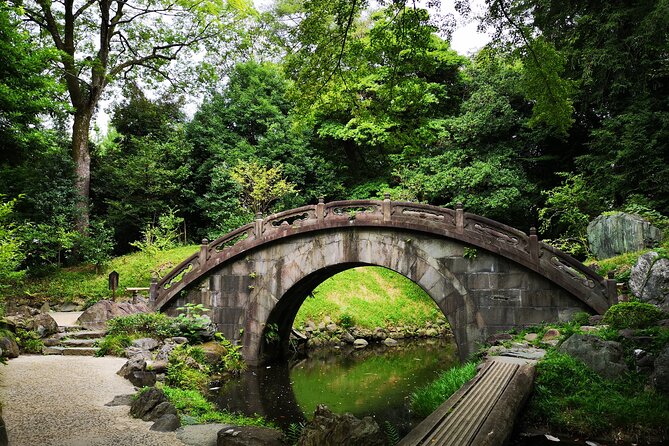
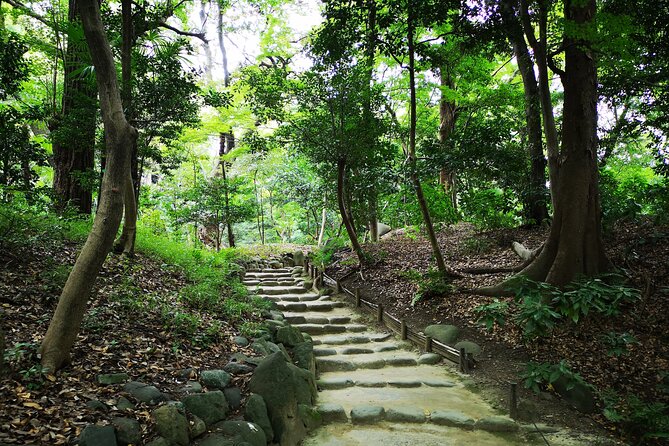
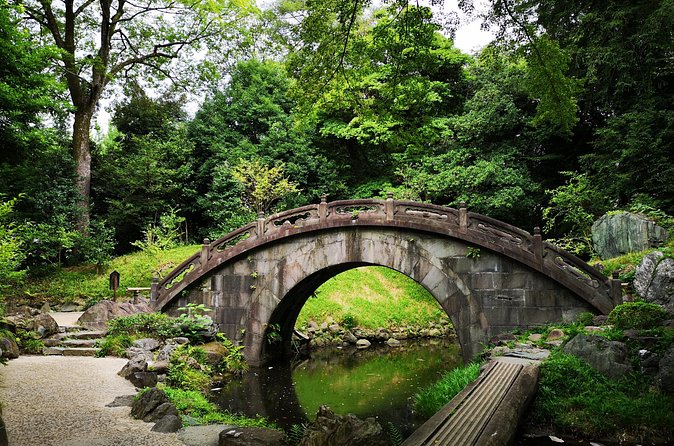
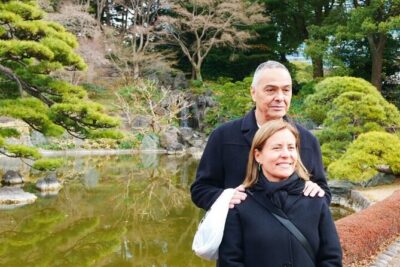
After the noise and signs of Akihabara, the garden offers a sharp change of mood. It dates from the Edo period and was influenced by Confucian poetry. Its design uses ponds, paths, bridges, and carefully arranged views to create a series of changing scenes.
This is not just a green space to cross on the way to the station. It is a formal strolling garden, meant to be experienced at a measured pace. You may find the stop especially welcome if the crowds of Asakusa and Akihabara begin to wear you down.
The garden was one of the most consistently praised parts of the experience, along with the temples. A guide such as Ken can make the setting more meaningful by explaining why the garden looks the way it does, rather than treating it as a simple photo stop.
The schedule gives you 45 minutes here, which is enough for a useful introduction but not an exhaustive visit. If gardens are your main interest, you may want a separate, longer visit on another day.
The guides make the biggest difference
The tour is not built around one named guide. Depending on the date, you might meet Taka, Hiro, Michelle, Johann, Yapi, Matt, Hiroshi, Yeman, Shizuko, Toru, Ken, Andrew, Katsu, or another member of the team.
That means the experience can vary. The strongest accounts describe guides who are friendly, clear, patient, funny, flexible, and comfortable answering questions. Ken was praised for helping with the train system and changing parts of the route to suit personal interests. Taka was praised for strong English, local familiarity, and humor. Shizuko was noted for keeping a good pace and taking photos for the group.
The tour can also become nearly private if few people book. Several people had the guide to themselves or shared a very small group. That can be excellent value because you can ask more questions and request small changes.
Still, do not assume every guide will handle the day in exactly the same way. If you need a slower pace, clearer English, more temple detail, or extra pop-culture time, say so at the start. A direct request can prevent the common problems of a rushed route or unclear meeting expectations.
Walking, trains, and what the four hours really mean
The schedule lists about 45 minutes at each of five sections, but the stops add up to roughly 195 minutes. That leaves part of the four-hour window for walking between districts, train rides, introductions, and changes in the route.
This is not a slow neighborhood stroll. You will walk through busy streets, stand at cultural sites, board local trains, and spend much of the time outdoors. A moderate fitness level is requested, and that is sensible. Wear shoes you can use for four hours without complaint.
Standard local train rides are listed as included, along with all fees and taxes. However, one account said the group had to pay its own train fares. Because that conflicts with the stated inclusion, confirm the arrangement with the provider or guide before departure. Carry a small amount of transit money anyway, since it is practical in Tokyo even when fares are meant to be covered.
The end point is Akihabara Station at 1 Chome Sotokanda, Chiyoda City. That is useful if you want to continue exploring Akihabara after the tour, though the planned stop already includes time in the district.
Who will get the most from this tour
I would choose this for a first or second day in Tokyo if you want someone to explain the city while you get your bearings. It is particularly helpful if Japanese temple etiquette feels unfamiliar or if the train system seems daunting.
It also suits families. One account described children enjoying the energy and variety, though the four-hour walk eventually made them tired. Build in rest afterward rather than scheduling another demanding activity immediately.
This is a good fit for you if:
- You want old Tokyo and modern pop culture in one outing.
- You prefer a guide to wandering alone.
- You like asking questions about customs and daily life.
- You are comfortable walking at a moderate pace.
- You want help using local trains.
- You have limited time and want several neighborhoods in one afternoon.
I would hesitate if you want long, unhurried visits at each site. I would also hesitate if you dislike crowds, cannot walk for several hours, or want a dedicated anime-shopping tour. Akihabara receives only part of the afternoon, and the route has a lot to cover.
Practical details before you book
Confirmation is provided when you book, and mobile tickets are available. The tour offers group discounts, but the supplied information does not specify the discount amount.
Free cancellation is available up to 24 hours before the start time for a full refund. Changes or cancellations inside that window are not accepted, and the cut-off uses Tokyo local time. The experience requires good weather. If poor weather cancels it, you are offered another date or a full refund.
Bring water, comfortable shoes, and money for food or shopping. Food and drinks are not included. If markets or Akihabara interest you, tell your guide early so the available time can be used well.
Should you book this Tokyo walking tour?
Book it if you want a well-packed first look at East Tokyo and value explanation over simply collecting photos. The combination of Senso-ji, Ueno, Akihabara, and Koishikawa Korakuen is unusually broad, and the small group can make the four hours feel personal.
I would book with realistic expectations. You are covering a lot of ground, crowds can make it hard to hear, and the experience depends heavily on the assigned guide. Confirm train-fare arrangements, arrive ready to walk, and ask for the pace and interests you want.
For a first-time visitor who wants history, customs, markets, pop culture, and a garden in one compact outing, the $70.49 price can be worthwhile. For a slow temple visit or a serious Akihabara shopping day, choose a more focused activity instead.
FAQ
How long does the tour last?
The tour lasts approximately four hours.
How many people can join the tour?
The maximum group size is eight people.
Where does the tour begin?
It begins in Asakusa at Japan, 111-0032 Tokyo, Taito City, Asakusa, 1-chōme 1-1, at the listed Kamigaya Building address.
Where does the tour end?
The tour ends at Akihabara Station, 1 Chome Sotokanda, Chiyoda City, Tokyo 101-0028.
Which places are visited?
The route includes Asakusa, Senso-ji Temple, Ueno, Akihabara, and Koishikawa Korakuen Garden.
Is admission to Koishikawa Korakuen Garden included?
Yes. Admission to Koishikawa Korakuen Garden is included.
Are train rides included?
The tour information states that standard local train rides are included. One account reported paying for train rides separately, so confirm the arrangement before the tour.
Are food and drinks included?
No. Food and drinks are not included.
What level of fitness is needed?
A moderate level of physical fitness is recommended because the experience involves walking and moving between several Tokyo districts.
Can I cancel for a full refund?
Yes, if you cancel at least 24 hours before the start time. Cancellations made less than 24 hours ahead are not refunded.
Just added around Japan
- Tsumami Zaiku Japanese Fabric Flower Class★ 5.0 · 3 reviews
- Tokyo: Serene Sakura & Sake: An Exclusive Brewery Pairing Lunch★ 5.0 · 2 reviews
- Tsukiji Food Strolling and Hama Rikyu Garden Walking Tour★ 5.0 · 7 reviews
- Private tour – Scenic Fuji Escape: Hakone, Peace Park & More★ 5.0 · 4 reviews
- Tokyo Cherry Blossom Half Day Walking Tour with a Local Guide★ 3.5 · 4 reviews
- TOKYO: Tailored Gardens tour with Pro Gardener by E-bike -BASIC★ 5.0 · 2 reviews
- Cherry Blossom Highlights, Asakusa, Ueno, Imperial Palace Garden★ 4.5 · 4 reviews
- Japan’s Customs of Ikebana Art, Tea Ceremony & Kimono Welcome★ 5.0 · 2 reviews
Japan Garden Tours, compared.
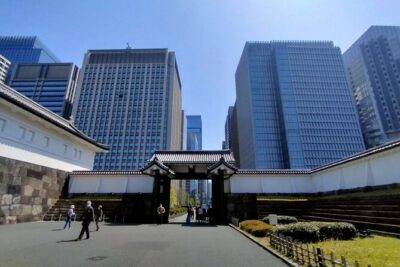
Imperial Palace East Garden and Edo Castle Walking Tour in Tokyo
Read our review →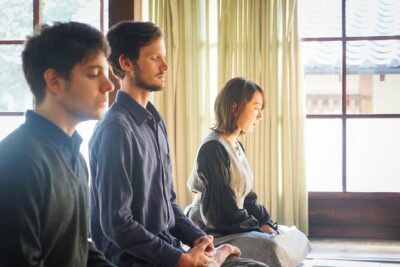
Kyoto Zen Meditation & Garden Tour at a Zen Temple with Lunch
Read our review →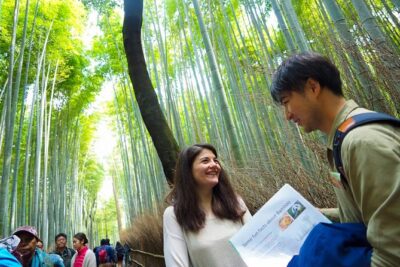
Kyoto Arashiyama Bamboo forest & Garden Half-Day Walking Tour
Read our review →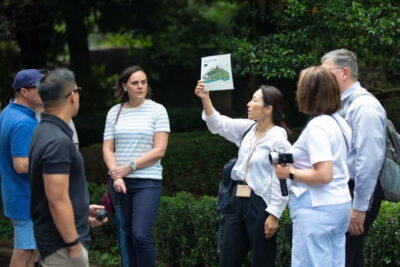
Authentic Kyoto Tea Ceremony: Camellia Flower Teahouse
Read our review →
Edo Castle & East Garden of the Imperial Palace Tour
Read our review →Browse the lists this tour appears in