
Review · KAGOSHIMA
Kagoshima Highlights Private Tour, Sakurajima Volcano and more
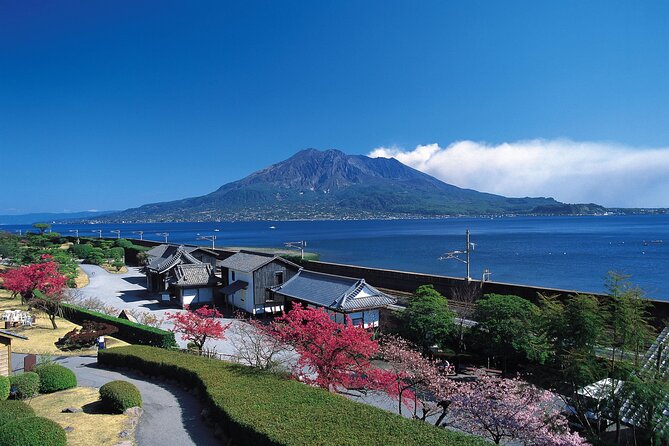
Sakurajima is the star here: a real volcano rising from Kagoshima Bay, with about 200 eruptions in an average year. You’ll visit lava fields, a buried shrine gate, several lookouts, and Japan’s longest foot bath. I like the way this tour lets you see the volcano up close rather than treating it as a distant postcard.
I also like the private format and guide Hitomi’s flexible approach. She can shape the day around your group, explain Kagoshima’s samurai and industrial past, and help you choose lunch in Tenmonkan. The main catch is cost: the advertised $459.81 covers the guide fee, but your group must also pay for a chartered taxi, ferry, food, and some entrance fees.
Key points at a glance
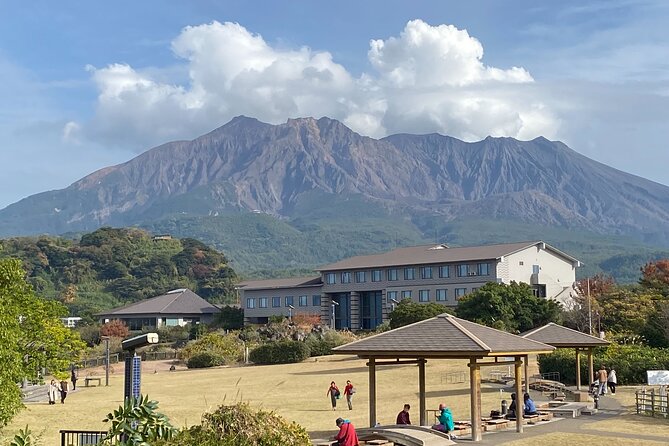
- Sakurajima up close: Visit the volcano’s visitor center, lava fields, buried torii gate, and two lookouts.
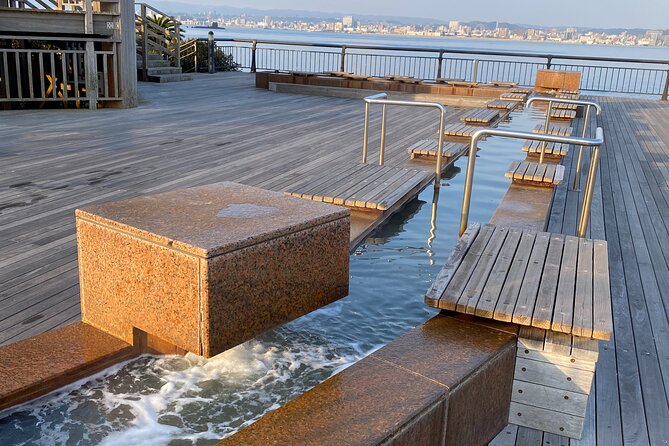
- A 100-meter hot foot bath: Nagisa Foot Bath Park uses natural spring water from roughly 1,000 meters underground.
- Private pacing: Your group alone joins the tour, with six-, seven-, or eight-hour options available.
- Tenmonkan lunch stop: Choose local specialties such as Wagyu beef, black pork, or ramen, with lunch paid separately.
- Sengan-en and early industry: Walk a large traditional garden, then see the former Shuseikan factory and Satsuma cut glass.
- Extra costs matter: Taxi, ferry, Sengan-en admission, and lunch are not included in the quoted tour price.
Why Sakurajima makes this a strong Kagoshima day
Many city tours give you a view of Sakurajima across Kagoshima Bay. This one takes you onto the volcanic island itself. That difference matters. You see black lava, new plant growth, ash-shaped reminders of eruptions, and the practical ways people live beside an active volcano.
Sakurajima is not a dormant mountain dressed up for sightseeing. It remains active and averages around 200 eruptions each year. The tour does not promise an eruption during your visit, but the setting gives the day a real sense of place. At the Sakurajima Visitor Center, you can watch a 13-minute film with English subtitles and study panels about past eruptions, returning vegetation, and daily life near the volcano.
I especially like this opening stop because it gives meaning to the rest of the route. Without it, the lava fields and buried gate might look like unusual scenery. With it, you understand that each stop records a different chapter in Sakurajima’s volcanic story.
The private setting also helps families and mixed-age groups. One party of six, including grandparents and adult children, used the day as a southern Japan highlight. Another family with young children appreciated the flexible guide and the chance to collect a small amount of volcanic ash as a memento. You should still follow the guide’s instructions and local rules around volcanic areas, but the subject is naturally engaging for children.
More Private Garden Tours in Japan:
- Kyoto: Zen Garden, Zen Mind (Private)
★ 5.0 · 126 reviews - Tokyo Private Tour! Edo Castle & Imperial Palace East Gardens
★ 5.0 · 105 reviews - Mount Fuji & Lake Kawaguchiko Private Tour: Beyond the Ordinary
★ 5.0 · 78 reviews
Walking the lava fields and soaking your feet
The Sakurajima Nagisa Foot Bath Park is one of the tour’s easiest pleasures. The foot bath runs for about 100 meters and uses hot spring water that emerges at roughly 42 degrees Celsius from 1,000 meters below ground. You sit, soak, and look out at the volcanic setting while your feet do the work.
This is a good pause after the visitor center, especially if your group includes people who do not want a strenuous walk. Bring or wear something that makes it easy to uncover your feet, and remember that the stop lasts about 20 minutes. It is a short visit, not a full bathing experience.
At Kurokami Shrine, you see one of Sakurajima’s most memorable eruption reminders. A torii gate once stood about three meters high. A major eruption buried almost all of it, leaving only the top beam above ground. The village elder chose not to dig it out, preserving the sight as a record of the eruption’s force.
The stop takes only about 10 minutes, but it packs a punch. You are not just looking at a volcano from a viewpoint. You are seeing how one eruption altered a community’s built environment.
Shioyagamoto offers a quieter look at plant recovery. Here, you can see differences in vegetation growing on lava from about 1,300 years ago and lava from roughly 80 years ago. The visit is brief, around 10 minutes, so do not expect a long nature walk. Its value is in the contrast: older lava has had far longer to support plant life than newer flows.
Two viewpoints, two different volcano views
Arimura Lava Lookout sits on a small hill amid the lava field created by the great 1946 eruption. It is part of a one-kilometer lava promenade and gives you a closer look at the volcanic ground. The stop lasts about 20 minutes.
This is the place for texture and scale. The lava is not just a dark shape in the distance. It forms the ground beneath you and frames the view toward the imposing volcano. The promenade may suit you if you enjoy short walks, but the tour does not describe the entire path as part of the scheduled stop. If walking comfort is a concern, ask Hitomi how far your group should go.
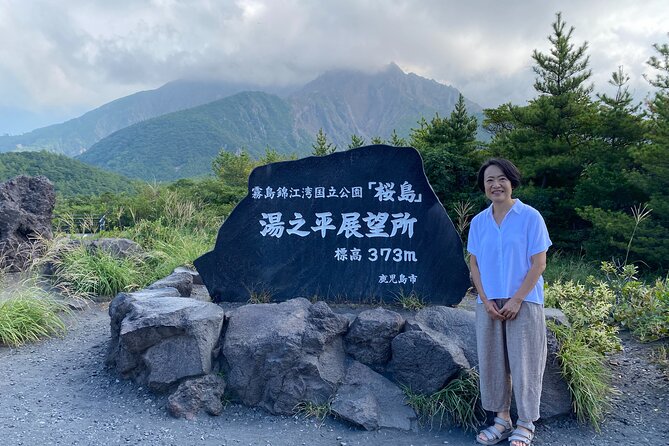
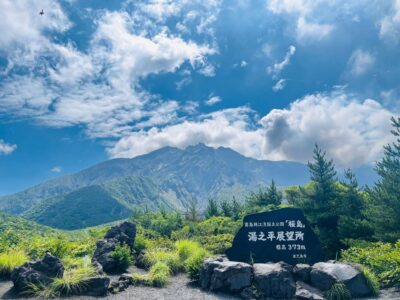
Yunohira Lookout reaches the highest point on Sakurajima accessible to people, at 373 meters above sea level. From here, you look toward the volcano’s rocky face and across Kagoshima Bay to the peninsula.
The stop is scheduled for about 15 minutes, so think of it as a focused viewpoint rather than a hike. Weather is important. Rain, cloud, or volcanic haze can soften the view, and the tour requires good weather. A poor-weather cancellation can bring a new date or a full refund, but the strict policy means you should not assume you can freely change your booking for other reasons.
Tenmonkan puts lunch in the middle of the day
After the volcano stops, the tour heads to Tenmonkan, Kagoshima’s main shopping and eating district. You get about an hour for lunch and can choose what suits your group.
The local menu gives this stop real flexibility. You might choose Wagyu beef, black pork, or ramen. The guide can suggest a restaurant, but lunch is not included, so the final cost depends on what you order. A yakiniku meal, in which you cook meat at the table, has been a favorite part of the day for some groups. It also works well for families because everyone can choose how much and what kind of food to eat.
I like placing lunch here rather than forcing one fixed restaurant on every group. It lets you match the meal to your budget and appetite. On the other hand, an open lunch choice means you should discuss preferences with Hitomi before the day begins, especially if anyone in your group has dietary needs. The supplied details do not promise a specific restaurant or menu.
The one-hour stop is also useful if you need a change of pace. Sakurajima is about geology and outdoor viewing. Tenmonkan shifts the day toward food, shopping, and city life.
Same place, a different kind of green day out:
- Osaka: teamLab Botanical Garden Entry Ticket
★ 4.5 · 1,710 reviews - Imperial Palace East Garden and Edo Castle Walking Tour in Tokyo
★ 5.0 · 510 reviews - Mt. Fuji Day Trip from Tokyo with English Speaking Driver Guide
★ 5.0 · 443 reviews - Kyoto Zen Meditation & Garden Tour at a Zen Temple with Lunch
★ 5.0 · 441 reviews
Optional Kagoshima sights for a history-focused route
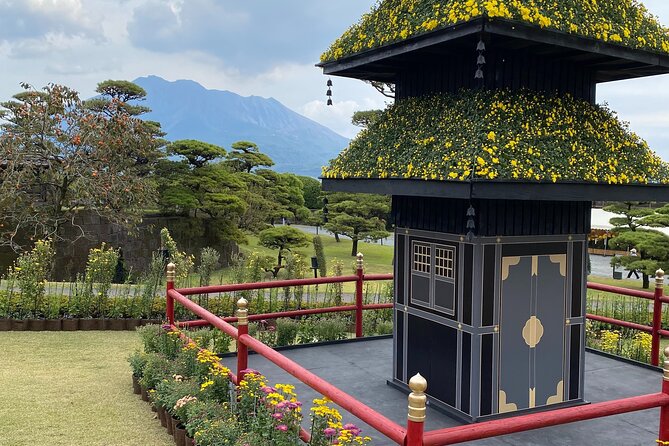
The tour can include additional Kagoshima stops, depending on your chosen route and available time. These include places connected with Francis Xavier, the Shimazu family, Saigo Takamori, Kagoshima Castle, and the former lodgings of British engineers.
Francis Xavier arrived in Gion-no-su in 1549 and spent about a year in Kagoshima, introducing Christianity and other foreign ideas to Japan. A shrine dedicated to Shimazu Nariakira honors the 28th head of the Shimazu clan and is among the city’s major places of worship.
Saigo Takamori is another important figure. He helped bring about the Meiji Restoration, including the peaceful surrender of Edo Castle, then left government work and returned to Kagoshima. A stop connected with him adds a human angle to the political changes that reshaped Japan.
Kagoshima Castle was the Shimazu residence, with construction beginning around 1601. The former lodgings for British engineers show a later stage of change, when the Shimazu leadership brought in foreign specialists to build Japan’s first Western-style spinning mill.
These stops are not all listed with fixed visit times, so you should treat them as customization choices rather than guaranteed additions to the standard seven-hour route. If your priority is Sakurajima, adding too many city sights could make the day feel rushed. If you have already seen the volcano or prefer local history, the balance can shift toward Kagoshima’s political and industrial story.
Sengan-en gives the day a calmer second half
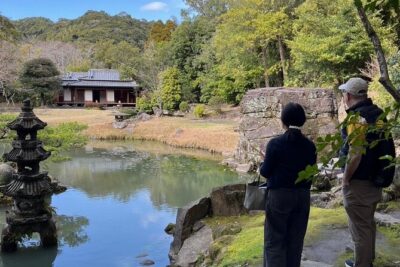
Sengan-en is a 12-acre garden built in 1658 as a villa for the Shimazu lord family. Its ponds, streams, bamboo grove, shrines, and mountain paths give you a marked change from Sakurajima’s rough lava.
The garden is scheduled for about an hour. That is enough time to see its main character without pretending you can inspect every corner. You may find bubbling streams, quiet water, and views toward Kagoshima Bay. A mountain hiking trail offers a wider outlook, though the tour details do not promise that the full trail will be walked.
Admission is not included and costs ¥1,600 per person. That extra fee is worth factoring into your comparison, particularly for a large group. The garden is one of the day’s best choices if you want traditional Japanese design, a slower pace, and a setting tied to Kagoshima’s ruling family.
The garden also helps explain why the tour feels broader than a volcano excursion. You move from natural force to carefully shaped beauty, then into the technology that helped modernize the region.
Shoko Shuseikan and Satsuma glass
The Shoko Shuseikan Museum occupies the former Shuseikan Machine Factory. Its main building dates to 1865 and was used for metal processing connected with ships and other industrial work. It is described as Japan’s oldest surviving stone Western-style factory building.
You get about 20 minutes here, with admission not included. That is a short visit, so you should expect a compact introduction rather than a full museum study. Still, the stop gives useful context to the British engineer lodgings and the wider story of Kagoshima’s early industrial development.
At Iso Kogeikan, you can see Satsuma cut glass. The factory began in 1851, closed in 1877, and was revived about a century later. Craftspeople cut through thick colored glass to reveal clear glass beneath, producing gentle changes in tone.
This stop is free and takes about 20 minutes. It may appeal to you if you like craft demonstrations and Japanese design. It is less essential if your only goal is volcanic scenery, but it rounds out the day with a local product rather than another viewpoint.
The available details also mention other possible additions, including a Mars or Kanosuke whiskey distillery, Chiran’s Peace Museum and samurai residences, natural artisan amber rice vinegar, and Ibusuki sand baths. These are not part of the fixed ten-stop schedule described here, so confirm the route before booking if one of them is a must-see.
What the private format costs in real terms
The listed price is $459.81 per group of up to eight people, but it is not an all-inclusive vehicle price. The guide fee is included. A seven-hour chartered taxi averages ¥34,000 for up to three people or ¥46,000 for up to eight people.
You also pay the round-trip Sakurajima ferry fare: ¥500 per person, plus about ¥4,700 for a car depending on its size. Add ¥1,600 per person for Sengan-en and your lunch in Tenmonkan.
That structure can offer fair value for a full group. Eight people sharing the guide and taxi costs may find the private day more practical than paying for separate transport and trying to connect distant sights on your own. A smaller group has less help spreading the vehicle cost, so compare the total rather than judging the headline price.
The private taxi matters because the route covers multiple volcanic stops, a ferry crossing, Tenmonkan, Sengan-en, and industrial sites. You are paying for control over the day and the ability to adjust the mix, not just for a guide standing at one attraction.
The tour is commonly booked about 120 days ahead, which is a useful sign to reserve early if your dates are fixed. Confirmation is sent within 48 hours, subject to availability. Pickup is offered, and the meeting window listed for the operating period is 7:00 a.m. to 10:00 a.m.
Who should book this Kagoshima tour
I would choose this tour for a family, multigenerational group, or cruise-port stop with limited time. The route covers the essential Sakurajima sights quickly, and the private vehicle removes the need to piece together ferry, taxi, and city transport.
It also suits you if you want an English-speaking guide who can explain both volcano science and Kagoshima’s past. Hitomi has been praised for clear communication, friendly service, and adapting the day to group requests. Her good English is especially useful when you want to change the order, ask about lunch, or connect the sights to local history.
The tour is less ideal if you want a slow, silent garden visit, a serious volcano hike, or a fixed low price with everything paid in advance. The schedule moves often, several stops are short, and the major add-on costs need to be settled separately.
The activity is private, and most people can participate. Still, tell the guide about mobility concerns before the day begins. The itinerary includes lava promenades, viewpoints, a garden, and vehicle transfers, but it does not give detailed accessibility information.
Should you book it?
Book this tour if Sakurajima is your priority and you want more than a distant bay view. The volcano center, buried torii, lava fields, foot bath, and Yunohira lookout give you a strong seven-hour introduction to the island, while Tenmonkan and Sengan-en add food, gardens, and local culture.
The best reason to book is flexibility with a real guide, not the headline price. Before paying, calculate the taxi, ferry, admission, and lunch costs for your group, then decide if the convenience is worth it. For a large family or short port visit, I think it can be a smart choice. For a small group on a tight budget, compare the full total with arranging transport independently.
FAQ
How long does the Kagoshima private tour last?
The standard tour lasts about seven hours. Six-hour and eight-hour versions can also be customized.
How many people can join the private tour?
Up to eight people can participate in one private group. Only your group joins the activity.
Is pickup available?
Yes, pickup is offered. The listed meeting window is between 7:00 a.m. and 10:00 a.m.
Is transportation included in the tour price?
No. The guide fee is included, but the chartered taxi is extra. A seven-hour taxi averages ¥34,000 for up to three people or ¥46,000 for up to eight people.
How much does the Sakurajima ferry cost?
The round-trip ferry fare is ¥500 per person. A car costs about ¥4,700, depending on its size.
Is lunch included?
No. Lunch is paid separately. In Tenmonkan, you can choose options such as Wagyu beef, black pork, or ramen.
Is admission to Sengan-en included?
No. Admission costs ¥1,600 per person.
Who guides the tour?
The experience is led by an experienced Kagoshima guide with excellent English skills. The guide named in the tour information is Hitomi.
What happens if bad weather cancels the tour?
The tour requires good weather. If it is canceled because of poor weather, you can receive a different date or a full refund. For other cancellations or amendments, the experience is non-refundable.
Just added around Japan
- Tsumami Zaiku Japanese Fabric Flower Class★ 5.0 · 3 reviews
- Tokyo: Serene Sakura & Sake: An Exclusive Brewery Pairing Lunch★ 5.0 · 2 reviews
- Tsukiji Food Strolling and Hama Rikyu Garden Walking Tour★ 5.0 · 7 reviews
- Private tour – Scenic Fuji Escape: Hakone, Peace Park & More★ 5.0 · 4 reviews
- Tokyo Cherry Blossom Half Day Walking Tour with a Local Guide★ 3.5 · 4 reviews
- TOKYO: Tailored Gardens tour with Pro Gardener by E-bike -BASIC★ 5.0 · 2 reviews
- Cherry Blossom Highlights, Asakusa, Ueno, Imperial Palace Garden★ 4.5 · 4 reviews
- Japan’s Customs of Ikebana Art, Tea Ceremony & Kimono Welcome★ 5.0 · 2 reviews
Kagoshima Garden Tours, compared.
Sakurajima Century Lava Climb Journey with E-bike
Read our review →
Discover the Wonders of Sakurajima Half Day Tour in Kagoshima
Read our review →Sakurajima Century Lava Climb Journey with E-bike
Read our review →
Discover the Wonder of Sakurajima Half Day Tour in Kagoshima
Read our review →
Experience about the blessings of the earth in Sakurajima.
Read our review →
Kagoshima Gardens & Shrines — Local Bus Guided Tour (Small-Group)
Read our review →Browse the lists this tour appears in