
Review · JAPAN
Kamakura Zen Temples and Gardens Private Trip with Government-Licensed Guide
Kamakura’s best feature is its variety: in one day, you can move from quiet Zen gardens to a giant bronze Buddha, a bamboo grove, and forest paths above the town. This private tour lets you choose three or four sites instead of following a fixed route. Guides including Kei, Kappa, and Seky have shaped visits around temple interests, local food, and the weather.
I like the one-to-one attention and the freedom to skip places that do not suit you. I also like the chance to connect the temples to Kamakura’s samurai and Buddhist past, rather than simply collecting entrance photos. The main catch is cost control: at $153.11 per person, you still pay for transport, meals, and most admission fees.
Key points to know before booking
- Choose only three or four sites: The long list of temples and shrines is a menu, not a promise that you will see them all.
- Meet on foot in Kamakura: Standard pickup is within a designated area, not private hotel transport.
- Expect a walking day: Some options include wooded trails, hills, and steps.
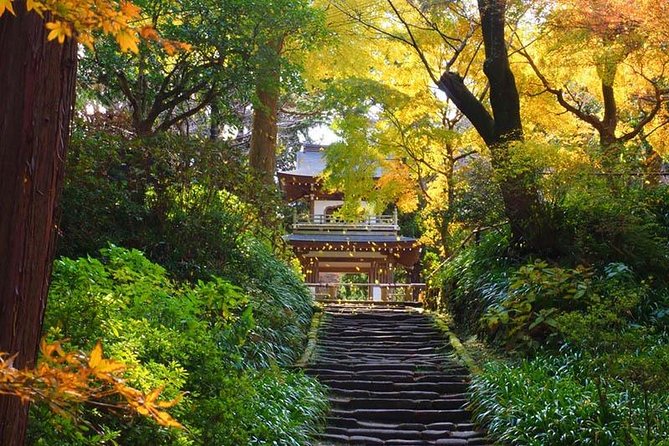
- Pick your season carefully: Meigetsuin is especially known for hydrangeas, while Hokoku-ji is prized for its bamboo grove.
- Plan extra cash: Entry fees, buses or trains, lunch, and personal expenses are not included.
- Private means flexible: Only your group takes part, and the guide can shape the day around your interests.
Why a private Kamakura tour can be worth the price
Kamakura is easy to reach from Tokyo, but its temples are spread across several parts of town. A map can show you the names. It cannot always explain why Engaku-ji ranks second among the Five Great Zen Temples, why Jufuku-ji is connected to Minamoto Yoritomo’s family, or how a bamboo grove fits into the wider setting of a temple.
That is where this tour earns its keep. You pay for a licensed local English-speaking guide who can adjust the pace and explain what you are seeing as you go. If you care about Japanese Buddhism, samurai culture, architecture, gardens, or local customs, that context may be worth more than simply taking a train and walking between famous sites.
The price is easier to justify for two or more people sharing a private booking. Solo visitors pay the full per-person rate, then add admissions, food, and transport. The tour lasts about six hours, so it is not a quick photo stop. It is a substantial half-day outing, but you need to budget beyond the headline price.
More Private Garden Tours in Japan:
- Kyoto: Zen Garden, Zen Mind (Private)
★ 5.0 · 126 reviews - Tokyo Private Tour! Edo Castle & Imperial Palace East Gardens
★ 5.0 · 105 reviews - Mount Fuji & Lake Kawaguchiko Private Tour: Beyond the Ordinary
★ 5.0 · 78 reviews
Building your three or four-site route
The experience is customizable, and that is the most important detail to understand. The 18 places below are possible choices, not a fixed itinerary. You should decide in advance if your priority is Zen, major landmarks, gardens, shrines, bamboo, or walking trails.
A useful first conversation with your guide would be: I want quiet temples and gardens, or I want the Great Buddha and Kamakura’s essential sights. That simple choice can change the character of the day.
Some places are close together, while others require local transport or more walking. Since transportation is extra, ask how your chosen combination affects the route and budget.
Engaku-ji and Kencho-ji, the core Zen temples
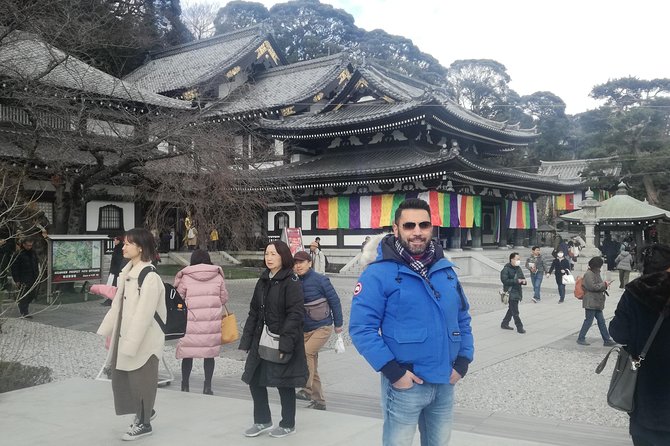
Engaku-ji is one of eastern Japan’s leading Zen temples and the second of Kamakura’s Five Great Zen Temples. It was founded in 1282 by Hojo Tokimune, the regent who ruled during a major period in Kamakura’s medieval history.
The grounds give you a strong opening to the city’s Zen tradition. The listed visit time is only about 10 minutes, so that is not enough for a long, slow exploration. If Engaku-ji is your main interest, tell the guide you want to give it more time rather than treating it as a quick stop.
Kencho-ji ranks first among the Five Great Zen Temples and was founded in 1253. It is also described as Kamakura’s oldest Zen temple. The suggested visit time is about 30 minutes, making it a better choice if you want a fuller look at a major temple complex.
I would pair Engaku-ji and Kencho-ji for a Zen-focused day, then add either Meigetsuin or Jochiji. That gives you a clear thread instead of rushing across town to gather unrelated sights.
Meigetsuin, Jochiji, and Tokeiji for quieter temple time
Meigetsuin is known as the Hydrangea Temple because hydrangeas bloom heavily on its grounds. It belongs to the Rinzai Zen tradition and was founded in 1160.
This is the most season-sensitive choice on the list. If hydrangeas are a main reason for visiting, confirm the timing with your guide before booking. Even outside bloom season, the temple has a clear identity, but the flowers are part of its appeal.
Jochiji is the fourth of the Five Great Zen Temples and a branch temple of the Engaku-ji school. Its smaller scale may suit you if you prefer a calmer stop to a major complex. The visit is listed at about 30 minutes, enough for a considered look without making it the entire day.
Tokeiji is another small Rinzai temple connected to Engaku-ji. It is only a few hundred meters from Engaku-ji, so these two make practical companions. The suggested time at Tokeiji is about 10 minutes, which suggests a brief visit rather than an extended temple study.
Eisho-ji offers a different note. It is the only surviving nunnery in Kamakura and was founded in the early Edo period by a woman connected to the Tokugawa family. Its suggested stop is also short, but its connection to women’s religious life gives it a special place on the list.
A few more garden visits around Japan worth a look
- Mt. Fuji Day Trip from Tokyo with English Speaking Driver Guide
★ 5.0 · 443 reviews - Tokyo: Tsukiji Market and Hama-rikyu Gardens Guided Tour
★ 4.8 · 73 reviews - Nagano Spring: 1-Day Cherry Blossoms & Snow Monkeys Guided Tour
★ 5.0 · 31 reviews - Himeji: Himeji Castle & Kokoen Garden 3.5-Hour Guided Tour
★ 4.9 · 30 reviews
Jomyo-ji and Hokoku-ji, gardens and bamboo
Jomyo-ji is the fifth of Kamakura’s Five Great Zen Temples. It lies in the eastern hills and was founded by the influential Ashikaga family.
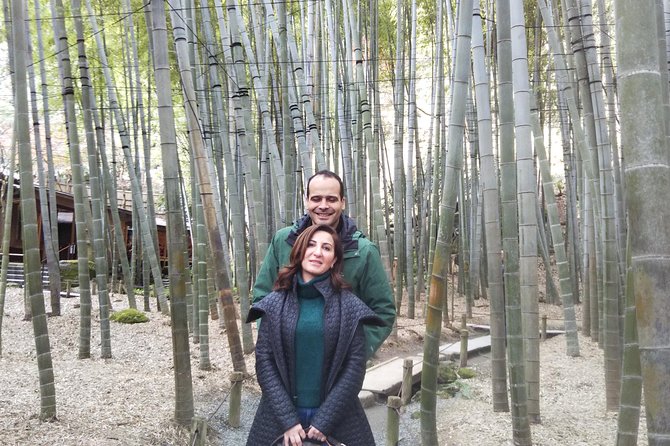
Hokoku-ji is the choice for bamboo. More than 2,000 bamboo stalks fill the small grove behind the main hall, with narrow paths running through it. The grove is not enormous, so do not expect a whole day of hiking there. Its appeal is concentrated: a short, striking change from the open temple grounds.
A guide can help you decide if Jomyo-ji and Hokoku-ji belong together. Both are in the eastern part of Kamakura, and the pairing gives you a useful contrast between a major Zen temple and a compact bamboo setting.
One past visit included green tea in the bamboo forest. That detail is not part of the standard inclusions, so treat tea or food as an optional expense rather than a guaranteed feature. Still, it points to the kind of local choice you can discuss with a private guide.
The Great Buddha and Hasedera
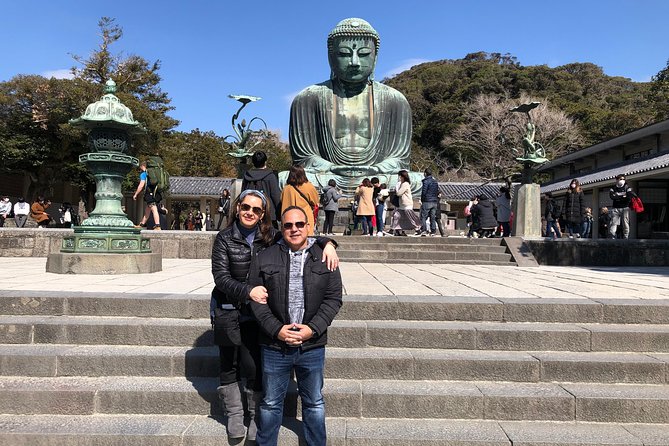
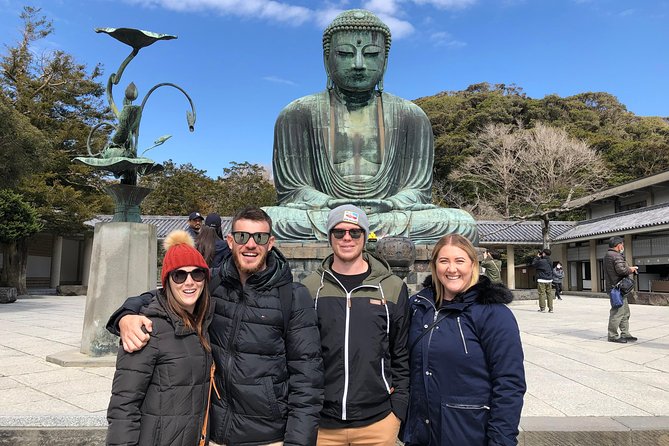
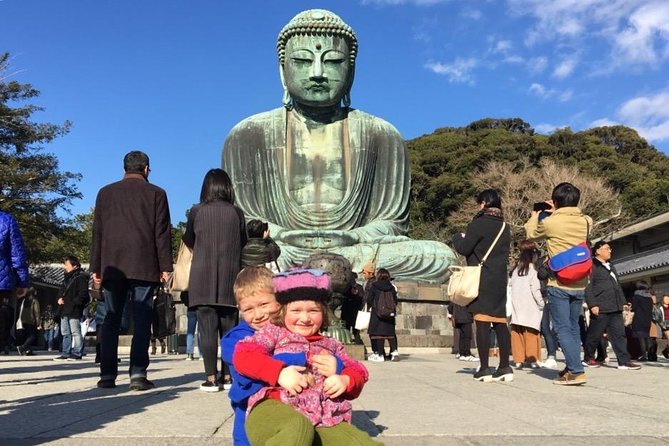
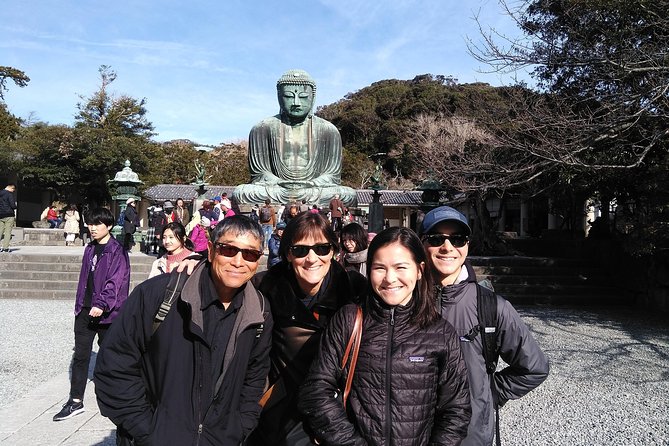
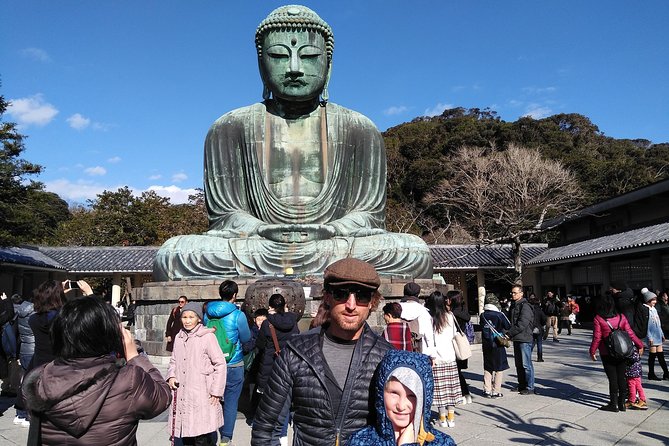
Kotoku-in is home to Kamakura’s Great Buddha, an 11.4-meter bronze image of Amida Buddha. It is one of the city’s essential sights and usually the clearest choice if this is your first visit.
The statue is outdoors on the temple grounds, which gives the stop a different feel from an enclosed hall. The listed time is about 30 minutes. Admission is not included, so add that to your day’s costs.
Nearby Hasedera is a Jodo temple famous for its 9.18-meter gilded wooden statue of Kannon, the Buddhist goddess of mercy. The statue is one of the largest wooden sculptures of its type. The suggested visit time is only 10 minutes, which feels short for a place with this much to see, so ask the guide if Hasedera is meant to be a quick stop or if the schedule can be adjusted.
The Great Buddha and Hasedera are a natural pair, especially for a first-time visit. They also appeared together in one guide’s route after meeting at Kamakura Station and taking a bus toward Kotoku-in. That example is useful, but remember that local transport is not included in the tour price.
Tsurugaoka Hachimangu and Kamakura’s samurai story
Tsurugaoka Hachimangu is dedicated to Hachiman, the patron deity of the Minamoto family and of samurai in general. It is free to enter and listed as a 10-minute stop.
That short timing tells you how the tour treats it: likely as a concise introduction rather than a long shrine visit. If samurai history is central to your interests, make this clear before the day begins. The shrine can provide an important historical frame for the temples, but it may not fit comfortably alongside several distant sites.
This is a good place to connect religious practice with political power. Kamakura was not only a temple town. Its shrines and Buddhist institutions also reflect the military government that made the city a center of medieval Japan.
Zeniarai Benten and the smaller Nichiren temples
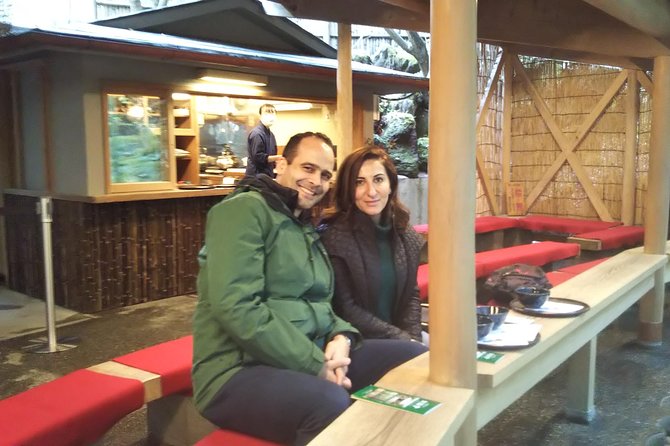
Zeniarai Benten is known for money washing. The name refers to washing coins at the shrine’s spring, and local belief says that money washed there will multiply. Admission is free, and the planned visit is about 30 minutes.
The shrine offers a more hands-on custom than simply looking at architecture. If you want a stop with a local ritual, it is one of the strongest options. It is also in western Kamakura, so pairing it with every eastern temple would create a less efficient day.
Ankokuronji and Myohonji are two of Kamakura’s Nichiren temples. Ankokuronji was founded by Nichiren around 1253 when he first came to Kamakura. Myohonji was founded in 1260 by Hiki Yoshimoto and lies among the southeastern hills.
Both have short listed visit times of about 10 minutes. They make sense for someone interested in Nichiren Buddhism or in the quieter temple areas away from the headline sights. They are less obvious picks if you have only one day and want the Great Buddha, bamboo, and the major Zen temples.
Zuisen-ji, Jufuku-ji, and Eisho-ji
Zuisen-ji is a Zen temple in the far east of Kamakura, at the back of a narrow valley surrounded by wooded hills. It is a branch temple of Engaku-ji and is given about 30 minutes in the route.
Its location makes it appealing if you want a temple setting shaped by nature and distance from the central streets. It also means you should not add it casually to a route that already crosses the town several times.
Jufuku-ji is the third of the Five Great Zen Temples and belongs to the Kencho-ji school of Rinzai Zen. It was established at the order of Hojo Masako, the wife of Minamoto Yoritomo.
The suggested visit is 10 minutes, so it works as a concise stop on a history-focused walk. Eisho-ji, also listed at 10 minutes, adds the story of a female religious institution and early Edo-period connections. These are good choices for a guide-led day because the historical explanation may matter more than a long visit inside the grounds.
Forest trails and Enoshima
Kamakura is bordered by the sea to the south and wooded hills in the other directions. Trails run through those hills and connect several atmospheric temples.
The hiking option is listed at only 10 minutes, but do not read that as a full hike. It is better understood as a possible walking segment or short trail experience. If you want a longer walk, ask about the route length and terrain before setting off. The tour is on foot, and the hills can change the pace.
Enoshima is a separate island just west of Kamakura, linked to the mainland by a bridge and reached by a short train ride. It has a shrine and other attractions, but 30 minutes is not enough to see the island in depth. Choose it only if you want a quick taste of the coast and island setting, not a complete Enoshima visit.
Because Enoshima adds transport and distance, it competes with the temple choices. I would reserve it for a repeat visit or for a group that has already seen Kamakura’s main temples.
What the six hours feel like
Six hours sounds generous, but three or four sites can fill the day once you include walking, local buses or trains, photographs, explanations, and food. The tour is not a private car sightseeing service by default. You meet the guide on foot within the designated Kamakura area, and transportation costs extra.
One guide, Kei, met a group at the JR Kamakura Station ticket gate before taking a bus to Kotoku-in and Hasedera. Another booking used a private car and driver from Yokohama, but that was arranged separately through the guide’s company. Do not assume hotel pickup or a private vehicle is part of the standard package.
The walking format is a strength if you want to feel the town’s connections between temples. It is less convenient if you have limited mobility or dislike hills, stairs, or changing transport. Most people can participate, and service animals are allowed, but the experience remains an active walking day.
Guides, food, and personal attention
The guide names associated with past outings include Kei, Kappa, and Seky. Kappa shaped one rainy-day visit around the group’s requested places and suggested additional areas, then helped choose a traditional local restaurant. Kei’s route included chilled white wheat noodles called hiyashi udon.
Those details show the useful side of a private guide. You can ask for help choosing lunch, learning table customs, or finding a dish that fits your plans. Lunch is not included, and you should not assume a restaurant or meal will be part of every booking.
Seky also worked with a driver on a hot, humid August day. That is a reminder to discuss weather and transport if you are visiting in summer. The tour can be adjusted, but a private car is an extra arrangement, not a standard feature.
Who should book this experience
I would choose this tour if you want a guide to explain Buddhist schools, temple rankings, samurai connections, or Japanese customs. It also fits families or small groups who want to set their own pace and avoid wasting time at places that do not interest them.
It is especially useful for a first visit when you cannot decide between the Great Buddha, Zen temples, bamboo, shrines, and a short hike. The guide can help turn that long menu into a sensible four-stop day.
I would skip it if you want a low-cost, fully independent outing or if you plan to see many places at a rushed pace. The base price is only part of the bill, and the tour does not include transportation, lunch, or most entry fees. It is also not the right format for someone expecting a private vehicle by default.
Should you book it?
Book it if personal planning and explanation matter more to you than the lowest price. Ask for a route built around three or four priorities, then confirm transport, walking distance, seasonal highlights, and admission costs.
For a Zen-focused day, choose Engaku-ji, Kencho-ji, Meigetsuin, and either Jochiji or Hokoku-ji. For a first Kamakura visit, consider the Great Buddha, Hasedera, Tsurugaoka Hachimangu, and one Zen temple. The private format and 4.9 rating from seven published ratings suggest a strong fit for people who value a personal guide, but the extra costs and walking make advance planning essential.
FAQ
How long does the Kamakura tour last?
The tour lasts approximately six hours.
Is this a private tour?
Yes. Only your group participates in the private tour or activity.
How many places can I visit?
The included tour is customizable around three or four sites from the available list.
Are admission fees included?
No. Entrance fees are generally extra. Guide entry fees are covered only for sights listed under the tour’s included expectations.
Is transportation included?
No. Transportation fees are extra, and private transportation is not included.
Is hotel pickup included?
The standard meeting arrangement is on foot within a designated area of Kamakura. A separately arranged private car may be possible, but it is not included.
Is lunch included?
No. Lunch and other personal expenses are extra.
Can I choose the temples and sights?
Yes. You can request preferred attractions from the available choices, including Zen temples, the Great Buddha, Hasedera, shrines, Enoshima, and hiking trails.
Is the tour suitable for most people?
Most people can participate, but it is a walking tour that may include hills and temple paths. Service animals are allowed.
Can I cancel for a full refund?
Yes, if you cancel at least 24 hours before the experience start time. Cancellations or changes made less than 24 hours before the start time are not refunded or accepted.
Just added around Japan
- Tsumami Zaiku Japanese Fabric Flower Class★ 5.0 · 3 reviews
- Tsukiji Food Strolling and Hama Rikyu Garden Walking Tour★ 5.0 · 7 reviews
- Tokyo: Serene Sakura & Sake: An Exclusive Brewery Pairing Lunch★ 5.0 · 2 reviews
- Private tour – Scenic Fuji Escape: Hakone, Peace Park & More★ 5.0 · 4 reviews
- Tokyo Cherry Blossom Half Day Walking Tour with a Local Guide★ 3.5 · 4 reviews
- TOKYO: Tailored Gardens tour with Pro Gardener by E-bike -BASIC★ 5.0 · 2 reviews
- Cherry Blossom Highlights, Asakusa, Ueno, Imperial Palace Garden★ 4.5 · 4 reviews
- Japan’s Customs of Ikebana Art, Tea Ceremony & Kimono Welcome★ 5.0 · 2 reviews
Japan Garden Tours, compared.
Imperial Palace East Garden and Edo Castle Walking Tour in Tokyo
Read our review →
Kyoto Zen Meditation & Garden Tour at a Zen Temple with Lunch
Read our review →
Kyoto Arashiyama Bamboo forest & Garden Half-Day Walking Tour
Read our review →
Authentic Kyoto Tea Ceremony: Camellia Flower Teahouse
Read our review →
Edo Castle & East Garden of the Imperial Palace Tour
Read our review →Browse the lists this tour appears in