
Review · JAPAN
Autumn leaves& illuminations at Korankei , winter cherry blossoms
The unusual draw here is autumn leaves and cherry blossoms at the same time. In Obara, more than 10,000 Shikizakura trees bloom among red and yellow foliage. Later, Korankei brings maple-lined paths, sunset, food stalls, and evening illumination.
I like the easy bus connection from Nagoya and the way the tour links two very different Aichi sights in one afternoon. I also like the timing: you reach Korankei as daylight fades and the red leaves begin to glow around 17:00. The main consideration is guide language, since English may receive less attention than Chinese during group explanations.
Key points to know before booking
- Two seasonal sights in one afternoon: Obara combines Shikizakura blossoms with autumn foliage, a rare pairing in Japan.
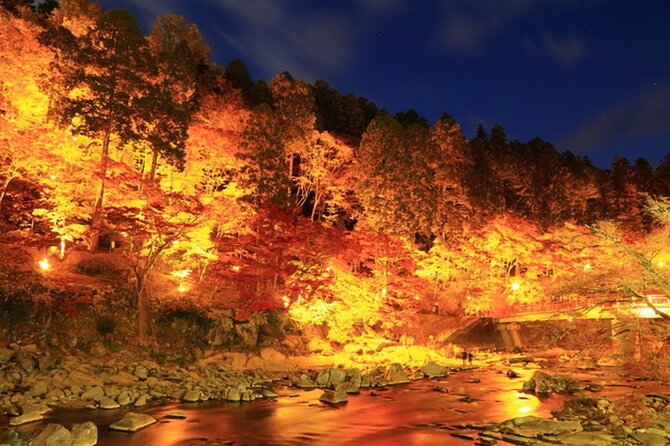
- Korankei after dark: Maple trees and nearby food vendors are illuminated from around 17:00.
- Simple Nagoya departure: Meet at Esca underground shopping center at 12:30 for an air-conditioned bus ride.
- Free time matters: Obara gets about 50 minutes, while Korankei gets about two hours.
- Lunch is not included: Bring money for food stalls or eat before departure.
- Allow for traffic: The planned return is 19:30, but the bus may arrive later.
Why this Aichi day trip is different
Many autumn excursions from Nagoya focus on one famous garden or temple. This one gives you two seasonal settings in Toyota City, each with a different mood.
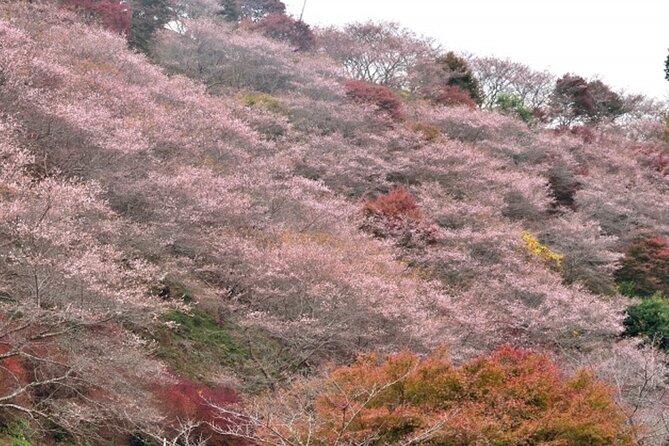
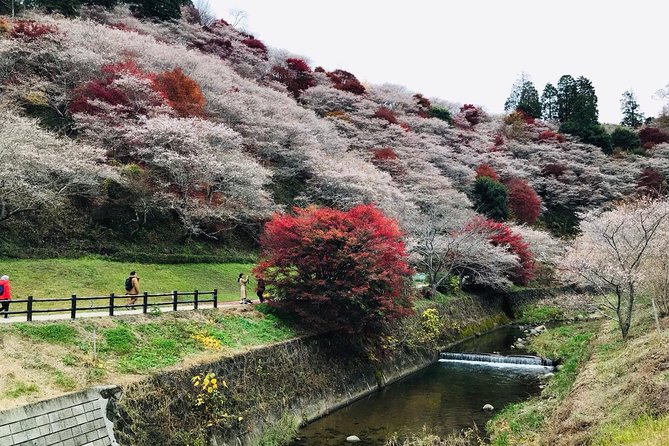
Obara Fureai Park is the botanical surprise. Shikizakura, often described as winter cherry blossoms, can flower in both spring and autumn. During the autumn season, pale blossoms appear beside red, yellow, and green leaves. The effect is unusual because the soft cherry flowers and strong fall colors share the same view.
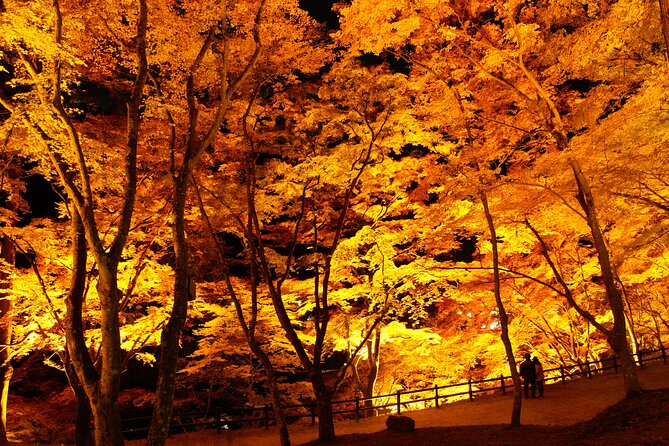
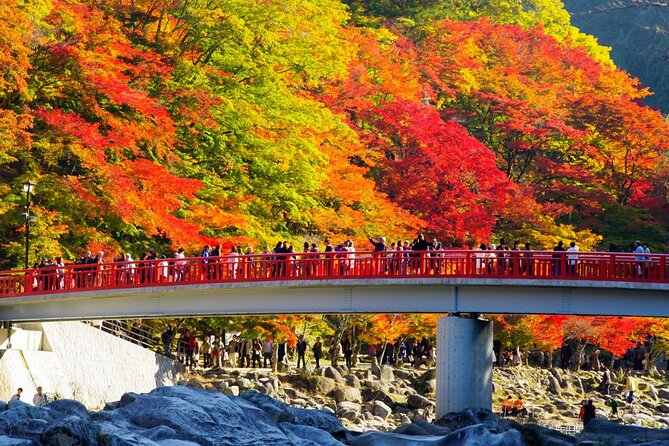
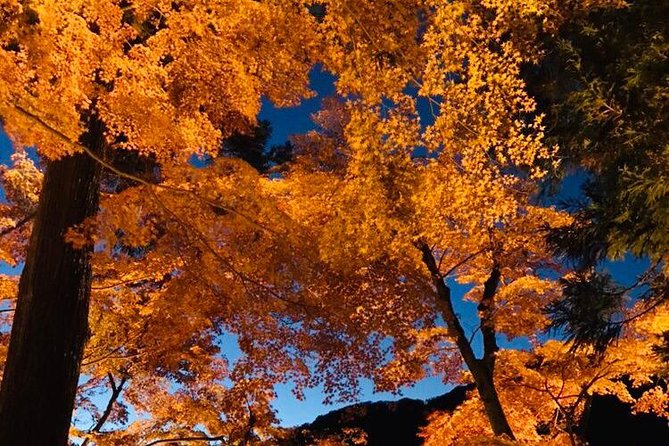
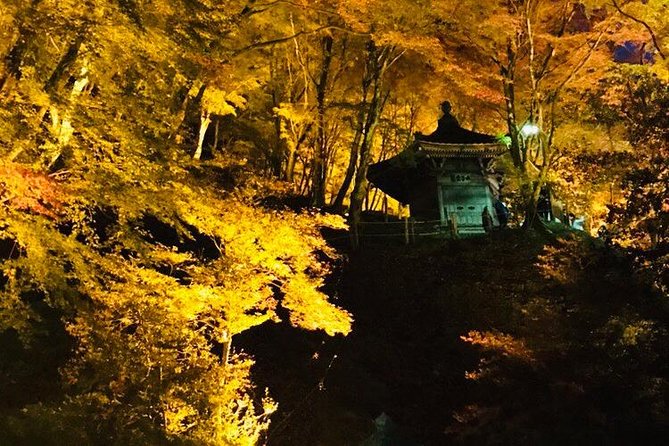
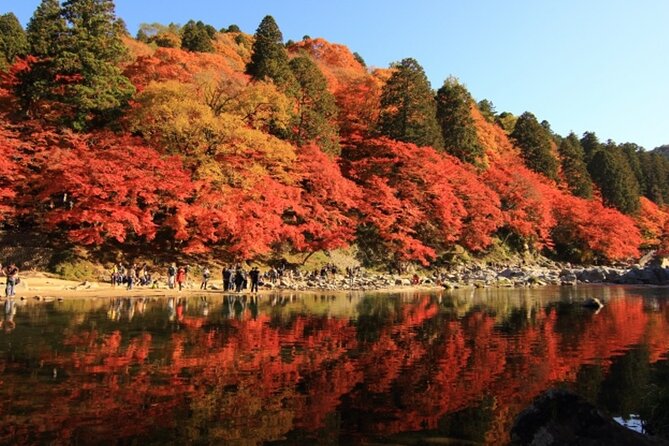
Korankei, also called Koran Valley, is the more dramatic evening stop. More than 4,000 maple trees line the area, and the light changes as sunset approaches. Once illumination begins at around 17:00, the red leaves and food stalls take on a different character.
I like the contrast. Obara is about seeing an uncommon seasonal combination in daylight. Korankei is about walking, eating, taking photographs, and watching the colors change into an evening display.
More Cherry Blossom Tours in Japan
- Mt. Fuji, Cherry Blossom & Shiba Sakura Pvt. Day Tour
★ 5.0 · 326 reviews - Nagano: 1-Day Snow Monkey & Cherry Blossom Tour in Spring
★ 4.8 · 51 reviews - Mt. Fuji & Hakone Cherry Blossom private One Day Tour
★ 4.5 · 35 reviews
Meeting in Nagoya at 12:30
The tour begins at Esca underground shopping center, listed at 6-9 Tsubakicho in Nagoya’s Nakamura Ward. The meeting point is near public transportation, but you should still arrive early. Nagoya Station can feel confusing if you are unfamiliar with its underground passages, and the bus will leave after the gathering time.
The practical rule is simple: do not cut it close. Late arrivals and no-shows are not refunded, and the bus does not wait for people who have not arrived.
From Nagoya, the ride to the destination takes about an hour. That is a useful trade-off. You avoid arranging regional trains, local buses, and transfers in the hills, and you can watch the city give way to the countryside from an air-conditioned vehicle.
The vehicle is included, along with all fees and taxes. The group can reach up to 45 people, so this is not a private outing. A larger coach may feel less personal, but it keeps the price at $78.49 per person and makes the route easy for first-time visitors to Aichi.
Obara Fureai Park and the Shikizakura trees
The first stop lasts about 50 minutes. That is enough time to walk around the main viewing area, take photographs, and see the unusual mix of blossoms and autumn leaves. It is not enough for a long rural walk or a slow exploration of every part of Obara.
The setting is especially appealing if you have already seen Japan’s standard spring cherry blossom season. Shikizakura offers a second chance to see cherry flowers, but with fall colors around them. The blossoms are not a replacement for the large spring displays found in major cities. Their appeal is the contrast with the season around them.
The area is known for more than 10,000 red and yellow autumn trees and Shikizakura blossoms. The colors depend on actual weather, so the exact balance of flowers and foliage can vary. Some years may favor the cherry blossoms, while others may give you stronger autumn color.
That weather factor is important. This is a seasonal outing, not a year-round sightseeing tour with the same view every day. If your priority is peak red maple color, ask about current conditions before departure if possible, and keep your expectations flexible.
The short stop also means you should use your time well. Follow the guide’s instructions, keep your camera ready, and avoid spending the whole visit at the first viewpoint. Admission is free, so your main cost here is the tour transport and the time needed to reach the area.
Korankei after sunset
Korankei receives about two hours, making it the heart of the outing. The valley has more than 4,000 red, yellow, and green maple trees, with paths and old shops and eateries near the gorge.
I would treat this as a walking and food stop rather than a formal guided sightseeing tour. You can look for a good viewpoint, stroll near the gorge, sample local snacks, and watch the light fade. The combination of trees, water, shops, and illuminated food stalls gives the evening a more relaxed feel than a quick photo stop.
The timing is well chosen. Sunset brings a softer view of the trees, and illumination begins around 17:00. If the schedule and daylight cooperate, you see Korankei in two forms: natural light first, then artificial light on the red leaves.
The exact experience depends on the season and the weather. Foliage may not be at its best on the day of your visit, and cloud or rain can change the sunset completely. The tour requires good weather, and if poor conditions force cancellation, you can receive a different date or a full refund.
Food vendors are part of Korankei’s appeal, but lunch is not included. Bring cash or a payment method accepted by the stalls, though the supplied information does not specify which vendors take cards. You can also eat before the tour begins if you prefer a predictable meal.
The old shops and eateries add local character, but do not expect a long shopping program. Two hours sounds generous, yet it can pass quickly once you walk, take photographs, queue for food, and find a place to watch the illumination.
Same place, a different kind of green day out:
- Osaka: teamLab Botanical Garden Entry Ticket
★ 4.5 · 1,710 reviews - Imperial Palace East Garden and Edo Castle Walking Tour in Tokyo
★ 5.0 · 510 reviews - Mt. Fuji Day Trip from Tokyo with English Speaking Driver Guide
★ 5.0 · 443 reviews - Kyoto Zen Meditation & Garden Tour at a Zen Temple with Lunch
★ 5.0 · 441 reviews
What the guide service is like
The guide is there to manage the route, timing, and group movement. One guide was described as cordial and willing to answer questions in English. The caution is that much of the spoken commentary may be in Chinese, which can leave English-speaking visitors with less background information during the journey.
That does not make the trip unusable for English speakers. It does mean you should take an active approach. Ask your questions clearly in English, confirm the meeting time and return point, and pay close attention to instructions about where and when to rejoin the bus.
The available information does not provide the guide’s name, so you should not expect to choose a particular guide when booking. Language balance may also vary from one departure to another.
For many people, the scenery is the main reason to book, and you can enjoy the parks without needing a long lecture. If detailed English interpretation is essential to your visit, this is a point to weigh carefully. If you mainly want transportation and a well-timed route, the guide arrangement may be sufficient.
Is $78.49 good value?
At $78.49, the tour is not the cheapest way to take a regional trip, but the price includes the air-conditioned vehicle and all fees and taxes. You are paying for a simple connection from central Nagoya to two seasonal sites that would require more planning on your own.
The value is strongest if you want to avoid driving. Autumn roads near popular foliage areas can be slow, and the return trip may be delayed by traffic. A coach removes the need to navigate unfamiliar roads or work out several rural connections.
The value is weaker if you want complete freedom. Obara is limited to about 50 minutes, and Korankei follows the group timetable. You cannot simply stay longer if the colors are especially good or leave early if the area feels crowded.
Admission to both listed stops is free, so the fee is mainly for transport, coordination, and the convenience of combining the locations. Since lunch is excluded, budget extra for food at Korankei.
I see this as a fair price for a seasonal day trip from Nagoya, especially for visitors who prefer not to manage regional transport. It is less attractive for confident independent explorers who already have a car, know the area, or want to spend a full day at one place.
Timing, group size, and practical comfort
The full activity lasts about six hours and 30 minutes. Departure is at 12:30, with a scheduled return to the Nagoya meeting point at 19:30. Traffic can push the return later, so do not schedule a tight dinner reservation, train connection, or evening performance.
The tour has a minimum of two participants and a maximum of 45. That range tells you what kind of experience to expect. With a small departure, the trip may feel easier to manage. With a full coach, you should expect a more organized group outing and less individual attention.
Most people can participate, according to the supplied information. No special access details are provided, so you should ask the operator directly if you have mobility concerns or need specific assistance.
Wear comfortable shoes. The useful part of Korankei is walking along the gorge and viewing the trees from different points, not sitting on the bus or staying beside one stall. Autumn evenings can also feel cool, so bring an extra layer.
The tour uses a mobile ticket. Keep it easy to access before you reach the meeting point, especially if you are moving through Nagoya Station and the underground shopping center.
Who will enjoy this tour most
This outing suits you if you want a seasonal view outside central Nagoya without renting a car. It is also a good fit if you like photography, short walks, local snacks, and evening lights more than museums or long historical explanations.
Families and older visitors may appreciate the direct bus, though the amount of walking and the exact path conditions are not specified. Couples and friends can enjoy the sunset and illuminated trees, while solo visitors benefit from having transport and a fixed route arranged.
You should think twice if you dislike group schedules, need extensive English commentary, or want to spend a full day in one location. You may also prefer another date if the weather forecast looks poor or the foliage report suggests the season is early or late.
The strongest reason to choose this tour is the pairing of Obara and Korankei. The first stop gives you an unusual autumn and blossom combination. The second gives you a more classic maple-viewing experience, with the added pleasure of illumination and food stalls.
Booking, cancellations, and seasonal expectations
You can cancel for a full refund up to 24 hours before the start time. Changes made less than 24 hours before departure are not accepted, and cancellations inside that period are not refunded.
Confirmation is normally sent at booking. If you book within three days of travel, confirmation may take up to 48 hours and remains subject to availability.
The biggest variable is nature. The best time for Shikizakura and red leaves can differ from the planned date, and no tour can guarantee peak color. The operator may cancel for poor weather and offer another date or a full refund.
I would book this when the unusual seasonal pairing matters more to you than perfect timing. If you need guaranteed peak foliage, no traffic risk, or a private English-speaking guide, this may not meet your needs.
Should you book the Obara and Korankei tour?
Book it if you want an easy Nagoya departure, a rare view of Shikizakura with autumn foliage, and an evening at Korankei with illuminated maple trees. The $78.49 price is reasonable for the transport and two-stop route, especially if you do not want to drive.
Skip it if you need a quiet private outing, full English commentary, or flexible hours. For everyone else, this is a practical seasonal trip with a memorable central idea: cherry blossoms in the autumn hills, followed by red leaves glowing after sunset.
FAQ
Where does the tour begin?
The tour begins at Esca underground shopping center, 6-9 Tsubakicho, Nakamura Ward, Nagoya, Aichi 453-0015, Japan.
What time does the tour depart?
The scheduled start time is 12:30 pm.
When does the tour return to Nagoya?
The scheduled return time is 19:30, though traffic may cause a delay.
How long does the experience last?
The tour lasts approximately six hours and 30 minutes.
What transportation is provided?
An air-conditioned vehicle is provided for the journey from Nagoya and between the stops.
Is lunch included?
No. Lunch is not included, but Korankei has food vendors and local snacks available for purchase.
Are admission fees included?
All fees and taxes are included, and admission to the listed stops is free.
Can I cancel for a full refund?
Yes. You can cancel at least 24 hours before the start time for a full refund. Cancellations made less than 24 hours before departure are not refunded.
What happens if the weather is poor?
The activity requires good weather. If it is canceled because of poor weather, you will be offered another date or a full refund.
More Winter Activities in Japan
- Nagano Spring: 1-Day Cherry Blossoms & Snow Monkeys Guided Tour
★ 5.0 · 31 reviews - Snow Monkey and Cherry Blossom Illumination Tour (3rd ~19th Apr)
★ 5.0 · 2 reviews - Eobi Valley(Winter), Strawberry, Nami Island & Railbike fr Seoul
★ 5.0 · 9 reviews - Seoul: Nami and K-Garden with Optional Alpaca Winter Tour
★ 5.0 · 3 reviews
Just added around Japan
- Tsumami Zaiku Japanese Fabric Flower Class★ 5.0 · 3 reviews
- Tokyo: Serene Sakura & Sake: An Exclusive Brewery Pairing Lunch★ 5.0 · 2 reviews
- Tsukiji Food Strolling and Hama Rikyu Garden Walking Tour★ 5.0 · 7 reviews
- Private tour – Scenic Fuji Escape: Hakone, Peace Park & More★ 5.0 · 4 reviews
- Tokyo Cherry Blossom Half Day Walking Tour with a Local Guide★ 3.5 · 4 reviews
- TOKYO: Tailored Gardens tour with Pro Gardener by E-bike -BASIC★ 5.0 · 2 reviews
- Cherry Blossom Highlights, Asakusa, Ueno, Imperial Palace Garden★ 4.5 · 4 reviews
- Japan’s Customs of Ikebana Art, Tea Ceremony & Kimono Welcome★ 5.0 · 2 reviews
Japan Garden Tours, compared.
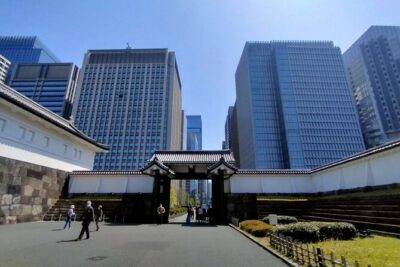
Imperial Palace East Garden and Edo Castle Walking Tour in Tokyo
Read our review →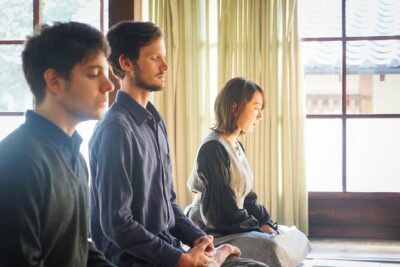
Kyoto Zen Meditation & Garden Tour at a Zen Temple with Lunch
Read our review →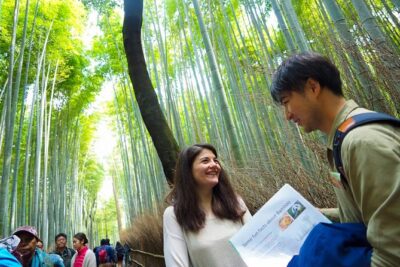
Kyoto Arashiyama Bamboo forest & Garden Half-Day Walking Tour
Read our review →
Authentic Kyoto Tea Ceremony: Camellia Flower Teahouse
Read our review →
Edo Castle & East Garden of the Imperial Palace Tour
Read our review →Browse the lists this tour appears in