
Review · TOKYO
Japanese Fan Painting Workshop ~ in a Tokyo Flower Shop
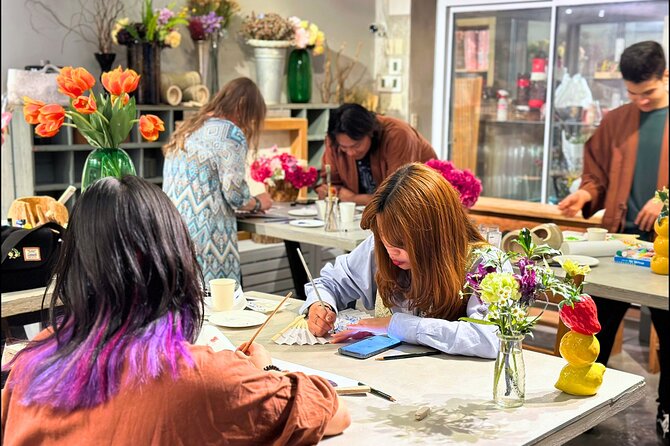
Japanese fan painting gives you a quiet, hands-on break from Tokyo’s fast streets. In a flower-filled shop, you choose the shape, size, and color of your fan, then work with Ruby and her team to create a useful souvenir rather than another mass-produced trinket. The calm setting and patient instruction make this a good pick for beginners.
I like the chance to learn about traditional subjects such as cherry blossoms, koi fish, and scenic views while still having room to invent your own design. I also like the practical advice on painting an irregular fan surface with acrylic and water-based paints. The main drawback is value: at $60 for about two hours, the class may feel costly if you have already done several art workshops or want a longer studio session.
Key points
- Paint in a Tokyo flower shop: The floral setting offers a peaceful change from the city’s crowded sights.
- Ruby and her team guide the class: You receive hands-on help, even if you have little art experience.
- Choose your own fan: Pick from different shapes, sizes, and colors before you begin.
- Use classic Japanese motifs: Cherry blossoms, koi fish, and scenic views provide easy starting ideas.
- Take home a useful souvenir: Your finished fan is both a personal artwork and a cooling tool.
- Plan for a small group: The class accepts no more than 20 people and lasts about two hours.
A quiet art break in central Tokyo
Tokyo gives you no shortage of temples, shopping streets, towers, and bright signs. This workshop offers a different kind of afternoon. Instead of moving from one sight to the next, you sit down in a flower shop and spend time making something with your hands.
The setting matters. A flower-filled room creates a softer mood than a busy sightseeing stop, and the painting gives you a reason to slow down. You are not simply watching a demonstration. You are choosing colors, testing brushwork, and deciding how much of the fan to cover.
I would think of this as a short creative retreat rather than a formal art course. You receive cultural background and technique tips, but the main goal is a relaxed experience. You do not need to arrive with a carefully planned design or a strong art background.
The class also offers an easy way to meet other artsy people in Tokyo. The group size can reach 20, so the atmosphere may vary by date. A smaller group could feel more personal, while a full session may give you more social energy and a wider range of ideas to see.
A few more garden visits around Tokyo worth a look
- Japanese flower arranging (Ikebana) Experience/Workshop in Tokyo
★ 5.0 · 52 reviews - Tsumami Zaiku Japanese Fabric Flower Class
★ 5.0 · 3 reviews - Tokyo: Ikebana Workshop at Ginza
★ 5.0 · 2 reviews
Arriving at The Park House Chiyoda Kojimachi
The meeting point is The Park House Chiyoda Kojimachi in Kojimachi, Chiyoda City, Tokyo, postal code 102-0083. The activity begins and ends at this meeting point, so you do not need to arrange a separate return transfer after painting.
The location is near public transportation, which helps fit the workshop into a day of sightseeing. Still, allow enough time to find the exact entrance and arrive ready to begin. The supplied address includes the building and neighborhood details, but no specific station or walking time is provided.
On arrival, you enter the flower-filled space and settle into the workshop. That first impression is part of the experience. You are not painting in a plain classroom, and the flowers give you visual ideas before you even pick up a brush.
Since the class is mobile-ticketed, keep your booking available on your phone. Confirmation is provided at booking, making this a simple activity to add to a Tokyo schedule.
Choosing the fan that becomes your canvas
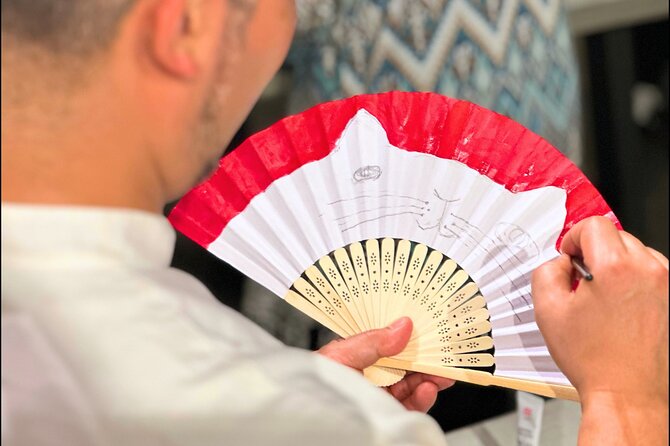
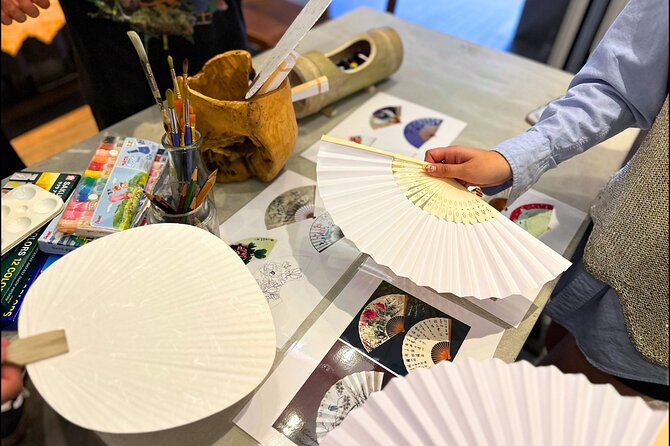
The first creative choice is the fan itself. You can choose from a range of shapes, sizes, and colors. This is more important than it sounds because the fan’s form affects how your design will look and how much space you have to paint.
A smaller fan may suit a simple pattern or a few carefully placed flowers. A larger fan gives you more room for a wider scene or a design with several elements. The available colors can also change your approach. A pale base may make painted details easy to see, while a stronger base color can become part of the artwork.
You also get a functional object, not just a flat art board. Japanese fans have long served both decorative and practical purposes, especially as a way to cool yourself in warm weather. That combination gives your finished piece a use after the class ends.
I like this part because it gives you a small amount of control before the painting starts. You are not all producing an identical souvenir. Even if two people choose the same motif, their fan size, colors, and brushwork can make the results quite different.
Learning why fans matter in Japanese culture
Before or during the painting, the instructor explains the history and significance of fans in Japanese culture. The information helps place your craft project in context. You are not treating the fan as a random souvenir, but as an object with both daily and artistic roles.
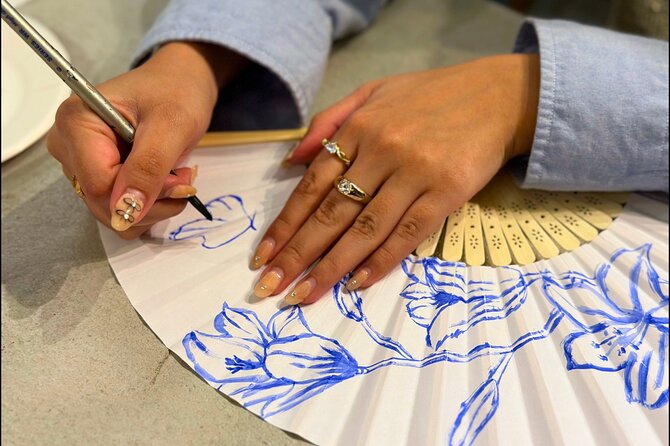
The class introduces traditional motifs that make sense on a fan. Cherry blossoms offer a familiar seasonal image. Koi fish give you a strong subject with movement and shape. Scenic views let you work with broader areas of color and composition.
You are free to follow these traditional ideas, but you can also create your own design. That balance is one of the workshop’s strongest features. If you want a clear starting point, the classic motifs keep you from facing a blank surface. If you prefer to experiment, the instructor does not require you to copy a set pattern.
The cultural introduction is likely to be brief rather than a full lecture. This is a painting class first. Still, the background gives your souvenir a stronger connection to Japan than an object bought from a shop shelf.
Same place, a different kind of green day out:
- Imperial Palace East Garden and Edo Castle Walking Tour in Tokyo
★ 5.0 · 510 reviews - Mt. Fuji Day Trip from Tokyo with English Speaking Driver Guide
★ 5.0 · 443 reviews - Tokyo: Imperial Palace East Gardens Walking Tour
★ 4.8 · 353 reviews - Mt. Fuji, Cherry Blossom & Shiba Sakura Pvt. Day Tour
★ 5.0 · 326 reviews
Painting on an irregular surface
A fan is not the easiest surface for a first-time painter. Its shape can be narrow, curved, or divided into sections, and the design needs to work across the full object. That challenge is part of the fun, but it can also make a simple idea harder to execute.
Helpful instruction matters here. The workshop supplies delicate brushes and colorful paints, and the guidance includes advice for working with acrylic and water-based paints on an irregular surface. You can ask for help with placement, color choices, or technique as your design takes shape.
The class suits beginners because the instruction is patient and kind. You do not need to call yourself an artist to participate. The aim is not to produce a museum-quality painting. It is to make a fan you enjoy and feel comfortable taking home.
At the same time, do not expect a long technical course. The session lasts about two hours, so the teaching must stay focused. If you already have experience with several art workshops, you may find the format familiar. One direct assessment described the afternoon as pleasant but questioned the cost after completing many similar creative activities.
That is a fair point. The value comes from the mix of setting, cultural context, instruction, and souvenir. If you judge the price only by the amount of painting time, $60 may feel high. If you value a calm Tokyo activity with materials included and a finished object to keep, the price becomes easier to justify.
Traditional motifs or your own design
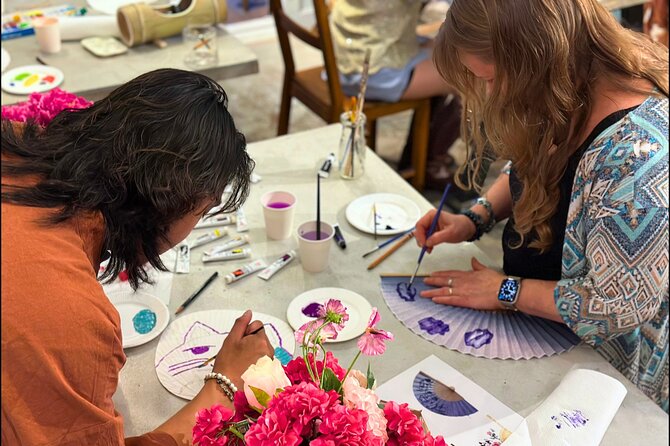
The workshop does not force one artistic style. You can use cherry blossoms, koi fish, or scenic views, then adjust the colors and layout to suit your taste. You can also leave the traditional subjects behind and design something personal.
If you are unsure where to begin, start with one main idea. A fan can become crowded quickly when you add too many details. A few well-placed blossoms or a single koi may create a cleaner result than trying to fill every open area.
The irregular surface rewards a light touch. Acrylic and water-based paints can produce different effects, so follow the instructor’s advice before applying large amounts of color. It is worth testing your brush and paint approach carefully rather than rushing into the most visible section.
I would also treat the fan as a souvenir with character, not a test of artistic skill. Small uneven lines or changes in color are part of the handmade result. The finished piece records your time in Tokyo, which gives it more personal value than a perfectly uniform factory product.
Ruby’s patient approach for beginners
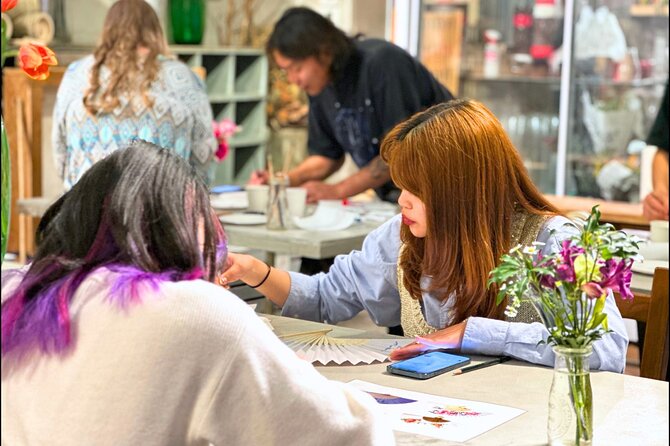
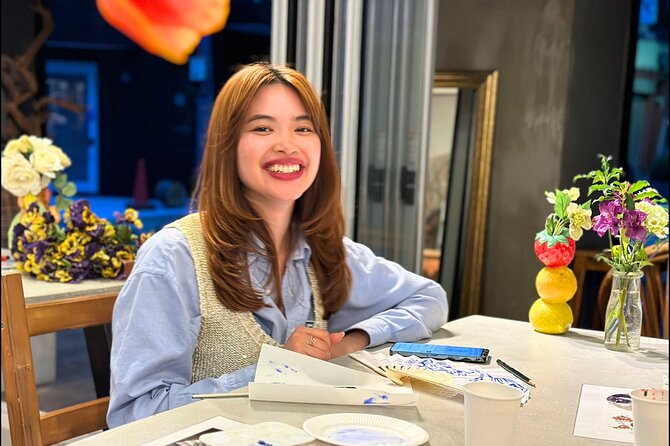
Ruby is identified as the experience provider, and she leads a team that welcomes participants into the shop. Her approach is especially useful if you and your companion are not confident painters. You can ask for assistance instead of trying to solve every problem alone.
The strongest praise for the class centers on patience, kindness, and thoughtful support. That matters in a workshop where people may arrive with very different comfort levels. One person may want detailed guidance, while another may prefer to work independently.
Ruby and her team appear to allow room for both styles. You can learn traditional techniques and motifs, or do your own thing. The result should feel like your fan, not a finished example that you simply copy.
The class is also suitable for couples and friends. Painting side by side gives you a shared activity without requiring you to produce matching work. At the end, you can take photos with your fans, creating a simple record of the afternoon.
What the two-hour schedule feels like
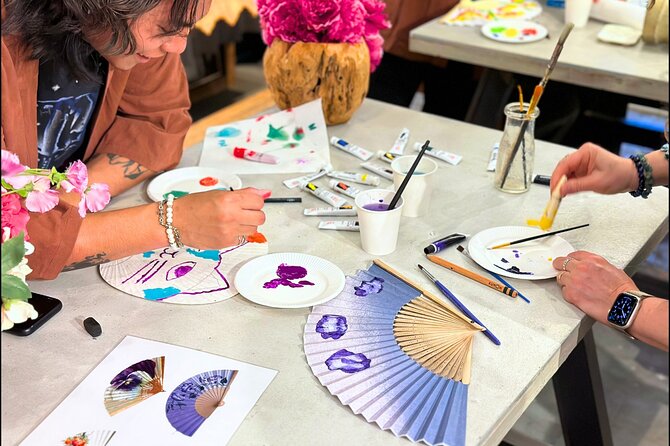
The full experience lasts approximately two hours. The available details do not divide that time into exact minutes, so expect a general flow rather than a strict timetable.
You begin by arriving at the flower shop, choosing your fan, and getting settled. The instructor then provides cultural background and explains the painting process. From there, you work on your design with access to paints, brushes, and advice.
The middle of the session is the main creative period. This is when you make the choices that define the finished fan. You can ask questions about painting on the uneven surface, use traditional subjects for direction, and adjust your design as you work.
The session ends back at the meeting point. You leave with your painted fan and, according to the activity details, may take photos at the end. Because the schedule is compact, keep your design manageable. A simple plan is more likely to feel satisfying than an ambitious scene that needs several extra hours.
Who will get the most from this activity
I would recommend this workshop to several kinds of visitors:
- First-time art makers: Patient help and supplied materials remove much of the pressure.
- Couples and friends: You can share a creative afternoon while making separate designs.
- Repeat Tokyo visitors: The class offers something outside the usual sightseeing route.
- Souvenir hunters: The fan is personal, functional, and easy to connect with your time in Japan.
- People who need a slower afternoon: The flower shop setting provides a calm change of pace.
- Culture-minded makers: The introduction to fan history and traditional motifs adds meaning to the craft.
It may be less suitable if you want a serious multi-hour art lesson, advanced instruction, or a very low-cost activity. The group can include up to 20 people, so the level of individual attention may depend on attendance and how much help each person needs.
Most people can participate, and service animals are allowed. No special art ability is required in the supplied information, and the beginner-friendly instruction makes this a reasonable choice for those starting from zero.
Is $60 a fair price?
At $60 per person, this is not the cheapest way to spend two hours in Tokyo. You are paying for more than paint and a fan, though. The fee covers the setting, instruction, materials, cultural explanation, and a handmade item you can use after the class.
The value is strongest when you want an experience with a clear result. You do not simply attend a talk or watch a demonstration. You leave with something you made yourself, and the fan can still serve its original cooling purpose in warm weather.
The price is harder to defend if you compare it with casual craft activities or if you already have plenty of similar artwork from your trip. One assessment found the session pleasant and technically helpful but felt the cost was high after completing several other art projects.
My advice is to book it for the atmosphere and personal souvenir, not because it is a bargain. If the flower shop setting, Japanese fan culture, and guided painting all appeal to you, the fee is reasonable. If your main goal is simply to paint for the lowest price, choose another activity.
Booking timing and cancellation
The experience is booked an average of 47 days ahead, which suggests that planning early is sensible, especially if you have fixed dates in Tokyo. You receive confirmation at the time of booking, and the mobile ticket makes the reservation easy to keep with your other travel documents.
Free cancellation is available up to 24 hours before the start time for a full refund. Cancellations or changes made less than 24 hours before the activity are not accepted for a refund, and the cut-off follows local Tokyo time.
That policy is fairly flexible for a planned activity, but pay attention if your Tokyo schedule may change. The class begins and ends at the same location, so it is easier to place into your day than an activity with several meeting points.
Should you book the Japanese Fan Painting Workshop?
Book this if you want a calm, creative Tokyo afternoon with a useful souvenir and enough guidance to help you succeed as a beginner. The flower shop setting, patient support from Ruby and her team, and freedom to choose traditional or personal designs give the class real appeal.
Skip it if you are looking for an advanced studio lesson, a long art session, or the lowest possible price. At two hours and $60, the value depends on how much you care about the setting and the handmade result.
For most people, the best reason to choose it is simple: you get to slow down, make something personal, and leave Tokyo with a fan that carries your own brushwork.
FAQ
Where does the Japanese Fan Painting Workshop take place?
The workshop takes place at The Park House Chiyoda Kojimachi in Kojimachi, Chiyoda City, Tokyo, Japan, postal code 102-0083.
How long does the workshop last?
The activity lasts approximately two hours.
How much does the workshop cost?
The listed price is $60 per person.
What can I paint on the fan?
You can use traditional subjects such as cherry blossoms, koi fish, and scenic views, or create your own design.
Do I choose the fan myself?
Yes. You can choose from different fan shapes, sizes, and colors.
Are painting materials provided?
Yes. The workshop provides paints and delicate brushes for the activity.
Is the class suitable for beginners?
Yes. The instructor offers guidance, and the activity is suitable for people with little or no art experience.
How many people can join the activity?
The maximum group size is 20 participants.
Can I cancel for a refund?
Yes. You can cancel at least 24 hours before the start time for a full refund. Cancellations or changes made less than 24 hours before the start time are not accepted for a refund.
Just added around Tokyo
- Tsumami Zaiku Japanese Fabric Flower Class★ 5.0 · 3 reviews
- Tokyo: Serene Sakura & Sake: An Exclusive Brewery Pairing Lunch★ 5.0 · 2 reviews
- Tsukiji Food Strolling and Hama Rikyu Garden Walking Tour★ 5.0 · 7 reviews
- Private tour – Scenic Fuji Escape: Hakone, Peace Park & More★ 5.0 · 4 reviews
- Tokyo Cherry Blossom Half Day Walking Tour with a Local Guide★ 3.5 · 4 reviews
- TOKYO: Tailored Gardens tour with Pro Gardener by E-bike -BASIC★ 5.0 · 2 reviews
- Cherry Blossom Highlights, Asakusa, Ueno, Imperial Palace Garden★ 4.5 · 4 reviews
- Japan’s Customs of Ikebana Art, Tea Ceremony & Kimono Welcome★ 5.0 · 2 reviews
Tokyo Garden Tours, compared.
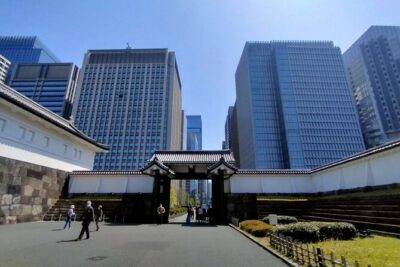
Imperial Palace East Garden and Edo Castle Walking Tour in Tokyo
Read our review →
Edo Castle & East Garden of the Imperial Palace Tour
Read our review →
Tokyo Private Tour! Edo Castle & Imperial Palace East Gardens
Read our review →
Mount Fuji & Lake Kawaguchiko Private Tour: Beyond the Ordinary
Read our review →
Rainbow Bridge Day Cruise Show and Only Soft Drinks
Read our review →
Tsukiji Market and Hama-rikyu Gardens Guided Tour
Read our review →Browse the lists this tour appears in