
Review · TOKYO
Cherry blossom & Japanese Sake Tasting in Shinjuku
The best part of this Shinjuku tasting is its steady progression through eight Japanese sakes, starting with lighter, lower-alcohol pours and ending with more distinctive aromas and flavors. Traditional snacks help you notice how sake changes with food, and the final amazake offers a sweet finish.
I like the thoughtful tasting order and the fact that every sake is available only in Japan. I also like the intimate feel suggested by a maximum of 20 people, plus the music and atmosphere that host Shuma brings to the room. The main drawback is the short one-hour schedule, which leaves little time for lingering over each pour.
Key points to know before booking
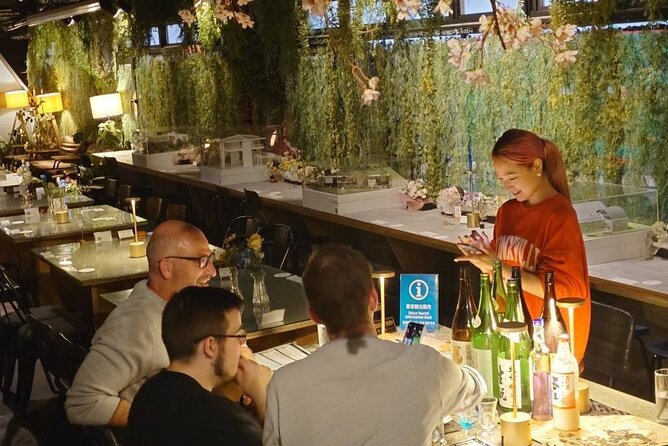
- Eight Japan-only sakes: The tasting gives you a broad sample of styles instead of focusing on one bottle.
- A gradual tasting order: You begin with sake around 15 to 16 percent alcohol before moving toward stronger aromas and more pronounced flavors.
- Traditional snack pairings: Food is part of the lesson, showing how sake works with different tastes.
- Amazake to finish: This sweet rice-koji drink serves as a dessert and a nonstandard but memorable ending.
- Shinjuku meeting point: You meet at A house with flowers, near public transportation, at 3-chōme 6-7, Sixth Sanwa Building, fourth floor.
- One-hour format: It is easy to fit into a Tokyo schedule, but the pace may feel brisk if you want long explanations or extended conversation.
Eight sakes, arranged for a smooth introduction
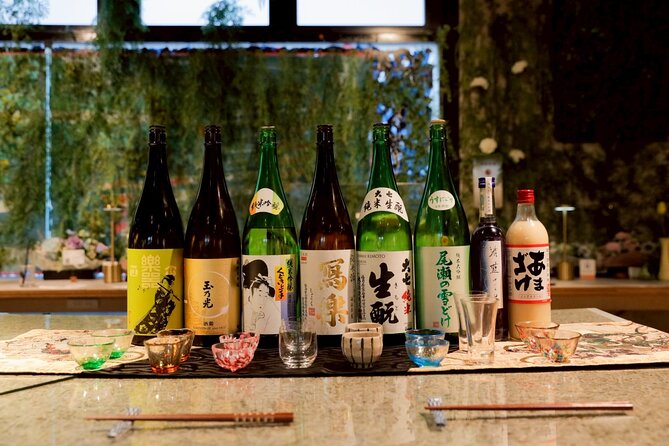
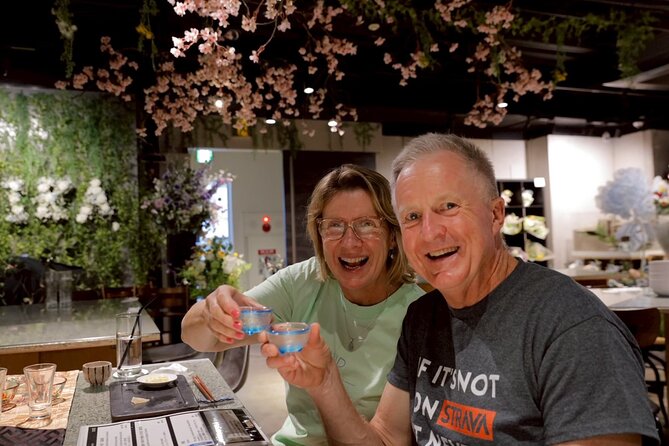
This is not a random flight of drinks. The tasting follows a clear path, which matters if you have little experience with sake and do not know how to compare bottles.
The first pours are simpler and generally sit around 15 to 16 percent alcohol. That is close to the strength of many standard sakes, but the point here is not to overwhelm you at the start. You get a calmer introduction before moving toward bottles with more noticeable aromas and flavor character.
As the tasting continues, the sake becomes more distinctive. You might notice sharper fragrances, fuller sensations, or a cleaner finish from one sample compared with another. The supplied details do not identify the eight labels, regions, rice varieties, or brewing methods, so you should not book this expecting a technical seminar on named breweries. Instead, think of it as a guided first look at the range of sake available in Japan.
That approach suits a mixed group. If you are completely new to sake, the opening pours give you a comfortable starting point. If you already order sake at restaurants, the later samples should offer more to compare. The selection is described as highly rated and sourced from across Japan, but the exact lineup may vary.
More Cherry Blossom Tours in Japan
- Mt. Fuji, Cherry Blossom & Shiba Sakura Pvt. Day Tour
★ 5.0 · 326 reviews - Mt. Fuji & Hakone Cherry Blossom private One Day Tour
★ 4.5 · 35 reviews - Tokyo Cherry Blossoms blooming spots E-bike Tour, 3hrs
★ 5.0 · 27 reviews
Why the order of service matters
Sake is often treated as one category, yet it can taste very different from one bottle to the next. Temperature, food, alcohol level, aroma, and texture all affect the way it comes across.
The tasting introduces that idea without making you study a chart. You begin with the straightforward choices, then work toward more aromatic and pronounced examples. This protects your palate and gives you a simple reference point. When a later sake tastes more fragrant or crisp, you have already sampled something milder for comparison.
The description also points out that sake can be enjoyed at different temperatures depending on the season and the dish. That is useful context, even though the exact serving temperatures for this session are not given. You may find that a sake seems brighter or softer depending on how it is served, so pay attention to temperature as well as flavor.
For me, this makes the tasting more useful than simply receiving eight glasses in a line. You are given a basic way to think about sake, even within a compact schedule.
Snack pairings turn the tasting into a meal lesson
Traditional Japanese snacks accompany the pours. They are not just something to nibble between drinks. The food lets you see how sake responds to salty, savory, or otherwise contrasting flavors.
Try each snack with the sake rather than eating everything first. Notice which pairing makes the drink seem smoother, crisper, sweeter, or more pronounced. Even if you do not have a trained palate, the comparison gives you something concrete to discuss.
This is especially helpful if you plan to order sake with dinner during the rest of your time in Japan. You may leave with a better sense of why a particular style works with food instead of choosing a bottle based only on its name or price.
The details do not promise a full meal, and additional meals and drinks are not included. You should treat the snacks as tasting accompaniments, not as a replacement for lunch or dinner. If you arrive hungry, plan to eat separately before or after the session.
Amazake provides an unusual sweet ending
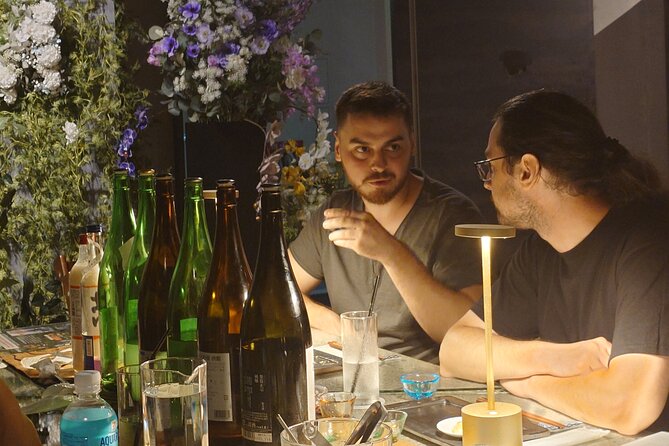
The final taste is amazake, a sweet fermented rice drink made with rice koji. It is often enjoyed as a dessert and is sometimes called drinkable IV in Japan because of its traditional reputation as a nourishing drink.
Amazake is not the same as the alcoholic sake served earlier. Here, it gives the tasting a gentle change of pace. After several savory or dry samples, the sweetness creates a natural finish.
This last course may be the most surprising part for people who associate Japanese drinks only with sake. It also broadens the session beyond alcohol. You still need to be at least 20 to take part because the activity serves sake, but the closing drink itself is a different kind of Japanese fermented beverage.
The description does not specify whether the amazake contains alcohol, so you should ask the host if that matters to you. The important point is that it is served as the sweet final course.
More Cherry Blossom Tours in Tokyo
- Cherry Blossom Private Tour
★ 4.5 · 18 reviews - Licensed Guide Tokyo Meguro Cherry Blossom Walking Tour
★ 4.5 · 13 reviews - Evening Hanami (Cherry Blossom) Experience with a Local
★ 3.5 · 10 reviews - Tokyo: Mt. Fuji & Hakone Cherry Blossoms Private Day Tour
★ 3.5 · 9 reviews
Shuma sets the tone in a small Shinjuku room
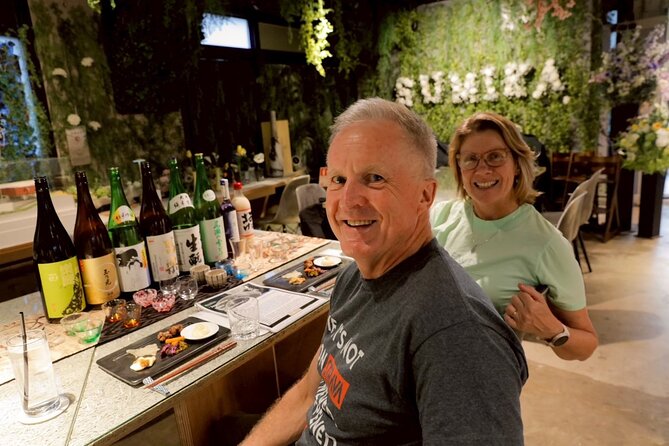
The host named in the available feedback is Shuma. A positive impression centers on his hosting, along with the room’s atmosphere, music, sake arrangement, and food pairing.
Those details matter in a tasting. The drinks are only part of the event. A rushed or awkward presentation can make unfamiliar sake feel difficult, while a relaxed host can help you compare flavors without turning the session into a lecture.
The setting is listed as A house with flowers, at the Sixth Sanwa Building, fourth floor, in Shinjuku. The name suggests a more personal meeting space than a large restaurant, though the supplied details do not describe the interior beyond the positive note about ambiance and music. You should use the full address when navigating:
Japan, 160-0022 Tokyo, Shinjuku City, Shinjuku, 3-chōme 6-7, Sixth Sanwa Building, fourth floor.
The group can include up to 20 people. That is still small enough to feel more focused than a large food tour, but it is not a private tasting. If the room reaches its maximum, your opportunity to ask individual questions may be limited, especially within one hour.
A one-hour stop that fits neatly into Shinjuku plans
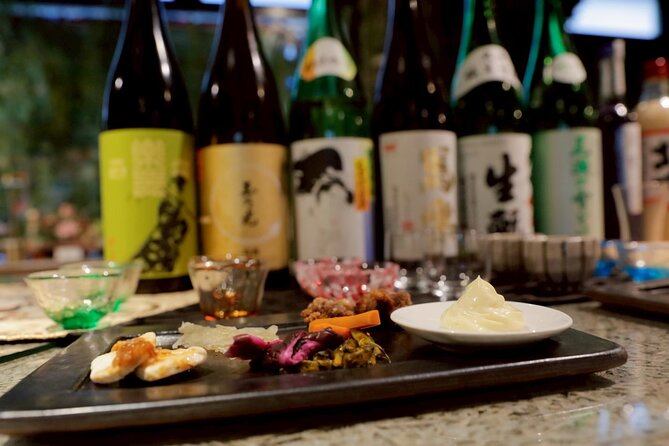
The session lasts about one hour and begins and ends at the same meeting point. That makes it easy to place between other activities in Shinjuku, provided you allow enough time to find the building and reach the fourth floor.
The short duration is both a strength and a limitation. You can sample eight sakes without giving up half a day. This works well for a first introduction, a pre-dinner activity, or a compact stop during a busy Tokyo itinerary.
At the same time, eight pours in 60 minutes require a steady pace. You will likely have time to taste, compare, eat the snacks, and hear the basic explanation, but not to spend many minutes on every bottle. If you want a slow technical discussion of brewing, regional styles, or individual producers, a longer class may suit you better.
The activity ends where it starts, so you are not left at an unfamiliar part of the city. Transportation to the meeting point is not included, and hotel pickup and drop-off are not provided.
Is $39.02 a fair price?
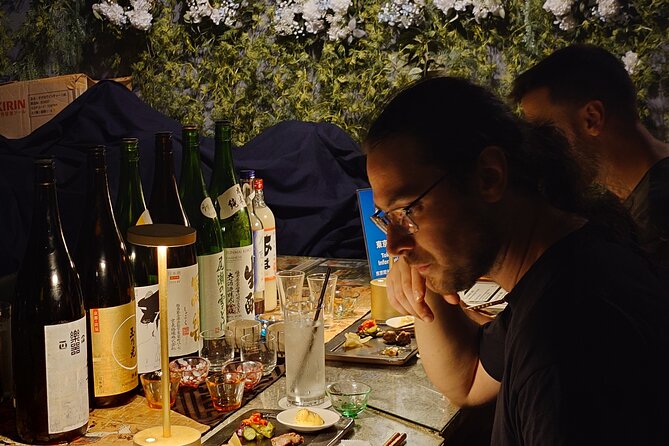
At $39.02 per person, the value depends on how much you want from the tasting. You receive eight sake samples, traditional snack pairings, amazake, and the hosted presentation. All fees and taxes are included, which keeps the advertised cost straightforward.
For someone who would otherwise buy several bottles or glasses while trying to compare sake independently, this can be a practical way to sample a broad selection. You also avoid guessing at a shop or restaurant menu. The session gives you a controlled sequence and food to help make sense of the differences.
The value is less obvious if you are mainly looking for a full meal, a long class, or a private guide. Additional meals and drinks cost extra, and the one-hour format limits the amount of instruction you can receive.
I see the strongest value for first-time sake drinkers, couples looking for a compact food-and-drink activity, and people who want to taste Japanese products before deciding what to seek out later. Experienced sake fans may still enjoy the eight-sample format, but should check whether the current selection offers styles they have not tried.
The experience is booked, on average, 36 days ahead. That does not guarantee every date sells out, but it is a useful sign that you should reserve early if your Tokyo schedule is fixed.
The practical rules that matter
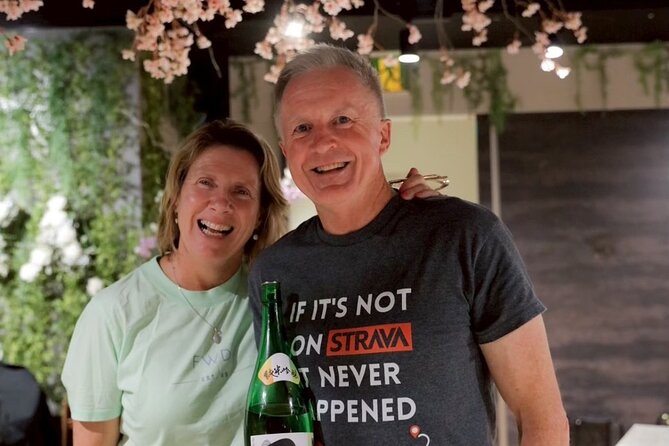
You must be 20 or older to participate. Japanese law prohibits underage drinking, and this activity does not accept anyone under that age because sake is served.
Confirmation arrives at booking, and a mobile ticket is provided. The meeting point is near public transportation, but transportation expenses are your responsibility. Since the address includes a building name and fourth-floor location, keep the meeting details available on your phone.
Cancellation is free up to 24 hours before the start time for a full refund. Cancellations or changes made within 24 hours are not accepted for a refund. The cut-off follows local Tokyo time, so check the clock carefully if you are changing plans from another time zone.
The activity may also be canceled if the minimum number of participants is not reached or if poor weather affects the session. In those cases, you are offered another date or experience, or a full refund. Since this is called a cherry blossom experience, weather may be especially relevant, but the supplied information does not promise a particular blossom view or a guaranteed outdoor component.
Who will enjoy this sake tasting most?
I would choose this for you if you want a friendly first step into sake rather than a formal certification course. The gradual order, food pairings, and sweet amazake finish make the subject approachable.
It also works for a pair or small group with different levels of interest. One person can focus on the atmosphere and snacks while another compares aromas and alcohol levels. Shuma’s relaxed hosting style, music, and room atmosphere should help keep the session social.
You may want to skip it if you do not drink alcohol, are under 20, or need a substantial meal. It may also disappoint you if you expect a detailed list of producers, a long lesson on brewing, or a private setting. The available information does not promise any of those things.
Should you book it?
Book this tasting if you want to sample eight Japan-only sakes in a well-ordered hour, with traditional snacks and amazake included. The combination offers more guidance than simply ordering one drink at a bar, while taking far less time than a full-day food tour.
I would book early, especially since many reservations are made more than a month ahead. Arrive ready to taste slowly, compare each pour with the food, and ask about anything that catches your attention.
The best reason to choose it is the balance of variety and simplicity. You get a broad introduction without needing prior sake knowledge. Just keep your expectations in line with the format: this is a compact hosted tasting in Shinjuku, not a full dinner or an advanced brewing course.
FAQ
Where does the sake tasting begin?
It begins at A house with flowers, located at Japan, 160-0022 Tokyo, Shinjuku City, Shinjuku, 3-chōme 6-7, Sixth Sanwa Building, fourth floor.
How long does the activity last?
The tasting lasts approximately one hour.
How many sakes are included?
The session includes eight carefully selected sakes that are available exclusively in Japan.
Is food included?
Traditional Japanese snacks are included as pairings. Additional meals and drinks are not included.
What is served at the end?
The tasting ends with amazake, a sweet fermented drink made from rice koji that is enjoyed as a dessert.
Can anyone under 20 participate?
No. Participants must be at least 20 years old because Japanese law prohibits underage drinking and the activity serves sake.
Is transportation included?
No. Transportation to the meeting point is not included, and there is no hotel pickup or drop-off.
What is the cancellation policy?
You can cancel up to 24 hours before the start time for a full refund. Cancellations or changes made less than 24 hours before the start time are not accepted for a refund. If the activity is canceled because of poor weather or because the minimum number of participants is not reached, you can choose another date or experience, or receive a full refund.
More Food & Drink in Tokyo
- Tsukiji Food Strolling and Hama Rikyu Garden Walking Tour
★ 5.0 · 7 reviews - Tokyo Spring Daytime (Cherry Blossom) Food Tour
★ 5.0 · 6 reviews - Princeville Botanical Gardens Tour and Chocolate Tasting Ticket
★ 5.0 · 774 reviews - Sorrento: Lemon Garden Tour with Marmalade Tasting
★ 4.6 · 405 reviews
More Drinking Tours in Tokyo
- Tokyo: Serene Sakura & Sake: An Exclusive Brewery Pairing Lunch
★ 5.0 · 2 reviews - Bangkok: White Orchid Chao Phraya Dinner Cruise free Beer
★ 4.4 · 4,573 reviews - Amsterdam: The Original Flower Boat with Local Guide and Bar
★ 4.7 · 342 reviews - Savannah Midnight in the Garden Pub Crawl
★ 4.5 · 75 reviews
Just added around Tokyo
- Tsumami Zaiku Japanese Fabric Flower Class★ 5.0 · 3 reviews
- Tsukiji Food Strolling and Hama Rikyu Garden Walking Tour★ 5.0 · 7 reviews
- Tokyo: Serene Sakura & Sake: An Exclusive Brewery Pairing Lunch★ 5.0 · 2 reviews
- Private tour – Scenic Fuji Escape: Hakone, Peace Park & More★ 5.0 · 4 reviews
- Tokyo Cherry Blossom Half Day Walking Tour with a Local Guide★ 3.5 · 4 reviews
- TOKYO: Tailored Gardens tour with Pro Gardener by E-bike -BASIC★ 5.0 · 2 reviews
- Cherry Blossom Highlights, Asakusa, Ueno, Imperial Palace Garden★ 4.5 · 4 reviews
- Japan’s Customs of Ikebana Art, Tea Ceremony & Kimono Welcome★ 5.0 · 2 reviews
Tokyo Garden Tours, compared.
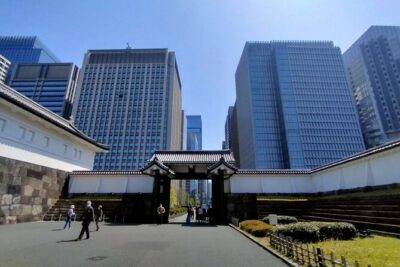
Imperial Palace East Garden and Edo Castle Walking Tour in Tokyo
Read our review →
Edo Castle & East Garden of the Imperial Palace Tour
Read our review →
Tokyo Private Tour! Edo Castle & Imperial Palace East Gardens
Read our review →
Mount Fuji & Lake Kawaguchiko Private Tour: Beyond the Ordinary
Read our review →
Rainbow Bridge Day Cruise Show and Only Soft Drinks
Read our review →
Tsukiji Market and Hama-rikyu Gardens Guided Tour
Read our review →Browse the lists this tour appears in