
Review · JAPAN
Kanazawa: Samurai, Matcha, Gardens and Geisha Full-Day Tour
Kanazawa’s best sights are not packed into one grand complex. They are spread across old neighborhoods, castle grounds, gardens, shrines, and tea districts. This full-day walk ties them together with the stories that make each place matter. You’ll see where lower-ranking samurai lived, sip matcha in a refined tea setting, and step inside a preserved geisha house.
I especially like the 12-kilometer walking route, which takes you through side streets that a bus tour would miss, and the pause for matcha and wagashi at Gyokusen-an. Guides such as Mike, Akari, Gareth, Daniel, and Lee have been praised for clear history, patience, and flexibility. The tradeoff is simple: this is a long day on foot, with weather and slippery winter streets to consider.
Key points to know before booking
- A full walking tour: Expect several hours outside and, for some people, roughly 12 kilometers or more than 27,000 steps.
- Four major sides of Kanazawa: Samurai homes, castle grounds, Kenroku-en Garden, and the Higashi-chaya geisha district all fit into one day.
- Two traditional tea experiences: Matcha and wagashi are served at Gyokusen-an, followed later by a visit to the historic Shima geisha house.
- Strong English guiding: The guide fills in the social history behind buildings that can otherwise look like attractive old streets.
- Lunch is your choice: The tour does not include lunch, but there is time to ask your guide for suggestions and eat near the route.
- Weather matters: Rain, snow, ice, and cold can change the feel of the day, so good shoes and proper clothing are essential.
Start beneath Kanazawa Station’s sumo wrestlers
Meet outside the Shinkansen ticket gates, in front of the information center. If you are entering from outside, go through the East Entrance and look for the four large sumo wrestlers. Your guide will wear a Snow Monkey Resorts tour tag.
Before walking away from the station, you’ll see Tsuzumi-mon, the sweeping wooden gate that has become Kanazawa’s modern symbol. Its design borrows from traditional Japanese forms while belonging firmly to the present day. It is a useful first lesson in how Kanazawa combines old architecture with newer city life.
The meeting point is practical, but do not cut it too close. Kanazawa Station is large enough to cause a few minutes of confusion, especially if you are arriving by train with luggage. The tour begins at 9:00 AM according to the provided schedule, though you should check your booking for the exact start time.
More Garden Day Trips in Japan
- Mt. Fuji Day Trip from Tokyo with English Speaking Driver Guide
★ 5.0 · 443 reviews - Mt. Fuji, Cherry Blossom & Shiba Sakura Pvt. Day Tour
★ 5.0 · 326 reviews - Full-Day Tour from Kanazawa: Samurai, Matcha, Gardens and Geisha
★ 5.0 · 68 reviews
Nagamachi shows how samurai life really worked
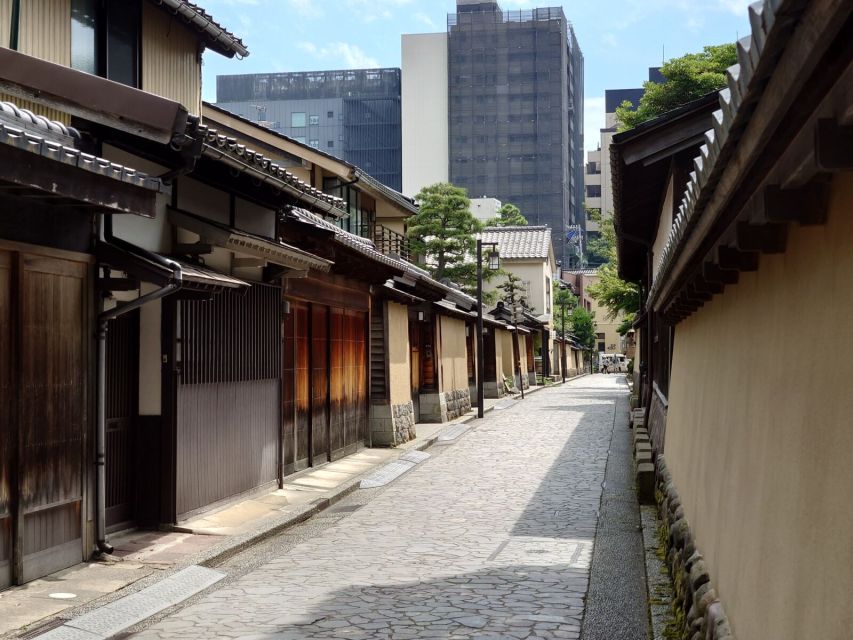
The walk toward Nagamachi takes about 30 minutes and uses side streets rather than a direct urban route. You pass local residences and occasional wooden temples before reaching a quieter neighborhood once associated with lower-ranking samurai.
This distinction matters. Samurai life was not only castle lords and grand armor. Many warriors lived in modest homes, managed household duties, and worked within a strict social order. Entering preserved residences gives you a better feel for that everyday world than looking at weapons behind glass.
Nagamachi itself has crooked streets, earthen walls, and traditional homes. The district is attractive, but the guide’s explanations make it more useful. You learn how the area was organized and how samurai status shaped housing and daily life.
There is also free time to look at local crafts and wares. Kanazawa is known for traditional arts, so this is a good place to browse rather than rush from one photo stop to the next. Keep your expectations practical: the free time is part of a packed day, not a long shopping session.
The route can be especially pleasant for families and curious first-time visitors. Daniel, one of the guides assigned on this experience, has been praised for patiently adjusting the pace for children and allowing extra stops. Akari and Mike have also been singled out for making room for questions and personal interests.
Oyama Shrine mixes Japanese and Western design
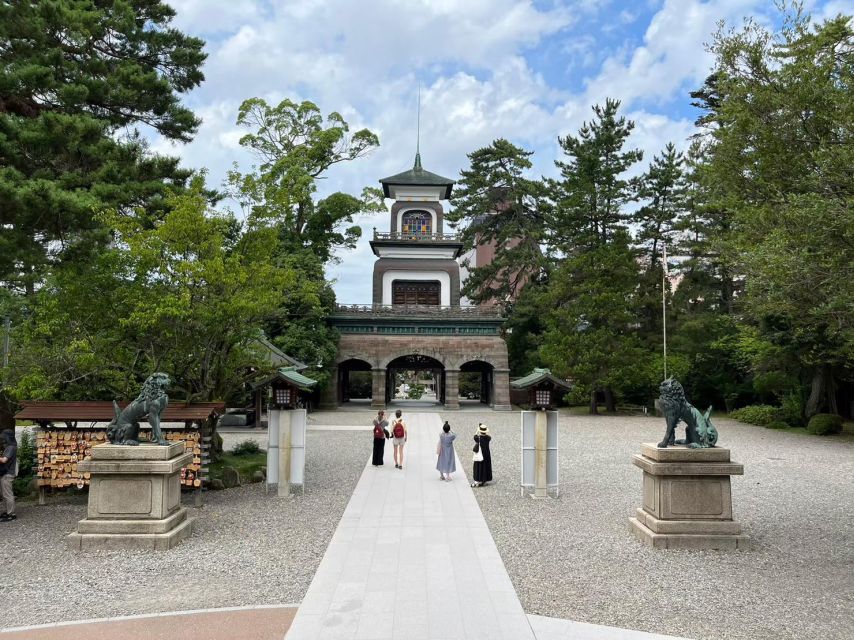
Oyama Shrine is a short stop, but it gives the day a welcome change of pace. Its gate and architecture combine Japanese and Western elements, reflecting the period when Japan was rapidly changing in the 19th century.
The stained glass is the detail to watch for. It feels unexpected after the traditional streets of Nagamachi, and that contrast is the point. Kanazawa’s history is not frozen in the Edo period. The city continued to absorb outside ideas while keeping its own visual language.
Behind the shrine, a koi pond and small garden lead toward a large wooden bridge. Crossing the bridge and passing through an impressive gate brings you into the Kanazawa Castle grounds. This is one of the route’s better transitions because the city gradually gives way to walls, gates, water, and open space.
Matcha at Gyokusen-an gives the morning a quiet pause
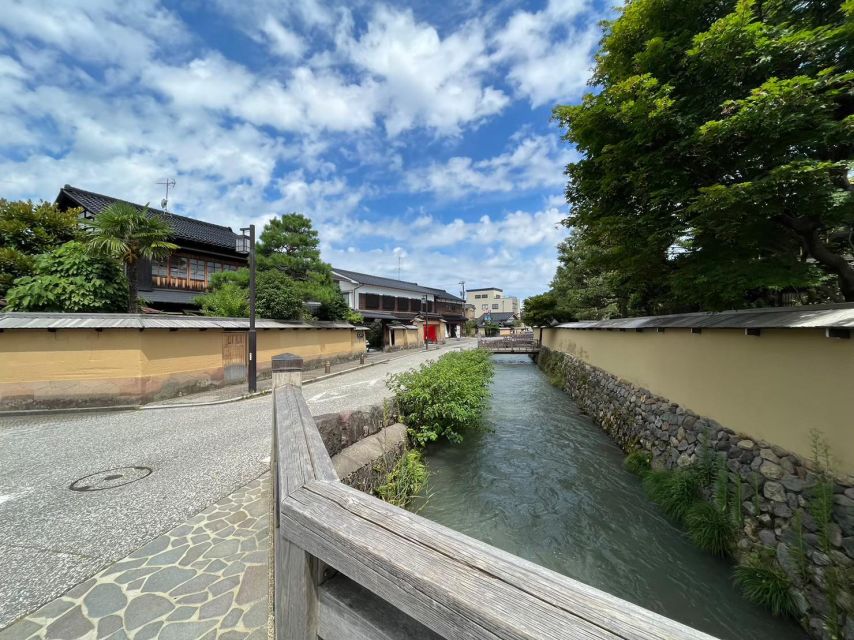
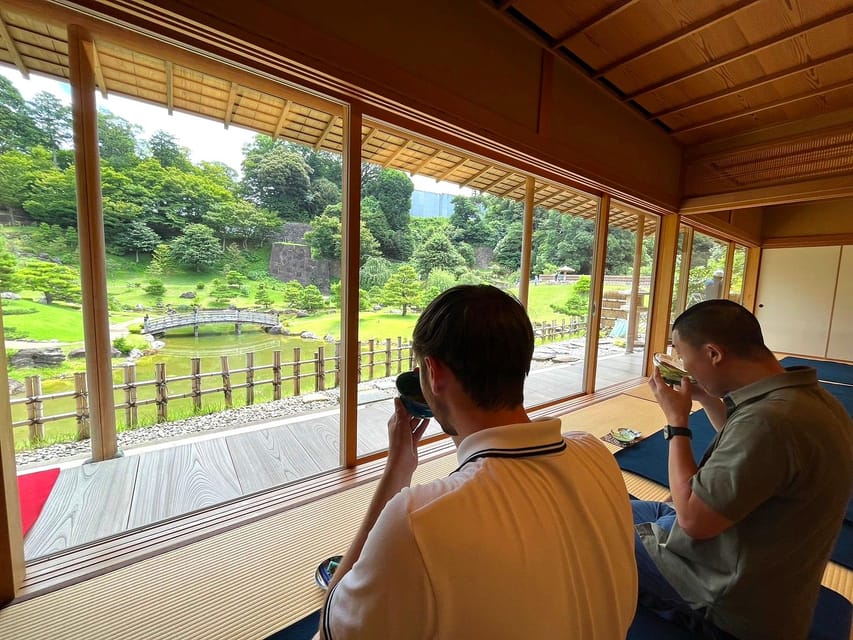
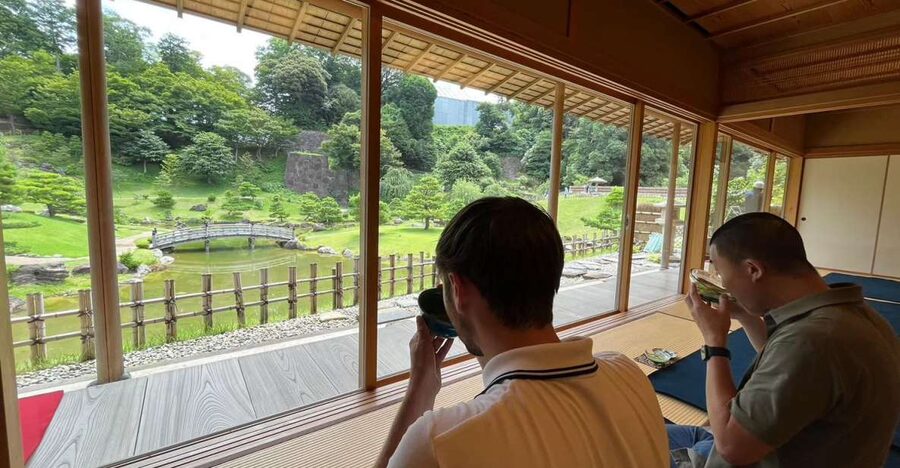
At Gyokusen-an, you can sit with views over a carefully maintained garden at the foot of the castle’s large stone walls. The tea house interior uses a restrained Japanese style, with the kind of detail that rewards slowing down.
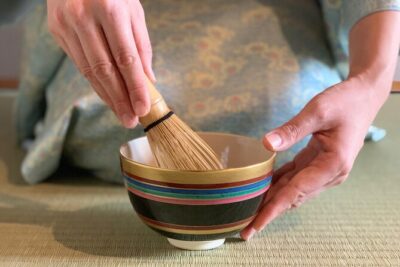
The matcha experience includes artistic wagashi sweets served by staff in kimono. Your guide explains the proper way to drink the tea, so you do not have to guess what to do. This is not presented as a formal lesson in every rule of tea ceremony. It is a calm, accessible introduction that works well even if you have never tried matcha before.
I like this stop because it breaks up the walking. Kanazawa can be wet, cold, or humid, and sitting indoors with tea gives your feet and attention a rest. The garden view also adds something that a quick cup in a modern café cannot.
Gyokusen-an may occasionally host a special event. If that happens, the matcha tasting moves to another location. The experience remains part of the tour, but the exact setting can change.
After tea, you have time for lunch nearby. Lunch is not included, which keeps the price from being padded with a fixed meal you may not want. It also means you should budget separately and ask your guide for a recommendation. The schedule provides time to eat, but you should not expect a leisurely restaurant afternoon.
Same place, a different kind of green day out:
- Osaka: teamLab Botanical Garden Entry Ticket
★ 4.5 · 1,710 reviews - Imperial Palace East Garden and Edo Castle Walking Tour in Tokyo
★ 5.0 · 510 reviews - Kyoto Zen Meditation & Garden Tour at a Zen Temple with Lunch
★ 5.0 · 441 reviews - Kyoto Arashiyama Bamboo forest & Garden Half-Day Walking Tour
★ 5.0 · 413 reviews
Kanazawa Castle connects power, defense, and design
The route continues through the castle grounds before crossing toward Kenroku-en. Kanazawa Castle is partially restored, so you should not expect a completely intact feudal palace. The value is in the scale of the grounds, the stone walls, gateways, gardens, and the way the site explains the power once held by the lords of Kanazawa.
The guide helps connect the castle to the samurai district and the garden. Without that context, the walls and buildings can blur into a series of attractive structures. With it, you can see how administration, defense, ceremony, and landscape design worked together.
This section also provides more open walking, which can feel refreshing after the tighter streets of Nagamachi. On a rainy day, castle walls and gardens take on a different mood, but wet stone and paved paths may be slippery. Use the short breaks wisely and keep your shoes dry if possible.
Kenroku-en is the day’s visual centerpiece
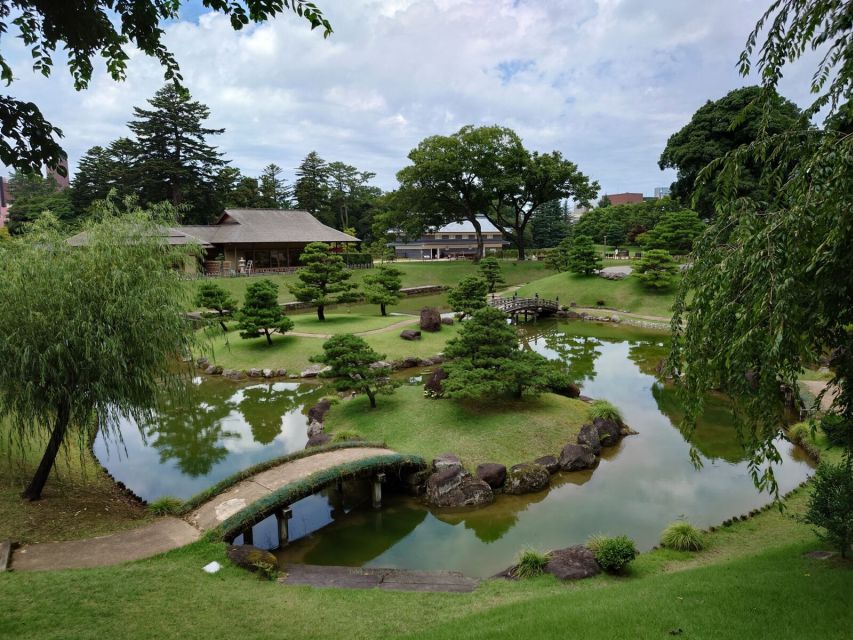
Kenroku-en is often listed among Japan’s finest gardens, and the visit lasts about 90 minutes. That amount of time is useful. You are not simply led to one viewpoint, given a quick explanation, and moved on. You have room to notice ponds, bridges, trees, paths, and the garden’s changing views.
The guide explains how the garden was designed and developed over more than 200 years under the lords of Kanazawa Castle. The name Kenroku-en refers to the combination of qualities a great garden should bring together, including spaciousness, seclusion, artifice, antiquity, water, and views. The setting makes those ideas easier to understand than a textbook would.
Seasons alter the garden considerably. Winter can bring snow and the famous protective ropes used around trees, while rain may soften the colors and leave the castle garden misty. Summer can be warm and muggy. You need weather-ready clothing more than you need fashionable clothes here.
This is one of the places where a guide adds real value. The garden is beautiful on its own, but the layout is not random. Knowing why certain features were placed where they are helps you read the space rather than merely photograph it.
Higashi-chaya reveals Kanazawa’s tea-house culture
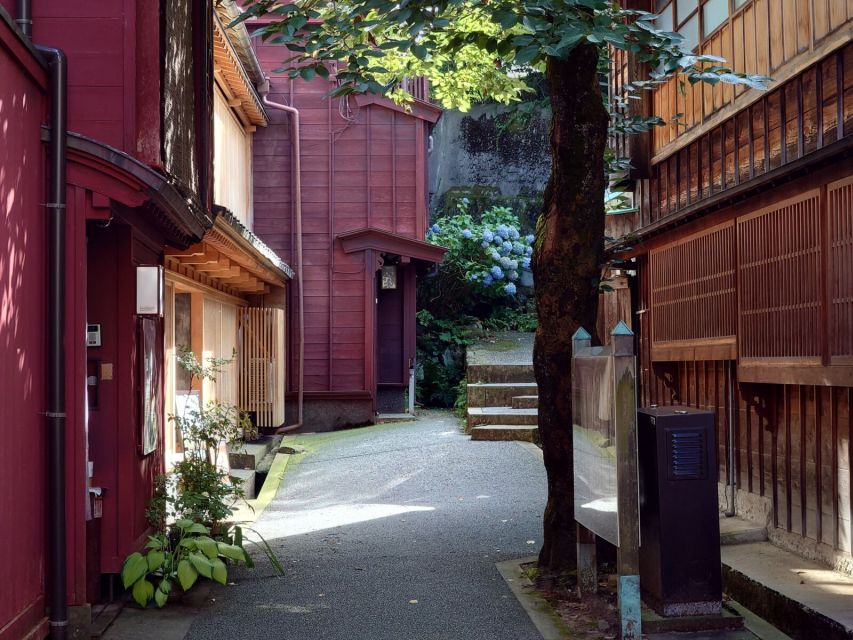
From Kenroku-en, the tour continues to Higashi-chaya, one of Kanazawa’s defining districts. The streets are lined with tall two-story wooden tea houses, and some have red-painted interiors or exteriors, a detail especially associated with Kanazawa.
The word tea house can mislead English-speaking visitors. These were not ordinary cafés. They were places for entertainment, music, conversation, and performances by geisha. The guide explains how the district functioned and how it fits into Kanazawa’s social history.
You receive about 40 minutes for guided exploration, free time, shopping, and sightseeing. That is enough to enjoy the street atmosphere and browse, but not enough for an unhurried tour of every shop. If you spot a craft item or sweet you want, do not assume you can return later in the day. The route eventually heads back toward the station.
The district can be busy, but the tour also uses nearby backstreets. That matters because the main lanes can feel polished and photo-focused, while the smaller streets show more of the neighborhood’s scale and texture.
Shima gives you an inside look at a preserved geisha house
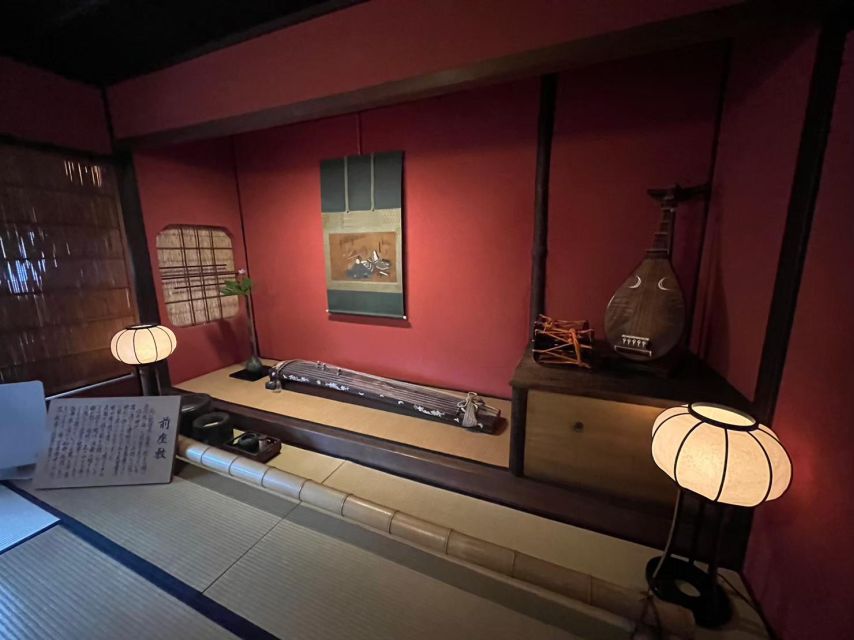
The visit to Shima is one of the most distinctive parts of the day. This historic geisha house has been preserved with its traditional architecture, allowing you to see the spaces where tea-house entertainment once took place.
The stop lasts about an hour and includes an entry fee. Your guide explains the building and the customs connected with geisha culture, which helps you avoid the usual shallow picture of costumes and makeup. You get a look at the rooms, proportions, and details of a place designed for private gatherings and performance.
This visit also gives the Higashi-chaya district more meaning. Instead of seeing only attractive wooden façades, you can understand how the buildings were used. For many people, it is the point at which the day’s samurai, castle, garden, and tea-house themes come together.
Remember that this is a cultural site, not a live performance. The tour provides access to the house and interpretation, but the supplied details do not promise a geisha show or a private meeting.
The return walk uses Kazue-machi backstreets
The day ends with a walk back toward Kanazawa Station, passing through the maze-like lanes of Kazue-machi. This final section keeps the tour from ending abruptly at the main tea district.
By this point, your feet may be tired. Several people have completed the route at around 12 kilometers, and one account reached more than 27,000 steps. That is a serious walking day, especially in rain, summer humidity, winter cold, or snow.
Still, the walking is the reason the tour feels like a city visit rather than a checklist. You move through residential streets, shrine grounds, castle paths, garden lanes, and old entertainment districts. If you prefer taxis, buses, or a short list of indoor attractions, this is not the right format.
What the $156 price includes
At $156 per person, the tour is not the cheapest way to see Kanazawa. Its value depends on how much help you want with the city’s history and logistics.
The price includes an English-speaking guide, the matcha experience, Kenroku-en entry, and entry to Shima. It does not include lunch. You are paying mainly for the full-day guiding and the ability to connect several districts without planning the route yourself.
A guide can also save you from missing the significance of places that look simple at first glance. The samurai homes, Oyama Shrine, castle grounds, garden, and geisha house each have different stories. A good guide layers those facts through the day instead of delivering one long lecture.
The guides assigned to this experience have included Mike, Akari, Gareth, Daniel, Lee, Mohammed, Devin, and Adeline. Their individual style will vary, but the most useful pattern is clear: ask questions, mention your interests, and tell the guide if you need a slower pace or an extra pause. Several guides have helped with train tickets and onward travel advice at the end, though that should be viewed as a kind courtesy rather than a guaranteed service.
Practical advice for a long day outdoors
Wear comfortable walking shoes with good grip. In winter, snow and ice may cover roads and sidewalks, and temperatures can fall below 10°C, with mornings and evenings near or below freezing. Warm shoes are not optional in those conditions.
Rain gear is equally important. Bring an umbrella or raincoat and check the forecast before leaving the station. The tour continues outdoors, and rain can make stone paths, wooden walkways, and streets slippery.
Wear socks and clothing suited to the season. You will have free time at some stops, but you must return to the meeting point your guide gives you. If you become separated, the number on your tour pass can connect you with staff.
The tour is offered in English. Free cancellation is available up to 24 hours before the activity for a full refund, and you can reserve while paying later, which may help if your Japan route is still changing.
Who should book this Kanazawa walking tour?
Book it if you want one strong day that explains Kanazawa through its major cultural districts. It suits first-time visitors, history fans, families with older children, and anyone who would rather ask a local guide than build a route from several separate admissions.
It is also a good choice if you are staying in Toyama or passing through Kanazawa by train and want to see the main sights efficiently. The station start and finish make the day easy to fit around rail travel, though you should not schedule a tight onward connection.
Think twice if you dislike long walks, need frequent indoor breaks, or want a slow, highly flexible day. The guide can adjust the pace to a point, but the route covers a lot of ground. For most active visitors, the walking is a fair trade for the range of neighborhoods and the chance to see Kanazawa at street level.
FAQ
Where does the tour start?
Meet outside the Shinkansen ticket gates, in front of the information center at Kanazawa Station. If you enter from outside, look immediately inside the East Entrance for the four large sumo wrestlers.
Where does the tour end?
The tour ends back at the meeting point at Kanazawa Station.
What time does the tour start?
The provided schedule lists a 9:00 AM start, but you should check availability and your booking for the exact starting time.
How long does the tour last?
It is a full-day experience lasting about one day, with the route returning to Kanazawa Station.
Is the tour conducted in English?
Yes. The tour includes a live English-speaking guide.
Is lunch included?
No. Lunch is not included, but there is time to eat nearby and ask your guide for recommendations.
What admissions are included?
Entry to Kenroku-en Garden and Shima, the historic geisha house, is included. The matcha experience and guide are also included.
How much walking is involved?
Expect several hours of walking outdoors. The route can total about 12 kilometers, and some participants have recorded more than 27,000 steps.
What should I wear in winter?
Wear warm clothing, warm shoes, and footwear with good grip. Snow and ice may be present, and temperatures can be below 10°C, with mornings and evenings close to or below freezing.
Can I cancel the booking?
You can cancel up to 24 hours in advance for a full refund. A reserve-now, pay-later option is also available.
Should you book it?
If you want a guided introduction to Kanazawa that reaches beyond the obvious photo stops, I would book this tour. The matcha pause, preserved samurai homes, Kenroku-en, and Shima give the day plenty of variety. Just arrive ready to walk, dress for the forecast, and leave enough energy for the final streets back to the station.
More Full-Day Trips in Japan
- Private Car Full Day Tour of Osaka Temples, Gardens and Kofun Tombs
★ 5.0 · 24 reviews - Tokyo: Full-Day Japanese Garden Private Guided Tour
★ 4.6 · 13 reviews - Mt.FUji private Full Day Trip with English Driver
★ 4.0 · 4 reviews - Versailles Full Day Bike Tour with Palace, Gardens, & Picnic
★ 5.0 · 2,217 reviews
Just added around Japan
- Tsumami Zaiku Japanese Fabric Flower Class★ 5.0 · 3 reviews
- Tokyo: Serene Sakura & Sake: An Exclusive Brewery Pairing Lunch★ 5.0 · 2 reviews
- Tsukiji Food Strolling and Hama Rikyu Garden Walking Tour★ 5.0 · 7 reviews
- Private tour – Scenic Fuji Escape: Hakone, Peace Park & More★ 5.0 · 4 reviews
- Tokyo Cherry Blossom Half Day Walking Tour with a Local Guide★ 3.5 · 4 reviews
- TOKYO: Tailored Gardens tour with Pro Gardener by E-bike -BASIC★ 5.0 · 2 reviews
- Cherry Blossom Highlights, Asakusa, Ueno, Imperial Palace Garden★ 4.5 · 4 reviews
- Japan’s Customs of Ikebana Art, Tea Ceremony & Kimono Welcome★ 5.0 · 2 reviews
Japan Garden Tours, compared.
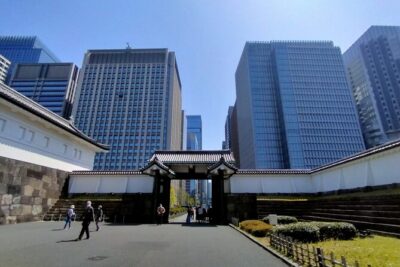
Imperial Palace East Garden and Edo Castle Walking Tour in Tokyo
Read our review →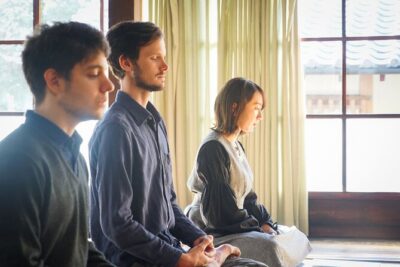
Kyoto Zen Meditation & Garden Tour at a Zen Temple with Lunch
Read our review →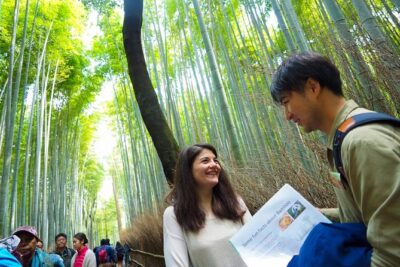
Kyoto Arashiyama Bamboo forest & Garden Half-Day Walking Tour
Read our review →
Authentic Kyoto Tea Ceremony: Camellia Flower Teahouse
Read our review →

Edo Castle & East Garden of the Imperial Palace Tour
Read our review →Browse the lists this tour appears in