
Review · TOKYO
Calligraphy and Tokyo Great Buddha, Botanical garden, art museum
Tokyo’s quieter side is the real prize here. You begin with Japanese calligraphy, then leave the usual sightseeing routes for Oyama’s long local shopping street and Akatsuka’s Great Buddha, gardens, museums, and old castle site. It feels less like ticking off famous sights and more like seeing how several ordinary, sacred, and cultural places fit together.
I like two things especially: you make a paper work to display at home, and the route gives you a useful look at daily Tokyo through local shops and restaurants. The main drawback is pace. Five hours is a lot to fit around calligraphy, lunch, public transport, and several stops, so some visits may be brief.
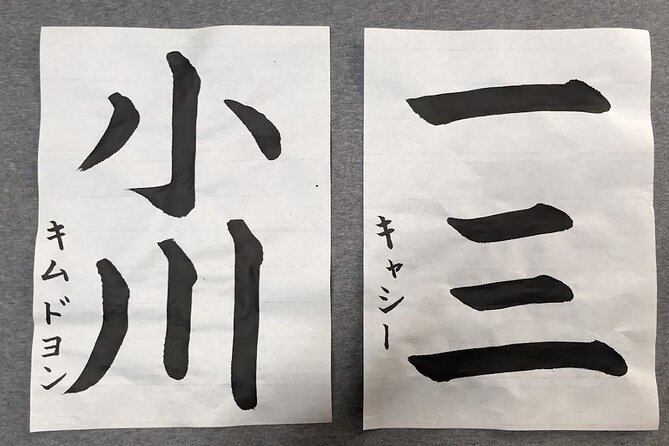
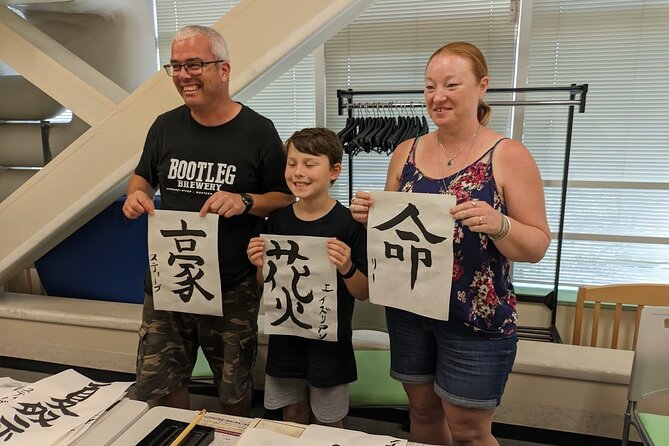
- Make your own calligraphy work: Learn basic technique and produce a paper piece for your room.
- Walk Oyama’s 1.2-kilometer shopping street: Choose lunch from a local area with more than 100 shops and many restaurants.
- See Tokyo’s Great Buddha in Akatsuka: Visit a calm part of the city that receives less tourist traffic.
- Touch sacred spring water: The route includes a small holy waterfall and spring.
- Combine nature, art, and local history: Akatsuka Botanical Garden, Itabashi Art Museum, castle ruins, and a local museum all appear in one outing.
- Travel with only your own group: This is a private activity, priced at $99.76 per person, with museum admission and lunch extra.
Calligraphy First, With Something to Take Home
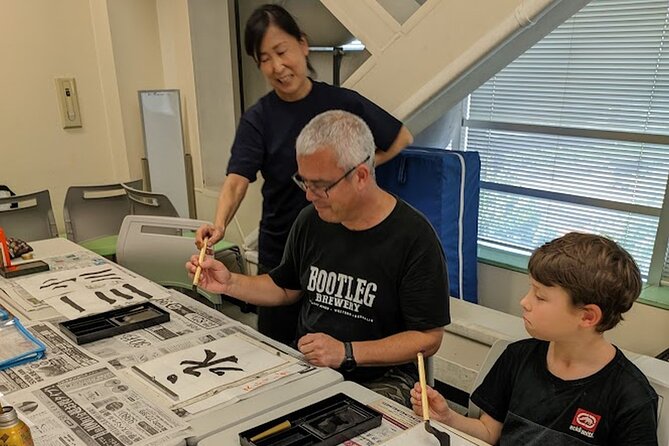
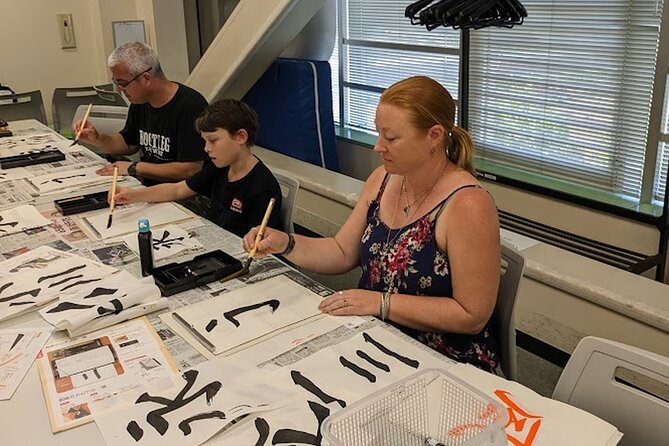
The tour starts at 10:00 a.m. near Oyama Station in Itabashi City. Your first activity is a basic Japanese calligraphy lesson, where you learn enough technique to create your own works on Japanese paper.
This is not just a demonstration where you watch someone else write elegant characters. You sit down and make pieces yourself. The useful part is that the result is intended for display at home, so your paper works become a small souvenir with a personal connection to Tokyo.
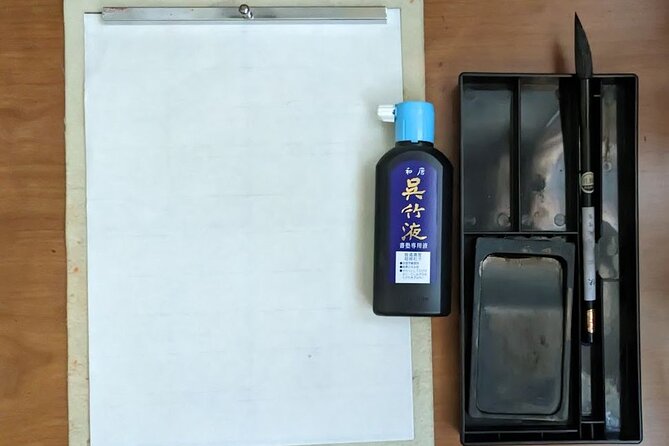
The calligraphy tools are lent to you during the class. Japanese paper is provided, with 10 to 20 sheets per person. That allowance gives you room to practice rather than worry about ruining your first attempt. Calligraphy requires controlled brush movement and a steady hand, so a few practice sheets are welcome.
You should know about the seating requirement. The activity is not recommended for anyone who has trouble sitting in a chair. The supplied information does not say how long the class lasts, but it comes at the start of a five-hour day, followed by walking and sightseeing.
I like this opening because it gives the tour a clear purpose. You are not simply looking at Japanese culture from outside. You are asked to make something, and that makes the later temples, museums, and historic sites easier to place in context.
Oyama’s Shopping Street Shows Everyday Tokyo
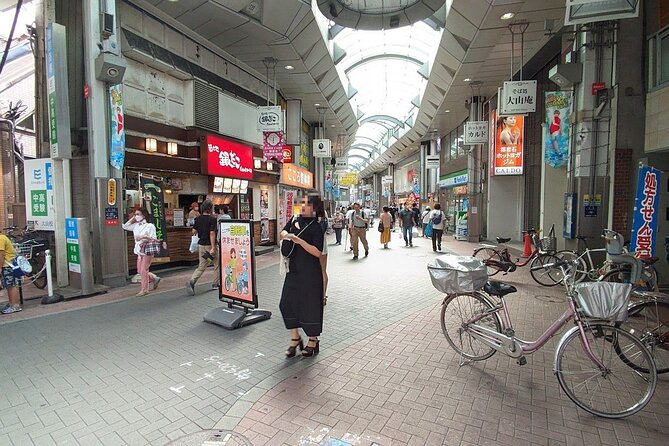
After calligraphy, your guide leads you through Happy Road Oyama and Yuza Oyama. Together, the shopping area is described as about 1.2 kilometers long, with more than 100 shops. Another description gives a higher count of more than 200 shops and 50 restaurants, so the exact number is best treated as an estimate. The important point is the scale: this is a substantial local shopping district, not a single souvenir lane.
This is one of the strongest parts of the day. Big-name Tokyo districts can be exciting, but they often show you the city through department stores, famous signs, and crowds. Oyama gives you a different view, with a useful mix of stores and places to eat. The tour specifically presents the street as an area not usually found in guidebooks.
Lunch is taken here at your own expense. That gives you some choice, but it also means the $99.76 tour price does not cover your meal. Alcoholic drinks are not included either. You should budget separately for lunch and choose according to your own appetite and comfort with local dining.
The guide’s role matters here. A shopping street can be easy to walk through without understanding what makes it worth your time. With a guide, you have someone to point out the character of the area and help connect the shops, food, and neighborhood to the rest of the tour.
Do not expect a major food tour with a fixed tasting menu. The information only promises a local restaurant stop and time for lunch. If you want a very specific meal, ask the provider ahead of time, since the included details do not identify a restaurant or menu.
More Botanical Garden Tours in Tokyo:
- Walking tour, Tokyo Great Buddha, Botanical Garden, etc.
★ 5.0 · 2 reviews - Osaka: teamLab Botanical Garden Entry Ticket
★ 4.5 · 1,710 reviews - Blanes: Marimurtra Botanical Garden Entry Ticket
★ 4.7 · 998 reviews
Trains and a Bus Lead to Akatsuka
After lunch, you travel by train and bus to Akatsuka. That transfer is part of the appeal, but it also affects the timing. You are not moving between nearby attractions in one compact complex. The day uses public transportation to connect separate places across Tokyo.
The itinerary is designed for people who enjoy seeing how a city works. Riding local transport helps you get beyond the central sightseeing circuit, and Akatsuka is described as quiet and calm rather than heavily visited. You will need to walk between some stops, and the full activity may involve two to three kilometers of walking.
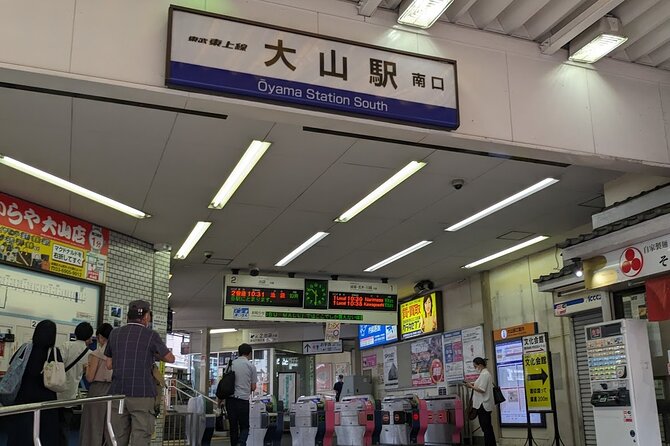
The public transport element also means you should arrive at Oyama Station on time. The meeting point is listed as Oyama Station, at 4 Oyamacho, Itabashi City, Tokyo 173-0023. The activity ends back at the same meeting point, which makes the return plan simple, even if the middle of the day includes several connections.
The tour is private, so only your group takes part. That is a real advantage here. A guide can adjust explanations to your interests and keep the day more personal than a large group outing. At the same time, private does not mean leisurely. The schedule still has several stops to cover.
Tokyo Great Buddha in a Quiet Setting
Akatsuka’s Tokyo Great Buddha is the headline stop in the second half of the tour. The setting is presented as peaceful and outside the normal tourist zone, which gives the visit a different mood from Tokyo’s better-known religious sites.
The Great Buddha is best understood as part of a wider local area rather than a single blockbuster attraction. You arrive after the more hands-on calligraphy lesson and the practical energy of Oyama’s shopping street. The contrast is useful: first you see people shopping and eating, then you move into a calmer setting connected to faith and local history.
The supplied details do not give the statue’s dimensions, date, or religious affiliation, so the guide’s explanation will be important. You should expect the stop to focus on seeing the Buddha and understanding its place in Akatsuka, rather than a long formal temple program.
The route also includes a sacred spring and a very small holy waterfall. This is a modest stop, not a grand natural attraction. Its appeal comes from the act of visiting a local sacred place and touching the water. You should follow the guide’s instructions and treat the spring respectfully.
This part of the tour may suit you if you prefer smaller sites with a quiet atmosphere. If your main goal is a long temple visit or a major national monument, the Great Buddha stop may feel short. The day is built around variety, not extended time at one religious site.
Akatsuka Botanical Garden Adds a Green Pause
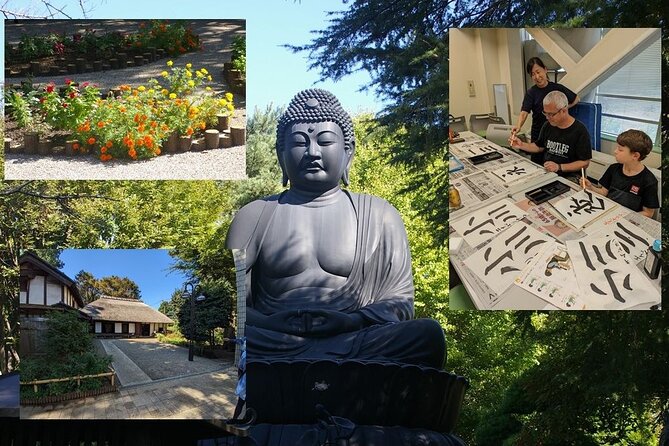
The Akatsuka Botanical Garden gives the itinerary a change of pace. After the station transfers and urban shopping street, you have a chance to walk among plants and take a quieter break.
The information provided does not list the garden’s plant collections, seasonal highlights, or admission details. I would therefore treat it as a pleasant garden visit rather than book this tour specifically for rare specimens or a formal botanical program.
Its value is in the mix. The garden helps break up the museums and historic sites, and it gives you a calmer setting for part of the afternoon. Depending on the season, the feel of the garden may change, but the tour description does not promise specific blooms.
You will want comfortable shoes. The tour recommends against participation for anyone unable to walk two to three kilometers, and the botanical garden adds more time on your feet. The exact distance may vary with the route and the time spent at each stop.
More Museums in Tokyo:
- Vienna: Skip-the-Line Sisi Museum, Hofburg and Gardens Tour
★ 4.8 · 5,918 reviews - Marrakech: Majorelle Garden, YSL, and Berber Museum Entry
★ 4.6 · 5,168 reviews - Rome: Borghese Gallery and Gardens Guided Small-Group Tour
★ 4.6 · 2,783 reviews - Rome: Borghese Gallery & Gardens Small Group Guided Tour
★ 4.5 · 2,190 reviews
Art and Local History at Four Cultural Stops
The Itabashi Art Museum is another major part of the Akatsuka route. Unique works are displayed there, according to the tour description, but no particular exhibition or collection is guaranteed. Museum programs can change, so you should think of this as a chance to see local art rather than a promise of one famous masterpiece.
Admission is not included. The listed estimate is about 650 Japanese yen, or roughly $5. That is a modest extra cost, but you should carry enough yen or confirm payment arrangements before the tour. The museum is the only specific entrance fee identified in the supplied information.
The day also includes Akatsuka castle ruins, described as a small hill where a castle once stood. This is not a reconstructed castle or a large fortress complex. The appeal is the setting and the reminder that Tokyo’s outer districts have layers of history beneath the modern city.
You also visit Itabashi Kyodo Shiryo-kan, a local museum. The name is commonly associated with a community history museum, but the tour information does not specify its displays or opening arrangements. Expect a local rather than grand-scale museum visit.
Putting these stops together gives the tour its strongest educational quality. You see art, local history, a former castle site, a botanical garden, and a religious landmark in one neighborhood. None is presented as a huge attraction on its own. Together, they show a side of Tokyo that is easy to miss if you stay around the most famous central districts.
The tradeoff is time. Eight listed elements, plus transport and lunch, create a full schedule. You may not get a long, unhurried visit at every stop. If you want to study museum displays closely or spend an hour taking photographs at the garden, a self-guided day would offer more freedom.
What the $99.76 Price Really Covers
At $99.76 per person, this is not the cheapest way to see Akatsuka. But the price includes more than admission to one attraction. You are paying for a private guide, the calligraphy lesson, use of calligraphy tools, Japanese paper, guidance through Oyama’s shopping street, and visits to several local cultural sites.
The calligraphy materials add practical value. You receive 10 to 20 sheets of paper per person, and the tools are available for the lesson. The final work gives you a souvenir that is more personal than a purchased object.
The guide also saves you the work of building a route between Oyama and Akatsuka. You do not have to research the shopping street, work out which local sites belong together, or plan the public transport connections. That convenience matters most if you want a day with structure and local context.
You still need to pay for lunch and about 650 yen for the art museum. Travel costs are not clearly itemized in the supplied details, so confirm what transport is covered before booking. Travel insurance is not included.
The price makes the most sense for a small private group that values personal guidance and a packed local itinerary. For a solo visitor focused only on the Great Buddha, it may feel expensive. For a couple or family that wants calligraphy plus a full afternoon route, the combination is more convincing.
Who Will Enjoy This Five-Hour Route
I would choose this activity if you want to see a less familiar part of Tokyo and prefer doing something creative instead of only taking photographs. It suits people who enjoy local shopping streets, modest museums, public transport, and cultural stops that are not major headline attractions.
It also works well for visitors who want a private format. Your group has the guide to itself, which can make the calligraphy instruction easier to follow and the walking tour more flexible in conversation.
You should think twice if you dislike sitting for a lesson, cannot walk two to three kilometers, or want a relaxed schedule with long visits at each stop. The tour is also less suitable if your priority is a specific art exhibition, since the museum works and displays are not identified in advance.
The activity requires good weather. If poor weather forces cancellation, you are offered another date or a full refund. Otherwise, you can cancel for a full refund up to 24 hours before the 10:00 a.m. start time. Changes or cancellations inside that window are not accepted.
Should You Book It?
Book this tour if you want rural Japan in Tokyo without leaving the city. Its best qualities are the hands-on calligraphy class, the everyday feel of Oyama’s shopping street, and the unusual combination of Great Buddha, spring, garden, art museum, castle ruins, and local museum in Akatsuka.
Do not book it expecting a slow, polished museum day or a famous-sights checklist. The schedule is active, lunch and some admission costs are extra, and the route includes walking and public transport. For the right visitor, that is exactly the point: you get a personal souvenir, a local meal break, and a view of Tokyo that most short city itineraries skip.
FAQ
Where does the tour start?
It starts at Oyama Station, at 4 Oyamacho, Itabashi City, Tokyo 173-0023, Japan.
What time does the activity begin?
The start time is 10:00 a.m.
How long does the tour last?
The activity lasts approximately five hours.
Where does the tour end?
The tour ends back at the meeting point near Oyama Station.
Is lunch included?
No. Lunch is taken at the local shopping street, but you pay for it separately.
Is the art museum admission included?
No. The entrance fee is about 650 Japanese yen, or approximately $5.
Is this a private activity?
Yes. Only your group participates.
Are calligraphy materials provided?
Calligraphy tools are lent to you, and 10 to 20 sheets of Japanese paper are provided per person.
Is the tour suitable for people with limited mobility?
It is not recommended for anyone who has difficulty sitting in a chair or cannot walk two to three kilometers.
Just added around Tokyo
- Tsumami Zaiku Japanese Fabric Flower Class★ 5.0 · 3 reviews
- Tokyo: Serene Sakura & Sake: An Exclusive Brewery Pairing Lunch★ 5.0 · 2 reviews
- Tsukiji Food Strolling and Hama Rikyu Garden Walking Tour★ 5.0 · 7 reviews
- Private tour – Scenic Fuji Escape: Hakone, Peace Park & More★ 5.0 · 4 reviews
- Tokyo Cherry Blossom Half Day Walking Tour with a Local Guide★ 3.5 · 4 reviews
- TOKYO: Tailored Gardens tour with Pro Gardener by E-bike -BASIC★ 5.0 · 2 reviews
- Cherry Blossom Highlights, Asakusa, Ueno, Imperial Palace Garden★ 4.5 · 4 reviews
- Japan’s Customs of Ikebana Art, Tea Ceremony & Kimono Welcome★ 5.0 · 2 reviews
Tokyo Garden Tours, compared.
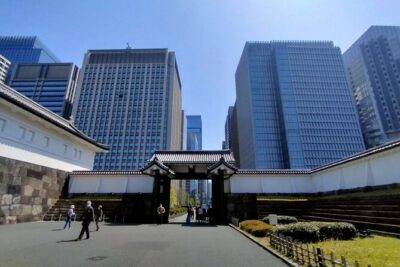
Imperial Palace East Garden and Edo Castle Walking Tour in Tokyo
Read our review →
Edo Castle & East Garden of the Imperial Palace Tour
Read our review →
Tokyo Private Tour! Edo Castle & Imperial Palace East Gardens
Read our review →
Mount Fuji & Lake Kawaguchiko Private Tour: Beyond the Ordinary
Read our review →
Rainbow Bridge Day Cruise Show and Only Soft Drinks
Read our review →
Tsukiji Market and Hama-rikyu Gardens Guided Tour
Read our review →Browse the lists this tour appears in