
Review · TOKYO
Walking tour, Tokyo Great Buddha, Botanical Garden, etc.
Tokyo’s Akatsuka district gives you a side of the city that neon-lit central neighborhoods cannot. This private walk follows quiet lanes and small hills to a 13-meter Buddha, a botanical garden, a tiny waterfall, castle ruins, and two museums. I like the calm setting and the variety packed into three and a half hours.
I also like the small-group format. With only your party and a guide, you can move at a sensible pace and ask questions as you go. The catch is the 6 to 8 km of walking, including narrow alleys, stairs, and hills. Hot weather will make this feel much longer, so bring water and sensible shoes.
Key points at a glance
- A quiet side of Tokyo: Walk beyond the main sightseeing routes through narrow lanes and low hills in Akatsuka.
- The 13-meter Tokyo Great Buddha: See a statue nearly as tall as Nara’s famous Great Buddha.
- Five distinct types of sights: The route combines a botanical garden, waterfall, art museum, castle ruins, and local-history museum.
- Private groups of six or fewer: Your group receives a more personal outing rather than joining a large tour.
- A genuine walking day: The route covers about 6 km, with the practical details listing 6 to 8 km and including stairs.
- Extra costs to plan for: The Itabashi Art Museum admission is about 700 yen, and snacks, lunch, and insurance are not included.
Why Akatsuka makes a good Tokyo walking day
Most first-time visits to Tokyo focus on major districts, bright shopping streets, shrines, and famous crossings. Those places have their place, but this walk takes you into a quieter part of the city where the rewards are smaller and more local in scale.
You begin at the north exit of Shimoakatsuka Station on the Tobu Tojo Line. From there, the route heads through narrow alleys and stairs toward the botanical garden. That opening stretch is important to understand. This is not a flat stroll from one major attraction to another. You will be walking through ordinary streets, climbing modest slopes, and changing pace often.
I like that the route does not rely on a single headline sight. The Great Buddha is the obvious centerpiece, but the garden, museums, waterfall, and old castle site give the outing a useful range. You get nature, religion, art, and local history in one compact area.
The private format also changes the feel. The activity is limited to one group of six people or fewer, so you are not being moved along with a large crowd. You can ask for clarification, pause for a closer look, or spend more time at a stop that interests your group. The experience is provided by Hanabusa_calligraphy, though no individual guide name is supplied.
More Botanical Garden Tours in Tokyo:
- Calligraphy and Tokyo Great Buddha, Botanical garden, art museum
★ 5.0 · 2 reviews - Osaka: teamLab Botanical Garden Entry Ticket
★ 4.5 · 1,710 reviews - Blanes: Marimurtra Botanical Garden Entry Ticket
★ 4.7 · 998 reviews
Starting at Shimoakatsuka Station
The meeting point is Shimo-akatsuka Station, at 2 Chome-1 Akatsuka, Itabashi City, Tokyo 175-0092. The station is on the Tobu Tojo Line, and the tour begins at the north exit.
Allow yourself enough time to find the correct exit. In Tokyo, stations can have several exits and long internal corridors, and arriving early is wise when a walking tour has a fixed start. Your mobile ticket should be available at booking, and confirmation is sent at the time of reservation.
The first section passes through narrow alleys and stairs. This is one of the more revealing parts of the outing because you begin to see how the neighborhood works away from Tokyo’s major commercial centers. It also sets the physical tone for the day. If you have knee trouble or dislike uneven routes, ask yourself if several hours on foot is a good fit before booking.
The tour lasts about three and a half hours. That is enough time for a varied route, but it is not long enough for every stop to receive an extended museum visit. Your guide will help set the pace, and the private group format should make the timing more flexible than a large group tour.
Akatsuka Botanical Garden and its changing seasons
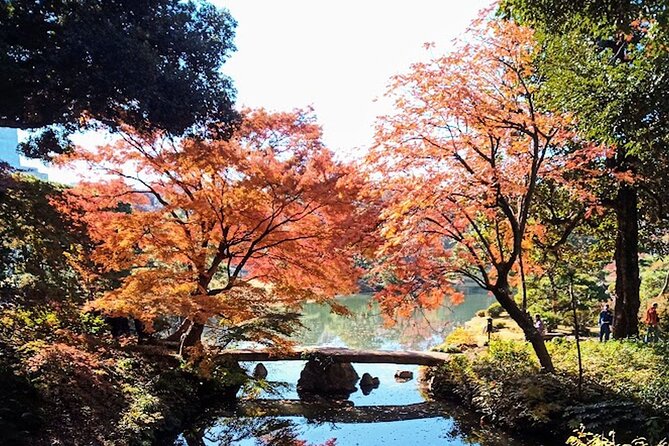
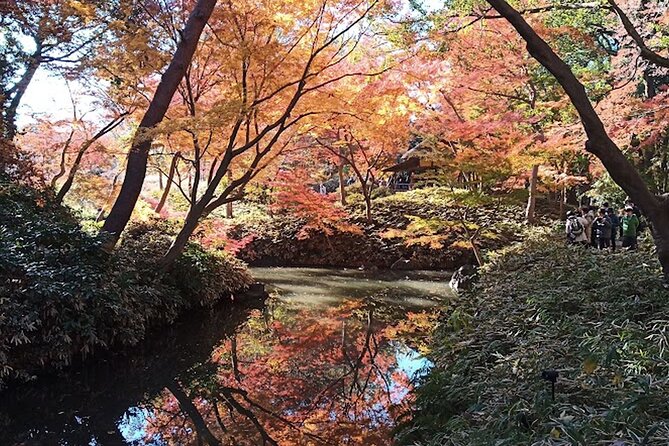
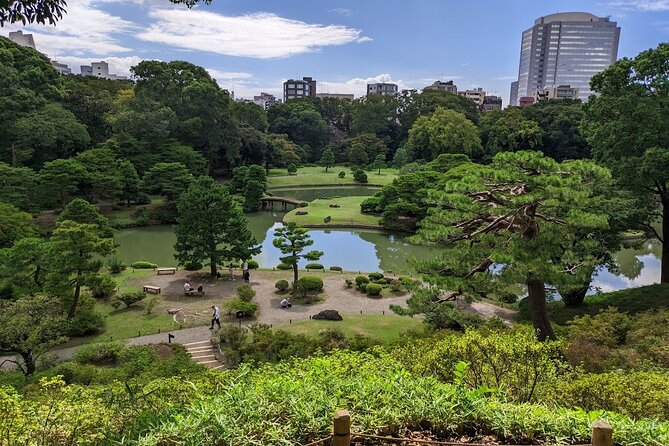
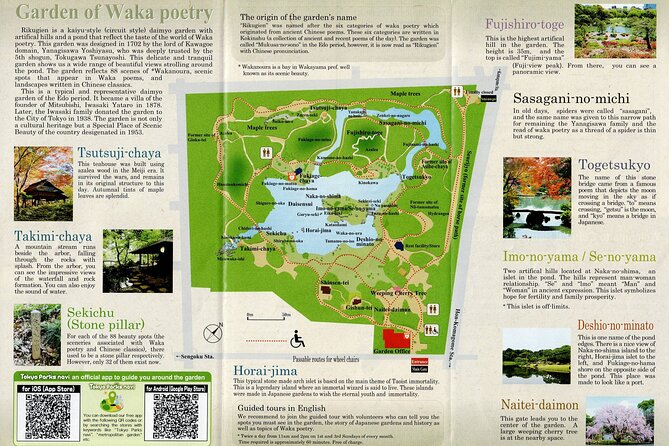
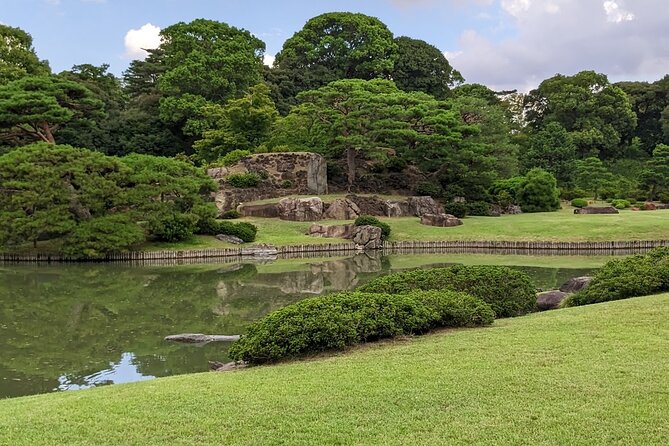
Akatsuka Botanical Garden is an early highlight. The garden includes seasonal flowers, Japanese-style gardens, bamboo groves, and recreated forest areas. Its appeal changes with the time of year, so the exact display depends on when you visit.
I like this stop because it gives the walk breathing room after the urban approach. You are not simply crossing the city between attractions. The route shifts from alleys and stairs to planted spaces, shaded paths, and traditional garden features.
The garden also offers a useful introduction to Japanese gardening without requiring a separate half-day visit. You can see how bamboo, water, trees, and arranged planting create different moods in a small area. If you enjoy taking photographs, this is likely one of the more rewarding sections, especially when seasonal flowers are in bloom.
Keep your expectations sensible. This is one stop within a three-and-a-half-hour route, not a long botanical tour. The time available will depend on your group’s pace and how much time is spent at the other sights.
The Tokyo Great Buddha, a 13-meter surprise
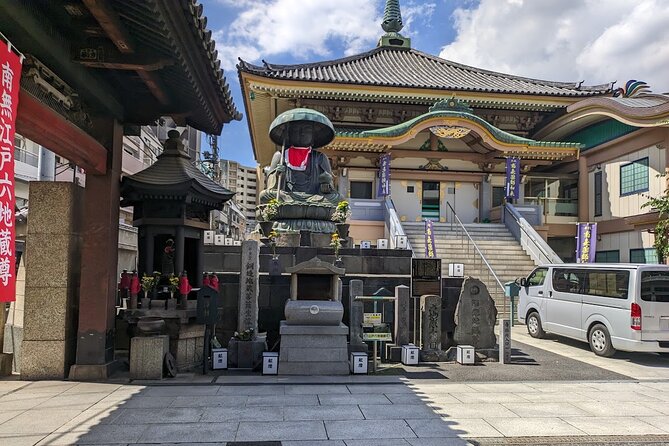
The Tokyo Great Buddha is the main visual punch of the walk. The statue measures 13 meters from its pedestal, with a head measuring 3 meters. The Great Buddha at Nara is about 15 meters high, so this Tokyo statue is close in scale to one of Japan’s best-known religious monuments.
That comparison gives you a useful sense of size. This is not a small neighborhood statue you glance at and leave. It is large enough to change the feel of the site around it, especially after walking through quiet residential streets.
The Buddha also works well as a contrast with the rest of the itinerary. The botanical garden is about plants and careful design. The Buddha is about scale, stillness, and religious presence. You do not need to visit a famous central temple to encounter a major Buddhist image in Tokyo.
Since the tour includes several stops, your time here may be shorter than on a dedicated temple visit. Still, the combination of the approach, the peaceful setting, and the statue’s size gives this part real weight.
More Garden Walks in Tokyo:
- Imperial Palace East Garden and Edo Castle Walking Tour in Tokyo
★ 5.0 · 510 reviews - Tokyo: Imperial Palace East Gardens Walking Tour
★ 4.8 · 353 reviews - Licensed Guide Tokyo Meguro Cherry Blossom Walking Tour
★ 4.5 · 13 reviews - Tsukiji Food Strolling and Hama Rikyu Garden Walking Tour
★ 5.0 · 7 reviews
Akatsuka Fudo Falls and the meaning of purification
Akatsuka Fudo Falls is small in physical terms. The spring water falls only about 1 meter. Do not arrive expecting a dramatic cascade.
Its importance comes from tradition. The site is associated with Shugendo practitioners who perform purification here before training. That detail gives the stop more meaning than its modest size might suggest. You are seeing a small natural feature connected with a Japanese religious practice, not simply checking off a waterfall.
This is a good example of the tour’s character. The route favors places with local interest and a story, even when they are not grand. The waterfall will probably take only a short time to see, but it adds a different note to the day and helps explain why the area has more layers than its quiet streets first suggest.
Itabashi Art Museum and the extra admission fee
The Itabashi Art Museum provides the tour’s cultural stop. Its exhibitions change by season and theme, so the content will depend on your visit date.
Admission is not included. The stated price is about 700 yen, so bring extra money if you want to enter. That additional fee is modest, but it matters when comparing the tour’s advertised cost with the actual amount you may spend.
I appreciate that the museum gives the walking route a break from outdoor sightseeing. After alleys, hills, gardens, and religious sites, an exhibition offers a more focused indoor stop. It can also be useful on a hot day, although you should not assume the entire tour takes place indoors.
The exact amount of time inside is not specified. If art is your main reason for visiting, a separate museum visit may suit you better. Here, the museum is one part of a broad neighborhood tour.
Akatsuka Castle Ruins Park and local history
Akatsuka Castle Ruins Park adds an older layer to the route. You will walk through the park and see the remains of a castle site rather than a restored fortress with walls and towers.
That distinction matters. The value here lies in the setting and the chance to connect today’s neighborhood with its earlier defensive and political role. Ruins often require a little imagination, but the guide can help explain what you are seeing and why the site matters.
The park also breaks up the built-up parts of the walk. You get another change in scenery without leaving the Akatsuka area. For me, this is one of the tour’s strongest ideas: it shows that local history can survive in parks, slopes, and fragments rather than only in grand monuments.
Itabashi Local Museum and life across the centuries
The Itabashi Local Museum covers life from primitive times to the present. Its displays include farmhouses built more than 100 years ago.
This is the stop that gives the route its broadest historical frame. The Great Buddha connects you with religious culture. The castle ruins point toward local power and defense. The museum brings the focus back to ordinary life, work, homes, and the changes that shaped the area.
The farmhouses should be particularly useful if you want more than a quick look at Tokyo’s modern side. They show how different the city’s surrounding areas once were, before the dense urban spread that defines much of Tokyo today.
As with the art museum, the exact time spent inside is not stated. You should view this as a guided introduction rather than a full museum study session. If one exhibition captures your interest, you may wish you had more time.
What the price of $39.25 really covers
At $39.25 per person, the price covers the guide fee for a private experience. That is reasonable if you are traveling with a small group and value a guide who can connect several modest sights into one coherent walk.
The price becomes stronger when six people share the private booking, since the group receives exclusive guiding rather than joining a larger party. For one or two people, the per-person cost may feel less like a bargain, but the private format still gives you a quieter outing and more room for questions.
You should budget separately for the Itabashi Art Museum, with admission listed at about 700 yen. Snacks are not included, and the tour information does not include lunch. One account of the experience mentions finishing with a very good lunch, but you should not treat that as part of the tour price or a guaranteed arrangement.
Travel insurance is also not included. The activity itself is straightforward, but the distance and warm-weather conditions make basic preparation worthwhile.
The walking demands, heat, and practical comfort
The route is described as approximately 6 km, while the practical information advises allowing for 6 to 8 km. I would plan for the higher figure. The route includes small hills, stairs, and narrow alleys, so distance alone does not tell the whole story.
Wear comfortable walking shoes. Bring water, especially in hot weather. A hat and light clothing may also help, though the provided details do not promise shade along the full route.
The experience suits most people who can manage several hours of walking. It may not suit anyone seeking an easy, flat outing, a short sightseeing transfer, or a tour centered on sitting indoors.
The private group limit is a real advantage here. If someone in your party needs a short pause, your group can discuss it with the guide instead of holding up a large departure. Still, do not book this expecting a fully adjustable route. The tour has several planned stops and a defined distance to cover.
Who should book this walk
I would choose this outing if you have already seen some of Tokyo’s major central sights and want a quieter neighborhood with more variety than a standard city stroll.
It is especially well suited to you if you enjoy:
- Local districts rather than only famous landmarks
- Small museums and historical sites
- Japanese gardens and seasonal plants
- Religious monuments
- A private guide and a small group
- Walking routes that mix nature, culture, and neighborhood life
I would think twice if you want a relaxed pace with little physical effort. The route is active, and the combination of heat, stairs, and 6 to 8 km can be demanding.
The tour also works well for people who like learning through contrasts. In a single outing, you move from quiet alleys to a garden, from a huge Buddha to a tiny waterfall, and from castle ruins to old farmhouses. That range is the point.
Booking timing and cancellation
This experience is often booked about 103 days ahead, so reserve early if your Tokyo dates are fixed. Confirmation is received at booking, and the mobile ticket makes the entry process simple.
Free cancellation is available if you cancel at least 24 hours before the start time. Cancellations or changes made less than 24 hours in advance are not accepted for a refund, and the cut-off follows local Tokyo time.
Should you book the Akatsuka walking tour?
Book it if you want quiet, local Tokyo and are comfortable covering several kilometers on foot. The Great Buddha gives the walk a memorable centerpiece, while the botanical garden, waterfall, art museum, castle site, and local museum keep the outing from feeling repetitive.
The strongest reason to choose it is the mix of sights in an area that is not crowded with sightseeing traffic. The main caution is physical: this is a real walking tour, not a gentle ride between attractions. Add the art museum fee, bring water, and plan your footwear carefully.
For a small group seeking a more personal look at Tokyo beyond the usual districts, the $39.25 price is fair. For anyone who wants a flat route, a major museum, or a short highlight tour, choose something else.
FAQ
Where does the tour begin?
It begins at the north exit of Shimoakatsuka Station on the Tobu Tojo Line, at 2 Chome-1 Akatsuka, Itabashi City, Tokyo 175-0092, Japan.
How long does the tour last?
The tour lasts approximately 3 hours and 30 minutes.
How far will I walk?
The route is described as approximately 6 km, with practical information advising that 6 to 8 km of walking will be required.
Is this a private tour?
Yes. Only your group participates, and the group size is limited to six people or fewer.
What attractions are included?
The route visits Akatsuka Botanical Garden, Tokyo Great Buddha, Akatsuka Fudo Falls, Itabashi Art Museum, Akatsuka Castle Ruins Park, and Itabashi Local Museum.
How tall is the Tokyo Great Buddha?
The statue measures 13 meters from its pedestal, and its head measures 3 meters.
Is admission to the Itabashi Art Museum included?
No. Admission costs about 700 yen and is not included in the tour price.
Are snacks included?
No. Snacks are not included.
Is travel insurance included?
No. Travel insurance is not included.
Can I cancel for a full refund?
Yes, if you cancel at least 24 hours before the experience start time. Cancellations or changes made less than 24 hours in advance are not accepted for a refund.
Just added around Tokyo
- Tsumami Zaiku Japanese Fabric Flower Class★ 5.0 · 3 reviews
- Tokyo: Serene Sakura & Sake: An Exclusive Brewery Pairing Lunch★ 5.0 · 2 reviews
- Tsukiji Food Strolling and Hama Rikyu Garden Walking Tour★ 5.0 · 7 reviews
- Private tour – Scenic Fuji Escape: Hakone, Peace Park & More★ 5.0 · 4 reviews
- Tokyo Cherry Blossom Half Day Walking Tour with a Local Guide★ 3.5 · 4 reviews
- TOKYO: Tailored Gardens tour with Pro Gardener by E-bike -BASIC★ 5.0 · 2 reviews
- Cherry Blossom Highlights, Asakusa, Ueno, Imperial Palace Garden★ 4.5 · 4 reviews
- Tokyo: Kimono Experience inside Shinjuku Gyoen National Garden★ 5.0 · 3 reviews
Tokyo Garden Tours, compared.
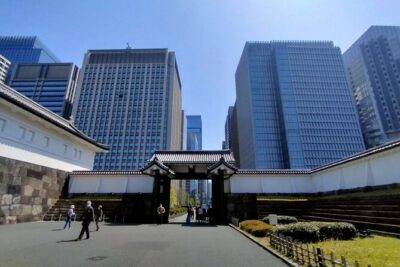
Imperial Palace East Garden and Edo Castle Walking Tour in Tokyo
Read our review →
Edo Castle & East Garden of the Imperial Palace Tour
Read our review →
Tokyo Private Tour! Edo Castle & Imperial Palace East Gardens
Read our review →
Mount Fuji & Lake Kawaguchiko Private Tour: Beyond the Ordinary
Read our review →
Rainbow Bridge Day Cruise Show and Only Soft Drinks
Read our review →
Tsukiji Market and Hama-rikyu Gardens Guided Tour
Read our review →Browse the lists this tour appears in