
Review · KYOTO
Ikebana Traditional Japanese Art of Flower Arranging
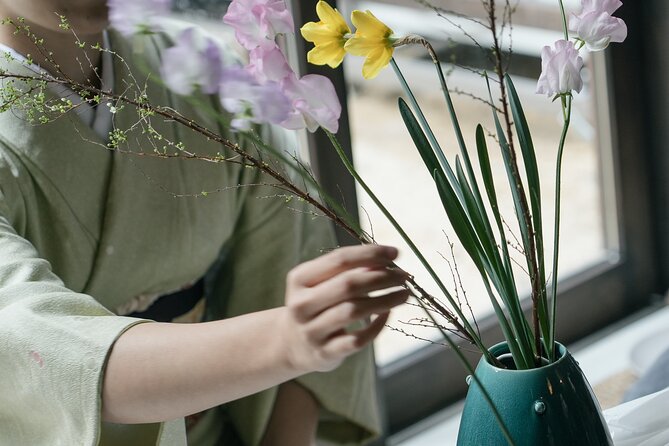
Ikebana turns a handful of fresh flowers into a small study of balance, space, and season. In this Kyoto class, English-speaking instructor Mana introduces you to the idea of giving flowers new life, then demonstrates two beginner-friendly forms before you create arrangements of your own.
I like the hands-on format and the small maximum of six people. I also like that the class connects practical skills, such as keeping flowers fresh for up to two weeks, with wabi-sabi ideas about natural shape and imperfection.
The main consideration is the short 90-minute schedule. It gives you a pleasant introduction, but anyone hoping for a full history of ikebana, including all major schools and rules, may find the background discussion brief.
Key points at a glance
- Two distinct styles: Learn the basic forms called Moribana and Nageire, both suited to beginners.
- A small Kyoto class: The group is limited to six people, allowing room for personal guidance.
- Seasonal flowers: Work with fresh blooms and use each stem’s natural shape as part of the design.
- A calm creative activity: The class uses flower arranging as a practical way to focus your attention.
- English instruction: Mana explains the techniques and demonstrates each arrangement in English.
- Simple logistics: The activity lasts about 1 hour 30 minutes, starts and ends at 3481 Tanbacho, Kamigyo Ward, Kyoto, and uses a mobile ticket.
Why this Kyoto flower class feels different
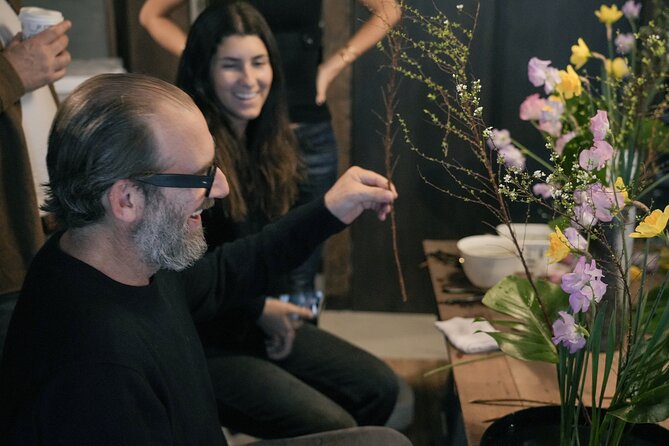
Many sightseeing activities ask you to look closely at Japanese culture. This one asks you to work with it. You handle flowers, make decisions about height and direction, and learn why a slightly curved branch or uneven stem may be more useful than a perfectly straight one.
Ikebana means living flowers. The goal is not to pack a container with blooms or copy a Western bouquet. Instead, you create a relationship among branches, flowers, leaves, empty space, and the vessel. The arrangement should suggest balance without looking stiff.
That idea makes the class useful for more than a souvenir photo. You begin to notice the natural lines of a stem and the character of a flower. The activity slows you down, which can be welcome after busy temple visits and crowded shopping streets.
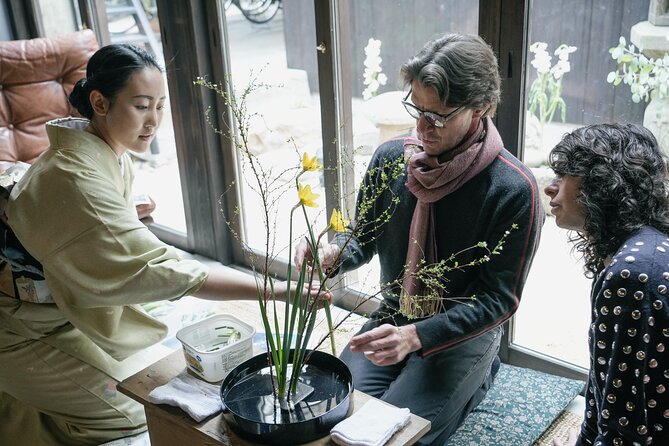
Mana teaches in English and combines explanation with demonstration. That matters here because ikebana has its own vocabulary and visual rules. Watching the form take shape before you pick up your own flowers makes the instructions easier to follow.
Other gardens people visit around Kyoto:
- Kyoto Zen Meditation & Garden Tour at a Zen Temple with Lunch
★ 5.0 · 441 reviews - Kyoto Arashiyama Bamboo forest & Garden Half-Day Walking Tour
★ 5.0 · 413 reviews - Authentic Kyoto Tea Ceremony: Camellia Flower Teahouse
★ 5.0 · 269 reviews
Starting with seasonal flowers and wabi-sabi
The exact flowers are seasonal, so your arrangement will depend on what is available at the time of your visit. That change is part of the point. Ikebana works with nature as it is, rather than forcing every flower into the same shape.
The wabi-sabi influence favors simplicity, restraint, and the beauty of things that are not perfectly regular. A bent branch is not necessarily a problem to correct. It may be the feature that gives the arrangement movement.
I like this approach because it keeps the class from becoming a craft exercise with one correct result. You still learn technique, but the natural qualities of the materials matter. Two people can work with similar flowers and produce arrangements that feel different.
You should expect to make choices about spacing, direction, height, and visual weight. These details may sound small, but they are the heart of ikebana. Empty space is treated as part of the design, not as a gap that needs filling.
Mana’s two demonstrations: Moribana and Nageire
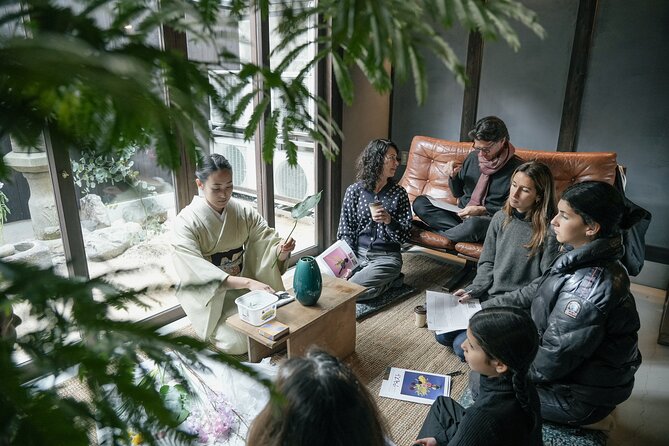
A useful feature of this class is the introduction to two styles, Moribana and Nageire. The instructor demonstrates both before you begin, giving you a visual guide to the differences.
Moribana generally presents flowers in a low, shallow container. It offers a broad composition and gives beginners a clear way to think about balance across the width of the arrangement. The form is approachable because you can see how the stems relate to one another from the start.
Nageire uses a taller vessel and a more upright arrangement. The flowers and branches have a different sense of movement, and the container affects how you position each stem. Learning both forms in one session lets you compare two ways of creating structure with natural materials.
The benefit is variety without needing a long course. You do not simply repeat one model. You see how the same basic principles change when the container, height, and direction change.
The limitation is time. A 90-minute class must move at a good pace if it is going to cover philosophy, demonstrations, and your own work. If you want detailed instruction on every ikebana school or a long discussion of its development, this introductory format may feel light on theory.
Your turn to arrange the flowers
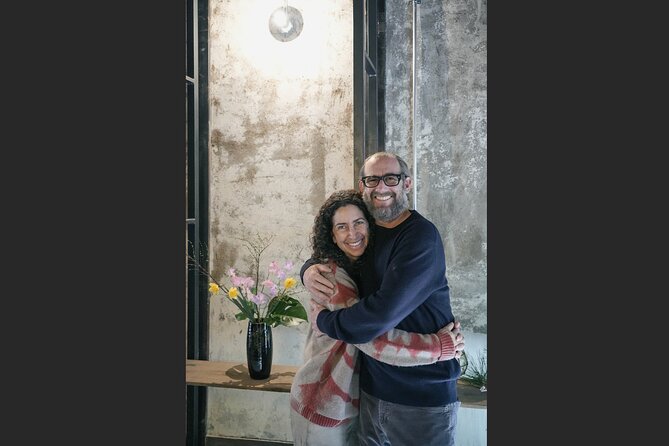
After the demonstrations, you work on your own arrangements. This is the part that makes the activity more memorable than a lecture. You have to decide where each flower belongs, how much space to leave, and how to use the stem’s natural line.
Mana provides instruction as you work. The class is small enough that personal guidance should be possible, and the teaching approach allows flexibility rather than demanding that every participant copy the demonstration exactly.
That balance is important for couples and friends. One person may prefer a cleaner, more restrained arrangement, while another may want stronger height or movement. The activity gives you a shared project without requiring identical results.
You should not expect a long private meditation session with no talking. This is a taught class, with explanations and corrections along the way. Still, the process has a mindful quality because it asks you to focus on one stem at a time.
The arrangement also gives you a physical reminder of the experience. You are not only taking home a memory of Kyoto. You have practiced a design method that you can use again with fresh flowers.
Same place, a different kind of green day out:
- Kyoto: Zen Garden, Zen Mind (Private)
★ 5.0 · 126 reviews - Kyoto Kiyomizu Tea Ceremony with Scenic Garden Views
★ 5.0 · 101 reviews - Kyoto: Private Tea Ceremony with a Garden View
★ 4.9 · 61 reviews - Bamboo Grove Temple and Garden Views Tour
★ 5.0 · 41 reviews
Practical flower care you can use at home

The class includes tips for maintaining fresh flowers, with the goal of helping them last up to two weeks. That practical advice adds value to the price because it continues after the class ends.
You learn to see flowers as living materials rather than disposable decoration. Their condition, direction, and response to care affect the arrangement. Good maintenance helps preserve the work and gives you more time to notice how the flowers change.
The two-week figure should be treated as a possible result, not a guarantee for every flower or home. Flower life depends on the material and care. Still, learning basic maintenance is a useful part of an activity that costs $72.26 per person.
I especially like that the class links technique with attention. You are not simply told how to make the arrangement look good for an hour. You are shown how to keep thinking about the flowers after the class is over.
A small group in a Kyoto home setting
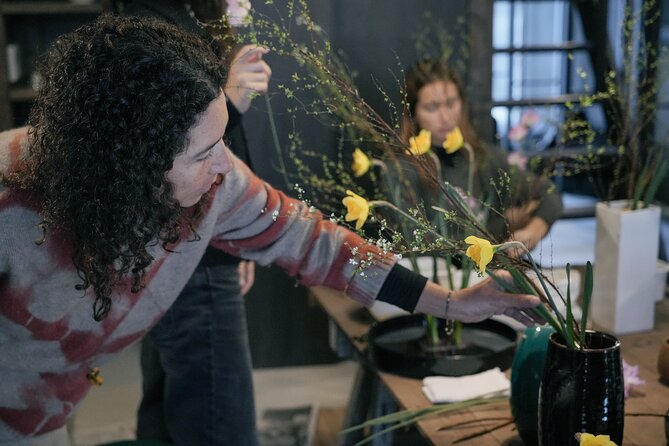
The class is held at 3481 Tanbacho in Kyoto’s Kamigyo Ward, at Symphony Kitano East, postal code 602-8287. It begins and ends at the same meeting point, so you do not need to arrange a separate finish location.
The setting has been described as a typical Japanese home, which can add a sense of place that a large commercial studio might not provide. The address is near public transportation, but you should still allow time to find the exact entrance and arrive before the start.
The maximum group size is six. That is a strong advantage for an activity involving delicate materials and personal instruction. A large group could make it harder to see demonstrations or ask for help at the right moment. Here, the format is more intimate.
The activity uses a mobile ticket, which keeps the booking simple. Confirmation is provided at the time of booking. Most people can participate, though the available information does not give detailed accessibility notes, so you should ask the provider if you have specific mobility needs.
Is $72.26 a fair price?
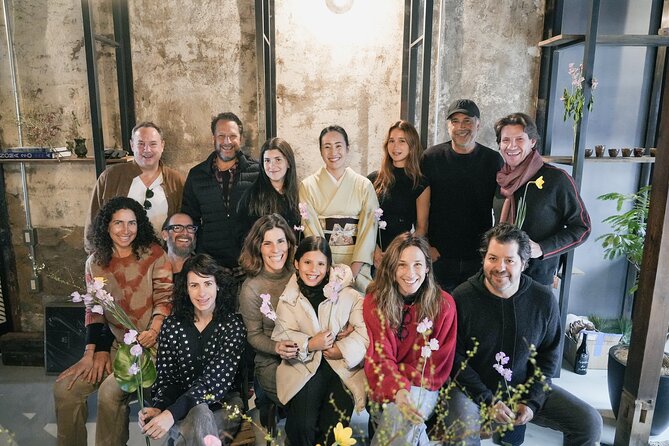
At $72.26 per person, this is not the cheapest way to spend 90 minutes in Kyoto. You are paying for a guided cultural lesson, fresh seasonal flowers, a small group, demonstrations of two styles, and the chance to make your own arrangements.
The value depends on what you want from the activity. If your priority is seeing as many famous sights as possible, the price may feel high for a short class. If you want a quiet, personal experience that teaches a skill and gives you a better understanding of Japanese aesthetics, it is easier to justify.
The group limit helps the value. Personal instruction matters more here than it would in a simple demonstration. You are not only watching an expert arrange flowers. You are making decisions yourself and receiving help as you work.
The practical flower-care guidance also gives the class a longer life. You can apply it after returning home, even if you do not continue with formal ikebana.
Who should book this experience?
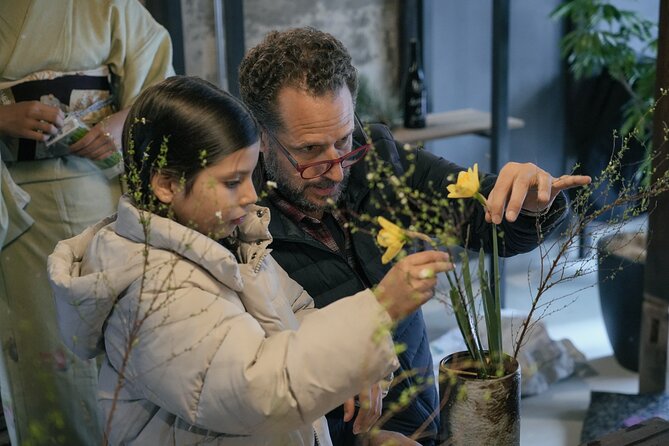
I would point this class toward you if you enjoy creative activities, Japanese arts, or slower cultural experiences. It suits couples, friends, and solo participants who like learning by doing.
It is also a good choice for a repeat visit to Kyoto, when you may want something beyond another temple, garden, or food stop. The class gives you a different way to think about Japanese design and nature.
Families may find it appealing if everyone in the group can take part in careful hands-on work. The available information does not list a minimum age, so you should confirm age requirements before booking with children.
You may want a different activity if you need a long academic explanation of ikebana. One participant wanted more discussion of the art’s history, different schools, and basic rules. Mana’s response explains that the class focuses on two beginner forms, Moribana and Nageire, rather than trying to cover every branch of ikebana in one session.
That focus is sensible for a short introduction, but it is worth knowing before you reserve.
Timing, meeting point, and cancellation
Plan for about 1 hour 30 minutes from start to finish. Since the activity returns to the meeting point, it is easy to fit into a Kyoto day without arranging a pickup or a second destination.
The meeting address is Japan, 602-8287 Kyoto, Kamigyo Ward, Tanbacho 3481, Symphony Kitano East. It is near public transportation, and you receive a mobile ticket and booking confirmation.
The activity is commonly booked about 30 days ahead, so reserving early is sensible if your Kyoto dates are fixed. Free cancellation is available when you cancel at least 24 hours before the local start time. Changes or cancellations made inside that window are not accepted for a refund.
There has been at least one serious report of a missed meeting and unanswered calls. That appears to be an isolated complaint beside the generally strong score of 4.7 from 19 ratings, but it is still a reason to double-check the address, start time, and meeting instructions before the day.
Should you book this ikebana class?
Book it if you want a small, hands-on Kyoto activity with clear English instruction and a creative result to take home. Mana’s demonstrations of Moribana and Nageire give the class useful structure, while the seasonal flowers and wabi-sabi ideas keep it connected to Japanese culture rather than turning it into a standard bouquet lesson.
Skip it if you want an extensive lecture on ikebana schools or a longer course. For most visitors, the best reason to choose this experience is its balance: practical instruction, a calm setting, a small group, and enough philosophy to make the arranging feel meaningful without becoming academic.
FAQ
Where does the ikebana class take place?
The class meets at 3481 Tanbacho, Kamigyo Ward, Kyoto, Japan, postal code 602-8287, at Symphony Kitano East.
Does the activity return to the meeting point?
Yes. The activity ends back at the same meeting point.
How long does the class last?
The class lasts approximately 1 hour 30 minutes.
How much does the experience cost?
The listed price is $72.26 per person.
Who teaches the class?
The class is taught in English by an ikebana instructor named Mana.
How many people can join?
The maximum group size is six participants.
What styles of ikebana are taught?
The class introduces Moribana and Nageire, two traditional beginner ikebana styles.
Are the flowers seasonal?
Yes. The class uses seasonal flowers for the arrangements.
Is the activity available with a mobile ticket?
Yes. A mobile ticket is provided, and confirmation is received at the time of booking.
Can I cancel for a full refund?
Yes, if you cancel at least 24 hours before the experience start time. Cancellations or changes made less than 24 hours before the start are not accepted for a refund.
Just added around Kyoto
- Kyoto-Nara Adventures Private Tour With Hotel Pick Up★ 4.0 · 5 reviews
- Traditional Japanese Flower Styling Workshop – Ikebana in Kyoto★ 5.0 · 10 reviews
- Stunning Private Tea Ceremony: Camellia Garden Teahouse★ 5.0 · 28 reviews
- Kyoto Hidden Treasures: Special Temple & Garden Access Tour★ 4.5 · 25 reviews
- Zen Garden Making and Matcha Tasting in Handmade Pottery Shop★ 3.5 · 2 reviews
- Guided Kyoto City Cherry Blossom One Day Private Tour★ 5.0 · 16 reviews
- Kyoto: Kinkaku-ji Temple & Serene Garden Guided Tour with Tickets★ 5.0 · 9 reviews
- Kyoto Golden Temple & Zen Garden: 2.5-Hour Guided Tour★ 5.0 · 2 reviews
Kyoto Garden Tours, compared.
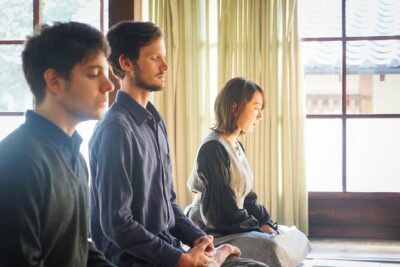
Kyoto Zen Meditation & Garden Tour at a Zen Temple with Lunch
Read our review →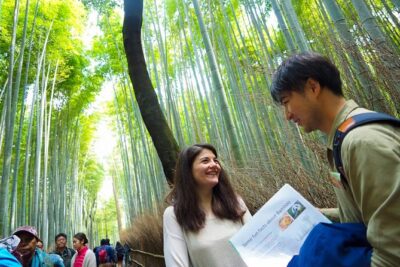
Kyoto Arashiyama Bamboo forest & Garden Half-Day Walking Tour
Read our review →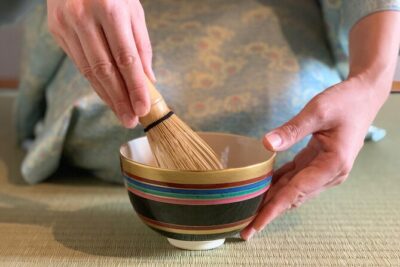
Authentic Kyoto Tea Ceremony: Camellia Flower Teahouse
Read our review →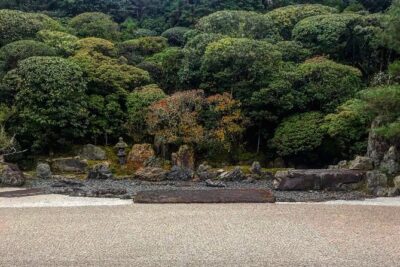
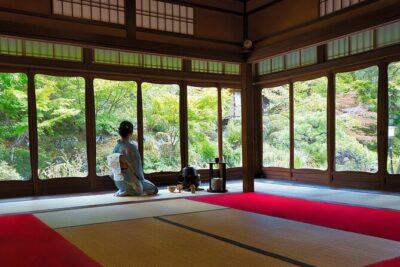
Kyoto Kiyomizu Tea Ceremony with Scenic Garden Views
Read our review →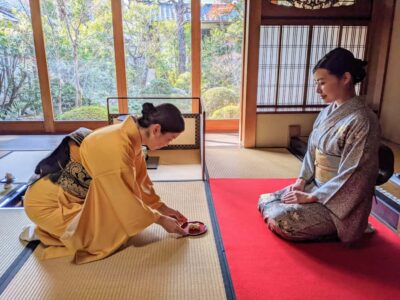

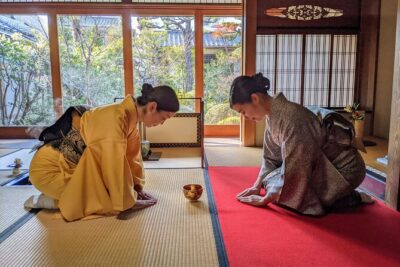
Stunning Private Tea Ceremony: Camellia Garden Teahouse
Read our review →Browse the lists this tour appears in