
Review · KYOTO
Traditional Japanese Flower Styling Workshop – Ikebana in Kyoto
The clever part of this Kyoto workshop is that you learn ikebana you can repeat at home, not just a formal arrangement made with rare flowers and costly Japanese equipment. At Sogetsu WEST, Master Fooraku shows you how shape, spacing, line, and seasonal feeling can turn ordinary materials into something graceful.
I like the small, private format and the practical teaching. I also like that you see more than one style and learn how to keep cut flowers fresh. The main consideration is the price: at $104.24 per person for about 1 hour and 45 minutes, this costs more than a casual craft class, so it makes the most sense if Japanese culture or floral design is a real interest.
Key points
- Master Fooraku’s 30 years of practice: You learn from an experienced ikebana teacher with strong command of the art and good English.
- A home-friendly approach: You do not need special flowers, tools, or traditional containers to keep practicing after Kyoto.
- Sogetsu WEST’s unusual collection: The studio has more than 300 flower containers, giving the lesson a strong visual connection to Japanese floral design.
- Private and relaxed: Only your group takes part, allowing room for questions and personal guidance.
- A finished arrangement to remember: You create your own piece, take a photo, and can request the session slides by email.
- A short cultural conversation: The closing chat can include Japanese food, traditions, and your own background.
Why this ikebana class is different from a quick craft lesson
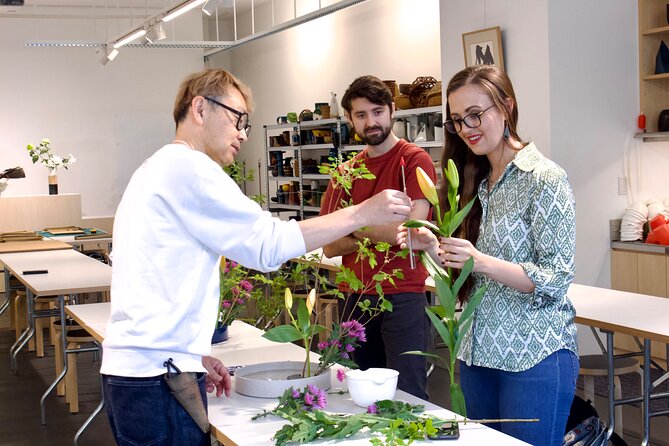
Ikebana is not simply putting flowers in a vase. It is a way of arranging living materials with attention to line, open space, balance, season, and the character of each stem. This workshop gives you a useful introduction without requiring you to become a member of a school or commit to a long course.
The Sogetsu tradition is a good fit for an introductory class because it allows a broad range of materials and forms. The emphasis here is not on copying one rigid arrangement and then stopping. You learn basic forms, several techniques, and ways to make an arrangement work with the containers and flowers you can find at home.
That practical point matters. Many cultural workshops give you a pleasant object to take away, but the lesson ends there. This one aims to give you a method. After returning home, you can adapt the ideas to local flowers, simple household items, and different room settings.
A few more garden visits around Kyoto worth a look
- Ikebana Floral Design Workshop in Kyoto
★ 5.0 · 6 reviews - Kyoto: Premium Ikebana Workshop with Vase Souvenir
★ 5.0 · 2 reviews - Anggrek Putih Lombok Cooking Class
★ 5.0 · 253 reviews
Arriving at Sogetsu WEST in Kyoto
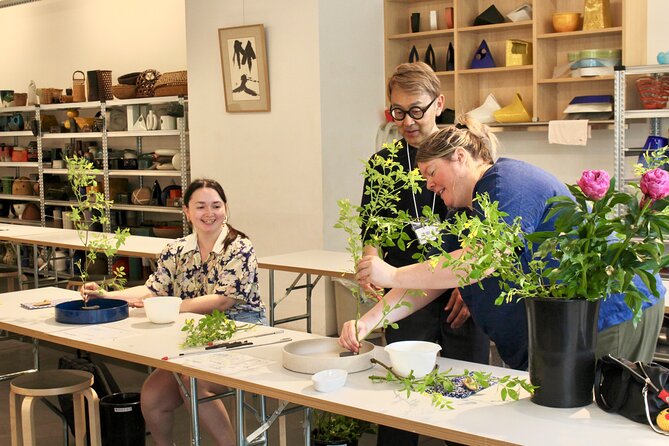
The meeting point is Sogetsu WEST, at 20-4 Sujakudōnokuchichō in Kyoto’s Shimogyo Ward. The activity begins and ends at this location, and it is near public transportation. Your mobile ticket provides the booking confirmation, so keep it accessible on your phone.
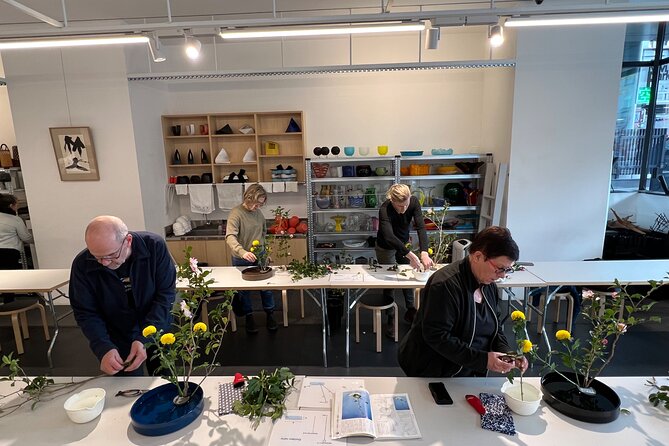
The studio’s collection of more than 300 flower containers gives the setting a useful role in the lesson. Containers are not just practical holders. Their height, width, color, and texture affect the entire arrangement. Seeing many options helps you understand why a flower placement that works in one vessel may look awkward in another.
The meeting point is not a sightseeing stop in the usual sense. You will not be touring a major temple or walking through a famous garden. The value is quieter: you are entering a working ikebana space where the objects around you help explain the art.
Because the workshop is private, only your group participates. That makes the session more personal than a large demonstration. You can ask for a repeat explanation, show uncertainty about a branch or stem, and discuss how to adapt the method to your own home.
The opening lesson: history, philosophy, and basic forms
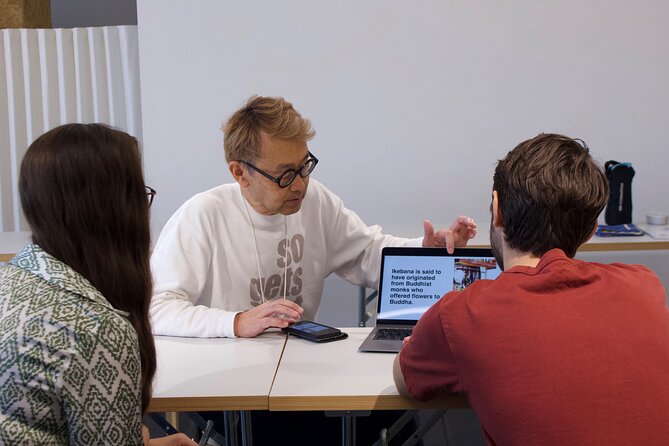
The class starts with the foundations of ikebana. Master Fooraku explains the history and philosophy behind the art before moving into the practical work. This context keeps the class from becoming a simple flower-arranging exercise.
You learn to look at a stem as a line rather than just a filler. Direction, height, angle, and empty space all affect the arrangement. The flowers are important, but so are the spaces between them. That may feel unfamiliar if your usual instinct is to fill every gap.
The workshop also introduces basic forms and different styles. The supplied information does not list each form by name, so you should think of this as a broad beginner’s lesson rather than a course devoted to one strict school pattern. The benefit is variety. You get a sense of how ikebana can change according to the materials and the container.
Master Fooraku has studied ikebana for more than 30 years. That long practice is especially useful in this part of the class, since a good teacher can explain not only what to do, but why an arrangement feels balanced or heavy. His English is described as good, which is important for a lesson built around subtle visual ideas.
Making your own arrangement with simple materials
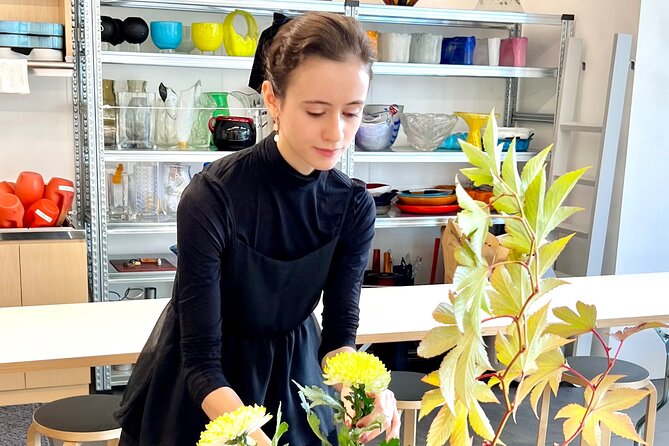
The central part of the experience is hands-on. With guidance, you create your own ikebana arrangement. The exact flowers used are not specified, so the materials may vary, but the lesson focuses on techniques that do not depend on rare blooms.
This is where the class earns much of its appeal. You are not expected to arrive with experience, and you do not need to own a traditional Japanese container once you return home. The lesson shows how to make different styles with accessible materials and basic tools.
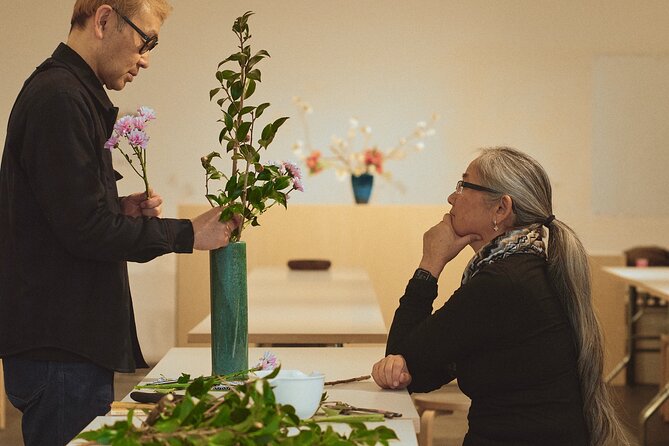
You can expect to make decisions about placement rather than simply follow a finished example. A stem may need trimming, a branch may create the main line, or a flower may work better when given more room around it. The teacher’s role is to guide your eye and help you adjust the arrangement.
That process can be more valuable than a perfect final result. You begin to see why an arrangement feels crowded, why one side seems too heavy, or why a small change in angle can make the whole piece calmer. These are useful skills if you want to continue at home.
The lesson also covers ways to keep flowers fresh. That detail is easy to overlook, but it matters. A beautiful arrangement is short-lived if the stems are poorly prepared or the flowers are not cared for properly. For someone planning to practice after the workshop, this advice adds real value.
Same place, a different kind of green day out:
- Kyoto Zen Meditation & Garden Tour at a Zen Temple with Lunch
★ 5.0 · 441 reviews - Kyoto Arashiyama Bamboo forest & Garden Half-Day Walking Tour
★ 5.0 · 413 reviews - Authentic Kyoto Tea Ceremony: Camellia Flower Teahouse
★ 5.0 · 269 reviews - Kyoto: Zen Garden, Zen Mind (Private)
★ 5.0 · 126 reviews
The 300-container collection and the role of the vase
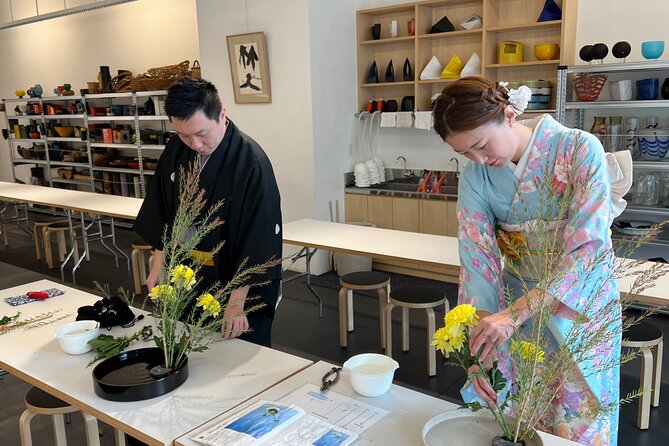
Sogetsu WEST has more than 300 types of flower containers. You may not work with all of them, of course, but the collection helps make one point clear: the container is part of the design.
In Western-style arranging, the vase can sometimes fade into the background. In ikebana, it helps establish the mood, scale, and direction of the piece. A low container can encourage a different shape from a tall one. A simple vessel may let the stems carry attention, while a more distinctive container can become part of the visual statement.
This setting also gives you a better feel for the range of ikebana. The art is not limited to one old-fashioned look. The Sogetsu approach supports creative arrangements and changing materials, which makes it easier for beginners to imagine using the ideas in a modern apartment or an ordinary dining room.
The collection is a reason to pay attention during the explanation, even if your main aim is to make your own piece. Notice how the teacher pairs the container with the flowers. That relationship is one of the main lessons you can take home.
Photographing the finished piece and closing conversation
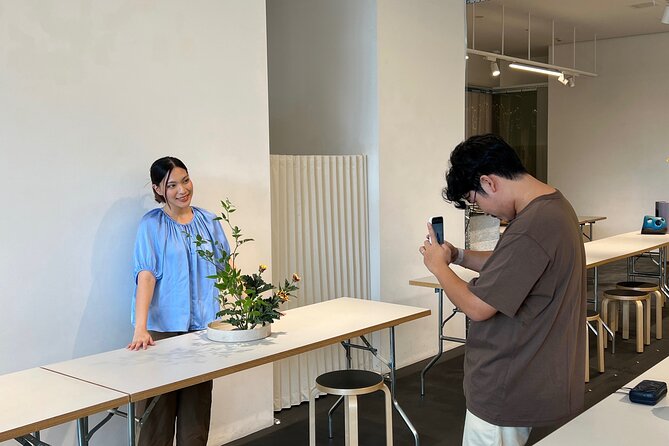
Once your arrangement is complete, you take a photo to remember it. This is a small touch, but useful. An ikebana piece is temporary by nature, and a photograph lets you keep a record of what you made.
You can also request the session slides by email. Since the workshop covers forms, philosophy, flower care, and techniques, those slides may help you recall the lesson later. They are especially useful if you want to try another arrangement at home instead of letting the class become a one-time activity.
The session ends with time to relax and talk. Questions can cover Japanese food, culture, and traditions, and you can share something about your own country and background if you are comfortable. This conversation gives the class a more human finish than simply packing up and leaving.
Do not expect a long cultural lecture at the end. The format is informal. Its value depends on the questions you bring, so think ahead about what you would like to ask. If you have been curious about Japanese seasonal customs or everyday traditions, this is a natural time to raise them.
What $104.24 buys you
The price is $104.24 per person. For a 1-hour-and-45-minute private session, that is a significant spend, especially when compared with a basic group craft activity. You are paying for personal instruction, the use of a specialist studio, access to an expert teacher, and a lesson designed for continued practice.
The value is strongest for three kinds of people. First, it suits anyone already interested in floral design. Second, it works well for visitors who want a quieter cultural activity instead of another large attraction. Third, it is a good choice if you want to learn a skill that can continue after your holiday.
The price may feel less worthwhile if you only want a quick souvenir or a simple flower-making activity. The finished arrangement is temporary, and the class does not promise a take-home vase or a long formal qualification. You are mainly buying instruction and time with a skilled teacher.
For a private activity, the cost also gives you a chance to ask questions without competing with a large group. Since only your party takes part, the teaching can focus on your arrangement and your level of experience. That personal attention is the clearest reason to choose this over a cheaper shared class.
Who should book this Kyoto experience?
I would recommend this workshop to curious beginners, flower lovers, couples, solo visitors, and anyone who wants a slower hour in Kyoto. You do not need previous ikebana experience, and the class is built around accessible ideas rather than a demand for special equipment.
It is also a strong choice for repeat visitors who have already seen Kyoto’s major temples and want a hands-on activity. The workshop connects to Japanese aesthetics in a direct way: you work with seasonal materials, notice natural form, and learn to value open space instead of filling every surface.
Families and mixed-interest groups should think about the private format. A person who enjoys craft work may get more from this than someone who wants a fast-paced attraction. Since the activity lasts nearly two hours, everyone in the group should be willing to slow down and concentrate.
The class can also suit people who are nervous about cultural workshops. The teaching is described as relaxed, and Master Fooraku’s good English should help you follow the explanations. Still, the topic is specific, so book it because you want to learn about ikebana, not simply because you have a spare hour.
Timing, transport, and booking details
The experience lasts approximately 1 hour and 45 minutes and returns to the starting point. Because the meeting point is near public transportation, you can fit it into a Kyoto day without arranging a separate transfer, though you should allow enough time to reach Sujakudōnokuchichō.
It is booked an average of 26 days ahead, which suggests that planning early is sensible, particularly if your Kyoto dates are fixed. The mobile ticket makes the entry process simple, and booking confirmation is provided at the time of booking.
Most people can participate, and the activity is private. Specific accessibility features are not provided, so anyone with mobility or other access needs should confirm details before paying.
Free cancellation is available up to 24 hours before the local start time for a full refund. Changes or cancellations made less than 24 hours ahead are not accepted for a refund, so check your plans before the cutoff.
Should you book Traditional Japanese Flower Styling Workshop?
Book it if you want personal instruction in a traditional Japanese art and like the idea of practicing at home after Kyoto. Master Fooraku’s long experience, the private setting, the 300-container studio, and the practical flower-care advice give the session more substance than a quick decorative activity.
Skip it if your main goal is a low-cost souvenir or a packed sightseeing schedule. At $104.24, it asks for a real interest in the subject. For the right person, though, it offers something many Kyoto activities do not: a quiet skill, a finished composition, and a new way to notice beauty in ordinary flowers and empty space.
FAQ
Where does the ikebana workshop take place?
The workshop takes place at Sogetsu WEST, 20-4 Sujakudōnokuchichō, Shimogyo Ward, Kyoto, 600-8842, Japan.
Where does the activity finish?
The activity ends back at the meeting point, Sogetsu WEST.
How long does the workshop last?
The session lasts approximately 1 hour and 45 minutes.
How much does the experience cost?
The listed price is $104.24 per person.
Who teaches the class?
The class is taught by Fooraku, also referred to as Master Fooraku. He has studied ikebana for more than 30 years.
Do I need previous ikebana experience?
No previous experience is stated as a requirement. The class teaches ikebana basics, so it is suitable for beginners.
Do I need special flowers or a traditional vase at home?
No. The workshop teaches styles that you can create after returning home without special flowers or traditional Japanese containers.
Is the activity private?
Yes. Only your group participates in the activity.
Can I cancel for a full refund?
Yes, if you cancel at least 24 hours before the experience start time. Cancellations made less than 24 hours ahead are not refunded, and the cutoff uses local time.
Just added around Kyoto
- Kyoto-Nara Adventures Private Tour With Hotel Pick Up★ 4.0 · 5 reviews
- Ikebana Traditional Japanese Art of Flower Arranging★ 4.5 · 19 reviews
- Stunning Private Tea Ceremony: Camellia Garden Teahouse★ 5.0 · 28 reviews
- Kyoto Hidden Treasures: Special Temple & Garden Access Tour★ 4.5 · 25 reviews
- Zen Garden Making and Matcha Tasting in Handmade Pottery Shop★ 3.5 · 2 reviews
- Guided Kyoto City Cherry Blossom One Day Private Tour★ 5.0 · 16 reviews
- Kyoto: Kinkaku-ji Temple & Serene Garden Guided Tour with Tickets★ 5.0 · 9 reviews
- Kyoto Golden Temple & Zen Garden: 2.5-Hour Guided Tour★ 5.0 · 2 reviews
Kyoto Garden Tours, compared.
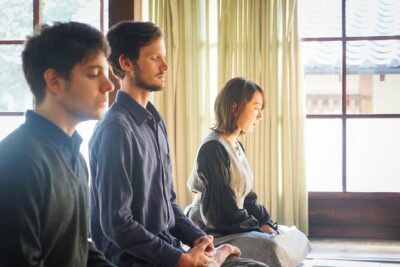
Kyoto Zen Meditation & Garden Tour at a Zen Temple with Lunch
Read our review →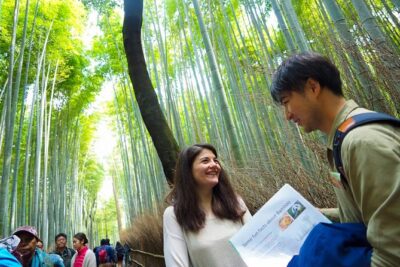
Kyoto Arashiyama Bamboo forest & Garden Half-Day Walking Tour
Read our review →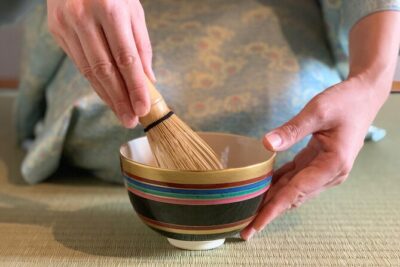
Authentic Kyoto Tea Ceremony: Camellia Flower Teahouse
Read our review →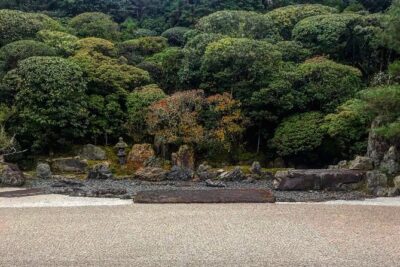
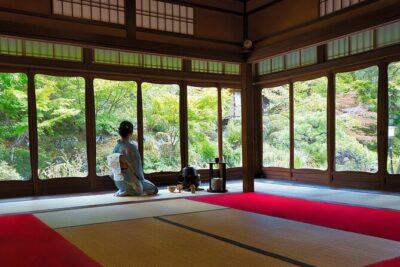
Kyoto Kiyomizu Tea Ceremony with Scenic Garden Views
Read our review →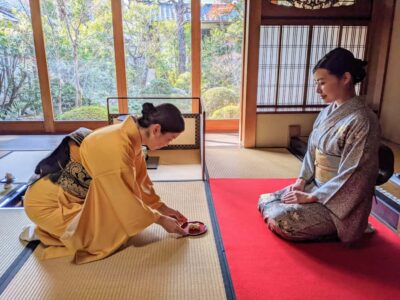
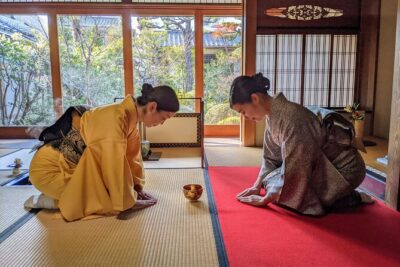
Stunning Private Tea Ceremony: Camellia Garden Teahouse
Read our review →Browse the lists this tour appears in