
Review · KYOTO
Kyoto: Kinkaku-ji Temple & Serene Garden Guided Tour with Tickets
Kyoto’s Golden Pavilion is the headline, but the real surprise comes at Ninna-ji Temple, where you enter the Main Hall for chanting with a monk, ask questions, and see a rotating sutra shelf. That rare access gives this tour more depth than a quick photo stop.
I like the sharp contrast between Kinkaku-ji’s glittering pond and gardens and Ninna-ji’s quieter imperial setting. I also like the small maximum of seven people, which gives guides such as Ellie, Eriko, and Eri room to explain Buddhist practice without shouting over a crowd. The main consideration is pace: three hours is enough for a strong introduction, but not enough for a slow, unhurried look at every corner.
Key points to know
- A golden pavilion built for a shogun: Kinkaku-ji began as the retirement villa of Ashikaga Yoshimitsu before becoming a Zen Buddhist temple.
- Rare temple access at Ninna-ji: You may enter the Main Hall for a monk-led chanting session and a question-and-answer period.
- Two UNESCO World Heritage temples: The tour links sites with very different moods and histories.
- Small group size: The experience is limited to seven people, making personal questions easier.
- Taxi transfer between temples: The move from Kinkaku-ji to Ninna-ji is handled comfortably, useful because Ninna-ji is a little out of the way.
- About $48.86 per person: The price includes admission and the guided experience, with especially good value if the monk session takes place as planned.
Why the monk session makes this tour different
Many Kyoto temple visits are built around gates, ponds, pagodas, and photographs. Those sights are worth seeing, but you can walk through them without understanding much about the religious life behind them.
This experience adds a rare personal encounter at Ninna-ji. You enter the Main Hall for a sacred chanting session led by a monk, then have time for questions and answers. That changes the visit from sightseeing into a short lesson in Buddhist practice.
The exact program at Ninna-ji can change because of temple circumstances. Keep that in mind when booking. The session is the tour’s most unusual feature, but it is also the part most dependent on what the temple can offer that day.
When the full program is available, you can expect a quiet, respectful setting rather than a staged performance. The monk explains spiritual traditions, and your guide helps connect the discussion to Japanese culture and temple life. You may also have a photo taken with the monk before continuing through the grounds.
More Garden Tickets in Kyoto:
- Kyoto: Kinkaku-ji Temple & Serene Garden Tour with Tickets
★ 5.0 · 2 reviews - Paris: Versailles Palace and Gardens Full Access Ticket
★ 4.6 · 41,579 reviews - Marrakesh: Majorelle Garden Entry Tickets
★ 4.5 · 9,651 reviews
Kinkaku-ji and the view that earns its fame
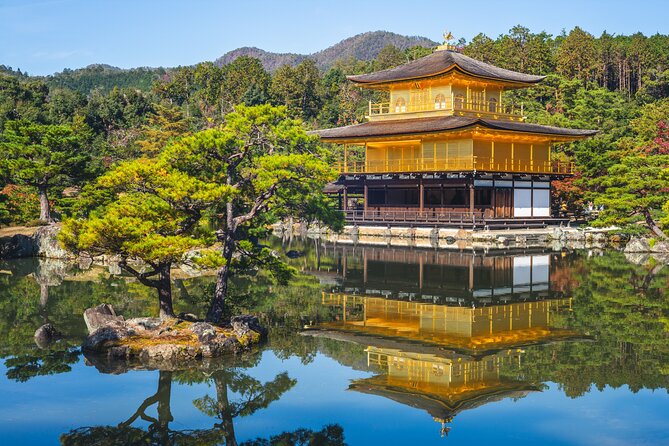
The first stop is Kinkaku-ji, usually called the Golden Pavilion. It was originally built as a retirement villa for shogun Ashikaga Yoshimitsu, a powerful military ruler. After his death, the property became a Zen temple.
The building’s upper floors are covered in gold leaf. Set beside a pond, the pavilion reflects in the water, giving you the classic Kyoto image that appears on countless postcards. The shine is not the whole story, though. Your guide explains how the site connects power, prestige, and religious devotion.
The grounds include the Shariden, the pavilion’s reliquary hall, along with the Karamon Gate, Rikushu-no-taki waterfall, Anmintaku Pond, Hakujanotsuka, Yukatei Teahouse, and Fudo Hall. The route gives you more than a quick look at the main building.
I especially like the garden’s borrowed view. The pavilion does not need to fill every inch of the scene. Water, trees, rocks, and distant forms help frame it, so the gold building feels part of a carefully arranged setting rather than a lone object placed beside a pond.
Plan on about one hour here. That is enough to walk the main path, hear the essential background, and stop for photographs. It is not enough for a long private meditation beside the water, especially if the grounds are busy.
Kinkaku-ji is also the more visually crowded half of the tour. The pavilion is one of Kyoto’s best-known sights, so the setting can feel more like a major attraction than a quiet temple. A guide helps by giving your walk structure and pointing out details you might otherwise pass without notice.
What the guide adds at the Golden Pavilion
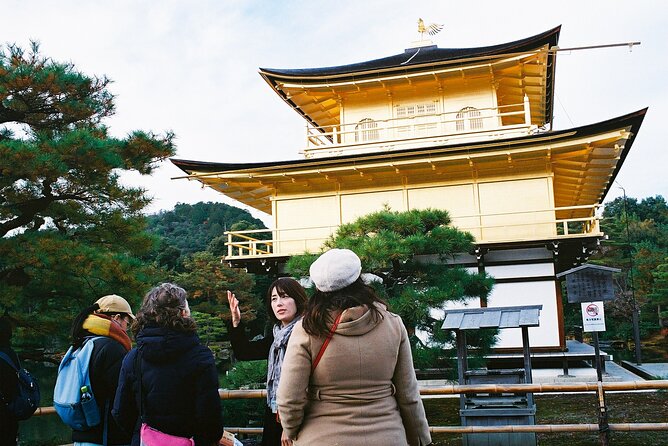
Without context, Kinkaku-ji can become a simple formula: shiny building, pond, photograph, exit. The guide gives the sight a human story.
You learn why a shogun built the original villa, how the place changed into a temple, and how Buddhist sites could also express political power. This is the kind of explanation that helps you read Kyoto’s monuments instead of simply collecting pictures.
Guides named Ellie, Eriko, and Eri have been praised for friendly delivery, strong English, and clear explanations. The important point for you is not a particular script. It is the chance to ask questions about Japanese religion, architecture, and custom as they come up.
The small group matters here. With no more than seven people, you can usually hear the guide and ask about details such as the pavilion’s reflection, the garden design, or the difference between a temple and a shrine. It should feel more like walking with an informed local than following a large flag through the grounds.
Moving from Kinkaku-ji to Ninna-ji
After about an hour at Kinkaku-ji, the tour continues to Ninna-ji. The transfer is by taxi, which saves you from sorting out the route yourself and makes the two-temple plan practical within three hours.
That convenience matters because Ninna-ji is slightly inconvenient to reach compared with Kinkaku-ji. You finish at Ninna-ji rather than returning to the starting point, so plan the rest of your day from the western Kyoto area.
The tour begins at Yamazaki-an, at 25 Kinugasa Babacho in Kita Ward. It ends at Ninna-ji Temple, 33 Omuro Ouchi in Ukyo Ward. Both points are near public transportation, but the experience is designed as a one-way visit, not a round trip.
A few more garden visits around Kyoto worth a look
- Kyoto Guided Walking Tour: Secret Zen Garden and Fushimi Inari
★ 5.0 · 17 reviews - Guided Kyoto City Cherry Blossom One Day Private Tour
★ 5.0 · 16 reviews - Kyoto Japanese Garden Lover’s Private Tour with Government-Licensed Guide
★ 4.5 · 10 reviews - Kyoto: Ryōan-ji, Greatest Zen Garden Guided Tour in 90 Min.
★ 4.0 · 7 reviews
Ninna-ji’s imperial past and quieter mood
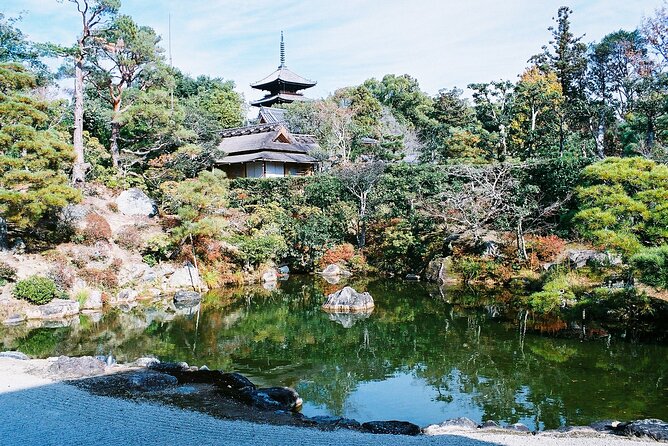
Ninna-ji was founded in 888 by Emperor Uda. That imperial connection gives the temple a different character from Kinkaku-ji, which began as a shogun’s villa.
The temple is the head of the Omuro school of Shingon Buddhism. It is also known for its five-story pagoda, gardens, and Omuro cherry trees. The grounds carry a calmer feeling, and the contrast with the Golden Pavilion is one of the tour’s strongest ideas.
At Ninna-ji, you spend about one hour and 45 minutes. This longer visit gives the guide time to discuss Buddhist practice and gives you time to see more than the famous exterior features.
The Imperial Residence is part of the final section. It brings the tour back to Kyoto’s courtly past after the military and Zen associations of Kinkaku-ji. The sequence works well: power at the Golden Pavilion, religious practice in the Main Hall, then imperial elegance at the residence.
The Main Hall, chanting, and the rotating sutra shelf
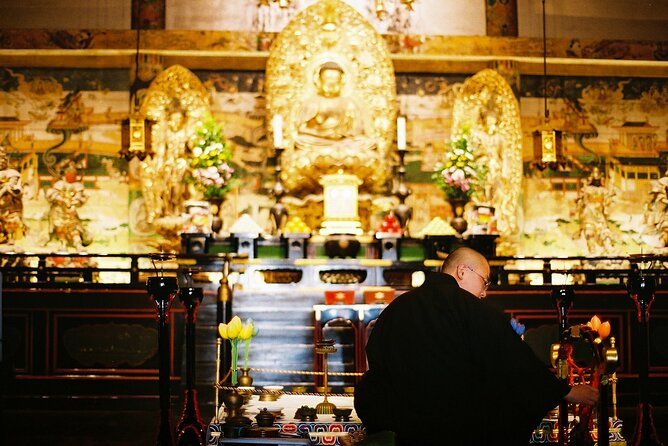
The Main Hall is the special-access moment. It is not always open to the public, and the itinerary may change if the temple has other needs. When access is available, you sit inside for a monk-led chanting session and then take part in a Q&A.
You do not need to arrive with a background in Buddhism to appreciate this. The guide helps explain what you are hearing and why ritual matters. The experience offers a direct connection to a living religious tradition, not just an explanation of an old building.
The Sutra Hall adds another hands-on detail. You can see and interact with a rotating sutra shelf, a ritual object connected with Buddhist teachings. The act has meaning beyond its mechanics, and your guide explains why the shelf matters.
This is also the part where respectful behavior counts most. Listen carefully, follow the guide’s instructions, and treat the space as a place of worship rather than an attraction designed only for photographs. A photo with the monk may be possible afterward, but the setting comes first.
Two temples, two kinds of beauty
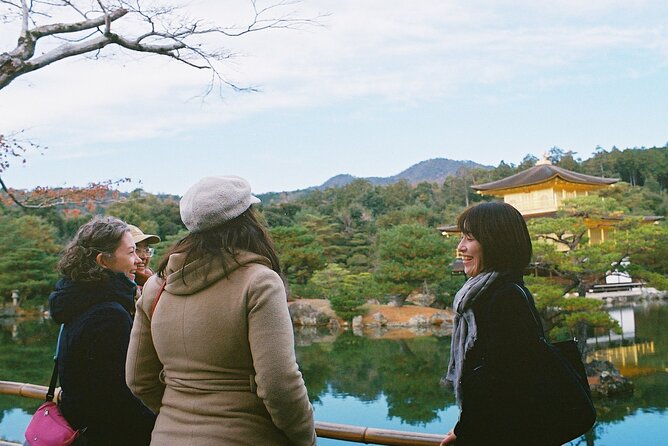
Kinkaku-ji gives you instant visual impact. Its gold leaf, pond, and garden are easy to understand at a glance. Ninna-ji asks for more attention, then rewards it with architecture, ritual, and a quieter sense of place.
I like the pairing because it avoids making Kyoto’s religious sites seem interchangeable. One temple shows how elite power could take on religious form. The other connects imperial heritage with an active Buddhist school and personal contact with a monk.
The tour also gives you a useful lesson in how to look at Japanese gardens. At Kinkaku-ji, the pavilion is framed by water and carefully placed natural elements. At Ninna-ji, the appeal is less about one shining structure and more about the balance of halls, gardens, pagoda, and historic spaces.
You should not expect a full survey of either temple. The tour gives you a focused route and selected explanations. If you want to study every building, linger among the gardens, or visit other sites nearby, plan a separate half-day.
Is $48.86 a fair price?
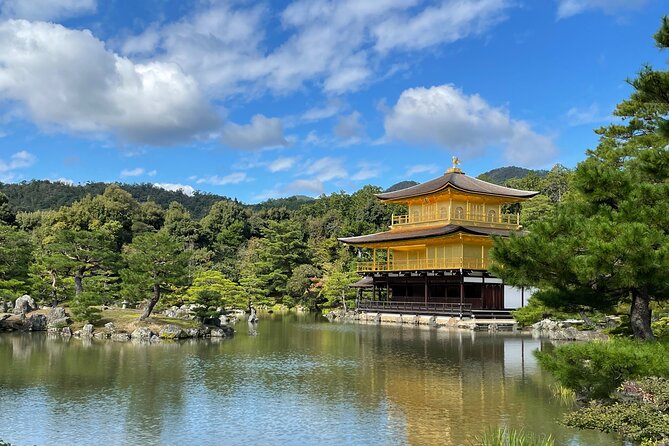
At about $48.86 per person, this is not the cheapest way to see Kinkaku-ji. You can visit the temple independently, pay admission, and walk the grounds without a guide.
The value comes from what is added. Your fee includes admission to both temples, a guide, the taxi transfer between them, and access to a program at Ninna-ji that may not be available on a standard self-guided visit. The small group also gives the tour a more personal feel.
I consider the price fair if the monk session and Main Hall access are important to you. Those elements are what separate this experience from simply buying two temple tickets.
The value is weaker if you only want photographs of the Golden Pavilion. In that case, the one-hour Kinkaku-ji portion may be enough, and a self-guided visit costs less. The tour makes more sense for you if you want religious context, help with transportation, and a planned visit to both UNESCO sites.
Who will get the most from this tour?
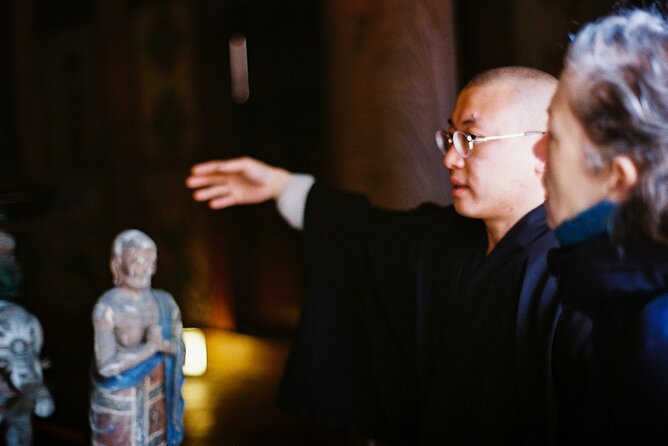
This is a good choice for a first visit to Kyoto, especially if you want a clear introduction to Japanese temples without spending a full day on a single district.
It suits you if you:
- Want historical explanation instead of a quick photo stop
- Are curious about Buddhist ritual and temple life
- Prefer a small group to a large coach tour
- Like having the route and transfer arranged
- Want to see both a famous attraction and a quieter religious site
- Have about three hours available
Families and older visitors may appreciate the taxi transfer, since it removes one navigational chore. Most people can participate, but the experience still involves walking through temple grounds and gardens.
It may not suit you if you need a highly flexible schedule. The itinerary runs to about three hours, and the Ninna-ji section can change because of temple conditions. It is also not the best match for someone who wants a long, silent garden visit with no commentary.
Timing, meeting point, and booking advice
The tour starts at Yamazaki-an, 25 Kinugasa Babacho, Kita Ward, Kyoto. It ends at Ninna-ji Temple, so do not assume you will be returned to your hotel or to the first meeting point.
A mobile ticket is provided, and confirmation comes at booking. The experience is near public transportation, but the taxi transfer between temples keeps the schedule compact.
This tour is often booked about 60 days ahead. That does not guarantee every date will sell out, but it is a useful signal if your Kyoto plans are fixed. A small maximum of seven people means there are fewer places than on a large group outing.
Free cancellation is available if you cancel at least 24 hours before the start time. Changes or cancellations inside that window are not refunded, and the cut-off follows local Kyoto time.
My final take: book it for access, not just the gold
I would book this tour if you want Kinkaku-ji explained properly and care about seeing a side of Ninna-ji that independent sightseeing may not provide. The monk-led chanting, Q&A, rotating sutra shelf, and Main Hall access give the experience its real purpose.
I would skip it if your only goal is a quick photograph of the Golden Pavilion or if you prefer to set your own pace. For everyone else, the combination of two UNESCO temples, a small group, a taxi transfer, and direct religious context makes $48.86 a sensible spend.
The one thing to confirm mentally before booking is flexibility at Ninna-ji. The program can change. If you accept that condition, this is a thoughtful three-hour introduction to Kyoto’s courtly, military, and Buddhist past.
FAQ
How long does the tour last?
The tour lasts about three hours, with approximately one hour at Kinkaku-ji and one hour and 45 minutes at Ninna-ji.
What is included in the price?
Admission tickets to Kinkaku-ji and Ninna-ji are included. The guided experience and taxi transfer between the temples are also part of the tour arrangement.
Where does the tour begin?
The meeting point is Yamazaki-an, 25 Kinugasa Babacho, Kita Ward, Kyoto, 603-8362, Japan.
Where does the tour end?
The tour ends at Ninna-ji Temple, 33 Omuro Ouchi, Ukyo Ward, Kyoto, 616-8092, Japan.
Is transportation provided between the temples?
The transfer from Kinkaku-ji to Ninna-ji is made by taxi, making the route easier to complete within the three-hour schedule.
How many people can join?
The maximum group size is seven people.
Can I enter the Main Hall at Ninna-ji?
The experience includes entry to the Main Hall for a monk-led chanting session when temple conditions allow it. The Ninna-ji program may change.
Is the tour available with a mobile ticket?
Yes. A mobile ticket is provided, and booking confirmation is sent at the time of booking.
What is the cancellation policy?
You can cancel for a full refund up to 24 hours before the experience starts. Cancellations or changes made less than 24 hours before the start time are not accepted for a refund.
Just added around Kyoto
- Kyoto-Nara Adventures Private Tour With Hotel Pick Up★ 4.0 · 5 reviews
- Ikebana Traditional Japanese Art of Flower Arranging★ 4.5 · 19 reviews
- Traditional Japanese Flower Styling Workshop – Ikebana in Kyoto★ 5.0 · 10 reviews
- Stunning Private Tea Ceremony: Camellia Garden Teahouse★ 5.0 · 28 reviews
- Kyoto Hidden Treasures: Special Temple & Garden Access Tour★ 4.5 · 25 reviews
- Zen Garden Making and Matcha Tasting in Handmade Pottery Shop★ 3.5 · 2 reviews
- Kyoto Golden Temple & Zen Garden: 2.5-Hour Guided Tour★ 5.0 · 2 reviews
- Guided Kyoto City Cherry Blossom One Day Private Tour★ 5.0 · 16 reviews
Kyoto Garden Tours, compared.
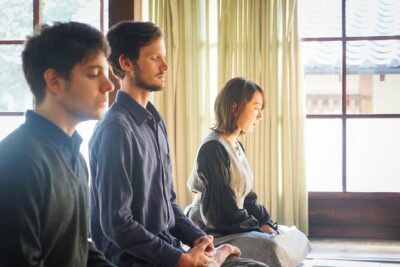
Kyoto Zen Meditation & Garden Tour at a Zen Temple with Lunch
Read our review →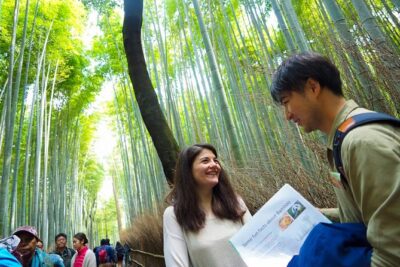
Kyoto Arashiyama Bamboo forest & Garden Half-Day Walking Tour
Read our review →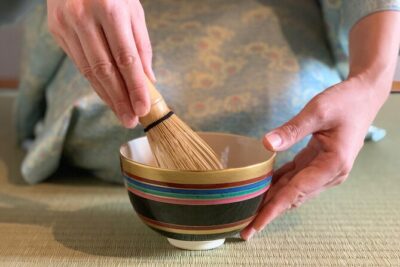
Authentic Kyoto Tea Ceremony: Camellia Flower Teahouse
Read our review →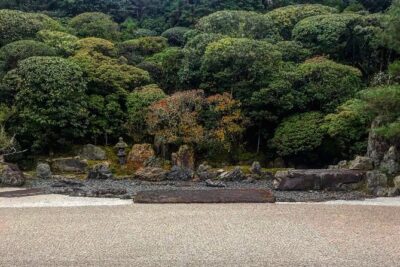
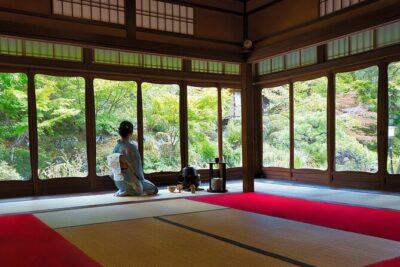
Kyoto Kiyomizu Tea Ceremony with Scenic Garden Views
Read our review →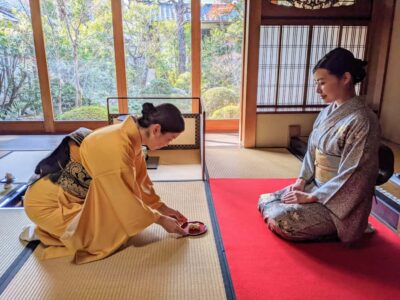
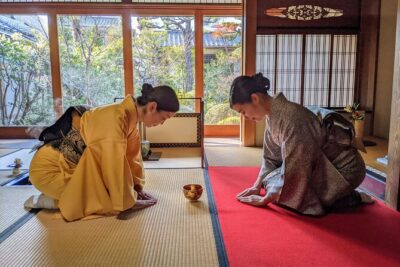
Stunning Private Tea Ceremony: Camellia Garden Teahouse
Read our review →Browse the lists this tour appears in