
Review · JAPAN
Kyoto: Ikebana (Japanese Flower Arrangement)
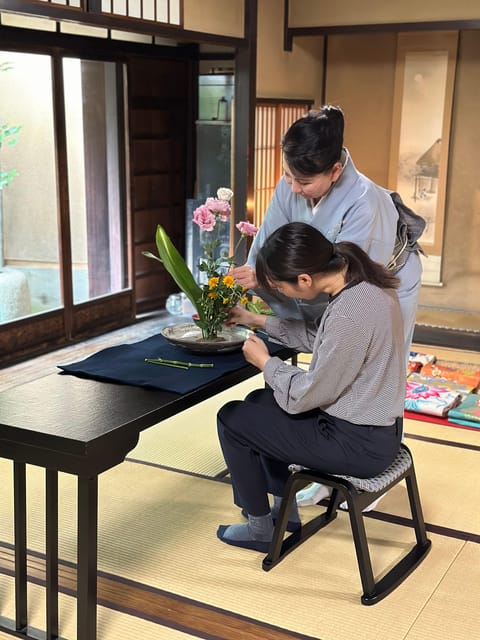
Ikebana here is more than putting flowers in a vase. You learn how a Kyoto flower arrangement from 1462 helped shape an art based on harmony between nature and human space, then make your own arrangement with seasonal flowers. I like that the lesson takes place inside Tondaya, a 140-year-old machiya, and that your finished work is set before the garden for photographs.
I also like the private-group format and the chance to speak with an ikebana master rather than simply watch a quick demonstration. The main concern is value: several recent bookings describe the practical lesson as very short, with limited explanation, so $122 is a lot if your session feels closer to 15 minutes than the advertised 90.
Key points at a glance
- Ikebana with a Kyoto origin story: The introduction connects the art to a flower arrangement made in Kyoto in 1462.
- A historic machiya setting: Tondaya is a 140-year-old Nishijin townhouse designated as a culturally significant landmark by Kyoto’s city government.
- Seasonal materials included: Flowers and all required tools are supplied, so you only need to arrive ready to work.
- Your arrangement becomes part of the visit: The finished piece is displayed by the garden, creating a natural spot for photographs.
- Language support varies: Instruction is offered in English and Japanese, with an interpreter or translation device used when necessary.
- Socks are required: Wear socks, not bare feet, and avoid stockings or tights.
What this Kyoto ikebana experience really offers
The heart of the activity is a beginner flower-arranging lesson led by an ikebana master. You receive seasonal flowers and the tools needed for the exercise, then work through an arrangement rather than merely touring a museum display.
That distinction matters. Ikebana is not simply Western-style bouquet making. The supplied background presents it as an art concerned with the relationship between natural forms and the space around them. A flower, branch, or stem is selected not only for color, but also for line, height, direction, and balance.
The experience traces this idea back to 1462, when a Kyoto arrangement was admired for its beauty and elegance. Unlike flowers offered for religious purposes, this arrangement was intended to express harmony between nature and human space. You do not need prior study to appreciate the point, but a clear explanation of those ideas is important. It gives the hands-on portion a purpose.
This is where the quality of the instruction matters most. A strong lesson should explain at least some of the rules or choices behind the arrangement, perhaps through a short demonstration before you begin. The information provided promises guidance from an ikebana master, but actual sessions may vary in how much theory and demonstration you receive. That is the largest uncertainty in the booking.
Other gardens people visit around Japan:
- Osaka: teamLab Botanical Garden Entry Ticket
★ 4.5 · 1,710 reviews - Imperial Palace East Garden and Edo Castle Walking Tour in Tokyo
★ 5.0 · 510 reviews - Mt. Fuji Day Trip from Tokyo with English Speaking Driver Guide
★ 5.0 · 443 reviews
Inside Tondaya, the 140-year-old machiya
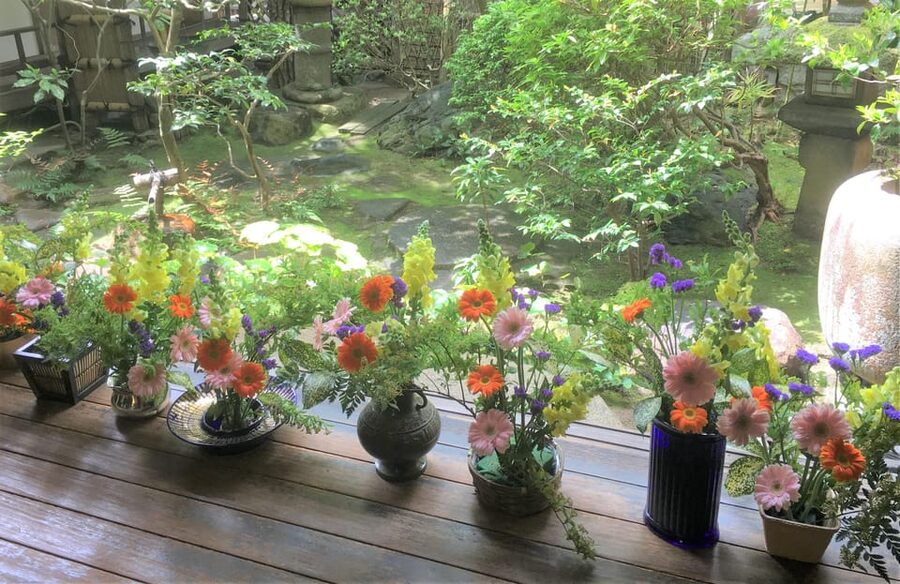
The lesson takes place at Tondaya, also called the Nishijin Japanese Cultural Experience Museum. This is not a modern classroom. It is a traditional Kyoto townhouse with 140 years of history, artifacts, and stories connected to the city’s living culture.
The house gives the flower arrangement a useful setting. Instead of making ikebana in an anonymous studio, you work in a place where traditional rooms, the garden, and historic objects form part of the experience. Once your arrangement is finished, it is placed in front of the garden for photographs. That final display is one of the more appealing touches because it lets you see the piece in a calmer, more intentional setting.
The follow-up tour of Tondaya is also included. Staff explain the building and its artifacts, offering a look at Kyoto customs beyond the flower arrangement itself. The exact length of this portion is not specified, so you should not assume that the full 90 minutes will be devoted to a detailed house tour.
One important detail: Tondaya asks you to wear socks. Bare feet are not allowed, and stockings or tights should be avoided. Pack or wear ordinary socks, especially if your Kyoto sightseeing outfit includes sandals.
A practical look at the 90-minute visit
The published duration is 90 minutes, with starting times available according to the date you select. The activity is for a private group, and reservations require at least two participants. That makes it a sensible choice for couples, families, or friends who want a shared cultural activity rather than a large class.
The visit should begin with an introduction to ikebana and its place in Japanese culture. The 1462 Kyoto origin story gives the lesson a useful starting point. You then receive the flowers and tools and create your own arrangement under instruction.
The most important part is the teaching. You should expect the instructor to guide you through the process, but the available information does not specify the ikebana school, the exact number of flowers, or the precise techniques taught. If you want formal study of a particular ikebana tradition, ask for those details before booking.
After the arrangement is complete, it is displayed near the garden for photographs. The session then includes a look around Tondaya, where staff share stories about the machiya and its traditional objects. The activity is therefore a mix of practical lesson, photo opportunity, and cultural tour.
The timetable deserves attention. The advertised visit lasts 90 minutes, yet some bookings describe a much shorter experience, including one account that put the active portion at about 15 minutes. Other accounts describe a history introduction, step-by-step arranging, photographs, and a pleasant visit to the building. I would treat the full duration as the intended schedule, while recognizing that the actual balance between teaching, arranging, and touring may depend on the staff available that day.
How good is the instruction?
The strongest praise focuses on the staff and the venue. One booking describes the guide and instructor as kind and well informed, with a clear introduction to ikebana’s roots and the development of the art. The arrangement process was explained step by step with help from an interpreter.
That is the best version of this experience. You get context first, practical help second, and time for photographs and the building afterward. For a first encounter with ikebana, that sequence makes sense.
But the instruction has not been consistent for everyone. One person expected an explanation of ikebana theory and rules, but found that the teacher offered little explanation and rearranged the flowers without being able to explain much. Another person wanted to see a demonstration by an experienced practitioner and found the session too short for the price.
This is a fair warning, not a reason to dismiss the activity altogether. Traditional arts can be taught in different ways, and language can affect how much detail comes across. The activity lists English and Japanese as the available languages. It also says that not every staff member speaks English, though the team will try to arrange an interpreter and may use a translation device.
If detailed verbal instruction is important to you, confirm how English support will work when you reserve. If you are happy with a gentle introduction, a little making, and a historic setting, the language issue may be less serious.
Same place, a different kind of green day out:
- Kyoto Zen Meditation & Garden Tour at a Zen Temple with Lunch
★ 5.0 · 441 reviews - Kyoto Arashiyama Bamboo forest & Garden Half-Day Walking Tour
★ 5.0 · 413 reviews - Tokyo: Imperial Palace East Gardens Walking Tour
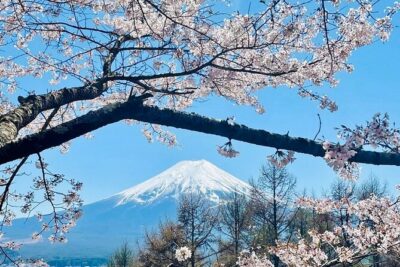
★ 4.8 · 353 reviews - Mt. Fuji, Cherry Blossom & Shiba Sakura Pvt. Day Tour
★ 5.0 · 326 reviews
What makes the $122 price reasonable, or not
At $122 per person, this is not a casual craft class. Your fee covers the ikebana activity, seasonal flowers, tools, entrance to Tondaya, and a private-group format. You are also paying for the setting and for access to a traditional cultural site rather than a standard workshop room.
The price makes more sense if you value the full package. You receive a cultural introduction, a hands-on arrangement, photographs with your finished piece, and a tour of an old machiya. The private format can also matter if you prefer asking questions without competing with a large group.
The price is harder to defend if the session is brief or if the teacher gives little explanation. A simple arrangement that takes only 15 minutes does not offer much value at this rate, especially if you came hoping for a proper lesson in ikebana principles.
The overall rating is 3.7 from nine ratings, which fits the mixed picture. The most positive accounts praise the venue, the staff’s kindness, and the clear explanation of the art. The low ratings focus on the short duration, weak theory instruction, and the sense that the cost did not match what was delivered.
I would book this for the combination of Tondaya and ikebana, not for a guaranteed intensive class. If your main goal is to study the art, compare this experience with a dedicated school that identifies its ikebana tradition and lesson plan.
The photo moment and optional kimono
Your arrangement is placed in front of the garden after the lesson. That gives you a simple but attractive way to record the experience, and it lets you see how the flowers look in a traditional setting rather than on the work surface.
One booking also describes an optional kimono experience at a small extra cost, followed by a short tour of the historic building. This is not included in the $122 price, so treat it as an add-on rather than part of the standard activity.
The kimono option may appeal if you want a more formal photograph at Tondaya. It is less useful if your priority is learning ikebana and keeping the visit focused. Ask about the added cost and timing before agreeing to it.
Who should book this activity?
I think this suits you best if you want a manageable cultural activity in Kyoto and enjoy making something with your hands. Beginners are specifically welcomed, and you do not need to bring flowers or tools.
It is a good fit for two people because the booking requires at least two participants. A parent and adult child, a couple, or two friends can share the process and compare arrangements afterward. The private-group setup may also be more comfortable for anyone who dislikes performing a traditional art in front of strangers.
The experience is less suitable if you need a long, rigorous class. You may be disappointed if you expect a formal demonstration, detailed theory, or a lesson tied to a named ikebana school. The supplied information does not promise those features, and some sessions have been criticized for not providing them.
It is also not ideal for a tightly packed sightseeing schedule unless you allow the full 90 minutes and time to find Tondaya at 697 Ishiyakuchicho in Kyoto’s Kamigyo Ward. Arrive on time. A late arrival could cut into an activity that already feels short if the schedule is not handled well.
Booking details worth knowing
The meeting point is Tondaya, Nishijin Japanese Cultural Experience Museum, at 697 Ishiyakuchicho, Kamigyo Ward, Kyoto, Japan. The activity is offered in English and Japanese, although an interpreter or translation device may be used when needed.
Flowers, arranging tools, and the entrance fee are included. You need to bring nothing special beyond socks. Do not arrive barefoot, and do not wear stockings or tights.
You can cancel up to 24 hours before the scheduled start for a full refund. Reserve now and pay later is available, which helps if you are still arranging your Kyoto days.
My verdict: book it for the setting, with realistic expectations
I would book this if you want a private introduction to ikebana inside a historic Kyoto machiya, and if the garden photographs and Tondaya tour matter as much to you as the flower arrangement itself. The venue, seasonal materials, and chance to meet an ikebana master give the activity real appeal.
I would hesitate if your main reason for booking is a serious lesson. The mixed results on explanation and timing are too important to ignore at $122. Before paying, ask whether an English-speaking instructor or interpreter will be present and how much time is planned for the actual lesson.
For the best chance of enjoying it, arrive in socks, keep your schedule open for the full 90 minutes, and think of the visit as a cultural encounter with a short hands-on workshop. That is a fair description of what this experience can offer.
FAQ
Where does the ikebana experience take place?
It takes place at Tondaya, Nishijin Japanese Cultural Experience Museum, at 697 Ishiyakuchicho, Kamigyo Ward, Kyoto, Japan.
How long does the experience last?
The scheduled duration is 90 minutes.
How much does the experience cost?
The listed price is $122 per person.
Is the activity suitable for beginners?
Yes. It is presented as an ikebana experience for beginners, with guidance from an ikebana master.
Are flowers and tools included?
Yes. Seasonal flowers and all necessary arranging tools are provided.
Is the Tondaya entrance fee included?
Yes. The entrance fee is included in the activity.
What languages are available?
Instruction is listed in English and Japanese. An interpreter may be arranged, and a translation device may be used when necessary.
Is this a private activity?
Yes. The activity is offered for a private group.
How many people are needed to reserve?
Reservations must be made for at least two participants.
What should I wear or bring?
You must wear socks. Bare feet are not allowed, and stockings or tights should be avoided.
Just added around Japan
- Tsumami Zaiku Japanese Fabric Flower Class★ 5.0 · 3 reviews
- Tsukiji Food Strolling and Hama Rikyu Garden Walking Tour★ 5.0 · 7 reviews
- Tokyo: Serene Sakura & Sake: An Exclusive Brewery Pairing Lunch★ 5.0 · 2 reviews
- Private tour – Scenic Fuji Escape: Hakone, Peace Park & More★ 5.0 · 4 reviews
- Tokyo Cherry Blossom Half Day Walking Tour with a Local Guide★ 3.5 · 4 reviews
- TOKYO: Tailored Gardens tour with Pro Gardener by E-bike -BASIC★ 5.0 · 2 reviews
- Cherry Blossom Highlights, Asakusa, Ueno, Imperial Palace Garden★ 4.5 · 4 reviews
- Japan’s Customs of Ikebana Art, Tea Ceremony & Kimono Welcome★ 5.0 · 2 reviews
Japan Garden Tours, compared.
Imperial Palace East Garden and Edo Castle Walking Tour in Tokyo
Read our review →
Kyoto Zen Meditation & Garden Tour at a Zen Temple with Lunch
Read our review →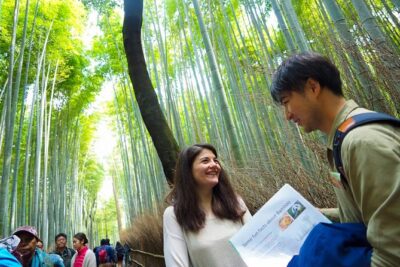
Kyoto Arashiyama Bamboo forest & Garden Half-Day Walking Tour
Read our review →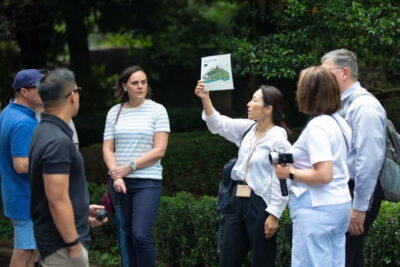
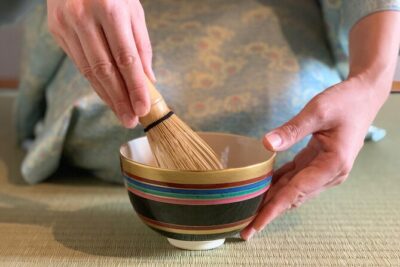
Authentic Kyoto Tea Ceremony: Camellia Flower Teahouse
Read our review →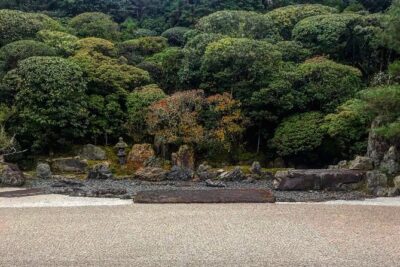
Edo Castle & East Garden of the Imperial Palace Tour
Read our review →Browse the lists this tour appears in