
Review · KYOTO
Kyoto Hidden Treasures: Special Temple & Garden Access Tour
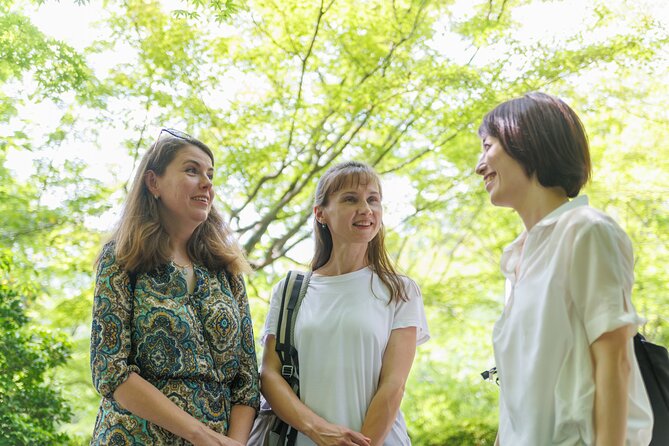
Kyoto’s best temple visits are not just about seeing old buildings. They are about understanding why a garden is arranged a certain way, what a pagoda represents, and how Buddhism and Shinto fit into daily life. This private tour puts that interpretation in the hands of a local guide, with possible stops ranging from famous Kiyomizu-dera to the quieter garden of Haradanien.
I like the private format, which lets you move at your group’s pace and ask the questions that matter to you. I also like the practical transit help. Guides such as Sayuri, Naomi, Takuma, Makiko, Haru, Chika, and Osamu have been praised for making Kyoto’s buses, trains, and temple customs easier to understand.
The main catch is that the route is not fixed. The experience lasts about two to four hours, the contents depend on your date, and the description says it is not customizable. Ask for the exact plan before booking, especially if you have your heart set on one particular temple.
Key points to know before booking
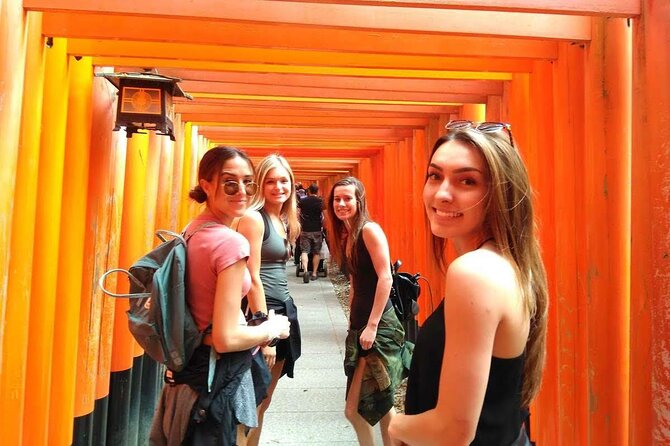
- The 6:45 am start gives you an early beginning: Meet your guide in the lobby of Kyoto Brighton Hotel, then set out by foot and public transportation.
- The route changes by date: The listed temples are possible stops, not a promise that you will see all seven.
- You travel like a local: Your guide can explain how to use Kyoto’s public transit, with local taxis or transit used between sites.
- The strongest value is cultural explanation: Guides explain Buddhism, Shinto, Japanese history, and the meaning behind the places you visit.
- This is private but not fully custom: Only your group participates, but the operator says the tour content varies and cannot be changed.
- Cherry blossom timing matters: Tenryu-ji, To-ji, Kiyomizu-dera, Haradanien, and Ninna-ji can look especially striking in spring, but seasonal beauty depends on the date.
Why this private Kyoto tour works best with a guide
Kyoto is easy to admire and surprisingly easy to misunderstand. A temple may look like a collection of roofs, statues, and gravel, while its layout reflects centuries of religious ideas. A guide gives you the missing pieces, explaining the difference between Buddhist and Shinto spaces and pointing out details you could otherwise walk past.
That help is especially useful at places such as To-ji, where the religious art can feel overwhelming without context. The temple’s Lecture Hall contains a three-dimensional mandala with 21 Buddhist statues. Names such as Dainichi Nyorai, Fudo Myo-o, and the Four Heavenly Kings mean more when someone explains how the figures relate to one another.
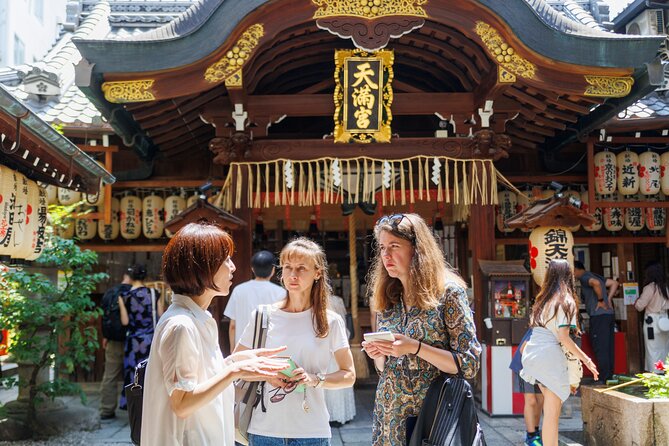
The private setup also changes the rhythm. You do not have to keep up with a large group or wait while strangers take photographs. If you are traveling as a couple, family, or small party, you can ask about religion, architecture, gardens, or local customs as you go.
The guide quality is important here. Sayuri was praised for explaining Buddhism and Shintoism while helping with local transit. Makiko was noted for patience and practical transit instruction. Chika brought local stories and answered detailed questions, while Takuma Goda was described as informative and fun. One fair warning is that guide experience can vary. One person found a guide friendly and energetic but less experienced with historical details.
A few more garden visits around Kyoto worth a look
- Kyoto Zen Meditation & Garden Tour at a Zen Temple with Lunch
★ 5.0 · 441 reviews - Kyoto Arashiyama Bamboo forest & Garden Half-Day Walking Tour
★ 5.0 · 413 reviews - Kyoto: Zen Garden, Zen Mind (Private)
★ 5.0 · 126 reviews
Starting at Kyoto Brighton Hotel at 6:45 am
The meeting point is the lobby of Kyoto Brighton Hotel at 330 Shiteicho in Kyoto’s Kamigyo Ward. The early start is useful in a city where major temples can become crowded later in the morning, but it is not for anyone hoping to sleep late.
From the hotel, your guide handles the route. This is not a private-car excursion, so expect walking, trains, buses, and possibly a local taxi. That can take extra time, particularly during cherry blossom season, when Kyoto’s roads and transit routes become slow.
I see the public transportation element as a real benefit rather than a compromise. Kyoto’s transit system is manageable once someone shows you how it works, and the skill can help for the rest of your trip. Still, transfers reduce the time available inside the temples. One itinerary experienced too much time moving from one place to another, a reminder that a short tour covering distant areas can feel hurried.
The tour ends back at the meeting point. Wear comfortable shoes, and expect a moderate amount of walking. The activity runs rain or shine.
Tenryu-ji and the Arashiyama setting
Tenryu-ji was founded in 1339 and is one of Kyoto’s major Zen temples. Its garden is the chief reason to visit. The design gives you a quiet place to consider the relationship between water, rocks, trees, and borrowed scenery, rather than treating the grounds as a simple photo stop.
The temple is in Arashiyama, an area that also includes the Bamboo Grove and Togetsukyo Bridge. If this forms part of your date’s route, the setting gives you several famous Kyoto sights in one area. The tradeoff is that Arashiyama is popular, and the time available for each sight may be limited on a two-hour version of the tour.
Spring cherry blossoms and autumn foliage can add color to the garden, but the tour is not only a seasonal outing. Tenryu-ji’s Zen setting has value at any time of year, particularly when your guide explains how to look at a Japanese garden instead of simply walking through it.
To-ji and the 55-meter pagoda
To-ji offers a strong contrast to the quieter garden experience. Its five-story pagoda rises 55 meters and is the tallest wooden pagoda in Japan. The building is an instantly recognizable Kyoto sight, but the interior religious art is what gives the visit weight.
The Lecture Hall’s three-dimensional mandala presents a carefully arranged world of Esoteric Buddhist teaching. Twenty-one statues include Dainichi Nyorai, Fudo Myo-o, and the Four Heavenly Kings. Without an explanation, the room can be impressive but confusing. With a guide, you have a better chance of understanding who the figures are and why their positions matter.
The Main Hall and Lecture Hall are associated with Kobo Daishi, the monk who helped establish To-ji as an important center of Shingon Buddhism. If you are interested in Japanese religion or art, this may be one of the most rewarding possible stops.
In spring, the pagoda and cherry blossoms create one of Kyoto’s classic views. Keep in mind that the tour may not visit To-ji on your particular date, and the listed stops are not a guaranteed sequence.
Same place, a different kind of green day out:
- Authentic Kyoto Tea Ceremony: Camellia Flower Teahouse
★ 5.0 · 269 reviews - Kyoto Kiyomizu Tea Ceremony with Scenic Garden Views
★ 5.0 · 101 reviews - Kyoto: Private Tea Ceremony with a Garden View
★ 4.9 · 61 reviews - Bamboo Grove Temple and Garden Views Tour
★ 5.0 · 41 reviews
Kiyomizu-dera and Kyoto from the wooden stage
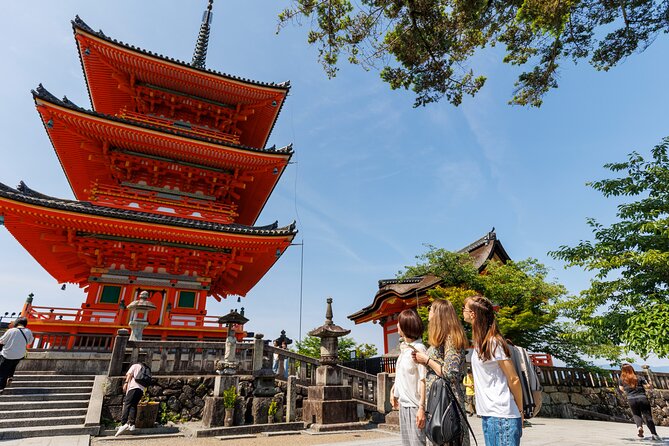
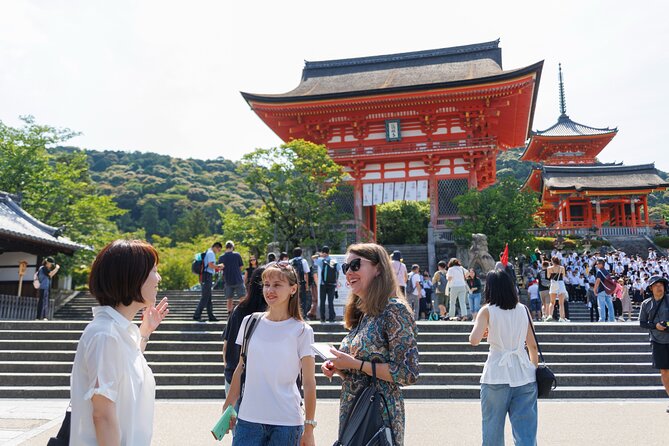
Kiyomizu-dera is one of Kyoto’s essential sights. The temple dates back more than 1,200 years and is famous for its large wooden stage, built over a hillside without using a single nail. From the stage, you get a broad view across Kyoto, with seasonal trees filling the foreground.
The appeal is both visual and architectural. You can appreciate the scale of the structure, then look out over the city and see how the temple’s hillside position shapes the experience. Cherry blossoms in spring and autumn leaves make the view more dramatic, though they also bring more people.
A guide helps here by giving the building a place in Japanese religious history instead of reducing the visit to a viewpoint. The half-day experience with Sayuri that included Kiyomizu-dera was also paired with Sanjusangendo, showing how this operator may combine different temples depending on the day.
Kiyomizu-dera involves walking and likely some slopes or uneven surfaces around the temple area. The tour requires moderate physical fitness, so this is not a good choice if you need a vehicle-based sightseeing plan.
Haradanien, Kyoto’s private garden surprise
Haradanien is the most unusual possible stop on this route. It is a privately owned garden that receives fewer visitors than Kyoto’s major temple grounds. That relative quiet is part of its appeal, especially if you have already seen the city’s best-known sights.
In spring, more than 400 cherry trees create a dense tunnel of blossoms. The garden is known for flowers appearing in heavy profusion through the seasons, so it offers a different experience from the carefully restrained look of a Zen garden.
I would choose this stop for its contrast. Tenryu-ji and Taizo-in invite you to think about Zen design, while Haradanien gives you a concentrated display of seasonal planting. The practical issue is timing. A garden built around blossoms is most compelling when the flowers are at their best, so ask what is expected on your date before counting on it as the highlight.
Ninna-ji and late-blooming Omuro cherry trees
Ninna-ji brings imperial connections and refined temple architecture. Emperor Uda founded it in 888, and members of the imperial family later served as head priests. Its buildings and gardens reflect that link with the court.
The temple is especially known for Omuro-zakura, a late-blooming cherry tree. That makes Ninna-ji useful for visitors who arrive after some of Kyoto’s earlier blossoms have faded. The timing still depends on the season, but the late bloom is part of what gives the site its identity.
This is a good stop if you want a polished, spacious temple setting with a strong connection to the imperial past. It also pairs well with Haradanien and Taizo-in in a garden-focused route, though distances between sites can make transfers a real part of the morning.
Taizo-in and a quieter Zen visit
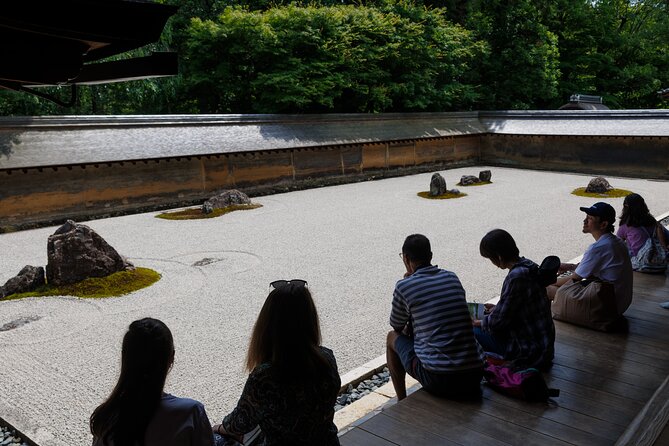
Taizo-in is a smaller-scale possibility, but it carries plenty of interest. The temple has a historic Zen setting, a national treasure ink painting, and a beautiful garden. It is suited to you if you prefer a quiet place where art and religious thought matter more than a famous exterior.
The garden can be appreciated at a slower pace, provided the schedule allows it. This is where the private format helps most. You can ask your guide to explain the painting, the Zen setting, or the garden’s design rather than simply checking the temple off a list.
Taizo-in is also a useful counterpoint to Kiyomizu-dera. Kiyomizu offers a major structure and city view, while Taizo-in offers a more restrained encounter with Japanese art and Zen practice. Which one you prefer depends on whether you want famous sights or a calmer visit.
What $140 gets you
At $140, the value depends on how many people are in your private group and how long your route lasts. A two-hour outing covering a small number of sites will feel different from a four-hour visit with several admissions and substantial guide time. Group discounts may improve the cost for a larger party.
You are paying for more than entry tickets. The package includes a private guide, planning around the day’s route, help with public transit, and interpretation of places that can otherwise seem difficult to read. If you are new to Kyoto, that guidance can save time and make the temples more meaningful.
The price is less compelling if you want to rush through many famous sights or if you already understand Kyoto’s transit and religious traditions. You may see fewer places than you could visit alone in a full day. The point is not maximum coverage. It is better understanding and a less confusing morning.
The overall rating is 4.7 from 25 ratings, with 92 percent recommending the experience. The strongest pattern is clear: people value friendly guides, historical explanation, efficient routing, and help using local transit. The repeated caution is also clear: route transfers can take longer than expected, and guide experience is not identical every time.
Timing, walking, and the fine print
This experience is listed as lasting approximately two to four hours. The itinerary changes by date, so do not assume you will visit Tenryu-ji, To-ji, Kiyomizu-dera, Haradanien, Ninna-ji, and Taizo-in in one outing. Ask the operator for the precise route before booking.
Although the activity is private, it is described as not customizable. That means private participation does not necessarily mean you can select any temple you want. Your group gets its own guide, but the scheduled content is determined by the date.
Public transit or local taxis may be used between stops, and no private vehicle is included. You should be comfortable walking at a moderate level and should wear good walking shoes. Confirmation arrives at booking, and free cancellation is available up to 24 hours before the start time. Cancellations or changes made within 24 hours are not refunded or accepted.
Is this Kyoto temple tour right for you?
Book it if you want a private introduction to Kyoto’s temples, need help with public transportation, or care about learning what you are seeing. It is particularly useful for couples, families, and small groups who want to ask questions without a large crowd around them.
I would also consider it for a return visit. A guide can reveal details you missed at Fushimi Inari, Kiyomizu-dera, or another familiar site, especially if you want more than another round of photographs.
Think twice if you need a guaranteed visit to one specific temple, dislike early starts, or want a private car. The changing route and transit time require flexibility. Before paying, confirm the exact date-specific itinerary, expected duration, and likely stops. If those details suit your plans, this is a practical way to connect Kyoto’s gardens, Buddhist art, imperial temples, and everyday transit in one focused morning.
FAQ
Where does the tour begin?
The tour begins in the lobby of Kyoto Brighton Hotel at 330 Shiteicho, Kamigyo Ward, Kyoto.
What time does the tour start?
The stated start time is 6:45 am.
How long does the experience last?
The tour lasts approximately two to four hours.
Will I visit every temple listed?
No specific full route is guaranteed. The contents vary depending on the tour date, so you should ask the operator for the precise itinerary.
Is transportation included?
This is a walking tour with no private vehicle. Public transportation or local taxis may be used between locations.
What happens if I need to cancel?
You can receive a full refund if you cancel at least 24 hours before the experience start time. Cancellations or changes made within 24 hours are not accepted, and the amount paid is not refunded.
Just added around Kyoto
- Kyoto-Nara Adventures Private Tour With Hotel Pick Up★ 4.0 · 5 reviews
- Ikebana Traditional Japanese Art of Flower Arranging★ 4.5 · 19 reviews
- Traditional Japanese Flower Styling Workshop – Ikebana in Kyoto★ 5.0 · 10 reviews
- Stunning Private Tea Ceremony: Camellia Garden Teahouse★ 5.0 · 28 reviews
- Zen Garden Making and Matcha Tasting in Handmade Pottery Shop★ 3.5 · 2 reviews
- Guided Kyoto City Cherry Blossom One Day Private Tour★ 5.0 · 16 reviews
- Kyoto: Kinkaku-ji Temple & Serene Garden Guided Tour with Tickets★ 5.0 · 9 reviews
- Kyoto Golden Temple & Zen Garden: 2.5-Hour Guided Tour★ 5.0 · 2 reviews
Kyoto Garden Tours, compared.
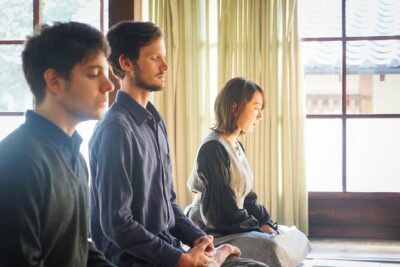
Kyoto Zen Meditation & Garden Tour at a Zen Temple with Lunch
Read our review →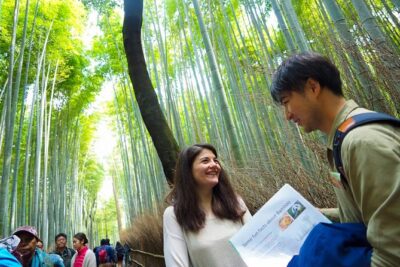
Kyoto Arashiyama Bamboo forest & Garden Half-Day Walking Tour
Read our review →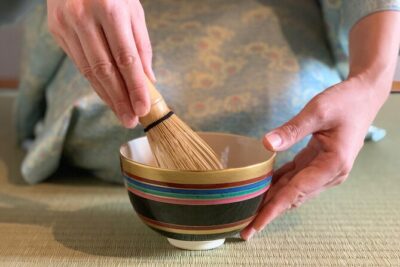
Authentic Kyoto Tea Ceremony: Camellia Flower Teahouse
Read our review →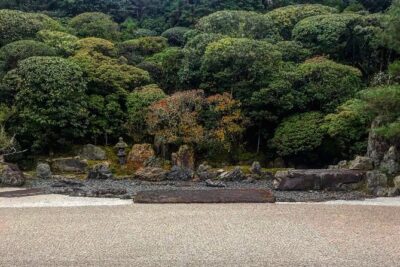
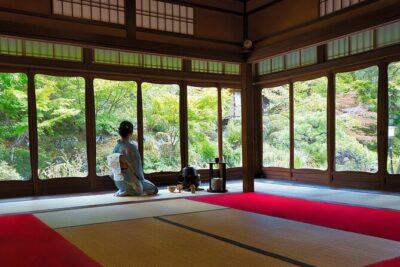
Kyoto Kiyomizu Tea Ceremony with Scenic Garden Views
Read our review →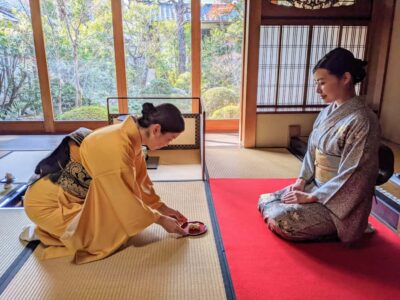
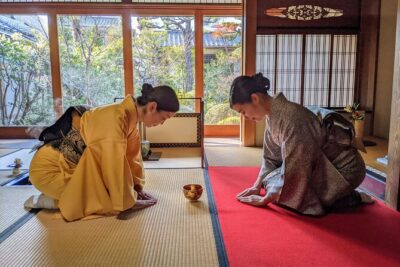
Stunning Private Tea Ceremony: Camellia Garden Teahouse
Read our review →Browse the lists this tour appears in