Review · TOKYO
Mt. Fuji & Hakone Cherry Blossom private One Day Tour
Mt. Fuji and Hakone make a powerful one-day pairing: snow-fed ponds, a volcanic lake, sulfur vents, shrine gates, mountain views, and one of Japan’s biggest outlet malls. The private vehicle lets you cover ground that is awkward by public transport, especially with a family or small group.
I like the door-to-door transport and the chance to shape a long day around your own group. I also like the variety: this is not only a Fuji photo stop, but a full circuit through Oshino and Hakone. The main caution is that the service may feel more like a private car with a driver than a guided cultural tour, and traffic can cut into sightseeing time.
Key points before you book
- Six major stops in about 10 hours: Mt. Fuji, Oshino Hakkai, Lake Ashi, Moto Hakone Shrine, Owakudani, and Gotemba Premium Outlets.
- Private transport for up to five people: The $450 group price can work well when divided among a family or small party.
- Best for reducing transit stress: You avoid changing trains and buses between Tokyo, Yamanashi, and Hakone.
- Guide service can vary: Some bookings receive a friendly, helpful driver, while others may not include much historical or cultural explanation.
- Weather and traffic matter: Mt. Fuji views are never guaranteed, and the route can become rushed if you leave Tokyo late.
- Extra charges are possible: The Subaru Line 5th Station fee is listed at $15, and the Hakone Open Air Museum fee is also listed at $15 if that museum is part of your plan.
Why this private Fuji and Hakone route works
The big selling point is simple: distance. Tokyo to the Mt. Fuji area is a substantial outing, and the Fuji and Hakone sights are spread across two prefectures. Public transport is possible, but it takes planning, transfers, and careful attention to schedules.
Here, your group travels together in an air-conditioned vehicle with private transportation and a hotspot on board. That matters if you are traveling with children, older relatives, or anyone who would rather spend the day looking out the window than checking train connections.
The group limit is five people. At $450 total, the price works out to $90 per person for five, before food and listed admission costs. For two people, it is a much more expensive day, but you are paying for privacy, flexibility, and transport rather than simply buying a seat on a bus.
There is one important wording issue to clear up before departure. The tour information says pickup is offered, while the stated meeting point is Tokyo Station, at 1 Chome-9 Marunouchi. Confirm the exact pickup location and return arrangement when you book. The activity ends back at the meeting point listed for the booking.
More Cherry Blossom Tours in Japan
- Mt. Fuji, Cherry Blossom & Shiba Sakura Pvt. Day Tour
★ 5.0 · 326 reviews - Tokyo Cherry Blossoms blooming spots E-bike Tour, 3hrs
★ 5.0 · 27 reviews - Cherry Blossom Private Tour
★ 4.5 · 18 reviews
Mt. Fuji Subaru Line 5th Station at 2,300 meters
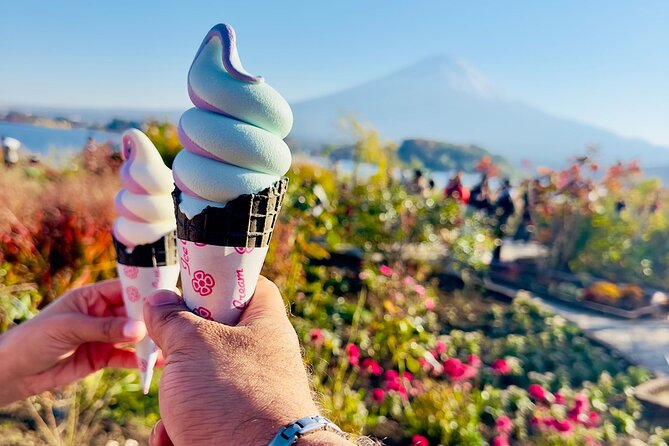
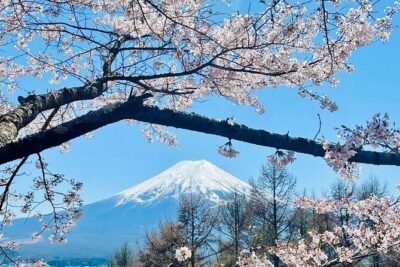
The Fuji Subaru Line 5th Station is the day’s headline stop. At about 2,300 meters, it sits high on Mt. Fuji’s northern slope and offers wide views over the Fuji Five Lakes area when the weather cooperates.
You get roughly two hours here, which gives you time to look around, take photographs, and enjoy the mountain setting without treating the stop as a quick roadside pause. The station is also a sightseeing destination in its own right, not only a starting point for climbers.
The road to the station is the Fuji Subaru Line, a scenic toll road beginning in Fujikawaguchiko. Snow can cause temporary winter closures or partial closures. During the main climbing season, private vehicles are restricted for much of the period, so the exact access plan can change.
The listed Subaru Line fee is $15. It is not included in the headline price, so keep that charge in mind when comparing this trip with other private excursions.
The practical issue is visibility. Mt. Fuji can disappear behind cloud even on a clear-looking day in Tokyo. This tour gives you several scenic stops, but it cannot promise a perfect cone-shaped Fuji view. That is why I would treat the mountain itself as a bonus, while valuing the rest of the route on its own merits.
Oshino Hakkai and its clear spring ponds
Oshino Hakkai gives the day a quieter, more traditional feel. The eight spring ponds are fed by snowmelt from Mt. Fuji, filtered through volcanic rock. The water is known for its clarity, and the ponds are framed by traditional-style buildings, small shops, and mountain views.
You have about 30 minutes here. That is enough to see the main pond area and take photographs, but it is not a long village visit. If you enjoy browsing local snacks and small shops, you may wish the stop were longer.
Oshino Hakkai is a good contrast with the developed 5th Station. Here, the appeal comes from water, old-style architecture, and the connection between Mt. Fuji’s snow and the springs below. Fresh spring water is available to drink directly from the source, according to the tour information.
Admission is free. Since this is a short stop, stay aware of the vehicle departure time. A few extra minutes spent shopping can become lost time later, especially on a route vulnerable to traffic.
Lake Ashi and the Hakone caldera
Lake Ashi, also called Lake Ashinoko, occupies the caldera of Hakone. It was formed after a volcanic eruption nearly 3,000 years ago, and today it is one of Hakone’s best-known scenic areas.
The tour allows about two hours around the lake. The itinerary refers to Togendai, a popular point near the water with views toward Mt. Fuji and surrounding peaks. Depending on the day’s timing and conditions, your time here may be used for lakeside views and photographs rather than a full boat cruise.
The lake is one of the places where weather makes a real difference. On clear days, Mt. Fuji may appear beyond the water. On cloudy days, the lake still provides a calm scenic break, but the famous Fuji view may be absent.
I like this portion because it slows the day down after the drive through the Fuji area. Still, ask how the two hours will be used if a cruise or another Hakone activity matters to you. The published tour details mention boat cruises as a Lake Ashi attraction, but they do not include a cruise ticket in the package.
More Cherry Blossom Tours in Tokyo
- Licensed Guide Tokyo Meguro Cherry Blossom Walking Tour
★ 4.5 · 13 reviews - Evening Hanami (Cherry Blossom) Experience with a Local
★ 3.5 · 10 reviews - Tokyo: Mt. Fuji & Hakone Cherry Blossoms Private Day Tour
★ 3.5 · 9 reviews - Tokyo Cherry Blossom Express Tour with Boat Ride
★ 4.3 · 7 reviews
Moto Hakone Shrine and the Torii of Peace
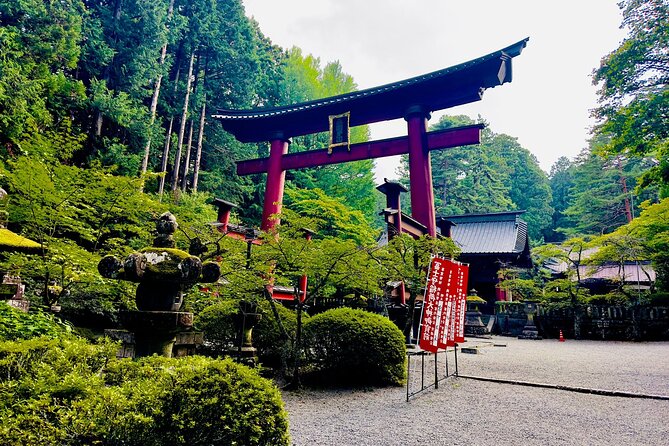
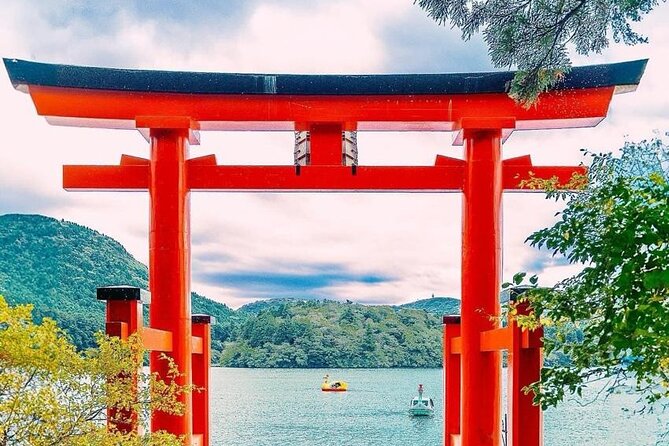
Moto Hakone Shrine sits by Lake Ashi in a forested setting. Its most recognizable feature is the Torii of Peace, a red gate placed in the water. The shrine is associated with protection, good fortune, travel, and prosperity.
You get about 30 minutes here. That is enough for a short walk, photographs, and a look at the shrine area, but not a leisurely visit through every path around the grounds. The route from nearby Hakone-machi or Moto-Hakone can involve walking, and the shrine can also be reached by boat.
This stop adds cultural meaning to what could otherwise be a scenery-only tour. Take a moment to observe the shrine respectfully rather than treating the gate as just another photo background. The forest and lake setting are part of the appeal.
The short schedule is the limitation. If you want a slower shrine visit, shopping around Moto-Hakone, or a lake cruise, you may need to give up time at another stop. A private vehicle gives you control, but a 10-hour day still has a firm limit.
Owakudani’s sulfur vents and black eggs
Owakudani is an active volcanic area formed by the last eruption of Mt. Hakone, about 3,000 years ago. Sulfurous fumes, hot springs, and hot rivers give the place a very different character from Lake Ashi and Oshino Hakkai.
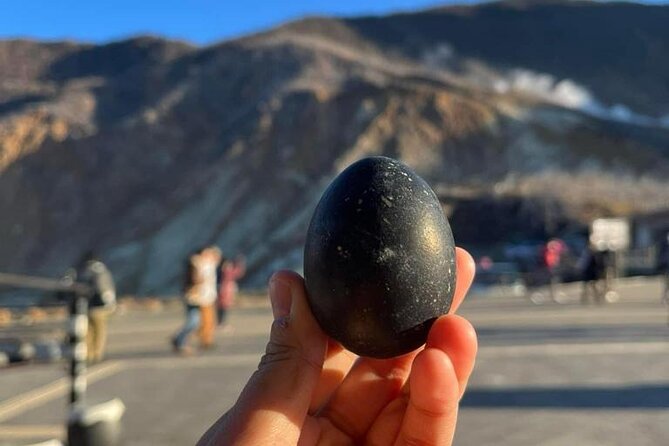
The stop lasts about one hour. You can expect a strong volcanic atmosphere, viewing areas, shops, and the famous black eggs. These eggs are cooked in hot spring pools, which darkens their shells through the sulfur. Local tradition says that eating one adds seven years to your life.
The site can be an unusual highlight, but it is not a quiet nature walk. Volcanic fumes and access conditions can affect the visit. The tour information does not promise a particular route through the area, so follow local instructions and your driver’s timing.
Owakudani is also another place where clear weather can reveal Mt. Fuji. Even without that view, the steaming volcanic ground gives the day a memorable change of pace.
Gotemba Premium Outlets for the final stop
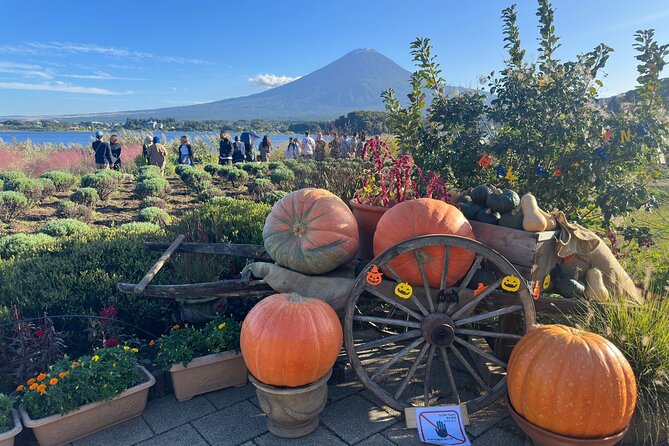
Gotemba Premium Outlets is a major shopping center at the base of Mt. Fuji, near Hakone. It has roughly 300 stores and restaurants, along with a food court, a 50-meter Ferris wheel, a hotel, and a public hot spring bath.
The tour gives you about two hours here. That is enough for a targeted shopping visit, but not enough to inspect every store. You will find international fashion, sports, household, electronics, food, and luxury brands.
Prices are generally better than regular Japanese retail prices, but this is not a place where every item is dramatically cheap. I would set a budget and make a short list before arriving. Otherwise, two hours can disappear among the shops without adding much to the day.
This stop will suit you if shopping is part of your Japan plans. If you care more about temples, walks, or mountain scenery, you may find the mall less appealing than additional time around Hakone. Its inclusion also makes the trip feel less like a pure nature tour and more like a broad day out.
The guide question: private tour or private driver?
This is the most important point to understand before booking. A private vehicle does not always mean a full guide who explains Japanese history and culture at every stop.
Some group experiences are handled by a friendly, helpful driver. Rezi is named in one especially positive account for taking a group to less crowded Mt. Fuji sites and making time for the Hakone Open Air Museum. Hiroyuki Sato signs provider responses, but that does not mean he will personally lead your day.
Other accounts describe the service as mainly a car and driver. One serious complaint also raised concerns about rushed timing and unsafe driving. Those are not minor matters. You should expect professional driving and a clear schedule, and you should speak up immediately if you feel unsafe or rushed.
Ask before the day begins:
- Is the assigned person a guide, a driver, or both?
- Will the tour follow all six listed stops?
- Is the Open Air Museum included, or would it replace another stop?
- What time should you leave Tokyo to avoid the worst delays?
- What admission charges will your group pay?
The answers will help you decide if this is the right product. If you want transport and local assistance, it may fit well. If you want detailed commentary at every shrine and volcanic site, confirm that service in writing.
Timing, traffic, and the real value of 10 hours
Ten hours sounds generous until you account for the distance from Tokyo and the number of stops. Fuji and Hakone roads can become congested, and the driving time can eat into visits.
A late start is especially risky. The booking information and provider responses stress the value of leaving early, with one suggested departure around 7 a.m. for a long journey to the Fuji area. If your group asks for a much later start, you may have to drop stops or shorten them.
That is not a flaw unique to this trip. It is the basic tradeoff of trying to combine Mt. Fuji, Oshino, Hakone, and Gotemba in one day. I would rather see five stops at a sensible pace than race through six, so agree on priorities before setting off.
Food is not included. Coffee, tea, lunch, and alcoholic drinks are also excluded. You can buy food along the route, but you should not assume a long restaurant break is built into the schedule.
Who should book this day trip?
This private outing is a strong match for families, couples, friends, and groups of up to five who value convenience over a fixed public transport schedule. It is particularly useful when your group includes children or older adults, since everyone can stay together in one air-conditioned vehicle.
It also suits first-time visitors who want to see several major sights without designing a complicated route through two areas outside Tokyo. The hotspot and private transport add practical comfort during a long day.
I would be more cautious if you are a solo visitor, a couple on a tight budget, or someone who wants detailed cultural instruction. The $450 price is easier to justify with five people. With one or two people, compare it with public transport, a bus tour, or a shorter private outing.
The cherry blossom title may attract you during spring, but flowering conditions are not guaranteed by the tour itself. If blossoms are your main reason for booking, confirm expected timing and flexibility before paying.
Should you book this Mt. Fuji and Hakone tour?
Book it if your priority is seeing a wide range of Fuji and Hakone sights in one private vehicle, with pickup arrangements, return transport, and no need to manage multiple connections. The strongest value comes when five people share the $450 price and agree that convenience matters.
Do not book it expecting a guaranteed Mt. Fuji view, a slow cultural tour, or a full-time history guide unless those points are confirmed. Start early, clarify the meeting point, ask who will drive and guide, and decide which stops matter most to your group.
For the right party, this is an efficient and varied day. For a small group seeking deep explanation at every stop, it may feel like an expensive driver service with a packed route.
FAQ
How long is the Mt. Fuji and Hakone private tour?
The tour lasts approximately 10 hours and ends back at the stated meeting point.
How many people can join the private tour?
The price covers a private group of up to five people. Different vehicles may be used for different group sizes.
Is pickup from a Tokyo hotel included?
Pickup is offered in the tour information, but the stated meeting point is Tokyo Station. Confirm your exact pickup location and return details before the tour.
Are entrance fees included?
All fees and taxes are listed as included, but the Subaru Line 5th Station fee of $15 is separately listed. A $15 fee is also listed for the Hakone Open Air Museum if that site is included in your plans.
Is lunch included?
No. Lunch, coffee, tea, and alcoholic beverages are not included.
Can I cancel for a full refund?
Yes, if you cancel at least 24 hours before the experience start time. Cancellations or changes made less than 24 hours before the start time are not accepted for a refund.
More Garden Day Trips in Tokyo
- From Paris: Giverny, Monet’s Home & Gardens Half-Day Trip
★ 4.5 · 2,887 reviews - From Paris: Giverny Day Trip with Audio Guide or Live Guide
★ 4.3 · 2,372 reviews - Victoria and Butchart Gardens Day Trip from Vancouver
★ 4.5 · 2,242 reviews - Giverny Monet’s Home and Gardens Half Day Tour from Paris
★ 4.5 · 1,836 reviews
More Garden Day Trips in Japan
- Mt. Fuji Day Trip from Tokyo with English Speaking Driver Guide
★ 5.0 · 443 reviews - Tokyo City Attractive One Day Tour
★ 5.0 · 15 reviews - Ashikaga Flowers Park Pvt. One Day Tour with Pickup
★ 4.0 · 6 reviews - Full Guided Mt. Fuji & Hakone Attractive Private Day Tour
★ 5.0 · 3 reviews
Just added around Tokyo
- Tsumami Zaiku Japanese Fabric Flower Class★ 5.0 · 3 reviews
- Tokyo: Serene Sakura & Sake: An Exclusive Brewery Pairing Lunch★ 5.0 · 2 reviews
- Tsukiji Food Strolling and Hama Rikyu Garden Walking Tour★ 5.0 · 7 reviews
- Private tour – Scenic Fuji Escape: Hakone, Peace Park & More★ 5.0 · 4 reviews
- Tokyo Cherry Blossom Half Day Walking Tour with a Local Guide★ 3.5 · 4 reviews
- TOKYO: Tailored Gardens tour with Pro Gardener by E-bike -BASIC★ 5.0 · 2 reviews
- Cherry Blossom Highlights, Asakusa, Ueno, Imperial Palace Garden★ 4.5 · 4 reviews
- Japan’s Customs of Ikebana Art, Tea Ceremony & Kimono Welcome★ 5.0 · 2 reviews
Tokyo Garden Tours, compared.
Imperial Palace East Garden and Edo Castle Walking Tour in Tokyo
Read our review →
Edo Castle & East Garden of the Imperial Palace Tour
Read our review →
Tokyo Private Tour! Edo Castle & Imperial Palace East Gardens
Read our review →
Mount Fuji & Lake Kawaguchiko Private Tour: Beyond the Ordinary
Read our review →
Rainbow Bridge Day Cruise Show and Only Soft Drinks
Read our review →