
Review · JAPAN
Tokyo: Ashikaga Flower Park with Entry Ticket
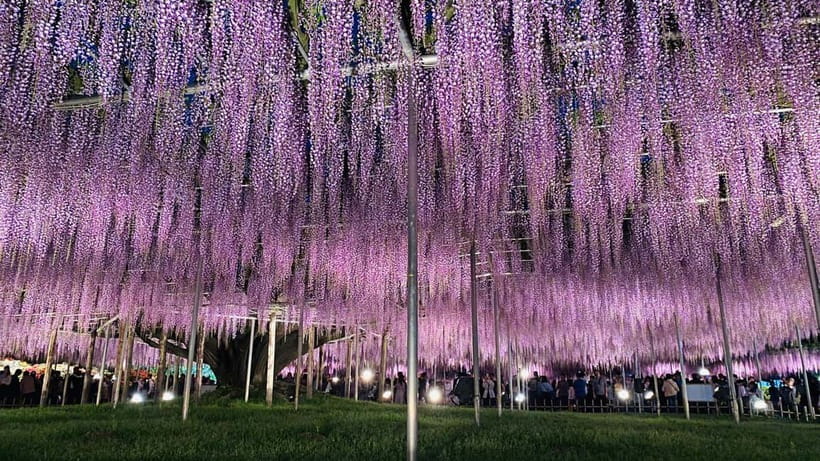
Ashikaga Flower Park is a strong choice if you want a full day built around flowers rather than another city sight. In spring, the Great Wisteria forms the park’s famous flower canopy. In winter, hundreds of lights turn the paths into something entirely different.
I like the three-hour park visit, which gives you time to walk, stop for photos, and enjoy the gardens without rushing. I also like the practical transport plan: parking, express tolls, park entry, and the return train from Oyama Station are included. The main drawback is the $206 price, which is a serious spend for a day centered on one park, especially since food and drinks are extra.
Key points to know before booking
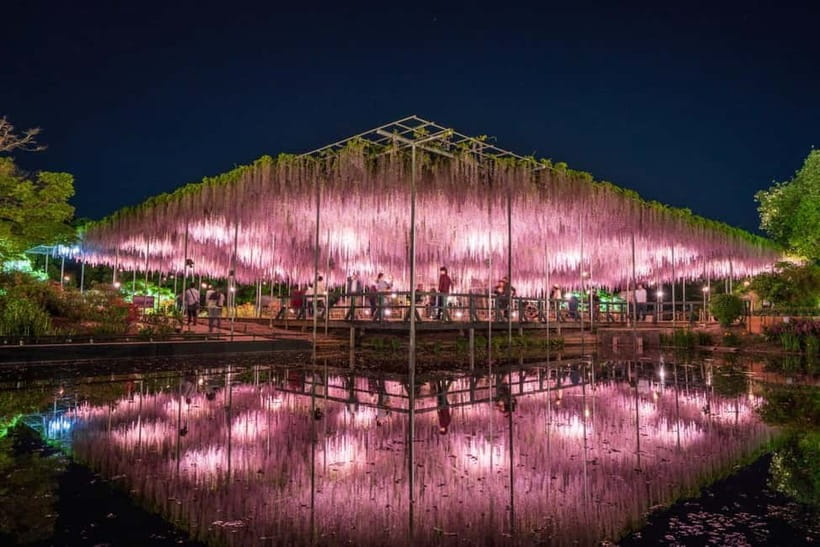
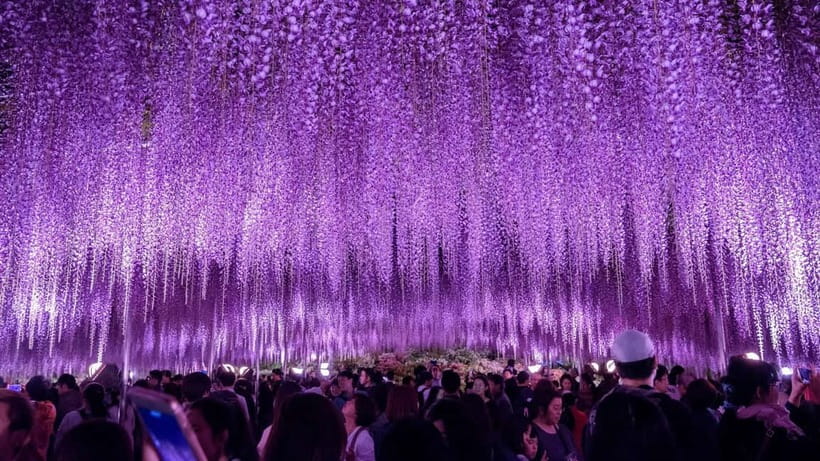
- The Great Wisteria is the park’s star in spring, with a large trellis that becomes a canopy of blossoms during the wisteria season.
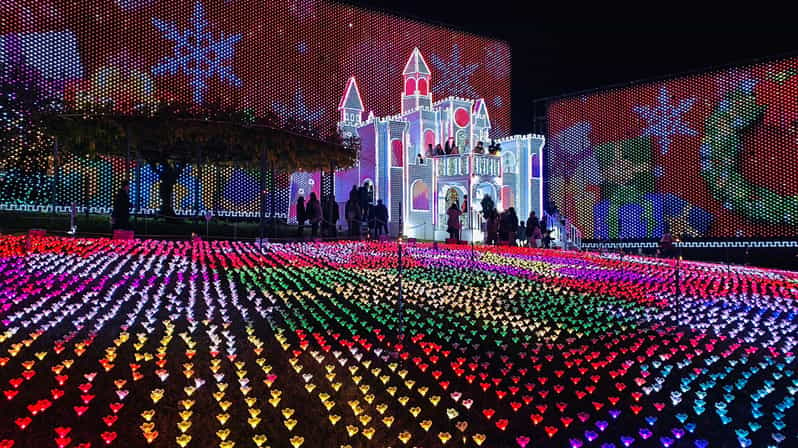
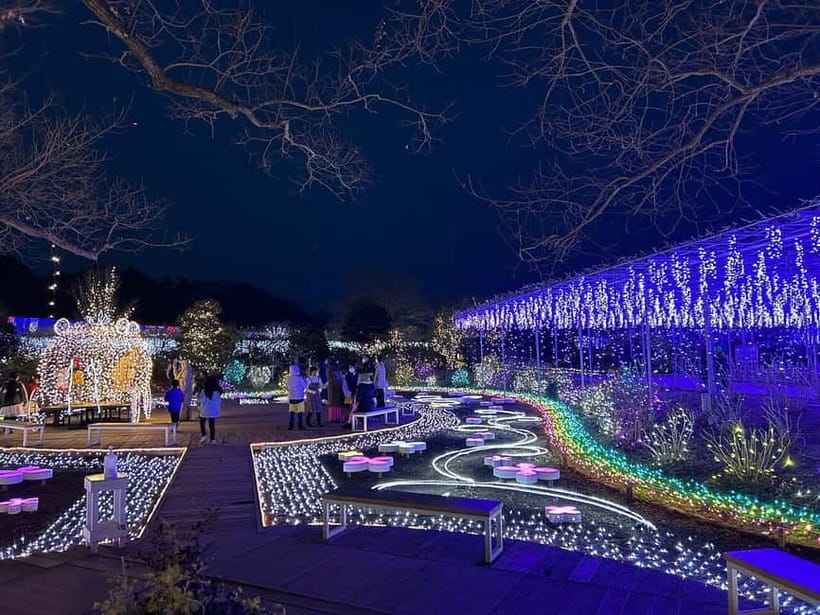
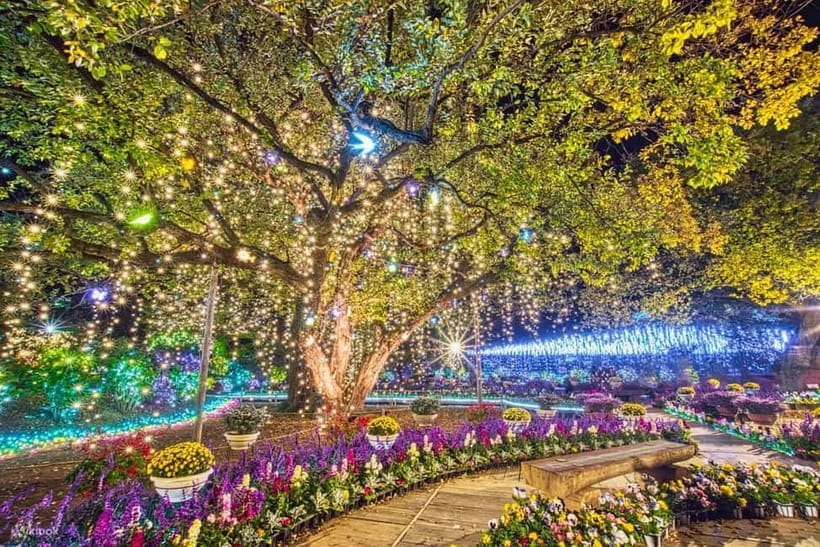
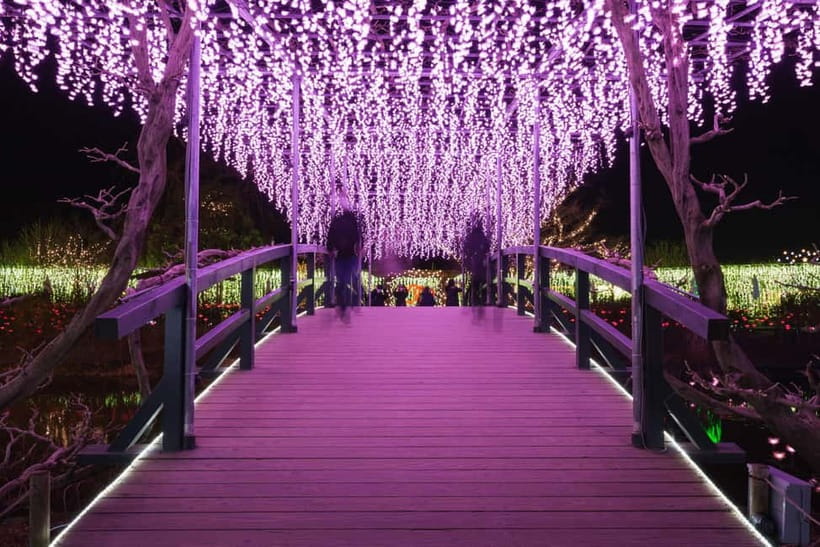
- Winter offers a completely different visit, with hundreds of lights and bright installations along the park’s paths.
- You get three hours inside Ashikaga Flower Park, enough for a relaxed walk and plenty of photographs.
- Your return train from Oyama Station to Shinjuku Station is included, along with admission, parking, and express tolls.
- Ali may be your guide, and his role can include taking photographs and videos as well as guiding the group.
- Food and drinks are not included, so plan to pay separately for anything you want during the day.
Why Ashikaga Flower Park is worth the long day
The appeal here is simple: you get time with flowers, not just a quick photo stop between several attractions. Ashikaga Flower Park is known for seasonal displays, so the mood changes depending on when you visit.
Spring is the headline season. The Great Wisteria is a massive vine trellis that creates a canopy of blossoms when the wisteria is in flower. That structure gives the park its most memorable visual feature. You can walk beneath it, pause for photographs, and see how the flowers change the feeling of the path around them.
Summer brings roses and other garden displays. The park’s appeal then is less about one famous feature and more about the mix of flowers and carefully maintained planting. If you enjoy taking portraits or travel photographs, you can use the flowers as changing backdrops rather than relying on one viewpoint.
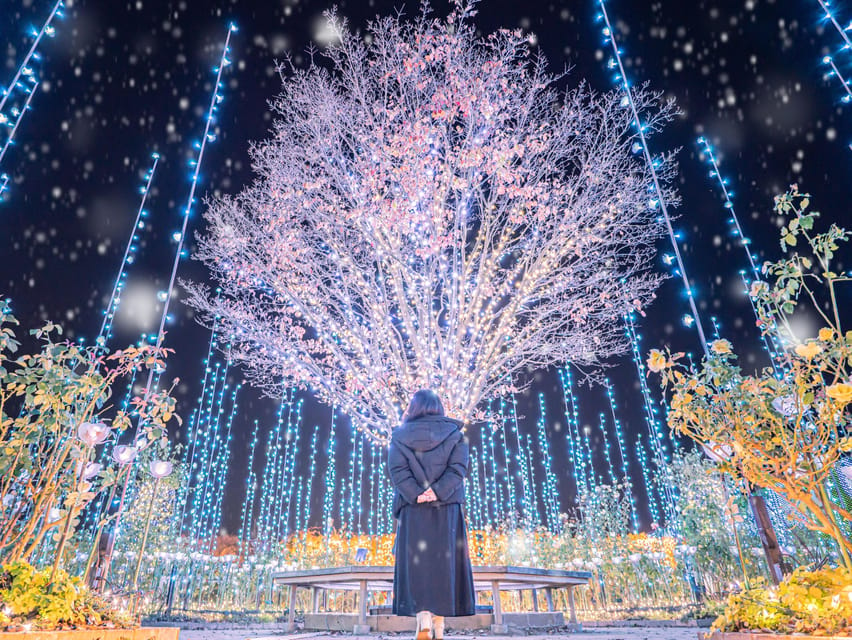
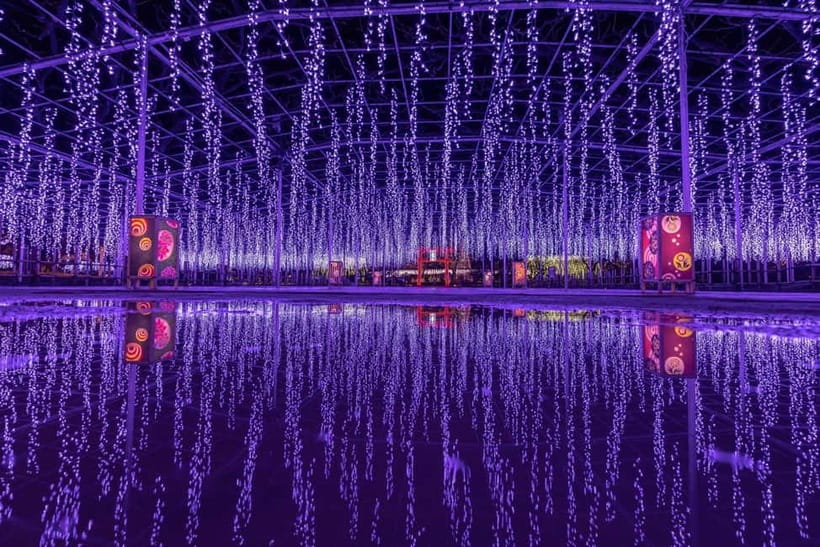
Winter is a different experience again. The bright lighting illumination fills the park with hundreds of lights and light installations. The flowers may not be the main event in this season, but the paths take on a new character. I would choose winter if you prefer evening light displays and photographs with a more theatrical feel.
The supplied schedule allows about three hours for sightseeing and walking. That is useful because you can move at a gentle pace. You do not need to treat the park like a race from one landmark to the next. You can stop at flower beds, follow the winding paths, and give yourself time to take pictures.
More Garden Tickets in Japan:
- Osaka: teamLab Botanical Garden Entry Ticket
★ 4.5 · 1,710 reviews - Kyoto: Kinkaku-ji Temple & Serene Garden Guided Tour with Tickets
★ 5.0 · 9 reviews - TeamLab Botanical Garden Osaka Ticket
★ 3.5 · 6 reviews
Three hours among flowers, paths, and light
The park visit is described as sightseeing and walking, with peaceful paths winding through the gardens. That tells you what kind of day this is: an outdoor visit with time on your feet, rather than a guided museum tour packed with facts.
I like that balance. A garden is best enjoyed with room to pause. You can look at the flowers, frame a picture, and move on when you are ready. The experience also works well for people who prefer a calmer outing after several busy days in Tokyo.
At the same time, you should not expect a long list of separate attractions. The park itself is the destination. Your enjoyment will depend heavily on the seasonal display and your interest in gardens, photography, and outdoor walking.
The winding paths are part of the charm, but they also mean you should wear comfortable shoes. This is practical advice rather than a special tour requirement. Three hours of strolling is easy for many people, but less pleasant if you arrive in unsuitable footwear.
Spring wisteria, summer roses, and winter lights
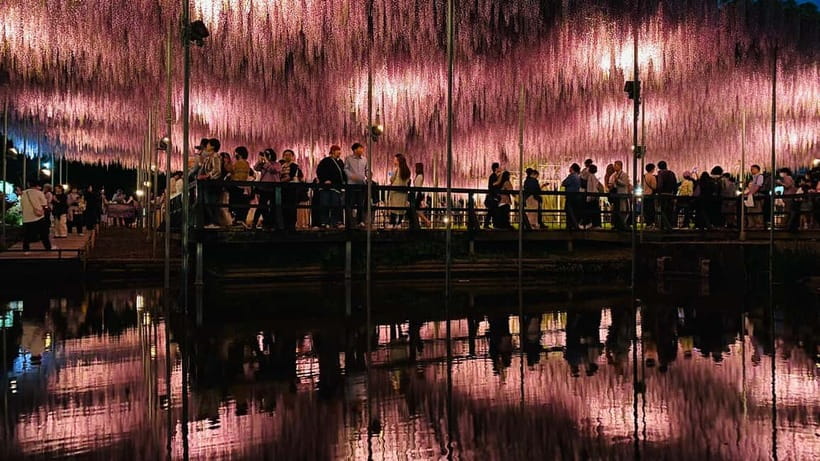
The seasonal timing matters more here than it does on many day trips. The park features wisteria in spring, roses in summer, and illumination displays in winter. You should choose your date with the type of visit you want in mind.
For a classic Ashikaga experience, spring is the obvious choice because of the Great Wisteria. The huge vine trellis is the park’s centerpiece, and the blossoms create the canopy most associated with the site. If the wisteria is your reason for going, confirm the expected seasonal timing before you pay, since flower conditions can change.
Summer gives you roses and other flowers in a garden setting. This may suit you if you want colorful backdrops for portraits and a broader range of plants rather than one main feature.
Winter works for people who enjoy lights more than flowers. The hundreds of illuminated points and installations can make the same paths feel fresh and unfamiliar. It is also the season that gives you the strongest contrast with a normal daytime garden visit.
The activity description presents the park as a place with displays throughout the year, but it does not promise a particular flower to be in bloom on every date. Keep that in mind. The park remains the focus, but the exact display depends on the season of your booking.
Transport from Tokyo, Tochigi, or Ibaraki
You can choose from pickup options in Tochigi, Ibaraki, or Tokyo. The information does not specify a separate pickup point for each area, so check the available starting option and time when you select your date.
The transport arrangement is one of the tour’s most useful features. Parking and express tolls are included, so you do not need to work out those costs separately. After the park visit, the experience finishes at Oyama Station, and a return train ticket from Oyama Station to Shinjuku Station is included.
That setup gives the day a clear shape. You are driven to the park, spend about three hours walking, and then use the train return to Shinjuku. It is not a free-form rental car day, and that can be a plus if you would rather let someone else handle the road portion.
You should pay attention to the finish point. The tour does not finish back at your accommodation. The included train goes from Oyama Station to Shinjuku Station, so you need to plan for your onward journey from there if Shinjuku is not your final destination.
The schedule is listed as a one-day experience, with starting times subject to availability. I would check the exact pickup and return timing before booking, especially if you have an evening reservation in Tokyo.
Same place, a different kind of green day out:
- Imperial Palace East Garden and Edo Castle Walking Tour in Tokyo
★ 5.0 · 510 reviews - Mt. Fuji Day Trip from Tokyo with English Speaking Driver Guide
★ 5.0 · 443 reviews - Kyoto Zen Meditation & Garden Tour at a Zen Temple with Lunch
★ 5.0 · 441 reviews - Kyoto Arashiyama Bamboo forest & Garden Half-Day Walking Tour
★ 5.0 · 413 reviews
What the guide adds to the day
The host or greeter can speak English or Japanese. The named guide associated with the experience is Ali, and his role can go beyond explaining the route.
Ali is specifically noted for taking photographs and videos during the outing. That matters if you are traveling alone, as you will not have to rely only on self-timer shots or ask strangers to take every picture. It can also help couples and families who want at least a few images with everyone in the frame.
A guide who handles safety and gives clear explanations can make the transport portion easier too. Ali has been described as resourceful, polite, helpful, and attentive to participant safety. Those are useful traits on a day that combines road travel, a large garden, and a train transfer.
Still, you should not assume Ali will personally lead every departure. AD Travels is the provider, and the available host may vary. The confirmed language and guide details should be checked when you book.
The guide’s photography help is a nice extra, but it should not be the main reason you pay the price. The park, seasonal timing, and included transport are the core value. Think of the photos as a welcome benefit.
Is $206 good value?
At $206 per person, this is not a cheap way to see a flower park. You are paying for more than admission, though. The package includes the park entry ticket, parking, express tolls, and a return train ticket from Oyama Station to Shinjuku Station.
That bundled transport has real value if you do not want to plan the route yourself. A private road transfer to a park outside Tokyo can be inconvenient to arrange, and the return train removes one part of the day from your planning list.
The value also improves if you want a guide who can help with safety, explanations, and photographs. Solo visitors may especially appreciate having someone available to take photos and help them feel oriented.
The price is harder to justify if you are comfortable arranging your own transport, paying admission directly, and visiting without a guide. A self-planned day may cost less, though the supplied information does not provide separate admission or transport prices for comparison.
I would see this as a convenience-focused day trip, not a bargain outing. You are paying for a guided arrangement and fewer transport decisions. If your priority is the lowest possible cost, this may not be the right fit. If your priority is a smooth day with a planned return to Shinjuku, the inclusions make the price easier to understand.
Food, photos, and what to bring
Food and drinks are not included. You should budget separately for anything you want to eat or drink during the day. No meal plan is provided, so do not assume lunch is part of the $206 price.
The most useful item to bring is a camera or phone with enough storage and battery. The park is designed for photographs, from the Great Wisteria in spring to the winter light installations. If Ali is your guide, he may also help create photos and videos for you.
Comfortable shoes matter because the main activity is walking through the park for about three hours. You may want to leave room in your schedule for a relaxed pace rather than treating the visit as a quick stop.
I would also choose clothing suited to the season. Spring, summer, and winter offer different displays and different outdoor conditions, though the provided information does not give specific weather guidance.
Who will enjoy this experience most?
I would recommend this day to flower lovers, photographers, couples, families, and solo visitors who want a simple route from the Tokyo area. The guide and photography help are particularly useful if you want to return with more than hurried phone snapshots.
It also suits you if you prefer a peaceful outdoor visit to a crowded city program. The park’s winding paths and changing seasonal displays give you room to set your own pace within the three-hour visit.
The experience may be less suitable if you want several unrelated sights in one day. This is not a broad Tochigi sightseeing program. It focuses on Ashikaga Flower Park, with transport built around that destination.
It may also disappoint if you book for a specific flower without checking the season. Wisteria, roses, and winter lights do not all appear at the same time. Pick the season first, then decide if the trip fits your plans.
Booking flexibility and practical details
You can cancel up to 24 hours before the activity for a full refund. The reserve-now, pay-later option lets you hold a place without paying at the time of booking, which is useful when your Japan plans are still moving around.
The activity lasts one day, but the exact starting time depends on availability. Check the date and departure details carefully, especially if you are staying outside central Tokyo.
The available languages are English and Japanese. The experience begins from one of the listed pickup areas in Tochigi, Ibaraki, or Tokyo and finishes at Oyama Station, followed by the included train to Shinjuku Station.
These details are small, but they shape the day. You should know where the road portion begins, where the organized experience ends, and how you will continue after arriving in Shinjuku.
Should you book Ashikaga Flower Park?
Book this experience if you want a season-focused flower day with organized transport, included admission, and a planned train return to Shinjuku. It is especially appealing in the wisteria season or during the winter illumination, when the park offers its most distinctive visual displays.
I would also consider it if you are traveling alone and value help with photographs. Ali’s photography and video assistance can make the day more personal, while his polite guidance and attention to safety add comfort.
Skip it if $206 feels too high for one garden or if you prefer to arrange your own train and park visit. The experience offers convenience, not a low-cost shortcut.
For the right season and the right kind of traveler, Ashikaga Flower Park gives you a calm day away from Tokyo, strong photo opportunities, and a return plan that is already organized.
FAQ
Where is Ashikaga Flower Park located?
Ashikaga Flower Park is in Tochigi Prefecture on Honshu, Japan.
How long do I spend at the park?
The planned sightseeing and walking time at Ashikaga Flower Park is about three hours.
What seasonal displays can I see?
The park features wisteria in spring, roses in summer, and winter illumination displays with hundreds of lights.
What is the Great Wisteria?
The Great Wisteria is a large vine trellis that forms a canopy of blossoms during the wisteria season.
Where can pickup take place?
The listed pickup areas are Tochigi, Ibaraki, and Tokyo. Check the available option and starting time for your chosen date.
Where does the experience finish?
The organized experience finishes at Oyama Station. A return train ticket from Oyama Station to Shinjuku Station is included.
What is included in the price?
The price includes entry to Ashikaga Flower Park, parking, express tolls, and the return train ticket from Oyama Station to Shinjuku Station.
Are food and drinks included?
No. Food and drinks are not included, so you need to pay for them separately.
Can I cancel the booking?
You can cancel up to 24 hours in advance for a full refund. You can also reserve now and pay later.
Just added around Japan
- Tsumami Zaiku Japanese Fabric Flower Class★ 5.0 · 3 reviews
- Tokyo: Serene Sakura & Sake: An Exclusive Brewery Pairing Lunch★ 5.0 · 2 reviews
- Tsukiji Food Strolling and Hama Rikyu Garden Walking Tour★ 5.0 · 7 reviews
- Private tour – Scenic Fuji Escape: Hakone, Peace Park & More★ 5.0 · 4 reviews
- Tokyo Cherry Blossom Half Day Walking Tour with a Local Guide★ 3.5 · 4 reviews
- TOKYO: Tailored Gardens tour with Pro Gardener by E-bike -BASIC★ 5.0 · 2 reviews
- Cherry Blossom Highlights, Asakusa, Ueno, Imperial Palace Garden★ 4.5 · 4 reviews
- Japan’s Customs of Ikebana Art, Tea Ceremony & Kimono Welcome★ 5.0 · 2 reviews
Japan Garden Tours, compared.
Imperial Palace East Garden and Edo Castle Walking Tour in Tokyo
Read our review →
Kyoto Zen Meditation & Garden Tour at a Zen Temple with Lunch
Read our review →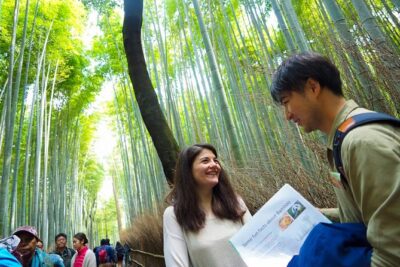
Kyoto Arashiyama Bamboo forest & Garden Half-Day Walking Tour
Read our review →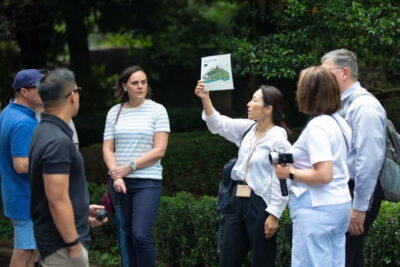
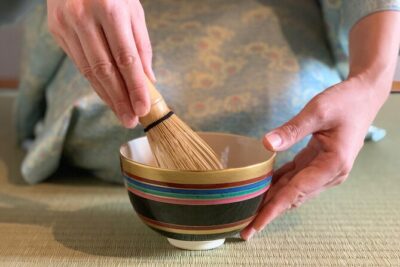
Authentic Kyoto Tea Ceremony: Camellia Flower Teahouse
Read our review →
Edo Castle & East Garden of the Imperial Palace Tour
Read our review →Browse the lists this tour appears in